

The Acropolis is the one Athens stop you plan around, not the one you squeeze in. This time-slotted Acropolis ticket gets you in using your email ticket (printed or on your phone), and you can pair it with a self-guided audio tour for a smoother, less stressful visit.
I like that you’re not stuck in a group rhythm. You choose your entry time slot, walk the hill at your own pace, and still get structured storytelling at key monuments like the Parthenon and Erechtheion.
One thing to consider: it’s not a live-guide experience, and some visitors mention the audio doesn’t always match their exact location perfectly. If you’re the type who wants real-time answers, you’ll need patience—or plan to read a bit before you go.
- Key things to know before you go
- Acropolis entry that respects your schedule
- How the e-ticket + scan works at the Acropolis gates
- The self-guided audio tour: how it helps without slowing you down
- Theater of Dionysus: start with the stage, not just the skyline
- Propylaea: the monumental gate that sets the mood
- Parthenon Temple: take the time you think you don’t have
- Temple of Athena Nike and the porch of Maidens
- Odeon of Herodes Atticus: the view payoff
- Optional add-on: Plaka (Old Town) audio for an Athens follow-through
- Price and value: is worth it?
- Timing, crowds, and the comfort checklist that saves your day
- Opening hours and seasonal closing times you should actually plan around
- Who this fits best (and who should choose something else)
- Should you book the Acropolis ticket with optional audio?
- The Best Of Acropolis Of Athens!
- More Tickets in Acropolis Of Athens
- More Tours in Acropolis Of Athens
- More Tour Reviews in Acropolis Of Athens
Key things to know before you go
 1 / 10
 2 / 10
 3 / 10
 4 / 10
 5 / 10
 6 / 10
 7 / 10
 8 / 10
 9 / 10
 10 / 10
- Pre-booked time slot means you can scan and enter with less friction than ticket lines.
- South Entrance is your target, near the Acropolis metro area, so you can get moving right away.
- The audio tour is app-based (no physical device), so bring your own headphones.
- You’ll walk past major highlights such as Theater of Dionysus, Propylaea, Athena Nike, Erechtheion, and viewpoints toward Odeon of Herodes Atticus.
- Optional add-on: Plaka (Old Town) English audio so you can keep the story going after your climb.

👉 See our pick of the 5 Best Tours In Acropolis Of Athens
Acropolis entry that respects your schedule
Let’s start with the big win: you’re buying the right to enter on a specific date and time slot, not just showing up and hoping for the best. For a site like the Acropolis—where crowds can pile up fast—time control is peace of mind.
Your entry is limited to your selected slot (with a small grace window). That means you’ll want to think like a local: arrive prepared, don’t cut it close, and then enjoy the day instead of stressing about whether your phone signal or map app will cooperate.
This is also a one-day activity in practice. There’s no complicated itinerary hopping between neighborhoods. You’ll spend your energy on the hilltop—walking, stopping, and looking—then decide if you want to use the optional Plaka audio on the same day.
You can also read our reviews of more tours and experiences in Acropolis Of Athens

How the e-ticket + scan works at the Acropolis gates
After booking, your ticket lands in your email. On the day, you go straight to the Acropolis entrance and scan it at the validating machines. No meeting point drama, no group waiting, no hunting for a guide in a sea of travelers.
You can use a printed ticket or show it on your phone. Either way, the goal is the same: get through the validating step quickly so you can start walking while your energy is still high.
A couple practical notes matter here:
- Entry is only allowed during your time slot (or within 15 minutes before/after it).
- The time slot cannot be amended for any reason. So if your flight runs late, build in a buffer.
Also, this is a non-refundable offer. If you tend to over-plan and then change plans last minute, that’s the only “paperwork” risk you’re taking on.
The self-guided audio tour: how it helps without slowing you down
If you choose the audio option, you’ll get a multilingual self-guided tour in English, German, French, Spanish, Italian, and several others (Dutch, Polish, Japanese, Portuguese are also listed). It’s designed for people who want context without being marched around.
This is where the “knowledge” part comes in. The audio doesn’t just point at stones—it tries to connect what you’re seeing with what the structures meant. Visitors often say the audio is detailed and easy to follow from stop to stop, which is exactly what you want when your legs are doing most of the work.
One more practical detail: you’ll download and run the tour via an app. There’s no physical audio device provided. That means:
- Bring headphones (the guidance explicitly says headphones are needed).
- Expect to be slightly “device-dependent” for the experience.
- If your battery is low, plug in or carry a small charger.
Some travelers report the audio can occasionally lag behind where they are standing. That can happen at busy sites where everyone moves at slightly different speeds. If you notice a mismatch, simply walk to the next visible marker and let the audio catch up.
Theater of Dionysus: start with the stage, not just the skyline
Your entry point sends you toward the heart of the site, and a smart way to approach it is to begin by orienting yourself. The Theater of Dionysus is one of those “oh wow” moments where the landscape makes instant sense: you’re looking at the bones of a city built around performance, politics, and public life.
Even if you don’t know Greek drama, you’ll feel what this place was designed for—rows, scale, and sightlines. It’s also a nice first stop because it gives you a reference point before you start climbing deeper into temple territory.
Practical tip: early in the day usually means better breathing room. Several visitors recommend aiming for an early time slot specifically to avoid peak congestion after 9am.
More Great Tours NearbyPropylaea: the monumental gate that sets the mood
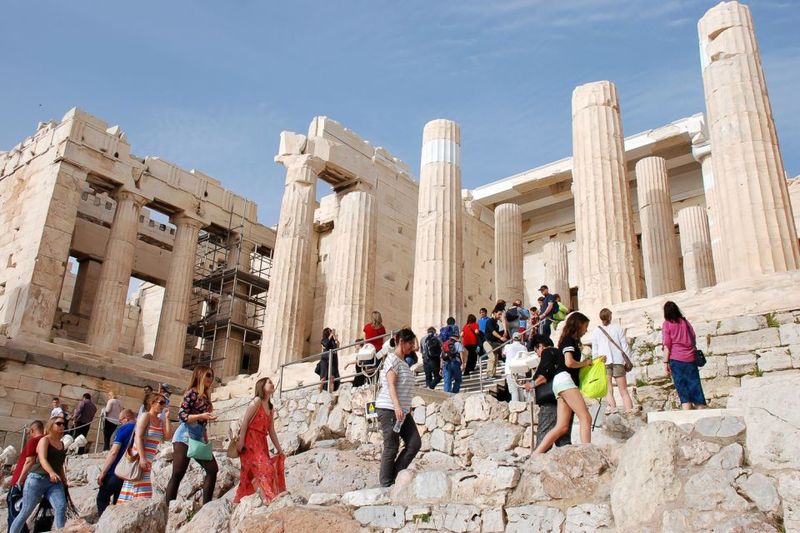
Next comes Propylaea, the grand gateway to the Acropolis complex. This is one of those moments where the architecture does its job fast. Before you even reach the most famous temple, the site’s layout pushes you forward like a path with a point.
Propylaea helps you understand how the Acropolis works as a processional space. You’re not just walking around ruins—you’re moving through a designed sequence. If you’ve ever visited big memorial sites, it’s that same idea: structure influences emotion.
And because it’s a transition zone, it’s a great place to pause, catch your first clear city views, and then decide how slow you want to be for the rest of the circuit.
You can also read our reviews of more guided tours in Acropolis Of Athens
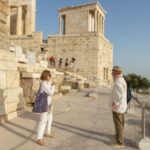
Parthenon Temple: take the time you think you don’t have
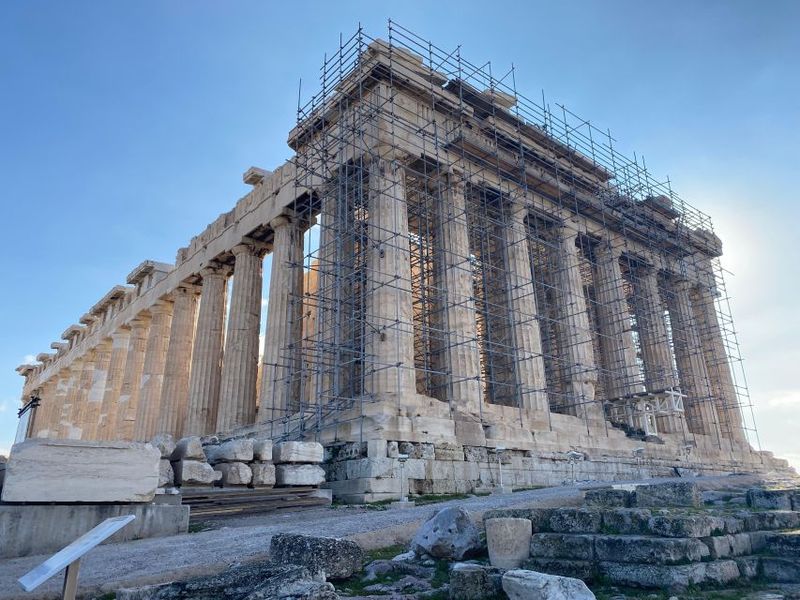
The Parthenon is the headline, but the best way to enjoy it is to treat it like a long sentence, not a quick photo. Look for how the building sits on the hill and how it relates to the rest of the complex.
With the audio, you’re not limited to reading captions. You can hear the “why” while your eyes are actually on the details. Visitors consistently call out that the audio information is strong and easy to follow, which makes the Parthenon feel less like a famous image and more like a specific building with a specific purpose.
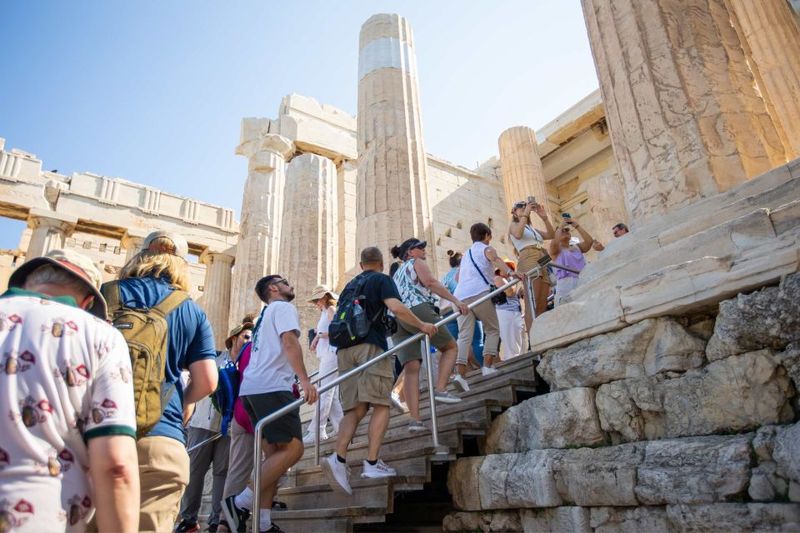
Also, be ready for the reality of crowds. Even with a smooth entry, people bunch up at the most photogenic angles. If you want breathing space, plan to linger at side angles rather than only fighting for the front-facing shot.
Temple of Athena Nike and the porch of Maidens
From the Parthenon, the route naturally brings you toward smaller but unforgettable structures, especially the Temple of Athena Nike and the Erechtheion, including its porch area often referred to as the porch of Maidens.
These spots reward slow looking. Unlike the Parthenon’s massive presence, the Erechtheion area is more about intricate forms and the sense that this complex wasn’t one “big project.” It was a collection of sacred spaces, updated and emphasized over time.
If you’re traveling with someone who gets bored by ruins, this is your leverage. The smaller structures make it easier to explain what you’re seeing without turning the visit into a lecture.
Drawback to keep in mind: the whole hill is a steady climb, and the site involves uneven surfaces and steps. Wear shoes you trust. In hot weather, comfortable footwear is the difference between enjoying the view and just getting through the day.
Odeon of Herodes Atticus: the view payoff
Your walk isn’t only about temples. There’s also a viewpoint payoff. The route includes seeing the Odeon of Herodes Atticus from the top, and you’ll get the kind of perspective that makes Athens feel huge.
From the hill, you can take in Athens, surrounding mountains, and the Aegean Sea (on clear days). That panorama is part of the reason people say the Acropolis feels unforgettable even if they’ve seen it in photos.
If you’re a photo person, go with a simple plan:
- Take your “wide” shot first (so you remember the setting),
- then circle back for close views once the crowd shifts.
Also, shade is scarce. Bring a sun hat and be honest with yourself about whether you’ll manage the heat.
Optional add-on: Plaka (Old Town) audio for an Athens follow-through
If you select the option for the Athens Old Town (Plaka) English self-guided audio tour, you can keep the story going after the hill. It’s a nice way to connect what you saw at the Acropolis with what you’ll see at street level.
Plaka is the obvious choice for this kind of add-on because it’s walkable and atmosphere-heavy. You don’t need to turn it into an “all-day” production—just use the audio to spot details you might otherwise miss.
Even if you don’t do the Plaka audio, this option is good value if you’re staying in central Athens and want a built-in activity that doesn’t require booking another timed ticket.
Price and value: is $46 worth it?
At $46 per person, you’re paying for three main things:
1) a pre-booked time slot to reduce waiting,
2) entry to one of the most famous archaeological sites in Europe,
3) and, if you select it, an app-based multilingual audio tour.
For travelers who don’t love queues, the time-slot part can be worth it on its own. Many people who go later in the day report that the site becomes significantly more crowded. When entry is scheduled, you can spend your limited vacation time on the hill instead of standing in line.
Is it a bargain compared with a guided tour? Often, yes—because you’re not paying for a human guide. But it’s also not the same as a live guide. If you want extra questions answered on the spot, this format won’t fully replace that.
The “sweet spot” for value is:
- you want flexibility,
- you’re comfortable using an app,
- and you like learning through well-paced stops rather than lecture-style touring.
Timing, crowds, and the comfort checklist that saves your day
If you’ve ever tried to enjoy the Acropolis during peak hours, you already know why early is popular. Visitors repeatedly suggest arriving early to beat crowd surges. That lines up with how timed entry typically performs: you get your best experience window when you enter before the main waves.
Once you’re on site, plan for the physical reality:
- It’s a climb. Even if it feels manageable, it adds up.
- It can be hot and windy depending on the season.
- Shade is limited.
What to bring is spelled out clearly, and you’ll thank yourself for following it:
- comfortable shoes
- sunglasses
- sun hat
- water
- headphones
- ID card (especially for children)
Also note what’s not allowed: pets, baby strollers, luggage/large bags, and backpacks are prohibited. That means you’ll want to travel light and use a small day bag only if it meets the site rules (the guidance is strict enough that you should expect the worst if you show up bulky).
Opening hours and seasonal closing times you should actually plan around
Your visit must fit the Acropolis schedule, and closing times vary by season. The guidance lists these closing times:
- Nov 1 – Mar 31: 5:00 PM
- Apr 1 – Sep 15: 7:30 PM
- Sep 16 – Sep 30: 7:00 PM
- Oct 1 – Oct 15: 6:30 PM
- Oct 16 – Oct 31: 6:00 PM
Because you’re entering on a time slot, it’s smart to choose a slot that gives you enough daylight and energy to finish at a comfortable pace. Don’t pick the latest slot just because it looks convenient. If you enjoy photos and lingering at key points, you’ll appreciate earlier entry more than you expect.
Who this fits best (and who should choose something else)
This is best for travelers who want independence. You enter on your own, move at your own pace, and use the audio tour as your guide.
You’ll likely love this if:
- you don’t want a rigid group schedule,
- you’re happy with a self-guided format,
- you like structured stops but not constant interruptions.
It may not suit you if:
- you’re wheelchair user (it’s listed as not suitable),
- you’re pregnant (also listed as not suitable),
- or you require a live guide for accessibility, pacing, or questions.
In addition, the “no strollers” rule can matter for families. If you’re traveling with a child who needs stroller support, you’ll need a different plan.
Athens: Acropolis Ticket & Optional Self-Guided Audio Tours
Should you book the Acropolis ticket with optional audio?
If your goal is the best balance of control, learning, and value, I think this is a smart booking. The time slot reduces stress, and the audio brings context so you don’t just “see famous buildings,” you actually understand what you’re looking at.
Book it if:
- you want less waiting and a smooth entry,
- you like walking at your own pace,
- you’ll bring headphones and use the app.
Consider another option if:
- you strongly prefer a live guide for explanations and real-time answers,
- you need stroller support or fall into the listed “not suitable” categories,
- or your schedule is so unpredictable that a fixed time slot feels risky.
Bottom line: for most independent travelers, an Acropolis visit is the centerpiece of Athens. A time-slotted ticket plus audio is a practical way to make that centerpiece feel enjoyable instead of exhausting.
You can check availability for your dates here: