
Berlin makes it easy to do a “Nazis in Germany” day trip—but Sachsenhausen hits harder because you see how the system worked up close. This English bus tour to Sachsenhausen Concentration Camp runs about 4 hours, includes a guided walk inside the memorial, and uses coach commentary to set the context before you arrive.
What I like most: you get a professional licensed guide and you’re not just handed the facts—you’re walked through the camp’s layout and purpose, including places such as the gas chamber, crematoria, execution area, and infirmary barracks. Second, the logistics are smooth for a heavy subject: air-conditioned private transport, clear meeting instructions near Friedrichstraße, and a site map so you can keep your bearings.
One thing to consider: this tour is not wheelchair accessible and it involves a lot of walking on uneven ground. If mobility is an issue, you’ll feel it more than you might expect.
- Key Things People Really Notice
- How This Sachsenhausen Bus Tour Gets You Ready For the Site
- Meeting Point Near Friedrichstraße: Easy to Find, If You Know What to Watch For
- The Coach Ride: Where the Background Lecture Adds Meaning
- Sachsenhausen Memorial Guided Tour: What You’ll See on Foot
- Oranienburg on the Drive: Seeing the Region, Not Just the Camp
- Tower A and the Camp Entrance: The Symbol That Still Haunts
- Commandant’s House and Camp Control: Understanding the System Behind the Cruelty
- The Places Associated With Mass Death: Gas Chamber, Crematoria, and More
- Infirmary Barracks and Experimentation: Where the Tour Gets Especially Specific
- How Much Time You Really Get (and How to Use It Well)
- Group Pace, Comfort, and Bathroom Reality
- Accessibility: This Isn’t a Sit-Down Tour
- Price and Value: What You’re Actually Paying For
- Practical Packing List and Tour Rules
- Which Guides Are Being Praised (And Why That Matters)
- Who This Tour Is Best For
- Should You Book This Sachsenhausen English Bus Tour?
- FAQ
- How long is the Berlin to Sachsenhausen tour?
- Where do I meet the tour guide in Berlin?
- What time is the tour returned to Berlin?
- Is this tour wheelchair accessible?
- Does the price include the memorial entry fee?
- What languages are available for the guide?
- What should I bring for the tour day?
- Are there any restrictions on alcohol or drugs?
- What is the cancellation policy?
- If You’re Still on the Fence
- The Best Of Berlin!
- More Tours in Berlin
- More Tour Reviews in Berlin
Key Things People Really Notice
- Expert, compassionate guides: Reviews repeatedly call out guides like Paul, Hannah, Jamie G, Georgia, Klaus, and Nikolai for knowledge and sensitivity.
- You see the core parts of the memorial: crematoria, execution trench, infirmary areas, and sections tied to imprisonment and punishment.
- Coach commentary before you arrive: multiple travelers mention background lectures that add meaning to what you see on-site.
- Comfortable, easy Berlin-to-site transport: air-conditioned private vehicle plus frequent practical notes like bathroom timing.
- Good value for a guided day trip: transportation, memorial entry, and a €3 donation per person are included.

👉 See our pick of the We Rank The 9 Best Wine Tours In Berlin
How This Sachsenhausen Bus Tour Gets You Ready For the Site
Sachsenhausen is one of those places where “knowing the history” isn’t enough. The tour format helps because it doesn’t start in silence. You travel from central Berlin by bus first, and your guide uses that time to explain how the camp system fit into the wider Nazi machinery.
This matters for you as a traveler because Sachsenhausen is large and structured. If you arrive without context, you can end up staring at buildings and missing the logic behind them. With the coaching-style lecture on the way, you’re more prepared to understand what you’re looking at—especially the camp’s control system and how it was designed for expansion.
You can also read our reviews of more tours and experiences in Berlin.



Meeting Point Near Friedrichstraße: Easy to Find, If You Know What to Watch For
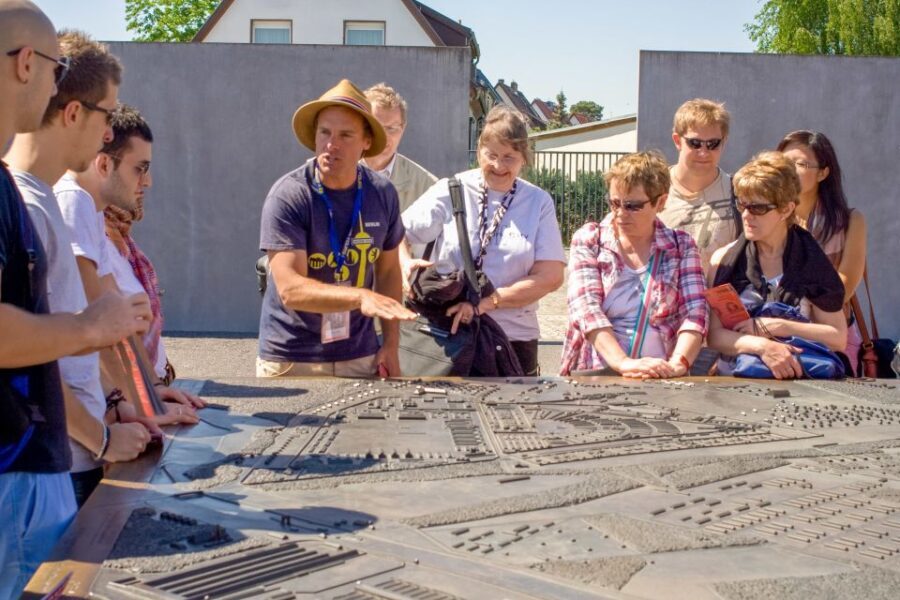
You meet outside Friedrichstraße train station on the square between the Tränenpalast (Palace of Tears) and the station. The instructions are specific, and that’s a good sign for a smooth start.
- Your guide will be wearing a blue lanyard and a yellow name tag, holding yellow umbrellas.
- The tour does not include hotel pickup or drop-off, so plan on getting yourself to this area on your own.
This is the kind of detail that saves time on tour day. It also helps when you’re visiting a serious site—less confusion, more time to focus.
The Coach Ride: Where the Background Lecture Adds Meaning
The bus ride is about 50 minutes each way. That’s not a lot of time, but reviews say your guide doesn’t waste it. Many travelers mention a background lecture on the coach that helps connect the dots—how the camp system developed and why these places were built to control people and expand the network.
You’ll also hear practical commentary as you head out. One review even mentioned a mic issue cutting out during commentary, but also described the guide’s knowledge as otherwise strong. In other words: even when tech glitches pop up, the quality of the guidance seems to stay the main event.
Sachsenhausen Memorial Guided Tour: What You’ll See on Foot
Once you arrive, you get about 2 hours with the guide inside the Sachsenhausen Memorial area. That’s a tight, purposeful window, because the site covers a lot of ground.
Expect to walk through barracks and key memorial zones and hear about daily routines, harsh conditions, and the camp’s administrative ruthlessness. Your guide’s job isn’t to shock you with random details—it’s to explain the structure, what each part was used for, and how the system moved people from imprisonment toward death or survival in extremely brutal ways.
Because the topic is emotionally heavy, the best guides also build in moments for reflection. More than one reviewer specifically said the guide created time to pause at meaningful points instead of rushing every stop like a checklist.
More Great Tours NearbyOranienburg on the Drive: Seeing the Region, Not Just the Camp
Before you fully step into Sachsenhausen, the tour describes driving through Oranienburg and seeing where inmates would have worked. This isn’t just scenery. It’s geography with a point.
When you connect the camp to the surrounding labor system, Sachsenhausen stops being an isolated horror and becomes part of a larger regional operation. That can help you understand what travelers often miss on their first visit: the system wasn’t only inside the fences.



Tower A and the Camp Entrance: The Symbol That Still Haunts
One of the most described features is Tower A and the entrance area where Arbeit Macht Frei appears. It’s one of those phrases that’s chilling not because you didn’t know it existed, but because you suddenly see how propaganda was used to mask brutality and control.
Your guide will use this moment as a turning point—moving you from general facts into the camp’s specific methods of intimidation and governance.
Commandant’s House and Camp Control: Understanding the System Behind the Cruelty
You’ll also pass by the commandant’s house, which helps you visualize the distance between those running the camp and those trapped inside it.
This is an important stop for you because Sachsenhausen wasn’t only about violence. It was about organization: planning, supervision, and expansion. The tour uses the buildings and routes on-site to show that the machinery of oppression was run with cold efficiency.
The Places Associated With Mass Death: Gas Chamber, Crematoria, and More
This tour includes some of the most difficult sections of the memorial, including areas associated with the gas chamber and the crematoria, plus the execution trench and infirmaries.
The practical value for you is that you don’t have to piece together the story yourself from signage alone. A licensed guide can connect what you see on the ground to what happened there, while also keeping the tone respectful. Reviews repeatedly mention this balance: clear explanation without making the tragedy feel like a performance.
If you’re the type of traveler who needs a break during heavy moments, bring that up internally before you go. Use the pauses the guide creates, and don’t feel guilty stepping aside briefly if you need air.
Infirmary Barracks and Experimentation: Where the Tour Gets Especially Specific
One of the highlights listed for this experience is the infirmary barracks, including areas tied to experimentation during the war.
This is where Sachsenhausen can feel different from other memorials. The tour doesn’t only show punishment and death. It also points to the ways the regime used medical and research spaces as tools of harm—something that’s easy to miss if you visit without guidance.
Several reviewers praised guides for handling this kind of material with sensitivity and clear explanations. That’s exactly what you want here: strong context, careful wording, and enough pacing to absorb it.
How Much Time You Really Get (and How to Use It Well)
You have about 2 hours at Sachsenhausen. People mention that’s plenty for a guided overview, but not necessarily enough to read everything slowly or see every exhibit in maximum detail.
You can get the best value from the time by doing two things:
- Listen first to the guide’s walkthrough.
- Use any remaining moments afterward to check the memorial’s map and signage you found most confusing.
A traveler in the feedback noted they would have liked more time for reading letters and documents housed in buildings. If that matters to you, plan to treat this tour as the guided backbone and then consider a return visit later—or pair it with extra time in Berlin for deeper reading.
Group Pace, Comfort, and Bathroom Reality
This is a bus tour, so you’re not dealing with train schedules, transfers, or figuring out the site’s orientation when your brain is already overloaded by history.
Reviews also mention practical comforts: the coach is described as comfortable, warm, and air-conditioned. Some travelers pointed out “many toilet breaks,” which matters because the total day is about 4 hours door-to-door for the experience.
That said, group pacing is still a factor. If you’re someone who asks lots of questions, choose your moments. One review suggested there could be a bit more time for questions, which is common on structured tours. If you want maximum interaction, be ready to ask during the guided pauses rather than saving everything for the end.
Accessibility: This Isn’t a Sit-Down Tour
The tour is not wheelchair accessible and is not recommended for people with limited mobility or walking impairments.
That’s not a small footnote. Sachsenhausen involves walking in a memorial environment that’s generally more uneven than a typical city attraction. If you think you might struggle, I’d treat this as a real constraint, not a maybe.
Price and Value: What You’re Actually Paying For
The price is listed as $55 per person. On the surface that sounds like a standard day-trip fare—but the value part is in what’s included.
Included:
- Professional licensed guide
- Transportation by private air-conditioned vehicle
- Driver
- Sachsenhausen Memorial entry
- €3 donation per person to the memorial
- Map of the former concentration camp
Not included: hotel pickup/drop-off, so you start at Friedrichstraße.
For you, the “value” isn’t just getting there. It’s getting a guided explanation that organizes a site too large and complex to understand well on your own in a short window. If you’ve done memorials before, you already know how often self-guided visits leave you with questions. This tour is designed to reduce those gaps.
Practical Packing List and Tour Rules
This tour asks you to keep things simple, and the rules are clear.
Bring:
- Comfortable shoes (seriously)
- Camera (if you want photos)
- A light snack and a drink (recommended)
- Weather-appropriate clothing
Not allowed:
- Alcohol and drugs
This is also one of those days where you’ll feel better if you dress in layers. The bus is warm, the walking can be chilly, and you don’t want to spend time thinking about comfort instead of learning.
Which Guides Are Being Praised (And Why That Matters)
One of the best signals here is that people don’t just rate the tour highly—they mention guide names and specific strengths.
You’ll see praise for guides such as:
- Paul: extensive knowledge and strong coach background lecture
- Hannah: compassionate, knowledgeable, and clear without feeling overwhelming
- Jamie G: empathy and smooth handling of tragic events
- Georgia: described as amazing by a U.S. reviewer
- Klaus: praised for handling a very emotional visit
- Nikolai: called highly informative, with energy and passion
This matters because Sachsenhausen is not a place where you want vague narration. You want someone who can explain systems, terms, and locations accurately, and who can keep the tone respectful when the material gets intense.
Who This Tour Is Best For
Book this tour if:
- You want an English-guided, structured visit rather than a solo scramble
- You care about understanding how the camp functioned, not just where it was
- You value expert narration on a complex site
- You want an easier day plan from Berlin that doesn’t require ticket wrangling
Consider skipping this one if:
- You rely on wheelchair access or you have significant mobility limitations
- You need a lot of downtime during tours—this is walking plus heavy content
- You’re looking for a light, casual sightseeing vibe (this is a serious memorial visit)
Should You Book This Sachsenhausen English Bus Tour?
If you’re choosing between a low-cost option and one that includes a licensed guide, transport, memorial entry, and a donation, this tour looks like a strong pick. Reviews consistently praise the guides for knowledge and compassion, and the coach commentary seems to help you understand what you’re seeing instead of only scanning signs.
Just be honest with yourself about two things: you’ll walk, and you’ll encounter difficult material. If you can handle that, and you want a well-organized Berlin day trip with expert guidance, this is a tour worth booking.
Berlin: English Bus Tour to Sachsenhausen Concentration Camp
FAQ
How long is the Berlin to Sachsenhausen tour?
The experience is listed as 4 hours total.
Where do I meet the tour guide in Berlin?
You meet outside Friedrichstraße train station, on the square between the Tränenpalast (Palace of Tears) and the station.
What time is the tour returned to Berlin?
The tour returns at the end of the experience back to the Reichstagufer 17 area, with the meeting point being near Friedrichstraße.
Is this tour wheelchair accessible?
No. The tour is not wheelchair accessible and is not recommended for people with limited mobility.
Does the price include the memorial entry fee?
Yes. Sachsenhausen Memorial entry is included, along with a €3 donation per person to the memorial.
What languages are available for the guide?
The tour is English only.
What should I bring for the tour day?
Bring comfortable shoes and a camera. A light snack and drink are also recommended.
Are there any restrictions on alcohol or drugs?
Yes. Alcohol and drugs are not allowed.
What is the cancellation policy?
You can cancel up to 24 hours in advance for a full refund.
If You’re Still on the Fence
If your priority is learning with a careful, knowledgeable English guide and you want a hassle-free bus day from central Berlin, book it. If your priority is maximum slow reading and lots of unstructured time on-site, you may want to plan extra time elsewhere—but for a guided overview in one trip, this is built for that.
You can check availability for your dates here: