

If you want one Rome stop that changes shape through centuries, this is a strong choice. Castel Sant’Angelo started as a monumental Roman tomb, later became a fortress, and then served papal purposes—so you’re walking through layers of the city’s story. You also get a digital audio guide and a panoramic finale from the roof terrace.
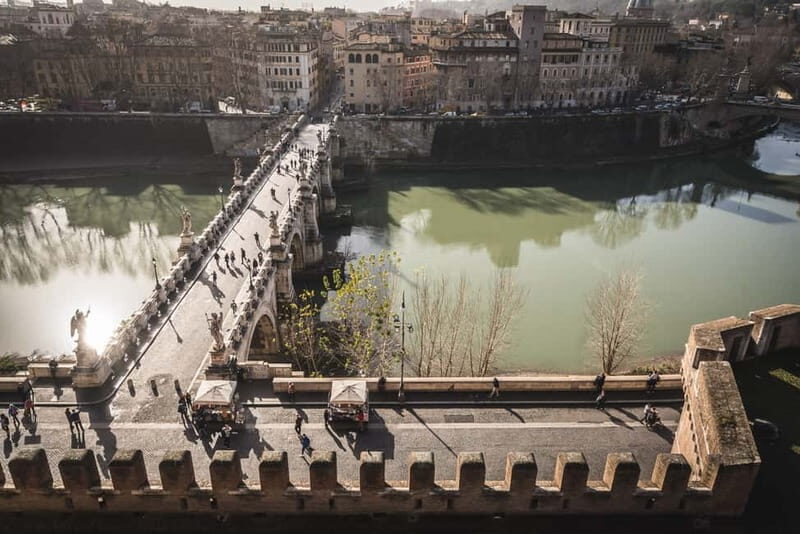
Two things I especially like here: the chance to see multiple eras in one circuit (ancient structure → medieval defense → papal rooms), and the payoff views over Rome, including the Vatican area, the Tiber River, and the Bridge of Angels. The other big win is pacing: you can go at your own speed with the audio guide instead of being stuck to a group rhythm.
One consideration: this visit isn’t for everyone because the route involves stairs and getting up to the terrace, and wheelchair users aren’t suitable based on the activity rules.
- Key Things to Know Before You Go
- Castel Sant’Angelo: From Mausoleum to Fort to Papal Rooms
- Tickets, Entry Rules, and the App Setup (So You Don’t Lose Time)
- Price and Value: Why the Package Cost Can Still Be Worth It
- What Happens During the Visit: A Clear Route Through the Building
- The Spiral Ramp and the “How This Place Was Reused” Moment
- Papal Residence Rooms: Where the Mood Changes
- The Chamber of Ashes and Preserved Frescoes
- Renaissance and Baroque Art and Frescoes You’ll Actually Notice
- Rooftop Terrace: The Rome View Finish Line (Vatican to Bridge of Angels)
- Top Café or Bar Break: A Small Luxury With Big Views
- Practical Tips for Stairs, Shoes, and Smartphone Needs
- Navigating the “Staff Assistance” Detail Without Getting Stuck
- Languages and Audio Guide Setup: What You Can Expect
- Who Should Book This Ticket & Audioguide?
- A Simple Booking Checklist (Do This, Then Enjoy the Visit)
- Should You Book This Castel Sant’Angelo Ticket & Audioguide?
- FAQ
- What’s included with the Castel Sant’Angelo entry?
- Is a guided tour included?
- Do I need to download an app on my smartphone?
- Are headsets included?
- What time slot rules apply to the ticket?
- What identification do I need to enter?
- What’s the official entry price for adults and children?
- Is the visit suitable for wheelchair users or mobility impairments?
- What’s the cancellation policy?
Key Things to Know Before You Go

- A phone audio guide (included): you’ll download the app details before entry, and you’ll need your own headphones
- Go by time slot: your ticket works only for the date and time you booked
- Expect a vertical walk: several floors, plus a spiral ramp and stairs to reach the rooftop
- Multiple “jobs” of the building: tomb, fortress, papal residence—different rooms feel like different centuries
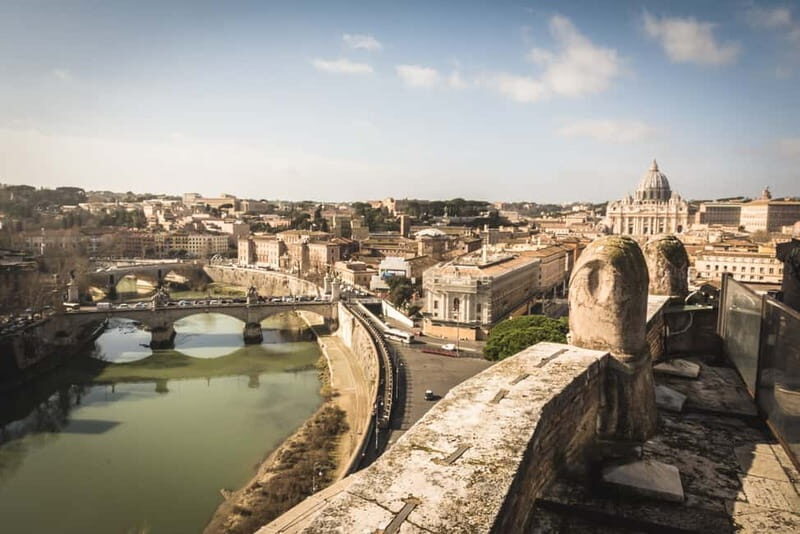
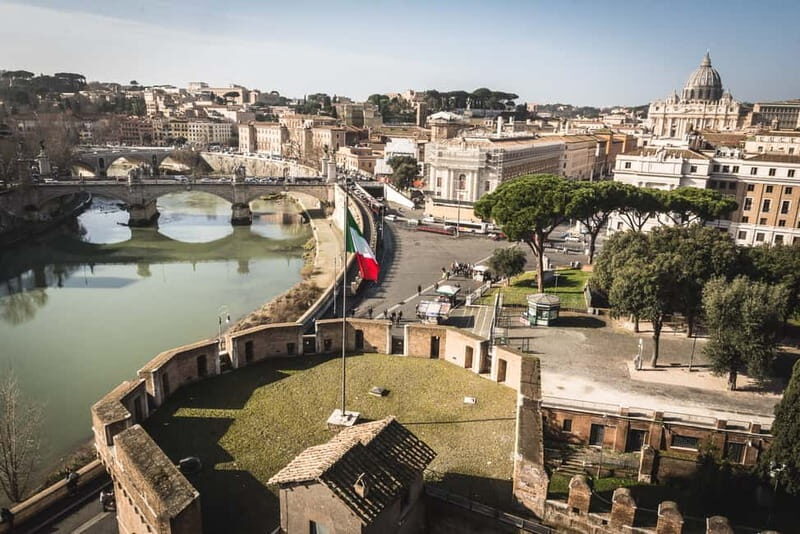
- Terrace view is the big finale: Vatican City, Tiber, and the Bridge of Angels are all in the same sweep
- Know the rules: bring a charged smartphone, plan for internet access, and avoid large bags
Castel Sant’Angelo: From Mausoleum to Fort to Papal Rooms
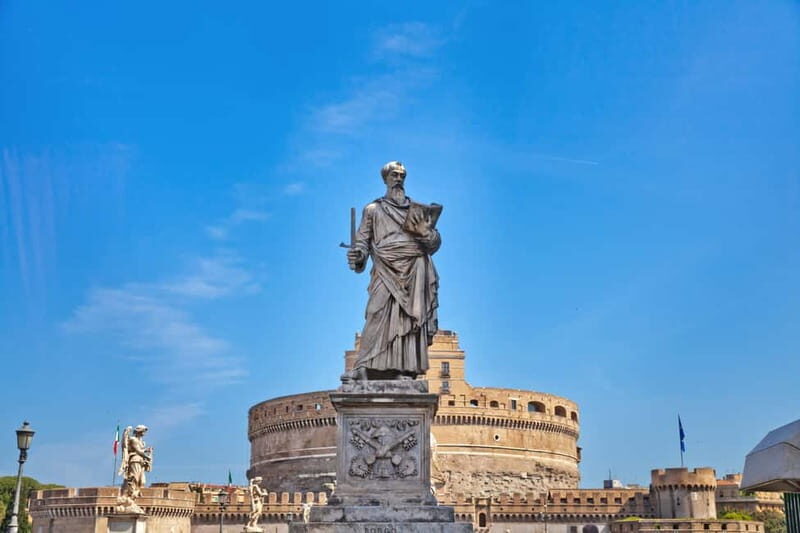
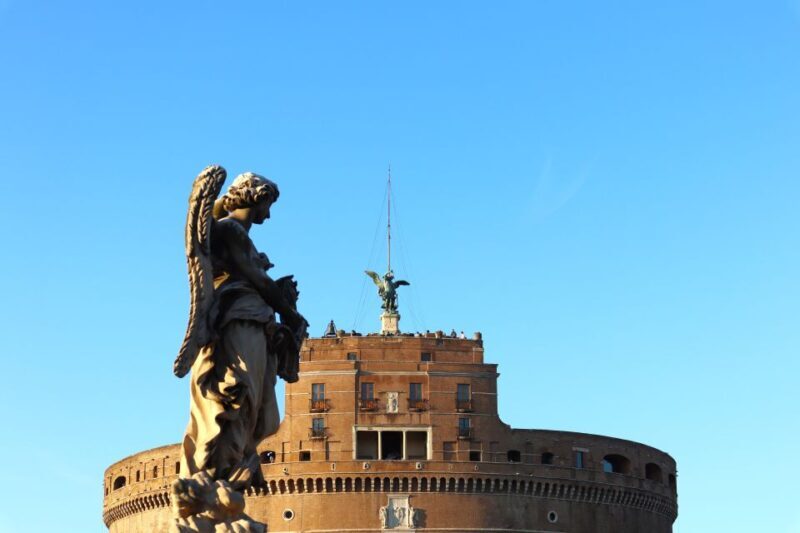
Castel Sant’Angelo is one of those Rome sites where the building itself teaches you history. You start in an ancient Roman mausoleum setting, then the experience guides you toward how the structure was reused—first as a fortress, then as part of defense planning during turbulent medieval times.
What makes it practical for travelers is that you’re not just reading about this stuff. You’re moving through spaces that correspond to those transformations: you’ll pass sections that connect to medieval defense functions, then later you’ll reach areas tied to papal residence use. If you like archaeology and architecture, this layout can feel like a guided “timeline” made of stone.
And yes, you’ll also get plenty of art. The visit includes stops with Renaissance and Baroque artworks and frescoes, plus other preserved visuals you can take in at a calmer pace because the audio guide keeps things moving without rushing you.
Tickets, Entry Rules, and the App Setup (So You Don’t Lose Time)
This is a self-guided style ticket: Castel Sant’Angelo access plus a digital audio guide. There’s no guided tour included, and the rules also say you won’t have staff assistance at the entrance as part of the reservation.
Here’s the logistics reality you should plan around:
- Your entry ticket(s) are delivered by email used during booking within 24 hours prior to your visit.
- You must download the smartphone app before you begin the tour. You’ll get the app download details by mail.
- At the entrance, you show your emailed ticket and a valid passport or ID. Your name must match what you entered during booking (complete names as stated on your passport).
- Tickets are valid only for the selected date and time slot. Late arrivals or no-shows aren’t refunded.
In other words, build a buffer. Arrive earlier than your slot to handle ticket verification, getting oriented, and any app setup hiccups.
Price and Value: Why the Package Cost Can Still Be Worth It
The official admission price listed is:
- Adults (18+): 16 euro
- Under 18: free entry
The package you’re booking is higher (listed as about $34 per person in the summary). That difference usually comes from what you’re getting with the booking: access plus the phone audio guide, and the convenience of handling your ticket digitally in advance.
Is it worth it? For many travelers, yes—especially if you hate ticket lines or want a smoother arrival. Even when crowds vary, the practical value here is time-saving and stress-reducing: you’re not scrambling for the right counter, and the audio guide means you can turn the visit into a story instead of just sightseeing.
If you’re traveling with teenagers or friends who are strong independent museum visitors, the audio guide can make the “extra cost” feel more justified than it might if you were only speed-walking for photos.
What Happens During the Visit: A Clear Route Through the Building
You’re set up for a multi-floor museum path. The experience description explains that you’ll explore the museum across 5 floors, moving toward a spiral ramp. This matters because it shapes your “feel” of the building: the route gradually shifts from outward monument framing to interior rooms and then up to the rooftop.
In practical terms, think of it like this:
- Lower and mid levels: structure and artifacts that connect to the building’s earlier and defensive uses
- Middle levels: spaces that connect to papal residence function
- Later levels: key “wow” stops (including the ash chamber description) and the art/fresco viewing moments
- Final stage: the roof terrace for panoramic Rome
The audio guide is what turns this into more than a walk. It helps you notice what you might otherwise miss—like how rooms were repurposed and what specific preserved elements are telling you.
More Great Tours NearbyThe Spiral Ramp and the “How This Place Was Reused” Moment
The path toward the spiral ramp is one of those subtle “this is why the building matters” points. A spiral ramp isn’t just a way to move between levels—it gives you momentum as the building’s role changes around you.
If you like getting your bearings fast, this section helps. You’ll feel the scale, and you’ll start understanding why the structure could serve so many different purposes across different eras.
One tip that comes up indirectly from how people describe the visit: take a moment during the ramp and pause the “power-walk” instinct. Even if you’re only here for about an hour, slowing down for one or two key viewpoints inside will make the later terrace photos more satisfying.
Papal Residence Rooms: Where the Mood Changes
As you continue upward, you reach areas that served as cells and rooms used as a Papal residence. This part often clicks for travelers because it adds a human rhythm to the building.
Instead of only thinking “ancient tomb” or “fortress,” you start thinking: people lived here; people worked; people occupied spaces for serious routines. Even if you’re not a “church history” person, the shift in room function can make the site feel more real.
If you’re traveling with friends who want variety (not just one theme), these papal residence rooms provide that change of tone.
The Chamber of Ashes and Preserved Frescoes
A standout described stop is a chamber of ashes, where you can marvel at remains of iconic Roman characters and the frescoes preserved around you.
This is the kind of room that’s easy to rush past if you’re moving only for big views. But if you’re using the audio guide, it becomes a key chapter—because it’s not just “see a display,” it’s “why did this building store memory this way?”
If you’re sensitive to heavy or strange historical themes, give yourself permission to spend more time here (or less time, if needed). The audio guide gives you context, but you can always choose your pace.
Renaissance and Baroque Art and Frescoes You’ll Actually Notice
The experience includes a wide variety of Renaissance and Baroque art works and frescoes. That’s great, but here’s the travel tip that matters: you’ll enjoy this more if you’re not treating it like a speed-photo assignment.
Because this visit is self-guided, you can:
- stop longer where the audio makes a specific point
- skip quickly if an area isn’t holding your attention
- return to the art later if you want a second look before the terrace
This is also why the audio guide helps your money-to-time ratio. You’re not just buying admission; you’re buying interpretation.
Rooftop Terrace: The Rome View Finish Line (Vatican to Bridge of Angels)
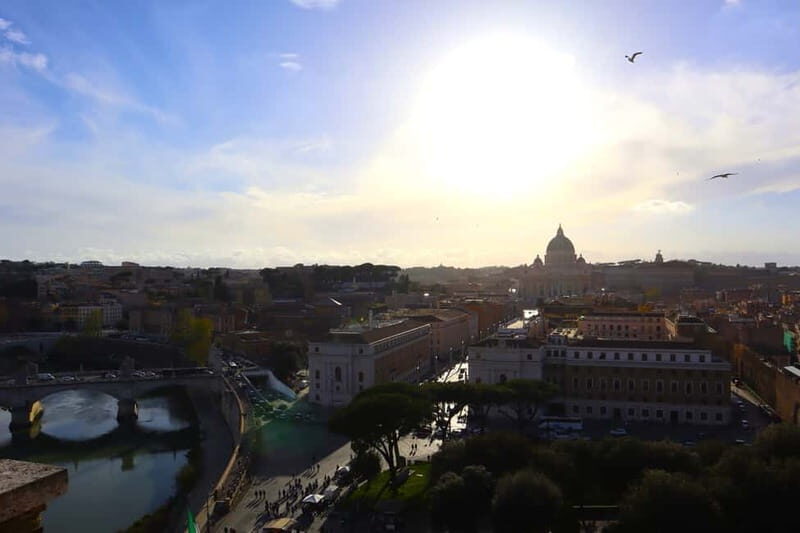
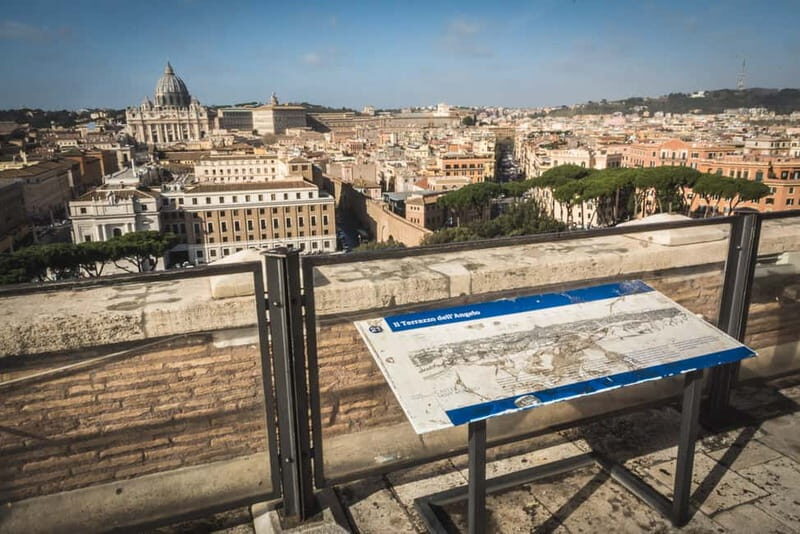
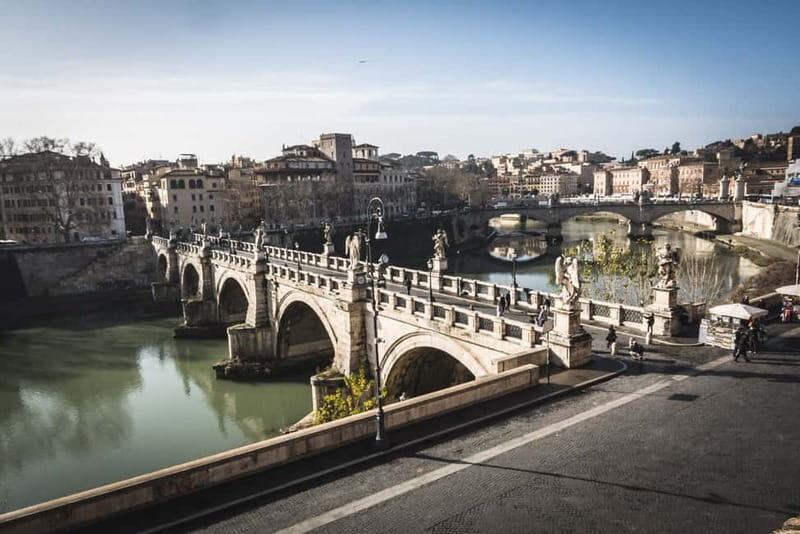
The final payoff is the roof terrace. The description is specific about what you should be able to spot: Vatican City, the Tiber River, and the Bridge of Angels.
This is the moment when the building stops feeling like a museum and turns into a “Rome stage.” You’ll be above the city, and the skyline context changes how you understand the site’s location.
If you’re traveling around sunset, you might find lighting makes the terrace extra pleasant. The rules don’t promise a sunset experience, so treat that as a bonus, not a guarantee—but the view itself is the consistent reason people keep ranking this visit highly.
Top Café or Bar Break: A Small Luxury With Big Views
Several visitors mention taking a break at a bar/café on an upper level and enjoying the sunshine with city views. It’s not part of the included ticket, but it’s a real-life travel tip: build a pause into your plan.
Why it’s worth it:
- it gives your legs a rest (stairs add up)
- it turns the terrace photos into a slow sequence instead of a sprint
- it’s a nice moment to reset before you head back down
If you’re the type who keeps skipping sit-down moments, Castel Sant’Angelo is one of the rare “stairs up, payoff down” places where the break feels earned.
Practical Tips for Stairs, Shoes, and Smartphone Needs
The rules are clear: you’ll climb stairs to reach the panoramic terrace, and the activity is not suitable for mobility impairments or wheelchair users.
So pack for the body, not just the camera:
- Comfortable shoes are non-negotiable
- Bring headphones (headsets are not included)
- Use a charged smartphone
- Have internet access ready for the app experience
- Avoid heavy luggage or large bags (not allowed, per rules)
One small real-world tip from traveler comments: bring water, since walking and climbing can dry you out faster than you expect in Rome.
Navigating the “Staff Assistance” Detail Without Getting Stuck
One tricky detail you should read carefully before you go: this reservation does not include a person to meet and escort you at the entrance, and staff assistance at the entrance isn’t included.
Still, some visitors report that a representative helped with audio guide app setup or ticket issues. That can happen in real life, but you shouldn’t count on it.
Your best strategy:
- go directly to the main entrance
- show your emailed ticket and ID
- handle app setup on your phone before you arrive
- if you genuinely need help, ask on-site staff for directions to the correct process rather than waiting around
On high-security days or unexpected closures, one visitor described the operator quickly reissuing access details when the castle closed due to Pope’s inauguration security. That’s not something you can plan around, but it’s reassuring: if problems happen, there’s evidence the provider may work to resolve them.
Languages and Audio Guide Setup: What You Can Expect
The audio guide is available in multiple languages: English, French, Italian, Chinese, German, and Spanish.
The app approach matters:
- you must download and be ready before entry begins
- audio is delivered through your phone, not a handed headset
- headphones are required for audio
If you’re traveling with kids, or with adults who aren’t fans of smartphone audio tours, confirm everyone’s comfortable with using a phone in museums. Otherwise, it can feel like extra steps rather than a benefit.
Who Should Book This Ticket & Audioguide?
This experience fits best if you:
- like history and want the building’s timeline explained
- enjoy architecture and art (Renaissance/Baroque frescoes)
- want strong views without committing to a full guided tour
- prefer self-guided pacing so you can spend more time where you care
It may not fit you if:
- you need step-free access (the activity isn’t suitable for wheelchair users)
- you don’t want to rely on app tech and a charged phone
- your group hates walking or climbing stairs
Travel style matters. If you’re the kind of traveler who plans a tight museum route and wants a satisfying finish with panorama views, Castel Sant’Angelo is a smart use of one day.
A Simple Booking Checklist (Do This, Then Enjoy the Visit)
Before you book, or before you leave your hotel:
- Confirm your selected time slot and plan to arrive early
- Make sure each participant’s name matches passport details entered during booking
- Download the audio guide app when you receive the instructions
- Charge your phone and test your headphones at least once
- Bring a passport or valid ID for verification
- Leave large bags at the hotel (not allowed on-site)
This checklist sounds basic, but it’s exactly what prevents the most common visit frustrations.
Should You Book This Castel Sant’Angelo Ticket & Audioguide?
Yes, if you want an efficient, high-reward Roman stop. The rooftop terrace payoff is real, the building’s “reused through centuries” story is compelling, and the audio guide is a practical way to get context without paying for a full guided tour.
I’d pass if stairs are a problem for you or if you’d rather do a ticket-at-the-gate museum visit with no app dependency. Also consider timing: choose a slot when you can move at a comfortable pace and not feel rushed. The visit is short enough to fit many itineraries, but it’s still a museum climb.
If you book, go in with one mindset: treat it like a story you can walk through. Then plan your final 20 minutes around the terrace view. That’s where Castel Sant’Angelo makes its strongest case.
Castel Sant’Angelo Entry Ticket & Audioguide
FAQ
What’s included with the Castel Sant’Angelo entry?
Your booking includes Castel Sant’Angelo access and a digital audio guide.
Is a guided tour included?
No. This experience is self-guided, and a guided tour is not included.
Do I need to download an app on my smartphone?
Yes. You must download the application on your smartphone before the tour begins, and you’ll receive details by mail.
Are headsets included?
No. Headsets are not included, so you should bring your own headphones.
What time slot rules apply to the ticket?
Tickets are valid only for the selected date and time slot. Late arrivals or no-shows aren’t accommodated and aren’t refunded.
What identification do I need to enter?
You must present a valid passport or identification during the activity for the verification process.
What’s the official entry price for adults and children?
Adult (18+): 16 euro. Under 18 years old: free entry.
Is the visit suitable for wheelchair users or mobility impairments?
No. The activity is listed as not suitable for people with mobility impairments and wheelchair users.
What’s the cancellation policy?
Free cancellation is available up to 24 hours in advance for a full refund.
You can check availability for your dates here: