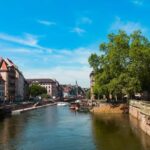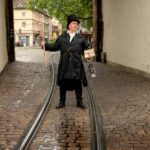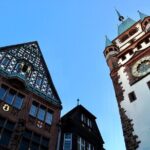
This 1.5-hour Freiburg walking tour is a smart way to get your bearings fast and still see the town’s signature details—especially the Bächle (those little street canals) and the twisty Gässle alley system around Münsterplatz.
I really like two things about it. First, the guides are repeatedly praised for being genuinely knowledgeable and upbeat—names that come up often include Iris, Annabelle, and Dr Tamara Spitzing. Second, you get a lot of standout sights packed into a short time, which makes the price feel like a bargain rather than a tourist tax.
One thing to consider: it’s not private, and even though the tour lists a max group size of 25, at least one traveler noted their group felt closer to 30. If you dislike crowds, you’ll want to pick a calmer time and arrive ready to keep moving.
- Key highlights you’ll care about
- Freiburg in 90 minutes: what this tour nails
- Meet at Schwarzwaldmarie: the simplest possible start
- Münsterplatz: where the story begins around the cathedral square
- The Bächle and Gässle magic: the Freiburg details most visitors miss
- Rheinkiesel mosaics: why the streets look a little different
- Gargoyles and the delicate steeple: gothic details, explained
- Altes Kaufhaus and the layered old-town vibe
- Konviktstraße and Gerberau: alleyways that feel most alive on foot
- Kaiser-Joseph-Straße and Augustiner Square: from old lanes to main street energy
- Martins gate and Rathausplatz: surviving city gates meet civic power
- Haus zum Walfisch and the walk back to Münsterplatz
- Guide quality is the real selling point (and travelers notice)
- Price and logistics: what you’re really paying for
- Accessibility, group size, and pace: the practical reality
- When to go: morning markets versus café-and-pub vibes
- Who this tour is best for
- Should you book this Freiburg old-town tour?
- FAQ
- How long is the Freiberg Gässle, Bächle and More City Tour?
- How much does the tour cost?
- Where do I meet the guide?
- What language is the tour guide?
- Does this tour include going inside Freiburger Münster?
- Is the tour wheelchair accessible?
- Is this a private tour?
- What sights and areas does the tour cover?
- Is the farmers market included?
- What rules should I know before joining?
- What’s the cancellation policy?
- The Best Of Freiburg!
- More City Tours in Freiburg
- More Tours in Freiburg
- More Tour Reviews in Freiburg
Key highlights you’ll care about
 1 / 10
 2 / 10
 3 / 10
 4 / 10
 5 / 10
 6 / 10
 7 / 10
 8 / 10
 9 / 10
 10 / 10
- Bächle and Gässle first: the tour centers on Freiburg’s most distinctive street-level features, not just big buildings.
- Münsterplatz plus more: you see the cathedral square, then keep walking through key old-town streets and squares.
- Gargoyles and steeple details: the guide points out specific features you’d otherwise miss.
- Colorful mosaics: you’ll get a sense of what gives Freiburg its recognizable look at street level.
- Farmers market timing: if you catch it in the morning, Minster Square adds a local-food moment.
- Good value for time: for about $13, you’re covering multiple major stops in 90 minutes.

👉 See our pick of the You’ll Love These 2 Workshops & Classes In Freiburg
Freiburg in 90 minutes: what this tour nails
If Freiburg is new to you, this is a solid first walk. It’s short enough that you don’t feel dragged around all day, but it still hits several of the city’s most memorable old-town spaces. Think “get the map in your head” plus “spot the details” at the same time.
You also get a clear flow: cathedral square first, then the maze-like alleys and historic streets, then town-hall/civic landmarks near the end. It’s the kind of route that helps you later when you’re wandering on your own.
And yes, the star is the stuff at eye level. This isn’t a tour where you only look at one skyline and move on. You’re paying attention to small waterways, quirky lanes, and building details—exactly what makes Freiburg feel like Freiburg.
You can also read our reviews of more city tours in Freiburg



Meet at Schwarzwaldmarie: the simplest possible start
The meeting point is easy to find if you’re already near the main cathedral area. You meet at the entrance of SCHWARZWALDMARIE Souvenirs on Münsterplatz. Your guide will be waiting there wearing a name tag with the BVGD logo.
Why this matters: Freiburg can be visually confusing at first. Starting on Münsterplatz keeps you oriented from the first minute. It also reduces the stress of trying to find a tour group inside narrow lanes.
Münsterplatz: where the story begins around the cathedral square
The tour begins in Münsterplatz, Freiburg’s classic “everyone gathers here” hub. The guide starts with a short history of the city so the architecture and street layout start making sense fast.
From there, you’re focused on what surrounds the square: beautiful community-center-style buildings and other secular landmarks that shape the square’s feel. It’s not just about pointing out the cathedral from far away. You’re learning how this area functions as the social and visual heart of town.
If you’re joining in the morning, this is also where the traditional farmers’ market comes in. You’ll see it on the square during the market period, which adds energy and local color beyond the usual sightseeing photos.
The Bächle and Gässle magic: the Freiburg details most visitors miss
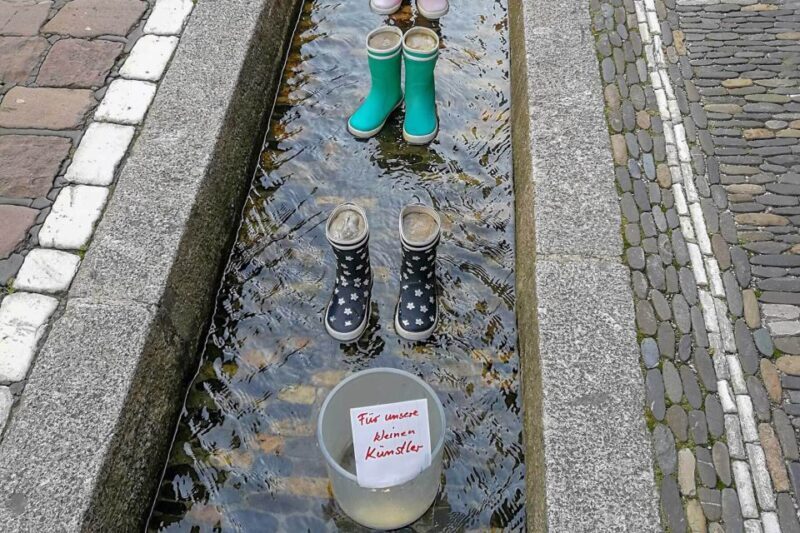
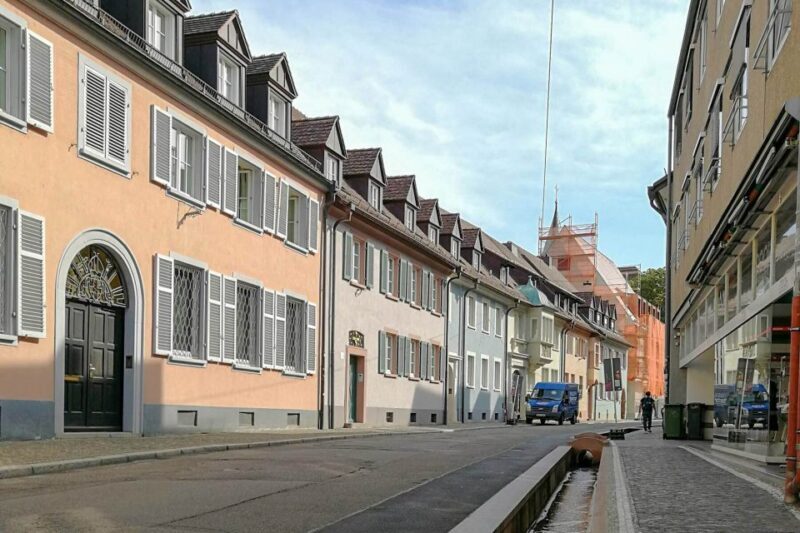
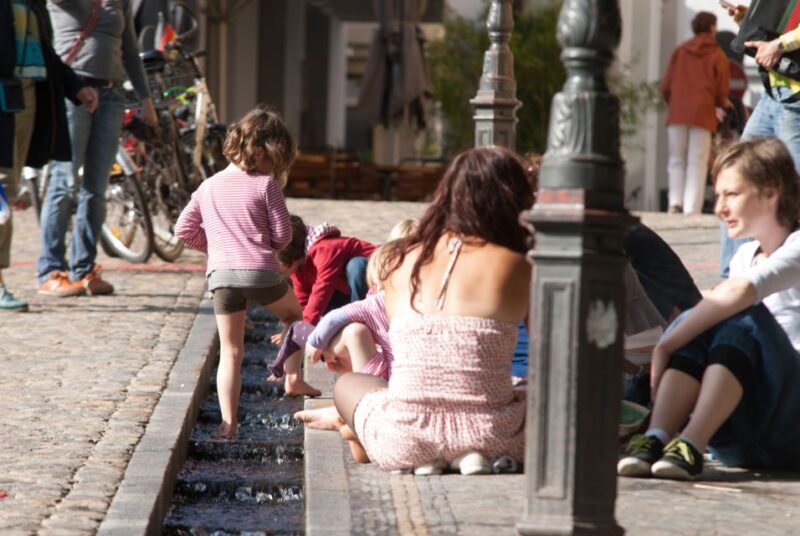
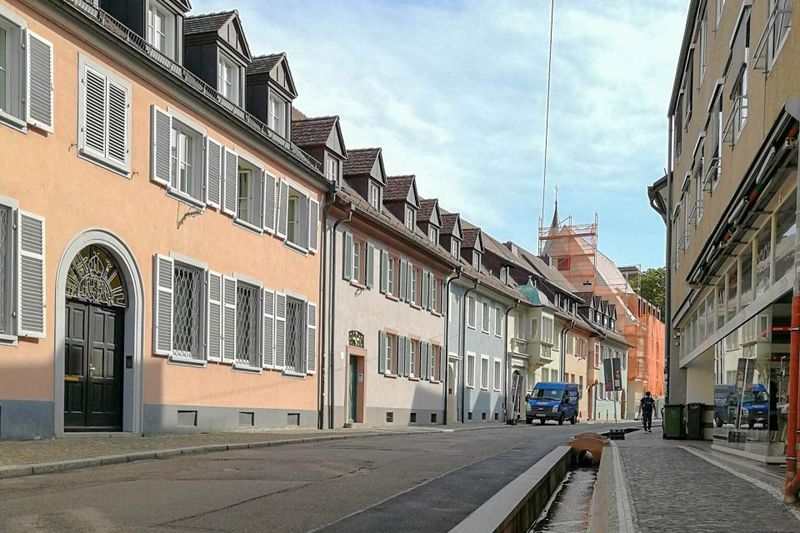
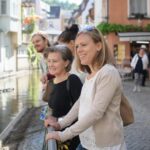
This is the core of the experience. Freiburg’s Bächle are small water channels that run along streets and through alley areas. They’re distinctive, and they’re also practical: they help explain why certain lanes and corners feel like lived-in neighborhoods rather than staged old-town sets.
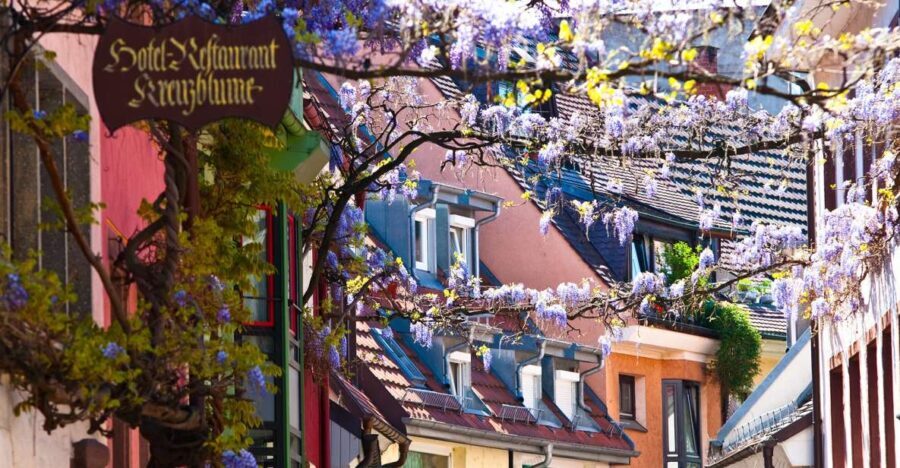
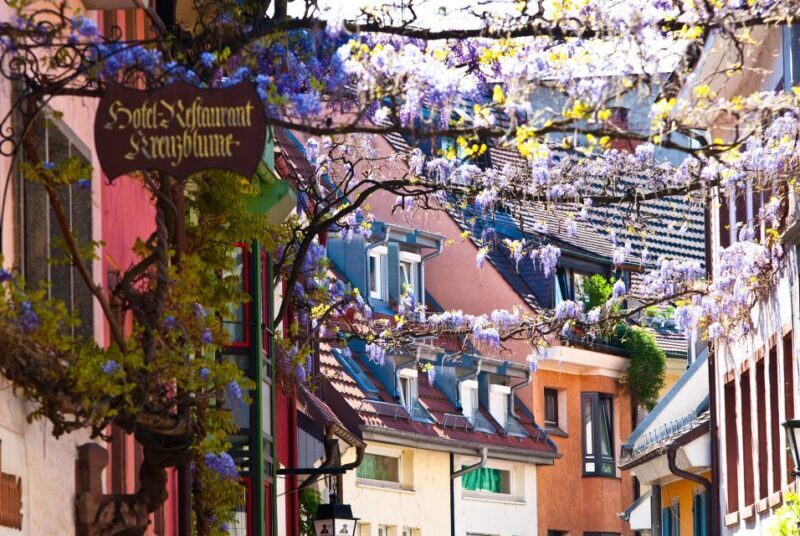
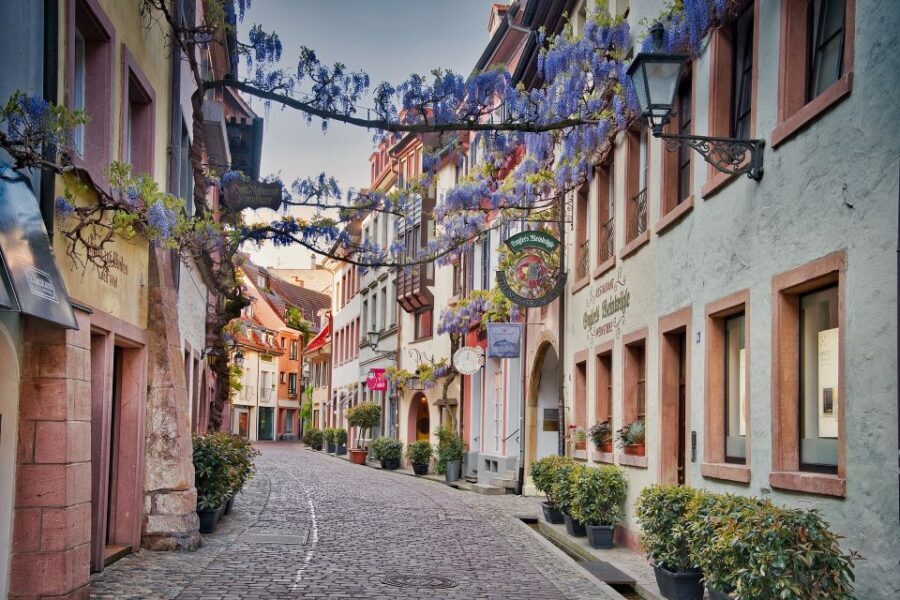
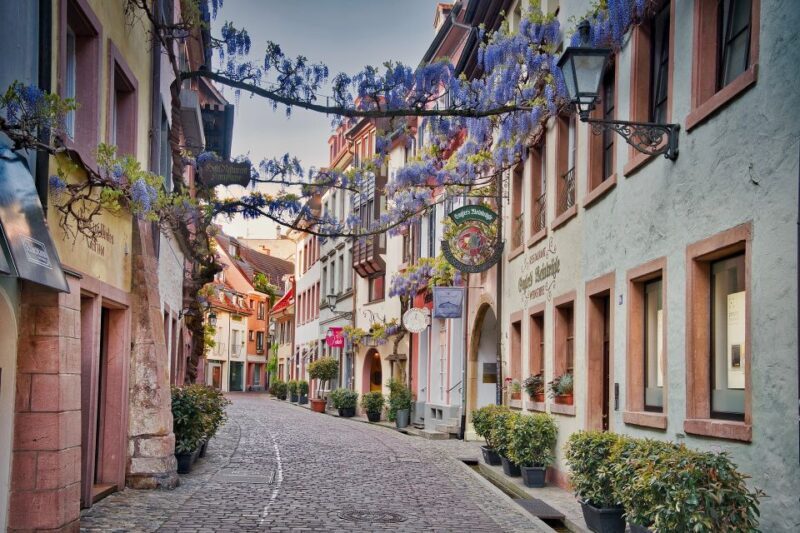
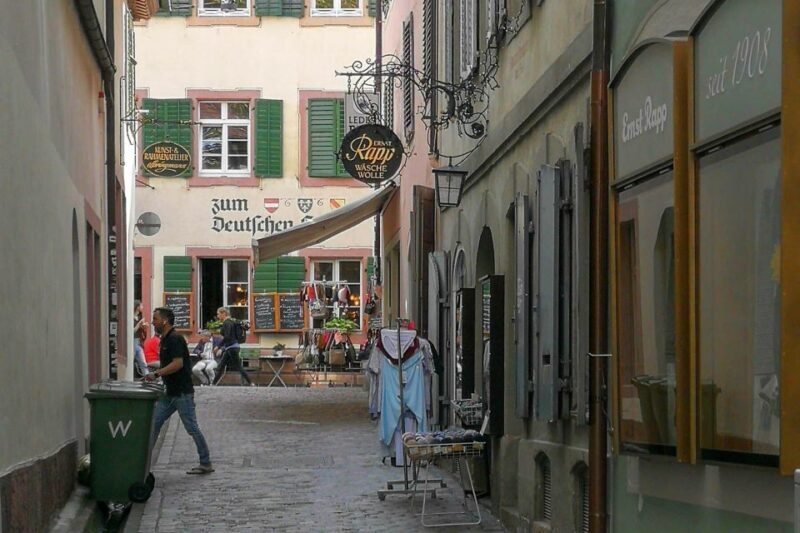
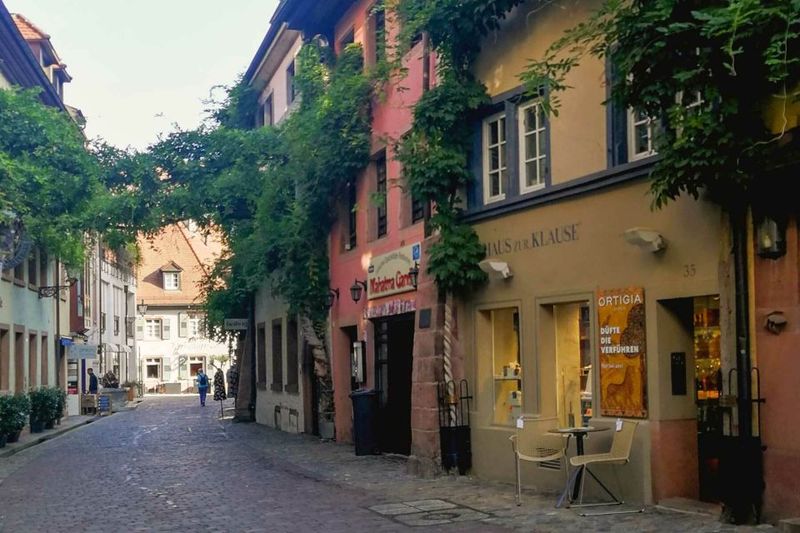
Then there are the Gässle—the contorted, twisting alleys. These aren’t wide pedestrian promenades. They’re the narrow, weirdly angled passages where you suddenly realize the city’s layout is part of the charm. When the guide points out how these lanes connect, you start to understand Freiburg’s old-town geography without needing a map app.
If you like architecture, you’ll enjoy the building details. If you like atmosphere, you’ll enjoy how water and lane patterns shape the walk.
Rheinkiesel mosaics: why the streets look a little different
One of the tour’s specific visual features is the presence of Rheinkiesel-mosaics. These give Freiburg a recognizable street-level character—small, colorful patterns that add texture along pathways and corners.
Even if you’re not a “mosaic hunter,” this matters. It’s part of what turns “a walk through an old town” into something more personal and memorable. You’ll see the city as a set of streets designed for people, not just a checklist of monuments.

Gargoyles and the delicate steeple: gothic details, explained
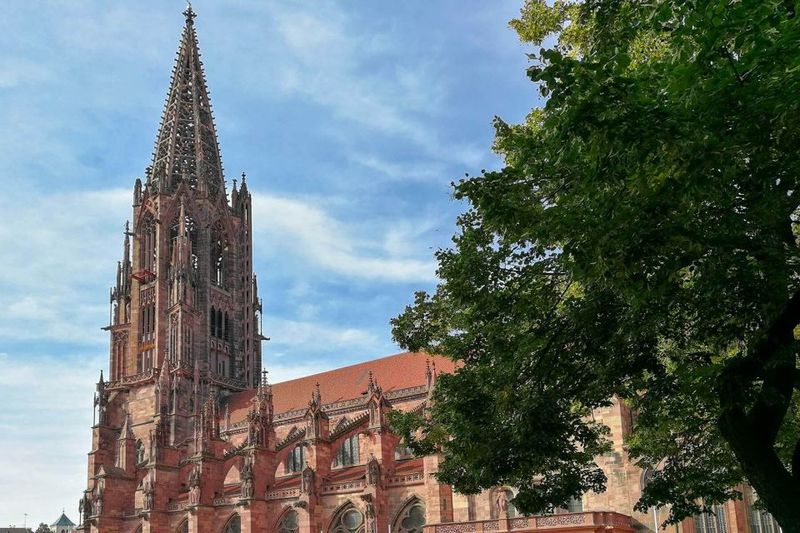
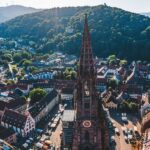
As you move around the cathedral area, the guide calls attention to the bizarrely shaped gargoyles and the delicate steeple details. This is exactly the kind of stop that’s worth paying for, because gothic features are easy to overlook when you’re just walking through.
You’ll get context—what you’re looking at and why it’s there. And because it’s explained while you’re standing in the right spot, the details stick in your memory.
If you only care about the broad silhouette of a cathedral, this part may feel more like “ornament spotting.” But if you enjoy visual puzzles and symbolic stonework, you’ll get a lot out of it.
Altes Kaufhaus and the layered old-town vibe
Next you’ll pass through historic shopping-and-city-life spaces, including the Altes Kaufhaus and other recognizable old-town landmarks such as the Alte Wache and Haus zum schönen Eck. These stops connect the dots between Freiburg as a medieval/early modern city and Freiburg as a place with daily movement—trade, browsing, and civic activity.
What I like about this approach: it keeps the walk from becoming one-note. You get cathedral square atmosphere, then you shift into “where people lived and shopped,” which makes the town feel more human.
A practical tip: if you’re the type who likes to step inside shops and compare streets later, these mid-walk stops give you anchor points. You’ll recognize them when you return.
Konviktstraße and Gerberau: alleyways that feel most alive on foot
Two of the most “walkable-feeling” parts of the route are Konviktstraße and Gerberau.
Konviktstraße is described as one of Freiburg’s most beautiful alleys. This is the sort of street where the buildings and the lane shape work together, and the guide’s commentary helps you notice patterns—how traffic and footpaths likely evolved over time.
Then there’s Gerberau, another old-town area you pass through. Even without museum entrances, these streets give you what most travelers want: the texture of the city, not just the highlight photo.
If you’re traveling with older kids or you just want something easy and scenic, this section tends to be the “everyone relaxes and enjoys it” stretch.
Kaiser-Joseph-Straße and Augustiner Square: from old lanes to main street energy
As you head toward Kaiser-Joseph-Straße, the mood shifts slightly. This is Freiburg’s main shopping street, so you’ll feel a livelier pulse than in the tiny lanes.
Along the way, you pass Augustiner Square and the Augustiner museum area. You’re not doing a museum visit on this tour, but seeing where it sits in the neighborhood helps you understand where culture and daily life overlap.
This section is useful if you plan to keep exploring after the tour. You’ll have a clear “main street spine” in your mind, plus a couple of reference points for cafés and evening strolling.
Martins gate and Rathausplatz: surviving city gates meet civic power
One of the tour’s “how is this still here?” moments is seeing the Martins gate—one of the surviving city gates of Freiburg’s old town. City gates are a great reminder that these streets once had boundaries, not just charm.
Then the walk moves to Rathausplatz, where you’ll see two historic townhalls. That pairing matters. It shows Freiburg’s civic center isn’t one building—it’s a whole square experience, a place designed for public life.
And because the tour is on foot, you don’t just see these landmarks. You understand the approach routes: the streets that lead you into the square and the way the buildings frame the space.
Haus zum Walfisch and the walk back to Münsterplatz
Near the end, you pass by Haus zum Walfisch, another historic landmark before returning to Münsterplatz and finishing back at the Schwarzwaldmarie Souvenirs meeting point.
This ending matters for travelers. You’re not dropped somewhere random. You end right where the city feels easiest to re-enter—so you can grab lunch, browse shops, or continue walking without needing to solve logistics.
Guide quality is the real selling point (and travelers notice)
The tour data is clear: it’s a walking tour with a German-speaking guide, and the guide stays with you for the key sights in the old town.
But the reviews add the missing layer: travelers consistently mention guides who know the city details and also know how to tell the story well. Names that come up include Iris, Annabelle, and Dr Tamara Spitzing. One recurring theme is warmth and patience—guides answering questions and keeping people engaged, even on a wet or cold day.
That’s not “nice to have.” It’s the difference between a tour that feels like a route and a tour that feels like a conversation with a smart local.
Price and logistics: what you’re really paying for
At about $13 per person for around 90 minutes, you’re not paying for museum time. You’re paying for:
- someone curating which sights are worth your attention in a short window
- interpretation that makes details legible (gargoyles, steeple features, street water channels)
- a route that connects multiple key areas without you getting lost
It’s also a straightforward format: you’ll be walking, you won’t be going inside the Freiburger Münster, and you won’t be doing museum visits. If you want interiors or long ticket lines, you’ll need another plan.
Rules and boundaries are clear too. Alcohol and drugs aren’t allowed. Audio recording isn’t allowed. If you’re a traveler who records everything, this tour isn’t built for that.
Accessibility, group size, and pace: the practical reality
The tour is listed as wheelchair accessible, which is a big plus for travelers who need that.
It’s also not private. The max group size is 25, and one traveler noted their group felt closer to 30. That means you should expect a moderate crowd level and some “keep moving” energy.
On a short walking tour, pace matters. If you have mobility limits, plan to use the fact that it’s only 1.5 hours and ask the guide about the easiest spots to pause or listen.
When to go: morning markets versus café-and-pub vibes
Timing can change the feel of this tour. When the farmers’ market is running, you’ll experience Minster Square with that morning bustle.
If you’re not there for the market, you’ll still see the square area and the broader old-town vibe, including Beizen (cafés and pubs). The difference is that the market brings a lively local scene; without it, it’s more of a sightseeing stroll with strong atmosphere.
If your goal is local food energy, try to schedule your tour earlier in the day.
Who this tour is best for
You’ll probably love this if:
- you’re visiting Freiburg for the first time and want an efficient overview
- you enjoy street-level details like Bächle, mosaics, and alley shapes
- you want a guide who explains what you’re seeing
- you want a budget-friendly way to cover multiple neighborhoods in 90 minutes
You might not love it as much if:
- you’re mainly interested in museum interiors or inside-the-cathedral experiences (this tour does not visit the Münster interior)
- you dislike groups or tight walking pace
- you need quiet, long stops rather than a guided route format
Should you book this Freiburg old-town tour?
Yes—if you want a first-pass Freiburg that’s lively, organized, and focused on the city’s real character.
Book it if you value good value for money and want a guide-driven walk where the Bächle, Gässle, cathedral-square sights, and historic streets connect into one understandable story. The short duration is a win, especially if Freiburg is one stop on a multi-city trip.
Skip or rethink it only if you’re specifically hunting for indoor cathedral/museum time, or if you strongly prefer private, uncrowded tours. For most travelers, this is exactly the kind of tour that makes later wandering easier—and way more interesting.
Freiburg: Gässle, Bächle and More City Tour
FAQ
How long is the Freiberg Gässle, Bächle and More City Tour?
The tour lasts about 1.5 hours.
How much does the tour cost?
It’s listed at $13 per person.
Where do I meet the guide?
Meet at the entrance to SCHWARZWALDMARIE Souvenirs on Münsterplatz. The guide will be waiting there with a name tag.
What language is the tour guide?
The tour is guided in German.
Does this tour include going inside Freiburger Münster?
No. The tour does not visit the inside of Freiburger Münster.
Is the tour wheelchair accessible?
Yes, it is listed as wheelchair accessible.
Is this a private tour?
No. It’s not private, and the group size is capped at 25.
What sights and areas does the tour cover?
You’ll see Old Town highlights including Münsterplatz, Altes Kaufhaus, Konviktstraße, Gerberau, Kaiser-Joseph-Straße, Rathausplatz, and Haus zum Walfisch, plus the Bächle and Gässle areas.
Is the farmers market included?
The tour includes Minster Square, and the traditional farmers’ market is mentioned as being available in the morning.
What rules should I know before joining?
Alcohol and drugs aren’t allowed, and audio recording isn’t allowed.
What’s the cancellation policy?
Free cancellation is available up to 24 hours in advance for a full refund.
You can check availability for your dates here: