
The Ambrosiana visit is a smart, one-day way to see top Renaissance names in a setting that feels like a real working library, not just a gallery. The big draw is the Codex Atlanticus material: the world’s largest collection of original Leonardo da Vinci drawings, presented inside the historic Pinacoteca Ambrosiana.
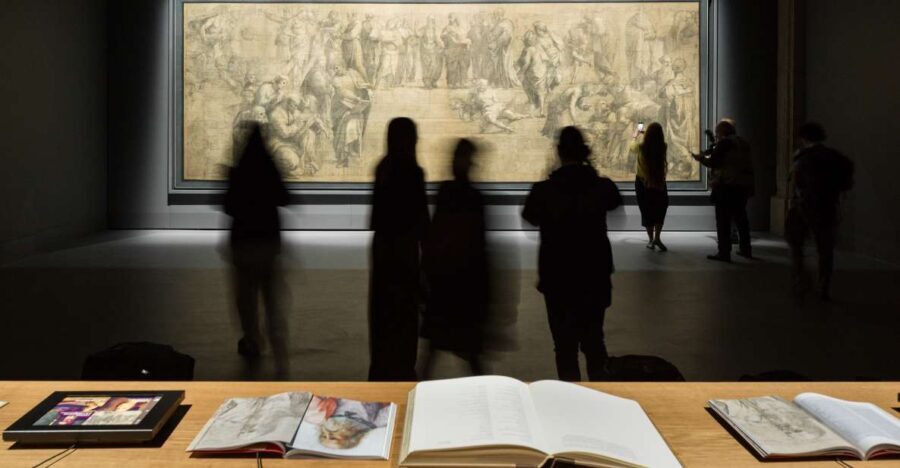
I love how the Leonardo section gives you enough time to actually study what you’re looking at, and how the museum pairs it with other masterpieces that make the whole period click. Many visitors also call out Raphael’s School of Athens cartoon as a standout, with a short film that explains how the cartoon’s transfer process worked.
One consideration: the museum atmosphere can be quite dim, and a few people found some wall text hard to read in those lighting conditions.
- Key things to know before you go
- Milan’s Ambrosiana: an art museum inside a historic library
- Tickets, price, and what buys you
- Getting there fast: Piazza Pio XI 2, metro links, and tram stops
- How long should you plan for: 2 to 3 hours works well
- Your visit flow: what to see first and why
- Start with orientation and layout
- Then hit the Leonardo focus
- Finish by broadening to the Renaissance rooms
- Optional add-on: the crypt (if offered that day)
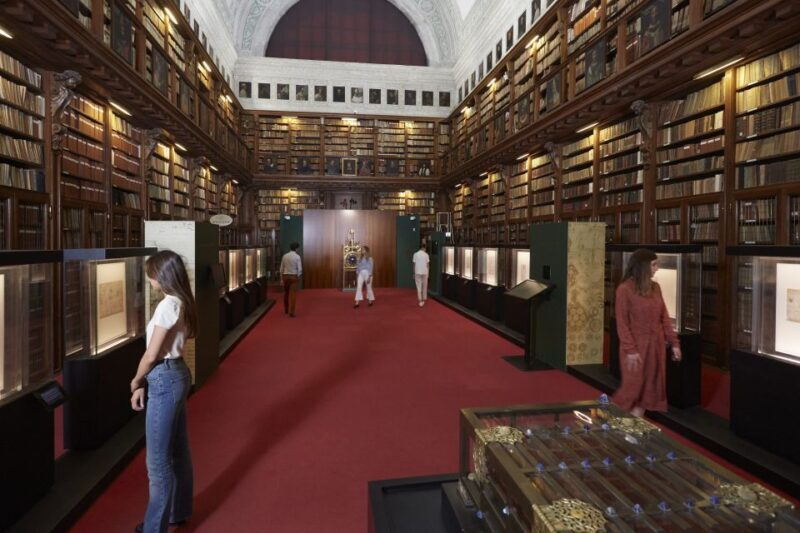
- Inside the Federiciana Room: the Leonardo setting and the pacing effect
- Leonardo’s Codex Atlanticus drawings: why this exhibit hits different
- Raphael’s School of Athens cartoon: the transfer process you can actually picture
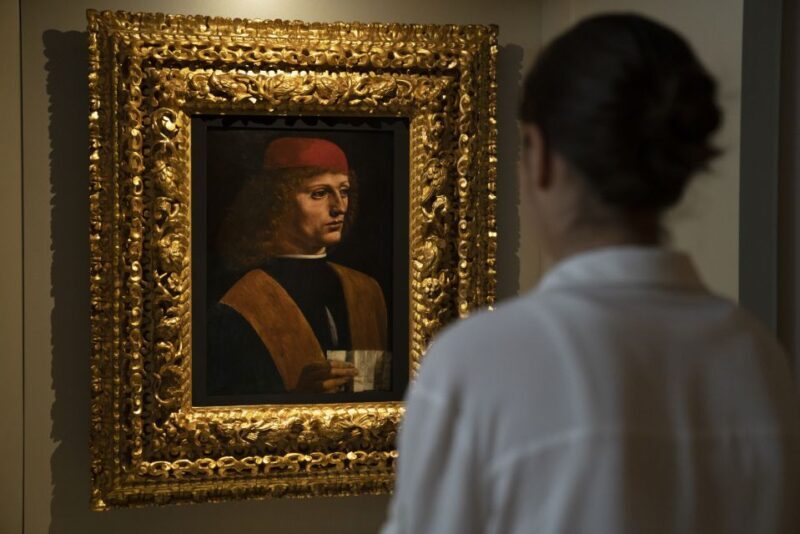
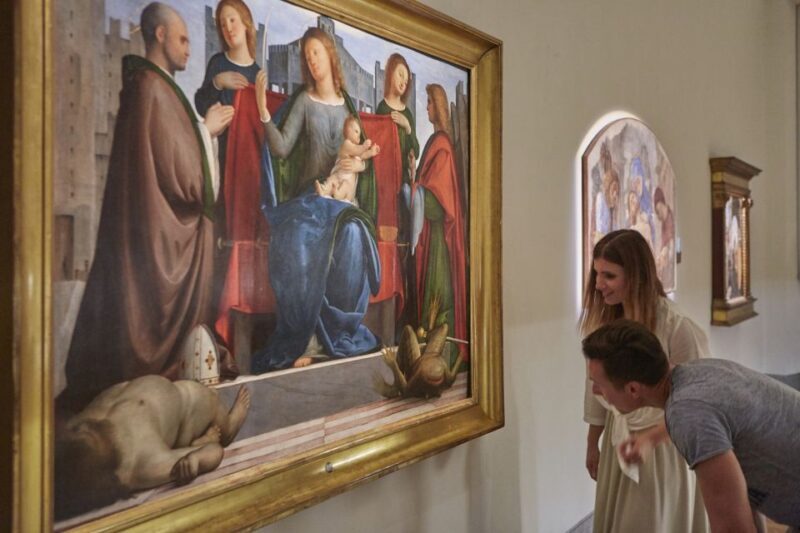
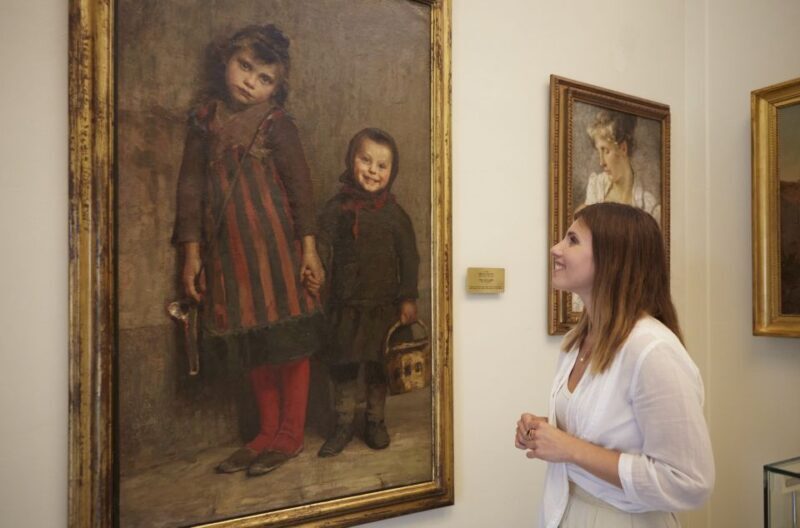
- The rest of the Renaissance collection: Botticelli, Tiziano, Caravaggio, and friends
- Audio guide and the after-visit app: how to get more value without getting stuck
- What the building feels like: lighting, silence, and places to pause
- Crowd levels: a calmer day in Milan than the big hitters
- Accessibility and family notes: stroller and navigation realities
- Service and staff: the kinds of details that earn praise
- Who should book this Ambrosiana day—and who might pass
- Should you book the Pinacoteca Ambrosiana & Codex Exhibition?
- FAQ
- How much does the Pinacoteca Ambrosiana & Codex Exhibition cost?
- Is the audio guide included?
- Where is the meeting point for this experience?
- What public transit options are closest to the Ambrosiana?
- How long does the experience last?
- Is free cancellation available?
Key things to know before you go
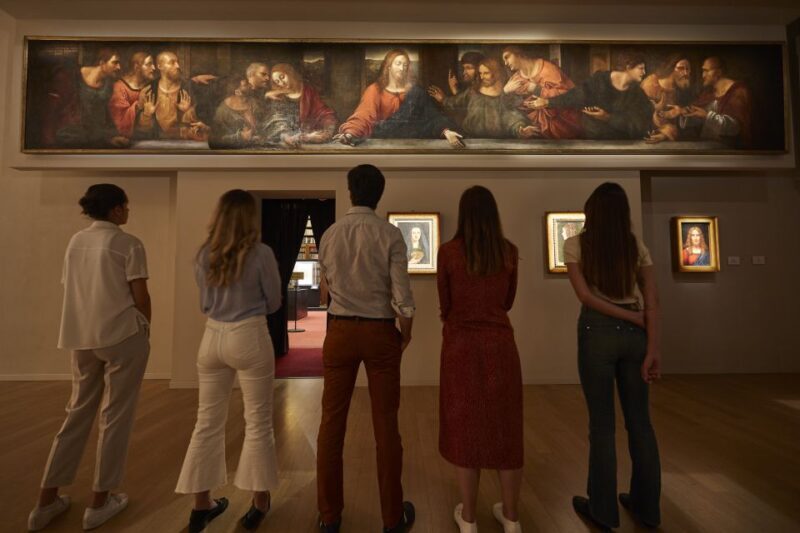
- Original Leonardo drawings from the Codex Atlanticus are the headline attraction
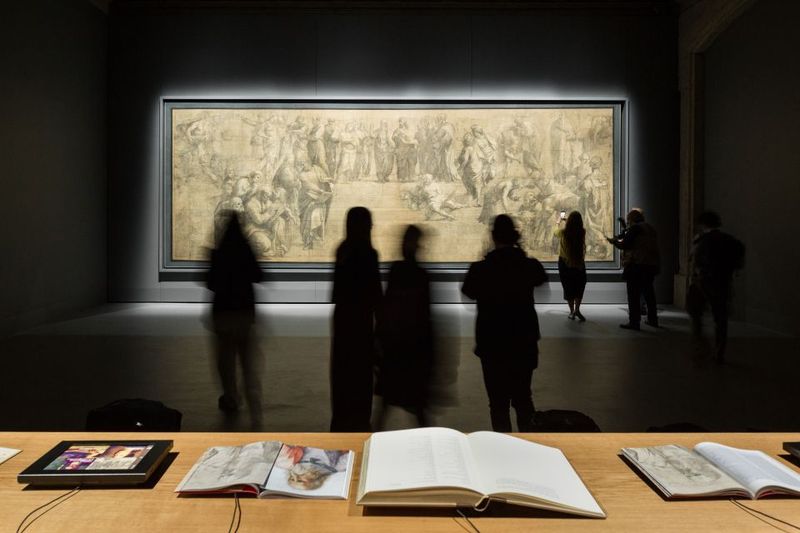
- Raphael’s School of Athens cartoon is frequently mentioned as the surprise high point
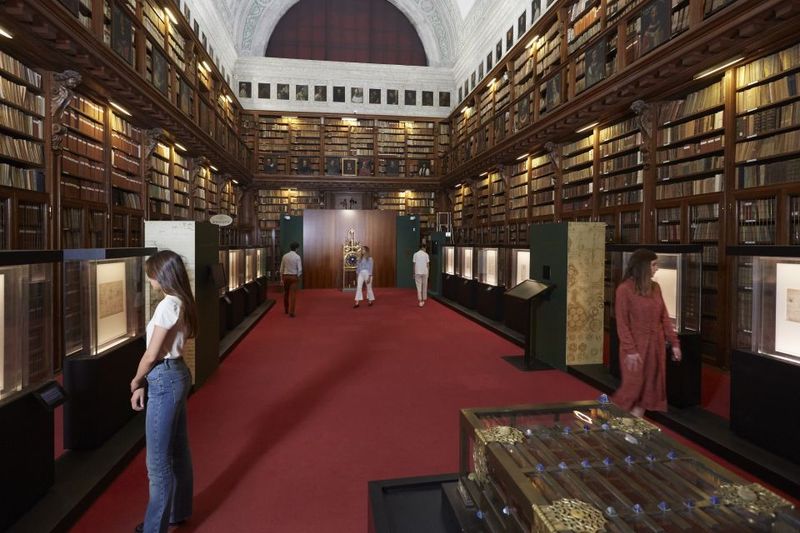
- A historic library setting changes the feel versus typical museum halls
- Audio is optional but valuable, and you can use the guide through your device after your visit
- Plan for 2–3 hours, especially if you want to read and linger
Milan’s Ambrosiana: an art museum inside a historic library
The Pinacoteca Ambrosiana isn’t one of those big “warehouse” museums. It sits within the Ambrosiana library complex, so your visit feels calmer and more thoughtful. You’ll move from art rooms into library spaces, and that shift matters: it changes how you experience drawing, design, and Renaissance thinking.
You’re also going for a specific kind of Renaissance genius. Leonardo’s drawings don’t work like finished paintings. They’re more like problem-solving on paper, with notes and visual experiments that help you understand how a mind worked. If you’ve ever wondered how artists planned ideas before paint, this is where you’ll start to see the process.
And yes, you can treat it like an art stop, but you can also treat it like a quiet brain stop. Several reviews highlight how relaxing the pace feels once you’re inside.
Tickets, price, and what $21 buys you
This experience is priced at $21 per person and includes exhibition tickets for the Ambrosiana collections plus the Leonardo drawings exhibition tied to the Codex Atlanticus. That’s important: you’re paying for access to the core attraction, not just a general gallery entry.
Audio guides are not included. They’re available for a nominal fee, listed as 4 EUR (and described as available in 6 languages). Whether that’s worth it depends on how you like to travel. If you enjoy context and want to understand what you’re seeing beyond the obvious names, the audio is the easiest add-on.
Value-wise, this one stands out because the headline material is rare. One major reason people rave here is that you get original Leonardo drawings in a museum that doesn’t feel overcrowded or overwhelming. Even visitors who said it’s smaller than the Brera museum often added that the layout and display are strong.
Getting there fast: Piazza Pio XI 2, metro links, and tram stops
The meeting point is The Ambrosiana, Piazza Pio XI 2, Milan. Getting there is straightforward if you’re using public transit:
- Nearest metro options: Red Line (Cordusio or Duomo) and Yellow Line (Duomo)
- Nearest tramways: lines 12, 14, and 16 to Orefici Cantù, or 2 and 3 to Duomo
Practical tip: Milan directions can send you to a totally different street if you mix up Duomo area exits. Give yourself a few extra minutes the first time and you’ll arrive without that late-panicky energy.
How long should you plan for: 2 to 3 hours works well
The official duration is listed as 1 day, but your time inside is what matters. Reviews repeatedly land at a 2–3 hour visit for a full experience, especially if you use the audio.
If you’re an art enthusiast and want to read labels and sit down in places, plan closer to 2.5 or 3 hours. If you’re mostly here for the Leonardo drawings, you might get through faster, but you’ll likely still want time for Raphael and the other Renaissance works.
Also, the museum lighting and quiet atmosphere encourage slower walking. People don’t rush here because it’s not designed to shove you through.
Your visit flow: what to see first and why
There isn’t a long itinerary in the travel-program sense, but there is a natural order that helps your brain connect the dots.
Start with orientation and layout
A few visitors mentioned that the museum can be easy to miss in parts if you don’t pay attention to internal navigation. When you enter, use any map or signage you’re given and don’t just follow the first corridor.
Then hit the Leonardo focus
Most people come for Leonardo, and it’s smart to do that while your attention is highest. The Codex Atlanticus materials are the anchor of the visit, and once you’ve seen that drawing world, the rest of the art starts to feel more coherent.
Finish by broadening to the Renaissance rooms
After Leonardo, you’ll bounce into the broader collections where you’ll see works by major artists from the period. Reviews frequently mention the variety without feeling chaotic.
Optional add-on: the crypt (if offered that day)
Some travelers noted an extra crypt visit and commented on the added cost. Since this isn’t listed as included here, treat it as optional and check what’s available at your visit time.
Inside the Federiciana Room: the Leonardo setting and the pacing effect
One key space mentioned in the experience description is the Federiciana Room. That matters because rooms like this aren’t just containers. They shape how the material feels.
In this room, the exhibition approach is tied to a broader story about Leonardo and his era. You’re not only looking at sketches as isolated genius artifacts. You’re learning about who Leonardo was, what he was trying to do, and the mental habits that show up in his drawings.
People often come in expecting to see drawings and then leave feeling like they understood the person behind them a bit more. That’s the value of this specific museum-room approach.
Leonardo’s Codex Atlanticus drawings: why this exhibit hits different
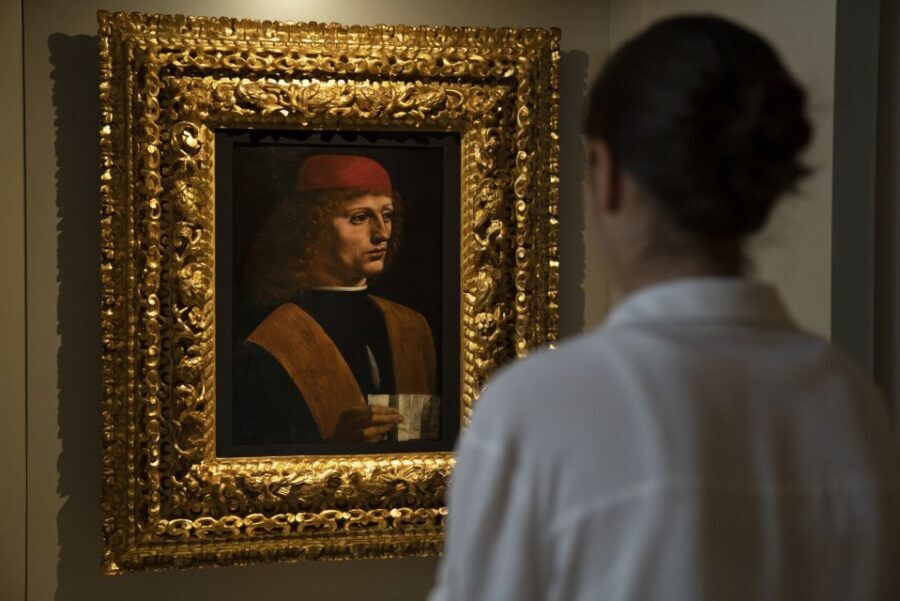
Leonardo’s drawings are the main event, and the museum’s handling is a big reason. The attraction here is described as the world’s largest collection of original Leonardo da Vinci drawings from the Codex Atlanticus.
What you’ll likely notice is that the exhibition doesn’t ask you to simply admire. It encourages you to look for relationships: between notes and sketches, between different ideas, between engineering thinking and visual design. That’s why visitors keep calling it special even if they’ve already seen other Leonardo works elsewhere.
A couple of reviews also point out how the drawings’ preservation and collection story is part of the experience. One visitor specifically praised the person who stored and protected the drawings as showing foresight, which is a reminder that behind every masterpiece display there’s a lot of careful work.
Practical tip: expect to spend real time here. If you spend 15 minutes only, you’ll get the headline but you won’t get the meaning.
Raphael’s School of Athens cartoon: the transfer process you can actually picture
If you’re deciding whether the Leonardo part is enough, many visitors say Raphael pushes the visit over the edge. The museum features Raphael’s cartoon connected to the School of Athens and includes a film explaining the transfer process of creating the cartoon and how it was moved onto the wall.
That film detail shows why this stop is more than name-dropping. You get a glimpse into craft and method: how a design becomes a monumental wall painting. And because the exhibit explains who the characters are, you can start connecting individual figures to the larger Renaissance idea-world.
One reviewer called this the highlight, and another said the film and character explanations were fascinating. If you like art history that’s practical, not just academic, this is exactly that.
The rest of the Renaissance collection: Botticelli, Tiziano, Caravaggio, and friends
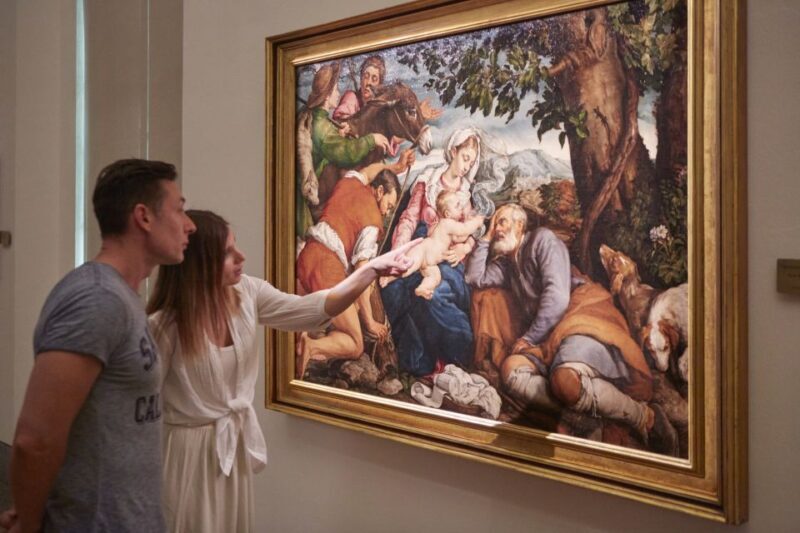
Beyond Leonardo and Raphael, the collection gives you a strong sense of the wider Renaissance landscape. The experience description calls out works by Botticelli, Raphael, Tiziano, and Caravaggio.
The best part of adding these artists is how it changes your viewing. You start to notice differences in how each artist handles:
- light and realism
- composition and drama
- how figures occupy space
- whether the work feels more scientific, emotional, or both
Caravaggio in particular tends to feel intense even when you’re seeing a smaller work than you’d find in a major city palace museum. And Botticelli’s style tends to read quickly because it’s so distinctive.
If you’re worried about the experience feeling too Leonardo-centric, the other masters help balance it.
Audio guide and the after-visit app: how to get more value without getting stuck
Audio guides are not included, but they’re available on GetYourGuide or at the ticket office for 4 EUR, and they’re described as available in 6 languages.
Multiple reviews mention that the audio guide is worth it. People say it adds background, and one visitor specifically described an audio guide setup that can be adjusted for longer visits. They mentioned the default mode was initially set up as a one-hour visit, and they had to switch it to a several-hours setting.
So here’s the simple traveler move: if you plan to stay longer than an hour, check your audio mode at the start. You’ll get far more relevant information instead of repeating the same basics.
Also, the experience description notes you can download the app and listen even after the visit. That’s handy if you want to review what you saw on the walk back or later at your hotel.
One small human note: an audio guide can be a bit cumbersome for some people, according to reviews. If you’re sensitive to phone/device friction, bring patience and plan to use it in blocks rather than constantly.
What the building feels like: lighting, silence, and places to pause
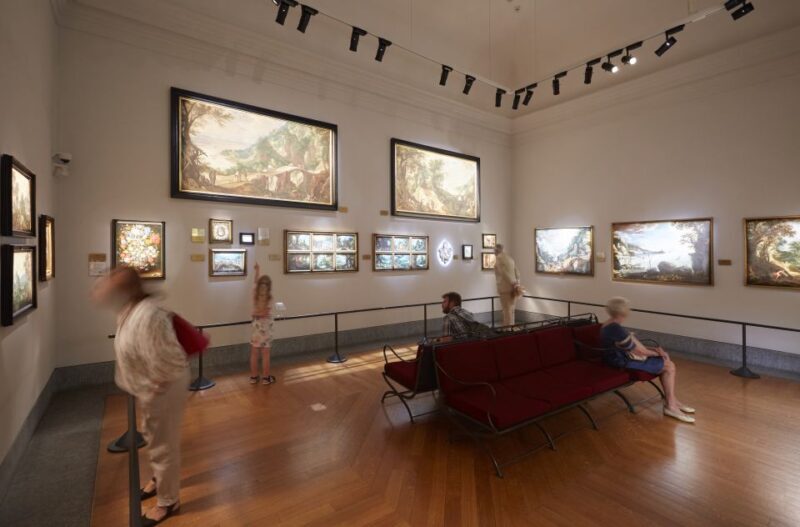
Reviews repeatedly mention that the Ambrosiana can feel dark and atmospheric. One person even called it a setting where the paintings and works feel more wondrous. The flip side is that dim light can make some wall text hard to read, and a couple of reviewers said the information was difficult to read due to lighting.
The good news: the museum is designed for viewing, not speed-walking. You’ll find people noting the museum is well lit in key areas and that there are places to sit down for a rest.
Some visitors also enjoyed that it was air-conditioned, which is not trivial in Milan during hot months. Think of the museum as both a cultural stop and a comfortable break.
Crowd levels: a calmer day in Milan than the big hitters
This is a smaller, quieter-feeling museum than many first-time travelers expect in Milan. Reviews mention no queue to enter for some, and that it’s not too crowded.
That can be a big deal with Leonardo material. When crowds are heavy, you often can’t really study. Here, the experience seems easier to manage, which helps you actually absorb what’s on display.
Still, it’s smart to book a time slot ahead since timed entry is how the activity is described as operating.
Accessibility and family notes: stroller and navigation realities
If you’re traveling with a baby buggy, a couple of reviewers said you may not be able to see some parts of the museum and that strollers appear to be restricted and kept at the entrance.
Also, because the museum is partly a library setting with rooms and floors, navigation can take attention. One visitor mentioned confusion about how to find the Codex display and said they were taken to the opposite end. That sounds like a rare mishap, but it’s a reminder: don’t hesitate to ask for help if you’re lost.
Service and staff: the kinds of details that earn praise
When travelers leave a high score for a museum visit, they usually mean staff helped them connect to the content. Here, reviews mention welcoming staff and helpful attendants, and they also praise the organization and how clearly things are displayed.
Guides matter too. Even though this is primarily an exhibition with optional audio, at least one review mentioned a guide named Linda who knew every detail about Leonardo and the masterpiece experience. That’s the kind of knowledgeable human touch that can turn a good exhibit into a memorable one.
A quick caution from reviews: some people felt confused by check-in or information that made them expect a tour guide, but they ended up dealing with tickets-only logistics. If you’re counting on a live guide, double-check what you booked before you arrive.
Who should book this Ambrosiana day—and who might pass
You’ll love this if you:
- come to Milan for Renaissance art and want a high-quality day that’s not too exhausting
- want original Leonardo drawings, not just photos or replicas
- enjoy art history when it comes with clear context and a bit of process explanation
- like quieter museums where you can sit and read without fighting the crowd
You might consider skipping or adjusting expectations if:
- you’re sensitive to dim lighting and struggle to read small wall labels
- you expect a long guided tour experience, since audio guidance is the main described add-on
- you need stroller access for all rooms, since some parts may restrict movement
For most travelers who want value and authentic art moments, this is one of the more rewarding choices.
Should you book the Pinacoteca Ambrosiana & Codex Exhibition?
If you’re deciding between a “big list” museum day and a more focused cultural stop, I’d book this. For $21, you’re getting timed access to Ambrosiana collections plus the Codex Atlanticus Leonardo drawings, and that alone is a rare kind of value in Milan.
Add the audio guide if you’re the type who likes knowing what you’re looking at, especially if you’ll stay 2+ hours. If you’d rather wander without extras, you can still enjoy it, but the audio is repeatedly described as adding meaningful background.
Bottom line: this is a high-signal museum visit. You come for Leonardo, you leave understanding why the Renaissance felt like a whole way of thinking.
Milan: Pinacoteca Ambrosiana & da Vinci Codex Exhibition
FAQ
How much does the Pinacoteca Ambrosiana & Codex Exhibition cost?
The price is listed as $21 per person.
Is the audio guide included?
No. The audio guide is not included. It’s available for 4 EUR, described as available in 6 languages.
Where is the meeting point for this experience?
The meeting point is The Ambrosiana, Piazza Pio XI 2, Milan.
What public transit options are closest to the Ambrosiana?
Nearest metro options are Cordusio or Duomo on the Red Line, and Duomo on the Yellow Line. Nearest tramways are 12, 14, and 16 to Orefici Cantù, or 2 and 3 to Duomo.
How long does the experience last?
It’s listed as 1 day. Reviews commonly suggest planning about 2–3 hours inside.
Is free cancellation available?
Yes. You can cancel up to 24 hours in advance for a full refund.
You can check availability for your dates here: