
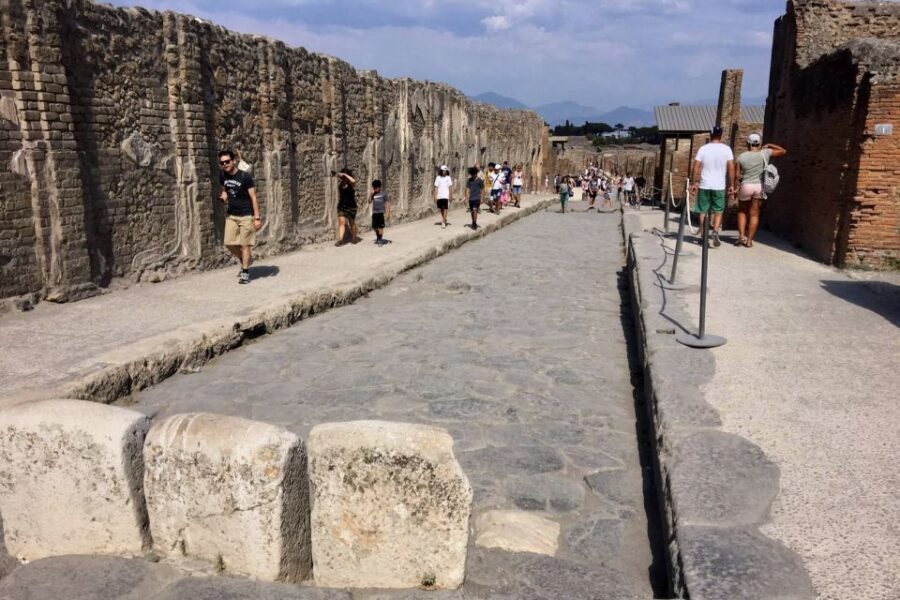
I’m reviewing a guided walking tour of Pompeii that pairs skip-the-ticket-line access with a live guide and official entrance ticket included. In plain terms: you trade queue time for walking time, and a good guide turns the stones into a place where real Romans lived.
What I like most is the focus on major landmarks in a tight 2-hour route—think the Forum, Thermal Baths, and the Lupanare—without you getting lost in the sheer scale. I also like that you get headsets, so the guide’s English/French/Spanish/Italian commentary stays clear even when the site is loud and crowded.
One thing to consider: the tour is not suitable for mobility impairments or wheelchair users, and Pompeii can feel rough on the body due to walking surfaces and heat. Also, while many travelers praise guides like Elisa, Salvatore, Francesca, and Maria by name, a few reviews mention start-time or meeting-point hiccups, so build in a little buffer.
- Key things to know before you go
- Pompeii in Two Hours: What You Can (and Can’t) See
- Meeting Point at 10:50am: Hotel Vittoria Garden and CELLINI
- Skip-the-Ticket-Line Access: The Real Value of “Fast Entry”
- Your First Walk Through the Ruins: The Town You’re Actually Visiting
- The Forum Stop: Where Power Meets Daily Noise
- Thermal Baths: More Than Hygiene, It’s Social Life
- Lupanare: Learning Without Looking Away
- Streets, Shops, and the Signs That Make Pompeii Feel Alive
- Headsets for Clear Listening: A Small Detail That Changes Everything
- How Guides Bring the Place to Life (Names Travelers Mention)
- Timing and Pace: Enough for Highlights, Not Everything
- Weather, Heat, and What to Wear
- Languages: English, French, Spanish, Italian (with One Caution)
- Price and Value: Why Can Be a Good Deal
- Small Reliability Issues to Watch For
- Who Should Book This Pompeii Walking Tour?
- After the Tour: How to Keep Your Pompeii Day Going
- Should You Book This Pompeii Guided Walking Tour?
- FAQ
- What’s the duration of the Pompeii guided walking tour?
- Is the entrance ticket included?
- Do I need to buy my own ticket for Pompeii?
- Does it include skip-the-ticket-line entry?
- What time and where do I meet the guide?
- Which languages are available for the guide?
- What should I bring?
- Is the tour accessible for wheelchair users or people with mobility impairments?
- The Best Of Torre Annunziata!
- More Tickets in Torre Annunziata
- More Tours in Torre Annunziata
- More Tour Reviews in Torre Annunziata
Key things to know before you go
 1 / 9
1 / 9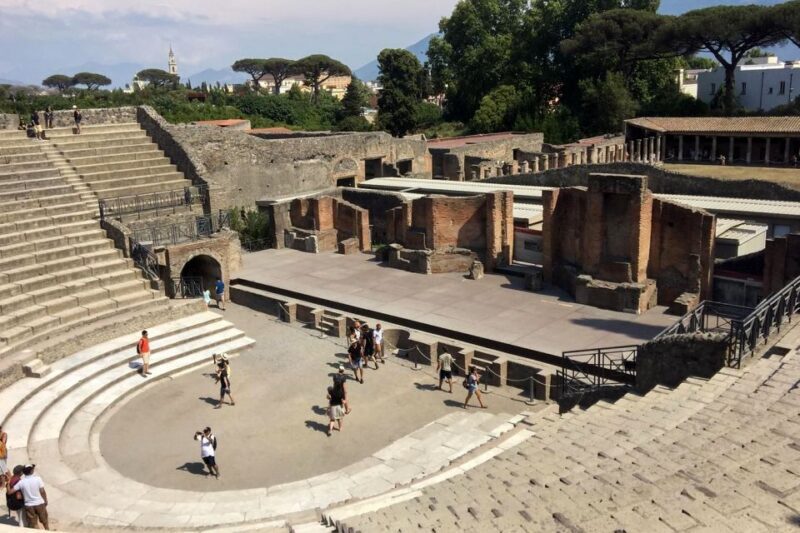 2 / 9
2 / 9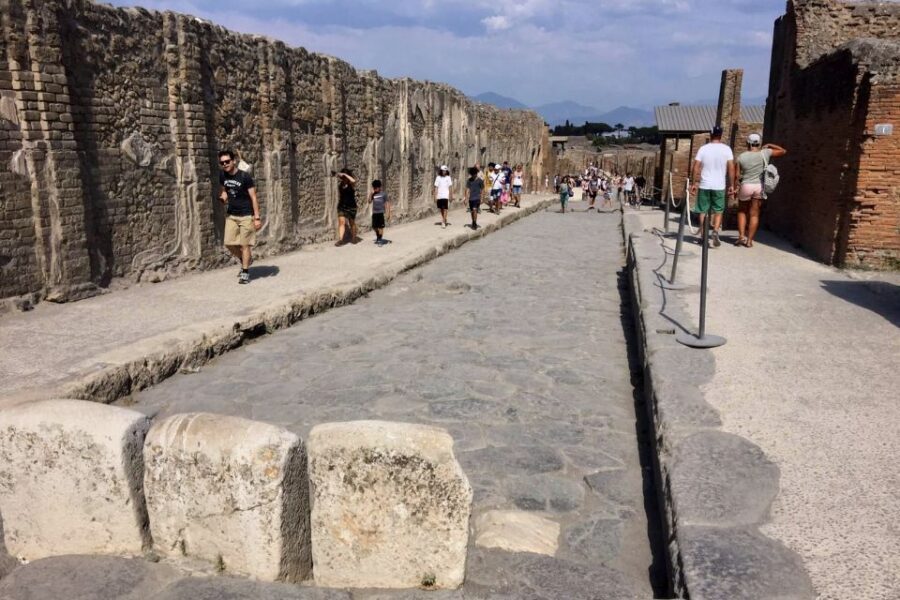 3 / 9
3 / 9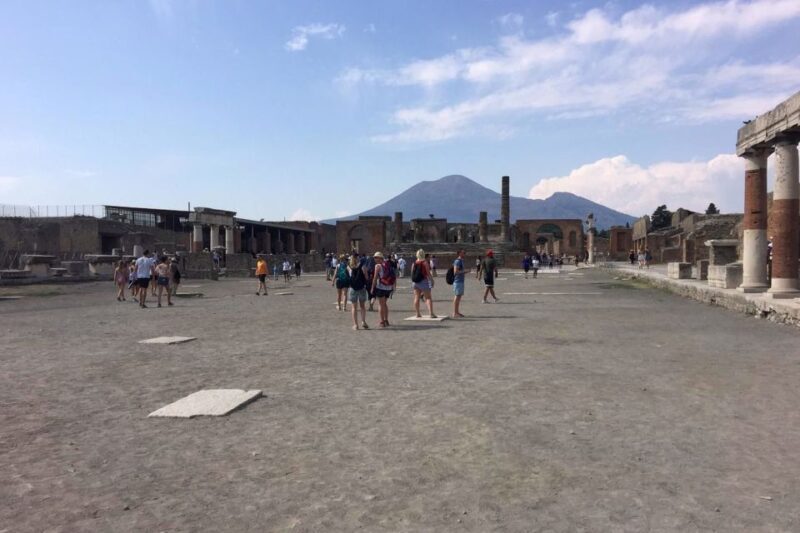 4 / 9
4 / 9 5 / 9
5 / 9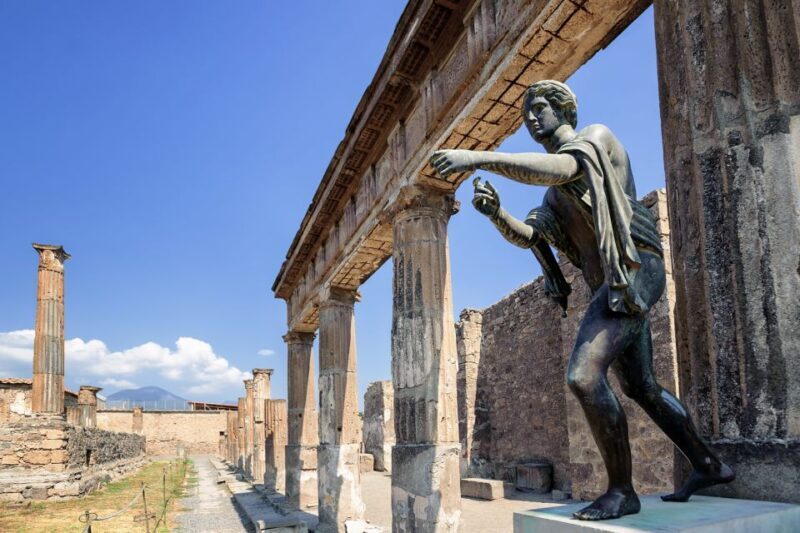 6 / 9
6 / 9 7 / 9
7 / 9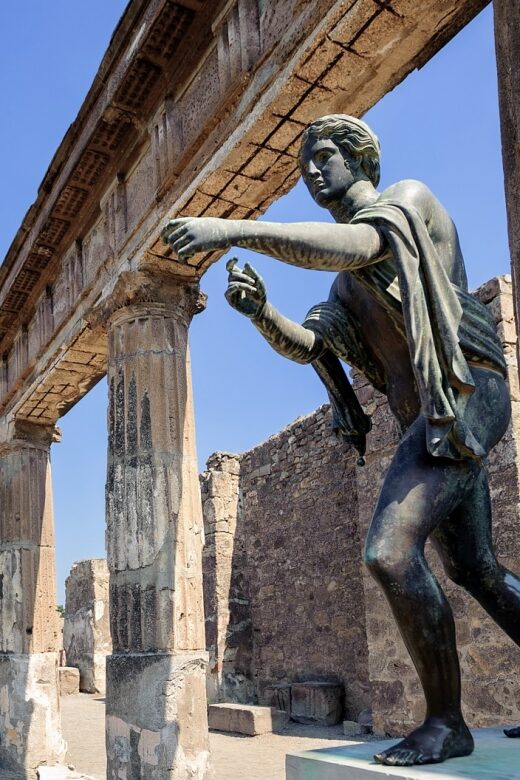 8 / 9
8 / 9 9 / 9
9 / 9- Skip-the-ticket-line entry means less waiting at the entrance and more time on the ruins
- Entrance ticket included (Pompeii Archaeological Site) so you avoid extra hassle
- Headsets included, which helps a lot in busy areas
- Stops cover big signature sights like the Forum, Thermal Baths, and Lupanare
- Language support includes English, French, Spanish, and Italian, but not every scenario is guaranteed
- 2 hours is enough for highlights, but not enough for seeing everything Pompeii has to offer
👉 See our pick of the What Are The Best Tours In Torre Annunziata? Our Top 4 Picks
Pompeii in Two Hours: What You Can (and Can’t) See
Pompeii is enormous. Even on a short visit, it can feel like you’re walking through a museum warehouse—unless someone helps you read the place. This tour is built for that moment. You’ll get a guided route that hits the core highlights and explains what you’re looking at, rather than leaving you to guess.
After centuries under volcanic ash, Pompeii still shows daily life in a way other ruins don’t. In two hours, you won’t see every street, shrine, and house. But you will leave with a strong map in your head: where public life happened, where people bathed, how commercial streets worked, and how the town functioned on an ordinary day.
You can also read our reviews of more tours and experiences in Torre Annunziata

Meeting Point at 10:50am: Hotel Vittoria Garden and CELLINI
Logistics matter with Pompeii tours because the site is busy and the streets around it can be confusing. This one meets at 10:50am at the garden of Hotel Vittoria, right outside the coral shop named CELLINI on Via Mare (80045 Pompei). The guide should be there holding a sign with your group details.
A few travelers mention that this exact area can be easy to miss at first. My advice: arrive a few minutes early, scan for the sign with your name, and don’t assume the group will automatically find you. If you’re coming by train, give yourself time for local walking and getting your bearings.
Skip-the-Ticket-Line Access: The Real Value of “Fast Entry”
The headline feature here is guaranteed to skip the long lines. That matters because Pompeii entrance queues can chew up your day. When you’re only there for a limited window, waiting around at the gate is pure waste.
The tour includes the entrance ticket to the Pompeii Archaeological Site (listed as €20), so you’re not stuck figuring out ticket machines while everyone else starts walking. In practice, this also helps you start the tour with momentum instead of stress.
Your First Walk Through the Ruins: The Town You’re Actually Visiting
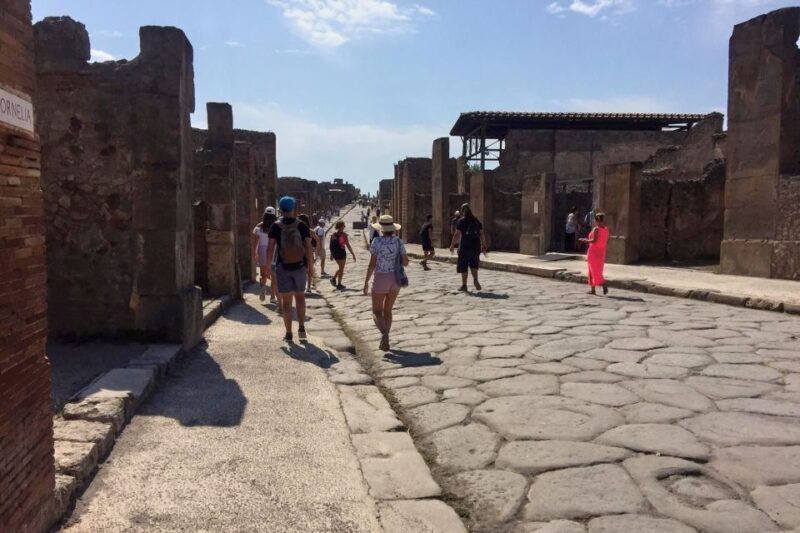
Right after entry, you’ll start moving through areas that show how Pompeii worked—streets, building fronts, and the logic of where things were placed. One theme the tour leans into is the excavation story: the town was gradually uncovered over the last few centuries, and a lot of what you see survived because ash preserved it for nearly 2 millennia.
A good guide will also point out what you’re not seeing. Pompeii isn’t a time capsule untouched by modern life. You’ll notice preservation behind glass in some cases, and you’ll hear how restoration and archaeology shape what visitors can experience today.
More Great Tours NearbyThe Forum Stop: Where Power Meets Daily Noise
The Forum is the obvious anchor for public life in Pompeii, but it’s also easy to underestimate if you just walk through it. With a guide, the Forum becomes a lesson on civic space: who gathered there, what it meant for the community, and how political and economic life blended into the town’s rhythm.
You’ll likely get help connecting the physical layout to the social one. That’s the difference between seeing ruins and understanding them. A guide can point out why certain structures mattered and what kinds of events and commerce a Forum would host.

Thermal Baths: More Than Hygiene, It’s Social Life
The Thermal Baths are one of the big reasons people love Pompeii. Baths were not just about cleanliness. They were places to meet, talk, relax, and handle part of daily routine.
On this tour, the baths aren’t presented as an isolated highlight. You should expect a guided explanation that ties the bathing spaces to Roman culture—how people used the building, how the flow through rooms worked, and why this kind of complex mattered for a city.
Reviews often describe the guides as funny and animated, and that style is especially useful here. Roman bathing spaces can feel like a maze if you don’t know what you’re looking at. With a guide, the layout becomes far easier to follow.
Lupanare: Learning Without Looking Away
The Lupanare is included for a reason: it shows how Pompeii didn’t just have temples and grand buildings. It also had the everyday realities of city life, including areas tied to adult commerce.
A careful guide will frame it in context rather than shock-value. Travelers mention guides showing a sensitive understanding of the civilization, which is what you want in a site like this. You’ll get a better grasp of what the space tells you about local life, even if you’d rather keep the tone respectful.
Streets, Shops, and the Signs That Make Pompeii Feel Alive
Pompeii doesn’t work like a tidy set of monuments. It feels like a real town frozen mid-day. This tour leans into that. You’re set up to notice streets with shopfronts and signage.
One of the most vivid details you might catch is how shops displayed produce and even signs selling things like wine. That kind of small street-level cue does a lot of work. It connects the big story of Vesuvius to the human-scale story of what people bought, drank, and used.
And because the tour is guided, you won’t just see painted or worn surfaces. You’ll get interpretation—what the space was used for and how it fit into daily life.
Headsets for Clear Listening: A Small Detail That Changes Everything
Pompeii is busy, and groups spread out. This tour includes headsets, so you can hear the guide clearly as you walk. That’s a real quality-of-life upgrade, especially in louder sections near entrances or crowded stops.
Most reviews praise the clarity this provides. There are also a few notes that the headsets weren’t comfortable for some people. If you’re sensitive about fit, it’s worth bringing a small patience mindset for adjustments. But overall, this setup tends to make the difference between hearing bits and hearing the full story.
How Guides Bring the Place to Life (Names Travelers Mention)
This is where the tour most often wins trust: people consistently call out the knowledge and personality of the guide. You’ll see names like Elisa, Salvatore, Micheal (spelled that way in one review), Francesca, Rita, Mattia, Imma, Maria, and others. While the exact guide depends on your date, the pattern shows up again and again: guides don’t just recite facts.
Instead, they explain how Pompeii functioned—public life, private routines, and how the town was preserved and uncovered. Some guides are described as humorous and interactive, and that matters. A funny guide can help you stay attentive when you’re walking under sun and stone for two hours.
Timing and Pace: Enough for Highlights, Not Everything
The tour runs about 2 hours. You’ll cover a large chunk of the central highlights, but you’ll also feel the Pompeii reality: it’s too big to absorb fully in one morning.
In reviews, travelers mention that the tour can cover only a small section and that it can take much longer to see everything. That’s normal. The advantage here is that you’ll leave with a list of what you saw plus a mental framework for what to explore next on your own.
A few reviews mention groups starting late due to meeting-point confusion or circumstances. If you’re traveling on trains, plan your return time with a buffer. Pompeii is not the place for a tight connection.
Weather, Heat, and What to Wear
This tour runs in all weather conditions, so dress appropriately. Pompeii is often hot, and the tour is walking-focused, on site paths and uneven surfaces.
Your practical checklist:
- Comfortable shoes you can walk on for real
- Weather-appropriate clothing (sun hat or light layers help)
- Water planning of your own, since food and drinks are not included
Also note: the tour isn’t suitable for wheelchair users or people with mobility impairments. If walking is hard for you, consider a different format.
Languages: English, French, Spanish, Italian (with One Caution)
The tour lists live guides in English, French, Spanish, and Italian. That’s great for visitors who want real explanations instead of a translation app.
One caution: the language is not guaranteed if there is only one participant speaking that language, because the tour may need to adapt staffing. The general message is: if language matching is a must-have for you, check availability carefully and don’t wait until the last day.
Price and Value: Why $50 Can Be a Good Deal
The price is listed as $50 per person, and the entrance ticket is included (noted as €20). That means you’re paying mainly for:
- Guiding and interpretation
- Skip-the-ticket-line entry
- Headsets
When you factor in the official entrance ticket, the effective cost of the guided experience becomes more reasonable. Also, you’re paying for time savings. Skip-the-line access can be the difference between a decent visit and a rushed one.
Is it worth it? For most first-time Pompeii visitors, yes—especially if you want more than an Instagram walk. If you already know Pompeii well and just want to roam at your own rhythm, you might not need a guide. But if you want meaning, a structured route, and someone to answer questions, this price typically feels fair.
Small Reliability Issues to Watch For
This tour seems well-run overall, but the reviews do show a few recurring practical issues you should plan around:
- Meeting point can be tricky. Watch for the sign with your name outside CELLINI.
- Group starts can slip if people are late or if there’s a mismatch at the pickup point.
- Headsets may not fit perfectly for everyone.
None of this is a deal-breaker. It just means you should show up on time and keep your mind flexible.
Who Should Book This Pompeii Walking Tour?
You’ll likely love it if you:
- Want a highlights route instead of spending your whole day trying to choose what to see
- Prefer a guide who explains Roman culture and daily life
- Value clear listening, thanks to headsets
- Don’t want to waste your limited time at the ticket line
You might skip it if you:
- Need wheelchair access or have limited mobility
- Want a slow, self-paced exploration with minimal structure
- Plan to sprint across Pompeii without time for a guided route
After the Tour: How to Keep Your Pompeii Day Going
The tour ends after covering key highlights like the Forum, Thermal Baths, and Lupanare. After that, you’ll be in a better position to explore on your own because you’ll recognize major areas and understand the town’s logic.
Also, you can use what you learned to notice details that a guided route highlights—shopfronts, street layouts, and the way domestic and public spaces connect.
Should You Book This Pompeii Guided Walking Tour?
Book it if you want Pompeii to feel coherent in a short amount of time. The combination of skip-the-ticket-line entry, an included entrance ticket, and knowledgeable multi-language guides is the core win. It’s also a solid choice if you’re the type who enjoys being told what to look for and why, especially at places like the Forum and Thermal Baths.
Skip it if your main goal is wandering at your own pace for hours, or if mobility is an issue. And if you’re traveling with a tight schedule, give yourself a little breathing room for meeting-point logistics.
If you show up early, wear good shoes, and listen through the headsets, this tour is one of the more efficient ways to experience Pompeii without turning it into a stressful checklist.
Pompeii: Guided Walking Tour with Entrance Ticket
FAQ
What’s the duration of the Pompeii guided walking tour?
The tour lasts 2 hours.
Is the entrance ticket included?
Yes. The tour includes an entrance ticket to the Pompeii Archaeological Site (listed as €20).
Do I need to buy my own ticket for Pompeii?
No. The entrance ticket is included as part of the tour package.
Does it include skip-the-ticket-line entry?
Yes. The tour is described as guaranteed to skip the long lines.
What time and where do I meet the guide?
The pickup point is at 10:50am in Pompeii, at the garden of Hotel Vittoria, right outside the coral shop called CELLINI (Via Mare, 80045 Pompei). The guide will have a sign with your customers’ name.
Which languages are available for the guide?
The live guide languages listed are English, French, Spanish, and Italian.
What should I bring?
Bring comfortable shoes. Weather-appropriate clothing is recommended, and children must have a passport or ID card.
Is the tour accessible for wheelchair users or people with mobility impairments?
No. The tour is listed as not suitable for people with mobility impairments and not suitable for wheelchair users.
You can check availability for your dates here: