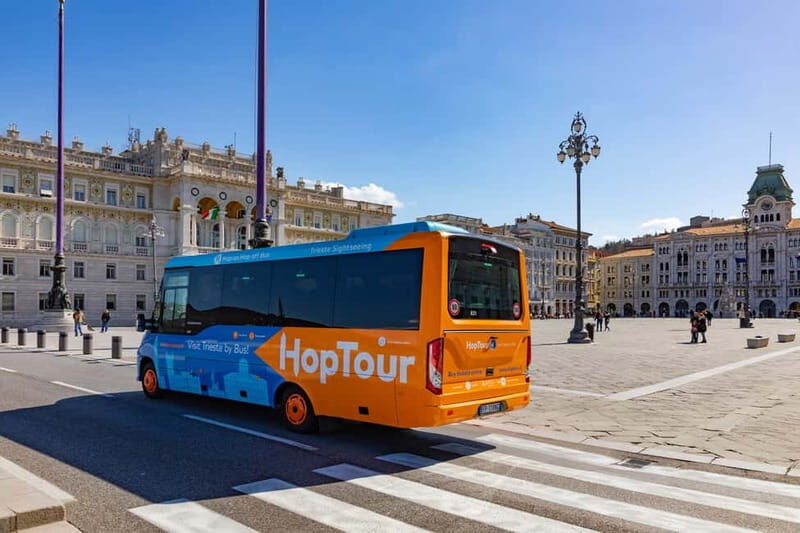
Trieste comes at you fast on this 1.5-hour, air-conditioned bus ride with a synchronized audio guide and hop-on hop-off freedom. You start near the water, cruise the historic center, then swing out toward Barcola and Miramare for big scenery.
What I like most is the way the on-board audio keeps you oriented street by street, and how the route packs in a lot of top sights without turning your day into a full-on walking test. For $20, the 24-hour ticket is also a smart way to stretch your sightseeing time, especially if you’re visiting in a rush.
One thing to watch: hop-on hop-off works best if you plan your re-boarding timing. When the bus is busy, seats aren’t always automatic, and there are also note-worthy location issues like roadworks near San Giusto and some walking distances around Miramare.
- Key points to know before you go
- Entering Trieste by bus: an easy orientation in 90 minutes
- Price and value: why can feel like a bargain
- Getting on board: where to meet and how the route starts
- How hop-on hop-off really works (and what can slow you down)
- The audio guide: the difference between seeing and understanding
- The waterfront beginning: Molo Audace and Mandracchio area
- Salone degli Incanti, Eataly, and the city’s seaside-culture mix
- Lighthouse and La Lanterna Baths: views with a practical reason
- The Maritime Museum area: when ports become stories
- Roman and Orthodox landmarks in one smooth loop
- Squares that act like a city compass: Borsa, Vittorio Veneto, Goldoni
- San Giusto Hill and the roadworks reality check
- Port-adjacent sights: old port hydrodynamics and the Barcola shift
- Miramare Castle: the views are the point, just plan for walking
- Food breaks without derailing your day
- Comfort, chargers, and the small stuff that matters
- Pets and accessibility: what to plan for
- Who this tour suits best
- Possible drawbacks and smart workarounds
- Should you book this Trieste bus tour?
- FAQ
- How long is the Trieste bus tour?
- Is it hop-on hop-off, and is the ticket valid for 24 hours?
- Where do I board the bus?
- What languages are available for the audio guide?
- Are entrance tickets to attractions included?
- Are pets allowed on the bus?
- The Best Of Trieste!
- More Guided Tours in Trieste
- More Tours in Trieste
- More Tour Reviews in Trieste
Key points to know before you go
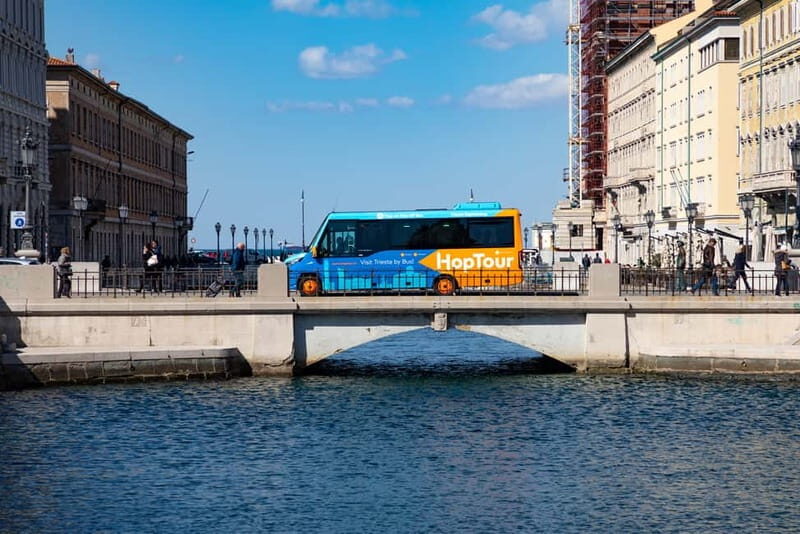


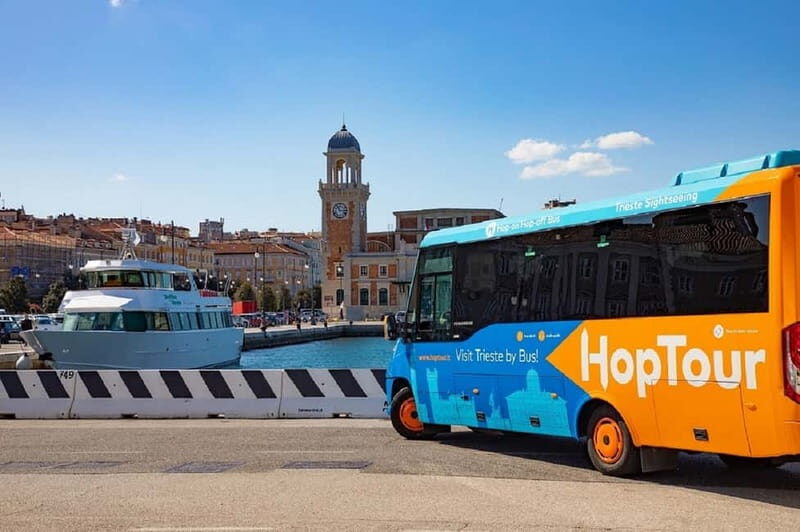
- Molo Audace pier gives a dramatic start, built on the wreck of an older ship
- 24-hour validity means you can do a first loop, then return to the stops you care about
- Synchronized audio guides run in English, German, Italian, and Spanish
- Easier city orientation with a route that hits Roman, Orthodox, and maritime Trieste
- Roadworks at San Giusto can affect that stop (plan for a walk)
- Pets are allowed only with a muzzle, so build that into your logistics

👉 See our pick of the Trieste’s 3 Top Workshops & Classes (With Prices)
Entering Trieste by bus: an easy orientation in 90 minutes
If Trieste feels like it has layers, that’s because it does. This bus tour is built to show you the city’s main “chapters” in a logical route: water first, then classic center streets and squares, then the port side and finally Miramare and the Barcola coastline.
From the moment you board, you’re not stuck guessing what you’re looking at. The audio guide is synced to the route, so you hear what matters as you pass key landmarks. That’s a big deal in Trieste, where streets and viewpoints can look similar until you know what’s where.
Also, you’re riding in comfort: an air-conditioned bus with a USB charger onboard. On a hot day (or a rainy one), that comfort alone can be worth it.
You can also read our reviews of more guided tours in Trieste


Price and value: why $20 can feel like a bargain
At about $20 per person for a 1.5-hour circuit, the best value is the combination of three things: bus comfort, an audio guide in multiple languages, and time flexibility.
The ticket is valid for 24 hours, which is where the real value lives. Many travelers use it as a first-day “map in motion,” then return later that same day (or the next day) for a second visit to one or two places they want to linger.
And unlike a ticket that just gets you from A to B, this one supports decision-making. You can hop off, take your time, then hop back on the next bus—provided there’s a seat and you follow the re-boarding process the team explains.
Getting on board: where to meet and how the route starts
You board at Molo Audace, in front of Unità d’Italia Square. That’s a convenient starting point because it’s right in the waterfront zone where Trieste’s port identity is obvious.
The broader route loops back to riva Tre Novembre, near the Prefettura/Teatro Verdi/municipio area. So even though you start at Molo Audace, the day still feels like one connected loop: water → center → waterfront outskirts → Miramare → back.
One practical note from traveler experience: the meeting point can be a little tricky if there’s no clear signage. If you’re arriving by foot from a cruise port or train side, give yourself extra time and use your phone maps carefully before you commit.
How hop-on hop-off really works (and what can slow you down)
On paper, this is hop-on hop-off. In practice, it works best with a simple mindset: think of the bus as a frequent-moving shuttle with a route, not a free-for-all where every stop is guaranteed anytime.
Here’s what you should expect:
- You can hop off at stops and then take the next bus if there’s a seat.
- Your seat is guaranteed only for the course you booked (that’s why re-boarding logistics matter).
- When you want to get back on after sightseeing, you’ll need to coordinate—travelers mention giving their name to the staff to help ensure a seat for the return trip.
On busy days, people can get tight. Some travelers also noted that when the bus was fully booked, they couldn’t hop freely at will. The good news: the staff on board are described as helpful and patient about explaining timing.
More Great Tours NearbyThe audio guide: the difference between seeing and understanding
The best part of this tour isn’t just that you’ll pass famous spots. It’s that the audio guide tells you what you’re looking at in the moment.
The guide runs in English, German, Italian, and Spanish, and it’s delivered through a system designed for the ride—so you’re not fumbling with apps while trying to watch the skyline.
Travelers also mention that the audio quality is good, and that the onboard team helps with questions and re-boarding instructions. If you’re the type who usually skips museum labels, this is still useful—because you get the context without adding extra walking time.
You can also read our reviews of more tours and experiences in Trieste
The waterfront beginning: Molo Audace and Mandracchio area
Your tour starts with a payoff: Molo Audace. The pier is built on the wreck of an older ship, which gives this spot a story right away. Instead of viewing it as just a pretty port, you learn why it exists and how the maritime identity shaped the city.
As the bus moves along the waterfront, you’ll also pass areas tied to the harbor and shore life. This is where Trieste’s “in-between” character shows up—part Italian city, part port town, with influences you can feel in the architecture and landmarks.
If you’re doing Trieste on a cruise day, this opening stretch matters because it gives you orientation fast. You’ll be able to recognize where you are later when you walk or take another local transport option.
Salone degli Incanti, Eataly, and the city’s seaside-culture mix
Next up is the shore zone connected to the Salone degli Incanti – Eataly stop. Even if you don’t go inside immediately, it’s a smart place to note: you’re near a hub where grabbing a meal or a break is easy when you’re hopping off for sightseeing.
This stop is also a good example of what the route is doing well: it doesn’t just throw you at “classic postcards.” It places you where the city actually functions—waterfront, food options, and a visible link between the promenade world and the center.
For many travelers, it becomes their default lunch or snack checkpoint, because the hop-on format lets you time it without losing your place in the route.
Lighthouse and La Lanterna Baths: views with a practical reason
On the next leg, you’ll pass Via Ottaviano Augusto, including the lighthouse and La Lanterna Baths near Campo Marzio Station.
This section is especially helpful if you want the “Trieste coastline” look but don’t want to spend hours walking. You get the big visual sweep from the bus window, and you also learn what you’re seeing as you pass it.
If your travel style is: see first, decide later, this is a win. You can stay onboard for the loop, then hop off closer to the places that give you that next-level feeling.
The Maritime Museum area: when ports become stories
You’ll pass by the Trieste Maritime Museum area. Even without entering, it’s a useful marker. Trieste’s history isn’t only art and churches—it’s also shipping, trade, and the city’s connection to the sea.
The value here is simple: the bus turns “I see a museum” into “I understand why this museum matters.” That means your future museum visit (if you choose one) will feel less random.
And because you’re not paying entrance tickets on the bus tour itself, you stay flexible. If you want only the highlights, you can keep moving.
Roman and Orthodox landmarks in one smooth loop
One of the most satisfying things about this route is how it crams in multiple cultural lanes without you having to stitch together separate outings.
You pass the Roman Theatre and the nearby Santa Maria Maggiore area, and then you move toward the Orthodox side with the Serbian Orthodox Temple of Saint Spyridon and later the Greek Orthodox Church of Saint Nicolò.
Why this works for travelers: Trieste’s identity isn’t one-note. It’s layered. Seeing Roman ruins and Orthodox churches on a single bus circuit helps you understand why the city’s architecture feels like it belongs to more than one timeline.
It’s also convenient for people who are short on time. Instead of picking only one theme—Roman, maritime, or religious—you get a “map” of everything.
Squares that act like a city compass: Borsa, Vittorio Veneto, Goldoni
As you head through the center, you’ll pass major squares and streets that anchor Trieste’s walking grid.
Key stops along the way include:
- Piazza della Borsa (a classic civic/commerce landmark)
- Piazza Vittorio Veneto (a central viewpoint area)
- Piazza Carlo Goldoni and Carducci Boulevard (great for understanding where the city’s energy sits)
- Oberdan Square and the tram station area
- Libertà Square near the train station
Even if you never step out, these pass-by moments matter. They help you build a mental map for later. After the tour, you’ll likely find it easier to choose where to wander on foot.
San Giusto Hill and the roadworks reality check
San Giusto is the big hilltop target. The bus is set to cover San Giusto Castle and Church, but there’s an important update: the stop can be suspended due to roadworks.
So treat this as a “plan with a backup” situation. If the bus doesn’t drop you where you want, you may need to adjust your walking route or rethink the order of your day.
This matters because San Giusto is a spot many people want for the view and the medieval feel. If you’re the type who hates surprises, give yourself buffer time and be ready to walk more than you expected.
Port-adjacent sights: old port hydrodynamics and the Barcola shift
Once you leave the classic center lane, the tour starts stretching toward the more industrial and coastal edges.
You pass the Central Hydrodynamics of the Old Port of Trieste, then continue toward the calmer, greener seaside areas like the Pinewood of Barcola and the Barcola Beach stretch.
This switch is part of why the tour feels like good value: it doesn’t only show you buildings. It shows you the coastline mood—fresh air, open space, and the “Trieste breath” you usually only get when you’re far enough from the center.
And because this tour is hop-on hop-off, you can decide whether you want to stop for a quick walk, a photo session, or just a breather before continuing.
Miramare Castle: the views are the point, just plan for walking
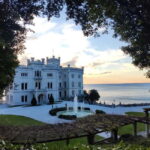
Miramare Castle is the star draw for many visitors, and the route takes you there via the Miramare Boulevard area and the Barcola crossings zone.
Travelers particularly enjoy this stop for the stunning scenery and the sense of stepping into a different world. The castle area is also a good example of why hop-on hop-off is useful: you can stay longer if it captures your attention, then rejoin when you’re ready.
One practical consideration: some travelers report that the bus doesn’t always stop right beside the castle entrance and that you may face a walk (about 700 meters was mentioned). If you have mobility limits or you’re visiting in very hot weather, plan water and comfortable shoes.
Food breaks without derailing your day
This tour isn’t a food tour, but it still supports eating because you pass places where a stop makes sense.
The clearest food-linked moment is the Salone degli Incanti – Eataly stop. Using it as a lunch checkpoint can help you avoid the classic problem of sightseeing hunger—because hop-on hop-off means you can time your meal around what you want to see.
If you’re craving local snacks rather than a sit-down meal, you can also use your off-bus time for a quick bite. The key is that you’re not trapped in one neighborhood for the whole half day.
Comfort, chargers, and the small stuff that matters
This bus tour includes a USB charger, which sounds small until you’re trying to run maps, photos, and translation apps while outside in the day.
It’s also described as comfortable, with air-conditioning on board for many trips. Still, a few travelers noted issues like a speaker not working in one language, or that some buses had less-than-perfect air-conditioning. If audio is a make-or-break detail for you, keep it in mind, but most reports are positive.
Also, if you’ve got luggage—some cruise travelers mentioned storing bigger bags under the bus—this setup can reduce day-of-stress.
Pets and accessibility: what to plan for
Pets are allowed only if wearing the muzzle. If you’re traveling with a dog or cat, that’s a non-negotiable rule to plan around.
For accessibility and comfort: the route includes hilltop and scenic areas, and some stops may involve walking after you get off. That’s especially relevant around San Giusto (with possible roadwork effects) and Miramare (with a reported walk distance). If you’re traveling with elderly family members or someone with limited mobility, consider building in extra time and using the first loop to check where you’ll feel comfortable hopping off.
Who this tour suits best
This is a strong match if you:
- Want a quick Trieste orientation without spending the whole day on foot
- Are visiting in a short window, like a cruise stop, and need a plan fast
- Like history but also want comfortable transport and easy logistics
- Prefer to choose later what you want to explore more deeply
It’s also helpful if you’re traveling with older relatives or anyone who appreciates fewer stairs and more seating—just remember the walking distances at key scenic stops.
Possible drawbacks and smart workarounds
Here are the main downsides to keep your expectations realistic:
- Re-boarding coordination: You may need to coordinate with staff and timing, especially if the bus is full.
- Seat guarantees aren’t unlimited: Seats are guaranteed only for the course you booked.
- Roadworks at San Giusto: That stop can be suspended, changing your plan.
- Walking distances: Miramare and other scenic drop-offs may require a decent walk.
- Occasional audio or air-conditioning quirks: Some travelers reported a speaker issue in one language or air-conditioning not working perfectly.
Smart workarounds:
- Start earlier in the day if you want the best hop-on flexibility.
- Do a full loop first, then return to your favorite 1–2 stops.
- If you care about San Giusto or Miramare, set your plans with extra buffer time.
Should you book this Trieste bus tour?
Yes, book it if you want an efficient, low-stress way to understand the city and see the major landmarks in one go. At $20 with a 24-hour ticket, it’s good value for travelers who like to see a lot and then choose what deserves a second look.
I’d be more cautious if you have limited mobility, hate walking, or are visiting during a very busy time. In that case, the roadworks and stop distances (especially for San Giusto and Miramare) could turn into more walking than you’d expect.
This is a practical “get your bearings” tour that makes Trieste feel navigable fast, with knowledgeable audio support and a route that hits both the old center and the waterfront views.
Trieste Bus Tour with Audio Guide
FAQ
How long is the Trieste bus tour?
The tour duration is 1.5 hours.
Is it hop-on hop-off, and is the ticket valid for 24 hours?
Yes. The ticket is valid for 24 hours, and you can hop on and off at the stops along the route.
Where do I board the bus?
You board at Molo Audace, in front of Unità d’Italia Square.
What languages are available for the audio guide?
The audio guide is available in English, German, Italian, and Spanish.
Are entrance tickets to attractions included?
No. Entrance tickets to monuments and attractions are not included.
Are pets allowed on the bus?
Pets are allowed only if they are wearing a muzzle.
You can check availability for your dates here: