
You’ll discover Italy’s Christmas magic through treasured family traditions like setting up elaborate presepe nativity scenes starting December 8th, enjoying the Feast of Seven Fishes on Christmas Eve, and participating in La Novena’s nine-day prayer period. Experience Saint Lucy’s Day celebrations with bonfires, savor multi-course Christmas Day meals, and welcome La Befana on Epiphany. Don’t miss regional specialties at local markets, Christmas caroling with zampognari shepherds, and Saint Nicholas Day gift exchanges that’ll create unforgettable holiday memories for generations.
- Setting Up Elaborate Presepe Nativity Scenes Starting December 8th
- Celebrating the Feast of Seven Fishes on Christmas Eve
- Enjoying Multi-Course Christmas Day Family Meals
- Participating in La Novena Nine-Day Prayer Period
- Welcoming La Befana the Gift-Giving Witch on Epiphany
- Honoring the Immaculate Conception With Lights and Markets
- Celebrating Saint Lucy’s Day in Northern Italy
- Experiencing Regional Christmas Specialties and Local Markets
- Attending Christmas Caroling and Theater Performances
- Gathering for Saint Nicholas Day Family Traditions
- The Sum Up
Setting Up Elaborate Presepe Nativity Scenes Starting December 8th
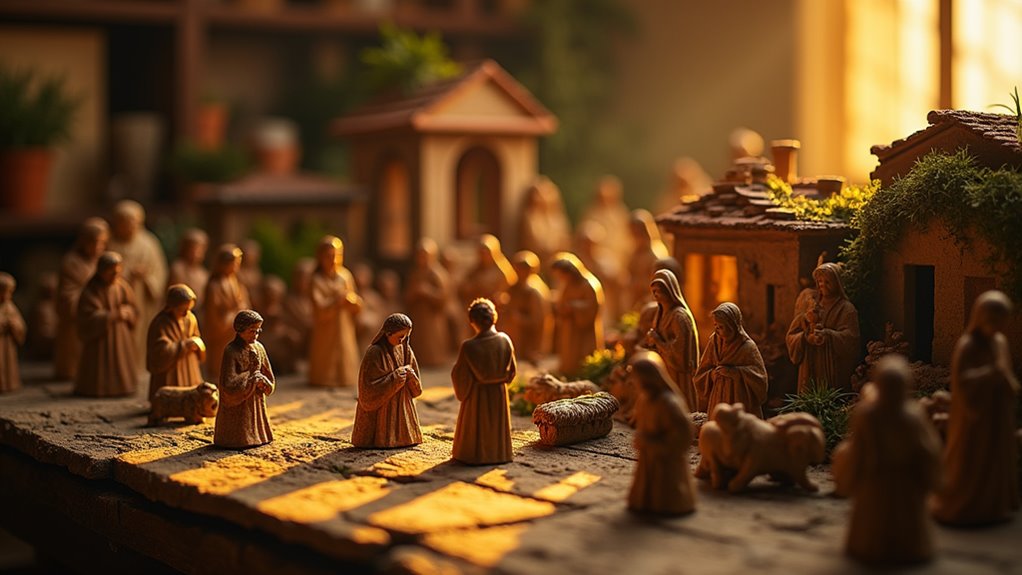
When December 8th arrives in Italy, families across the country begin transforming their homes with one of Christianity’s most cherished traditions—the presepe, or nativity scene.
You’ll notice something unique about these displays: the infant Jesus figure won’t appear until midnight on Christmas Eve, leaving an empty crib that builds anticipation throughout December.
Your presepe should include essential elements like the stable, Mary, Joseph, and the Magi positioned far from the scene. Families often bring out treasured figures that have been passed down through generations, creating connections between past and present celebrations.
Each day, you’ll move the wise men and their camels closer to the grotto, creating an interactive countdown to Christmas.
This hands-on tradition engages children while teaching them patience and the nativity story’s timeline, making your family’s Christmas celebration more meaningful and participatory.
Celebrating the Feast of Seven Fishes on Christmas Eve
After you’ve carefully arranged your presepe and admired the empty manger awaiting the Christ child, it’s time to prepare for Christmas Eve’s most anticipated culinary tradition—La Vigilia, or what Italian-Americans call the Feast of Seven Fishes.
This seafood celebration stems from Catholic abstinence rules requiring no meat or dairy during Christmas Eve vigil. You’ll find the tradition varies dramatically across Italy—southern coastal regions offer the most abundant selections, while northern areas like Piemonte surprisingly feature meat-filled agnolotti.
Prepare classic dishes like baccalà, capitone, and calamari alongside pasta with anchovies. Add fried vegetables, artichokes, and pickled items as accompaniments. While Italian-Americans strictly follow seven courses, authentic Italian menus vary by region. The number seven holds deep biblical significance, appearing over 700 times in scripture and representing the seven sacraments of the Catholic Church.
Serve after midnight mass with panettone for dessert, creating meaningful family connections through this cherished heritage celebration.
Enjoying Multi-Course Christmas Day Family Meals
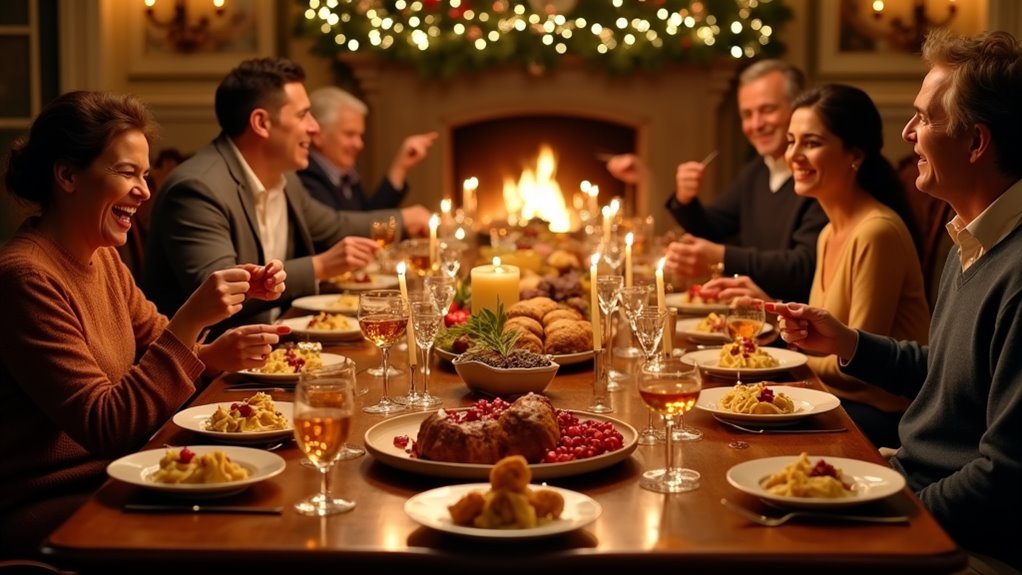
While Christmas Eve’s seafood feast sets the stage, Christmas Day transforms Italian homes into havens of indulgence where multi-course meals unfold like treasured family heirlooms.
You’ll start with antipasti featuring cured meats, cheeses, and bruschetta that encourage leisurely conversation.
The primi course showcases comfort classics like Lasagna Bolognese or tortellini in brodo, warming everyone’s hearts alongside their stomachs.
Your secondi brings substantial proteins—think bollito misto’s mixed boiled meats in northern regions or roast lamb with potatoes in central Italy.
Contorni like pepperonata and orange fennel salad add vibrant colors to winter tables.
Throughout the meal, you’ll pair courses with regional wines while creating memories that’ll last generations. The feast concludes with traditional sweets like baci di dama served alongside rich espresso, bringing the celebration to a perfectly Italian close.
This isn’t just dinner; it’s your family’s edible storytelling tradition.
Participating in La Novena Nine-Day Prayer Period
Beyond the warmth of family feasts, Italian Christmas celebrations embrace a profound spiritual dimension through La Novena, a nine-day prayer period that transforms homes into sacred spaces from December 16th through Christmas Eve.
You’ll gather your family each evening for this beautiful tradition composed by Rev. Charles Vachetta in 1721 at a Vincentian missionary house in Turin.
As the father, you’ll lead opening prayers while everyone responds with “O come, let’s adore Him.” Your eldest child recites Old Testament prophecies, and together you’ll pray the Magnificat with daily antiphons.
The structure includes responsory prayers, psalms, and Scripture readings that contemplate Christ’s Incarnation. Many families enhance this sacred time by opening their windows during prayer, symbolizing their receptivity to Christ’s coming into their hearts and homes.
This intimate ritual creates anticipation for Christmas while strengthening family bonds through shared devotion and contemplation.
Welcoming La Befana the Gift-Giving Witch on Epiphany
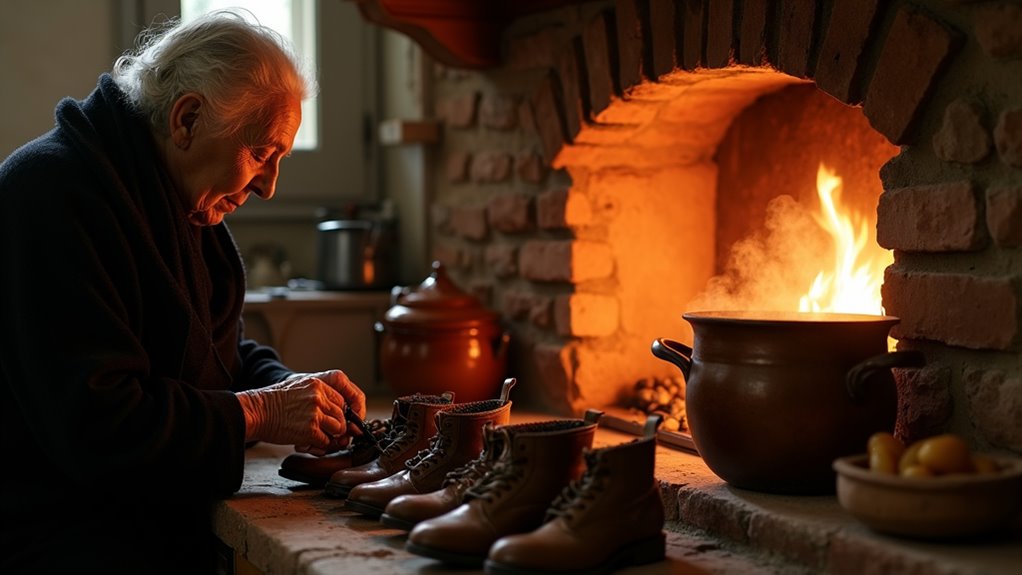
Though Christmas morning has passed, your Italian celebration continues with one of the country’s most beloved traditions—welcoming La Befana, the benevolent witch who’ll visit your home on Epiphany Eve.
On January 5th, you’ll hang stockings by the fireplace and leave wine or food for this legendary figure who searches endlessly for baby Jesus, bringing gifts to children along her journey.
If your children have been good, they’ll wake to toys and sweets filling their stockings. Misbehaved little ones might find coal or garlic instead.
You can join street festivities on January 6th, watching costumed Befanas parade through town squares. This elderly figure is easily recognized by her distinctive appearance—a hunchbacked woman with a long nose and pointy hat, carrying her magical broomstick.
Some families light bonfires the night before, burning old year puppets to welcome fresh beginnings in this magical conclusion to Italy’s extended Christmas season.
Honoring the Immaculate Conception With Lights and Markets
As December 8th arrives, you’ll witness Italy transform into a glowing celebration of the Immaculate Conception—the country’s official start to Christmas season.
You’ll find families gathering to light towering bonfires across villages, especially in Puglia and Calabria, where these ancient flames symbolize purification and hope.
This magical day marks when you’ll traditionally set up your Christmas tree and nativity scene, joining Italian families in decorating with sparkling lights and handmade ornaments.
You can join solemn masses and processions in local churches adorned with flowers and candles.
In Rome, you’ll witness the Pope’s celebrated observance at the Spanish Steps, where Mary’s statue receives flower garlands.
Don’t miss tasting traditional baccalà dishes and regional specialties that make this sacred day both spiritually meaningful and deliciously memorable.
Families also gather to pray the Rosary together, reflecting on Mary’s life events and her role as protector and intercessor.
Celebrating Saint Lucy’s Day in Northern Italy
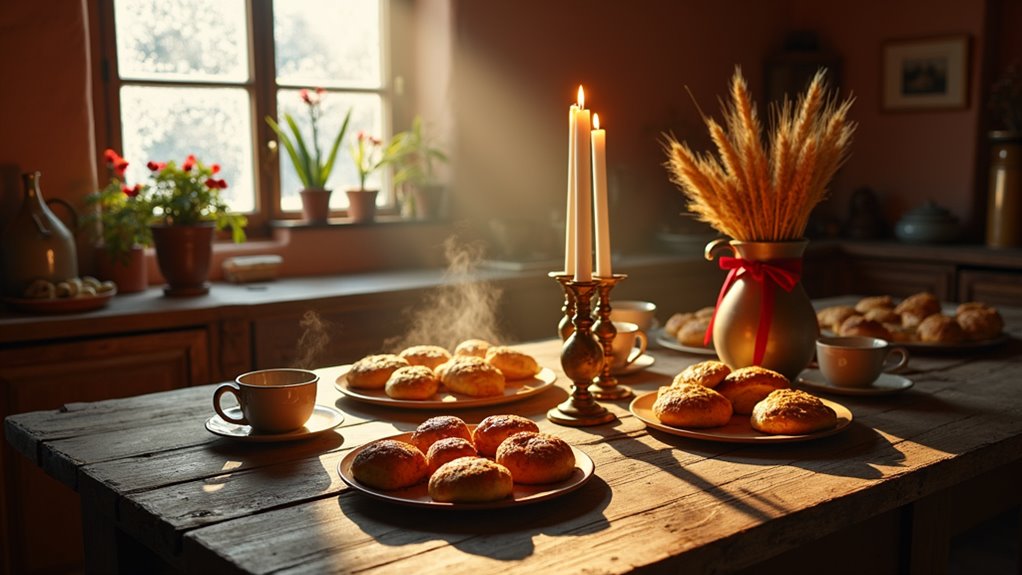
When December 13th arrives in northern Italy, you’ll discover Saint Lucy’s Day transforms the region into a celebration that rivals Christmas itself. In Lombardy, Veneto, and Emilia-Romagna, you’ll witness children preparing for Saint Lucy’s nighttime visit with her faithful donkey and escort Castaldo.
Your children can participate by writing letters requesting gifts the week before, then preparing snacks on December 12th evening. They’ll leave coffee or milk for Saint Lucy, carrots and grass for her donkey, and bread for Castaldo. Just make certain they don’t peek during gift delivery, or legend says ashes will be thrown in their eyes.
You’ll experience the magical Vampata di Santa Lucia bonfires after evening mass, celebrating this beloved “female Father Christmas” who brings light during winter’s darkest days. Many families also plant wheat grains that will grow by Christmas, symbolizing Jesus’ Nativity and creating a beautiful connection between Saint Lucy’s feast and the upcoming celebration of Christ’s birth.
Experiencing Regional Christmas Specialties and Local Markets
Beyond the enchanting celebrations of Saint Lucy’s Day, Italy’s Christmas magic comes alive through its extraordinary regional specialties found in bustling local markets across the country. You’ll discover tortellini in broth in Bologna’s markets, while Piedmont offers delicate agnolotti di plin and rich brasato al Barolo.
Head south to Sicily, where you’ll find pasta con le sardine and crispy cannoli filled with sweetened ricotta. Naples’ markets showcase baccalà prepared with capers and olives, plus golden struffoli dripping with honey.
Don’t miss Tuscany’s ancient panforte, packed with spices and dried fruit, or Lazio’s traditional pangiallo. Each region’s Christmas markets offer authentic tastes that’ve been perfected over centuries. The Christmas Eve tradition of Cenone della Vigilia features spectacular all-fish menus that transform these markets into seafood wonderlands throughout southern Italy.
Attending Christmas Caroling and Theater Performances
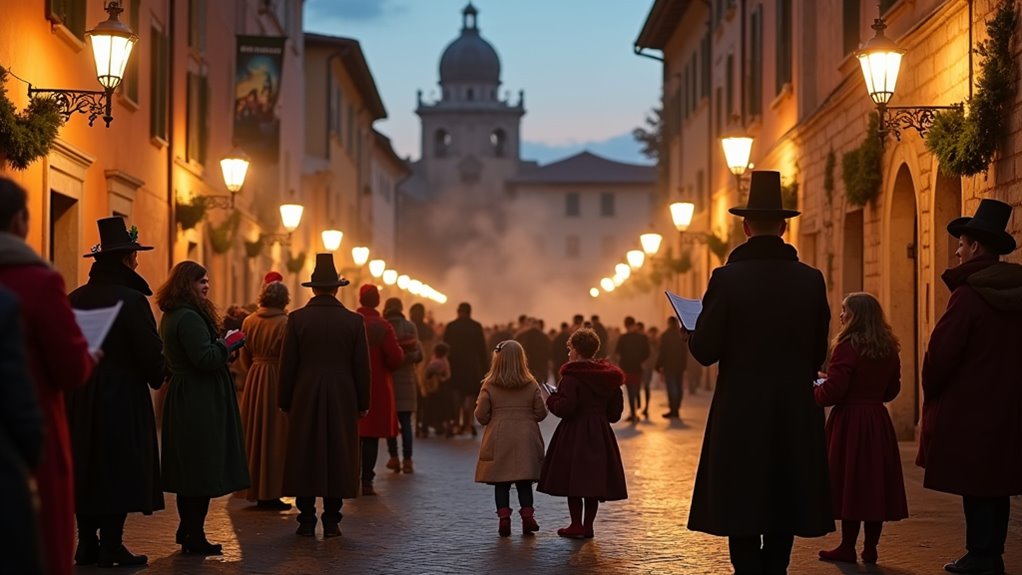
While exploring Italy’s Christmas markets, you’ll hear the haunting melodies of zampognari shepherds echoing through ancient streets and piazzas. These traditional musicians, dressed in Abruzzo folk costumes, play zampogna bagpipes and piffero oboes while performing beloved carols like *Tu scendi dalle stelle*.
You’ll find them appearing in nativity scenes as symbolic figures offering lullabies to the Christ child.
Don’t miss the presepi viventi—living nativity performances that began with Saint Francis in 1223. These immersive re-enactments happen on Christmas Eve in medieval towns, featuring live animals and local children as the Holy Family. The tradition originated in Greccio in 1223 when Saint Francis created the first nativity scene.
In Naples, visit Via San Gregorio Armeno for handcrafted figurines and elaborate displays that turn nativity scenes into theatrical art forms, continuing traditions that noble families perfected centuries ago.
Gathering for Saint Nicholas Day Family Traditions
As December 5th approaches, Italian families prepare for one of their most cherished traditions—celebrating Saint Nicholas Day with rituals that blend faith, family bonding, and childhood wonder.
You’ll help your children place plates or letters on tables the evening of December 5th, where they’ll request gifts while promising good behavior.
Overnight, Saint Nicholas fills these plates with chocolates, candies, and treats—though naughty children might find sugar candy resembling coal lumps instead.
On December 6th, you can embrace the role many Italian grandfathers play by dressing as Saint Nicholas to distribute presents. In cities like Trieste, families gather for gift-giving ceremonies that have been passed down through generations, creating a special community atmosphere during this beloved celebration.
Don’t forget to have your children leave stockings or shoes on windowsills, where they’ll discover small gifts the next morning, creating magical memories that’ll last lifetimes.
The Sum Up
You’ll discover that Italian Christmas traditions create lasting memories when you embrace them with your loved ones. Don’t just observe these customs—actively participate by setting up your own presepe, preparing traditional dishes together, and attending local celebrations. You’re not simply following rituals; you’re connecting with centuries of Italian heritage while building new family bonds. These experiences will transform your holiday season into something meaningful and unforgettable for generations.