
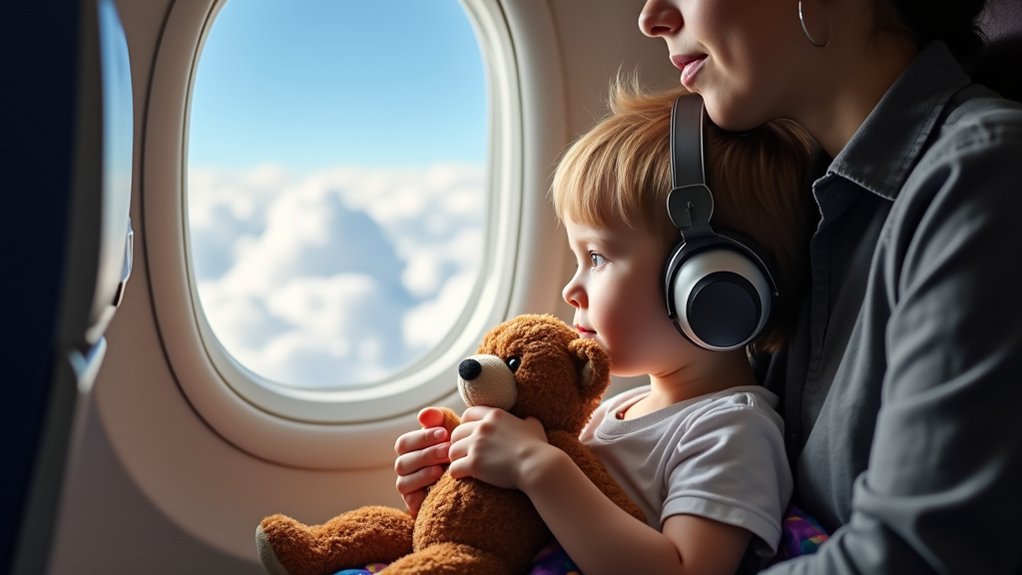
Start by consulting your child’s therapist for personalized strategies, then practice with short local trips to build confidence. Create visual aids like hand-drawn maps and social stories, while packing comfort items such as noise-canceling headphones and familiar toys. Maintain regular routines during travel and give your child specific roles to foster ownership. Practice safety measures positively, consider specialized travel services for severe anxiety, and invest in flexible travel insurance. These foundational approaches will help you discover additional techniques for transforming stressful journeys into manageable family adventures.
- Consult Your Child’s Therapist Before Planning Your Trip
- Start Small With Local Practice Trips
- Prepare Your Child Through Visual and Interactive Learning
- Pack Strategic Comfort Items and Sensory Tools
- Maintain Familiar Routines During Travel Days
- Create Designated Calm-Down Spaces and Strategies
- Give Your Anxious Child Specific Roles in Travel Activities
- Practice Safety Measures Without Creating Additional Worry
- Consider Alternative Travel Arrangements for Severely Anxious Children
- Invest in Flexible Travel Insurance for Peace of Mind
- Last Words
Consult Your Child’s Therapist Before Planning Your Trip
When you’re planning a trip with an anxious child, your first call should be to their therapist. They’ll help you develop calming and recovery plans for potential travel challenges you mightn’t anticipate on your own.
Your therapist brings professional experience with your child’s specific needs, identifying overlooked aspects that could make or break your trip.
Together, you’ll create strategies covering developmental, sensory, medical, and emotional priorities in your itinerary. They’ll help prepare your child for routine disruptions and unfamiliar environments through proven techniques. You can also create ID cards for each travel day to keep in your child’s backpack for emergency situations or if separation occurs.
This collaboration provides specific tips for maintaining your child’s security during the trip, from visual itineraries to social stories that familiarize them with travel processes.
This professional guidance transforms potential stress into manageable experiences.
Start Small With Local Practice Trips
Before diving into major travel plans, take your anxious child on short, local adventures to build their confidence and coping skills. These practice trips create controlled environments where you can implement familiar coping strategies without overwhelming sensory input.
Start with nearby parks, museums, or restaurants where your child can practice managing uncertainty like minor delays or detours.
Local outings help your child develop problem-solving abilities and emotional regulation in manageable settings. They’ll learn flexibility when plans change and gain confidence through small accomplishments. These experiences allow children to develop critical thinking skills as they navigate real-world challenges in familiar environments.
These experiences also provide opportunities to practice social interactions—ordering food, asking directions, or meeting new people—in lower-stakes environments.
Each successful local trip becomes evidence of their capability, reducing self-doubt and anticipatory anxiety for future travels.
Prepare Your Child Through Visual and Interactive Learning
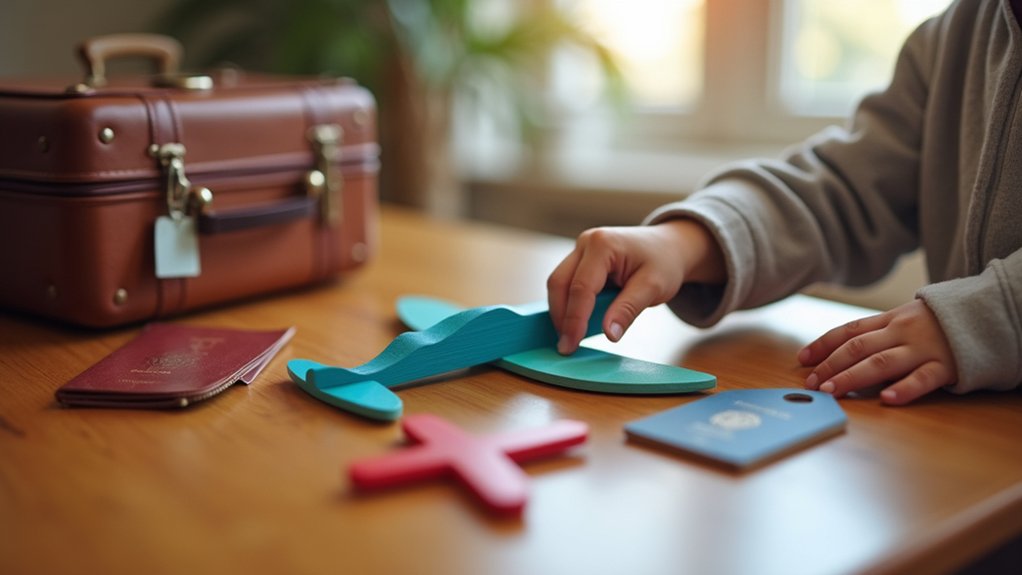
Since anxious children often struggle with uncertainty and the unknown, transforming abstract travel plans into concrete visual experiences becomes one of your most powerful tools. Create simple, hand-drawn maps showing airports, hotels, and planned activities. These visual references help children process what they’ll encounter, especially benefiting visual-spatial learners who might otherwise imagine worst-case scenarios.
Develop social stories combining pictures and written descriptions that follow your trip’s chronological order. Include detailed schedules covering transportation, activities, and return procedures. Review these materials multiple times—one week before and again one to two days prior to departure.
Involve your child in researching destinations and give them specific roles like “snack manager” or “bag checker.” This collaborative approach builds ownership, confidence, and transforms unknowns into manageable, familiar experiences. Remember that addressing individual needs is crucial since each child’s anxiety triggers and coping mechanisms may differ significantly.
Pack Strategic Comfort Items and Sensory Tools
Beyond preparation and planning, your anxious child will need tangible items that provide immediate comfort and regulation during travel’s sensory challenges. Pack noise-canceling headphones to block overwhelming airport sounds, plus a backup pair for emergencies. Include fidget cubes, stress balls, or small stuffed animals for tactile comfort during waiting periods.
Weighted lap pads or compression garments provide calming deep pressure when your child feels overwhelmed. Don’t forget familiar objects like favorite blankets or comfort toys that ground them in new environments.
Choose sensory-friendly clothing with soft, seamless fabrics and slip-on shoes for easy security checks. Consider bringing communication tools like picture cards or tablet apps to help your child express their needs clearly when feeling stressed or frustrated.
Pack familiar snacks in small portions to prevent hunger meltdowns, including crunchy options that provide alerting sensory input when needed.
Maintain Familiar Routines During Travel Days
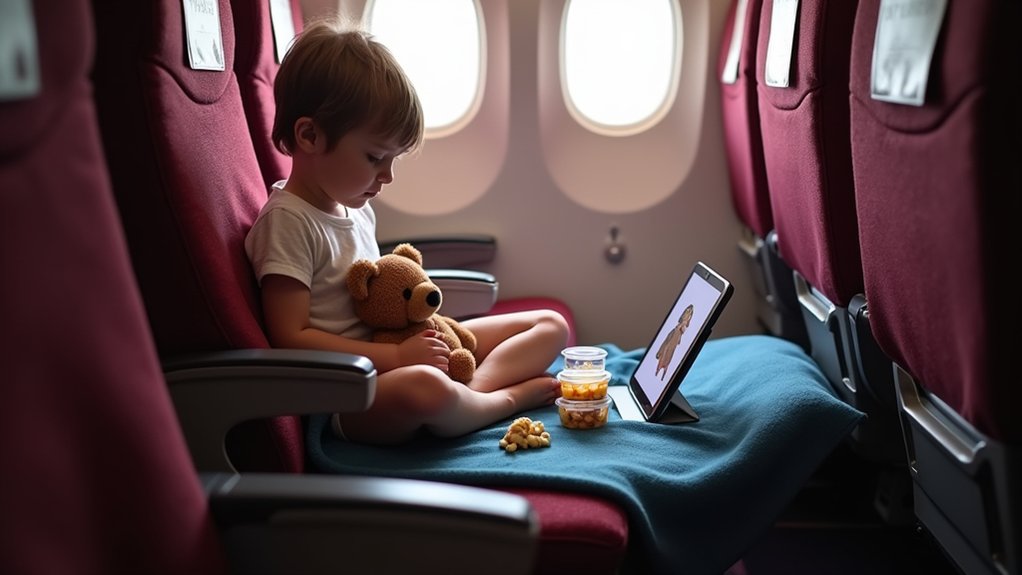
While travel inevitably disrupts your family’s normal flow, maintaining key routines becomes your child’s emotional anchor during chaotic travel days. Keep bedtime rituals consistent, even in hotel rooms—pack portable noise machines and familiar blankets to recreate home sleep conditions.
Stick to regular meal times and plan road trip stops around usual feeding intervals. During flights, offer nursing or bottles during takeoff and landing for ear pressure relief.
Preserve nap schedules by building quiet time into long travel segments. Use familiar pillows to signal rest periods. Listen to favorite playlists for grounding, and maintain morning rituals as stability anchors.
Schedule sightseeing around your child’s energy peaks, and involve them in daily planning. Target one routine element to maintain strictly—this consistency provides reassurance amid travel’s uncertainty. Allow for adequate downtime after crossing time zones to help your anxious child adjust gradually to new environments.
Create Designated Calm-Down Spaces and Strategies
Routines provide structure, but anxious children also need immediate refuge when overwhelming moments strike during travel. You’ll want to designate specific calm-down spaces wherever you’re staying—a corner of your hotel room with familiar comfort items, a quiet spot in the car, or a cozy area with blankets and portable noise machines.
Stock these spaces with headphones, downloaded movies, and favorite snacks to provide distraction during high-stress moments. Use painter’s tape on windows to control lighting and create darker, more predictable environments that mimic home. Consider giving your child their own activity bag to carry, which builds independence and ensures their comfort items are always within reach.
When your child feels overwhelmed, guide them to these prepared spaces without judgment. Acknowledge their feelings as valid, even when fears seem illogical to you. These refuges become emotional anchors in unfamiliar territory.
Give Your Anxious Child Specific Roles in Travel Activities

When anxious children feel like passive passengers on someone else’s journey, their worry intensifies—but giving them specific roles transforms them into active participants who help shape the travel experience.
Start by involving your child in trip planning decisions. Let them choose pit stops, activities, or snacks to create ownership and reduce anxiety about unknown elements. Assign age-appropriate responsibilities like packing personal items or managing entertainment rotations during travel segments.
Create predictable routines with your child’s input, maintaining familiar bedtime rituals and meal schedules even in new environments. Frame expectations through collaborative discussions about what they’ll see, hear, and experience. When children understand what to expect, their nervous system feels safe and they can better manage the emotional challenges of travel.
Break travel into manageable segments based on their feedback about break preferences. These concrete roles keep anxious minds engaged while building confidence and control.
Practice Safety Measures Without Creating Additional Worry
Safety preparation becomes a delicate balance—you need thorough planning without turning every precaution into a new source of anxiety for your child. Frame safety measures positively—explain that hand sanitizer keeps everyone healthy for fun activities, or that seat belts help everyone feel secure during adventures.
When discussing airport security, present it as helpful people ensuring safe flights rather than focusing on potential threats. Practice security procedures at home using play scenarios, letting your child send stuffed animals through a pretend X-ray machine.
Pack medications discretely in original containers and involve your child in choosing comfort items for the health kit. Keep vaccination discussions matter-of-fact, emphasizing protection rather than dangers. Allow your child to express their feelings about any safety concerns they might have about the trip.
Most importantly, model calm confidence in these safety routines.
Consider Alternative Travel Arrangements for Severely Anxious Children
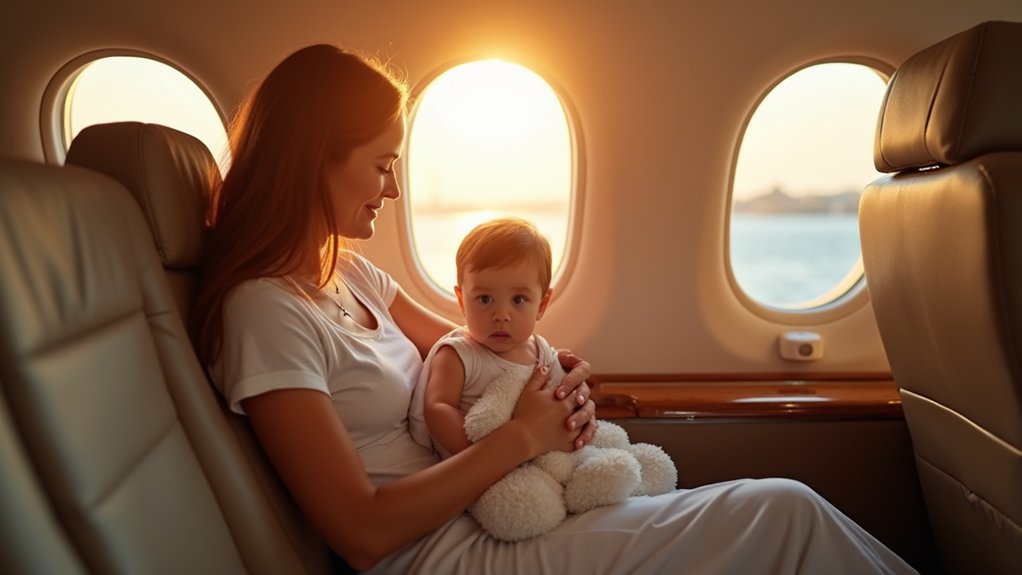
Despite your best efforts to prepare and reassure, some children experience anxiety levels that make traditional travel arrangements overwhelming. Consider shorter trip durations to reduce exposure to travel stressors and minimize disruption to established routines. Mini-experiences serve as low-risk testing grounds for your child’s travel capacity.
Select off-peak travel times and less crowded destinations to minimize sensory overload. Fewer crowds at airports and tourist spots decrease overwhelming sounds, lights, and social demands.
Utilize travel services specializing in special needs accommodation. These professionals help identify suitable destinations and connect you with neurodiversity-affirming programs. Look for IBCCES-certified travel professionals who provide specialized support and tailored planning for families with children who have special needs.
Consider alternative accommodations like airport sensory rooms and support services such as Hidden Disabilities Sunflower lanyards.
Sometimes home-based alternatives like backyard camping or staycations preserve familiar routines while providing novelty.
Invest in Flexible Travel Insurance for Peace of Mind
Although no parent wants to imagine their child’s anxiety spiraling during a family trip, investing in extensive travel insurance transforms potential disasters into manageable inconveniences. Look for policies offering Cancel for Any Reason add-ons, which refund 50 to 75% of trip costs when cancellation becomes necessary for any reason—including your child’s mental health needs.
Choose family plans that include free coverage for children under 18 and cover pre-existing conditions like anxiety. These comprehensive policies also provide medical repatriation to the UK if your child requires specialized treatment that isn’t available at your destination.
Emergency medical expenses coverage up to £10 million protects against unexpected health incidents, while trip interruption benefits provide financial relief when travel plans change mid-journey.
Annual policies eliminate re-declaring medical conditions for each trip, reducing stress for families managing ongoing anxiety concerns while ensuring comprehensive protection.
Last Words
Remember, you’re not alone in this journey. Traveling with an anxious child isn’t impossible—it just requires extra planning and patience. You’ll likely face some bumps along the way, and that’s completely normal. Don’t let setbacks discourage you from creating beautiful memories together. Trust your instincts, celebrate small victories, and know that each trip will become easier as your child builds confidence. You’ve got this, and your efforts will pay off.