

You’ll find European family travel offers incredible value in Eastern European countries like Bulgaria and Poland, where daily costs run $15-25 compared to $30-40 in Western Europe. Multigenerational trips are surging, with 47% of travelers now choosing extended family adventures. Plan for 40% budget overruns since 80% of families overspend on food and treats. Short city breaks work best for young kids, while two-week itineraries suit families ready for multi-country exploration. Discover the essential strategies that’ll transform your European family adventure.
- Popular European Family Destinations and What Makes Them Special
- Budget-Friendly Countries That Won’t Break the Bank
- Multi-Generational Travel Is Trending Across Europe
- Beach Resorts Remain the Top Choice for Families
- Cruise Options Are Growing in Popularity
- Planning Multiple Short Trips vs. One Long Vacation
- How Much European Family Travel Really Costs
- Special Needs Considerations for European Destinations
- Coordinating Travel Dates With Extended Family and Friends
- Where Food and Treat Expenses Add Up Quickly
- Multi-Destination Itineraries for Adventurous Families
- Quality Time Benefits That Make European Travel Worth It
- Last Words
Popular European Family Destinations and What Makes Them Special
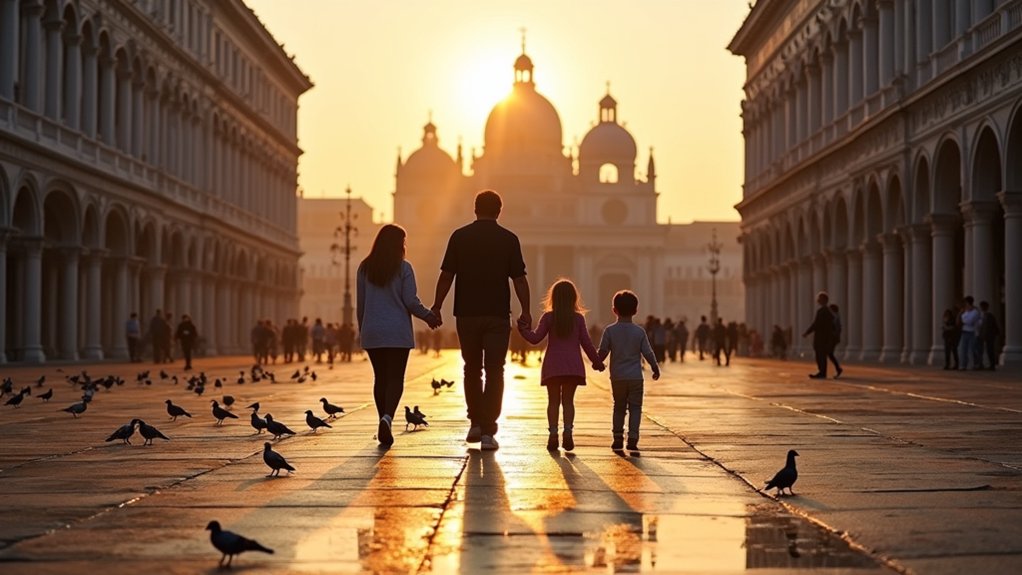
While Europe offers countless destinations, certain cities consistently captivate families with their perfect blend of education, adventure, and accessibility. Rome tops family-friendly lists with its awe-inspiring Colosseum and architecturally marvelous Pantheon, seamlessly integrating history into daily exploration through walkable sites.
Dubrovnik’s historic walls provide breathtaking Adriatic views, combining coastal beauty with adventurous climbing while showcasing stunning terracotta rooftops. The Mount Srđ Cable Car offers panoramic vistas and hiking trails that create memorable outdoor adventures for active families. Salzburg enchants families with its storybook Old Town, featuring fountains, the imagination-sparking Dwarf Garden at Mirabell Palace, and explorable Festung Hohensalzburg castle.
Budapest offers Margaret Island’s mini-zoo and pedal karts, plus the fairy-tale Fisherman’s Bastion structure. Prague captivates with its magical storybook atmosphere, famous bridges, and Letna Park‘s city views and playgrounds, creating energy-resetting experiences that enhance family exploration through wide, navigable paths.
Budget-Friendly Countries That Won’t Break the Bank
Exploring Europe’s most enchanting destinations doesn’t require draining your savings account, especially when you venture beyond the continent’s pricier western capitals. Bulgaria ranks as the EU’s cheapest country, while Romania offers hostel beds from $12 nightly and incredible castles like Bran and Peleș.
Poland delivers significant savings compared to Western Europe without sacrificing cultural experiences.
For coastal adventures, Albania’s Riviera rivals Greek islands at a fraction of the cost, with accommodation starting at $10 per night. Bosnia & Herzegovina provides the region’s lowest expenses—hostel beds under $10 and meals for $5-$12.
Hungary’s Budapest consistently ranks among Europe’s cheapest cities, with budget airline flights costing around 50 euros. Most Eastern European countries feature monthly city passes often priced under $20, making local transportation incredibly affordable for families. These destinations offer rich history, stunning landscapes, and warm hospitality while keeping family budgets intact.
Multi-Generational Travel Is Trending Across Europe
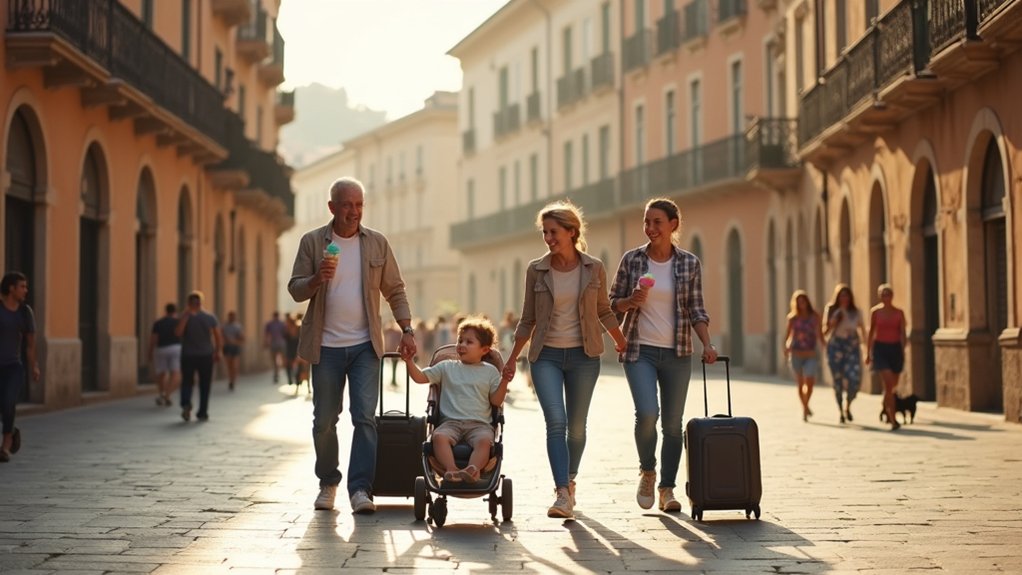
As families increasingly seek meaningful connections across generations, multi-generational travel has surged to become Europe’s hottest vacation trend. You’re part of a growing movement—47% of travelers now choose multigenerational family trips, representing a 17% jump from last year.
If you’re a Millennial or Gen Z parent, you’re especially likely to plan these adventures, with 58% organizing extended family vacations. The motivation? Quality time ranks highest, with 89% citing deeper family bonds as their primary reason.
Europe’s perfectly positioned for these trips. Spain offers Barcelona’s vibrant culture alongside Mediterranean relaxation, while Italy provides Tuscany’s charm and Venice’s magic. Ireland’s castles and storytelling pubs create unforgettable memories. Smart planners focus on iconic cities like London, Paris, and Rome for first-time family visitors due to their proven appeal across all age groups.
Airlines like EasyJet are capitalizing with “grans go free” deals, making multi-generational European adventures surprisingly affordable.
Beach Resorts Remain the Top Choice for Families
Despite Europe’s countless cultural attractions and historic cities, beach resorts continue to dominate family vacation choices—and for good reason. You’ll find that 41% of millennials with children choose beach destinations, while 37% of UK families specifically select Spain as their top pick.
The numbers make sense when you consider what these resorts offer. Crete leads the Family Beach Index with 10 water and theme parks, while destinations like Costa Blanca provide short flight durations and excellent value.
Turkish resorts like Antalya and Belek offer perfect 25°C sea temperatures, and Cyprus delivers low family holiday costs. With over four million visitors annually, Crete demonstrates just how popular these family-focused destinations have become.
Modern beach resorts have evolved beyond simple sun-and-sand experiences. You’ll discover all-inclusive properties with kids’ clubs, babysitting services, and even babewatch programs for infants as young as four months.
Cruise Options Are Growing in Popularity

While beach resorts maintain their family vacation dominance, European cruises are rapidly capturing parents’ attention with their unique blend of convenience and adventure. You’ll find Europe leading cruise destinations at 30%, markedly ahead of Caribbean options at 19%. Mediterranean routes remain consistently popular at 28.4%, while Northern Europe cruises jumped from 13.8% to 19.9% consideration for 2025.
What makes cruises particularly appealing? Nearly one-third of passengers sail with three or more generations, making them great for extended family trips. You can choose from various durations—53.6% prefer 5-7 night voyages that match typical family schedules. The timing for booking couldn’t be better, as wave season deals beginning in January 2025 offer families significant savings on cruise costs.
First-time cruisers represent 31% of passengers, with 68% of international travelers considering their first cruise, demonstrating strong family appeal.
Planning Multiple Short Trips vs. One Long Vacation
Whether you choose a week-long Mediterranean cruise or prefer breaking your European adventure into bite-sized pieces, you’ll need to decide between multiple short trips versus one extended vacation.
European families are increasingly choosing shorter getaways, with 65% taking multiple 1-3 night trips and 64% opting for 4-6 night vacations. Young families now average 6.5 holidays annually, up from 5.3 previously.
Short domestic breaks dominate, comprising 48.8% of all trips in 2024. However, micro-trips can become costly and mentally taxing compared to longer vacations.
Most travelers across age groups prefer 4-6 nights per trip, striking a balance between relaxation and practicality. If you’re traveling internationally with kids, consider that foreign trips typically last 7.8 nights versus 3.9 nights domestically. The vast majority of European travel stays within the EU, with 92.2% of overnight trips occurring in European Union countries.
How Much European Family Travel Really Costs
Before you start booking flights and hotels, understanding the true cost of European family travel can save you from sticker shock at checkout. A 14-day Germany/Austria family trip averages $4,008 CAD per person, breaking down to $286 daily. Transportation accounts for $1,562, accommodations $1,537, and food $774 per person.
You’ll face significant price variations across destinations. Marmaris, Turkey offers the cheapest family essentials, while Ibiza costs nearly double. Even budget-friendly spots like Bulgaria’s Sunny Beach saw 17% price increases in 2025. The Algarve in Portugal stands out as the most affordable Eurozone destination for families, despite experiencing a 15% price rise.
Here’s the kicker: 80% of families overspend by 42%, primarily on food, drinks, and treats. Kids’ beach extras alone average £202 per family. Budget an extra 40% cushion beyond your planned expenses to avoid financial stress during your European adventure.
Special Needs Considerations for European Destinations
Planning a European vacation with special needs family members requires extra research, but don’t let accessibility concerns derail your travel dreams. Europe offers surprisingly good support for travelers with disabilities, often surpassing U.S. standards despite lacking ADA-level mandates.
Book accessible accommodations well in advance—many city-center hotels have only one or two wheelchair-friendly rooms that fill up by December for summer travel. Request specific photos and elevator measurements to ensure your equipment fits. Purpose-built hotels feature roll-in showers, grab rails, and charging points near beds.
Choose destinations wisely: Copenhagen excels with accessible Legoland and Tivoli Gardens, while Madrid offers wheelchair-friendly metros and buses. Consider popular Spanish coastal areas where hotels often include pool hoists and adapted aquatic facilities for guests with mobility needs. Location matters most—stay near accessible transport stops to minimize expensive taxi rides and maximize your family’s independence.
Coordinating Travel Dates With Extended Family and Friends
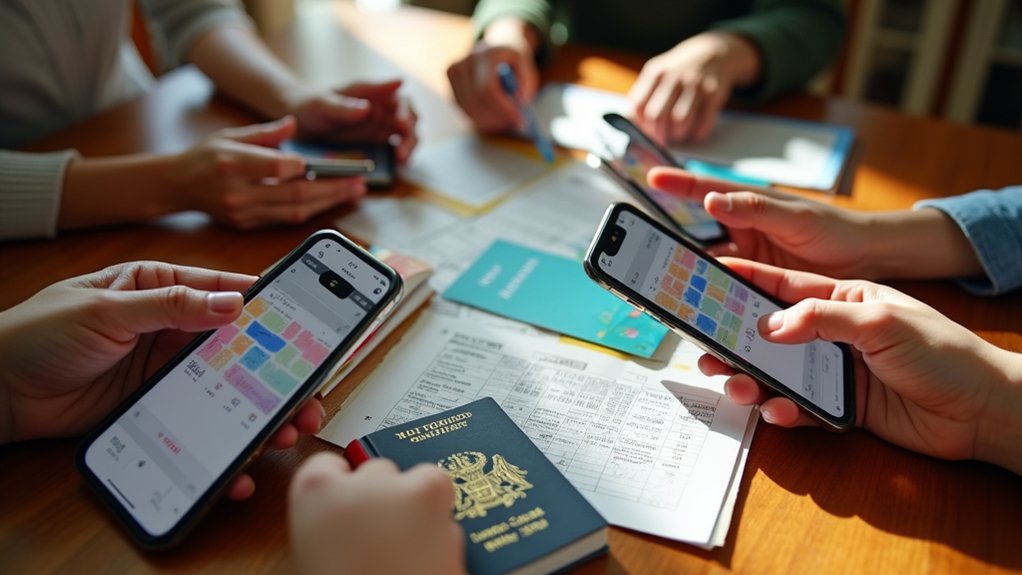
When’s the last time you tried herding cats? That’s what coordinating European travel dates with extended family feels like. But you’re not alone—over half of parents are planning multigenerational trips, and 54% of grandparents actually take charge of organizing them.
Start planning early since 76% of families are eyeing international travel within two years. Consider limiting destinations to one or two accessible countries to accommodate different mobility levels. Eastern Europe offers excellent options like Prague and Budapest for fewer crowds and easier coordination.
Here’s your secret weapon: 80% of older travelers willingly fund trips for children and grandchildren. Let grandparents lead the planning—they’re surprisingly good at it.
Focus on destinations with activities for all ages and remember that 87% of parents involve kids in destination choices. Large groups can achieve significant savings by choosing accommodations that offer flexible options for multiple families traveling together.
Where Food and Treat Expenses Add Up Quickly
While you’re carefully budgeting for flights and hotels, food expenses are quietly plotting your financial downfall. In Europe, those innocent-looking treats and meals add up faster than you’d expect. Your kids will spot gelato stands, candy shops, and street vendors at every turn, and saying no becomes exhausting.
Budget travelers typically spend $20-$30 daily on food, but families routinely blow past these limits. Regional costs vary dramatically, with Western Europe requiring $30-$40 per day in major cities while Eastern European destinations offer relief at $15-$25 daily.
Statistics show 68% of families exceed budgets due to food and drink expenses, with kids’ treats contributing to overruns in 80% of trips. That €5 pastry here, €10 lunch there, and €8 snack pack quickly escalate into serious money.
Combat this by setting daily treat limits, shopping at local groceries, and using apps like TheFork for restaurant discounts.
Multi-Destination Itineraries for Adventurous Families
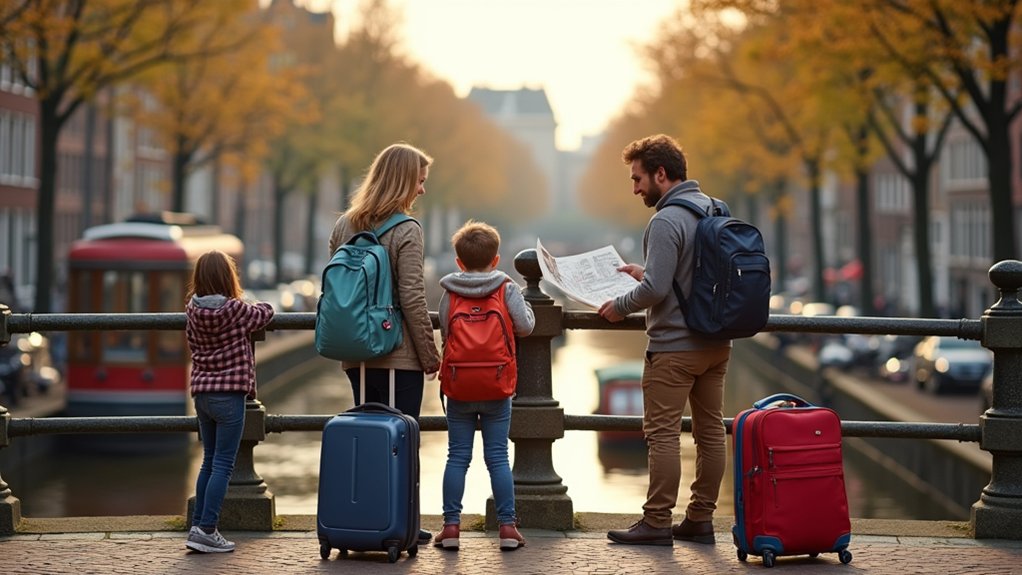
Once you’ve mastered the art of feeding your family without bankrupting yourself, the real adventure begins with mapping out a multi-city European journey that won’t leave everyone exhausted and cranky.
For trips under one week, stick to a single city to avoid spreading yourselves too thin. Two weeks works perfectly for young children visiting multiple destinations, while three-week itineraries let you explore 5+ countries thoroughly.
Consider Central Europe circuits through Prague, Vienna, and Budapest for Gothic architecture and thermal baths, or Alpine routes spanning Munich, Switzerland, and Austria for mountain scenery.
Choose vacation rentals over hotels for better space and amenities like washers. Build in daily downtime—gelato breaks aren’t just treats, they’re survival strategies.
Flexible itineraries prevent overscheduling disasters. Book only essential activities in advance like popular museum tickets or cable car lifts to maintain scheduling flexibility while securing must-see experiences.
Quality Time Benefits That Make European Travel Worth It
Beyond the Instagram-worthy castle photos and gelato-stained smiles lies the real treasure of European family travel: uninterrupted quality time that’s impossible to replicate at home. You’ll discover your kids without the usual social pressures, watching them authentically engage with medieval castles and bustling markets. Those shared meals in Roman trattorias become cherished memories, while steering Prague’s cobblestone streets together builds resilience through teamwork.
European travel forces you out of autopilot parenting. You’ll make decisions collectively—whether to climb another cathedral tower or find that hidden gelateria. Without digital distractions dominating dinner conversations, deeper connections emerge naturally. Your children naturally become cultural ambassadors, sparking conversations with locals that create unexpected friendships and authentic cultural exchanges you’d never experience as adults traveling alone. These shared challenges create lasting bonds and stories you’ll reminisce about for years, forming the foundation of family traditions that future generations will treasure.
Last Words
You’ve got all the tools now to make your European family adventure unforgettable. Don’t let budget fears hold you back—there’s something magical about watching your kids discover ancient castles and taste gelato for the first time. Start planning early, book accommodations with kitchenettes to save on meals, and remember that the memories you’ll create together are priceless. Europe’s waiting for your family to explore it.