
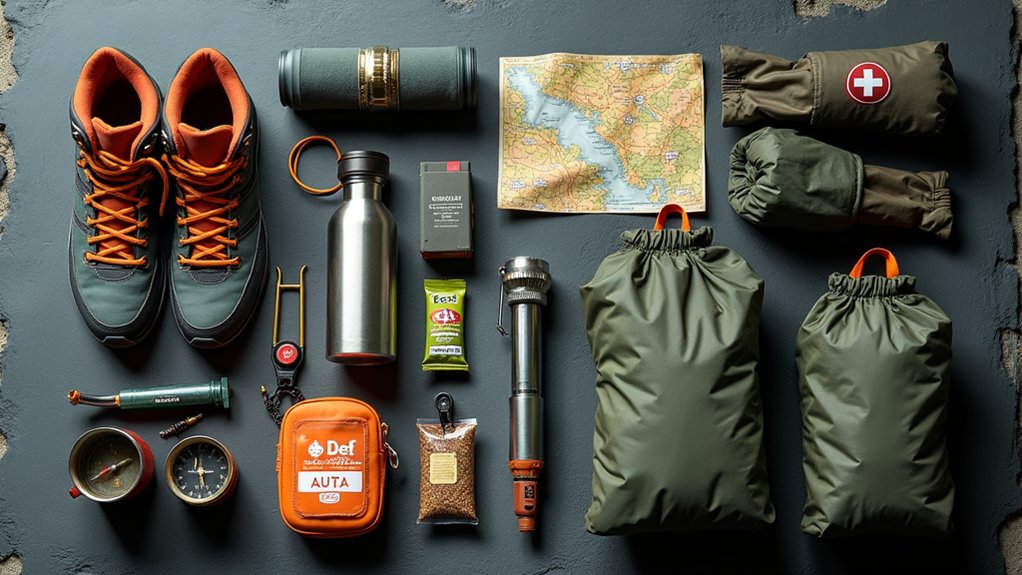
Your teen’s DofE expedition success hinges on packing these 15 essentials: waterproof jacket and trousers with fully taped seams, properly broken-in hiking boots, 60-70L rucksack, three-season sleeping bag, insulating roll mat, warm hat, emergency whistle, personal cooking kit, sun hat, sunglasses, gloves, headlamp with spare batteries, first aid kit, tough water bottles, and moisture-wicking base layers. Each item serves a critical safety function that could prevent expedition failure or emergency evacuation. Below you’ll discover the specific features that make each piece of gear expedition-worthy.
- Waterproof Jacket and Trousers With Taped Seams
- Properly Broken-In Hiking Boots With Ankle Support
- 60-70L Capacity Rucksack for Multi-Day Expeditions
- Three-Season Rated Sleeping Bag
- Insulating Roll Mat for Ground Protection
- Heavy Duty Rucksack Liner or Roll Top Dry Bag
- Layering System: Thin and Warm Fleece Clothing
- Waterproof Walking Socks With Odour Control
- Headlamp or Torch With Spare Batteries
- 1-2 Litre Water Bottles for Hydration
- Personal First Aid Kit With Blister Treatment
- Warm Hat for Cold Night Protection
- Emergency Whistle for Safety Signalling
- Lightweight Personal Cooking and Eating Kit
- Weather Protection: Sun Hat, Sunglasses, and Gloves
- Last Words
Waterproof Jacket and Trousers With Taped Seams
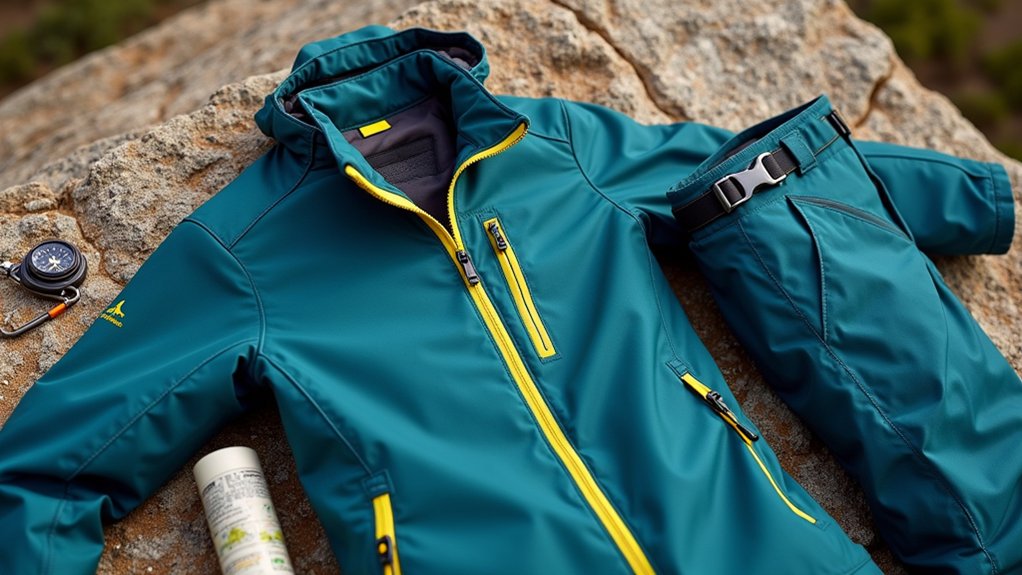
When your teenager heads out on their DofE expedition, a high-quality waterproof jacket and trousers with fully taped seams become their primary defense against hypothermia and discomfort. You’ll need garments rated 15,000-20,000mm for mountaineering-like conditions they’ll face.
Fully taped seams are non-negotiable – these heat-sealed tapes cover every stitching hole that would otherwise let water penetrate. Look for 3-layer construction with laminated membranes for maximum durability and breathability.
Waterproof zippers are standard on quality 20k-rated jackets, while storm flaps provide backup protection. Don’t forget the DWR coating that beads water on the surface – it’s re-treatable when worn. Welded seams eliminate sewing holes entirely, providing even superior waterproof integrity compared to traditional taped construction.
You can’t DIY seam taping at home, so invest in properly manufactured gear. Regular cleaning and DWR reapplication will extend performance throughout their expedition.
Properly Broken-In Hiking Boots With Ankle Support
Your teenager’s feet will carry them through miles of rocky terrain, making properly broken-in hiking boots their foundation for expedition success. Choose mid-height boots that protect against scrapes and rocks while allowing ankle muscle development. High-top boots can weaken ankles over time, so opt for lightweight designs with moderate support.
Break-in is pivotal—start the process weeks before departure to prevent painful blisters from rigid materials. Your teen should wear them on progressively longer walks, allowing feet to adapt gradually. Building bone and tendon strength requires about a year of conditioning, while muscle strengthening occurs within weeks of consistent use.
Consider trekking poles for additional stability on challenging terrain.
For injury-prone teens, pre-tape ankles with athletic tape rather than relying solely on boot support. Remember, properly conditioned ankles combined with well-fitted, broken-in boots provide the best protection for multi-day expeditions across varied terrain.
60-70L Capacity Rucksack for Multi-Day Expeditions
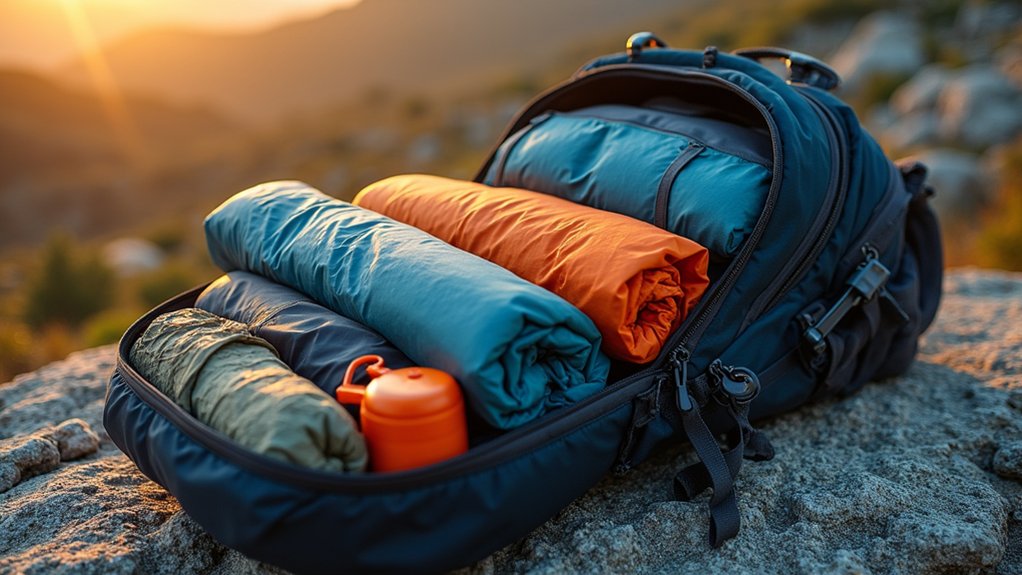
A 70-liter rucksack forms the backbone of multi-day DofE expeditions, providing essential carrying capacity for 5-7 days of gear while maintaining manageable weight distribution. You’ll want a pack with curved carbon fiber or aluminum frame systems that transfer weight to your teen’s hips, reducing shoulder strain during long trail days.
Look for models with roll-top closures and trampoline-style back panels that prevent chafing while promoting airflow.
Keep loads between 35-40 pounds for ideal comfort—anything over 50 pounds becomes problematic for young hikers. Modern ultralight packs can weigh as little as 22-24 ounces while maintaining full 70L capacity, dramatically reducing base pack weight for more efficient hiking.
Choose packs with waterproof Dyneema or Challenge ULTRA fabrics, though you should still pack critical items in dry bags.
Side pockets for water bottles and front daisy chains for external gear attachment provide essential accessibility without sacrificing internal storage space.
Three-Season Rated Sleeping Bag
While temperatures can plummet unexpectedly during UK expeditions, a three-season sleeping bag rated for 0°C to -5°C provides the essential warmth your teen needs for spring through autumn DofE adventures.
Look for mummy-shaped bags with box wall baffles that prevent cold spots and draft collars that eliminate heat loss.
Down-filled models offer superior warmth-to-weight ratios, typically weighing 2-4 pounds while packing down to basketball size or smaller. However, synthetic alternatives perform better in damp conditions.
Choose bags with full-length zippers and ventilation options, allowing your teen to regulate temperature during active nights. Three-season bags offer a balanced combination of warmth, weight, and pack size that makes them versatile for most DofE expedition conditions.
The wide girth design accommodates side-sleepers while maintaining thermal efficiency for those chilly mountain mornings.
Insulating Roll Mat for Ground Protection
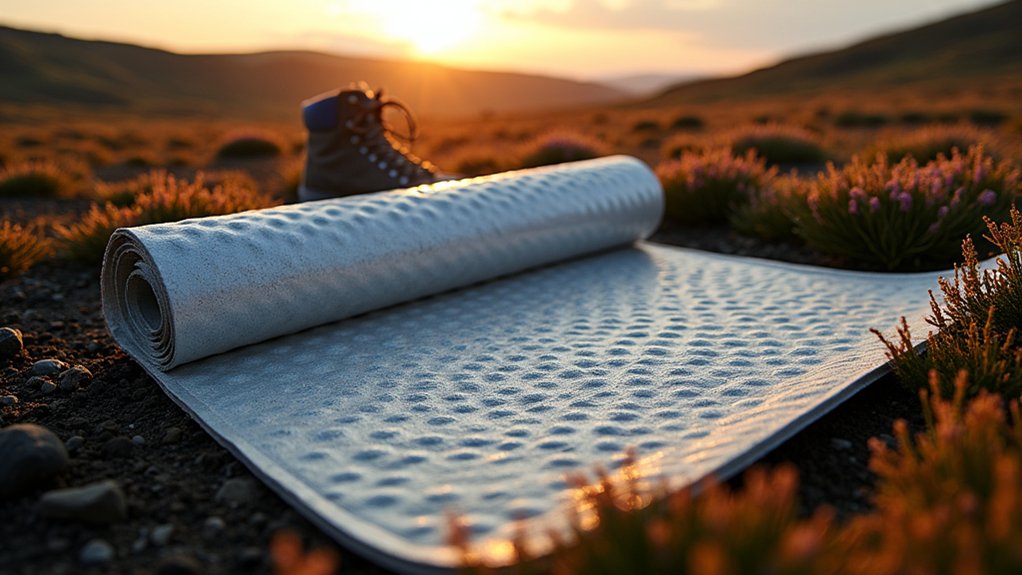
When your teen settles down for sleep on cold, rocky ground, an insulating roll mat becomes their critical barrier against heat loss and discomfort that can ruin an entire expedition. You’ll need to choose between closed-cell foam mats, self-inflating mats, or inflatable options based on your expedition’s requirements.
Closed-cell foam mats offer unbeatable durability—they’re puncture-proof, lightweight, and provide excellent ground insulation at minimal cost. However, they’re bulky and less comfortable than alternatives.
Self-inflating mats balance warmth, weight, and comfort effectively for most DofE scenarios. They automatically inflate within 5 minutes when the valve is opened, though may require a few additional breaths of air.
Check R-values when selecting: ratings of 1.0-2.0 suit summer expeditions, while 4.0+ handles winter conditions.
Quarter-length mats reduce weight while maintaining adequate protection.
Don’t let your teen use yoga mats—they lack proper insulation for outdoor use.
Heavy Duty Rucksack Liner or Roll Top Dry Bag
Your teen’s carefully selected sleeping gear won’t matter if it’s soaked through from rain or river crossings. A heavy-duty rucksack liner or roll-top dry bag provides essential waterproofing that rucksack manufacturers’ “water-resistant” claims simply can’t guarantee.
Budget-conscious families can use strong rubble sacks or double-layer heavy-duty plastic bags as basic liners. However, purpose-built options like Lifeventure Ultralight Dry Bags offer superior protection with PU-coated fabric and fully taped seams. Their roll-top closure with Kross buckle creates completely waterproof seals.
Choose multiple smaller dry bags over a single large liner for better organization. Color-coding helps your teen quickly locate specific gear categories during expeditions. Consider 2-70 litres capacity options to reduce weight and pack efficiently. This prevents wet equipment from adding dangerous weight while maintaining essential insulation properties when your teen needs them most.
Layering System: Thin and Warm Fleece Clothing
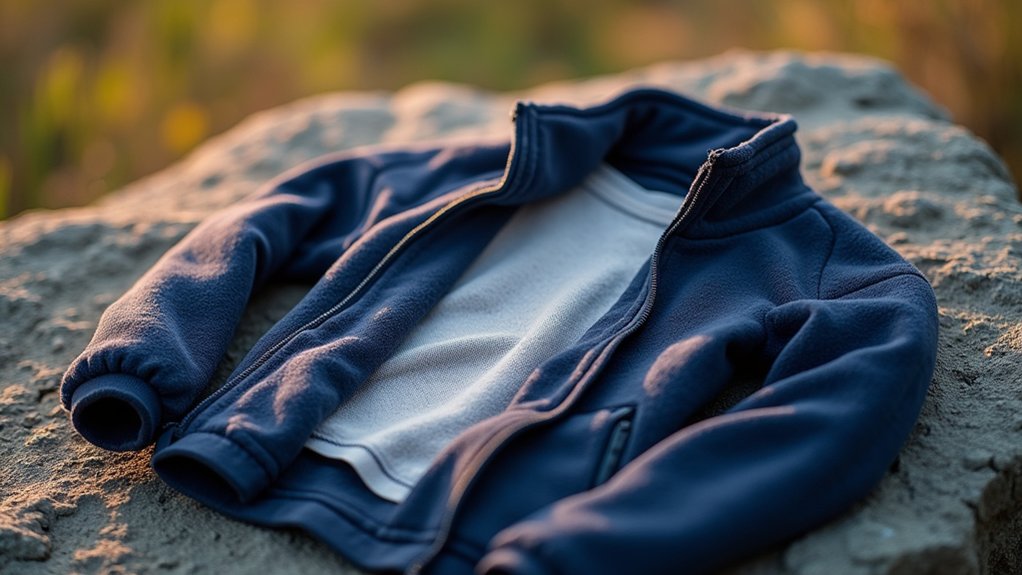
Although waterproof shells protect against external moisture, your teen needs an effective insulation layer that maintains warmth during temperature fluctuations throughout multi-day expeditions. A lightweight fleece serves as the crucial mid-layer in their three-layer system, trapping warm air close to the body while remaining breathable during active hiking.
Choose polyester fleece under 200gsm for high-activity use, or 200-300gsm for versatile all-round warmth. These materials dry quickly, maintain insulation when damp, and won’t add excessive weight to your teen’s pack. Remember that air trapped within the fleece material acts as the primary insulator, making loft and fluffiness essential features to look for.
Grid-pattern fleeces offer superior warmth-to-weight ratios through air-trapping design.
Your teen should wear fleece over their base layer when temperatures drop, adding or removing it via zippers as exertion levels change. This prevents dangerous overheating while ensuring adequate warmth during rest stops.
Waterproof Walking Socks With Odour Control
While your teen’s boots provide the primary barrier against wet conditions, waterproof socks serve as the critical backup defense that prevents blisters, hypothermia, and foot infections during multi-day expeditions.
Choose socks with three-layer construction featuring waterproof hydrophilic membranes and merino wool linings for superior moisture management.
Sealskinz socks offer Aquasealz™ technology with blister-reducing seams, while DryMile ACTIVE features bamboo charcoal for exceptional odor control during humid conditions. These waterproof socks provide essential protection against rain, puddles, snow, and mud while maintaining year-round use through temperature regulation.
Merino wool naturally resists odor during multi-day treks, eliminating the need for frequent changes.
Proper care extends sock life considerably—wash on cool cycles with mild detergent and air dry.
Never tumble dry or iron waterproof membranes.
Quality waterproof socks maintain performance through hundreds of miles when cared for correctly.
Headlamp or Torch With Spare Batteries
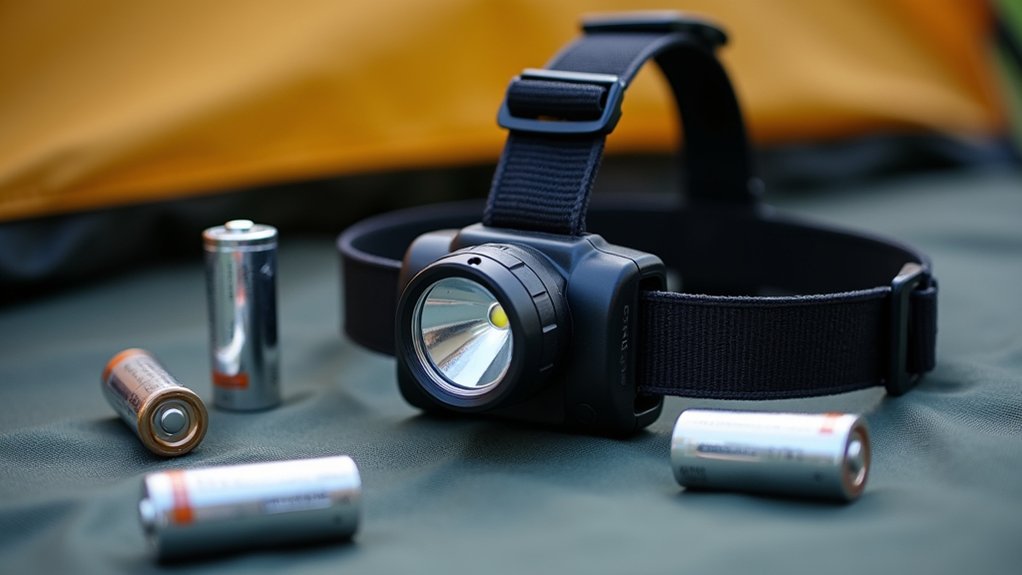
Once your teen’s feet stay dry and comfortable, reliable lighting becomes the next safety priority for DofE expeditions. You’ll need a headlamp or torch with spare batteries for your teen’s personal kit. Headlamps offer hands-free convenience for cooking, map reading, and tent setup after dark.
Consider the Lifesystems Intensity 580 for a powerful beam and long battery life, or the Silva Explore 5 with a USB-C rechargeable battery and a 2-hour charge time. The Ionic model provides 350 lumens brightness with a 40-hour battery life.
Look for a range of 155-350 lumens to balance power and efficiency.
Pack spare batteries in waterproof bags and ensure fresh batteries for consistent performance. Check functionality before departure—DofE standards mandate torches with spares for all expedition levels. Headlamps also serve as essential safety equipment alongside whistles for emergency signalling and visibility in challenging conditions.
1-2 Litre Water Bottles for Hydration
After securing reliable lighting, your teen needs proper hydration capacity for their DofE expedition. Pack two 1-litre tough bottles rather than multiple small ones or single large containers. Bronze expeditions require 4L total capacity, while Silver needs 6L, both equating to 2L daily consumption.
Choose robust bottles with secure locking lids to prevent splits and leaks in rucksacks. Lifeventure Tritan bottles or quality outdoor shop alternatives work well. Avoid thin single-use plastics that compromise durability and environmental responsibility.
Consider hydration bladders for Silver and Gold levels, enabling hands-free sipping throughout the day. Bladders promote slow, consistent hydration and are easier to drink from while walking compared to traditional bottles. However, always pair bladders with a 1L backup bottle due to leak risks.
Bottles also serve as measuring jugs for camp cooking, making them essential multi-purpose equipment.
Personal First Aid Kit With Blister Treatment
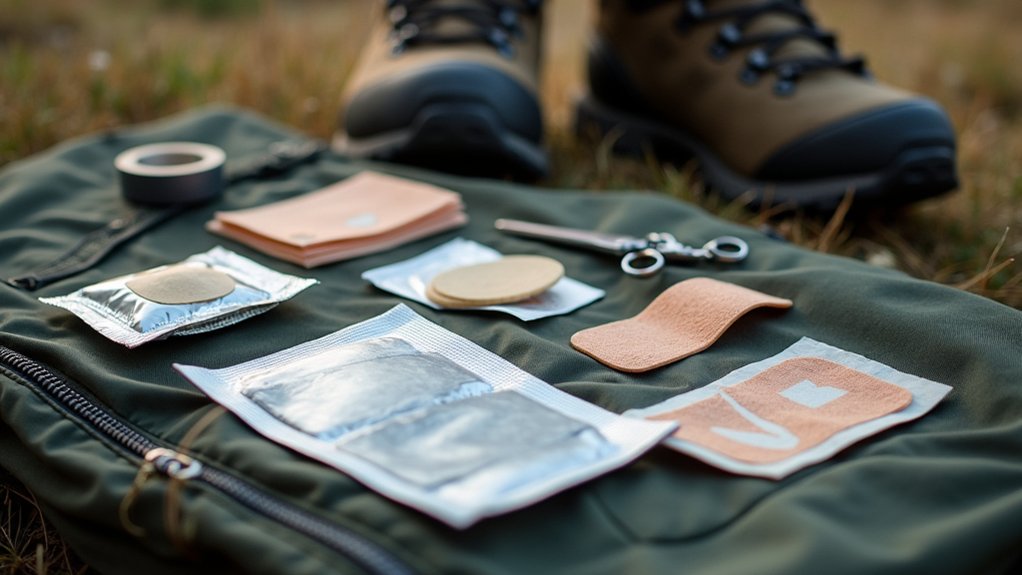
Beyond group medical supplies, every DofE participant must carry their own personal first aid kit tailored to individual needs and potential expedition injuries. Your teen’s kit should prioritize blister treatment since these are the most common issues encountered. Include Compeed plasters for superior blister protection, plus assorted adhesive plasters and chiropody felt for padding.
Pack antiseptic wipes, sterile dressings like Melolin squares, and microporous tape for securing bandages. Essential tools include latex-free gloves, tweezers for splinter removal, small scissors, and safety pins. Don’t forget personal medications, antihistamines, and rehydration sachets.
Ensure your teen familiarizes themselves with all contents and clearly labels medications before departure. Consider pre-stocked options like Lifesystems Trek First Aid Kits for convenience. Check with your expedition provider whether they supply the group med kit or if your teen needs to contribute specific items to the shared supplies.
Warm Hat for Cold Night Protection
While summer expeditions might seem warm during the day, nighttime temperatures can plummet unexpectedly, making a quality warm hat absolutely essential for your teen’s safety and comfort.
Heat loss through the head contributes considerably to hypothermia risk, so don’t underestimate this critical piece of kit.
Choose wool or synthetic materials over cotton for superior insulation and moisture management. Cotton should be avoided completely as it dries slowly when wet and causes dangerous coldness that can compromise your teen’s safety.
A well-fitted beanie or woolly hat should provide complete ear coverage while remaining lightweight enough for easy packing.
Make sure the hat integrates seamlessly with your teen’s layering system – they’ll need to add or remove it quickly as temperatures fluctuate.
Pack the warm hat as standard equipment regardless of season, and consider including a backup in their emergency kit for unexpected weather changes.
Emergency Whistle for Safety Signalling
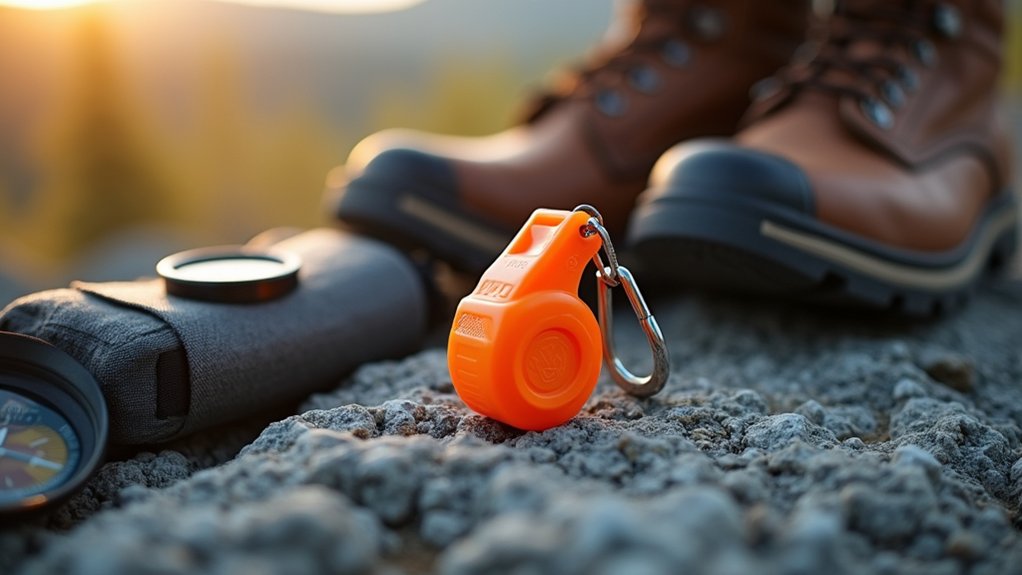
An emergency whistle ranks among the most critical safety items your teen must carry on every DofE expedition, as it can literally save their life when they’re lost, injured, or facing dangerous conditions. The whistle’s listed as mandatory personal kit alongside torches and first aid supplies for good reason.
Your teen needs a high-decibel model producing 100+ decibels, with the Life Systems Echo Whistle at 108dB being ideal. The tough plastic construction withstands harsh outdoor conditions while weighing just 13 grams.
Teach your teen the international distress signal: six sharp blasts repeated at one-minute intervals. Rescuers respond with three blasts. This simple signalling system works when visibility’s poor and voices can’t carry far enough to alert expedition leaders or other teams nearby.
Lightweight Personal Cooking and Eating Kit
After ensuring your teen carries proper safety equipment, you’ll need to focus on selecting the right lightweight cooking and eating kit that won’t weigh down their rucksack during long expedition days.
Trangia stoves are the gold standard for DofE expeditions, with the 27 series (720g) great for 1-2 people.
Choose titanium utensils over stainless steel—a titanium mug weighs just 65g compared to 130g for steel equivalents.
Opt for plastic alternatives like the Lifeventure Ellipse range for bowls and plates, which remain durable while staying lightweight. Consider aluminium cook sets as another excellent lightweight option that provides durability without adding unnecessary weight to your teen’s pack.
Weather Protection: Sun Hat, Sunglasses, and Gloves
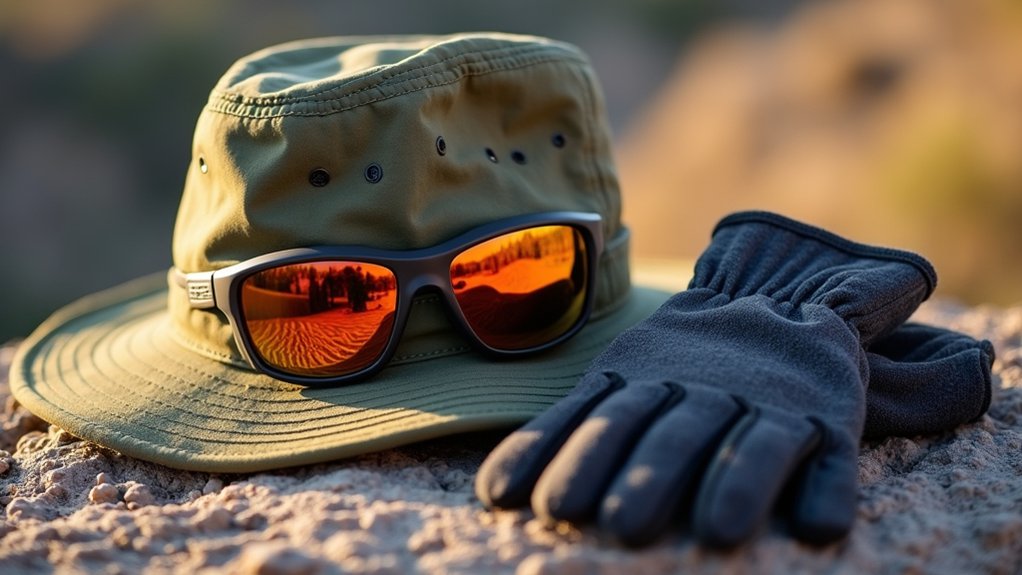
When your teen faces Britain’s unpredictable weather during DofE expeditions, proper head and hand protection becomes essential for both comfort and safety. A lightweight, packable sun hat protects against harmful UV rays during summer expeditions, working alongside sun cream for thorough protection.
Quality sunglasses shield eyes from glare and prevent rain from affecting visibility during variable weather conditions.
Don’t overlook gloves, even for summer expeditions. Temperatures drop significantly during evening hours, making lightweight, breathable gloves valuable for hand protection against wind and cold. Keep these accessories in your rucksack’s top lid pocket for quick access when weather conditions change unexpectedly.
Choose synthetic materials or merino wool for all items, avoiding cotton which retains moisture and causes chilling. Store these accessories in dry bags and ensure your teen understands proper layering techniques for effective temperature management throughout their expedition.
Last Words
You’ve got the essential gear your teen needs for a safe DofE expedition. Don’t compromise on quality with waterproofs, boots, and sleeping systems—these items protect your child in challenging conditions. Confirm everything’s tested before departure, from broken-in boots to properly fitted rucksacks. Remember, this isn’t just camping gear; it’s safety equipment that’ll keep your teenager warm, dry, and secure during their adventure. Invest wisely—their safety depends on these carefully chosen items.