
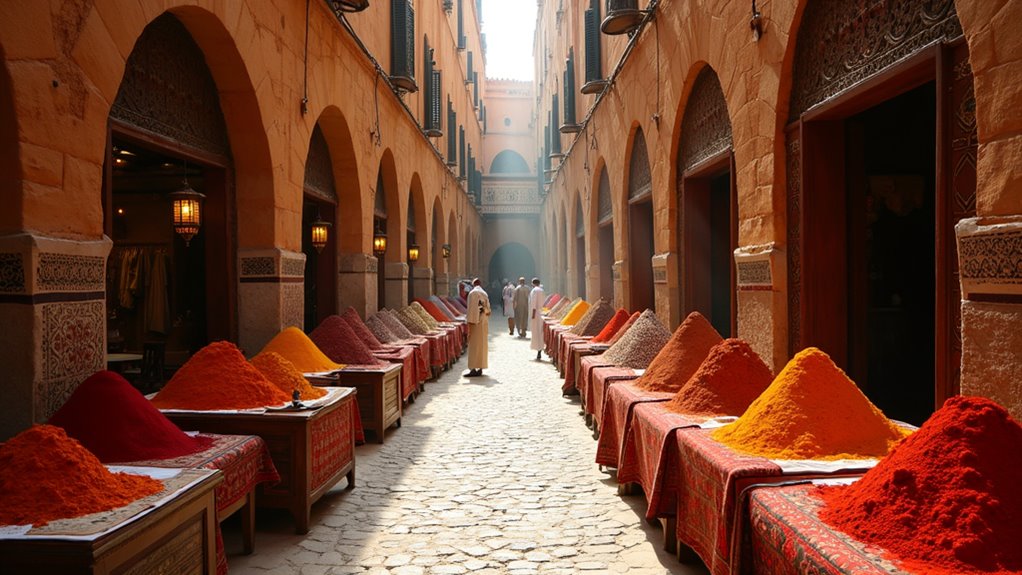
Start your Tunis Medina souk adventure by entering through Bab el Bhar gate and using Zitouna Mosque’s minaret as your landmark for navigation. You’ll want to dress modestly with covered shoulders and knees, carry cash in small Tunisian dinar bills, and master the art of haggling by starting at one-third the asking price. Focus on authentic handmade crafts from specialized souks like Souk el-Attarine for perfumes and Souk El Leffa for carpets, while greeting vendors respectfully with “aslema.” These foundational strategies will transform your family’s marketplace experience into something memorable.
- Navigate the Main Streets and Entry Points Like a Local
- Master the Art of Haggling and Payment Methods
- Dress Appropriately to Respect Cultural Traditions
- Explore Specialty Souks by Merchandise Category
- Use the Zitouna Mosque as Your Central Landmark
- Carry Sufficient Tunisian Dinars for Smooth Transactions
- Support Local Artisans by Buying Authentic Handmade Products
- Visit the Most Photogenic and Historic Market Sections
- Shop for Quality Textiles, Jewelry, and Traditional Crafts
- Follow Local Etiquette When Browsing and Purchasing
- The Sum Up
Navigate the Main Streets and Entry Points Like a Local
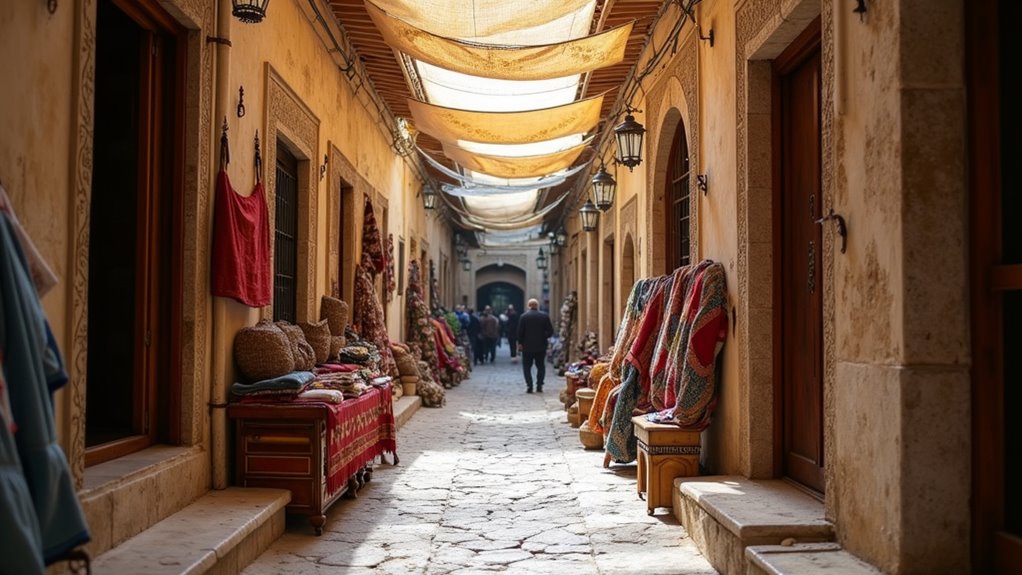
When you first enter Tunis Medina through Bab el Bhar—the main eastern gate also called Porte de France—you’ll step directly into a bustling world where ancient streets serve as extensions of family homes. You’ll find yourself immediately surrounded by souks and living areas, making this the perfect entry point for families.
To navigate safely with children, stick to the main north-south axis along Sidi Ben Arous Street, which intersects at Zitouna Mosque‘s court—your central landmark. Follow the east-west thoroughfare of Jemaa Zitouna and Pasha Streets, similar to ancient Roman roads.
Grab a tourist map from the rail station information bureau before exploring. For direct access across the Medina, take Kasbah Street from Victory Square to the Grand Mosque. Be aware that this historic area covers 270 hectares and houses nearly 110,000 residents, so you’ll be walking through active neighborhoods where locals live and work.
Master the Art of Haggling and Payment Methods
Once you’ve found your bearings along the main thoroughfares, you’ll quickly discover that haggling isn’t just expected in Tunis Medina—it’s an essential skill for protecting your family’s budget. Vendors set initial prices absurdly high, often three times the actual value.
Counter with one-third of their asking price while maintaining a friendly smile. Express shock at their opening bid to signal you’re not a naive tourist. Shop multiple stalls first to understand fair market rates before committing.
Always carry cash in small Tunisian dinar bills—cards aren’t accepted in traditional stalls. Stay polite even when vendors become dramatic or try blocking tactics. Consider bundling multiple items together to negotiate better group discounts on your purchases.
Learning basic Arabic phrases like “shokran” builds rapport. If negotiations stall, calmly walk away. Remember, this back-and-forth process respects local culture while ensuring reasonable prices.
Dress Appropriately to Respect Cultural Traditions
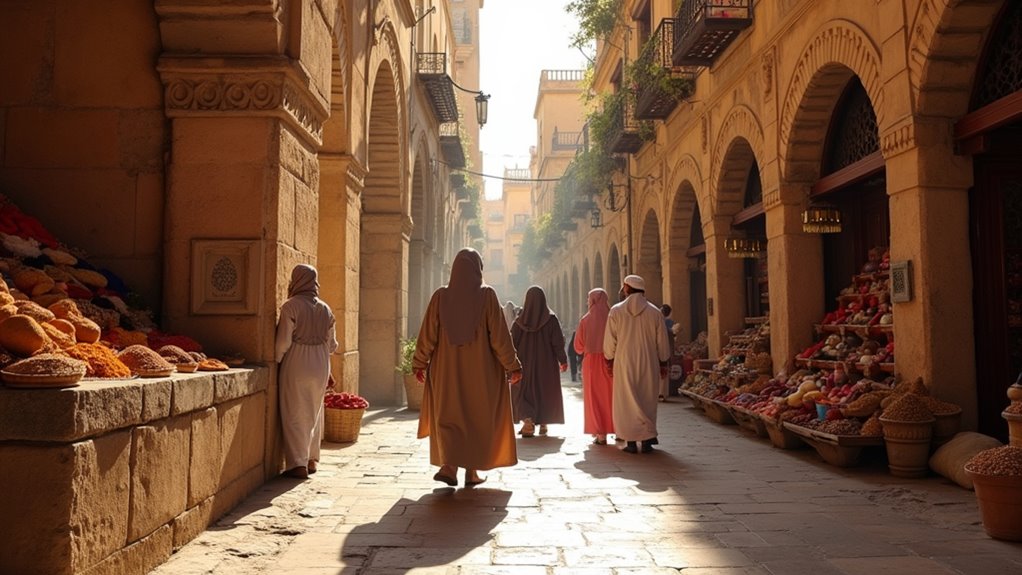
While bargaining skills will save you money, dressing appropriately guarantees you’ll navigate the Tunis Medina comfortably and respectfully with your family. Cover shoulders, upper arms, and legs when exploring traditional areas.
Women should choose knee-length or longer skirts, three-quarter sleeved tops, and pack a lightweight cardigan for extra coverage. Men can wear jeans, knee-length shorts, and avoid tank tops or unbuttoned shirts.
Skip clothing with political slogans or revealing cuts that show cleavage. Pack essential accessories like scarves for sun protection and mosque visits, plus comfortable walking sandals. Avoid slippery sandals due to the extensive walking required through the medina’s winding paths.
The medina becomes more conservative after dark, so dress modestly throughout your visit. These simple clothing choices show respect for local customs while keeping your family safe and comfortable during souk adventures.
Explore Specialty Souks by Merchandise Category
Now that you’re dressed appropriately for your medina adventure, you can confidently explore the specialized souks organized by merchandise categories.
Head to Souk el-Attarine north of Zitouna Mosque for perfumes, oils, and jasmine necklaces.
Visit Souk El Kmach for fabrics and traditional djellabas, while Souk el-Trouk offers tailors and custom clothing services.
Browse Souk El Birka for gold jewelry and Souk de la Laine for silver pieces.
Don’t miss Souk El Leffa for carpet bargaining near the Grand Mosque.
Explore Souk des Chéchias for traditional felt caps with live workshops.
You’ll find quality Tunisian dates and spices in specialty sections, with gift boxes priced between $10-$20.
Each souk maintains its traditional focus, making navigation easier for families. The entire medina contains over 700 monuments, including mosques, palaces, and fountains that you’ll discover throughout your shopping journey.
Use the Zitouna Mosque as Your Central Landmark
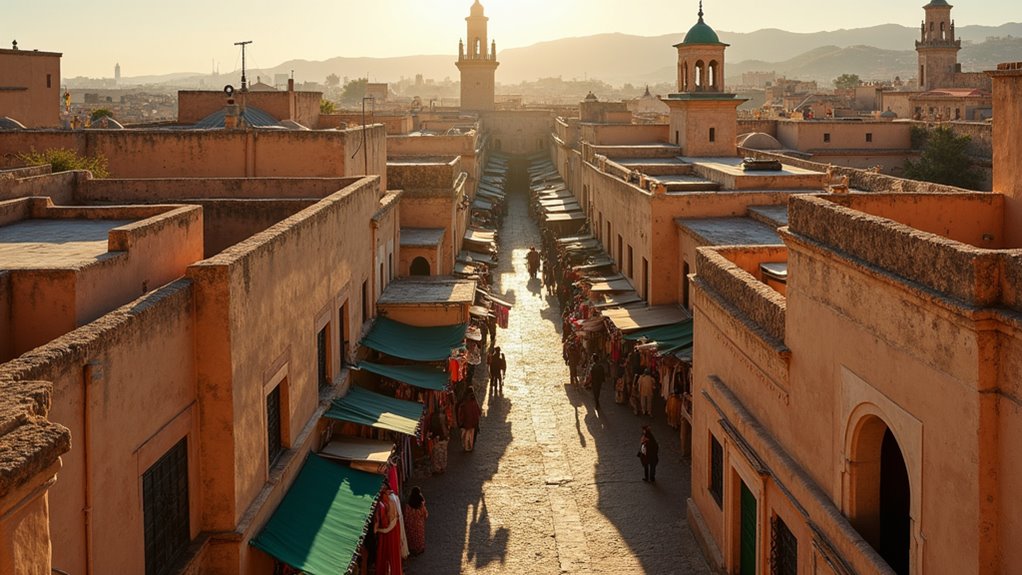
As you navigate the maze-like alleys of Tunis Medina with your family, the towering minaret and distinctive architecture of Zitouna Mosque will serve as your most reliable navigation anchor. This 7th-century landmark sits at the heart of the souks, making it great for establishing your bearings when you’re feeling lost in the winding passages.
You’ll easily spot the mosque’s minaret from various points throughout the Medina, helping you orient yourself toward specific souk areas. The 43-meter high minaret with its distinctive Almohad-style decoration makes it particularly visible above the surrounding buildings.
The mosque’s central courtyard and hanging portico overlooking the dried fruits souk provide excellent reference points for planning your shopping routes.
Keep the mosque as your home base—it’s where major pathways converge, making it simple to regroup with family members and access different merchandise quarters safely.
Carry Sufficient Tunisian Dinars for Smooth Transactions
Since most vendors in Tunis Medina operate on a cash-only basis, you’ll need to carry sufficient Tunisian dinars to make your family shopping experience smooth and stress-free. Budget 200-500 TND daily for shopping and small purchases, with current rates around 2.94 TND per USD as of December 2025.
Exchange money at licensed banks or official bureaus in the medina for better rates than the airport. Request smaller denominations under 50 TND since vendors often struggle providing change for larger notes.
Divide your cash between family members and use a money belt for security. The Tunisian dinar has shown consistent appreciation throughout 2025, making it a relatively stable currency for your travel planning.
ATMs in the souks dispense local currency, but avoid unofficial street changers due to counterfeit risks. Keep excess funds in your hotel safe and only carry what you’ll need for the day’s shopping adventures.
Support Local Artisans by Buying Authentic Handmade Products
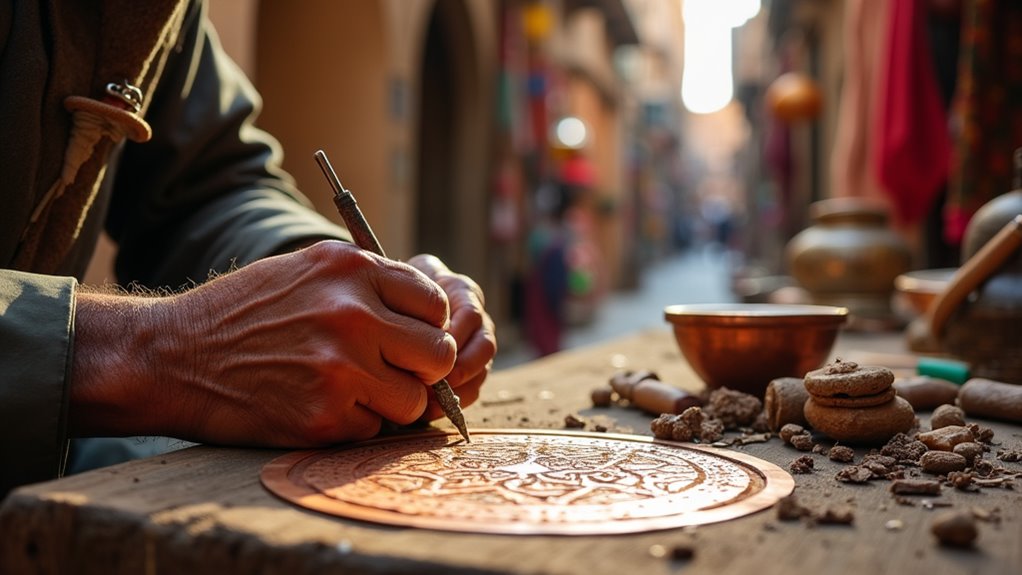
When you explore Tunis Medina’s winding alleys with your family, you’ll discover authentic handmade treasures that directly support local artisans who’ve preserved centuries-old crafting traditions. Look for silk embroidered dresses from medina workshops, hand-modeled pottery from El Kef, and traditional chechias felt head coverings.
Your children will love watching artisans create hand-decorated pottery with vibrant colors and geometric patterns.
Visit dedicated spaces like Espace de l’Artisanat for guaranteed authentic products blending modern and traditional styles. Purchase directly from workshop artisans creating woven silk scarves in Mahdia or carved olive wood items polished with olive oil.
Choose margoum rugs with Amazigh motifs, engraved silver jewelry, or colorful babouches leather slippers. These purchases preserve cultural heritage while providing meaningful souvenirs your family will treasure. The craftsmanship reflects influences from Andalusia, Italy, and Turkey that have shaped Tunisia’s distinctive artistic heritage across generations.
Visit the Most Photogenic and Historic Market Sections
Beyond supporting local craftspeople, you’ll want to capture stunning photos in Tunis Medina’s most historic market sections while creating lasting family memories.
Start at Souk El Attarine, the oldest souk from 1240, located directly behind Al-Zaytuna Mosque. Your family will love the aromatic perfume displays and historic ambiance great for photos.
Visit Souk Es Sabbaghine on the medina’s outskirts, where colorful dye vats and hanging textiles create striking visual backdrops.
The former slave market, Souk El Berka, now showcases beautiful gold and silver jewelry with fascinating historic contrast.
Don’t miss the Central Market‘s Art Deco facade and vibrant produce sections.
The medina’s iconic gates like Bab Bhar frame perfect entry shots, while narrow twisting streets around 700 historic monuments offer endless photogenic opportunities for your family album. As you wander through these atmospheric passageways, notice how the arched vaults overhead create natural frames for your photographs while protecting you from the elements.
Shop for Quality Textiles, Jewelry, and Traditional Crafts
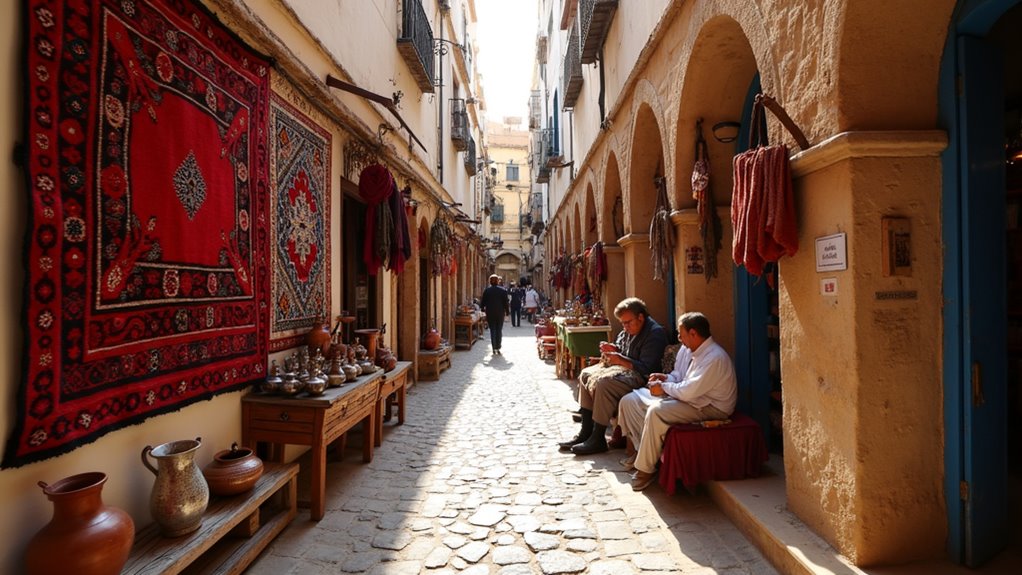
What treasures await your family in the medina’s craft souks? You’ll discover exceptional textiles in Souk des étoffes, where cascading kaftans and blankets fill narrow alleys.
Visit Souk El Leffa for Djerba’s woven wool products and traditional sefseri veils, while Souk de la Laine showcases skilled tailors working handlooms.
For jewelry, explore Souk des Orfèvres‘ glittering workshops where goldsmiths craft ornaments from coral, pearls, and precious stones. You’ll hear silversmiths’ hammers along Rue Jemaa ez Zitouna creating engraved chests and traditional pieces.
Don’t miss Souk des Tapis for Kairouan carpets and geometric Berber mergoums from southern Tunisia.
In Souk des Chechias, watch artisans shape colorful felt hats symbolizing Tunisian heritage.
Finally, browse Souk Chaouachia’s handicrafts including leather goods, ceramics, and metalwork from local workshops. The covered souks provide perfect shopping conditions as their architectural design keeps the narrow passages cool during summer heat and warm during winter months.
Follow Local Etiquette When Browsing and Purchasing
Understanding proper souk etiquette guarantees your family enjoys respectful interactions while shopping in Tunis’s bustling medina. Start every vendor encounter with “aslema” or “salam” greetings, followed by a handshake and light touch of your heart with your right hand. This builds mutual respect immediately.
When browsing, ask permission before photographing vendors or their goods. Maintain modest dress—cover shoulders and knees, especially for women. Avoid tank tops and shorts in conservative medina areas.
During bargaining, keep interactions friendly with smiles. Start negotiations at half the asking price, aiming for a fair middle ground. Never become aggressive while haggling—it’s part of the cultural experience. Take time to inquire about the maker’s village and techniques used, as authentic pieces come with clear origin stories.
Pay with cash Tunisian Dinars when possible, as cards may incur small fees.
The Sum Up
You’ll create unforgettable memories exploring Tunis Medina’s souks with your family when you follow these essential tips. Keep children close in crowded areas, carry small bills for easier transactions, and don’t hesitate to ask vendors questions about their crafts. Remember that shopping here isn’t just about buying souvenirs—you’re supporting local families and preserving centuries-old traditions. Take your time, stay hydrated, and enjoy this authentic cultural experience together.