If you’ve got a port day in Akureyri and want to see some of Iceland’s most dramatic landscapes without getting stranded, this Lake Myvatn and Godafoss tour delivers real value. You’re looking at roughly 5 to 6 hours total, which fits perfectly into a typical cruise schedule. The tour hits all the major highlights—from the thundering Godafoss waterfall to the otherworldly geothermal zones where the earth literally steams beneath your feet.
What makes this worth booking: The hassle-free logistics mean you don’t waste precious port time figuring out transportation. Your guide meets you right at the pier, handles all the driving, and gets you back in time to board your ship. Plus, you’re in a small group of around 18 people maximum, which feels genuinely intimate compared to the massive tour buses other cruise lines run. I also love that your guide is typically a local who actually knows the area—not just someone reading from a script.
One fair consideration: The tour packs in quite a lot of ground, and some travelers mention feeling rushed, especially if you want real time at the Myvatn Nature Baths. You’ve got roughly one hour there total, which includes lunch time and getting changed. If soaking in the warm waters is your main goal, you might find that window tight.
- What You’re Actually Getting for Your Money
- Meeting Your Guide at the Port
- Godafoss: The Waterfall That Stops You Cold
- Lake Myvatn: Where the Earth Gets Theatrical
- The Mud Pools and Steam Vents
- Dimmuborgir: The Dark Castle Lava Fields
- Grjotagja Cave and the Continental Rift
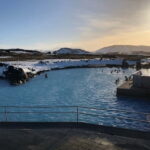
- The Myvatn Nature Baths: Worth the Extra Cost?
- The Pacing and Timing Reality
- Who This Tour Works Best For
- The Guide Quality Matters
- Weather and Flexibility
- Cancellation and Booking Peace of Mind
- Should You Book This Tour?
- FAQ
- How much time do I actually spend at each location?
- What if I want to swim in the Nature Baths but don’t have much time?
- Is the van comfortable for a full group of 18 people?
- What happens if the weather is bad on my tour date?
- Do I need to book the Nature Baths in advance?
- Will the guide speak English clearly?
- What should I bring on this tour?
- The Best Of Akureyri!
- More Boat Tours & Cruises in Akureyri
- More Tours in Akureyri
- More Tour Reviews in Akureyri
What You’re Actually Getting for Your Money
 1 / 8
1 / 8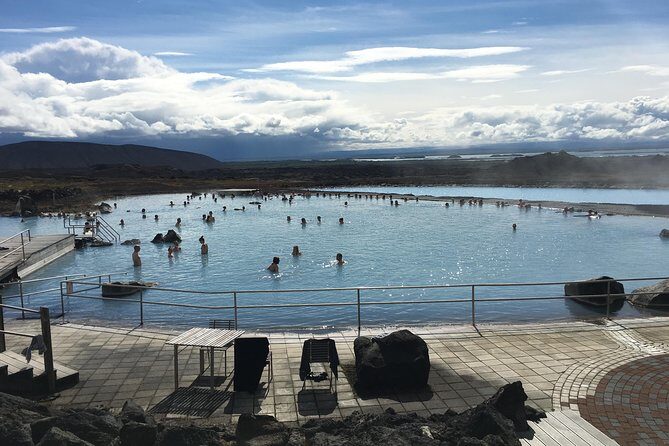 2 / 8
2 / 8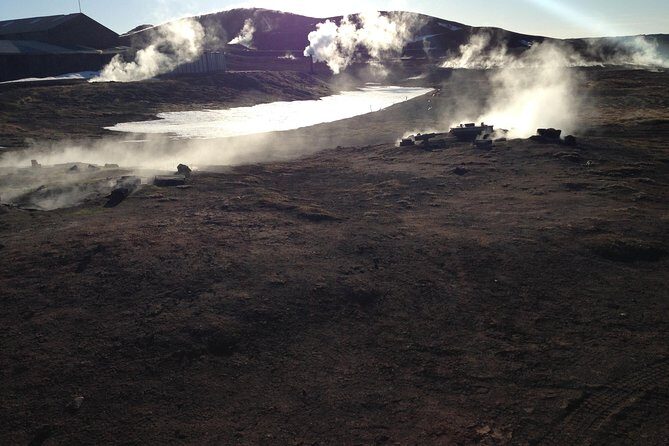 3 / 8
3 / 8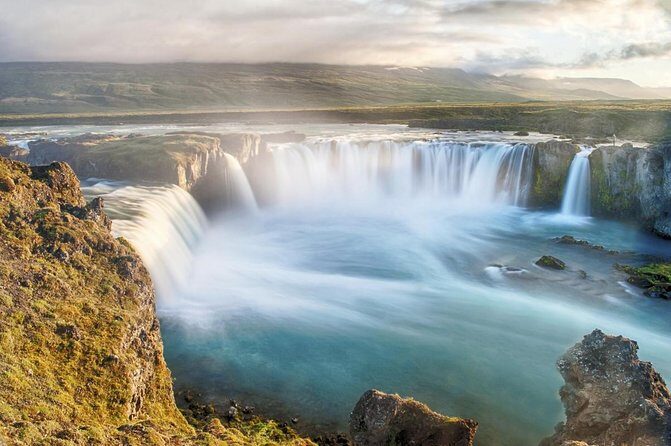 4 / 8
4 / 8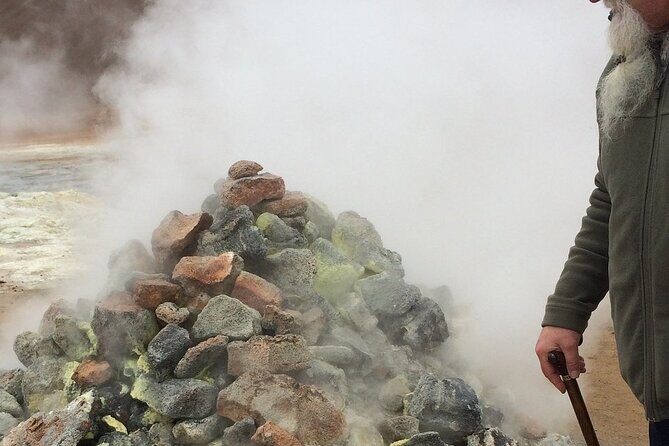 5 / 8
5 / 8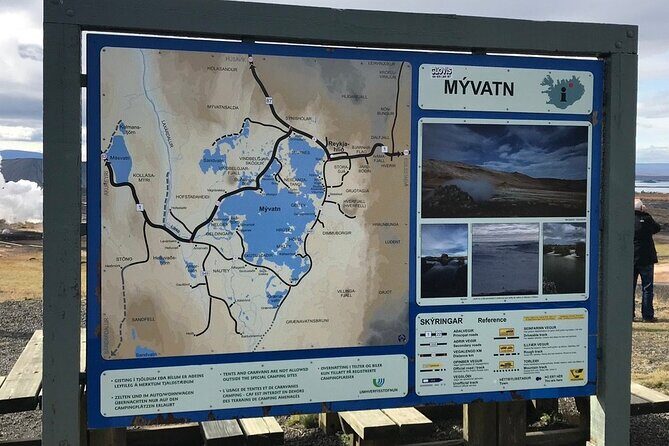 6 / 8
6 / 8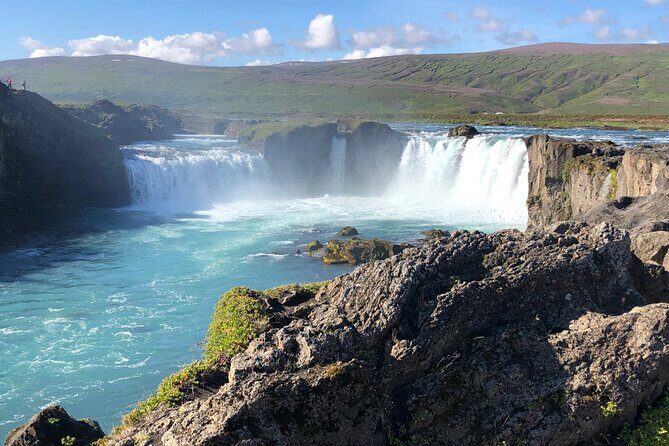 7 / 8
7 / 8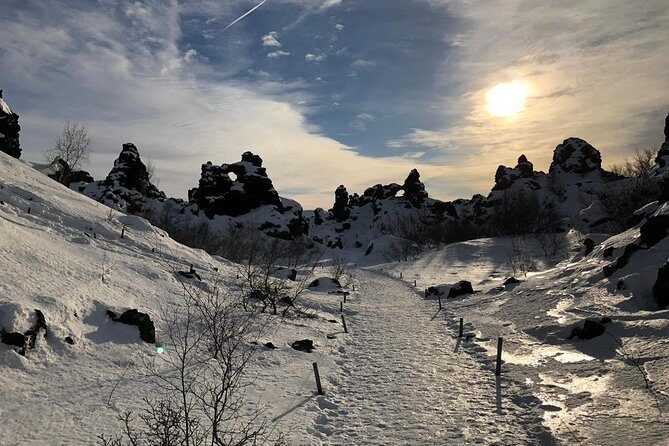 8 / 8
8 / 8At around $205 per person, you’re paying less than what cruise lines charge for their own excursions—often significantly less. The price includes your guide, transportation in a comfortable van, and all the major stops. What it doesn’t include is lunch and the entrance fee to the Nature Baths (roughly $60 extra per person). This matters because it means you need to budget accordingly and book the baths separately if that’s on your must-do list.
For the money, you’re getting genuine value. You’re not sitting in a tour bus for hours listening to generic commentary. Instead, you’re stopping at multiple distinct landscapes—waterfalls, mud pools, lava formations, and a tectonic rift—with a knowledgeable person explaining what you’re seeing.
👉 See our pick of the 4 Best Walking Tours In Akureyri (With Prices)
Meeting Your Guide at the Port
Logistics are straightforward. You’ll meet your guide at either the Oddeyrarbryggja or Tangabryggja pier car park, depending on where your ship docks. Look for the sign with Imagine Iceland Travel. This system works well because you’re not hunting around the port trying to find your tour operator. You’re steps from the ship, and everything moves quickly.
The van itself is comfortable and clean, though taller travelers mention it feels a bit snug if you’re at maximum capacity. Guides like Oli, Jon, and Johannes—who pop up repeatedly in reviews—tend to be entertaining and genuinely knowledgeable. They’ll share context about what you’re seeing without overwhelming you with information overload.
You can also read our reviews of more boat tours in Akureyri

Godafoss: The Waterfall That Stops You Cold
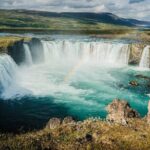
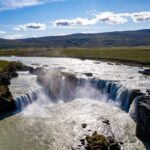
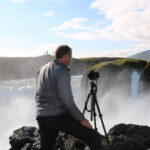
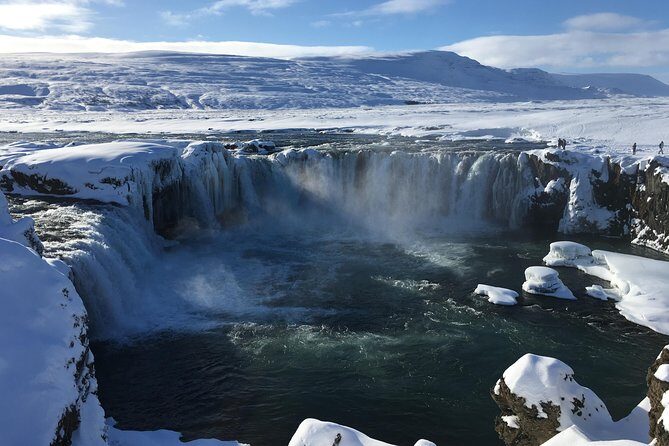
Your first real stop is Godafoss, the Waterfall of the Gods. You get about 30 minutes here, which is enough time to walk down, see the falls from multiple angles, and take photos without feeling pushed. The waterfall itself is genuinely impressive—a wide, powerful cascade that photographs beautifully no matter the light.
What makes this stop work is that you’re not wrestling with enormous crowds like you might at more famous Icelandic waterfalls. You get a real moment to stand there and absorb the scale of it. Your guide will point out the geology and tell you why this place mattered historically. Some travelers mention wishing they had more time here, particularly if you want to explore both viewpoints thoroughly. If that’s important to you, just plan accordingly and move efficiently through the other stops.
Lake Myvatn: Where the Earth Gets Theatrical
After Godafoss, you spend roughly three hours around Lake Myvatn, which is where things get genuinely unusual. This is geothermal country—the ground here is actively heated by volcanic activity, and you’ll smell sulfur and see steam rising from the earth.
The Mud Pools and Steam Vents
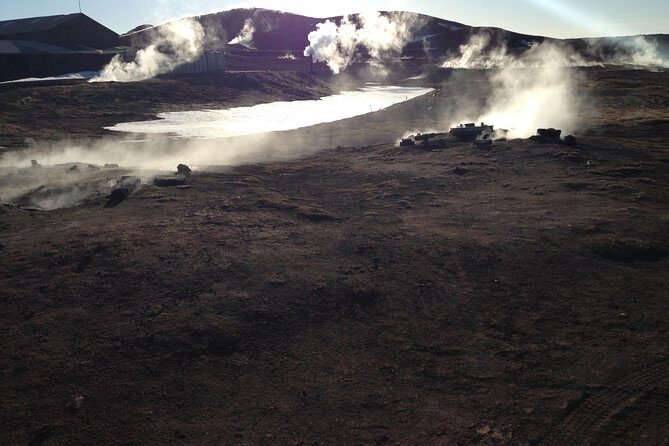
The first major stop is Námaskarð, where you’ll see the Hverir mud pools—these are exactly what they sound like. Bubbling, steaming mud pots in various shades of orange and brown, with natural steam vents (fumaroles) shooting up around them. It’s otherworldly and smells distinctly of sulfur. You get about 20 minutes here, which is enough to walk around, take photos, and understand what you’re looking at without the smell getting too overwhelming.
This is one of those stops that feels genuinely different from typical tourist attractions. You’re not looking at something ancient or man-made—you’re watching the earth actively do something unusual. Your guide will explain the geology, but honestly, the visual is striking enough on its own.
Dimmuborgir: The Dark Castle Lava Fields
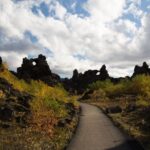
Next up is Dimmuborgir, also called the Dark Castle. This is a sprawling lava formation that looks like a medieval fortress made of black rock. You get 20 minutes to wander through it, and it’s genuinely fun to explore. The rock formations are strange and beautiful, with caves and passages you can walk through. Bring decent shoes because it’s uneven terrain.
What makes this stop special is how different it feels from the mud pools. You’ve gone from watching geothermal activity to walking through ancient lava flows. The contrast keeps the tour from feeling repetitive.


Grjotagja Cave and the Continental Rift
If you’re not using the Nature Baths, your guide will take you to Grjotagja Cave instead, an old bathing cave that sits in a rift between the Eurasian and American tectonic plates. You get about 15 minutes here. This is genuinely cool—you’re literally standing where two continental plates meet. The cave itself is small and interesting, and the context makes it feel significant rather than just another cave.
The Myvatn Nature Baths: Worth the Extra Cost?
Here’s where you need to make a decision. The tour includes an hour at the Myvatn Nature Baths, but the entrance fee (around $60 per person) is separate and must be booked beforehand. The tour notes you should reserve tickets about three hours after the tour starts, which means you’re booking once you’re already on the road.
If you do the baths, you’ll get to soak in warm, mineral-rich water with views of the surrounding landscape. It’s genuinely relaxing and feels like a nice reward after several hours of walking around. However, that one-hour window is tight if you actually want to swim. You need time to get changed, get in the water, eat lunch, and get back out. Some travelers found this frustrating and skipped the baths entirely, opting instead for the cave visit or just having lunch at the cafe.
My honest take: If you love soaking in geothermal pools and don’t mind moving quickly, book it. If you want a leisurely soak and a proper meal, you might feel rushed. The cafe has food, but it can get crowded during tour season.
The Pacing and Timing Reality
Let’s talk about the elephant in the room: some travelers mention feeling rushed. You’re covering a lot of ground in 5-6 hours, and your guide needs to keep things moving to get you back to your ship on time. Most guides handle this well, giving clear time warnings at each stop. However, one traveler mentioned a guide who was almost irritable about timing, which soured the experience.
The best approach is to wear a watch, stay aware of your time at each stop, and don’t wander off exploring caves if you’ve got five minutes left. Your guide isn’t being rude by keeping things on schedule—they’re managing logistics so you don’t miss your ship. That’s actually the entire point of booking a cruise excursion instead of renting a car.
Who This Tour Works Best For
You should book this if you’re a cruise passenger with limited time, enjoy seeing multiple landscapes in one day, and don’t mind a moderate pace. It’s perfect if you want to see the highlights without spending six hours driving yourself around. It’s also great if you’re curious about geothermal activity and Icelandic geology—your guide will explain what you’re seeing in ways that make it genuinely interesting.
Skip it if you want to spend hours at a single location, prefer a leisurely pace, or are hoping for a heavy focus on Icelandic history and culture. Some guides deliver more cultural context than others, so that experience varies.
The Guide Quality Matters
One of the best parts of booking with a local operator rather than your cruise line is the guide quality. You get people like Oli, Jon, and Johannes—locals who actually know the area and can answer questions beyond what’s in a tour script. They share stories, point out things other guides miss, and generally make the experience feel less like a checkbox tour.
That said, guide quality does vary. Most travelers rave about their guides, mentioning that they were knowledgeable, entertaining, and genuinely helpful. A few travelers had less engaging experiences, though even then, they noted the stops themselves were worthwhile.
Weather and Flexibility
The tour requires decent weather and operates rain or shine. If conditions are truly terrible, it can be canceled, and you’ll get offered a different date or full refund. In practice, Icelandic weather is unpredictable, so dress in layers and bring a good rain jacket. Your guide has done this in all conditions and knows how to navigate around weather issues.
Cancellation and Booking Peace of Mind
You can cancel up to 24 hours before the tour for a full refund, which is genuinely helpful if your cruise schedule changes or weather looks really bad. The confirmation comes immediately after booking, and you’ll get clear instructions about where to meet and what to expect.
One practical tip from the reviews: Make sure you know what time the tour starts so you can book the Nature Baths at the right time (about three hours later). This small detail prevents confusion and ensures your baths reservation aligns with when you’ll actually arrive there.
Should You Book This Tour?
Yes, if you’re looking for an efficient way to see multiple dramatic Icelandic landscapes during a cruise port day. The value is genuinely good compared to cruise line excursions, the logistics are handled well, and you’ll see things that stick with you. Godafoss alone is worth the price, and the geothermal areas around Lake Myvatn are unlike anything most people encounter in their travels.
The main question is whether the pace works for you. If you’re someone who wants to linger and really absorb each location, you might feel pressured. But if you’re happy seeing multiple highlights in one day and getting back to your ship on time, this is exactly what you need.
Book it well in advance—the tour notes it’s typically reserved about 100 days ahead, which tells you it’s popular for good reason. And if the Nature Baths appeal to you, don’t forget to add that reservation separately.
Lake Myvatn Day Tour and Godafoss Waterfall for Cruise Ships from Akureyri Port
FAQ
How much time do I actually spend at each location?
You get roughly 30 minutes at Godafoss, about three hours total around Lake Myvatn split between multiple stops (20-30 minutes each at the mud pools, lava formations, and other sites), and one hour at the Nature Baths if you choose to go. The remaining time is spent driving between locations and any breaks. The timing is tight but workable if you move efficiently at each stop.
What if I want to swim in the Nature Baths but don’t have much time?
One hour total at the baths is genuinely tight if you want to change clothes, swim, and eat lunch. Most travelers found they had maybe 20-30 minutes in the water after accounting for changing and eating. If swimming is your main priority, consider whether you’d rather skip the baths entirely and spend more time at the other stops instead.
Is the van comfortable for a full group of 18 people?
The van is clean and well-maintained, but at maximum capacity it feels snug, particularly if you’re tall. Most travelers found it acceptable for a 5-6 hour tour, though a few mentioned wishing there was more space. It’s not luxurious, but it gets the job done.
What happens if the weather is bad on my tour date?
The tour operates in rain and typical Icelandic weather, but if conditions become truly severe, it can be canceled. You’ll be offered a different date or a full refund. Dress warmly and bring a good rain jacket regardless, as weather in Iceland changes quickly.
Do I need to book the Nature Baths in advance?
Yes, the entrance fee is not included in the tour price and must be reserved separately beforehand. The tour recommends booking about three hours after the tour start time, which gives you a specific window to reserve. Without advance booking, you won’t be able to enter.
Will the guide speak English clearly?
Most guides are fluent English speakers, though a few travelers mentioned strong accents that occasionally made them hard to understand. This varies by guide. The tour is offered in English, and you’ll receive tour information in English from booking through completion.
What should I bring on this tour?
Wear comfortable walking shoes (the lava formations are uneven), bring layers and a waterproof jacket, and consider sunscreen and sunglasses. The geothermal areas can smell strongly of sulfur, so if you’re sensitive to smells, that’s worth knowing. Bring money for lunch at the baths or pack your own food if you prefer. A camera or phone for photos is essential given how visually striking these locations are.