We’ve reviewed countless guided tours across Europe, and this combination of the Acropolis site and its museum stands out for two compelling reasons: you get genuine expert commentary that transforms marble ruins into living history, and you actually save significant time by skipping some of the worst queues that plague this UNESCO World Heritage Site. The partnership between the archaeological site and the modern museum means you’re not just seeing artifacts in isolation—you’re understanding them in context, which deepens the entire experience.
That said, this tour demands physical stamina and requires tolerance for heat and crowds, even with the skip-the-line benefit. You’re climbing steep marble pathways under the Athenian sun with potentially 20-plus other people. If you have mobility concerns or heat sensitivity, you’ll want to read the practical details below carefully.
This tour works best for first-time visitors to Athens who want to maximize their understanding of ancient Greek civilization without spending a full day navigating crowds and deciphering archaeological placards on their own.
- What You’re Actually Paying For
- The Route: Seven Stops Through 2,500 Years of History
- Stop 1: The Acropolis Ascent and Overview (50 minutes)
- Stop 2: Theatre of Dionysus (15 minutes)
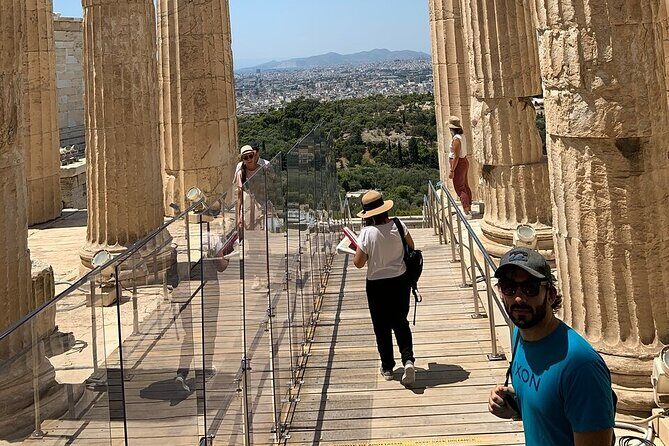
- Stop 3: The Propylaea and Temple of Athena Nike (combined, about 20 minutes)
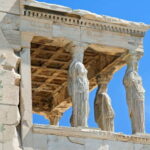
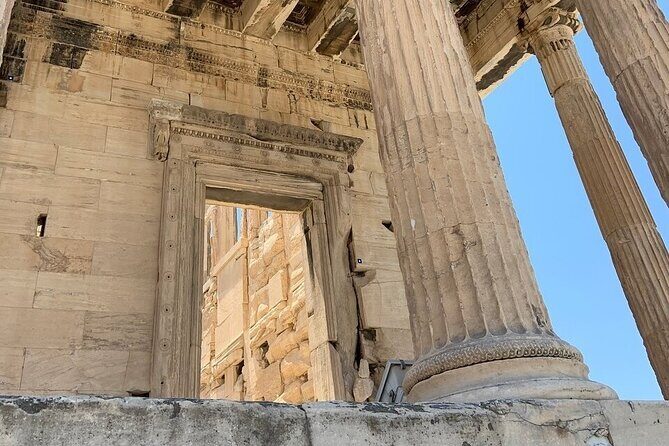
- Stop 4: The Erechtheion (15 minutes)
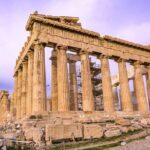
- Stop 5: The Parthenon (20 minutes)
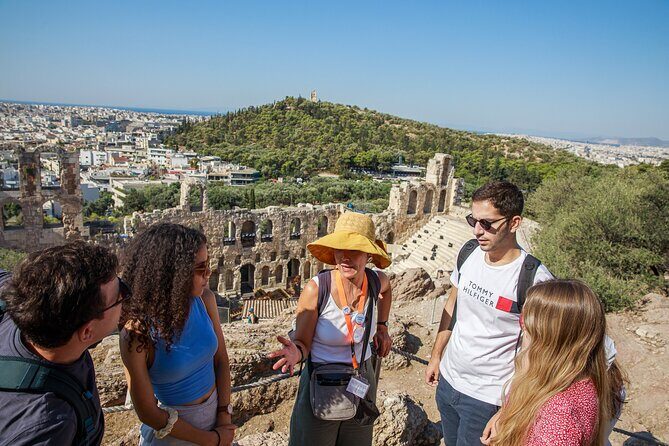
- Stop 6: The Odeon of Herodes Atticus (10 minutes)
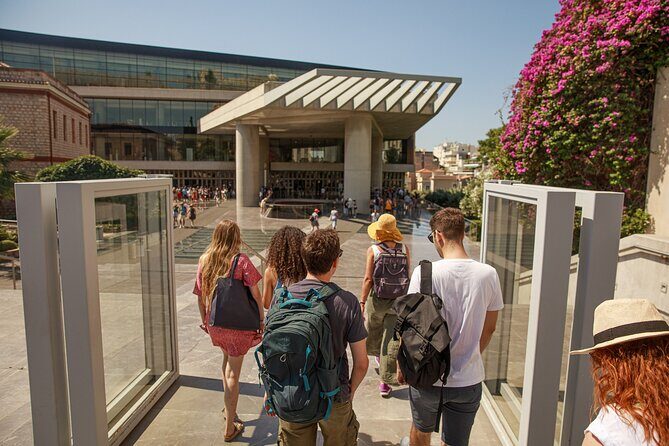
- Stop 7: Acropolis Museum (1 hour 30 minutes)
- The Guide Makes or Breaks the Experience
- Practical Realities: What to Prepare For
- When to Book and How to Optimize Your Visit
- Group Size and Logistics
- The Museum Experience
- Value Assessment: Is It Worth the Money?
- FAQ: Practical Questions Answered
- The Bottom Line
- The Best Of Athens!
- More Museum Experiences in Athens
- More Tours in Athens
- More Tour Reviews in Athens
What You’re Actually Paying For




At $56.84 per person for a 3.5-hour guided experience, this tour represents solid value when you consider what’s included. The base price gets you an English-speaking guide, use of wireless earpieces so you can hear commentary without standing in a tight huddle, and crucially, skip-the-line access to the Acropolis (if you book the ticket upgrade). The museum entrance fee ($20) and Acropolis entry ($30) are separate, but bundling these together saves you from buying tickets separately and waiting in those notorious lines that can stretch 45 minutes or longer during peak season.
What makes the pricing structure smart is flexibility. You can book without tickets if you’ve already purchased them elsewhere, or you can add them to guarantee your entry time. Several reviewers specifically praised booking the 8 a.m. early-entry option, noting that beating the crowds made an enormous difference in their experience, particularly during summer months when temperatures soar above 95°F.

👉 See our pick of the The 2 Top Tours In Athens: Which Is Best?
The Route: Seven Stops Through 2,500 Years of History
Your journey begins at Dionysiou Areopagitou Street, a short walk from the Acropolis’ main entrance. After security screening (expect up to 30 minutes during peak season), you’ll ascend the sacred hill with your guide.
You can also read our reviews of more museum experiences in Athens
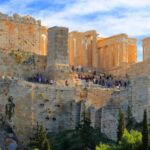

Stop 1: The Acropolis Ascent and Overview (50 minutes)
The climb itself takes about 15-20 minutes depending on fitness level and crowd density. The pathways are steep, uneven, and—this matters—slippery even when dry. One reviewer who initially worried about the climb noted that their guide “broke up the long hike into little intervals so it didn’t feel like we had to race up the hill.” This pacing approach appears consistent across multiple positive reviews, suggesting the guides are trained to make the ascent manageable for mixed-fitness groups.
As you climb, your guide will begin contextualizing what you’re seeing. Rather than just pointing at ruins, experienced guides like those praised in reviews weave mythology into the landscape, explaining why the ancient Athenians built here and what these structures meant to them.
Stop 2: Theatre of Dionysus (15 minutes)
This is where Western theater literally began. The hillside seating carved directly into the rock once held 17,000 spectators who gathered for tragedies and comedies that still influence storytelling today. Your guide will help you visualize how audiences experienced these performances, making the archaeological remains feel less like a museum piece and more like an actual functioning space.
Stop 3: The Propylaea and Temple of Athena Nike (combined, about 20 minutes)
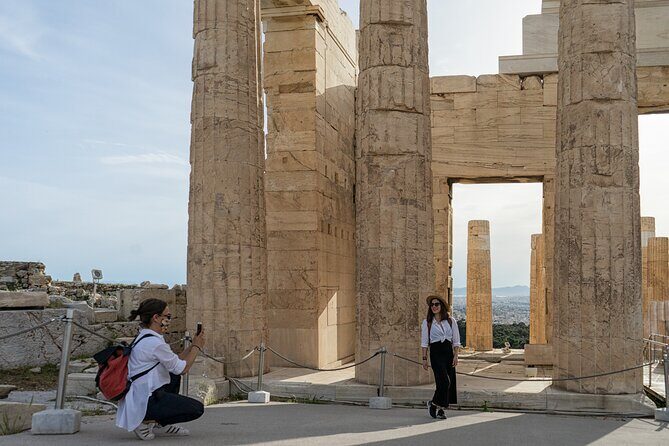
The Propylaea served as the monumental gateway to the sacred precinct. The Temple of Athena Nike, with its elegant Ionic columns, sits nearby on a bastion. One traveler mentioned their guide “weaved in vivid stories from mythology that truly brought the ancient world to life”—this is the kind of context that transforms these stops from “we saw some old columns” to genuine understanding of what these buildings represented.
Stop 4: The Erechtheion (15 minutes)
The Erechtheion’s Caryatid maidens—the famous female figures serving as columns—attract attention for good reason. These sculptures represent some of ancient Greece’s finest artistic work. Your guide will explain the mythological significance of this temple and why the Caryatids became iconic representations of female strength and beauty in Western art.


Stop 5: The Parthenon (20 minutes)
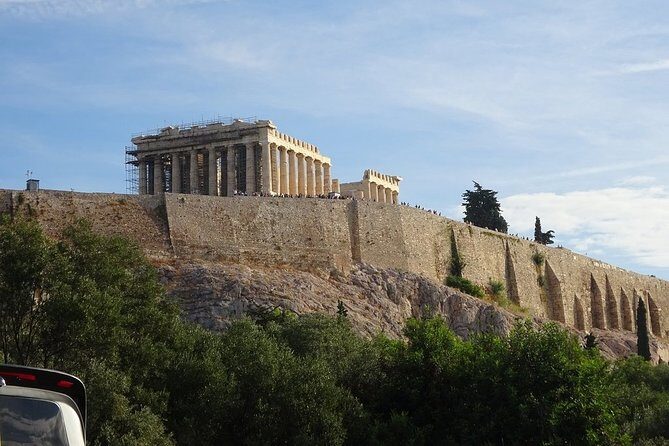
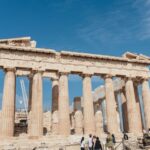
You’ve reached the summit and the tour’s centerpiece. The Parthenon dominates the landscape, and your guide will discuss its architectural innovations (those subtle curves that make it appear perfectly straight), its original function as a treasury, and the sculptural program that once decorated it. Here’s an important detail: many original sculptures are no longer on-site. They’re preserved in the museum you’ll visit next, which is why the guided approach works so well—your guide can explain what you’re looking at and where the originals are.
You’ll have time here to take photographs and absorb the views over Athens. The vista across the city is genuinely stunning, particularly in late afternoon light.
Stop 6: The Odeon of Herodes Atticus (10 minutes)
This Roman-era theater still hosts concerts and performances today, making it a living monument rather than a purely archaeological site. Your guide will explain how this structure represents the cultural continuity between ancient Greece and the Roman period that followed.
Stop 7: Acropolis Museum (1 hour 30 minutes)
After descending (carefully—the marble is genuinely slippery), you’ll enter the modern museum. Rather than trying to see everything, your guide will lead you through the highlights, connecting artifacts directly to what you just saw on the Acropolis. This is where those famous Parthenon sculptures live, along with thousands of other objects that tell the story of Athenian civilization.
One particularly detailed review noted: “It is a highlights tour – touring the entire Museum would take all day…We might have found things ourselves, but it was much better with a guide.” After the guided portion, you’re free to explore further independently if you have time, though most people are ready for shade and refreshment by this point.
The Guide Makes or Breaks the Experience
This tour’s reputation rests almost entirely on guide quality. The reviews are remarkably consistent in praising knowledgeable, engaging guides who balance historical depth with storytelling. Guides mentioned by name—Dimitris, Rina, Yolanda, Maria, Margarita, Niamb, Niobe—appear in multiple five-star reviews with specific praise for their ability to make history feel relevant and alive.
One standout review captures what separates excellent guides from merely competent ones: “She engaged the group with thoughtful questions, made sure everyone was safe from the slippery stones and those sneaky pickpockets, and even gave us ample time to rest and grab a snack between the Acropolis and the museum…She made the trek up to the Parthenon feel effortless, stopping at key moments to explain what we were seeing.”
That combination—safety awareness, pacing, engagement, and accessibility—doesn’t happen by accident. It reflects training and experience.
There’s one three-star review worth noting: the traveler felt their guide focused too much on anecdotes and not enough on historical significance, and prioritized schedule adherence over allowing photo time. This suggests that if you’re visiting primarily for Instagram-worthy shots rather than understanding history, you might find some guides’ pacing frustrating. However, this appears to be an outlier; the overwhelming majority of reviewers appreciated the balance between information and experience.
Practical Realities: What to Prepare For
The Heat and Sun: Multiple reviewers emphasized this isn’t a minor consideration. The Acropolis is almost entirely exposed, with minimal shade. One traveler noted seeing “kids crying trying to cope with the heat” during a summer visit. The tour operator provides some shade management—guides know where to pause—but you absolutely need sunscreen, a hat, and plenty of water. Several reviews specifically mentioned bringing a thermos with cold water, as vending machines only accept coins and water gets expensive.
The Crowds: Even with skip-the-line access, you’re still navigating crowded pathways. The security screening at entry can take 30+ minutes during peak season. One reviewer noted that despite arriving at 8 a.m., “it was still crowded” but the early start meant they could move through more comfortably than later arrivals.
Physical Demands: This isn’t a casual stroll. You’re climbing 200+ feet of elevation gain on uneven, sometimes slippery marble. One reviewer with a 77-year-old mother noted she “managed it well,” but that required choosing the early-start option and presumably good overall fitness. If you have knee, hip, or balance issues, honestly assess whether this is manageable. The tour operator notes it requires “moderate physical fitness level.”
What You Can’t Bring: Backpacks aren’t allowed on the Acropolis. If you’re traveling with a baby, strollers aren’t permitted either—the operator recommends a baby pouch instead. This matters for trip planning if you’re combining activities.
Timing Strictness: The tour has fixed entry times coordinated with the Acropolis’ schedule. Late arrivals won’t be accommodated, and there are no refunds for missing your slot. This is non-negotiable due to the site’s entry protocols.
When to Book and How to Optimize Your Visit
The data shows this tour is typically booked 38 days in advance, suggesting popular time slots fill up. If you’re planning an Athens trip, booking well ahead increases your chances of getting your preferred time.
The overwhelming consensus from reviews: book an early morning slot. The 8 a.m. start appears repeatedly in positive reviews with specific mention of beating crowds and avoiding the worst heat. One reviewer said the early start “meant we were cool enough and beat some of the crowds.” If you’re visiting in summer, this isn’t optional—it’s essential.
The ticket upgrade decision is worth considering. While it adds $50 to your total cost, reviewers who purchased tickets through the tour praised the skip-the-line benefit. Without prepaid tickets, you’re looking at potentially 45 minutes of queuing before your tour even begins. That’s time you could spend actually experiencing the site.
Group Size and Logistics
Tours are limited to 24 people maximum, which is genuinely small for a guided Acropolis experience. This size allows your guide to actually manage the group’s safety and pacing, which matters on those slippery marble paths. The wireless earpieces mean you’re not craning your neck to hear—you can position yourself for better views while still catching every word.
The meeting point is on Dionysiou Areopagitou Street, directly accessible by public transportation. If you’re arriving by cruise ship (the data mentions several cruise passengers), the X80 bus from Piraeus takes you directly there. Public transportation is straightforward, though one reviewer mentioned the meeting point signage could be clearer—they walked past it four times before finding it.
The Museum Experience
The museum portion feels like a natural extension rather than an afterthought. By the time you’ve seen the Acropolis, you’re genuinely curious about those missing sculptures and want to understand the full context. One reviewer captured this perfectly: “Many of the originals are in the Museum. It is a highlights tour – touring the entire Museum would take all day…it was much better with a guide. Once that part of the tour was over, we were free to explore more of the Museum on our own.”
The museum’s modern architecture contrasts sharply with the ancient site, but that’s intentional. The top floor’s famous glass floor lets you look down at the Acropolis while examining artifacts from it. Guides apparently lead memorable tours of this space, with one reviewer recalling “a memorable procession around the museum’s top floor, bringing the famous Parthenon frieze to life in a way we’ll never forget.”
Value Assessment: Is It Worth the Money?
A detailed review from someone who’d previously visited the Acropolis independently provides useful perspective: “Although the tour is a bit expensive, to us it was well worth it to hear the culture and history from a truly guide. If we had wandered the site and read placards on our own, we never would have gotten as much out of the visit.”
That’s the real value proposition. You’re not paying for access—you could get that yourself. You’re paying for expert interpretation that transforms viewing ancient ruins into understanding ancient civilization. The skip-the-line benefit is genuinely valuable, but it’s secondary to what you’re learning.
At $56.84 plus optional ticket purchases ($50), you’re spending roughly $110 per person total for a 3.5-hour experience. That’s comparable to a mid-range restaurant meal in Athens. Whether it’s worth it depends on how much you value guided expertise and your tolerance for self-directed exploration.
FAQ: Practical Questions Answered
Q: Do I need to buy tickets in advance, or can I purchase them on the day?
A: You can do either. The base tour price ($56.84) doesn’t include entrance fees. You can add Acropolis tickets ($30) and museum tickets ($20) when booking for skip-the-line access, or book without tickets and purchase them separately. However, reviewers who purchased through the tour praised avoiding long queues, so advance booking is recommended during peak season.
Q: What’s the actual walking distance and elevation gain?
A: The climb to the Acropolis summit is approximately 200+ feet of elevation gain on steep, uneven pathways. The entire tour involves continuous walking with minimal sitting. While guides pace it well with breaks, this requires moderate fitness. One reviewer with a 77-year-old participant noted she “managed it well,” but this likely required good overall fitness and the early-start option to avoid peak heat.
Q: Can I bring a backpack or stroller?
A: No, backpacks aren’t allowed on the Acropolis. Baby strollers are also prohibited. The tour operator recommends using a baby pouch instead of a stroller. Plan accordingly for what you can carry.
Q: How much time do I get at the Parthenon for photos?
A: The itinerary allocates 20 minutes at the Parthenon. One reviewer felt this wasn’t quite enough photo time given the crowds, though others found it sufficient. The time is shared with your guide’s commentary, so you’re not getting a full 20 minutes of uninterrupted photography.
Q: What if it rains?
A: Tours run rain or shine. One reviewer who experienced rain during their tour noted the operator provided rain gear for all participants. However, the marble becomes significantly more slippery when wet, increasing safety risks. The tour can be rescheduled if poor weather is forecast, and you’ll receive a full refund or alternative date if that happens.
Q: How crowded does it get, even with skip-the-line access?
A: You’re still navigating with crowds, particularly during peak season. Security screening can take 30+ minutes, and the pathways are busy. An early start (8 a.m.) significantly reduces crowds. One reviewer noted that despite the early time, “it was still crowded,” but manageable compared to later times.
Q: Is there food or water available on the Acropolis?
A: No food is available during the walk through the site itself. Water vending machines exist but only accept coins. Multiple reviewers emphasized bringing plenty of water in a thermos or bottle, as you’ll be in the sun for several hours. After descending, there’s a break before the museum where you could grab refreshments.
Q: Can I do just the Acropolis without the museum, or vice versa?
A: Based on the tour structure, they’re packaged together as a single 3.5-hour experience. The museum portion takes approximately 1.5 hours, while the Acropolis takes about 2 hours. The tour company may offer variations, but the standard offering includes both.
Q: What’s the cancellation policy if my plans change?
A: You can cancel up to 24 hours before the tour for a full refund. Cancellations within 24 hours forfeit your payment. If the tour is canceled due to poor weather or insufficient minimum participants, you’ll receive a full refund or alternative date option.
Acropolis of Athens and Acropolis Museum Tour
The Bottom Line
This tour delivers genuine value if you care about understanding what you’re seeing rather than just checking boxes on a sightseeing list. The combination of expert guides who bring ancient history to life, skip-the-line access that saves real time, and the logical flow between the archaeological site and museum makes this a smart investment for most first-time visitors to Athens. However, it demands physical stamina, heat tolerance, and an early start to optimize the experience. If you’re visiting in summer, book the 8 a.m. slot and prepare thoroughly for sun exposure. If you have mobility concerns or prefer self-paced exploration without expert commentary, consider alternative options. For everyone else—particularly those genuinely interested in Greek history and willing to put in a few hours of physical effort—this tour consistently delivers on its promise of transforming marble ruins into a living, comprehensible story of one of history’s greatest civilizations.