I like this tour because it gives you a fast, walkable overview of Lucca’s key landmarks, starting right at the historic walls. You’ll cover major sights linked to Roman roots, the medieval church scene, and the Cathedral of San Martino—without needing a car or a long time commitment.
Two things I especially like are the knowledgeable, engaging guides (many travelers call out how well they explain the city) and the practical route that’s easy to use even if you’re new to town. Plus, the pace includes real photo breaks at major stops, so you’re not just hurrying from one facade to the next.
One thing to consider: this is a group walking tour capped at up to 50 people, and headset equipment is not mentioned. If you’re sensitive to noisy crowds, you may want to position yourself where you can clearly hear the guide at each stop.
- Key Points
- A smart way to see Lucca’s highlights in about 2 hours
- Meeting point at Piazzale Giuseppe Verdi: find the tourist info area
- Porta San Donato: start at the wall gate and build the story
- Along Via San Paolino: the old Roman Decumanus Maximus
- Piazza San Michele in Foro: Roman forum space and a 12th-century facade
- Puccini sighting: the famous composer lives in the street-level details
- Via Fillungo and the tower houses: Lucca’s everyday bustle
- San Frediano Basilica: mosaic details you’ll want to look for twice
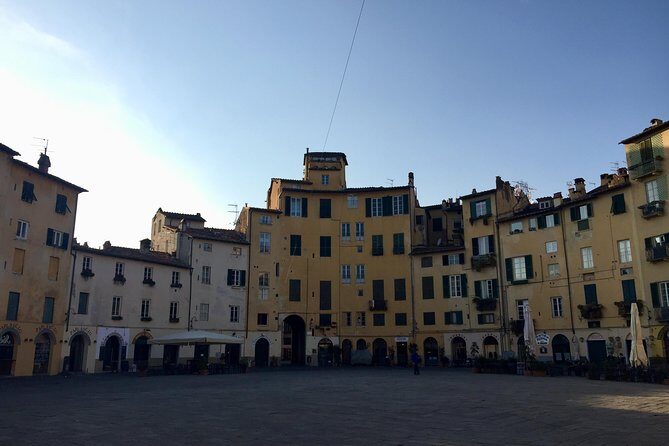
- Piazza Anfiteatro: an elliptical square built over Roman amphitheatre foundations
- Duomo di San Martino: the Pisa-Lucca Romanesque facade and a real finish line
- Optional: go inside the cathedral (small extra fee)
- Pace, logistics, and group size: what you should expect on the ground
- English guidance: how much you’ll get from the talking stops
- Value for money: .14 and what’s actually included
- Weather and timing: a solid afternoon plan
- Who this tour is best for
- Should you book Discover Lucca’s Secrets?
- FAQ
- How long is the Lucca walking tour?
- Where does the tour start and end?
- What time does it start?
- Is the tour in English?
- Do I need to buy tickets for the stops?
- Do I get a mobile ticket?
- What is the cancellation policy?
- The Best Of Lucca!
- More Walking Tours in Lucca
- More Tours in Lucca
- More Tour Reviews in Lucca
Key Points
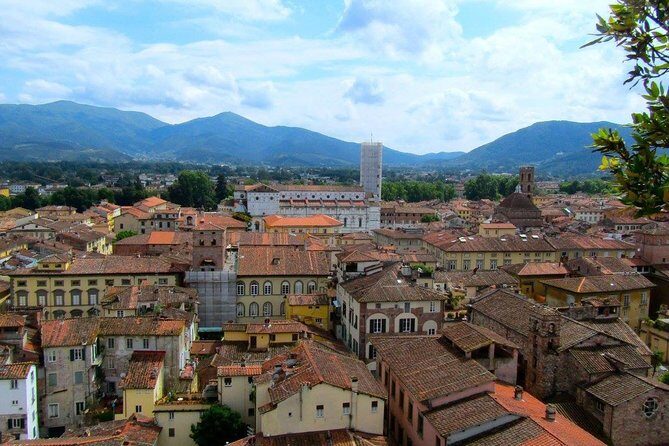
- Roman street and forum vibes in a short walking route, starting along the old Decumanus Maximus area.
- Lucca icons on the route, including Puccini’s birthplace exterior and the clock and oak-crowned towers.
- Great for first-time orientation, especially if you only have a couple of hours free in your schedule.
- Optional Duomo interior is extra (you can do it for about €3 if you’re not done exploring).
- Good value at $18.14, with several stops outside and no big entry costs unless you choose the cathedral inside.
- Group size can affect audio, so arrive a bit early to find a spot where you can hear well.

👉 See our pick of the Lucca’s 3 Best Pasta Experiences: Which To Choose?
A smart way to see Lucca’s highlights in about 2 hours
Lucca rewards slow wandering, but not everyone has the time for a full day of aimless strolling. This tour is built for the “I need a solid orientation fast” traveler. In roughly two hours, you get a clear sense of how Lucca grew—from Roman foundations to Renaissance walls—and you leave with names and landmarks you’ll recognize later when you go back out on your own.
It’s also a low-friction format. You’ll receive a mobile ticket, you meet centrally, and the tour runs in English with a professional guide. If your planning style is practical (and you like being told where to look), this kind of route can save you hours of guesswork.
You can also read our reviews of more walking tours in Lucca

Meeting point at Piazzale Giuseppe Verdi: find the tourist info area
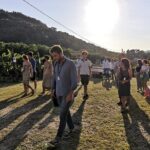
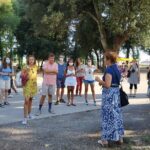
The start is Piazzale Giuseppe Verdi in Lucca. The helpful detail here is that the meeting point is right by the old Porta San Donato zone and close to the tourist information area, which makes it easier to orient before you begin walking.
A recurring theme with walking tours in historic centers is that pin drops and street corners can be confusing, especially if you arrive late or in bad weather. To avoid that stress, I’d aim to arrive a few minutes early and look for the tourist information area vibe near the walls.
Porta San Donato: start at the wall gate and build the story
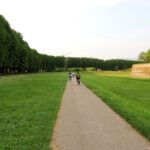
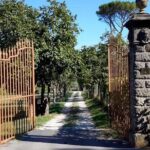
Your first stop is Porta San Donato, starting from Piazzale Verdi near the historic Renaissance walls. This is one of those moments where the tour turns from “walking around” into “reading the city.”
You don’t need museum tickets here. The gate area sets the stage for the bigger idea of the tour: Lucca’s layers. You’ll spend the rest of the walk connecting what you see now with what was built long before modern streets were laid out.
Along Via San Paolino: the old Roman Decumanus Maximus
From Porta San Donato, the route heads along Via San Paolino, which lines up with the ancient Roman street called the Decumanus Maximus. This is a great kind of detail because it changes how you view the street you’re walking on. Instead of seeing it as just a convenient corridor, you start noticing the geography—where Romans put major movement and civic life.
Along the way, you pass by a Renaissance church dedicated to the town’s patron saint, San Paolino. Even if you only glance at the exterior, it’s the sort of stop that makes your later Cathedral visit make more sense.
Piazza San Michele in Foro: Roman forum space and a 12th-century facade
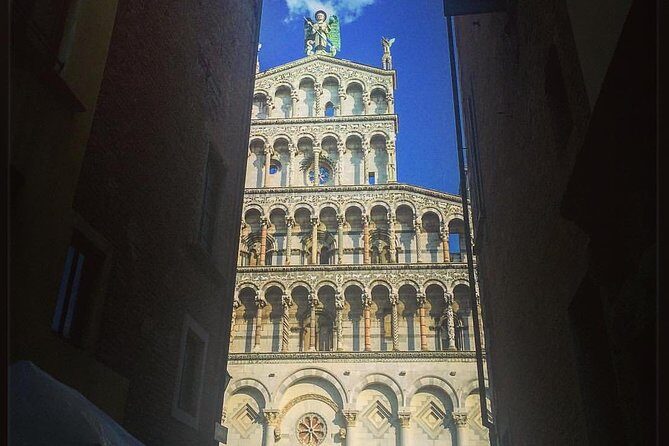
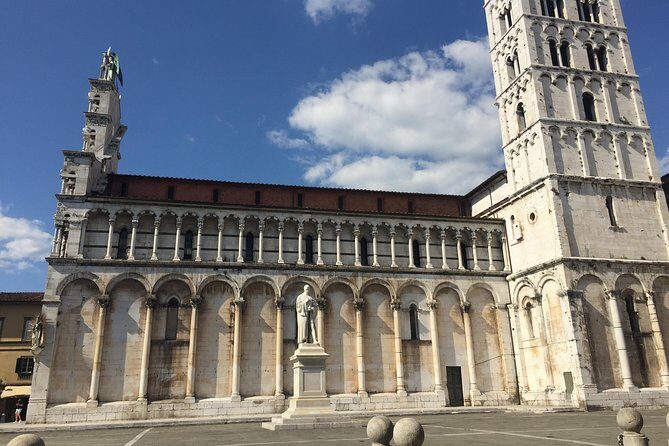
At the end of Via San Paolino, you reach Piazza San Michele, a site tied to the location of the ancient Roman forum. The key payoff here is the square itself. Lucca’s piazzas feel compact but significant, and this one is a strong “pause and photograph” moment.
You’ll also get a clear look at the 12th-century facade of the church of the same name. Facades in Lucca can be oddly satisfying because they look detailed even from a distance, and the light often behaves well on clear afternoons. Take the time here. You’ll appreciate it more later when you compare it to what you see in the Cathedral.
You can also read our reviews of more guided tours in Lucca

Puccini sighting: the famous composer lives in the street-level details
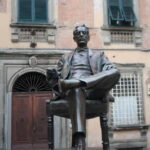
As you move, you’ll encounter Giacomo Puccini as part of the tour’s city story. You’ll see the exterior of the building where he was born.
This stop works well because it’s not an overly formal “museum moment.” It’s a street-level reminder that Lucca isn’t frozen in time. The city’s famous figures and its architecture share the same space, and you experience that just by walking a few blocks the right way.
Via Fillungo and the tower houses: Lucca’s everyday bustle
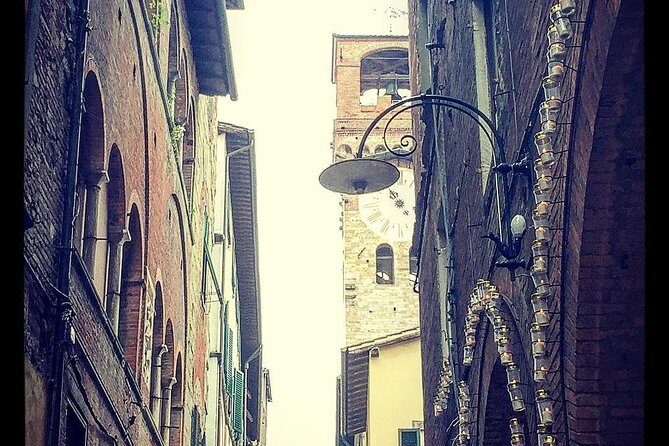
Next comes a stroll to Via Fillungo, Lucca’s main and busiest shopping street. This is more than a retail corridor. You’ll also see the look of traditional shops mixed with medieval tower houses.
Two towers often become the visual anchors on this section:
- Torre delle Ore (the clock tower)
- Torre Guinigi, crowned with seven holm oak trees
The tower trees are a Lucca signature you can’t really forget once you’ve spotted them. Even if you already knew about Torre Guinigi, seeing it from the walking route helps you understand the scale and why this city gained a reputation for being visually distinctive.
San Frediano Basilica: mosaic details you’ll want to look for twice
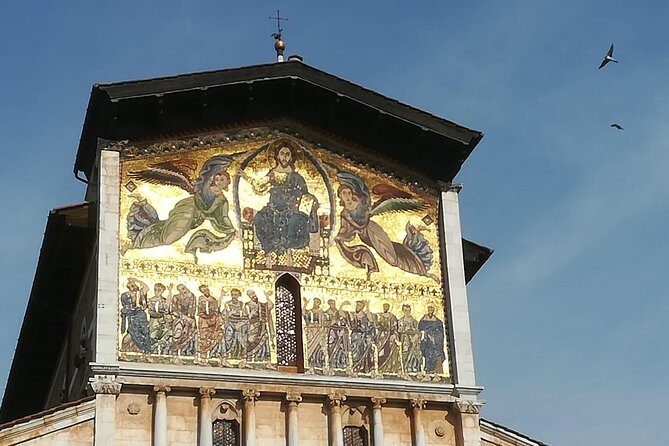
The tour’s next major stop is Basilica di San Frediano. This is where you start getting deeper into Lucca’s church art personality. As you move toward the church, you’ll be on a busy street, but San Frediano pulls you toward slower looking.
One highlight you’ll be told about is a Byzantine-style mosaic on the facade. That kind of detail matters because it’s not the same as typical Western church sculpture. It gives Lucca a wider cultural flavor without requiring you to do a long museum detour.
Piazza Anfiteatro: an elliptical square built over Roman amphitheatre foundations
After San Frediano, you’ll reach Piazza Anfiteatro, often described as one of Lucca’s most beautiful squares. The star here is the shape: it’s elliptical because later buildings were constructed over the foundations of an ancient Roman amphitheatre.
This is a stop where your brain clicks. You’re standing in a modern-looking public square, but the geometry tells you you’re literally on top of older civic infrastructure. If you like photography, this is where your camera will earn its keep—especially if you angle shots to catch the curvature.
Duomo di San Martino: the Pisa-Lucca Romanesque facade and a real finish line
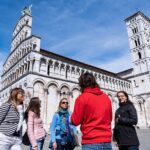
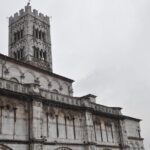
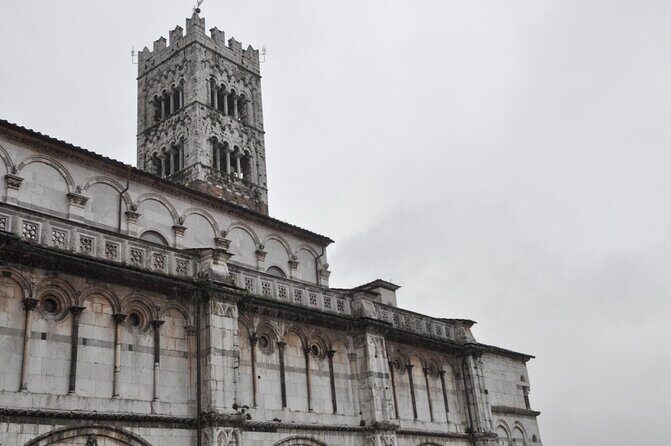
The final highlight is Cathedral of San Martino (Duomo di San Martino). The tour ends here, and the facade is the big moment: it’s known for its unusual Pisa–Lucca Romanesque look.
Even if you choose not to go inside, you’ll leave with a strong exterior overview. This is also a practical end location. The cathedral area is easy to build plans around for the rest of your afternoon and evening.
Optional: go inside the cathedral (small extra fee)
There’s also an option to continue inside the Cathedral. If you’re not too tired, the guide may be happy to bring you in. The interior visit includes a fee of about €3.00.
Inside, you can expect a few specific Lucca symbols and art highlights, including:
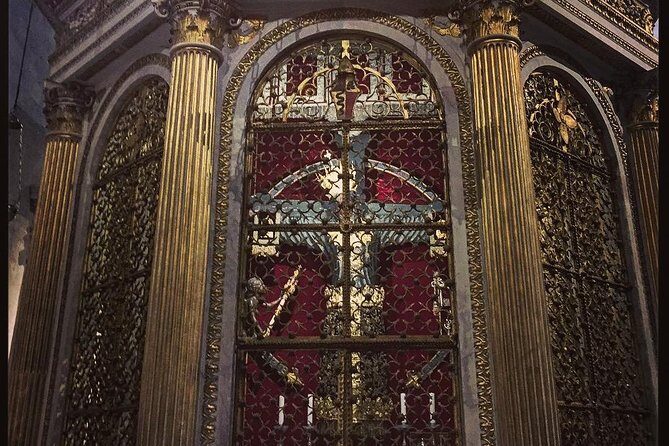
- Volto Santo, a revered wooden crucifix associated with Lucca
- A Last Supper by Tintoretto
- In the sacristy, the marble sarcophagus of Ilaria del Carretto, a sculptural masterpiece linked to Jacopo della Quercia
If this is the kind of stuff you care about, this optional piece can turn a good orientation tour into a more satisfying cultural stop.
Pace, logistics, and group size: what you should expect on the ground
The tour runs about 2 hours and starts at 2:00 pm. It’s designed for walking, with photo pauses and short stops where the guide can explain what you’re seeing. Many travelers specifically mention that the guide adjusts pace so the group stays engaged.
Still, because the tour can be up to 50 travelers, a few practical tips help:
- Go early enough to get a clear spot where you can hear.
- If you’re traveling with kids, keep them close at each stop so you don’t lose the group.
- Bring comfortable shoes. Lucca’s center is walkable, but it’s still cobbles and stone paths.
Also, service animals are allowed. And the tour is described as suitable for most travelers, which is a good sign if you’re balancing sightseeing with energy.
English guidance: how much you’ll get from the talking stops
This is a walking tour with a professional guide and explanations in English. That matters, because Lucca isn’t just famous for one landmark. It’s famous for the connections between places: Roman layout, medieval church power, and the city’s distinctive civic features like towers.
That’s why the guide quality is a big part of the value here. Many travelers describe the guides as passionate, funny in a natural way, and good at answering questions. In short: you’re not just collecting photos. You’re collecting context.
Value for money: $18.14 and what’s actually included
At about $18.14 per person, this is positioned as an easy add-on when your schedule is tight. The key reason it works for value is that many stops are outside or have free admission for viewing.
Based on the tour’s structure:
- Porta San Donato area is free.
- Piazza San Michele is mainly about the exterior church facade and square.
- Piazza Anfiteatro is free.
- The Duomo interior is optional and costs €3.00 if you go in.
So you can keep costs low by focusing on the exterior sights, and still decide later whether you want the Cathedral interior payoff.
Weather and timing: a solid afternoon plan
Two-hour tours are great for days when the morning got away from you. This one starts in the early afternoon, which can be ideal in summer because you can still plan dinner after.
Rain happens in Italy, of course. If weather is rough, the route is still doable because it’s a straight line through the city center. Just be sure you don’t plan something delicate right after—walking tours can run a few minutes with regrouping and photos.
Who this tour is best for
You’ll likely love this tour if:
- You’re in Lucca for the first time and want a quick orientation.
- You want Roman-to-medieval context without planning a complicated route.
- You enjoy architecture and details like mosaics, facade styles, and civic towers.
- You like having a guide point out what matters, so your independent wandering later feels smarter.
It may be less ideal if:
- You hate group noise and need quiet for your enjoyment.
- You’re picky about hearing every word. With a larger group and no headset mentioned, you might not catch everything.
Should you book Discover Lucca’s Secrets?
If you want a short, high-impact introduction to Lucca, I’d book it. The route hits the essentials: the Roman street layout feeling, the forum-linked square, the mosaic church stop, Piazza Anfiteatro, and the Cathedral facade. For the price, it’s a lot of landmark density without a pile of ticket costs.
My main caution is simple: if you’re hearing-sensitive, arrive early, stand where you can see the guide well, and be realistic about group dynamics. Otherwise, this is the kind of tour that helps you get your bearings fast and then enjoy the city at your own pace afterward.
Discover Lucca’s Secrets on a Guided Walking Tour
FAQ
How long is the Lucca walking tour?
The tour is about 2 hours (approx.), with time built in for stops and photos at major sights.
Where does the tour start and end?
It starts at Piazzale Giuseppe Verdi, 55100 Lucca and ends at Duomo di San Martino, Piazza Antelminelli, 55100 Lucca.
What time does it start?
The start time listed is 2:00 pm.
Is the tour in English?
Yes, the tour is offered in English.
Do I need to buy tickets for the stops?
Most viewing stops are free, but the Duomo interior (if you choose to go inside) has an entrance fee of €3.00. Admission for other specific stops is described as not included or free depending on the stop.
Do I get a mobile ticket?
Yes, you receive a mobile ticket.
What is the cancellation policy?
You can cancel for a full refund if you cancel at least 24 hours before the experience starts. Free cancellation is available up to that cutoff.