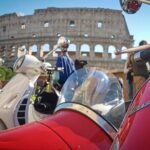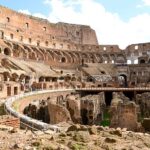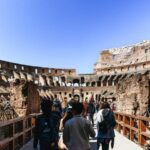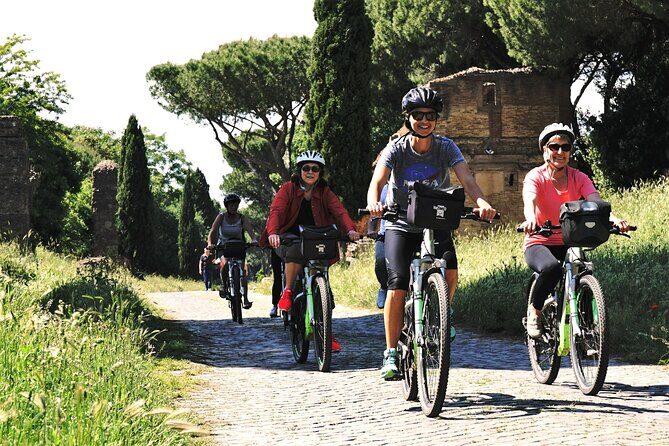
We’ve reviewed quite a few Rome tours over the years, and this electric bike experience stands out for two compelling reasons: it covers an impressive 17-mile arc of Rome’s most historically significant sites without exhausting your legs, and it actually gets you outside the crowded city center to experience Rome the way locals do. The e-bikes handle the terrain beautifully, allowing riders of varying fitness levels to keep pace with the group and absorb the history rather than focus solely on the physical effort.
That said, there’s one important caveat worth addressing upfront. This tour isn’t ideal for nervous cyclists or those unaccustomed to navigating traffic, even though roughly 60 percent of the route takes place in the peaceful Appian Way and Aqueducts parks. Some portions wind through Rome’s city streets, and while guides take carefully planned routes, you’ll still encounter typical urban cycling conditions.
This experience works best for travelers who can comfortably ride a bike, want to see Rome beyond the Colosseum and Vatican, and appreciate history delivered with genuine expertise rather than rushed soundbites.
- Why This Tour Deserves Your Attention
- Breaking Free from the Tourist Trail
- The E-Bike Advantage
- Small Group Dynamics
- Breaking Down the 4-Hour vs. 6-Hour Routes
- The 4-Hour Tour: A Focused Experience
- The 6-Hour Tour: The Full Picture
- What to Expect on the Ride Itself
- The Terrain and Pace
- Group Dynamics and Timing
- The Guide Experience
- What’s Included and What Costs Extra
- Practical Logistics and Safety Considerations
- Who Should Book This Tour
- Who Should Think Twice
- Safety and Route Planning
- Pricing and Value
- Notable Considerations
- Frequently Asked Questions
- The Bottom Line
- The Best Of Rome!
- More Cycling Tours in Rome
- More Tours in Rome
- More Tour Reviews in Rome
Why This Tour Deserves Your Attention

👉 See our pick of the Discover 2 Great Tours In Rome
Breaking Free from the Tourist Trail
Rome’s most iconic attractions—the Colosseum, Roman Forum, Vatican—attract millions of visitors annually. The Appian Way and its surrounding archaeological parks receive far fewer travelers, which means you’ll experience these sites with breathing room. One traveler described it perfectly: “Well run tour through parts of Rome that are harder to get to without getting into a cab or taking a really long walk.” That accessibility matters when you’re spending a full afternoon exploring.
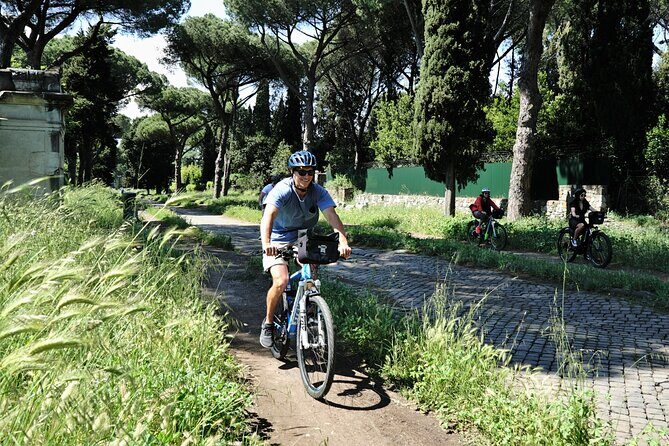
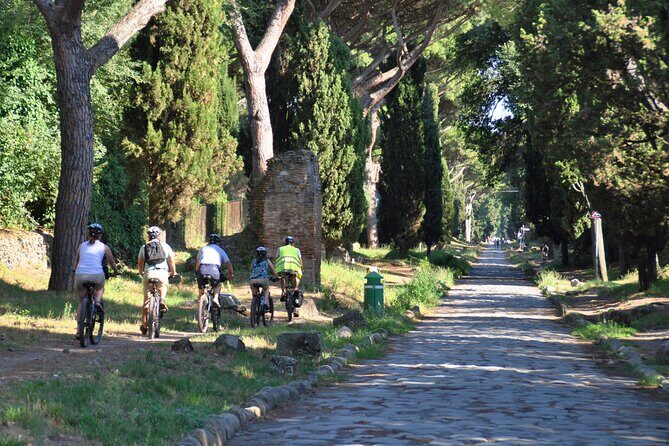
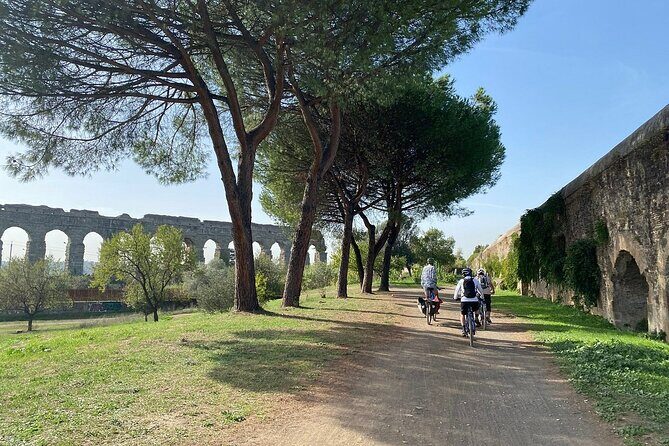
The Appian Way itself is genuinely extraordinary. Built in 312 BCE, it’s one of the most important roads in Roman history, and you’ll actually travel along the ancient stones. The transformation is striking—starting as an ordinary Roman street near the city gate, it gradually opens into the bucolic Appian Way Park, where you can see the landscape almost as it was two thousand years ago. Sheep still graze in the surrounding valleys, and the sense of stepping backward in time is palpable.
You can also read our reviews of more cycling tours in Rome


The E-Bike Advantage
Here’s what makes this tour particularly smart: the electric assist doesn’t eliminate physical activity, but it makes the experience accessible to people who would otherwise skip it. A 60-year-old traveling with her family reported, “The e-bikes made the trip so much easier, we felt safe and supported, and we were able to access parts of the areas around the city of Rome that we just would not have seen otherwise.” That’s not marketing speak—that’s genuine relief from someone worried about keeping up.
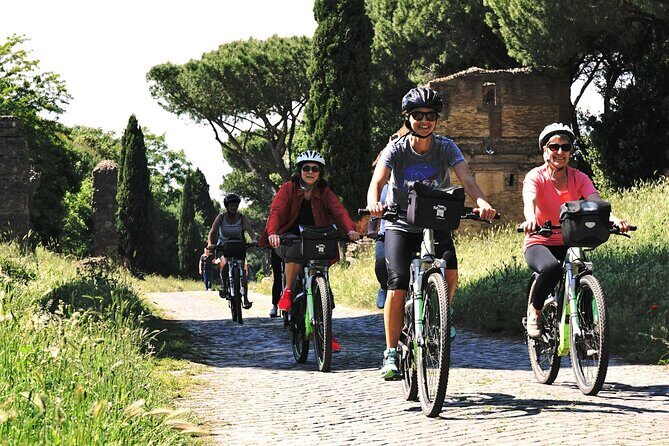
The bikes themselves are quality equipment (Cannondale models with anti-puncture tires), which means you’re not wrestling with subpar machinery. The electric motor does the heavy lifting on climbs and helps maintain group pace without requiring you to be an experienced cyclist. You can dial the assistance up or down depending on how much of a workout you want, and several reviewers mentioned that the battery barely drained during the full tour, suggesting the bikes are well-suited to this route.
Small Group Dynamics
Tours max out at 10 participants per guide, which creates a genuinely manageable experience. Larger groups often feel like you’re herding cats through history, but this size allows your guide to actually answer questions and adjust the pace when someone needs a breather. One family noted, “We felt very confident riding together and had lots of opportunities to engage with our tour guide.” That personal attention shapes the entire experience.
Breaking Down the 4-Hour vs. 6-Hour Routes
The 4-Hour Tour: A Focused Experience
The shorter route hits the essential highlights without overwhelming your schedule. You’ll depart from Porta San Sebastiano, the grand 3rd-century gate in the Aurelian Walls that marks Rome’s ancient boundary. It’s an atmospheric starting point that immediately conveys the historical weight of what you’re about to experience.
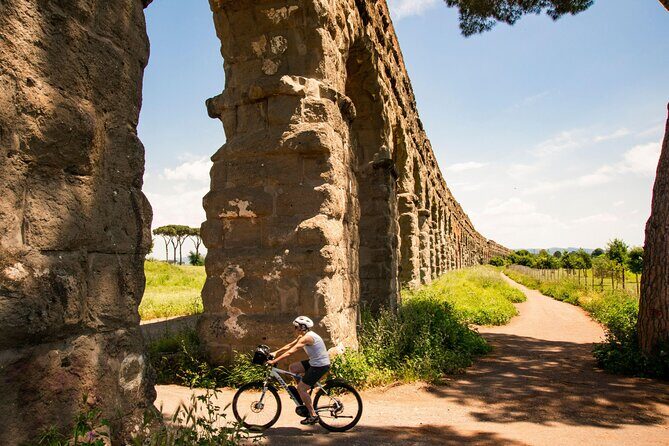
From there, you’ll ride through the Appian Way Park itself, where the ancient stones emerge from beneath the grass. The route includes stops at the Circus of Maxentius (a 4th-century Imperial complex with a villa, mausoleum, and chariot racetrack), the Mausoleo di Cecilia Metella (one of the best-preserved funerary monuments along the route), and concludes at the Parco degli Acquedotti, where you’ll see the colossal Roman aqueducts that supplied water to the entire city.
The 4-hour tour includes a brief stop at the Catacombs of San Callisto on most days (note: Wednesdays swap this for San Sebastiano instead). You won’t get a full guided tour of the catacombs on the shorter route, but you’ll see the entrance to these 2nd-century burial chambers that held roughly half a million souls. It’s atmospheric enough to convey the scale of early Christian Rome without consuming half your tour time.
One reviewer who’d previously tried exploring the Appian Way on foot said, “We had tried in the past to see the appian way by foot and failed—not making it past the catacombs of St Callixtus. This was by far the best way to encompass such a wide area.” That’s the practical value right there: you cover vastly more ground without exhaustion.
You can also read our reviews of more tours and experiences in Rome



The 6-Hour Tour: The Full Picture
If your schedule allows, the extended route justifies the extra time. You’ll cover everything in the 4-hour tour, but add a full 45-minute guided visit inside the Catacombs of San Callisto (or San Sebastiano on Wednesdays). Walking through these underground passages—carved from volcanic rock and layered with burial chambers—changes your understanding of early Christian Rome. The scale is genuinely claustrophobic in places, which makes the fact that early Christians worshipped and buried their dead here all the more striking.
You’ll also explore Villa dei Quintili, a sprawling 2nd-century private estate that belonged to two of the wealthiest brothers in Roman history. The ruins convey the staggering wealth of the Roman elite—this wasn’t a modest home. Finally, the 6-hour route includes a view of the Baths of Caracalla from the best vantage point available, giving you perspective on just how central bathing culture was to Roman social life.
Multiple reviewers specifically recommended the longer tour. One traveler noted, “Do the 6 hour tour. It’s worth it.” Another said, “You absolutely must do this tour if you have more than 1-2 days in Rome… Do the 6 hour tour. It’s worth it.”
What to Expect on the Ride Itself
The Terrain and Pace
The tour covers approximately 17 miles total, with about 60 percent taking place off-road in the parks and 40 percent on city streets. The off-road sections are genuinely pleasant—tree-lined paths through archaeological parks with minimal traffic. The city portions are more exposed; guides navigate carefully chosen routes, but you’ll still encounter Rome’s traffic and narrow streets.
Expect an intermediate difficulty level overall, which translates to moderate physical exertion even with electric assist. The bumpy terrain comes up in a few reviews—one traveler mentioned “roads and trails were bumpy at times”—so if you have back or neck issues, this isn’t ideal. However, most people find the riding manageable, especially younger participants.
Guides maintain a deliberate pace. One person noted that the group averaged around 6 mph, which sounds slow until you realize it’s intentional—it keeps everyone together, allows for frequent stops at historical sites, and lets you actually absorb what you’re seeing rather than just rushing through. One reviewer appreciated this, saying the tour “kept you moving and learning” without feeling rushed.
Group Dynamics and Timing
The tour runs between 4 and 6 hours depending on which option you choose, but Wednesdays can extend by about 30 minutes due to route deviations. The same applies during January 14–February 11, 2026. You’ll meet at Via Labicana, 49 in Rome, and the tour returns to the same starting point.
Groups start with a minimum of 4 participants (the tour can be canceled if fewer people book), and the operator has a history of running these tours regularly—the average booking happens 53 days in advance, suggesting consistent demand.
The Guide Experience
We noticed something distinctive in the reviews: travelers consistently praised specific guides by name—Arina, Stefan, Zac, Lorenzo, Han, Bita, Claudia, David, Fabio, Christian, Khalid—and described them as knowledgeable, friendly, charismatic, and engaging. One person said their guide possessed “encyclopedic” knowledge of Roman history. Another noted their guide “shares his knowledge with true passion.”
This suggests the operator invests in hiring knowledgeable local guides rather than treating this as a commodity experience. One family summed it up: “Our tour guide was very informative and ensured we were safe on the roads.” That combination of expertise and attentiveness shapes the entire experience.
What’s Included and What Costs Extra
The $102.79 per person price includes the e-bike itself (quality Cannondale equipment), the helmet (mandatory, provided free), a front bag, a water bottle, and the services of a local expert guide. If you choose the 6-hour option, the guided visit inside the catacombs is included.
What’s not included: food, drinks, or tips. However, the route passes a few spots where you can purchase refreshments during breaks. The operator notes that you can bring a picnic lunch and eat among the ancient aqueducts, which one traveler did and clearly enjoyed.
Tips are optional but clearly appreciated—several guides’ positive reviews suggest travelers felt the experience warranted gratuities.
Practical Logistics and Safety Considerations
Who Should Book This Tour
The operator recommends a moderate fitness level and comfortable bike-riding ability. Children aged 5–8 can ride in a child extension (child streamliner), while kids 9 and older can ride on appropriately-sized e-bikes. One family with teenagers reported everyone loved it, and another noted it was “perfect for families with older kids.”
The weight limit is 300 pounds (136 kg) per bike. Helmets are mandatory.
Who Should Think Twice
If you’re not confident on a bike, this isn’t the right tour. One reviewer who rented a bike independently rather than taking the tour specifically mentioned that inexperienced cyclists might struggle with the traffic portions. Another noted that the narrow paths and tight group formations made it necessary to have decent bike handling skills.
People with significant back or neck problems might find the bumpy terrain uncomfortable. One traveler mentioned this explicitly: “People with back and neck problems may want to steer clear.”
If you prefer leisurely pacing and plenty of photo stops, this might frustrate you. One reviewer mentioned wishing for more photo opportunities while riding, which suggests the tour maintains a working pace rather than a leisurely stroll-and-snap experience.
Safety and Route Planning
The operator emphasizes that about 40 percent of the route uses “carefully chosen city streets” to connect the parks, and while some traffic is unavoidable, the 60 percent in the parks has essentially no traffic. Multiple reviewers confirmed feeling safe, with one noting, “Routes are well planned… and the ebikes make it accessible for just about anyone that can ride a bike competently.”
The one dissenting review worth noting came from someone who did the tour on a Sunday when the Appian Way and Aqueduct Parks were crowded with local cyclists and pedestrians. They gave it 4 stars instead of 5, saying, “Maneuvering around a lot of pedestrians and other bikes was nerve-wracking.” Their recommendation: “Do this tour on a weekday.” That’s practical advice if you have flexibility.
Pricing and Value
At $102.79 per person, you’re paying for several things: quality e-bike equipment, a knowledgeable local guide, access to multiple archaeological sites, and the ability to cover 17 miles of Rome’s most historically significant areas in a single afternoon. Compare that to renting an e-bike independently (likely $30–50) plus entry fees to the catacombs (around €8) plus the time spent figuring out routes and navigation, and the value becomes clearer.
One traveler put it this way: “We felt comfortable and had a great deal of fun and learned so much… It was great to get out into the area outside of Rome proper, and to learn the history of some important things just a bit off the usual tours (e.g., Vatican, Colosseum, etc.). It gave us a broader perspective of Rome.”
That broader perspective—seeing Rome beyond the crowded monuments—is what you’re really paying for. The logistics and expertise are just the vehicle.
Notable Considerations
Booking timing: Advance your reservation early. The average booking happens 53 days ahead, suggesting popular dates fill quickly.
Cancellation policy: You can cancel free of charge up to 24 hours before the tour. If you cancel within 24 hours, you forfeit the full amount.
Weather: One group got caught in a rain storm and, according to their review, “everyone was positive and considered it part of our unforgettable experience.” The tour apparently continues in light rain, though you’ll want to dress accordingly.
Wednesday variations: Tours run a bit longer on Wednesdays due to route changes and different catacomb visits, so factor in extra time if that’s when you’re booking.
Easter Sunday 2026: The catacombs are closed on Easter Sunday, so the 6-hour tour won’t run that day.
Frequently Asked Questions
Q: Do I need to be an experienced cyclist to enjoy this tour?
A: You need to be a competent rider who’s comfortable navigating some traffic and narrow paths, but you don’t need to be athletic or cycle regularly. The e-bike assist handles most of the physical effort. Several reviewers noted they weren’t “really bikers” but found the tour very manageable with the electric assistance.
Q: What’s the difference between the 4-hour and 6-hour tours?
A: The 4-hour tour includes a brief stop at the catacombs without a full guided visit. The 6-hour tour includes a 45-minute guided walk through the catacombs, plus visits to Villa dei Quintili and the Baths of Caracalla. Multiple reviewers recommended paying for the 6-hour option if your schedule allows.
Q: How much of the tour involves riding through Rome traffic?
A: About 40 percent of the route uses city streets to connect the archaeological parks, though guides use carefully planned routes with limited traffic. The remaining 60 percent takes place in parks with essentially no traffic. One reviewer noted that Sunday traffic was heavier than expected, so weekday tours may feel less congested.
Q: Are the e-bikes difficult to operate?
A: No. Multiple reviewers mentioned they were “easy to use” and that you don’t need regular cycling experience to operate them. The electric assist is intuitive, and guides provide a quick equipment briefing at the start.
Q: Can children participate in this tour?
A: Children aged 5–8 can ride in a child extension attached to an adult’s bike. Children 9 and older can ride on appropriately-sized e-bikes. Several families with teenagers reported excellent experiences, noting the tour kept older kids engaged without boring them.
Q: Is this tour worth the cost compared to exploring on my own?
A: The operator handles logistics, route planning, and expert historical context. One family noted they’d previously tried exploring the Appian Way on foot and didn’t make it past the catacombs before exhaustion set in. The e-bike tour lets you cover the same area in a single afternoon while learning detailed history from a guide. Most reviewers felt the experience justified the price.
Appian Way, Catacombs and Aqueducts Park Tour with Top E-Bike
The Bottom Line
This tour succeeds because it solves a real problem: how to see Rome’s most historically significant archaeological sites without spending days on foot or paying for expensive taxis between scattered locations. The e-bikes make the experience accessible to people across a wide fitness spectrum, the guides clearly know their subject deeply, and the small group size means you actually get to engage with the history rather than just photograph it from a distance. At under $103 per person, you’re getting quality equipment, expert guidance, and access to sites that most Rome visitors never see. It’s best suited for travelers who can ride a bike comfortably, want to escape the crowds around the Colosseum and Vatican, and appreciate history delivered with genuine knowledge and enthusiasm. If you book the 6-hour option and do it on a weekday, you’ll likely have one of your favorite days in Rome.