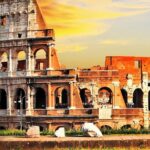

When you’re planning a Rome trip, the Colosseum is non-negotiable. But here’s the thing: showing up solo means joining thousands of other travelers shuffling through in a confused daze. We’ve reviewed this guided tour from The Tour Guy because it solves several real problems that independent travelers face—and it does so without breaking the bank.
We love two things about this experience. First, you get exclusive access to the Colosseum’s arena floor, a restricted area that most visitors never see. You’ll actually walk where gladiators walked, stand where ancient spectators gasped, and understand the scale of the place in a way that viewing from the upper tiers simply can’t convey. Second, the tour efficiently combines three major archaeological sites in just three hours, complete with knowledgeable commentary at each stop. You’re not just checking boxes; you’re building a coherent narrative of ancient Rome’s power and daily life.
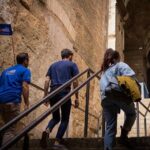
The main consideration: this is genuinely a walking tour. We’re talking substantial distances on uneven ancient pavement, plus climbing to the upper tiers of the Colosseum and ascending Palatine Hill. If you have mobility issues or aren’t comfortable with several hours of continuous walking, you should know this upfront.
This tour works best for history enthusiasts who want context alongside their sightseeing, travelers who value their time and want to see multiple sites efficiently, and anyone who prefers having a guide handle the logistics rather than navigating crowds solo.
- Why the Arena Floor Access Actually Matters
- The Tour Itinerary: Three Sites, One Coherent Story
- What’s Actually Included (and What Isn’t)
- The Guide Experience: The Real Variable
- Physical Demands and Practical Considerations
- Timing and Booking Strategy
- Value Assessment: Is This Worth .95?
- The Crowd Factor
- Practical Details That Matter
- Frequently Asked Questions
- The Best Of Rome!
- More Tours in Rome
- More Tour Reviews in Rome
Why the Arena Floor Access Actually Matters


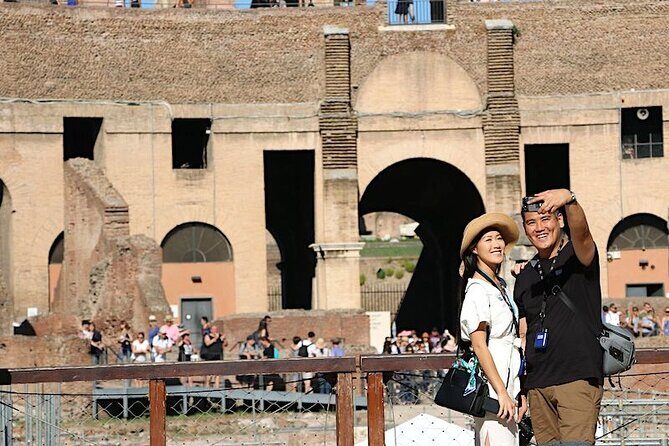


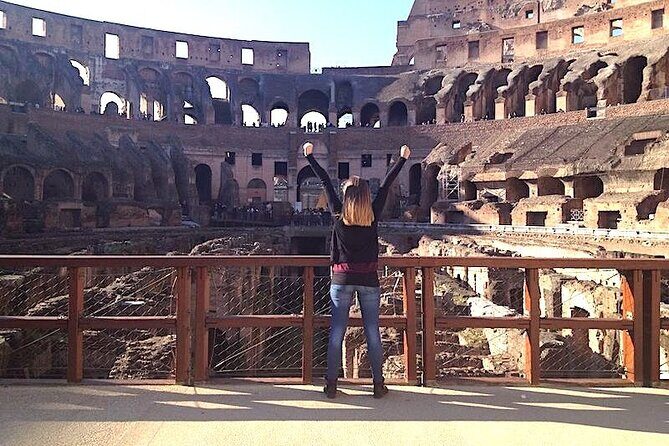
The Colosseum arena floor isn’t just a cool bonus—it fundamentally changes how you understand the building. Most visitors see the Colosseum as an impressive shell, a massive stone structure with good views from the upper levels. But the arena floor tells you what the Colosseum actually was: a machine for spectacle, carefully engineered with trap doors, underground chambers, and sophisticated stage machinery.
On this tour, your guide walks you through the Gate of Death, the very entrance where gladiators entered the arena. You see the reconstructed trap door that once launched wild beasts into the fighting space. One traveler noted that their guide, Gabriel (an archaeologist), “talked the whole time but made it engaging and entertaining and his jokes were great.” This isn’t random information—it’s the difference between seeing a famous ruin and understanding how Romans actually used it.
The arena floor access is technically restricted to guided tours and small groups, which means you’ll see far fewer people here than in the upper tiers. That breathing room matters when you’re trying to visualize ancient scenes. You can actually stand still for a moment without being swept along by a crowd current.

👉 See our pick of the Discover 2 Great Tours In Rome
The Tour Itinerary: Three Sites, One Coherent Story
The Colosseum (1 hour 30 minutes)
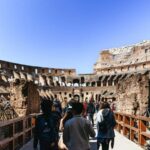
You’ll spend the first ninety minutes at the Colosseum, which gives you genuine time to process the scale. The tour includes access to the arena floor plus the first and second outer tiers—basically the middle-class and wealthy seating areas. Your guide explains the social hierarchy that the seating reflected, which adds another layer of understanding beyond just “look at this old building.”
One traveler who took the tour with guide Christina noted: “There is a lift for access to the higher areas, of which you gain the size of the arena.” That elevator access is genuinely helpful if you’re already tired from the arena floor exploration. You’re not forced to climb every single step if you’re feeling the fatigue.
The Colosseum stops are paced to let information sink in. Multiple reviewers mentioned guides being “very patient with those in the group asking questions” and making sure everyone could “see and was very informative.” This matters more than you’d think. In a self-guided visit, you’re reading plaques in a crowd. Here, you’re getting context and can ask follow-up questions.
The Roman Forum (1 hour)
After the Colosseum, you’ll walk to the Roman Forum—close enough that it’s a short transition but far enough that you’ll feel the shift in atmosphere. The Forum is where Rome actually happened: political debates, religious ceremonies, daily commerce. It’s less visually dramatic than the Colosseum, but arguably more important historically.
Your guide will point out the Temple of Julius Caesar, the Arch of Titus, and the Senate House. Without a guide, you’d be squinting at a field of ruins trying to match them to your guidebook. With one, you’re getting the story: why these buildings mattered, what they tell us about Roman values, how they fit into the larger narrative of the empire’s rise and eventual decline.
One traveler shared: “His stories of the gladiator history was engaging and his descriptions of everything were interesting. He was very easy to understand given English is his native language.” That clarity of communication matters, especially when you’re absorbing a lot of historical detail in a relatively short time.
Palatine Hill (20 minutes)
The tour concludes with a climb up Palatine Hill, often called the “Beverly Hills of Ancient Rome” because emperors built their palaces here. The reward for the climb is a panoramic view of the Circus Maximus and a sense of how Rome’s most powerful people literally lived above the rest of the city.
One reviewer noted: “Walking up Palatine Hill with his commentary was a true highlight of our trip.” That’s telling—the physical effort combined with good storytelling creates a memorable moment rather than just another tourist photo opportunity.
You can also read our reviews of more tours and experiences in Rome.

What’s Actually Included (and What Isn’t)
The $46.95 price includes all three site admissions (valued at €26 in entrance and reservation fees), the guided commentary throughout, and membership in a small group of maximum 18 people. For context, if you were to visit these sites independently, you’d pay entrance fees plus spend time navigating crowds and figuring out the layout yourself. The tour essentially buys you expertise and efficiency.
What you’re not getting: hotel pickup or drop-off, food, or beverages. You’ll meet at Fontana del Colosseo and end near the Colosseum area, both easily accessible by public transportation. The lack of included meals is actually fine for a morning or early-afternoon tour—you can grab lunch afterward at one of the many restaurants near the Colosseum.
The mobile ticket system is convenient. You get confirmation at booking, and your guide handles the actual entry logistics. No physical tickets to lose or worry about.
The Guide Experience: The Real Variable
Here’s what we’ve learned from reading through dozens of reviews: the tour’s quality genuinely depends on your guide. When it works well, it works really well. Multiple travelers described their guides as “fantastic,” “knowledgeable,” “engaging,” and “professional.” One reviewer said their guide was “a legit archeologist and had really great dad jokes as it related to the ruins.”
But there were outliers. One traveler found their guide “very difficult to understand,” and another felt their guide “repeated himself a lot” and “stayed in some areas too long.” The operator has acknowledged these concerns in their responses, committing to better guide coaching on clarity and pacing.
The good news: 90% of travelers recommend this tour, and the vast majority of reviews are five stars. The consistency is genuinely strong. But it’s worth knowing that your specific experience depends partly on guide assignment, which you can’t control in advance.
Physical Demands and Practical Considerations
Multiple reviewers emphasized the walking: “Lots of walking and lots of information,” “This is a lot of walking and standing, wear good shoes as there are un level walkways, bring a water bottle.” This isn’t exaggeration. You’re covering significant ground on ancient pavement that’s uneven in places.
The tour operator notes that travelers should have “a moderate physical fitness level” and that it’s “not recommended for travelers with heart problems or other serious medical conditions.” If you have any concerns, it’s worth asking directly before booking.
Practical tips from travelers who’ve done this: wear genuinely comfortable walking shoes (not “nice” shoes you can almost walk in), bring water, and use the restroom before entering the Colosseum—there’s only one toilet at the entrance, and once you’re inside, you can’t leave and re-enter without losing your place in the group.
Timing and Booking Strategy
The tour typically runs about three hours total, though the order of stops can vary depending on your entrance time. The operator notes that “depending on the entrance time of the Colosseum tickets we might visit the Roman Forum and Palatine Hill before heading to the Colosseum.” This flexibility actually works in your favor—it helps spread out crowds and can mean a better experience at whichever site you visit first.
Travelers book this tour an average of 66 days in advance, which tells you it’s popular. The cancellation policy is generous—you can cancel up to three days before for a full refund, which gives you flexibility if plans change.

Value Assessment: Is This Worth $46.95?
Let’s be direct about value. You’re spending less than fifty dollars per person for three major archaeological sites, entrance fees, and expert-guided commentary. If you were doing this solo, you’d pay entrance fees (roughly the same amount), spend time in lines, and navigate without context. Add in the time saved and the quality of information, and this pencils out as a smart investment.
One traveler captured this well: “we skipped hours in line” by going with a tour. That time savings alone has value, especially if you have limited days in Rome.
The tour isn’t luxury—you’re in a group of up to 18, not getting personalized attention. But it’s competent, efficient, and genuinely educational. That’s a different value proposition than a private guide (which would cost significantly more) but better than going it alone.
The Crowd Factor
Rome is crowded, especially at the Colosseum. One reviewer noted: “Even in October, Rome in general was very crowded. Our guide was very knowledgeable and added some humor to the tour as well. She made sure we were together through the crowds!”
Here’s the honest assessment: the tour doesn’t eliminate crowds, but it gives you tools to navigate them. Your guide knows the less-congested routes through each site, keeps the group together so you don’t get separated, and can position the group strategically for viewing major features. You’re still in a popular tourist destination, but you’re not entirely on your own.
Practical Details That Matter
You’ll need a valid passport or ID matching the name on your booking—this is non-negotiable for entry. Mobile tickets mean you don’t need to print anything, which is convenient for travelers with minimal luggage.
The maximum group size of 18 is meaningful. It’s small enough that you’re not herded like cattle, but large enough that the tour is economically viable. You get some social aspect (many travelers come with partners or friends) without the anonymity of a 50-person group.
The meeting point is at Fontana del Colosseo (the fountain at the Colosseum), and one traveler noted that “the meeting place description was a little off give yourself plenty of time to find it, lots of people there.” This is useful to know—arrive early, orient yourself to the fountain, and look for your guide’s group.
Rome: Colosseum Arena Floor Tour with Roman Forum & Palatine Hill
Frequently Asked Questions
How far in advance should I book this tour?
The average booking is 66 days ahead, which suggests it fills up regularly, especially during peak season. That said, availability varies by date. We’d recommend booking at least 2-3 weeks in advance to ensure your preferred time slot, but last-minute spots may be available if you’re flexible.
What if I need to cancel?
You can cancel up to three full days before the tour start time for a complete refund. If you cancel within three days of the start time, you forfeit the full amount. The cut-off times are based on the tour’s local time in Rome.
Do I need to bring anything specific?
Bring comfortable walking shoes (this is non-negotiable), water, and any sun protection you need. One traveler specifically recommended bringing a water bottle. Have your valid passport or ID ready—you’ll need it for entry to both the Colosseum and Roman Forum.
Is there food included?
No, food and beverages are not included. You can eat before or after the tour. Many restaurants are nearby, especially around the Colosseum area, so you can grab lunch after you finish.
Will I definitely get to see the arena floor?
The tour is called the “Arena Floor Tour,” and arena floor access is listed as included if you select that option. However, this is a restricted area, so the tour operator has specific procedures. All reviews mention arena floor access, suggesting it’s reliably included.
How is the tour paced if I’m not a fast walker?
Multiple reviewers mentioned guides being patient with slower-paced members of the group. One traveler said: “My friend and I were always bringing up the rear. Our guide was very patient with us and very kind.” The guides seem accustomed to mixed fitness levels within groups.
What if I can’t understand the guide’s accent?
This came up in a few reviews. One traveler noted their guide’s “accent was hard to understand at times,” and another found their guide “very difficult to understand.” Most guides received praise for clarity, but if English fluency is important to you, this is worth confirming with the operator before booking.
Will the tour be cancelled if too few people book?
Yes, the tour requires a minimum number of travelers. If it’s cancelled for this reason, you’ll be offered a different date, a different experience, or a full refund. This is why booking in advance matters—it helps ensure the tour runs.
Can I use a mobility aid or wheelchair?
The tour requires “a moderate physical fitness level” and involves “lots of walking” on uneven ancient pavement. There’s an elevator to access the Colosseum’s upper tiers, which helps, but the overall experience isn’t designed for significant mobility limitations. Contact the operator directly if you have specific concerns.
What’s the group size, and will I feel crowded?
Maximum group size is 18 people. This is small enough to navigate sites together without feeling anonymous, but large enough that you’re not getting personalized attention. For context, many Rome tours operate with 40-50 people, so 18 is genuinely manageable.
Is this tour better than going solo?
Multiple reviewers specifically mentioned that going with a guide enhanced their experience significantly. One said: “The Colosseum is definitely an iconic place to visit and better still with a tour guide.” You’re paying for expertise, efficiency, and the ability to ask questions—whether that’s worth it depends on your learning style, but the data suggests most travelers find it worthwhile.
This tour delivers genuine value if you want to understand ancient Rome rather than just photograph it. You’ll skip hours of lines, get expert context at three major sites, and benefit from a guide who can answer questions and navigate crowds. The walking is substantial, your guide quality can vary (though reviews suggest it’s usually strong), and you’ll be in a group rather than getting personalized attention. Book it if you’re interested in history, respect your time, and want to see Rome’s most important ancient sites efficiently. Skip it if you prefer wandering solo, have mobility concerns, or want a private guide experience.