I’m a fan of tours that help you work out the city fast, and this one is built for that. You start at Dam Square by the National Monument, then move through classic sights and lesser-known details around the center in a relaxed 2-hour walk.
What I like most is the quality of the guiding. The tour leans on stories that connect everyday life to major events, and you’ll hear it from guides reviewers named Francesco, Noah, Lili, Josh, and others who clearly know their Amsterdam. I also appreciate the practical value: you’re paying for a guided orientation, but the stops are free to visit, so you’re not stacking extra admission costs on your day.
One heads-up: it is still a walking tour in central streets, with frequent photo stops. If the weather turns (and Amsterdam loves rain), bring your umbrella and expect some pauses for explanations; a couple of reviews also mention accents that can be strong depending on the guide.
- Key things to know before you go
- Overview: a smart intro walk for first-time Amsterdam visitors
- Price and what you really get for
- Meeting at Dam Square: the easiest way to start on time
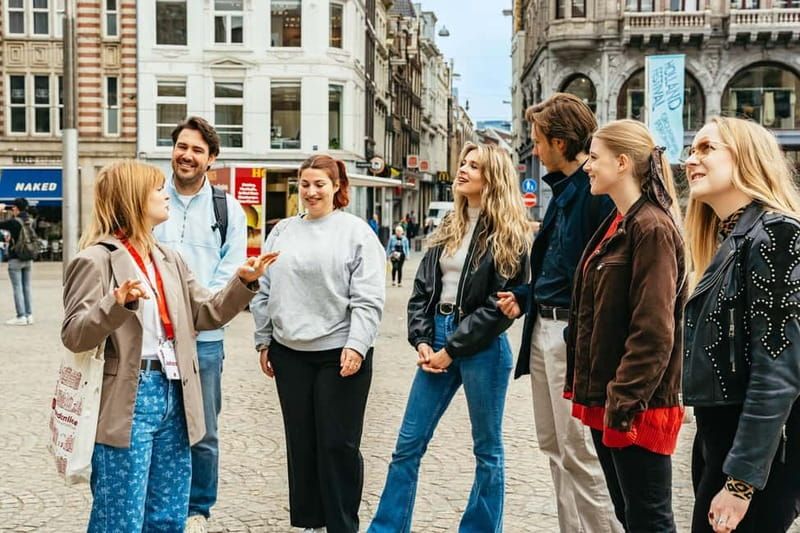
- The tour vibe: knowledgeable, story-driven, and very question-friendly
- Stop by stop: what you’ll see and why it matters
- Dam Square and the National Monument
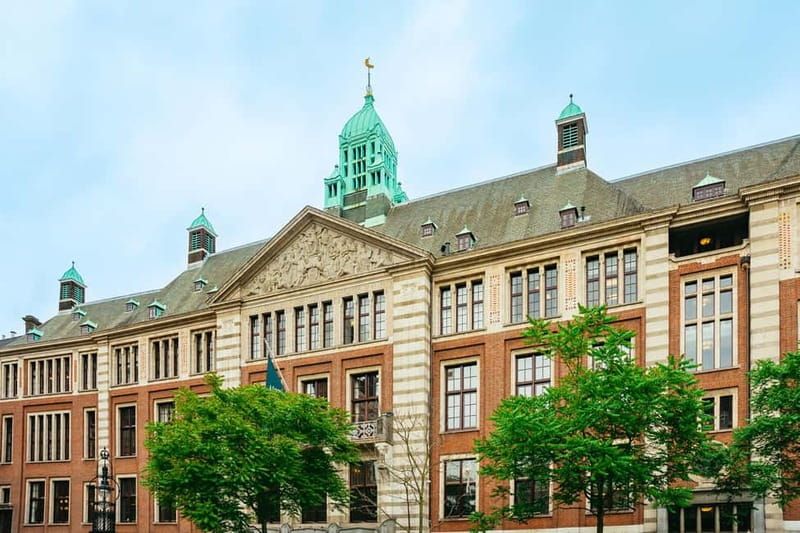
- Royal Palace, the New Church, and the old-post-office vibe
- Torensluis Bridge: street-level history and small details
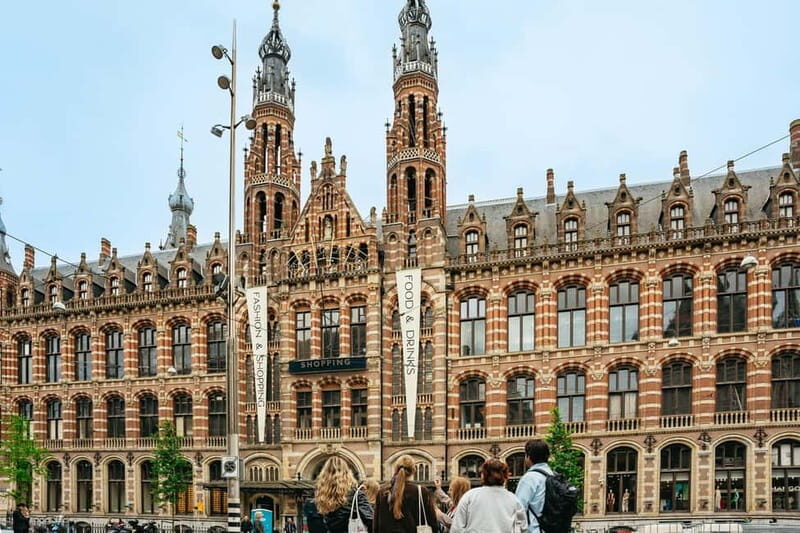
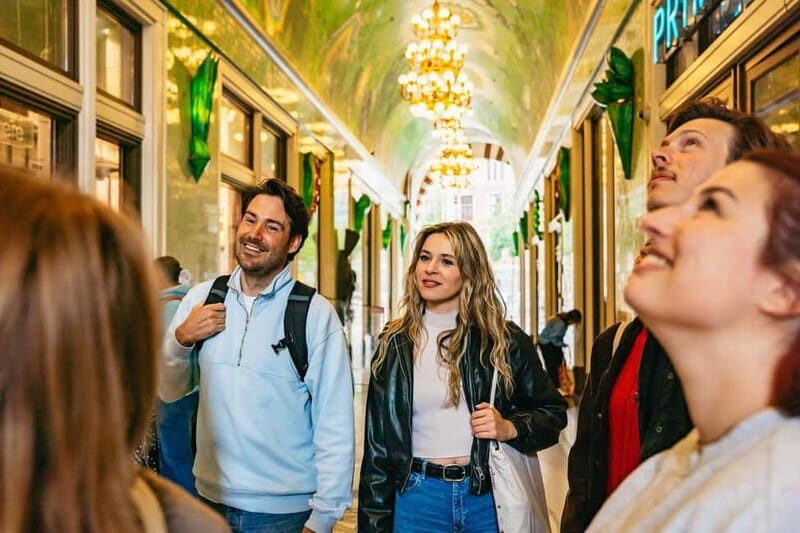
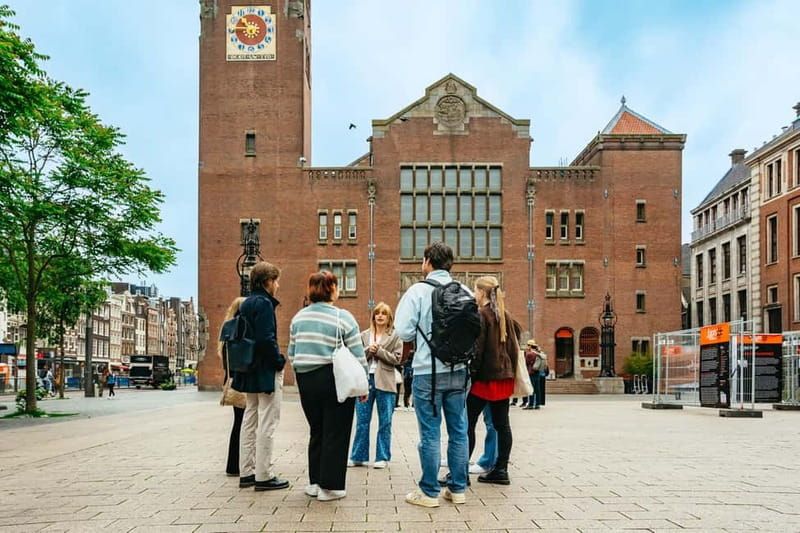
- Beurs van Berlage and Magna Plaza: commerce, change, and a modern overlay
- Multicultural present-day Amsterdam through architecture and memory
- Anne Frank Monument and Westerkerk: remembrance with context
- Homomonument and the message of visibility
- De Negen Straatjes: a quick taste of Amsterdam shopping streets
- Begijnhof: the calm pocket you’ll remember
- Amstel River return and the final approach to Dam Square
- What to bring and how to pace yourself
- Food and drinks: what’s included (and what isn’t)
- Accessibility and group size: plan with real-world expectations
- Languages: English, German, and Italian
- Should you book? The practical yes-or-no
- FAQ
- How long is the Amsterdam Cultural Highlights Walking Tour?
- Where do we meet for the tour?
- Is the tour wheelchair accessible?
- Are admission fees included for the sights?
- What should I bring?
- What languages are offered?
- The Best Of Amsterdam!
- More Walking Tours in Amsterdam
- More Tours in Amsterdam
- More Tour Reviews in Amsterdam
Key things to know before you go
 1 / 10
 2 / 10
 3 / 10
 4 / 10
 5 / 10
 6 / 10
 7 / 10
 8 / 10
 9 / 10
 10 / 10
- Meet at the National Monument stairs on Dam Square, look for the guide’s red name tag
- A tight 2-hour route focused on culture, history, and current-day context
- Free sights along the way means you can spend your money on food, not tickets
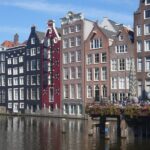
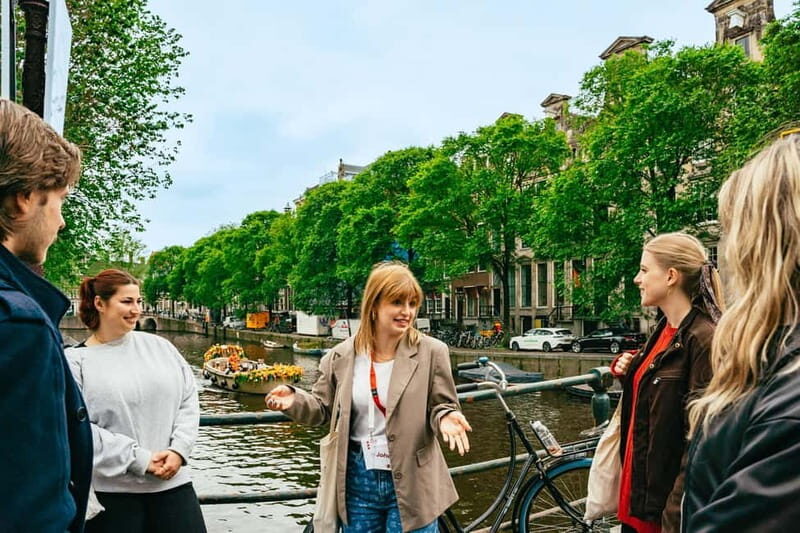
- Canal-and-river views: you’ll stroll by the Amstel and see canal houses up close
- Begijnhof is the “quiet pocket” moment on the tour, a favorite kind of stop
- Guides are the big win: many reviewers call out knowledge and great storytelling

👉 See our pick of the 15 Of The Best Workshops & Classes In Amsterdam
Overview: a smart intro walk for first-time Amsterdam visitors
If Amsterdam feels like a puzzle—canals, bicycles, handsome facades, and monuments everywhere—this tour helps you sort the pieces. In about two hours, you get a guided sense of how the city grew, what shaped it, and what life looks like here now.
It’s not a museum crawl. It’s a walking route through the center with stops that mix iconic landmarks and smaller cultural signals—bridges, statues, courtyards, and squares—so you learn what you’re actually looking at when you explore later on your own.
And because the sights are accessible without admission fees, you’re buying time and interpretation, not ticket lines. That’s a big deal when you’re trying to keep your day budget-friendly.
You can also read our reviews of more walking tours in Amsterdam



Price and what you really get for $30
At $30 per person for a 2-hour guided walk, the real value is not the “tour label.” It’s the guide time plus city tax included in the price, which turns into clearer decision-making for the rest of your stay.
You’re also not expected to pay extra to enter what you see. The tour is built around views and outdoor-access stops, with explanations as the main product. That makes it easier to compare against pricier activities that eat your time but don’t necessarily help you navigate.
If you’re the type who likes to understand why a place looks the way it does—why an era mattered, why a neighborhood feels the way it does—this price can feel like a bargain. If you’re only chasing a checklist of photos, you might wonder if you could do a self-walk. Most people don’t, because the stories change how you see the same streets.
Meeting at Dam Square: the easiest way to start on time
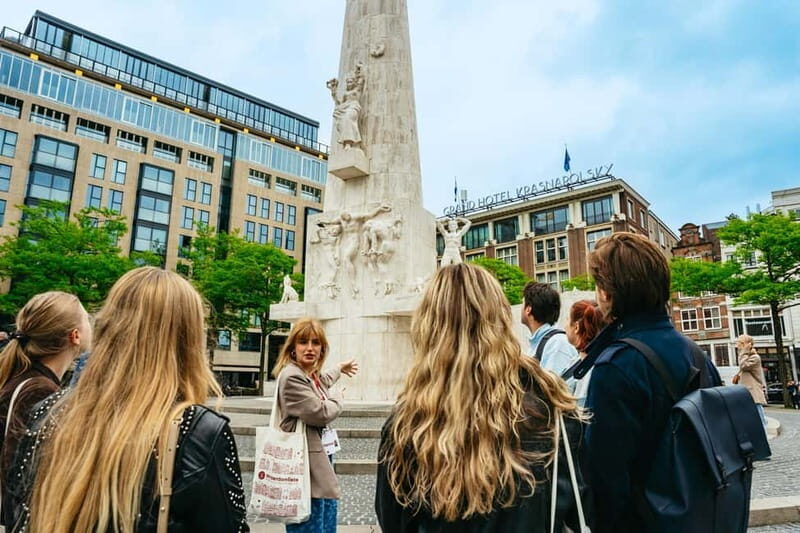
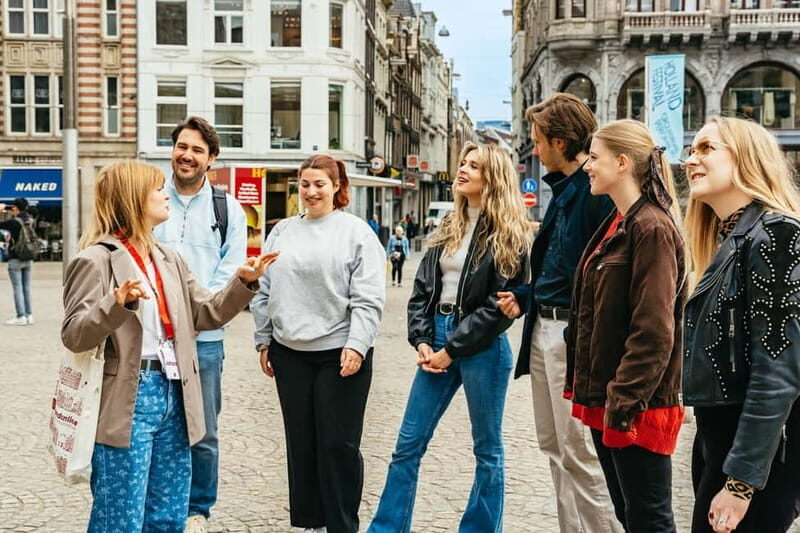
You meet on the stairs of the National Monument in Dam Square. It’s a big white obelisk pillar, and the guide wears a red name tag around their neck.
Practical tip: arrive a little early and don’t wander too far into the crowd. Reviewers didn’t complain about the route, but one noted that the guide branding wasn’t always easy to spot. Dam Square is lively, so give yourself a buffer.
Once you’re matched up with your guide, the pacing is designed for comfort. You’ll have photo stops and guided walking, not nonstop hustle.
The tour vibe: knowledgeable, story-driven, and very question-friendly
This tour wins on the human factor: the guides. Many reviewers single out guides as enthusiastic and knowledgeable, with names like Sonja, Francesco, Noah, Lili, Ginevra, Josh, and Santina. You’ll notice a pattern in the feedback: people didn’t just “learn facts.” They felt the guide made the city feel legible.
Expect a mix of storytelling styles. Some guides are playful and light. Others lean more formal. In either case, the goal stays the same: help you understand Amsterdam beyond the postcard version—how commerce, culture, conflict, and everyday tolerance show up in the streets.
Also, the tour is suitable for children, and it’s described as wheelchair accessible. So if you’re traveling with family or need accessibility options, this is built with that in mind.
More Great Tours NearbyStop by stop: what you’ll see and why it matters


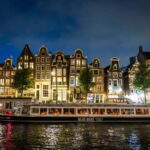
Dam Square and the National Monument
You start where Amsterdam feels official and symbolic. Dam Square is the center of gravity, and the National Monument is the emotional anchor. The monument was originally built to remember victims of World War II, and it now memorializes victims who lost their lives in any war worldwide.
It’s not just a photo stop. Your guide connects the square to the city’s identity and explains why that kind of memorial sits right in the middle of everyday life.
This also sets the tone for the entire walk. You’re going to see how big history doesn’t stay locked in textbooks here. It’s part of the urban landscape.
Royal Palace, the New Church, and the old-post-office vibe
From Dam Square, you’ll pass key civic and cultural buildings, including the Royal Palace of Amsterdam and the Nieuwe Kerk (New Church). You’ll also hear about the former main post office.
Why these stops work: they show Amsterdam’s blend of power and practicality. Palaces and churches reflect values and status. The old post office signals how the city communicated and moved goods and people.
You’ll get context without needing to commit to multiple indoor entrances, which is perfect if you want a guided overview early in your trip.
Torensluis Bridge: street-level history and small details
Crossing and moving around the Torensluis Bridge area is where the tour starts feeling more like a conversation with the city. You’ll learn about how merchants, salesmen, and the poor lived during the Middle Ages.
This is valuable because it prevents Amsterdam history from turning into a single-theme story. Yes, it’s art and wealth in certain periods—but there’s also the everyday reality of inequality and work.
You’ll also hear about the statue of Multatuli and see a reference to one of the tiny houses in the city—small scale, big meaning. Amsterdam has always packed more people and stories into less space than you’d expect.
Beurs van Berlage and Magna Plaza: commerce, change, and a modern overlay
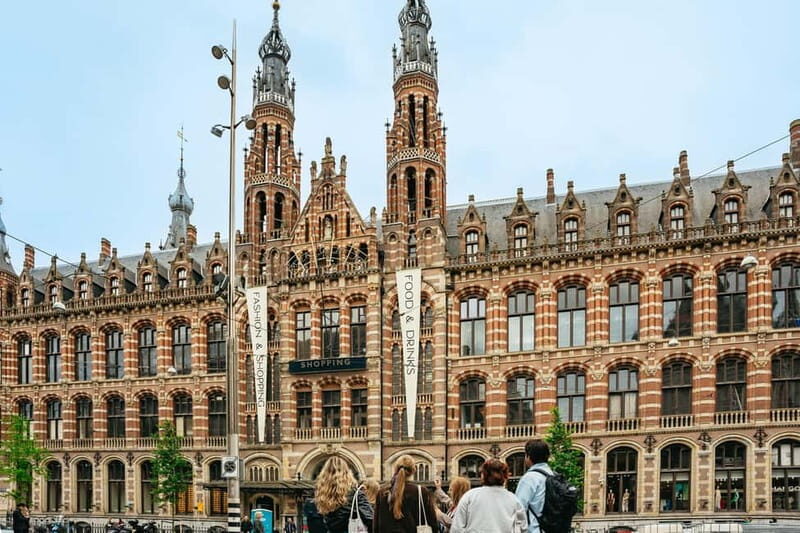
The route includes Beurs van Berlage and later Magna Plaza. These stops help explain how Amsterdam’s identity shifted from historic trading power to a city that still uses commerce as part of its pulse—just with different buildings and different uses now.
If you’re wondering why Amsterdam’s center feels both old and constantly reworked, this is part of the answer. The city doesn’t erase its past; it layers it.
Your guide will point out architectural design ideas that were popular in earlier times, so you start noticing details like you’d get from a slow stroll—only with explanations.
Multicultural present-day Amsterdam through architecture and memory
A big part of the tour centers on how World War II changed the people of the city, and how today Amsterdam is described as tolerant and multicultural.
You’ll see this communicated through the mix of landmarks you pass—some tied to remembrance, others tied to daily life. The tour’s strength is how it ties current-day character to past pressures rather than treating modern Amsterdam like it appeared out of nowhere.
Anne Frank Monument and Westerkerk: remembrance with context
You’ll walk past the Anne Frank Monument and then through the area around Westerkerk. These are strong stops, but the guide’s job is to keep them grounded in what the city is and how people lived, not just name-check tragedies.
Even if you already know the headline history, hearing it linked to specific streets gives you a different kind of understanding. It also helps you avoid the tourist trap of only seeing what’s famous without learning how it fits into the city’s wider story.
Homomonument and the message of visibility
Next comes the Homomonument. This stop adds an important social dimension to the tour. It’s about rights, visibility, and how different communities carved space for themselves over time.
Whether you already knew Amsterdam is known for tolerance, this is where that reputation gets something more tangible. It’s not just a vibe; it’s represented in a public memorial.
De Negen Straatjes: a quick taste of Amsterdam shopping streets
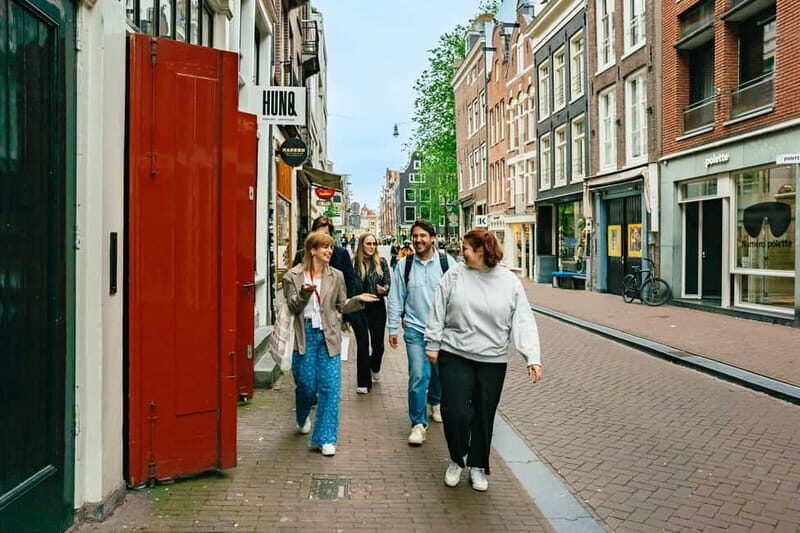
The tour pauses near De Negen Straatjes—the Nine Streets area—briefly and on purpose. This isn’t a deep shopping detour. It’s a taste of the kind of districts you can explore independently.
It also gives you a useful travel advantage: after the tour, you’ll have clearer instincts about where to wander next without getting lost.
Begijnhof: the calm pocket you’ll remember
If the tour has a single “wow, I didn’t expect this” moment, many travelers feel it here. You’ll cross to Begijnhof, described as a pearl of Amsterdam.
Begijnhof works because it’s small and quietly enclosed compared with the street chaos outside. Your guide explains what you’re seeing and includes context on local life. You also get a moment to reset.
This is a good stop for photos, but it’s also a good stop for breath. If you’re traveling with kids or older relatives, it’s a gentle highlight.
Amstel River return and the final approach to Dam Square
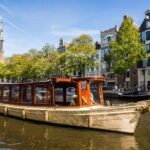
On your way back, you’ll see the Amstel—the river that the city’s name is linked to—plus canal-side scenes that help you connect Amsterdam’s geometry with its water system.
Then you finish back at the National Monument area. The overall arc matters: you start with civic identity, pass through culture and commerce, pause in quiet courtyards, then end with the river and memorial again.
That loop makes the city feel coherent.
What to bring and how to pace yourself
For what you’ll do, pack like a local for a rainy day:
- Comfortable shoes
- Umbrella
- Water
The tour includes guidance but you’re still outdoors. One review mentioned terrible weather, and the guide still made it engaging. That’s a great sign—but it doesn’t stop your shoes from getting muddy.
Also, because it’s a guided walk with photo pauses, you don’t need to sprint for the route. If you want more walking time after, you can easily continue exploring near Begijnhof, the canal lanes, or De Negen Straatjes on your own.
Food and drinks: what’s included (and what isn’t)
Food and drinks are not included. The tour does include guidance on which foods you must try, and reviewers mention that guides sometimes share very specific local pointers.
One small example from feedback: a guide suggested where to find bitterballen. That kind of practical tip turns the walking tour into a springboard for your next meal.
Plan a snack or plan your dinner afterward. The tour is designed to help you choose, not to feed you.
Accessibility and group size: plan with real-world expectations
The tour is wheelchair accessible, and private group options are available.
Group size varies. Some reviewers reported very small groups—like tours with only a few people—which can make the experience feel more personal. Other groups may be larger, but the overall structure is still manageable in about two hours.
If you prefer quieter attention, booking when smaller groups are likely to happen can help. If you’re fine with a lively group, you’ll still get the core route and interpretation.
Languages: English, German, and Italian
The live guide can be English, German, or Italian. Reviews mention that accents can vary depending on the guide. So if you’re sensitive to listening comprehension, consider choosing the language you’re most comfortable with.
The good news: multiple reviews mention guides answering questions clearly and professionally, even when people had lots of them.
Should you book? The practical yes-or-no
Book it if:
- you want an easy first-day orientation to Amsterdam’s center
- you value guides who connect history to what you see
- you like photo-worthy streets but also want context
- you’re trying to get good value without paying museum tickets
Skip or reconsider if:
- you only want long walking time with no stops, since the route includes photo and explanation pauses
- you’re not interested in context and would rather do a purely self-guided wander
Amsterdam: Cultural Highlights Walking Tour
FAQ
How long is the Amsterdam Cultural Highlights Walking Tour?
It lasts 2 hours.
Where do we meet for the tour?
Meet on the stairs of the National Monument at Dam Square. The guide wears a red name tag.
Is the tour wheelchair accessible?
Yes, the tour is wheelchair accessible.
Are admission fees included for the sights?
Admission fees are not something you pay for during the tour, since the sights can be visited for free.
What should I bring?
Bring comfortable shoes, an umbrella, and water.
What languages are offered?
The live guide is available in English, German, and Italian.
If you’re arriving in Amsterdam and want to feel oriented fast—without spending your day chasing tickets—this cultural highlights walking tour is a solid, budget-friendly way to start.
You can check availability for your dates here: