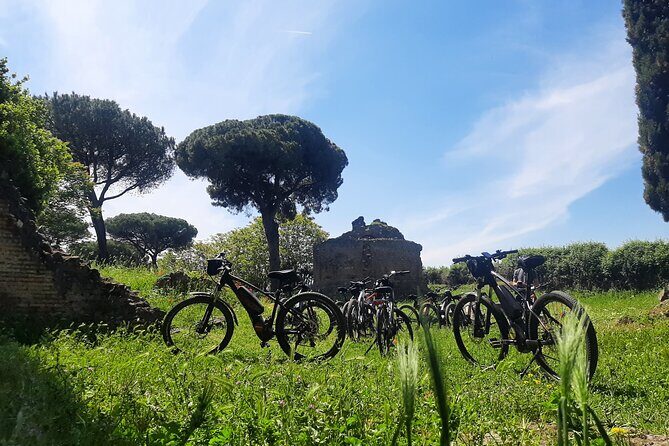
If you’re tired of elbowing your way through Rome’s packed plazas and monument queues, this electric bike tour along the Appian Way offers something genuinely different—a chance to experience Roman history on your own terms, pedaling through green spaces and ancient ruins that most travelers never see. We love that the tour combines serious history with genuine outdoor exploration, and that the electric bikes mean you’re not grinding up hills in Mediterranean heat. The main consideration is that this isn’t a leisurely cruise; it’s a real bike ride with some challenging terrain and several hours in the saddle, so you’ll want to be comfortable on a bicycle before booking.
This tour works best for travelers who actually enjoy cycling, prefer getting outside over indoor museums, and want to understand Rome’s engineering genius rather than just photograph famous monuments. Families with older kids (10+) and active adults will find this particularly rewarding, though less experienced riders should stick with the shorter 4-hour option.
- What Makes This Tour Different
- The Route: From City Gates to Countryside
- The Highlights: Aqueducts, Tombs, and Engineering Marvels
- The Catacombs Option: Worth the Extra Time
- The Meal: More Than Just a Box Lunch
- Guides Make the Experience
- Physical Reality Check
- Value for Money
- Practical Logistics
- Who Should Book This Tour
- Honest Takeaways from Travelers
- Frequently Asked Questions
- The Best Of Rome!
- More Cycling Tours in Rome
- More Tours in Rome
- More Tour Reviews in Rome
What Makes This Tour Different
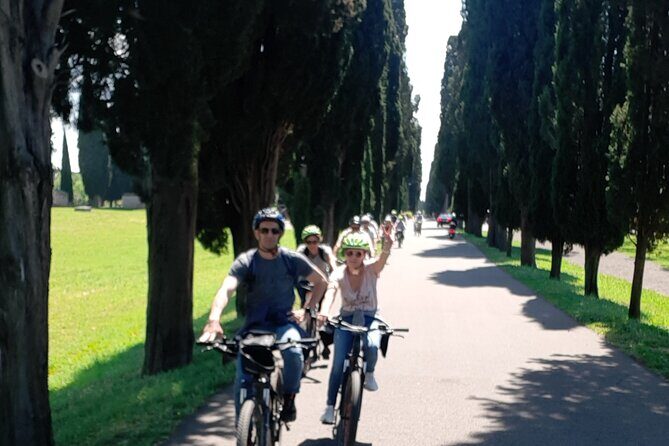
Most Rome tours follow the same script: Colosseum, Forum, Vatican, done. You shuffle through crowds, crane your neck, and leave without really understanding how the city actually functioned. This bike tour flips that approach entirely. You’re covering serious ground—literally pedaling the same route Roman soldiers once marched—while learning about infrastructure that kept an empire running for centuries.
The genius of using electric bikes here can’t be overstated. Yes, the Appian Way is mostly flat, but you’re also navigating Rome’s actual streets to reach it, managing some dirt trails, and encountering those notorious Roman cobblestones. Without electric assist, the tour would exhaust everyone but serious cyclists. With it, you can focus on the scenery and history instead of your burning quads. One reviewer noted, “The e-bikes (with suspension) make the riding accessible to all,” and that accessibility is exactly the point—you’re not excluding people who aren’t weekend warriors, but you’re also not babying the experience.

👉 See our pick of the Discover 2 Great Tours In Rome
The Route: From City Gates to Countryside
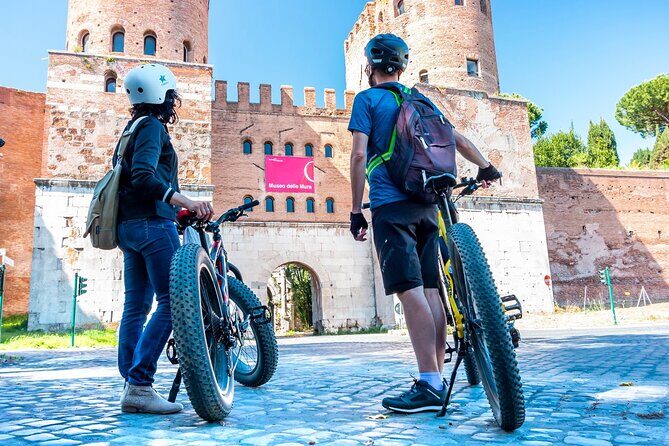
The tour begins at a bike shop just a short walk from the Colosseum, which is convenient for most visitors staying in central Rome. After you’re fitted for your e-bike and helmet, the route takes you through some of Rome’s busier streets before passing through Porta San Sebastiano, one of the most imposing gates in the ancient city walls. Built around 275 AD as part of the Aurelian Walls, this gate marks the official start of the Via Appia Antica. You’ll notice medieval graffiti carved into the stones—evidence of centuries of pilgrims, merchants, and soldiers passing through the same gateway you’re standing in.
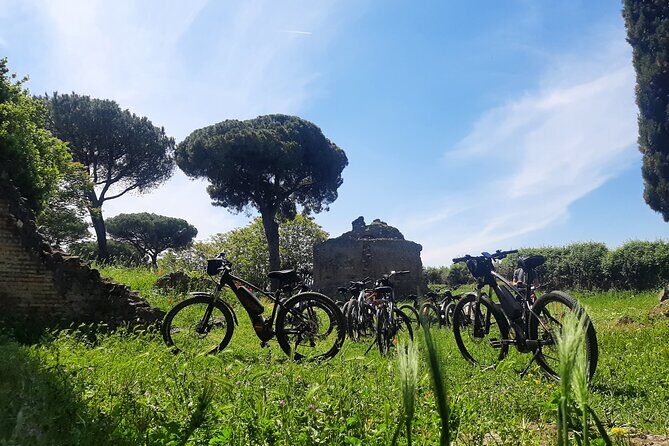
From there, the tour quickly transitions into the peaceful Parco della Caffarella, one of Europe’s largest urban green spaces. This is where you really leave Rome behind. The park is essentially an archaeological layer cake—you’re pedaling past ancient building remains, medieval structures, and Renaissance additions, all while surrounded by trees and open countryside. It feels genuinely surprising to discover such a place existing within a major European capital.
The heart of the tour, of course, is the Appian Way itself. The Romans called it the “Regina Viarum”—the Queen of Roads—and once you’re riding along it, you understand why. Built in the 4th century BC by the censor Appius Claudius (known as “the Blind”), the road eventually stretched all the way to Brindisi, connecting Rome to its most important southern port. You’re literally riding on the same stones that Roman armies marched on, that merchants traveled for trade, and that early Christians walked to reach the catacombs.
The ancient road itself presents a memorable riding experience. Those massive cobblestones—bigger than dinner plates with deep gaps between them—require some skill and attention. One experienced cyclist noted, “The terrain includes paved roads, cobblestone, and dirt, and is mostly flat with a few short hills,” adding that while it won’t be fun if you don’t enjoy cycling, it’s very doable on an e-bike. You’ll ride partially on the stones themselves and partially on dirt paths running alongside, depending on the condition and traffic.
You can also read our reviews of more cycling tours in Rome


The Highlights: Aqueducts, Tombs, and Engineering Marvels
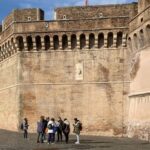
Beyond the Appian Way itself, the tour hits several standout archaeological sites. The Mausoleum of Cecilia Metella is perhaps the most impressive—a massive 1st-century BC tomb that’s the best-preserved mausoleum along the entire route. It was later incorporated into a medieval fortress, so you’re seeing layers of history stacked literally on top of each other. Reviewers consistently mention this as a visual highlight, and it’s easy to see why—the structure is both imposing and elegant.
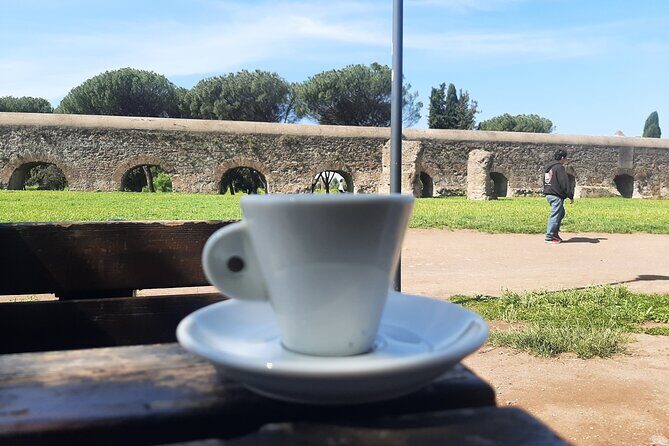
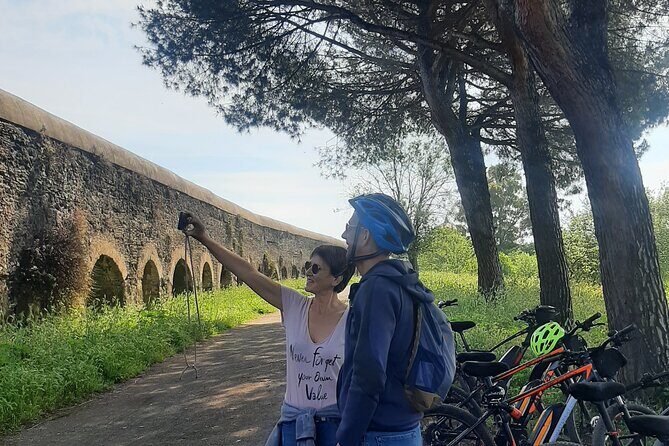
Then there’s the Parco degli Acquedotti (Aqueduct Park), where you’ll ride alongside the actual remains of Rome’s water system. The Claudian aqueduct and others are partially preserved here, and they’re staggering in scale. These weren’t small channels—they were massive engineering undertakings designed to move water across enormous distances. One reviewer captured this perfectly: “We could enjoy ruins of the aqueduct under gorgeous blue skies” rather than fighting crowds in the city center. The difference in experience is profound.
You’ll also see the Circus of Maxentius, which represents the best-preserved example of a Roman circus that survives today. The spina (the central barrier) is still visible, and it once held the Agonale obelisk—which Renaissance architects later moved to Piazza Navona’s Fountain of the Four Rivers. These details matter because they show how Roman artifacts have been scattered and repurposed throughout the city over centuries.
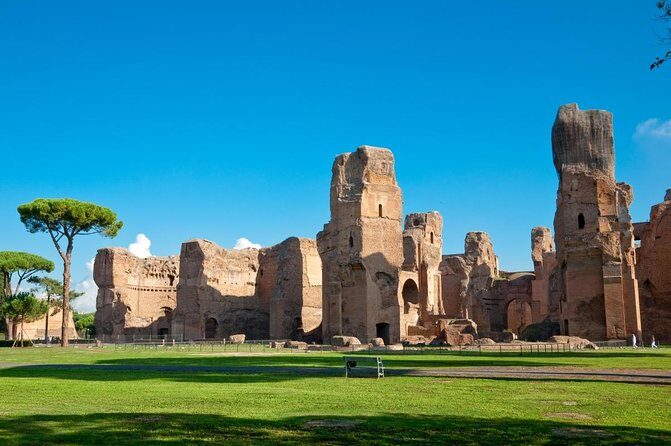
Near the end of the route, you pass the Baths of Caracalla. These weren’t just luxury—they were the largest public baths ever built at their time, serving thousands of Romans daily. They reveal how sophisticated Roman daily life actually was, with hot, warm, and cold water supplied by the Aqua Marcia aqueduct. The scale of these ruins gives you a tangible sense of an empire’s resources and engineering prowess.
The Catacombs Option: Worth the Extra Time
If you choose the 5-hour version with the catacombs included, you’ll visit the Catacombe di San Callisto—the official burial complex of the early Church of Rome. This is substantial: corridors extending about 20 kilometers underground, with over half a million burials, including 16 popes and 50 martyrs. You’re descending into the actual spaces where early Christians buried their dead, and it’s impossible not to feel the weight of that history.
One reviewer who did this section noted, “The catacombs (awesome!!!) was a more traditional tourist stop but nothing like the crowds of the city.” That’s the real advantage here—you’re experiencing these sites with a small group (maximum 12 travelers) rather than as part of a massive tour. The guided visit is included, so you get expert context rather than just wandering through tunnels.
The catacombs also provide a genuinely different perspective on Roman history. While you’ve spent hours exploring the engineering and military infrastructure of the empire, the catacombs show you the spiritual and social life of ordinary people living under that empire. It’s a valuable counterbalance to all those monumental structures.
The Meal: More Than Just a Box Lunch
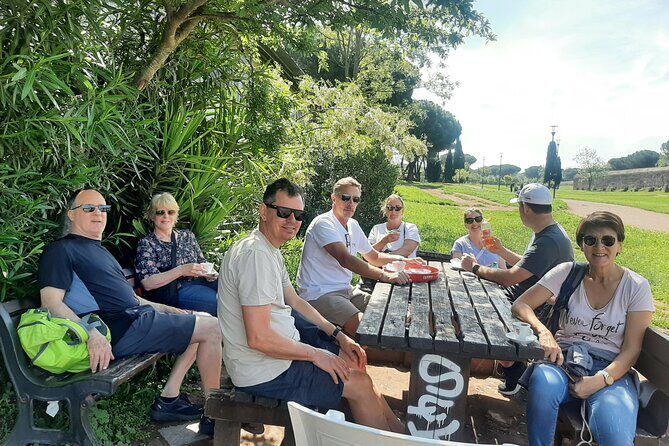
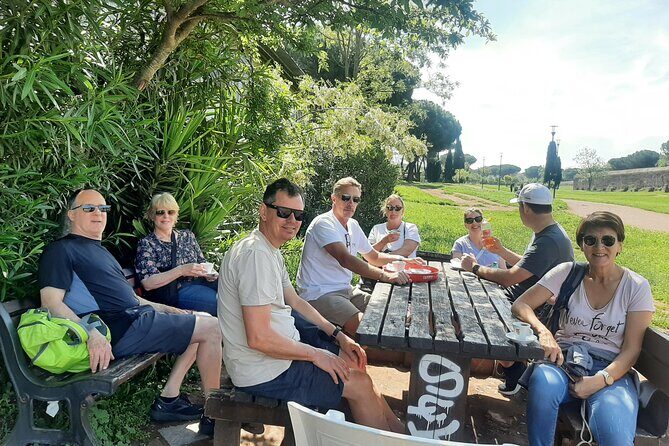
The 5-hour tour includes lunch at a restaurant in the Aqueduct Park area, not just a packed box as the name might suggest. One traveler reported, “The description refers to a box lunch but actually was a delightful simple meal in a pleasant sit down restaurant.” You’ll also get an afternoon aperitif. This matters for two reasons: first, it gives you a proper break to rest your legs and refuel; second, it means you’re not eating on the go while trying to manage a bike and camera.
The meal gives you time to process what you’ve seen and ask your guide questions without keeping the group in motion. It’s also a chance to sit with fellow travelers and swap impressions about the ride. These quiet moments often become the most memorable parts of a tour.
Guides Make the Experience
The reviews consistently praise the guides, and for good reason. These aren’t people who memorized a script—they’re knowledgeable historians who genuinely care about the experience. Names that appear repeatedly include Ava, Chris, Alex, and Iman, and travelers describe them as “knowledgeable,” “patient,” “entertaining,” and genuinely invested in the group’s safety and enjoyment.
One reviewer captured what makes a good guide here: “Alex made a number of stops, and was excellent at providing context and significance for the antiquities we were seeing, information on Roman and medieval history, impacts on the sites, and anecdotes about the past.” You’re not just pedaling past old rocks; you’re getting a real education in Roman history, urban development, and archaeological preservation.
The guides also manage the tricky parts well. Getting through Rome’s streets by bike can be anxiety-inducing, but multiple reviews mention guides who were “patient and reassuring” while navigating traffic. One traveler noted, “He was down to earth, extremely kind, funny, and so informative. He even took the time to remember our names (a group of 14 that included a 6 yr old).”
You can also read our reviews of more tours and experiences in Rome


Physical Reality Check
Let’s be direct: this is not a gentle tour. You’re cycling for 4-5 hours with varying terrain. The Appian Way’s ancient cobblestones are spectacular but require concentration. Some dirt trails are bumpy. The sun is often intense. One honest review stated, “This is a lot of biking and some of it takes some skill—navigating in traffic, down hill on tight dirt trails, and navigating huge cobblestones.”
That said, the e-bikes genuinely help. The electric assist means you’re not exhausted on hills, and the suspension absorbs impact on rough terrain. The tour company is clear about requirements: you must be able to ride a bike well, you should have moderate fitness, and there are weight limits (maximum 120 kg). If you’ve been sedentary for years, this might not be the tour for you. But if you ride a bike occasionally and don’t mind being active for several hours, you’ll be fine.
One reviewer who was honest about the physical demands still enthusiastically recommended it: “You will have challenging terrain and a sore backside, but soo worth it. Do it.” The soreness is real—bike seats on multi-hour tours aren’t cushy—but it’s worth it for what you experience.
Value for Money
At $78.60 per person for a 4-hour tour (or $98-ish for the 5-hour version with catacombs and lunch), you’re getting a lot. You’re getting a quality e-bike with helmet and accessories, a guide, small-group access to multiple archaeological sites, and either 4-5 hours of genuine outdoor exploration. Compare that to a standard Rome tour costing similar amounts where you’re standing in a museum queue for half the time.
The tour also requires advance booking (typically 38 days ahead on average), which suggests strong demand. It’s popular not because it’s flashy or easy, but because it actually delivers something valuable—a different way to experience Rome that most travelers miss entirely.
Practical Logistics
The tour meets at Roma STARBIKE’s location on Via dei SS. Quattro, a short walk from the Colosseum. You return to the same spot, so logistics are simple. The company offers mobile tickets, and you can cancel free up to 24 hours before the tour. Weather cancellations result in a rebooking or full refund.
The small group size (maximum 12 travelers) is significant. You’re not herded with 40 people; you’re with a manageable group where the guide can actually help individuals, adjust the pace if needed, and have real conversations. That intimacy transforms a tour into an experience.
The tour is offered in English, though the company is Rome-based, so other language options may be available if you contact them directly at +393756261525 or [email protected].
Who Should Book This Tour
This tour is perfect for travelers who want to understand Rome’s infrastructure and engineering, who prefer outdoor experiences to museum visits, and who actually enjoy cycling. It works well for families with older kids (10+) who can handle the physical demands. It’s also ideal if you’ve been in Rome’s center for days and need to escape the crowds without leaving the city.
It’s less suitable if you’re a non-cyclist, prefer entirely flat and smooth paths, or need a relaxing pace. It’s also worth noting that this tour pairs particularly well with museum-heavy days—the active outdoor experience provides good balance to sitting in the Vatican or Forum.
Honest Takeaways from Travelers
Across nearly 1,000 reviews, travelers consistently mention the same things: the guides are excellent, the escape from crowds is genuinely refreshing, the e-bikes make the experience accessible, and the history comes alive in a way that’s hard to replicate. One reviewer summed it up: “This bike ride was THE highlight of my 8 day trip to Rome.”
There are minor complaints—some people found the bike seats uncomfortable (a common cycling issue, not specific to this tour), and inexperienced riders occasionally struggled with the terrain. But these are exceptions in a sea of enthusiastic reviews. The 4.8/5 rating from 975 reviews speaks for itself.
Appian Way Aqueducts Bike Tour (Catacombs & Lunch Option)
Frequently Asked Questions
Q: Do I need to be an experienced cyclist to do this tour?
A: The tour company states you must know how to ride a bike “well,” and multiple reviews mention that inexperienced riders may struggle with the cobblestones and terrain. If you haven’t cycled in years, the 4-hour version without catacombs might be better than the longer 5-hour option, or you might want to consider a different tour entirely.
Q: What’s included in the price?
A: The 4-hour tour includes the e-bike, helmet, mobile phone holder, handlebar holder, and guided tour of the sites. The 5-hour version adds catacomb admission and a sit-down meal with aperitif. All admission fees to the archaeological sites are included; tips are optional.
Q: How much riding is actually involved?
A: You’re on the bike for most of the 4-5 hours. The tour includes multiple stops to see sites and learn history, but you’re not sitting in a restaurant or museum for extended periods. Expect to be actively cycling with breaks for sightseeing rather than the reverse.
Q: Can I bring my child on this tour?
A: Children ages 6-10 can join if they’re under 4’7″ (143 cm) tall, as they’ll use a trailer bike rather than a full-size bike. Several reviews mention families with kids enjoying the tour, though you should be comfortable with your child cycling for extended periods.
Q: Is the Appian Way itself difficult to ride on?
A: The ancient cobblestones are large with deep gaps between them and require some skill and concentration. You can ride on the stones themselves or on dirt paths alongside them depending on conditions. E-bike suspension helps significantly, but this is one of the more technically challenging parts of the route.
Q: What if the weather is bad?
A: The tour requires good weather. If conditions are poor, you’ll be offered either a different date or a full refund. Rome’s weather is generally reliable in most seasons, but summer heat can be intense.
Q: How many people are typically in a group?
A: The maximum group size is 12 travelers, which is significantly smaller than most Rome tours. Reviews consistently mention this as a positive aspect, allowing for more personal attention from the guide.
Q: What should I wear and bring?
A: Wear comfortable clothes suitable for cycling and sun protection (hat, sunscreen). Bring water—several reviews mention the tour doesn’t include drinks until near the end. Wear shoes suitable for cycling (not flip-flops), and consider padded bike shorts if you’re sensitive about comfort on long rides.
Q: Is lunch really included in the 5-hour tour?
A: Yes, though it’s not a packed box as the name suggests—it’s a sit-down meal at a restaurant in the Aqueduct Park area. You also get an afternoon aperitif. This provides a proper break in the middle of the tour.
Q: How far in advance should I book?
A: The tour is booked on average 38 days in advance, suggesting it’s popular, especially in peak season. Booking earlier is recommended, though availability may vary by season.
Bottom Line: This tour delivers genuine value by combining serious history, active outdoor exploration, and expert guides into a single experience that costs less than many museum tours. You’re not just seeing Rome’s famous monuments—you’re understanding how Roman engineering actually worked and experiencing the countryside that surrounds the city. If you enjoy cycling, appreciate history, and want to escape Rome’s tourist crowds, this is one of the best ways to spend a morning or afternoon in the city. The e-bikes make it accessible to reasonably active travelers, the small group size ensures quality attention, and the consistently high reviews (nearly 90% five-star ratings) suggest the tour delivers what it promises. Plan for some physical exertion and a potentially sore backside, but expect to leave with a fundamentally different understanding of Rome than you’d get from any museum visit.