There’s a particular magic that happens when you skip the tour bus lines and experience a city through the eyes of someone who actually lives there. After reviewing hundreds of traveler experiences with this Athens full day private tour, we’ve found something genuinely special: a carefully crafted eight-hour journey that manages to hit every major historical highlight while still feeling personal and flexible.
What we love most about this experience is the combination of practical convenience and authentic expertise. You’re not just getting transportation and a checklist of sites—you’re getting picked up from your hotel or cruise port in a comfortable, air-conditioned vehicle with a driver who understands both the logistics of navigating Athens’ notoriously challenging traffic and the deeper stories behind each monument. The flexibility to customize your itinerary on the fly, combined with skip-the-line access to major sites, means you’re not wasting precious vacation time dealing with logistics.
One consideration worth noting: while the tour includes 14 stops and covers an impressive amount of ground, you’ll need to be comfortable with a moderately paced day that involves some walking and standing at archaeological sites. This isn’t a leisurely stroll—it’s a well-orchestrated sprint through millennia of history.
This tour works brilliantly for first-time visitors to Athens with limited time, history enthusiasts who want context beyond what guidebooks provide, cruise passengers making the most of a port day, and anyone who’d rather avoid the sensory overload of large group tours. If you’re the type of traveler who values knowledge over speed and authenticity over convenience, you’re exactly who this experience was designed for.
- What You’re Actually Getting: Breaking Down the Value
- The Itinerary: A Masterclass in Historical Sequencing
- The Acropolis: Your Anchor Point (1.5 hours)
- The Theatre of Dionysus & Herodes Atticus Odeon (20 minutes combined)
- The Panathenaic Stadium (30 minutes)
- The Changing of the Guard (30 minutes)
- Syntagma Square & The Parliament (Brief stops)
- Mount Lycabettus (15 minutes)
- The Ancient Agora & Museum (1.25 hours total)
- Plaka & Koukaki Neighborhoods (1.5 hours including lunch)
- The Practical Reality: What the Experience Actually Feels Like
- Who Are the Guides, Really?
- The Value Proposition: Is It Worth the Money?
- Honest Considerations
- The Cancellation Policy: Low-Risk Commitment
- Frequently Asked Questions
- More Private Tours in Athens
- More Tours in Athens
- More Tour Reviews in Athens
What You’re Actually Getting: Breaking Down the Value
 1 / 8
1 / 8 2 / 8
2 / 8 3 / 8
3 / 8 4 / 8
4 / 8 5 / 8
5 / 8 6 / 8
6 / 8 7 / 8
7 / 8 8 / 8
8 / 8At $205.58 per person (with entrance fees to major sites running an additional €50 per person, about $55), this tour sits in that sweet spot between budget group experiences and premium private guides. But here’s what makes the pricing strategy smart: you’re paying for a private vehicle and driver for the entire day, which means no compromising with strangers about timing, no waiting for stragglers, and no feeling rushed through sites that deserve your attention.
The included amenities—onboard Wi-Fi, USB charging, bottled water, and hotel/port pickup and drop-off—might sound like minor details until you’re actually traveling in a foreign city. These touches eliminate the small friction points that can derail a day of sightseeing. You won’t be scrambling for a phone charger, trying to figure out public transportation from the port, or wondering if you’ll make it back in time for your evening plans.
One of the most frequently praised aspects across reviews is the quality of the drivers themselves. Multiple travelers mentioned guides with backgrounds in history and archaeology, which transforms what could be a simple shuttle service into an educational experience. As one traveler put it, “He really listened to what we were interested in and made adjustments. It truly felt as though we were visiting a friend in Athens and he was showing us around. But smarter.”
The Itinerary: A Masterclass in Historical Sequencing
The tour’s 14 stops aren’t randomly selected—they’re arranged in a logical flow that respects both geography and the rhythm of a full day. Let’s walk through what you’ll actually experience.
You can also read our reviews of more private tours in Athens



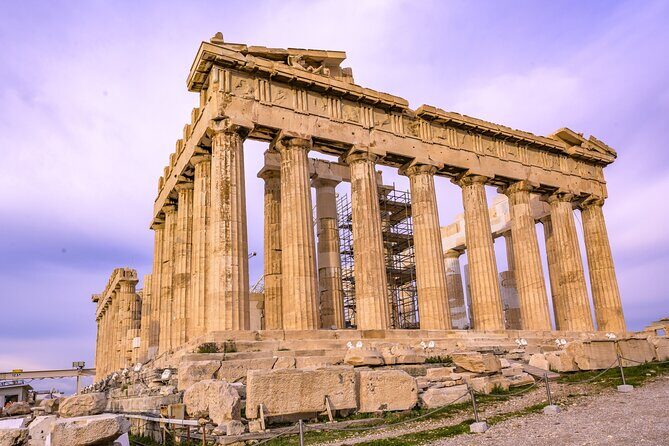
The Acropolis: Your Anchor Point (1.5 hours)
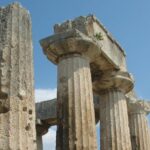
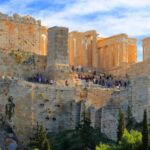
You’ll spend the most time here, and rightfully so. The Acropolis is the gravitational center of ancient Athens, and without context, it’s easy to feel overwhelmed by the crowds and the sheer scale. The beauty of having a knowledgeable driver is that you get the narrative before you arrive: the historical significance of this sanctuary dedicated to Athena, the engineering achievements that still baffle modern architects, and the stories embedded in every column.
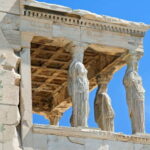
Once you’re on the grounds, you’ll encounter several distinct monuments that make up the Acropolis complex. The Parthenon (447-432 BC) is the obvious showstopper—one of the world’s most recognizable buildings and a symbol of Western civilization itself. But the surrounding structures tell equally compelling stories. The Erechtheion, with its famous Porch of the Caryatids (those female figures serving as columns), marks the legendary spot where Poseidon and Athena battled for the city’s name. The Temple of Athena Nike and the Propylaia (the monumental gateway) demonstrate how even entrances to sacred spaces were treated as architectural masterpieces in ancient Athens.
The genius of spending real time here is that you move beyond the typical “check the box” mentality. One traveler with mobility concerns noted that her guide “communicated perfectly the logistics of the day and was easily available,” ensuring she could explore at her own pace while still seeing everything that mattered to her.
The Theatre of Dionysus & Herodes Atticus Odeon (20 minutes combined)
These two theaters represent different eras but share a profound importance: they’re where Western drama was literally invented. The Theatre of Dionysus hosted the Great Dionysia festival, where playwrights like Sophocles and Euripides premiered works that still define theatrical tradition. The Herodes Atticus Odeon, built during the Roman imperial period, showcases how later civilizations continued to honor the same cultural values.
What’s fascinating here is understanding the scale and sophistication. The Herodes Atticus could hold 5,000 people and still maintains enough structural integrity that it hosts performances during the Athens Festival. These weren’t crude amphitheaters—they were engineering marvels with sophisticated acoustics.
The Panathenaic Stadium (30 minutes)
Also called Kallimarmaro, this stadium hosted the first modern Olympics in 1896 and retains its original marble construction. It’s a tangible connection between ancient athletics and modern Olympic tradition. You’ll see where ancient competitions honoring Athena took place, and you’ll understand why this particular stadium matters beyond just being another historical site.
The Changing of the Guard (30 minutes)
This is where the tour often transcends being merely informative and becomes genuinely memorable. Every hour, the Evzones (Greek presidential guards) perform an elaborate changing of the guard ceremony at the Monument to the Unknown Soldier in front of the Greek Parliament. It’s a 15-minute spectacle of synchronized movement, ceremonial precision, and national pride.
What makes this special through this tour is the insider perspective. Several travelers mentioned being taken to less-crowded vantage points and receiving detailed explanations of the uniform elements, the choreography, and the historical significance. One reviewer noted that their guide had actually served as an Evzone and could explain every detail from personal experience. That’s the difference between watching something and understanding it.
You can also read our reviews of more tours and experiences in Athens
- All Day Cruise -3 Islands to Agistri,Moni, Aegina with lunch and drinks included
★ 5.0 · 4,958 reviews


Syntagma Square & The Parliament (Brief stops)
These locations anchor you in modern Athens while providing context for how the city evolved. The Parliament building itself was originally a royal palace, and Syntagma Square is where much of Athens’ modern political history unfolded. These stops are brief, but they complete the picture of Athens as a living city, not just a museum.
Mount Lycabettus (15 minutes)
The hill offers panoramic views of Athens and the Saronic Gulf, and on a clear day, you can see all the way to the coast. This stop serves multiple purposes: it’s a visual reset after spending time at ground level with ancient ruins, it provides orientation (you can actually see the geography of everything you’ve visited), and it offers excellent photo opportunities. The Church of Agios Georgios at the summit adds another layer of historical interest.
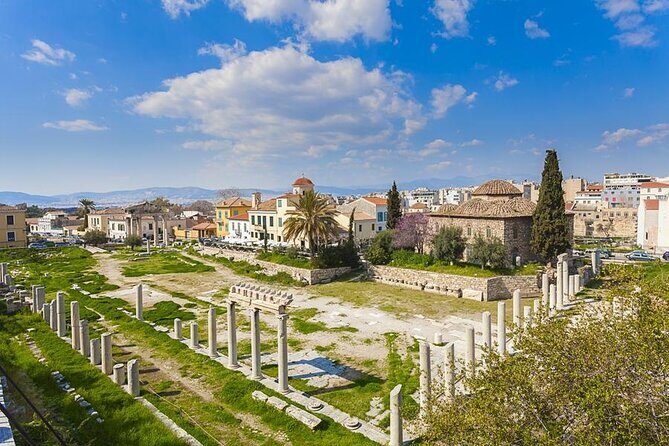
The Ancient Agora & Museum (1.25 hours total)
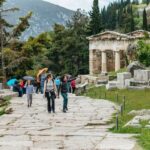
The Agora was the beating heart of ancient Athenian democracy—the marketplace where citizens gathered, debated, and conducted business. Walking through the remains, you get a sense of how ordinary life unfolded alongside the grand monuments. The Stoa of Attalos, a reconstructed covered colonnade, provides shade and helps you visualize how these spaces functioned.
The museum here is often overlooked by visitors rushing to bigger attractions, but it contains artifacts that directly illuminate daily life in ancient Athens. Pottery, voting tokens, and tools tell stories that the grand temples can’t.
Plaka & Koukaki Neighborhoods (1.5 hours including lunch)
This is where the tour shifts from monument-hopping to experiencing Athens as a living place. Plaka, the oldest neighborhood in the city, features neoclassical architecture, winding alleys, and countless small tavernas. Koukaki, slightly less touristy, offers that same authentic atmosphere with perhaps fewer tourist-trap restaurants.
The lunch stop is deliberately built into the itinerary, and this is where driver recommendations matter enormously. Multiple travelers mentioned being taken to local spots that served exceptional food at reasonable prices—the kind of places you’d never find on your own. One reviewer specifically praised being taken to “his neighborhood coffee shop, off the beaten path with no travelers” for an authentic Greek experience.
The Practical Reality: What the Experience Actually Feels Like
Reading reviews, a consistent theme emerges: travelers feel respected and cared for in ways that large group tours can’t match. One couple in their 80s with mobility concerns wrote, “Having mobility issues, my comfort and safety were priorities. He communicated perfectly the logistics of the day and was easily available, taking into consideration what our objectives were.”
The private vehicle means you’re not stuck to a rigid schedule. If you’re having a profound moment at the Parthenon, you’re not being herded along by a tour guide checking their watch. If you want to skip something on the itinerary, that’s fine too. One traveler mentioned, “We didn’t feel like completing the entire tour, so our guide made adjustments for us.”
The flexibility extends to customization. Your driver can suggest alternatives if major sites are unexpectedly closed, can take you to viewpoints other tours miss, and can respond to your interests in real time. This matters more than you might think when you’re trying to fit a lifetime of history into eight hours.
The transportation itself is worth noting. You’re traveling in a clean, air-conditioned vehicle (often described as a comfortable Mercedes minivan) rather than sitting in traffic on a bus. This means you can actually see the city as you move through it, and the driver can provide context about neighborhoods and modern Athens, not just ancient sites.
Who Are the Guides, Really?
The reviews paint a consistent picture of guide quality that’s genuinely impressive. Multiple guides are mentioned by name—Aristotle, Nasos, George, Panos—and reviewers consistently note their passion, knowledge, and genuine affection for their city. Several have university degrees in history or archaeology, and several have personal connections to sites (like having served in the Evzones).
This isn’t to say every single driver will blow your mind, but the consistency of praise across 667 reviews suggests this company has figured out something important about hiring and training. A 12-year-old reviewer wrote, “He explained them in such a way that it was so easy for me to understand!” That’s the hallmark of genuine expertise—the ability to make complex history accessible without dumbing it down.
The Value Proposition: Is It Worth the Money?
Let’s be direct: at $205.58 per person plus €50 for entrance fees, you’re spending roughly $260 per person for eight hours of service. That’s about $32.50 per hour, which is genuinely reasonable for a private vehicle and guide in a major tourist destination.
Compare this to alternatives: a standard group tour runs $60-80 per person and covers less ground with more people. A fully private guide can cost $200-300 per hour. This tour splits the difference—you get a dedicated vehicle and driver, but you’re not paying for a certified tour guide’s premium rates (though guides with archaeology backgrounds often have that certification anyway).
The skip-the-line access to major sites saves time that would otherwise be lost in queues, especially during peak season. The flexibility means you’re not locked into someone else’s pacing. The included amenities (Wi-Fi, charging, water, transfers) eliminate nickel-and-diming.
One practical consideration: entrance fees aren’t pre-purchased, which means you’ll pay the driver directly on the day. This is actually convenient (no advance planning needed) but means you should carry cash or be prepared to use a card. The tour organizer handles arranging your tickets, so you’re not figuring out the Greek ticketing system yourself.
Honest Considerations
Out of 667 reviews, we found one 4-star review that mentioned a “pushy” souvenir shopping stop where prices were inflated even at the advertised group discount. This reviewer also noted they didn’t communicate clearly enough about priorities (like wanting to see the Changing of the Guard), which the driver would have accommodated with better communication upfront.
The lesson here: be clear about what matters most to you. If there’s a specific site you absolutely must see or something you want to skip, mention it when you book or in your initial communication. These drivers are accommodating, but they’re not mind readers.
Weather can be a factor. Athens in summer is genuinely hot, and you’ll be doing significant walking. Bring water (though the tour provides some), wear comfortable shoes, and apply sunscreen generously.
Traffic in Athens can be unpredictable, so the itinerary is somewhat flexible by necessity. The tour is designed to be resilient to traffic delays, but if a major road closure happens (like one reviewer experienced during a cycling event), timing might shift. The company, to their credit, handled this by rescheduling and adjusting the itinerary without charging extra.
The Cancellation Policy: Low-Risk Commitment
You can cancel free up to 24 hours before the tour, which is genuinely reasonable. This gives you flexibility if your plans change or if weather becomes a serious concern. Less than 24 hours and you lose your money, which is standard for private tour operators.
Athens Full Day Private Tour
Frequently Asked Questions
Q: What’s included in the price, and what costs extra?
The $205.58 per person covers the vehicle, driver, pickup/drop-off, Wi-Fi, water, and USB charging. You’ll pay an additional €50 per person (roughly $55) for entrance fees to the Acropolis and Ancient Agora, paid directly to the driver on the day. Lunch is not included—you’ll eat at your own expense during the Koukaki/Plaka stop, though your driver can recommend restaurants.
Q: Can I customize the itinerary?
Absolutely. The tour includes 14 major stops, but your driver is flexible about timing, pacing, and even skipping certain sites if you prefer to spend more time elsewhere. This flexibility is one of the primary advantages of a private tour over a group experience.
Q: What if I’m coming from a cruise port?
The tour includes pickup from cruise ports, which is invaluable for cruise passengers. You’ll be picked up with your luggage if needed, and the driver will work with you on timing to ensure you make it back to your ship with time to spare. Several cruise passengers specifically praised this service.
Q: How much walking is involved?
Expect moderate to significant walking, especially at the Acropolis and Ancient Agora. The tour is not suitable for people with serious mobility limitations, though one traveler with mobility concerns noted her driver was exceptionally accommodating about routing and pacing. Wear comfortable shoes.
Q: Is the guide a certified archaeologist or tour guide?
The drivers have deep knowledge and many have backgrounds in history or archaeology, but they’re not officially “licensed tour guides” in the sense that they can’t lead you inside certain restricted areas of sites. However, several reviews mentioned guides who are actually certified and have this knowledge. When you book, you can request a certified guide if that matters to you (availability may vary).
Q: What’s the best time of year to do this tour?
Any time is viable, but spring (April-May) and fall (September-October) offer the best balance of pleasant weather and manageable crowds. Summer (June-August) is hot, and winter can be rainy. The tour operates year-round, but weather will affect your comfort level and photo quality.
Q: How far in advance should I book?
The tour is booked on average 84 days in advance, which suggests popular guides fill up quickly. If you have specific guide preferences (based on reviews), booking further ahead increases your chances. However, last-minute bookings are possible, especially if you’re flexible about which driver you get.
Q: Are children welcome on this tour?
Yes. One reviewer was a 12-year-old who loved the experience and appreciated how the guide explained complex history in an accessible way. The private nature means children can go at their own pace and ask questions without disrupting others.
Q: What should I bring or know before the tour starts?
Bring comfortable walking shoes, sunscreen, a hat, and a reusable water bottle (the tour provides bottled water, but having your own is convenient). Bring cash or a card for lunch and any additional purchases. Wear clothes appropriate for the season—Athens summers are intensely hot. Inform your driver of any mobility concerns, dietary restrictions, or specific interests when you book.
The Bottom Line: This is one of those rare tour experiences that actually delivers on its promise. You’re getting a full day of structured sightseeing with enough flexibility to feel personal, guides who genuinely love their city, and practical conveniences that eliminate the friction of navigating a major tourist destination alone. At roughly $260 per person all-in, it’s solid value for what you’re getting—a private vehicle, expert knowledge, and the freedom to experience Athens on your terms rather than according to some tour company’s schedule. If you’re visiting Athens for the first time with limited time, have a genuine interest in history beyond just snapping photos, or want to avoid the sensory overload of large group tours, this experience deserves serious consideration. The 667 five-star reviews aren’t accidents—they reflect a company that has figured out how to balance structure with flexibility, expertise with accessibility, and cost with value.