Bath is one of those places where the streets feel like a living museum, and this Bath city walking tour is a smart way to get the big landmarks in a short time. You start at Bath Abbey, then move through classic Bath set pieces like Pulteney Bridge, before finishing with the Roman Baths option and the city’s famous Georgian streetscapes.
Two things I like a lot: the guides. Reviewers repeatedly mention knowledgeable, witty locals (examples include Tom, George, Jamie, Ewan, John, and Anna) who make architecture and Roman-era details feel usable, not academic. Second, the value for money is strong for what you cover in 1.5–2 hours—especially if you’re visiting for a first taste of Bath.
One drawback to consider: the Roman Baths portion depends on crowds, and you’re still on a walking schedule. One traveler even noted admission felt packed, and another wished the guide had continued with them inside the Baths longer. If you want lots of inside interpretation at the Baths, you may need extra time on your own.
- Key points before you go
- What you really get from this 1.5–2 hour Bath walk
- Starting at Bath Abbey: why perpendicular gothic matters
- Pulteney Bridge: Palladian design you can spot quickly
- Roman Baths optional entry: hot springs and what you should focus on
- Crowds at the Baths: how to avoid the packed feeling
- Royal Crescent: 30 Grade-1 houses and real Georgian drama
- The Circus: learning the “how” behind the look
- Pump Rooms and Upper Assembly Rooms: from water to social life
- Guide quality is the real differentiator (and reviewers name names)
- Price and value: what buys in the real world
- Logistics and pace: meeting point, steps, and weather reality
- Who should book this, and who should think twice
- Tips I’d use to get the most out of it
- Should you book this Bath city walking tour?
- More Walking Tours in Bath
- More Tours in Bath
- More Tour Reviews in Bath
Key points before you go









- Perpendicular Gothic Bath Abbey: a quick stop with big architectural payback
- Roman Baths optional entry: includes the essentials, with time to focus on the hot springs
- Royal Crescent and The Circus: Georgian set pieces with practical stories behind them
- Pulteney Bridge: Palladian design that you can spot fast in real life
- Guide-led pacing: local experts keep things lively even on a rain-slick day
- Good value at about $26: especially for first-timers who want the highlights
What you really get from this 1.5–2 hour Bath walk
This tour is built for people who want the best highlights without turning Bath into a full-day homework assignment. The core experience is a guided walking route through the center, designed to connect Bath’s Roman roots to its Georgian showpiece architecture. Depending on your option, you can add entry to the Roman Baths, which turns this into a longer outing once you factor in time inside.
It’s also a good format for mixed groups. Several reviewers mention tours that worked well across ages and experience levels, and that the guide kept questions rolling. If you’re the kind of traveler who likes context—why a building looks the way it does—this style tends to land well.
The big promise here is “see the very best of Bath.” That can mean different things to different people, so here’s the practical version: you’ll get the landmark photos you came for (Abbey, bridges, crescents, the Circus) plus a guide explaining the logic behind them.
You can also read our reviews of more walking tours in Bath



Starting at Bath Abbey: why perpendicular gothic matters
You begin in the city center at Bath Abbey, which is often praised for being one of the finest examples of Perpendicular Gothic architecture in the country. Even if you’re not an architecture nerd, the Abbey gives you something valuable fast: scale and detail. It’s hard to forget once you’ve seen it in person, and it becomes a reference point for the rest of your walk.
What’s useful about the Abbey stop is how a good guide frames it. Reviewers talk about guides who connect Bath’s growth to the people and institutions that shaped it over time, and the Abbey is a great place to anchor that story. You’ll also get the feel of Bath’s layout, since you’re starting from the heart of it.
Also note the tour includes a donation to Bath Abbey. That’s not just a feel-good detail; it supports the site you’re learning about, which is part of traveling well with heritage places.
Pulteney Bridge: Palladian design you can spot quickly
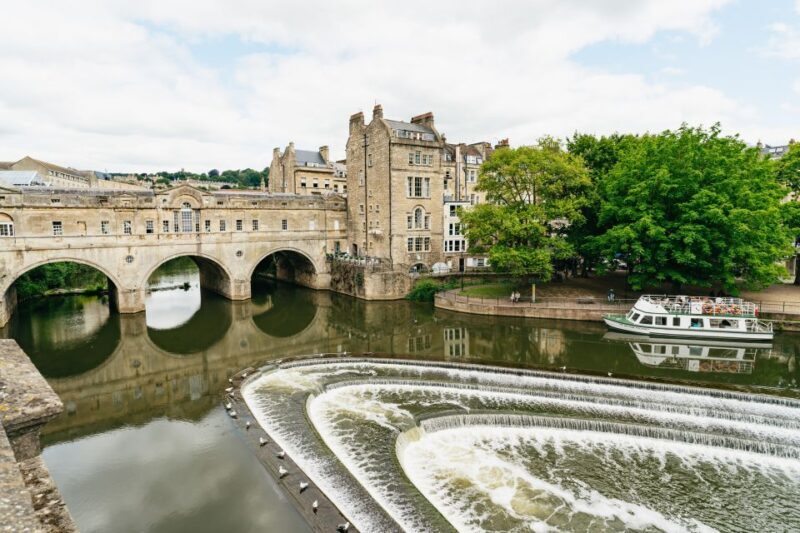
Next up is Pulteney Bridge, the famed pedestrian bridge in Bath with Palladian styling. If you’ve seen images before, you’ll recognize the rhythm immediately once you’re standing on it. One of the highlights is that it’s also featured in Les Misérables, which helps explain why it’s so widely photographed.
The value here is that the bridge is not just a photo stop. With a guide, you can learn how the design achieves that elegant façade look across a span—why it feels theatrical, but still disciplined. It’s the kind of architectural detail that becomes more enjoyable when you know what you’re looking for, even for a minute.
Practical tip: bridges and open stone walks can be breezy. Even in damp weather, the tour can still work well—one reviewer mentioned being out in wet conditions with umbrellas and staying entertained and informed anyway.
Roman Baths optional entry: hot springs and what you should focus on
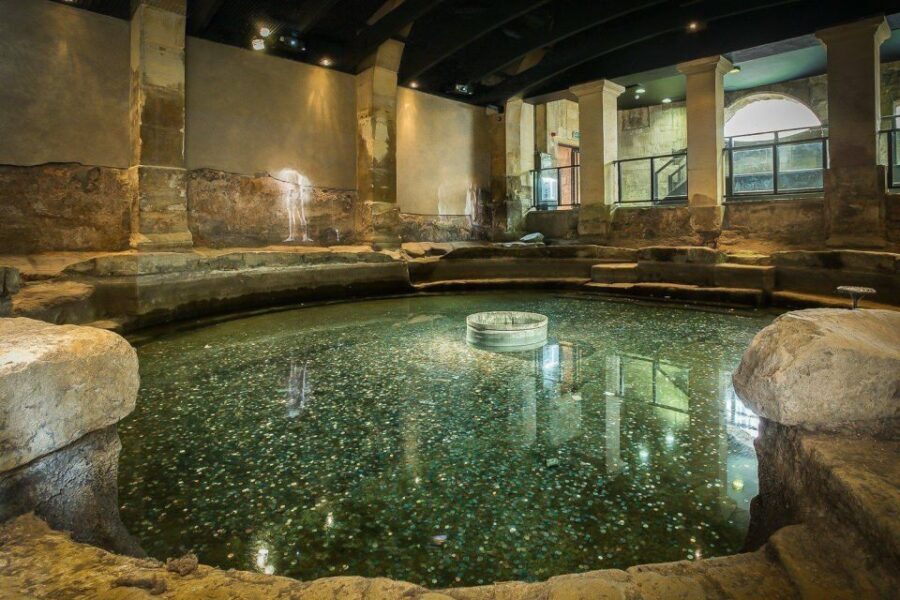
If you select the Roman Baths entry, this becomes the centerpiece moment of “past and present” in Bath. You’ll follow your guide to see Roman-era legacies left in the city, including the famous hot geothermal springs phenomenon that Bath is known for.
Here’s how to make this work even if you’re not a Roman-history specialist: treat the Baths like a sensory place. The water and the scale tell the story. You don’t need to memorize dates to get the point. What you’re aiming for is to understand how people used the space, what the site preserved, and why Bath’s geothermal water kept mattering through centuries.
Two helpful notes from travelers:
- One person said the Roman Baths ticket came with an audio guide inside, which can help bridge the gap between guided walking and self-paced time at the site.
- Some travelers reported a smoother entry experience with the tour ticket, while others warned that crowds can make it feel packed once you’re inside.
So, it’s worth going in with the right mindset: the Roman Baths are popular. Your experience will depend on timing and crowd levels.
More Great Tours NearbyCrowds at the Baths: how to avoid the packed feeling
This is the part where I’ll balance enthusiasm with realism. Multiple reviews were strongly positive about the tour overall, but at least a couple of comments hinted that the Roman Baths can get busy—one traveler specifically complained that admission numbers made it hard to see parts of the complex.
What can you do?
- Plan your mental priority list: pick the sections you most want to see, and don’t try to cover everything.
- Give yourself permission to slow down just where it counts: the hot springs areas and the main visitor zones are the heart of the experience.
- If you’re sensitive to crowd stress, consider choosing a earlier starting time if that option is available. One traveler praised a morning slot for keeping Bath calm and easy to navigate.
The good news: even with crowds, the Roman Baths still deliver the wow-factor. The practical win is that your guided walking portion helps you feel oriented, so you’re not wandering around trying to decode the place.
You can also read our reviews of more city tours in Bath


Royal Crescent: 30 Grade-1 houses and real Georgian drama
After the Roman-era stop (optional), the tour shifts into Georgian elegance—right where Bath shines. The Royal Crescent is the headline, with 30 Grade-1 listed houses forming one of the greatest examples of Georgian architecture in England.
This is one of those spots where the guide’s job matters. If you arrive knowing nothing, it can still impress. But if you arrive with context, it gets smarter. A good guide can help you read the structure: the façade’s curves, the uniform window rhythm, and the way the whole place signals status. Reviewers repeatedly mention guides who bring these stories to life with facts and humor, and the Crescent is a natural place for that.
If you like seeing architecture with an understanding of social meaning—how people lived and displayed power—you’ll likely enjoy the Crescent stop more than you expect. It’s not just a pretty curve. It’s a statement in stone.
The Circus: learning the “how” behind the look
From Royal Crescent, you move to The Circus, another of Bath’s Georgian masterpieces. The highlight here isn’t just that it’s beautiful; it’s that it’s a design puzzle you can learn to read.
When a guide points out what makes the Circus special—how the architecture creates that sense of motion and enclosure—it changes how you experience the space. Reviews mention that guides covered architecture in an engaging way, and some travelers explicitly said they enjoyed the in-the-air facts behind the buildings, not only the view.
If you’re traveling with kids or you want something that feels dynamic without being exhausting, the Circus can be a fun mid-tour reset. It’s also the kind of place where you can compare what you saw at the Crescent: same Georgian era energy, different design solution.
Pump Rooms and Upper Assembly Rooms: from water to social life
One of the most satisfying parts of this tour is that it links Bath’s famous water to daily life and social culture. You walk from the central Pump Rooms area to the Upper Assembly Rooms, finishing again in the Crescent and Circus zone.
This connection is useful because it helps you understand why Bath mattered beyond tourism posters. Bath’s geothermal water wasn’t only a healing legend—it shaped how people met, moved, and performed society. Even if you don’t go inside every building, the route helps you see the logic of the city’s center.
It’s also a smooth way to pace the walking. You get major visuals in a sequence that feels coherent: Roman roots, then Georgian display, then social venues tied to the water story.
Guide quality is the real differentiator (and reviewers name names)
A walking tour can go two ways: either it’s a list of sights, or it’s a guided conversation with structure. Based on the traveler feedback, this one lands closer to the second option.
You’ll hear consistent praise for guides who are:
- Local and knowledgeable, with answers that feel grounded
- Funny and engaging, keeping energy up without rushing
- Comfortable involving the group, including people asking questions
Names that came up often include Tom, George, Jamie, Ewan, John, Anna, and Marcel. That variety matters because it suggests the strength is in the guiding team and training, not just one standout person.
One extra detail that surprised me in a good way: a couple of travelers mentioned the guide voice or delivery style, and one noted the guide kept the tour feeling like a conversation rather than a rigid script. That matters if you want to learn without feeling lectured.
Price and value: what $26 buys in the real world
At about $26 per person, this tour is priced like an efficient city orientation, not a heavy museum day. For that cost, you’re getting a guided route through Bath’s central “greatest hits,” plus a donation to Bath Abbey.
Now, here’s the value math that matters. If you’re only doing self-guided walking, you’ll still see a lot, but you’ll miss the “why this design, why here, why then” connections that make places stick in your memory. Several reviewers specifically said they learned a lot in under two hours, with no sense of being rushed.
The optional Roman Baths entry adds cost depending on your selection, but it’s still a smart add-on for travelers who want one true anchor stop. The key is to budget time if you choose entry, because one reviewer advised planning closer to 3.5–4 hours total to include the Baths.
So yes, it’s good value. But it’s best value if you let the guide do their job—ask questions, notice the design details, and don’t treat it like a photo sprint.
Logistics and pace: meeting point, steps, and weather reality
The tour runs 1.5–2 hours, and it can be scheduled for morning or afternoon. The meeting point may vary depending on the option booked, so you’ll want to double-check where you’re supposed to gather.
Expect it to be a walking route with real city movement. One traveler mentioned steps, and another noted there was a small hill at the end. That’s not a problem for most visitors, but it’s worth knowing if mobility is limited.
Weather-wise, Bath can be damp. One reviewer described a rainy experience with umbrellas and still rated the tour highly. Translation: the tour is built to work even when conditions are not perfect, as long as you wear comfortable shoes.
If you’re the kind of traveler who hates being late, arrive a few minutes early. Multiple reviews mention guides arriving ahead of time and handling minor issues patiently.
Who should book this, and who should think twice
This tour is a great fit if you:
- Are visiting Bath for the first time and want the highlights quickly
- Like architecture and want simple explanations that make buildings make sense
- Want a guide-led walk that’s fun, not stiff
- Are traveling with mixed group ages and need engagement that keeps everyone interested
You might think twice if you:
- Want a very deep, step-by-step guided experience inside the Roman Baths with extended commentary throughout
- Are very crowd-sensitive for popular sites and hate feeling squeezed
- Expect every stop to include time inside multiple major buildings (this is still a walking tour, with the Roman Baths entry only if you choose it)
The bottom line: it’s ideal for getting oriented and for learning the “read” of Bath. If you want immersion, you’ll likely still want a second visit or more time on your own at the places you love most.
Tips I’d use to get the most out of it
- Wear comfortable shoes and plan for uneven stone streets.
- If Roman Baths are your priority, pick the option that includes Roman Baths entry and mentally budget extra time on top of the 1.5–2 hour walk.
- Bring a small day bag for weather changes. Even with umbrellas around, you’ll appreciate dry layers.
- Ask questions early. Several reviewers said guides answered in a friendly, engaging way and kept people involved.
- If possible, choose a quieter time slot. One traveler highlighted a morning start as calm and easy for seeing and hearing everything.
Bath: City Walking Tour with Optional Roman Baths Entry
Should you book this Bath city walking tour?
Yes, if you want the best landmarks of Bath tied together with clear explanations—and you like the idea of learning from a local guide rather than wandering blind. The combination of Bath Abbey, Pulteney Bridge, Royal Crescent, The Circus, and the optional Roman Baths entry makes it efficient. And with so many positive comments about guides like Tom, George, Jamie, Ewan, John, and Anna, it’s a strong bet for an enjoyable, value-packed outing.
Book with a bit of caution if your main goal is a crowd-free Roman Baths experience or if you need long inside interpretation at every stop. In that case, consider adding extra time at the Baths after the tour, so you’re not rushed by the walking schedule or peak visitor flow.
If you’re aiming for a smart first stop in Bath—so you can explore the rest of the city with confidence—this is a solid choice.
You can check availability for your dates here: