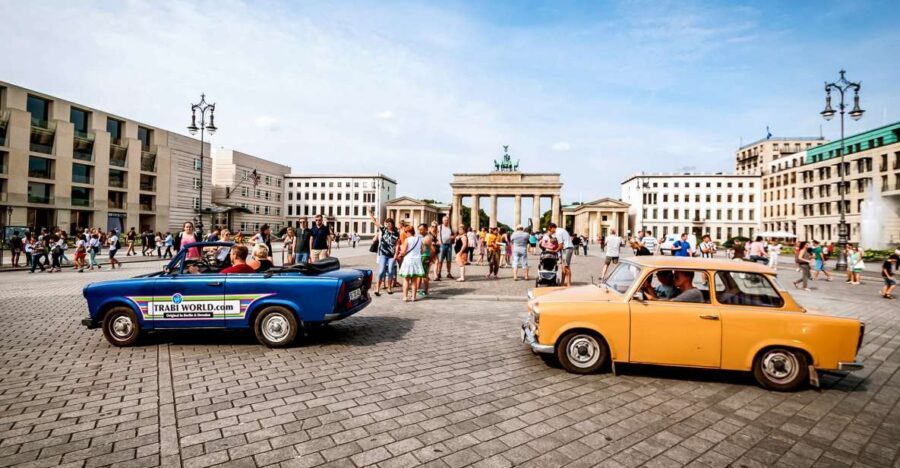
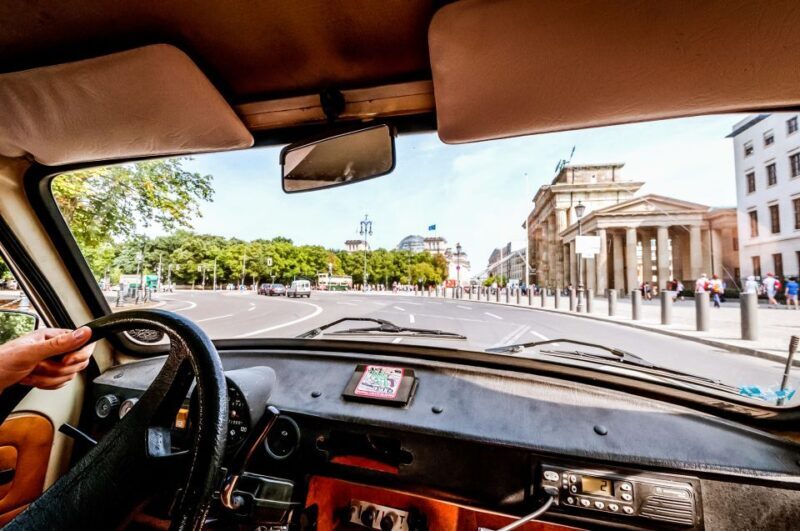
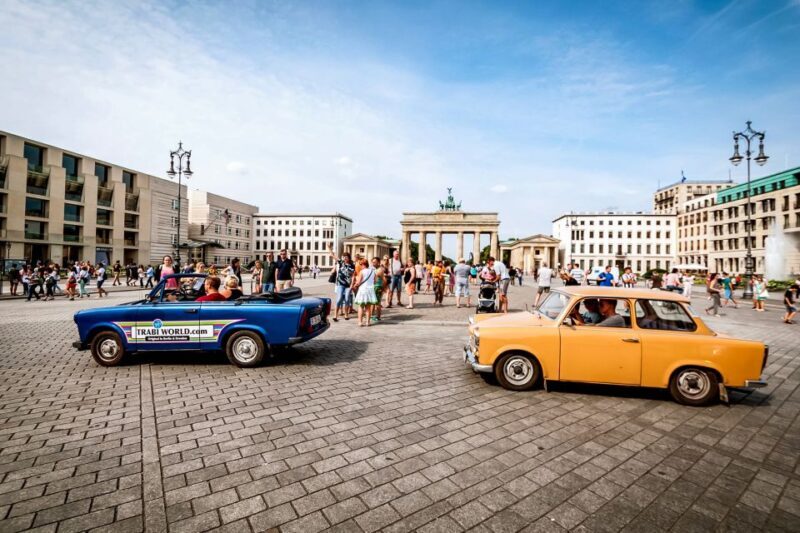
I love the way this Trabi Safari turns Berlin sightseeing into something hands-on. You squeeze into the legendary Trabant, learn the basics of its two-stroke and manual gearbox, then cruise a guided convoy past big landmarks like the Brandenburg Gate and along the Wall area.
Two things I really like: first, the guides (often hilarious and super knowledgeable) manage the convoy so you’re not constantly stressed. Second, you get a real sense of the city layout because you’re moving through the center at a slow, memorable pace with live radio commentary.
One drawback to plan for: you’re driving an old-school car with quirky controls over cobblestones, so it can feel nerve-wracking at first—especially if you hate manual transmission or you’re expecting a smooth ride.
- Key Highlights You’ll Care About
- Trabi Safari Basics: What You Drive and How Long It Takes
- Meeting Point at TrabiWorld (Zimmerstraße 97–100): Showing Up Smart
- Your Car Setup: Private Booking Inside a Shared Convoy
- Before You Start: Technical Instruction and the Real Meaning of “Two-Stroke”
- The Convoy System in Berlin: Why You Don’t Feel Lost
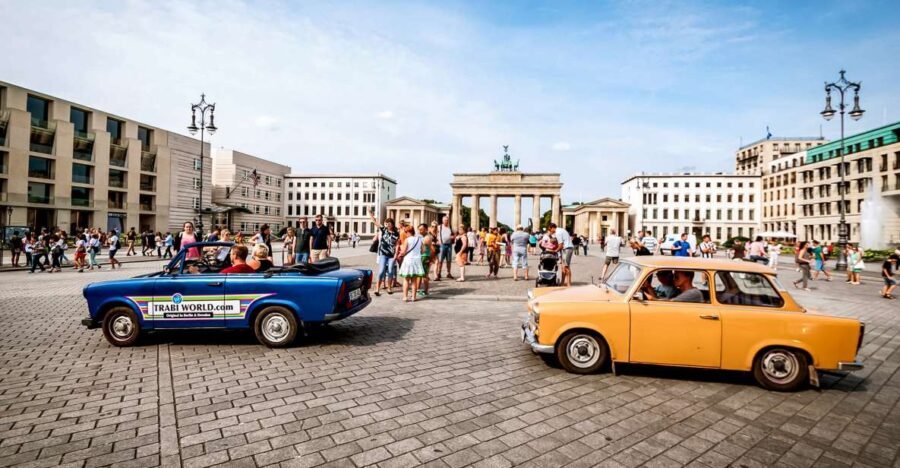
- Potsdamer Platz to Brandenburg Gate: Berlin’s Big Hits, Slower and Stranger
- Unter den Linden to Berlin Cathedral and Red City Hall
- TV Tower Views: City Scale You Can Feel in Motion
- East Side Gallery and Oberbaum Bridge: Passing Wall-Era Streets Up Close
- Checkpoint Charlie: One More Icon, No Waiting Around
- Driver Comfort and Cobblestones: The Fun Side and the Warning Side
- Guide Value: Why Names Like Axel and Thomas Matter
- What You Get Besides Sights: Radio, License, and the “Car-Era” Souvenir
- Price and Value: Why It Costs More Than a Bus Tour
- Who This Fits Best (and Who Might Skip It)
- Practical Tips to Make Your Tour Smoother
- Should You Book the 75-Minute Trabi Safari?
- FAQ
- Is the Trabi Safari 75 minutes long?
- Where does the Trabi Safari start?
- How much does the tour cost?
- Do I need a driver’s license?
- Can children join?
- Is the car shared with other people?
- How many people can fit in one Trabant?
- What’s included in the ticket price?
- Is there insurance, and what is the deductible?
- How far in advance can I cancel?
- More Tour Reviews in Berlin
Key Highlights You’ll Care About
 1 / 10
 2 / 10
 3 / 10
 4 / 10
 5 / 10
 6 / 10
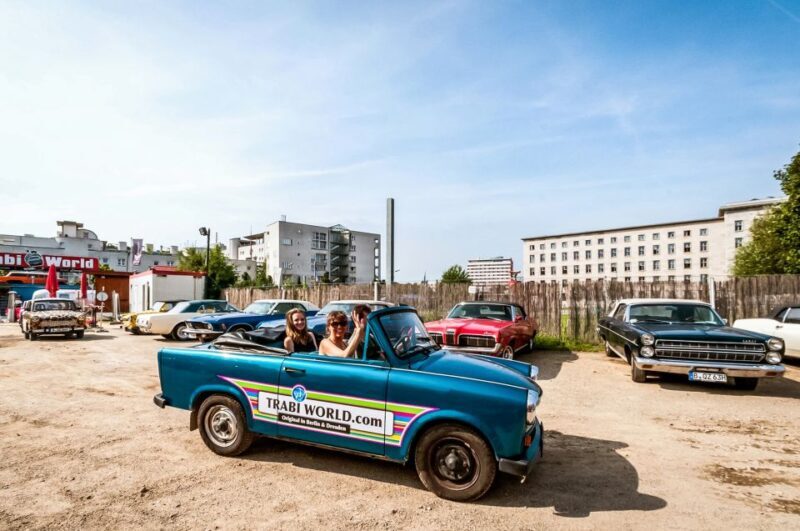 7 / 10
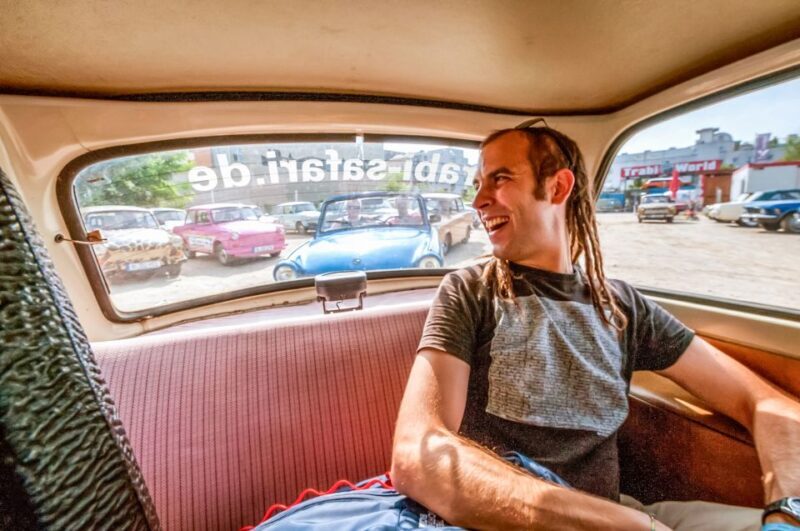 8 / 10
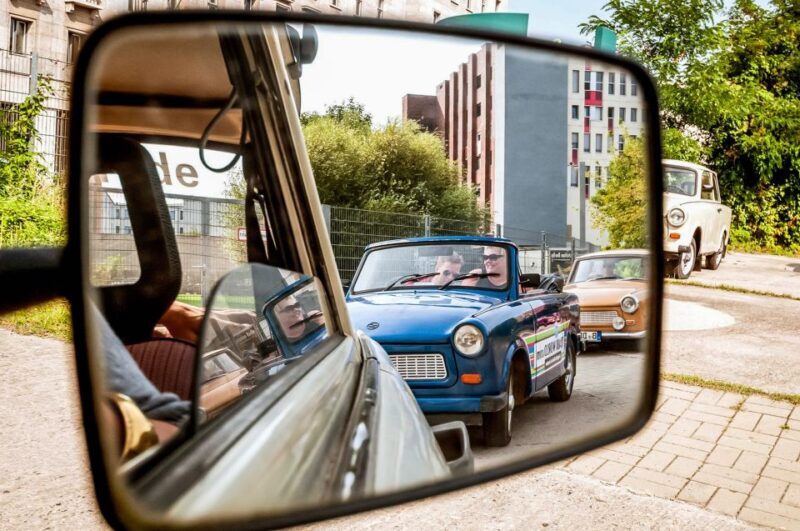 9 / 10
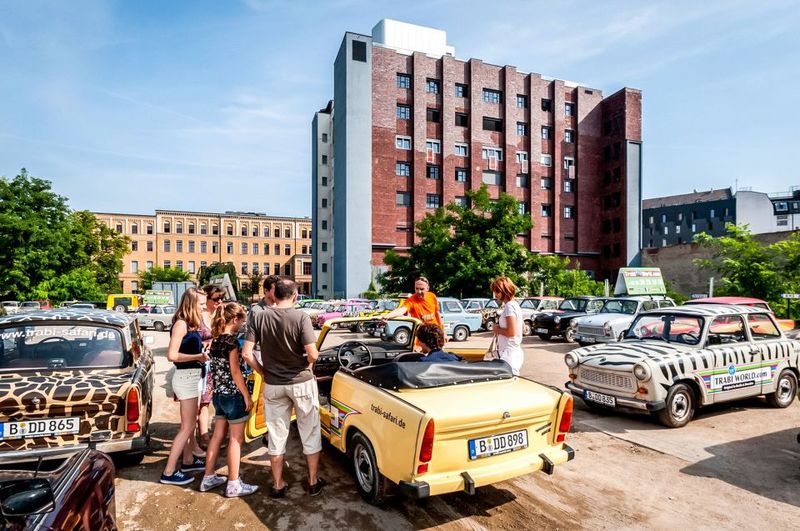 10 / 10
- A guided convoy where your car stays yours for the booking, even though you’ll share the route with other Trabis
- 75 minutes of landmark driving that covers both classic center sights and the Wall-area streets
- Live radio commentary plus an audio guide in English and German
- Trabant-driver’s license for each new driver in your car
- Free miles and gas, plus 3rd-party damage insurance (with an 850 EUR deductible)
- Meeting at TrabiWorld in central Berlin, making it easy to pair with a museum visit
Trabi Safari Basics: What You Drive and How Long It Takes
This 75-minute Trabi Safari is built around one simple idea: instead of riding past Berlin, you actually drive one of its most iconic cars—the Trabant. After a short technical intro, you’ll start the experience behind the wheel (with instructions first), then follow the convoy route for about an hour and change.
The timing matters. You’re not committing to an all-day tour, which is great if Berlin is just a stop on a larger trip or if you want something active without losing your whole day.
And yes, you’re in the cockpit of a very unusual machine. Expect slower, deliberate driving and a lot of people smiling and photographing you as you pass through central streets.
You can also read our reviews of more tours and experiences in Berlin.



Meeting Point at TrabiWorld (Zimmerstraße 97–100): Showing Up Smart
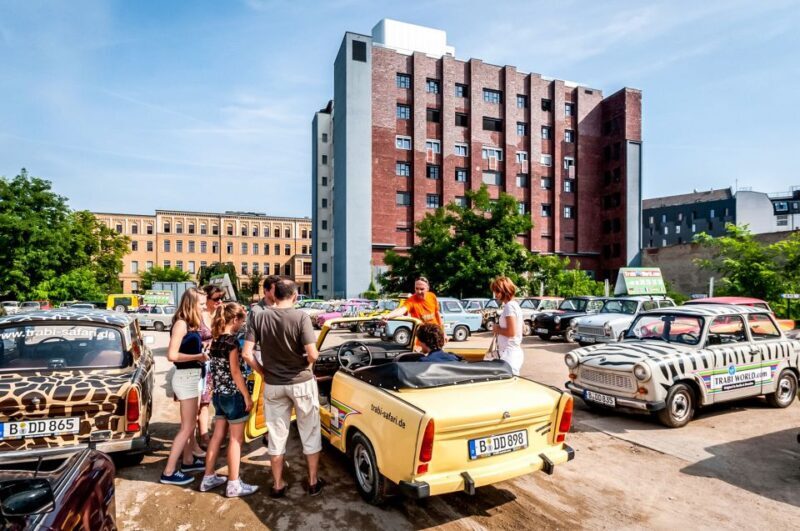
You meet at TrabiWorld, Zimmerstraße 97–100, right by the corner of Wilhelmstraße. It’s an easy pin to find, and it also sets the tone: this is a car-experience company, not a bus company pretending to be edgy.
What to bring is straightforward: a driver’s license. You’ll also want to be ready for the practical reality that you’re driving in a city with normal traffic lights and intersections—just with a very not-normal car.
If you’re thinking ahead, this is also a good moment to plan a post-tour stop at the Trabi Museum at Trabi World (it’s suggested as a nice follow-up).
Your Car Setup: Private Booking Inside a Shared Convoy
Here’s the clarity I appreciate: your booking has your own personal car and it is not shared with other people from different parties. You may see other groups in other Trabis in the same convoy, but your space stays yours.
Inside the car, you’ll be limited to a maximum of 4 people or 330 kg / 727 lb. Taller travelers can run into comfort issues because these cars weren’t built for modern proportions—one traveler mentioned needing to stretch because of the fit.
Also plan for ticket rules: each participant needs a ticket (driver, co-driver, passenger, and children). Children can get a free ticket, but they still need their own ticket.
Before You Start: Technical Instruction and the Real Meaning of “Two-Stroke”
Before driving, you get an intro to how the Trabant works—especially the two-stroke engine and the manual gearbox. That short training is more important than it sounds, because many people come in expecting the car to behave like something modern.
You’ll also hear what to do during the tour, including safety expectations and how the convoy is managed. Guides consistently focus on keeping everyone coordinated, especially at intersections.
If you’re rusty on manual driving, you’ll likely feel it at first. Still, the pattern is usually quick: after a few minutes you stop fighting the car and start enjoying it.
More Great Tours NearbyThe Convoy System in Berlin: Why You Don’t Feel Lost
Your drive isn’t random. You join a convoy with a guide at the beginning, and the group moves together. That convoy approach is a big part of why this works for most travelers.
A common theme from travelers: even if traffic lights split cars briefly, the convoy waits. You generally don’t get abandoned or left to navigate by yourself.
And because each car has live radio commentary, you’re not only getting landmark context—you’re also getting a sense of what’s coming next and why it matters. It’s sightseeing with guardrails.
Potsdamer Platz to Brandenburg Gate: Berlin’s Big Hits, Slower and Stranger
One of the reasons people love this tour is the mix of famous sights that you’d normally just glance at from the sidewalk.
You pass by:
- Potsdamer Platz
- Brandenburg Gate
- Unter den Linden
Driving past these in a Trabant changes the feeling fast. The car is visually loud, the driving is slower, and you’re physically present in the space instead of stuck on a walking timeline. That makes it easier to notice street geometry and how Berlin’s center is laid out.
The Brandenburg Gate moment is especially memorable in this setup. You’re not just viewing it; you’re rolling past in a vehicle that screams East Germany, which makes the whole scene feel like a reenactment rather than a photo stop.
Unter den Linden to Berlin Cathedral and Red City Hall
After the Gate area, the route continues toward the civic and cultural core of Berlin. You’ll pass:
- Berlin Cathedral
- Rotes Rathaus (Red City Hall)
These stops aren’t just about landmark photos. From behind the wheel, you tend to notice the spacing between buildings, the way the streets funnel crowds, and how long sight lines can be in this part of the city.
Also, the live commentary helps you connect the dots while you’re moving. You’re not stuck in silence while waiting for the next light.
TV Tower Views: City Scale You Can Feel in Motion
You also pass the TV Tower. You might not get a long pause to get out and explore, but you still get something valuable: the ability to understand the scale of central Berlin while driving through it.
This is one of those underrated benefits of a driving tour. You don’t just see landmarks—you feel where they sit relative to the street network.
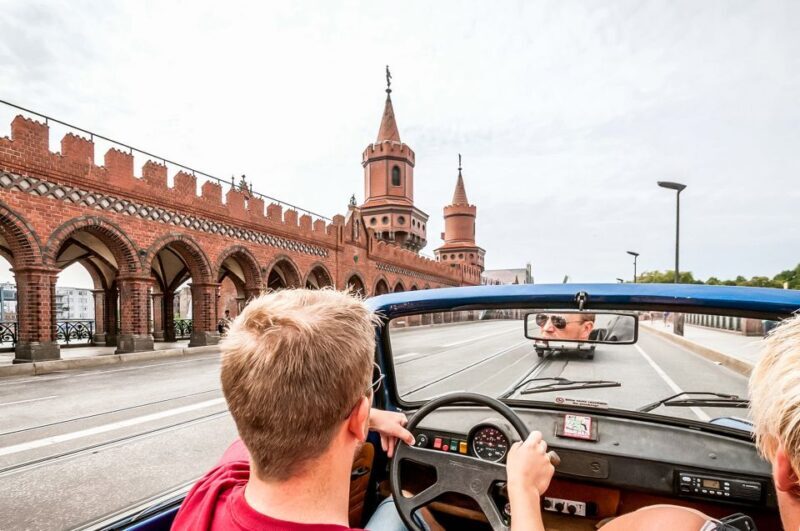
East Side Gallery and Oberbaum Bridge: Passing Wall-Era Streets Up Close
For many travelers, the most emotional stretch is the Wall-area driving. You’ll pass:
- East Side Gallery
- Oberbaum Bridge
When you’re rolling by in a Trabant, the Wall-adjacent art and structures feel closer than they do from a bus window. It’s not dramatic because you’re “immersed” in a story (though the car helps). It’s dramatic because the city is right there—streets, corners, and views that you usually only see if you’re walking with time to spare.
This is where the “DDR perspective” concept becomes real. You’re moving through the physical geography that Berliners navigated during division and reunion.
Checkpoint Charlie: One More Icon, No Waiting Around
You’ll also pass Checkpoint Charlie. In a short tour like this, it’s more about orientation than lingering.
What I like about that: you finish with your bearings. Later, when you revisit areas on foot or by transit, you understand how the neighborhoods connect and why those iconic sites sit where they do.
Driver Comfort and Cobblestones: The Fun Side and the Warning Side
The Trabant is famously basic, and that shows. The roads include areas with cobblestones, and you feel that in your body. One traveler described it as tense and chaotic at moments because of the car’s condition and the bumps. Another traveler said it gets easier quickly once you adapt.
If you’re sensitive to discomfort or you have mobility limits, consider whether a cramped car ride over uneven surfaces is a good fit. Some travelers with mobility problems appreciated this because it allowed them to avoid long walking tours, but your comfort level will vary.
A practical tip: bring patience. You’re not signing up for a luxury ride. You’re signing up for a memorable one.
Guide Value: Why Names Like Axel and Thomas Matter
The difference between a good driving tour and a great one is the guide. Here, travelers repeatedly mention guides who are:
- funny without losing control
- knowledgeable about Berlin
- careful about convoy safety
You’ll see names like Thomas, Axel, Harold, and Simon mentioned by travelers. That’s a hint that the staff isn’t just reading a script—they’re actively managing the experience.
One person even noted their guide took photos during the tour at major spots. Whether or not your car gets that exact treatment, the consistent message is that the guides pay attention to you as people, not just participants.
What You Get Besides Sights: Radio, License, and the “Car-Era” Souvenir
This isn’t just pay-for-a-drive. Included features make it feel like a real experience:
- Live radio commentary in each car
- Technical instruction
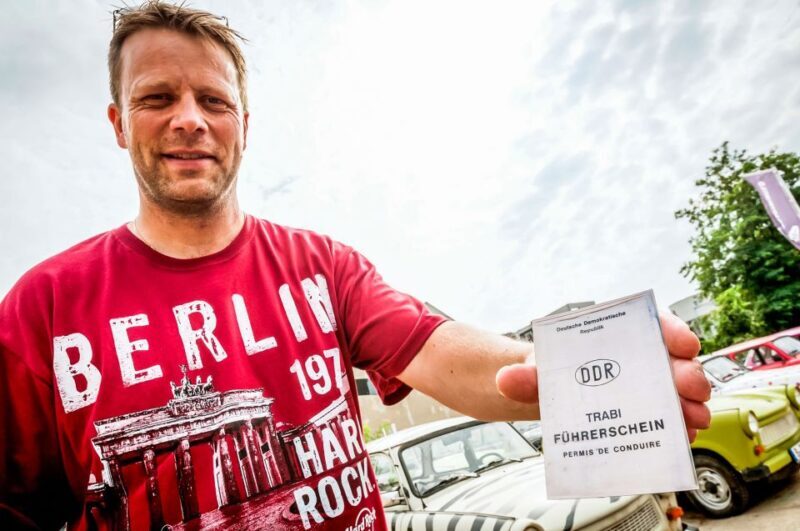
- Trabi-driver’s license for every new driver
- Free miles and gas
- Audio guide included in German and English
That Trabi driver’s license is a clever souvenir because it marks the effort it takes to drive the car. It’s also a nice token if you’re traveling with someone who didn’t drive—everyone feels included.
And because the car is noisy, the live radio is key. It keeps landmark talk from turning into a guessing game.
Price and Value: Why It Costs More Than a Bus Tour
At $93 per person for 75 minutes, this is not a budget activity. The value comes from what you’re actually buying: the right to drive a cultural icon in a guided loop through central Berlin.
What helps the value equation:
- you get free gas and miles
- you receive insurance coverage for third-party vehicle damage, with a deductible of 850 EUR
- you get guides and commentary that manage the convoy
It’s a premium for novelty, but the reviews consistently point to a simple logic: people feel they’re paying for something that feels hard to replicate—especially the chance to drive a machine tied to Berlin’s past, not just watch it from the curb.
Who This Fits Best (and Who Might Skip It)
This tour tends to fit travelers who:
- want to do something different beyond walking
- enjoy driving (even if you’re not a car person)
- like history, but prefer stories you can feel in the streets
- need a shorter format than multi-hour excursions
It may be less ideal if you:
- strongly dislike manual transmission
- get easily stressed by traffic and coordination tasks
- have concerns about fitting comfortably in a classic, compact car
One traveler mentioned an electric option, so if you need a non-manual setup, you might want to ask in advance whether alternatives are available.
Practical Tips to Make Your Tour Smoother
A few things that can make the day go better:
- Arrive ready with your driver’s license and confidence to drive
- Consider stretching beforehand if you’re taller—these cars are compact
- If it’s your first day in Berlin, this is a smart orientation move (people often say it helps them understand the city layout)
- If you’re visiting in busy periods, pick a time when you want to be in motion rather than stuck waiting
Also, Berlin traffic is real. A good guide keeps things moving and keeps the group together, but you should still expect normal city delays.
Should You Book the 75-Minute Trabi Safari?
I’d recommend booking if you want a Berlin activity that’s genuinely interactive and funny in a real-world way. The guides, the live radio commentary, and the classic routes past Brandenburg Gate and the Wall-area sites make this feel more like a memory than a checkbox.
You should think twice if you can’t handle manual driving or cramped comfort over uneven roads. And if your goal is purely quiet museum-style learning, this may feel more like action than classroom.
If you’re on the fence, here’s my best decision rule: if you’d enjoy driving an oddball car through the city while other people cheer and take photos, this is your tour.
Berlin: 75-minute Trabi Safari
FAQ
Is the Trabi Safari 75 minutes long?
Yes. The experience duration is 75 minutes.
Where does the Trabi Safari start?
It meets at TrabiWorld, Zimmerstraße 97–100, at the corner of Wilhelmstraße.
How much does the tour cost?
The price is $93 per person.
Do I need a driver’s license?
Yes. You must bring a driver’s license, and the requirement listed is class B with minimum age 18.
Can children join?
Children need a ticket, but children can get a free ticket.
Is the car shared with other people?
No. Each booking has a personal car and it will not be shared with other people from other bookings, though you may be driving in the same convoy as other cars.
How many people can fit in one Trabant?
The Trabant allows a maximum of 4 people or 330 kg / 727 lb.
What’s included in the ticket price?
Included features are technical instruction, a guide at the start of the convoy, live radio commentary, free miles and gas, and a Trabi driver’s license for each new driver.
Is there insurance, and what is the deductible?
There is 3rd-party vehicle damage insurance with a stated deductible of 850 EUR.
How far in advance can I cancel?
You can cancel up to 24 hours in advance for a full refund.
You can check availability for your dates here: