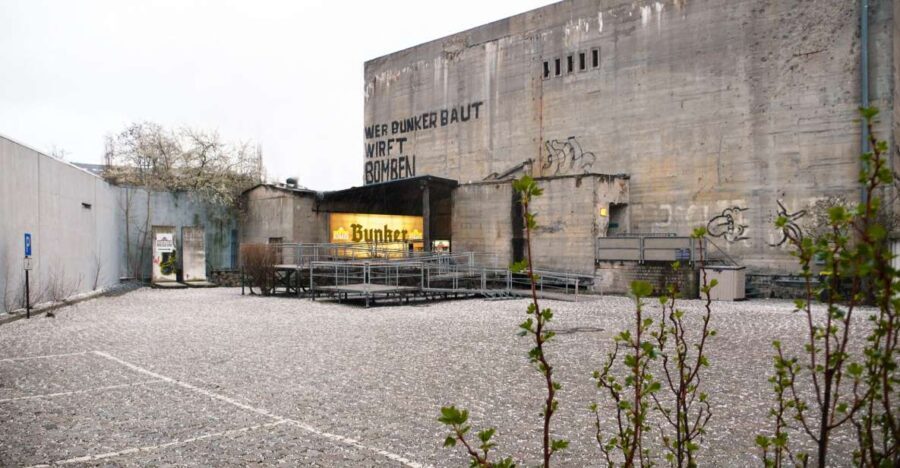
Berlin’s Berlin Story Bunker is a heavy, well-organized museum visit that uses a real bunker-style setting plus an included audio guide to walk you through Nazi Germany and Berlin’s broader history. The exhibition covers the Second World War, National Socialism, and even Berlin’s road to the fall of the Berlin Wall, all starting from the Berlin Story Bunker near Anhalter Bahnhof and Potsdamer Platz.
Two things I really like: first, the museum’s chronological structure with lots of large installations, photographs, and short film sequences helps you keep your bearings without needing a live guide. Second, the bottom level features a full-scale Führerbunker replica, which is both visually striking and emotionally difficult in the way good history should be.
One drawback to consider up front: this is an information-heavy experience with lots of reading, standing, and stairs, and it’s not suitable for people with mobility impairments. Also, basic rules matter here—cameras and video recording aren’t allowed inside.
- Key things to know before you go
- Berlin Story Bunker Entry Ticket: what you actually get
- Where to start: Schöneberger Str. 23a and the ticket office
- Audio guide basics: pacing yourself in a bunker
- The exhibition route: from imperial times to the Berlin Wall era
- Hitler’s rise and reign of terror: what the museum emphasizes
- Berlin’s 800-year timeline: 50 stations that help you connect the dots
- The Führerbunker replica: the full-scale model on the bottom floor
- Photographs and film sequences: powerful visuals with few ways to escape
- How long should you plan: 2 hours, 3.5 hours, or a full day?
- Comfort tips: stairs, warmth, and the reading load
- Staff and real human context: when guides add depth
- Rules and restrictions: cameras, video, and no pets
- Accessibility check: who should skip this one
- Timing and ticket practicality: last entrance and flexible booking
- Value for money: why can feel like a bargain
- Should you book it?
- FAQ
- How much does the Berlin Story Bunker Entry Ticket cost?
- How long can I use the ticket?
- What time is the last entrance?
- Where is the meeting point?
- What languages is the audio guide available in?
- Is photography or video recording allowed inside?
- Are pets allowed?
- Is it suitable for people with mobility impairments?
- More Tickets in Berlin
- More Tour Reviews in Berlin
Key things to know before you go
- Audio guide, included languages: You can choose from Spanish, English, French, German, Italian, Danish, Dutch, Russian, Hebrew, Portuguese, and Ukrainian.
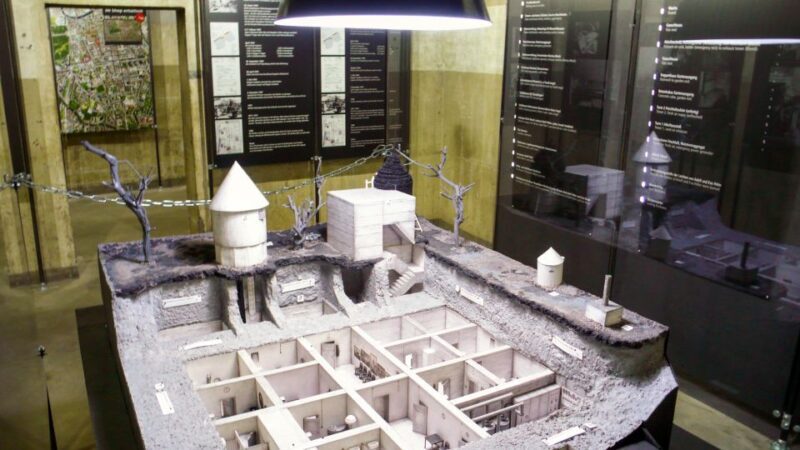
- Führerbunker replica on the bottom floor: A full-scale model is a major highlight.
- Berlin history spans 800+ years: You’ll see this unfold across 50 stations with photos and short film sequences.
- Plan real time: Many visitors end up at 3–5+ hours instead of the “quick stop” version.
- Midweek can feel calmer: Some people report a quieter visit when they went midweek.
- Museum rules are strict: No pets, and no photography or video inside.
Berlin Story Bunker Entry Ticket: what you actually get
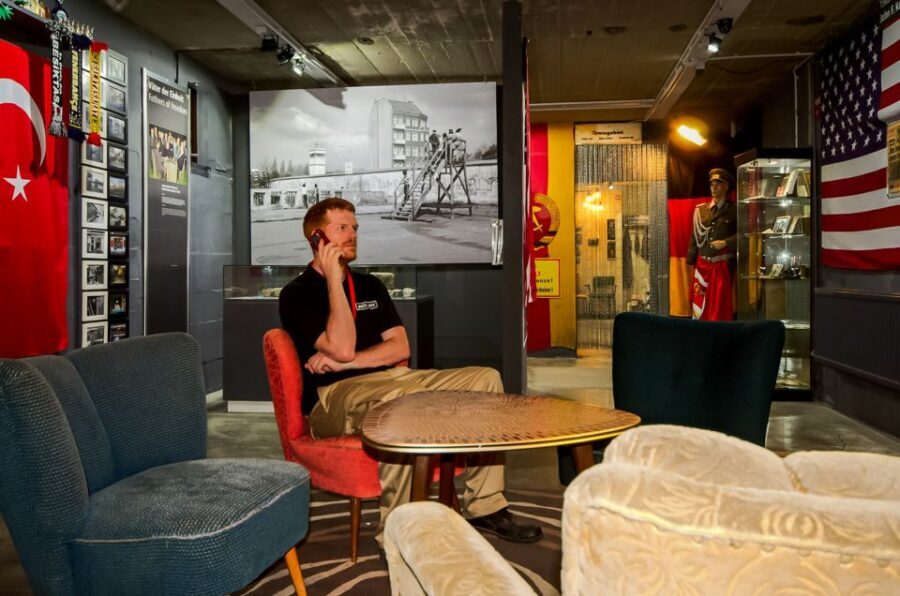
This ticket is straightforward value: you pay the entrance fee and get an audio guide (multiple languages), and you walk your own route through the exhibition at your pace. The museum is inside a big bunker complex, and the design is part of the experience—everything feels intentionally set up to make the history hit harder than it would in a typical gallery.
At a high level, expect two overlapping threads: the story of Berlin across many centuries, and the specific, grim storyline of Nazi rule and Hitler’s rise and reign of terror. The museum doesn’t ask you to guess what matters; it lays it out in stations and sections, and your audio guide helps stitch the timeline together.
If you want a museum that’s more than “pretty panels,” this is that kind of place. Visitors repeatedly point out how factual and detailed it is, with lots of text and visuals rather than just a few highlights.
You can also read our reviews of more tours and experiences in Berlin

Where to start: Schöneberger Str. 23a and the ticket office
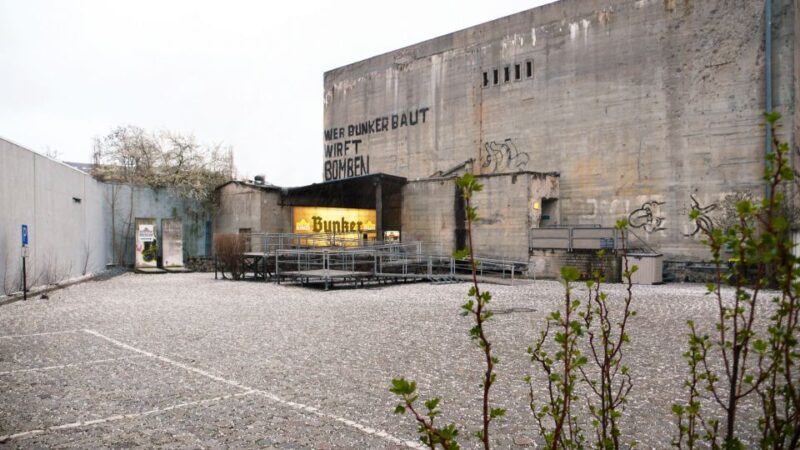
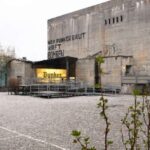
Your meeting point is the ticket office of the Berlin Story Bunker at Schöneberger Str. 23a, 10963 Berlin. That matters because it’s also where you’ll handle entry and get oriented for the audio guide.
The museum’s location is close to major Berlin anchors—near Anhalter Bahnhof and Potsdamer Platz—so it’s easy to combine with other sightseeing in central Berlin. Plan to arrive with enough time to settle in, because you’ll want those first minutes to get comfortable with the route and the audio guide.
Audio guide basics: pacing yourself in a bunker
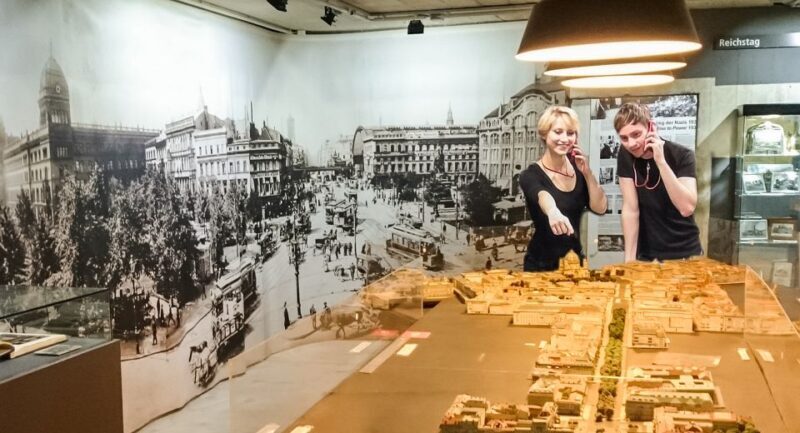
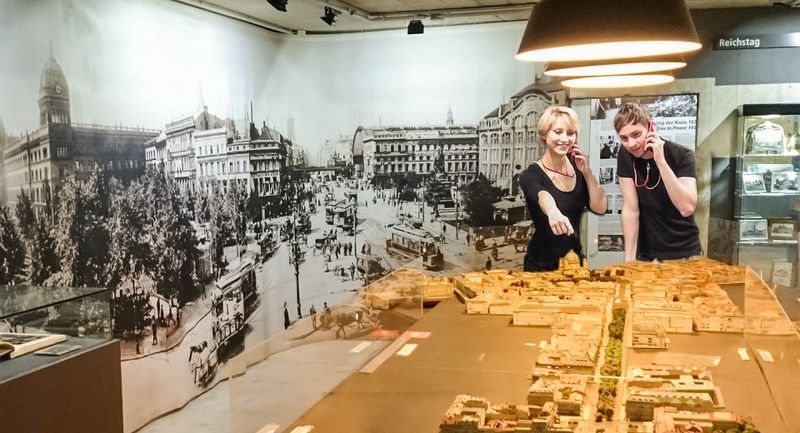
The audio guide is included, and you choose your language. Multiple languages are offered beyond the top few listed in some descriptions, so it’s worth checking that your language is available when you arrive.
What I like about this setup is that it lets you choose how fast you read. One visitor mentioned the audio device sometimes jumps oddly when pressing a number (like landing on 105 instead of 5), but they later found a simpler approach by using the next section rather than trying to “jump” by number. That’s a good tip to keep in mind if the device feels a little clunky.
For many travelers, the best plan is:
- let the audio guide give you the overview for each area
- then slow down and read the big boards where you feel your attention lagging
- use the audio to restore context when you move between sections
This is also the kind of museum where rushing can leave you feeling mentally tired without feeling informed. A self-paced approach helps prevent that.
The exhibition route: from imperial times to the Berlin Wall era
One of the museum’s strengths is that it doesn’t treat World War II as a standalone “chapter.” The experience follows events and context from Imperial times through the Second World War and into the fall of the Berlin Wall.
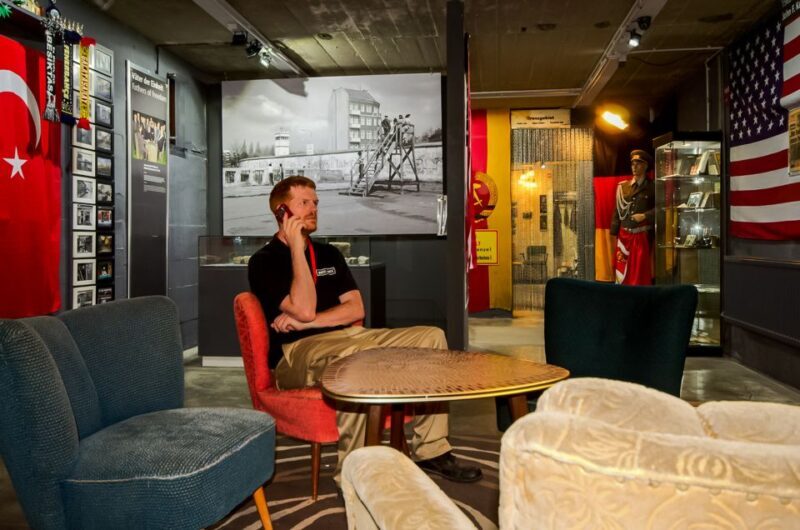
You’ll encounter 50 stations with large installations, photos, and short film sequences. If you’ve ever wandered through a museum and realized you missed the order, this place is built to help you avoid that. Visitors specifically mention appreciating the chronological order as they moved through the sections.
In practice, that means you’re not just seeing Nazi imagery in isolation. You’re getting the lead-up, the mechanisms of power, and the way Berlin itself relates to the bigger story.
More Great Tours NearbyHitler’s rise and reign of terror: what the museum emphasizes
The exhibition is explicit about the rise of Hitler and the Nazi reign of terror. It focuses on the Second World War and National Socialism, including how Hitler gained power and how the regime operated.
Expect intense material. Visitors describe it as harrowing but respectful, and they note the presence of photographs and film sequences that can be graphically unsettling. That’s not a “warning” so much as an honest fit-check: if you’re sensitive to graphic images, you’ll still be able to move at your pace, but you should understand the museum aims to show the truth.
Also, don’t expect a lot of “interactive gadgets.” Several people mention that it’s heavy on reading and visuals, and signage can be minimal in parts. If you’re the type who likes a guided walkthrough, the audio guide plays that role—while giving you freedom to pause and take in what you’re seeing.



Berlin’s 800-year timeline: 50 stations that help you connect the dots
A standout theme is Berlin itself—how the city’s role changes over time. The museum highlights an over 800-year-long history of Berlin through 50 stations, with large installations, countless photographs, and short film sequences.
Here’s why that matters to you as a traveler: Berlin can feel like a city of monuments that represent different eras, but without context it can be hard to understand how everything links. This exhibition tries to provide that connective tissue. You’ll walk through sections that show how Berlin became the “center of power” during the Nazi years, rather than just displaying wartime scenes.
You’ll also spend a lot of time reading, so it helps to treat your visit like a “museum day,” not an “hour-and-out” stop.
The Führerbunker replica: the full-scale model on the bottom floor
If you’re coming for one signature moment, it’s the bottom floor Führerbunker replica. Visitors consistently call out the replica as fantastic, and it’s also the part people mention even when they weren’t sure what to expect from the layout.
One visitor adds an extra detail that makes this more special: the top floor below the bunker has been conserved since the 1940s in its original state, so you can get a sense of what the spaces looked like during the era itself. That combination—original/conserved spaces above and a full-scale replica below—creates a strong contrast that makes the setting feel less like “a model” and more like a physical environment shaped by history.
Even if you’re not a diehard WWII fan, the bunker setting changes the way you read the exhibits. It doesn’t let you mentally step away.
Photographs and film sequences: powerful visuals with few ways to escape
The museum leans hard on photographs and short film sequences. Some visitors describe the photographs as unfiltered, and that fits the museum’s overall tone: it doesn’t sugarcoat what the regime did and how it worked.
You’re also limited in how you can document your visit—photography and video recording are not allowed inside. That rule can feel restrictive, but it also keeps the focus on the message rather than people’s screens.
If you’re the kind of traveler who likes to “collect” facts, this place gives you a lot to absorb. If you prefer museums that rely on objects rather than text, you might find it more reading than “artifacts.” One visitor notes there aren’t many artifacts, even though there’s plenty of information.
How long should you plan: 2 hours, 3.5 hours, or a full day?
The ticket says it’s valid for 1 day, but your real time depends on how you experience museums. Many visitors land around 3 to 5 hours, and several specifically recommend planning more—some say 4 hours, some mention 4.5, and others suggest 6 hours if you want to read thoroughly.
If you’re a quick reader and you don’t linger, you might make it through in about 2 hours. But multiple people mention they ended up spending longer because the content grabs you.
My practical advice: aim for 4 hours if you want to feel informed without burning out, and 5–6 hours if you’re the type who reads the boards carefully and replays audio sections.
Comfort tips: stairs, warmth, and the reading load
This is a “bring comfort” museum. Visitors mention:
- lots of walking/standing and stairs
- reading-heavy rooms where you’ll be mentally engaged for a while
- a warm environment, so plan accordingly
- the need for comfortable shoes
Some people also mention there are chairs available so you can sit and read, and that there’s a cafe and toilets on site. Having those breaks makes the difference between a rushed run-through and a visit that stays thoughtful.
If you’re visiting with teens or kids, note that one family said their 11-year-old found it easy enough to understand. That doesn’t mean it’s light content—it means the museum tries to explain clearly in the audio and through the station layout. Still, parents should judge what their child can handle.
Staff and real human context: when guides add depth
Most of the time, you’ll rely on the audio guide. Still, the museum also has staff who sometimes add extra human perspective.
One review mentions meeting the museum founder, who shared lived experience of the Berlin Wall. Another mentions Sergio, describing him as an amazing guide who could explain a difficult topic simply while staying accurate. That kind of encounter can elevate your visit from “information” to “understanding,” even if your main route remains self-paced.
So if you’re able to catch staff during your visit—ask a question or listen briefly to any guidance offered. It’s one way to get an extra layer without turning it into a guided tour.
Rules and restrictions: cameras, video, and no pets
The museum has clear restrictions:
- pets are not allowed
- no cameras inside
- video recording isn’t allowed
This is important for your planning. If you rely on photos to remember details later, you’ll need to switch strategies: take notes on your phone (if allowed), sketch the station order in your head, and focus on absorbing the experience rather than collecting images.
Also, respect the museum rules when you’re there. People mention the museum is well run, but the rules are part of keeping the space respectful given the subject matter.
Accessibility check: who should skip this one
This activity is not suitable for people with mobility impairments. That’s the key line in the provided details, and you should trust it.
Even for travelers without mobility issues, expect stairs and a lot of standing. If you have any concerns about mobility, endurance, or claustrophobia-like discomfort, you’ll want to weigh that before booking.
One visitor said they didn’t find it claustrophobic and noted fans and bigger rooms, but that’s individual. The safest move is to follow the stated accessibility guidance and pick something else if you need step-free routes.
Timing and ticket practicality: last entrance and flexible booking
The last entrance is at 5:30 PM, so don’t plan a late-day arrival. Build in travel time and buffer time to collect the audio guide and settle before your first sections.
This ticket also offers free cancellation up to 24 hours in advance for a full refund, and there’s a reserve now & pay later option. That’s useful in Berlin, where plans can shift depending on weather and how long other stops actually take.
And yes, there’s a skip-the-ticket-line feature, which helps if you’re trying to avoid waiting in busy hours.
Value for money: why $21 can feel like a bargain
At around $21 per person, this museum can feel like good value because of how much information you get for your time. Visitors often mention the depth of the exhibition, how comprehensive it is, and how they ran out of time because there’s so much to read.
You also aren’t paying extra for the audio guide—it’s included. And the setting is unique: a Berlin bunker environment with a full-scale Führerbunker replica.
The main cost is effort, not money. You’re paying with attention span. If you can handle reading and want a serious, factual experience, it’s strong value.
Should you book it?
Book this if you want a well-organized, factual museum visit that explains how Nazi power rose and how Berlin fits into that story. It’s also a great pick if you like structure: 50 stations, chronological flow, and an audio guide that helps you understand what you’re looking at without forcing you into a group pace.
Skip it if you need step-free accessibility, can’t handle heavy reading and stairs, or if you’re looking for a more light, casual attraction. And plan your time. If you show up thinking you’ll do it in an hour or two, you’ll likely feel stressed.
If you’ve got a half day to a full day and you want Berlin history that doesn’t tiptoe, this ticket is a solid choice.
Berlin: Berlin Story Bunker Entry Ticket
FAQ
How much does the Berlin Story Bunker Entry Ticket cost?
The price is listed as $21 per person.
How long can I use the ticket?
It’s valid for 1 day. Check available starting times when booking.
What time is the last entrance?
Last entrance is at 5:30 PM.
Where is the meeting point?
The meeting point is the ticket office of the Berlin Story Bunker at Schöneberger Str. 23a, 10963 Berlin.
What languages is the audio guide available in?
The audio guide is available in Spanish, English, French, German, Italian, Danish, Dutch, Russian, Hebrew, Portuguese, and Ukrainian.
Is photography or video recording allowed inside?
No. Cameras and video recording are not allowed inside.
Are pets allowed?
No, pets are not allowed.
Is it suitable for people with mobility impairments?
No, the activity is not suitable for people with mobility impairments.
If you want, tell me your dates and whether you prefer a faster or slower museum pace, and I’ll suggest an ideal arrival time and how to structure your hours inside.
You can check availability for your dates here: