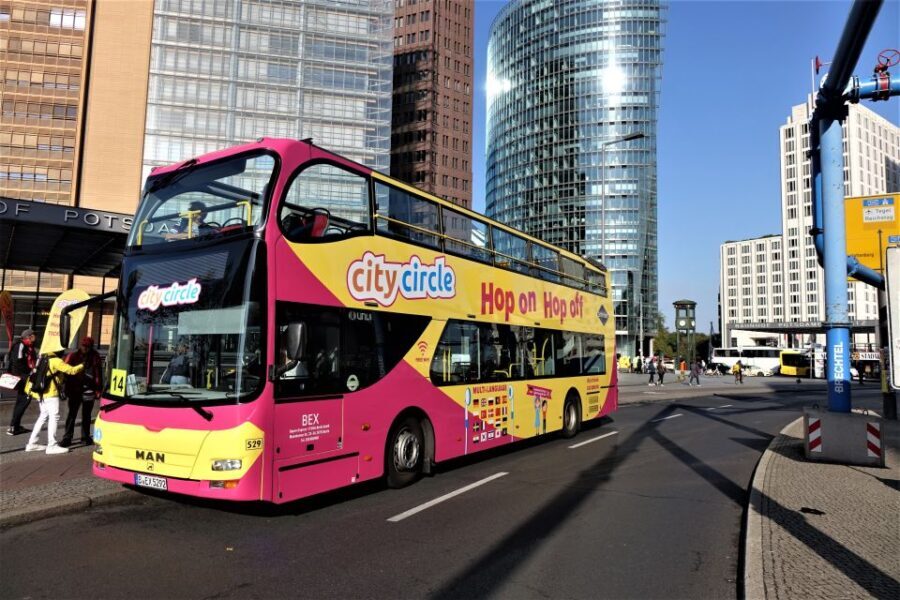
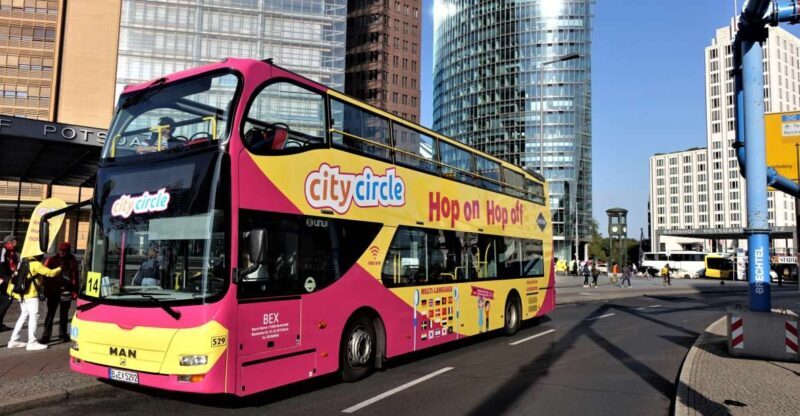
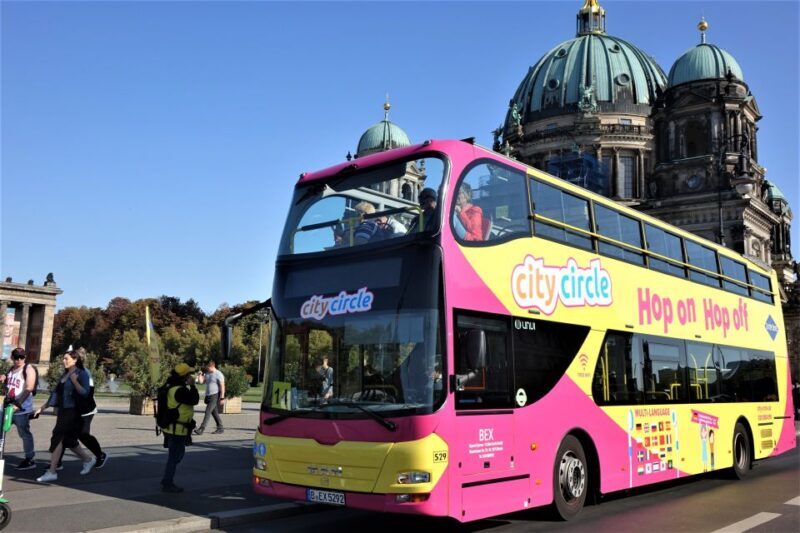
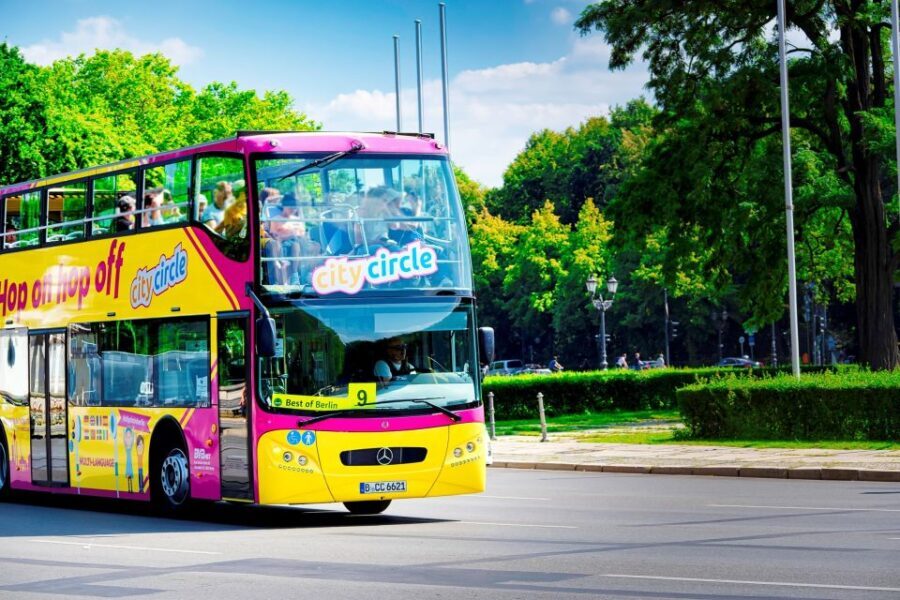
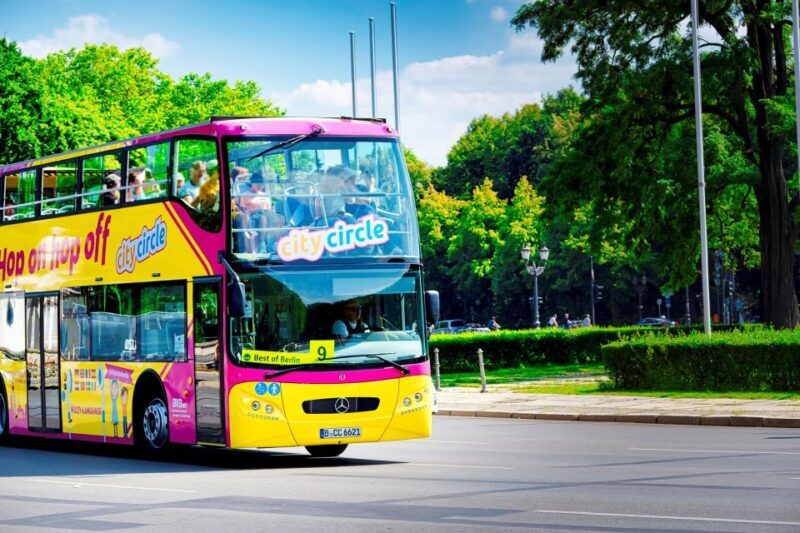
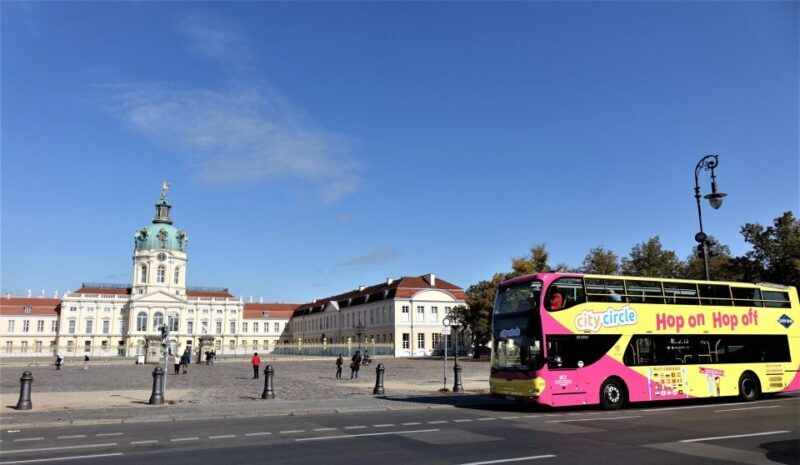
Berlin’s East and West hop-on hop-off bus is one of the quickest ways to get your bearings fast and see a big hit list of landmarks without doing a ton of planning. Expect an easy loop with frequent departures, onboard headphone commentary in many languages, and stops near places like Brandenburg Gate, Reichstag, and the East Side Gallery.
Two things I like a lot: you get a time-saving overview of the city with more than 100 sights along the route, and the audio setup is practical—headphones are included and commentary covers key areas as you pass them. The onboard experience is also pretty comfortable for a long day, with free WiFi and a free city-center map to help you connect the bus stops to what you actually want to do next.
One drawback to plan around: the bus can be slowed by traffic, roadworks, and occasional city disruptions, and the stops are mostly brief. If you want deep time inside museums or buildings, you’ll need to jump off and handle tickets on your own.
- Key points you’ll care about
- Getting Your Bearings With a Berlin East-and-West Route
- Price and Value: What Buys You in Real Berlin Time
- When the Buses Run: Hours and How Often You Can Hop
- Onboard Audio: Headphones, Languages, and How to Use Them
- Winter Mulled Wine at Brandenburg Gate (Yes, Really)
- Where You’ll Stop: From Curfürstendamm to the East Side Gallery
- West-leaning highlights
- East-leaning highlights
- Central historic-core stops
- Big-name icons
- Kurfürstendamm and KaDeWe: Starting With West Berlin Energy
- Potsdamer Platz and Checkpoint Charlie: Modern Berlin Meets Cold War Imagery
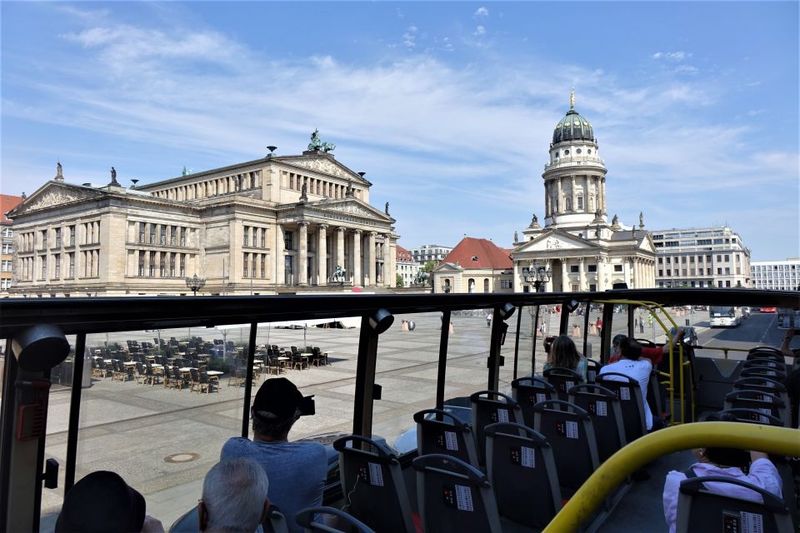
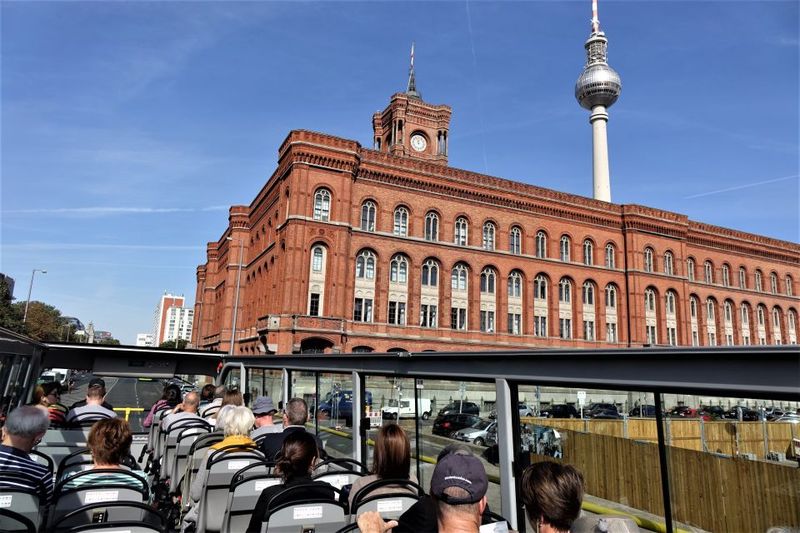
- Gendarmenmarkt and the Red City Hall Fountain Area: A Photo-Friendly Pause
- Alexanderplatz and Karl-Marx-Allee: East Berlin’s Big-Stage Streets
- Friedrichshain and the East Side Gallery Stops: Wall Art in the Open Air
- Museum Island, Humboldt Forum, and Unter den Linden: The Historic Core
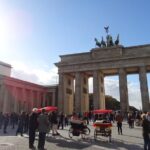
- Brandenburg Gate and Reichstag: The Iconic Stops You Shouldn’t Miss
- Views and Comfort: Upper Deck Tips and Photo Timing
- How Long to Stay at Stops (So You Don’t Get Trapped in Transit Time)
- Potential Snags: Traffic, Meeting Points, and Re-boarding Confusion
- Accessibility, Families, and Onboard Practical Stuff
- Who This Bus Tour Fits Best
- Should You Book This Hop-On Hop-Off Bus Tour?
- FAQ
- How much does the Berlin East and West hop-on hop-off bus tour cost?
- How long is the tour valid for?
- What are the operating hours?
- How often do the buses depart?
- Can I start the tour at any stop?
- Is audio included, and in what languages?
- Is WiFi available on board?
- Is the tour wheelchair accessible?
- Is mulled wine included in winter?
- The Best Of Berlin!
- More Wine Tours in Berlin
- More Tours in Berlin
- More Tour Reviews in Berlin
Key points you’ll care about
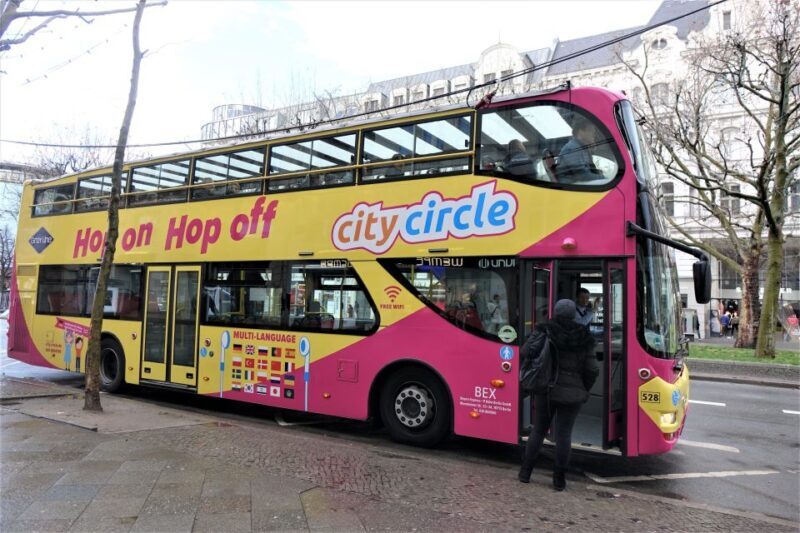
- Frequent departures (about every 15–20 minutes in summer) make it easy to hop off and re-board
- Multilingual headphone audio across 20 languages helps you understand what you’re seeing as you pass it
- Major East/West landmarks are covered in one pass, including Brandenburg Gate and the Reichstag area
- Winter mulled wine at Brandenburg Gate is part of the promotion for City Circle ticket holders
- Comfort extras like onboard WiFi, a free map, and a children’s channel make the ride easier for families
- First-come seating and brief stops mean you should plan your timing for popular areas

👉 See our pick of the We Rank The 9 Best Wine Tours In Berlin
Getting Your Bearings With a Berlin East-and-West Route
If you’re in Berlin for a day (or two), you don’t want to spend half your trip figuring out buses and neighborhoods. This tour is built for exactly that moment. You ride a sightseeing bus line through central Berlin and beyond, then hop off when something grabs you—like Checkpoint Charlie, Gendarmenmarkt, Alexanderplatz, or the stretch of the Berlin Wall at the East Side Gallery.
The smart part is the balance. You’ll see plenty from the street—so you know where you want to return later—but you’re not stuck in a single neighborhood. The route is designed to connect West-famous sights (think Kurfürstendamm and KaDeWe area) with major East-side stops (Alexanderplatz, Karl-Marx-Allee, Friedrichshain, and the East Side Gallery area).
For first-timers, I think this works best as your “lay of the land” day.
You can also read our reviews of more wine tours in Berlin



Price and Value: What $24 Buys You in Real Berlin Time
The price is listed at $24 per person, with a 1–2 day ticket option. In a city where you’ll pay for transit anyway and spend real time getting your bearings, the value here is about reducing decision fatigue.
You’re buying:
- A loop through a large number of key stops
- Headphones and audio commentary during the ride
- A map that helps you plan what to do when you get off
- Onboard WiFi, plus a kids’ channel
And if you choose to ride without hopping off right away, you can also stay on the bus for a full 2.5-hour city tour option.
It’s not a substitute for paying admission to major interiors (museums, historic halls, etc.). But it can save you the hours you’d otherwise spend crisscrossing Berlin just to find the right area.
When the Buses Run: Hours and How Often You Can Hop
Operating hours depend on the season:
- Summer season (April–October): 10:00 AM to 6:00 PM, every 15–20 minutes
- Winter season: 10:00 AM to 5:00 PM, every 20 minutes
The schedule is meant to be flexible, and you can start at any stop. In practice, you’ll still want a little buffer. Berlin traffic, roadworks, and city events can slow buses down, and that can affect the timing between stops.
A useful mindset: treat the bus frequency as a guide, not a guarantee. If you’re trying to catch a specific moment (sunset photos near a landmark, for example), plan to arrive early and don’t assume the bus will be perfectly on time at every stop.
Onboard Audio: Headphones, Languages, and How to Use Them
You’ll get free earphones for commentary in many languages, including English, German, French, Italian, Spanish, Russian, Ukrainian, Arabic, Hebrew, Hindi, and more. The info provided lists audio available in 20 languages, plus a kids’ channel in German/English.
The tour also notes a live tour guide, but what most travelers notice is the audio guidance through headphones. That’s great for two reasons:
1. You can learn as you pass major sights without needing a guide standing beside you every minute.
2. You don’t have to interpret street signs and history plaques while you’re still getting your bearings.
My practical tip: if the audio sync feels off sometimes, don’t panic. Focus on the landmarks visually first—then use the audio as context. You’ll absorb more that way, especially if you hop on and off more than once.
More Great Tours NearbyWinter Mulled Wine at Brandenburg Gate (Yes, Really)
In winter season, there’s a promotion tied to City Circle tickets: guests with a City Circle ticket (24h, 48h, or 72h) receive a free mulled wine. The voucher is issued at check-in, and it’s redeemed at the kiosk at Brandenburg Gate.
It’s specifically noted as valid from 1 January 2026 during the winter season. So if you’re traveling right before or after that window, double-check what’s available when you pick up your voucher.
This is one of those small touches that makes a bus tour feel more like a Berlin experience. It’s warm, it’s local-feeling, and it turns waiting time outside a stop into something you can enjoy.


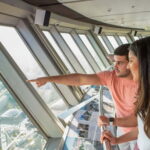
Where You’ll Stop: From Curfürstendamm to the East Side Gallery
The route includes a long list of stops around Berlin, and the best way to plan is to pick 2–3 “anchors” per day. You don’t need to get off everywhere. The bus gives you the option—what you do with it is up to you.
Here are some of the most important stop areas you’ll recognize:
West-leaning highlights
- Kurfürstendamm (classic shopping-and-café Berlin vibes)
- KaDeWe (the department store area; even if you don’t go in, it’s a strong landmark)
- Lützowplatz
- Kulturforum (good for travelers who want culture clustered in one area)
- Potsdamer Platz (modern Berlin, easy transit connections)
- Checkpoint Charlie (near the history-focused tourist corridor)
- Gendarmenmarkt
- Neptunbrunnen / Red City Hall area
East-leaning highlights
- Alexanderplatz (major hub and meeting point vibe)
- Karl-Marx-Allee
- Berghain / Friedrichshain (the nightlife-geared neighborhood feel)
- Mercedes Platz
- East Side Gallery / Mercedes Platz and East Side Gallery / Ostbahnhof (multiple stops help you reach the Wall section from different angles)
Central historic-core stops
- DomAquarée / Museum Island
- Berlin Cathedral / Lustgarten / Humboldt Forum
- Unter den Linden / Friedrichstraße
Big-name icons
- Brandenburg Gate
- Reichstag building
- Berlin Central Station
- Berlin Victory Column
- Elephant Gate / Bikini Berlin
- Kranzler Eck
- Plus stops through neighborhoods like Mitte and Tiergarten depending on where you time your hops
If you want the East-and-West contrast, this route is built for that. You’re not stuck doing only one side of Berlin.
Kurfürstendamm and KaDeWe: Starting With West Berlin Energy
If you start on the route around Kurfürstendamm, you’ll get a taste of Berlin’s Western shopping boulevard energy right away. It’s also a convenient way to orient yourself if your hotel is closer to central-west areas.
The KaDeWe area is famous for a reason: it’s one of Berlin’s best-known department store zones. Even if you don’t plan to shop, it’s a clear visual anchor. You can hop off, stretch your legs, and then return to the bus when you’re ready.
This area is a good pick for your first half-day—especially if you want to understand the layout of central streets before moving toward the major historic sights.
Potsdamer Platz and Checkpoint Charlie: Modern Berlin Meets Cold War Imagery
Potsdamer Platz is where Berlin shows a more modern face—big squares, heavy foot traffic, and easy connections to other parts of the city.
Then you swing into the Checkpoint Charlie zone. This is one of those areas where you’ll see lots of history-focused visitors. The bus stop here works well as a “get in the neighborhood, then decide what you want to do” moment. If you want to go deeper into museums or exhibitions, you can jump off and plan a separate visit.
The trade-off: because these spots are popular, they can be busy. If you’re hoping for quiet photos, go early or time your hop around bus frequency so you’re not fighting the crowd.
Gendarmenmarkt and the Red City Hall Fountain Area: A Photo-Friendly Pause
Stop points like Gendarmenmarkt and the Neptunbrunnen / Red City Hall area are useful because they feel like classic Berlin scenery. You can hop off, grab photos, and reset your day without needing an admission ticket.
This is also the kind of stop where audio plus visuals clicks. You hear context about the area while you walk around for 20–45 minutes, then you re-board for the next section.
If you’re doing only one day, these are great picks for “I want beauty without a huge time commitment.”
Alexanderplatz and Karl-Marx-Allee: East Berlin’s Big-Stage Streets
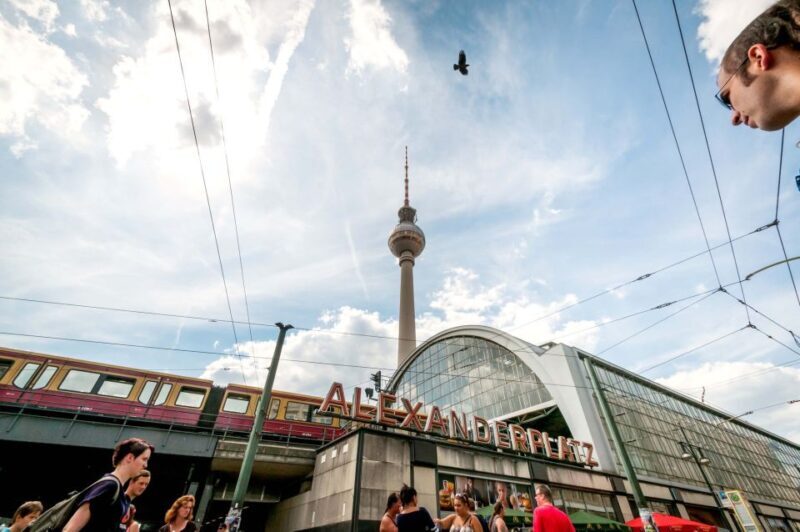
Alexanderplatz is a major hub—think meeting point, transit connection, and lots of energy. Even if you don’t go inside major buildings nearby, it’s an important Berlin reference point.
Then you roll toward Karl-Marx-Allee, one of the most identifiable East Berlin streets. You’ll see the scale and structure change compared to what you saw in the West-side neighborhoods. This is one of the reasons the tour format matters: you get the contrast by passing through it, not by reading about it from a distance.
If you’re interested in the East Side Gallery later, Alexanderplatz is a smart early-day stop because it helps you map how the neighborhoods connect.
Friedrichshain and the East Side Gallery Stops: Wall Art in the Open Air
For many travelers, the real emotional payoff is the section near the East Side Gallery. The bus route includes multiple nearby stops—so you can choose the one that puts you closest to the Wall stretch you most want to see.
This part of Berlin is popular for a reason: the art is out in the open, so you’re not limited to whatever display hours a museum has. When you hop off here, plan for walking. Even if you only set aside an hour, you’ll likely want more.
Pro tip: if you’re trying to time photos, note that buses are moving through traffic and traffic lights. Build extra time for the hop-off and re-boarding rhythm.
Museum Island, Humboldt Forum, and Unter den Linden: The Historic Core
The route passes major sights in the historic center, including DomAquarée / Museum Island, Berlin Cathedral / Lustgarten / Humboldt Forum, and Unter den Linden / Friedrichstraße.
This is the zone where you’ll see the city’s “big monuments” up close. It’s also where you might start wishing you had bought museum tickets or planned more time. That’s normal. The bus tour gives you orientation and a chance to decide what’s worth deeper time.
If you want one practical approach:
- Use the bus to identify what you want to return to.
- Then plan a separate visit for interiors on another day.
That saves you from feeling like you’re doing “touring homework” all at once.
Brandenburg Gate and Reichstag: The Iconic Stops You Shouldn’t Miss
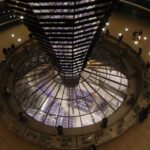
Two of the biggest-name moments are Brandenburg Gate and the Reichstag building area. Even if you’ve seen photos before, seeing them from the bus route helps you connect the geography.
This is also where the winter mulled wine voucher redemption happens at the kiosk at Brandenburg Gate (for eligible City Circle ticket holders). So if your trip overlaps the winter season, this stop becomes not just iconic, but practical and fun.
One more thing: buses can be slower around high-interest landmarks due to crowds and road conditions. Don’t build your strictest schedule around re-boarding right here.
Views and Comfort: Upper Deck Tips and Photo Timing
A lot of travelers mention the joy of seeing Berlin from the bus, and one clear theme is that the driving feels slow enough to take photos. That helps a lot in a city where you want shots across long avenues and squares.
Still, comfort depends on where you sit:
- If you’re on an upper deck, it can feel drafty in cooler weather.
- In winter, you’ll appreciate that the bus is kept warm, but your outdoor layers still matter.
For your day pack, I’d keep it simple: sunglasses and a sun hat are suggested, but bring layers too if you’re traveling outside peak summer.
How Long to Stay at Stops (So You Don’t Get Trapped in Transit Time)
One recurring lesson from traveler comments is that the bus stops are mostly for boarding and getting off briefly. You won’t get a long explanation at each landmark. If you want to go inside places, you’ll need to budget extra time and admission tickets yourself.
So a smart rhythm is:
- Hop off at a stop for a walk and photos.
- Re-board and move on.
- Save longer indoor visits for a second trip when you already know where you want to be.
If you do multiple days, doing a “ride first, then hop” strategy can work well. It helps you avoid getting off too early and then regretting you skipped a different stop that looked better from the bus window.
Potential Snags: Traffic, Meeting Points, and Re-boarding Confusion
This tour is designed to be easy, but Berlin can make it messy in the real world.
Common issues you may run into:
- Traffic diversions and roadworks can change routes and timing.
- City protests and marches can affect roads, which may change what you see.
- Some travelers report that meeting points can be confusing, especially if more than one option is used to pick up tickets.
- Re-boarding can feel tricky if you don’t clearly note the exact stop location you used.
Also, seating and departures can be first-come, first-served. If you arrive late to a stop, you might wait longer than expected.
My advice: when you get off, take a second to check the stop details and where the buses pick up. Then use that same point to re-board later, rather than guessing.
Accessibility, Families, and Onboard Practical Stuff
This tour is listed as wheelchair accessible, and you’ll often find it’s a good option if you want to reduce walking between far-apart sights.
For families, there’s a children’s channel in German and English, which can make the ride easier for kids who don’t want to sit through too much history.
You also get:
- Free WiFi on board
- A free city-center map
- Earphones for the multilingual audio
If you like to plan on the fly, WiFi and the map help you figure out what’s nearby at each stop.
Who This Bus Tour Fits Best
You’ll likely love this tour if:
- You’re in Berlin for a short time and want a fast overview
- You want a low-stress way to compare East vs West neighborhoods
- You appreciate guided context through audio while you travel
- You’d rather hop off when you feel like it than stick to a rigid schedule
It might be less ideal if:
- You want lots of stop-and-explain time at each landmark
- You prefer small-group, fully guided walking tours with long museum stops
- You need every departure to be perfectly timed with no buffer
For many travelers, it’s the best first step. Then you spend your best time on a few places you truly care about.
Should You Book This Hop-On Hop-Off Bus Tour?
If you want a practical Berlin starter plan, I’d book it. The value comes from the combination of frequent hop-on hop-off access, multilingual audio, and a route that covers both sides of the city without forcing you into complicated transit work.
I’d especially recommend it if you enjoy views from the road, want an organized way to hit iconic sites like Brandenburg Gate and the Reichstag, and like the idea of a warm winter perk like mulled wine at the Brandenburg Gate kiosk during the eligible winter promotion window.
Just go in with the right expectations: it’s great for orientation and “see it now, decide later,” not a replacement for time-intensive museum visits. If that fits your style, this tour is a smart, low-effort way to get the most out of Berlin fast.
Berlin: East and West Hop-On Hop-Off Bus Tour
FAQ
How much does the Berlin East and West hop-on hop-off bus tour cost?
The price is listed at $24 per person.
How long is the tour valid for?
It’s valid for 1 to 2 days, based on availability.
What are the operating hours?
Summer hours are 10:00 AM to 6:00 PM (April–October). Winter hours are 10:00 AM to 5:00 PM.
How often do the buses depart?
In summer, buses run every 15–20 minutes. In winter, they run about every 20 minutes.
Can I start the tour at any stop?
Yes, you can start at any of the listed stops.
Is audio included, and in what languages?
Yes. Free audio commentary is included through earphones, with languages listed across 20 options including English, German, French, Spanish, Italian, and many others.
Is WiFi available on board?
Yes, free WiFi is included on board.
Is the tour wheelchair accessible?
The tour is listed as wheelchair accessible.
Is mulled wine included in winter?
There is a winter promotion where City Circle ticket holders can receive a free mulled wine. The voucher is issued at check-in and redeemed at the kiosk at Brandenburg Gate during the winter season, with validity starting 1 January 2026.
You can check availability for your dates here: