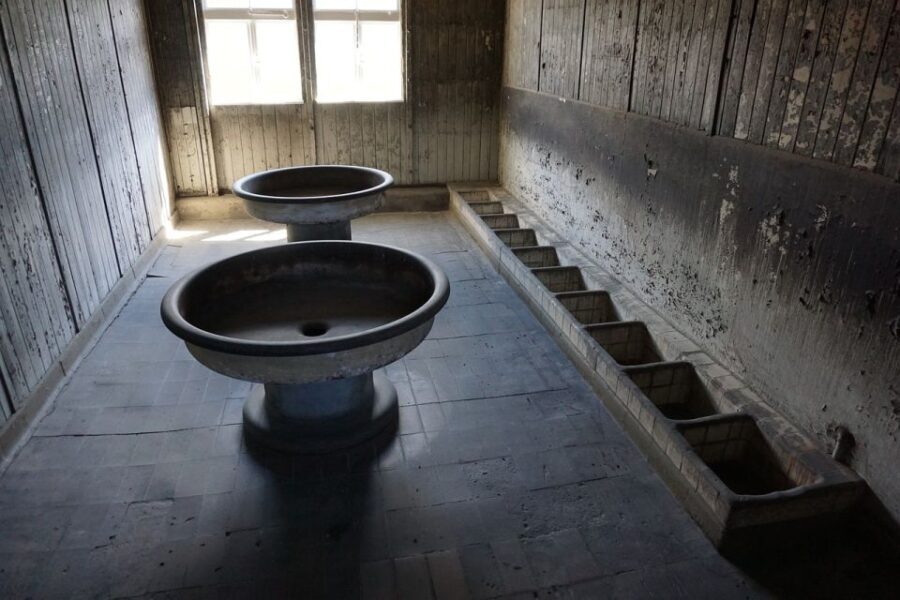
Our review is a serious but well-run day out from Alexanderplatz to the Sachsenhausen Memorial, with a licensed guide traveling with you from Berlin. You start with a train ride and get real context about why Sachsenhausen became a key Nazi “model camp,” then you walk the grounds with a guided, respectful approach. Reviews even name guides like Peter, Walid, and Richard, and guests repeatedly mention that the tone stays appropriate while still being clear and engaging.
Two things I especially like: the tour is built around an expert, question-friendly guide (people describe them as knowledgeable, organized, and careful with difficult topics), and you get skip-the-line entry plus the site fee included in the price. Also, you’re not just handed dates—you visit specific areas like Tower A, Barracks 38 and 39, punishment cells, and Station Z, so the story has physical stops you can connect to.
One thing to consider: this is a 5-hour experience where you’ll be on your feet, and it’s not suitable for wheelchair users or people with mobility impairments. It can also feel emotionally heavy fast, and if you’re visiting in winter, it may be bitter cold outside between stops.
- Key Highlights at a Glance
- Getting There From Alexanderplatz: The Smooth Train Start
- Price and What You Actually Get for (Plus One Ticket)
- A Short Note on Languages, Time, and Cancellation
- First Stop at Tower A and the Sign at the Entrance
- Barracks 38 and 39: What Cramped Life Looked Like
- Punishment Cells and the Machinery of Control
- The Infirmary, Morgue, and Medical Experiments
- The Prisoner Kitchen Museum and Key Turning Points
- Station Z Remains: Where Executions Took Place
- Soviet Memorial Built in 1961: What Came After
- Monuments Over Time: Different Ideologies, Different Messages
- The Guide Matters: Why Guests Keep Praising the Delivery
- Timing and Pacing in a 5-Hour World
- What to Bring: Shoes, Snacks, and a Weather Plan
- Accessibility: Who Should Rethink This Day Trip
- Who This Tour Suits Best
- Should You Book Sachsenhausen With This Guided Option?
- FAQ
- Where is the meeting point for the Sachsenhausen tour?
- How long is the tour from Berlin to Sachsenhausen?
- Is the entrance fee to the Sachsenhausen Memorial included?
- Do I need a train ticket to get to Sachsenhausen?
- What languages are the live guides available in?
- Is this tour suitable for wheelchair users or limited mobility?
- More Tours in Berlin
- More Tour Reviews in Berlin
Key Highlights at a Glance
- Train + guide from Berlin: meet at Alexanderplatz and ride with your accredited guide to the memorial
- Skip-the-line entry: a separate entrance helps you get moving faster once you arrive
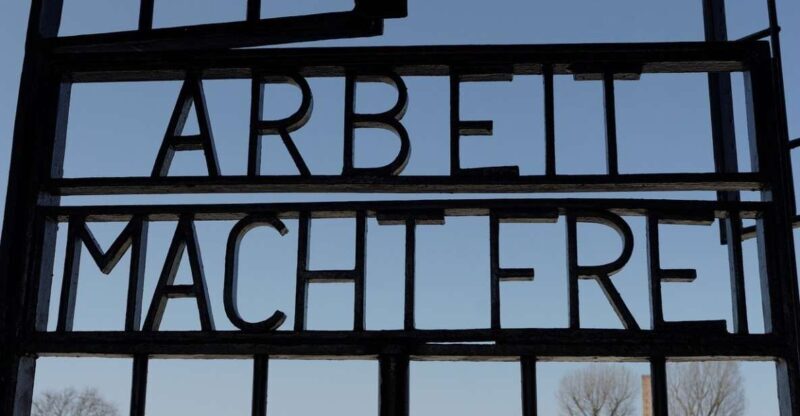
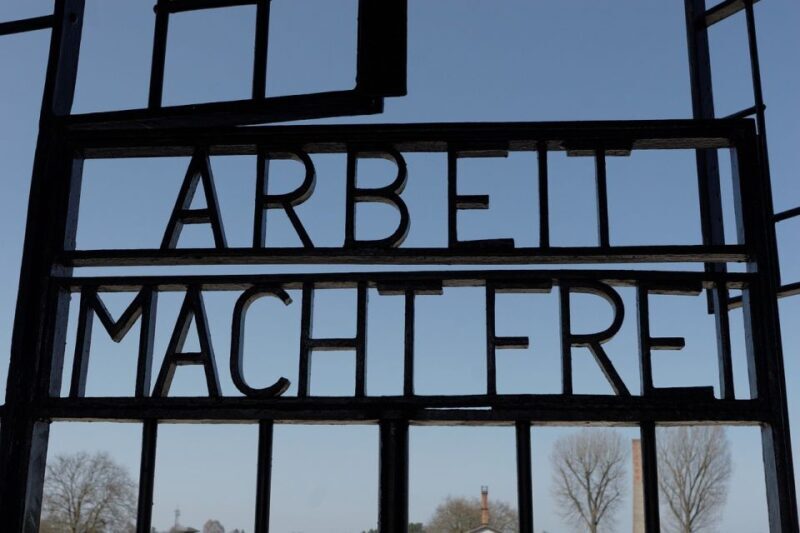
- Tower A orientation: start at the main entrance marked by the Arbeit macht Frei sign
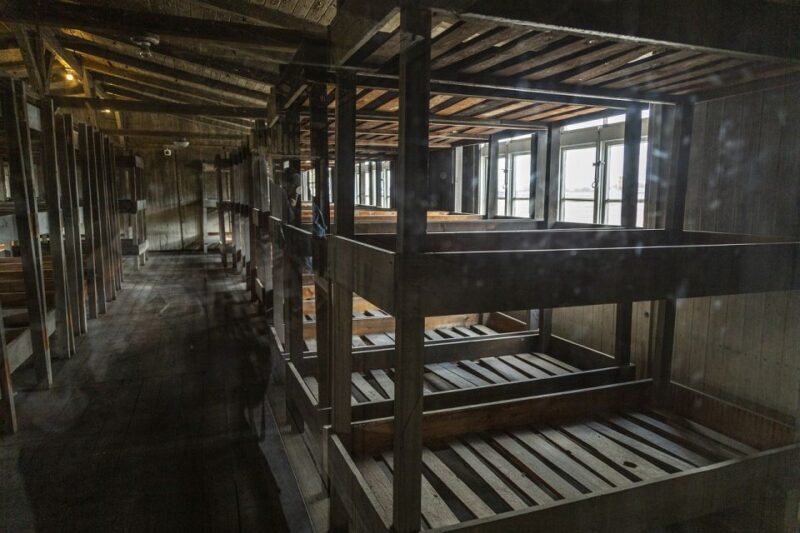
- Barracks 38 and 39: Jewish prisoner quarters are explained with museum stops and stark context
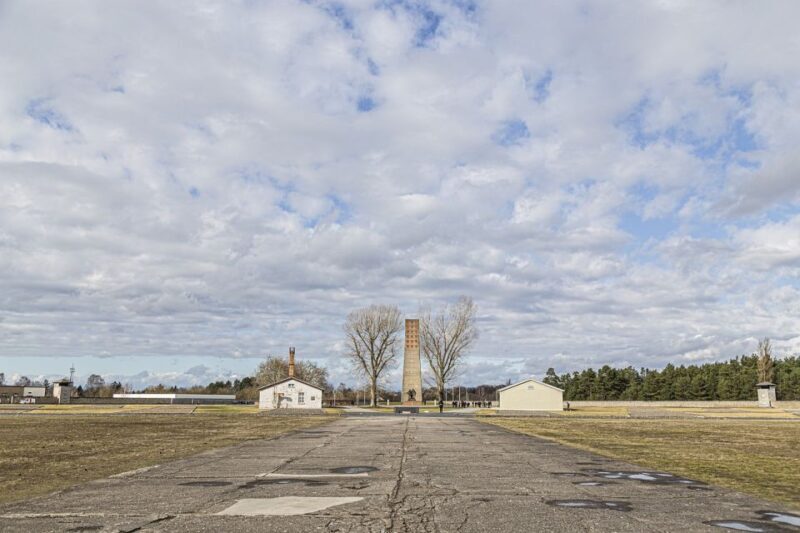
- Station Z + Soviet memorial: you’ll see execution-related remains and the postwar memorial built in 1961
- Guides praised for respect and clarity: guests often single out how guides balance depth with sensitivity
Getting There From Alexanderplatz: The Smooth Train Start
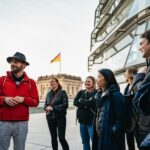
You begin at Alexanderplatz at the World Time Clock, where your Buendía-accredited guide is waiting. The meeting point matters here, because you’re not just buying a ticket and showing up—you’re getting a guided day with a clear handoff from Berlin to the memorial site.
After you regroup, you take a scenic train ride to Sachsenhausen with your guide on board. This is a practical setup: you gain background before you ever step through the grounds, which makes the first monuments and buildings far easier to understand.
You can also read our reviews of more tours and experiences in Berlin.

Price and What You Actually Get for $21 (Plus One Ticket)
At about $21 per person, this tour can feel like good value because it bundles several costs together. You’re paying for a professional guide who travels with you from Berlin, plus the guided visit itself, plus the Sachsenhausen entrance fee (3€ is included).
One cost to plan for: train tickets aren’t included. The activity requires an ABC zone ticket, and you need to buy it in advance—either at ticket machines in stations or online via the Berliner Verkehrsbetriebe website. If you’re trying to travel on autopilot, this part can catch you, so get it sorted early.
So the real value equation looks like this: you’re not paying extra for a second guided segment once you arrive, and you’re not scrambling for logistics during the day. That’s the difference between paying for “a ticket to a place” versus paying for an organized, educational experience.
A Short Note on Languages, Time, and Cancellation
This is a 5-hour tour, with starting times based on availability. It runs with live guides in Spanish, English, German, French, and Italian, so you should be able to match your language needs without sacrificing the structure of the visit.
You also get flexibility: free cancellation up to 24 hours before the tour for a full refund, plus reserve now and pay later. For a day trip that depends on transport and weather, that flexibility is genuinely useful.
First Stop at Tower A and the Sign at the Entrance
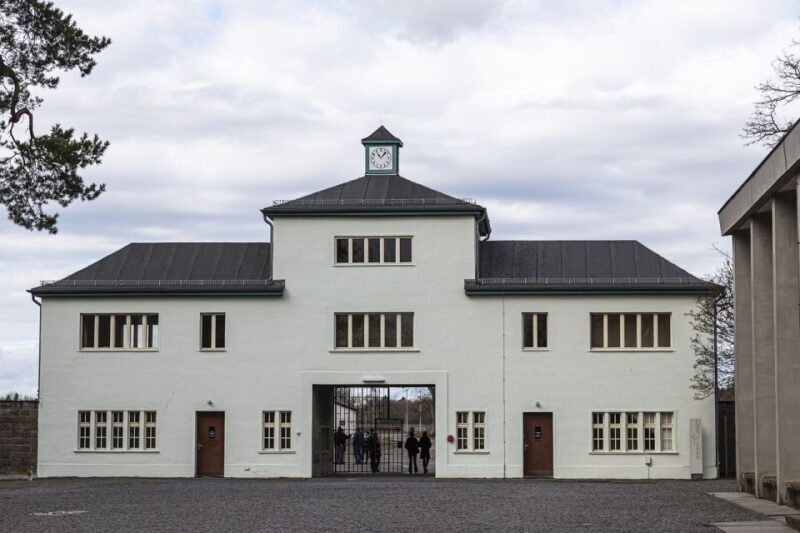
When you arrive at Sachsenhausen, you start at Tower A, the main entrance. This is where you’ll see the famous Arbeit macht Frei sign—presented in context, not as a headline.
This first stop is more than a photo point. Your guide uses it to frame what Sachsenhausen was designed to do: origins, purpose, and how the Nazis treated it as a “model camp.” That early framing helps you connect the physical layout to the system of control.
Also, guides keep the tone respectful. Multiple reviews stress that the delivery is careful with victims, and that respectful approach is a big part of why so many guests leave feeling they learned something meaningful rather than just “checked a box.”
More Great Tours NearbyBarracks 38 and 39: What Cramped Life Looked Like
From the entrance, you move into the Barracks 38 and 39 area, where Jewish prisoners were held in extremely cramped conditions. Barracks 38 functions as a museum that shows daily life in that brutal reality, with explanations that help you understand what imprisonment meant in practice—not only in theory.
This portion is heavy, but it’s also where the tour becomes concrete. You’re not just told about suffering; you’re shown spaces and given a clear, guided explanation of how the camp operated day to day.
One practical tip from the way guests talk about this: pace yourself. Even when the group is moving, you’ll want a moment to absorb what you’re seeing. The guided structure helps because you’re never forced to guess what you’re looking at.



Punishment Cells and the Machinery of Control
Next up, you visit original punishment cells used to detain prisoners for minor offenses. It’s a stark reminder that this system wasn’t only about mass actions—it was also about constant discipline and fear.
This stop matters because it explains how control worked at multiple levels. The camp wasn’t just a place where people ended up; it was also a place where everyday behavior could be punished, and where the rules were designed to break people down.
If you tend to get overwhelmed in museum settings, this is still manageable—guides typically keep moving while explaining what you’re seeing in small, clear sections.
The Infirmary, Morgue, and Medical Experiments
You’ll also get guided insight into cruel medical experiments carried out in the infirmary and morgue. This is one of the most difficult segments of the visit, and the tour’s structure helps here: your guide provides context and keeps the explanation grounded and respectful.
What I like about having a guide for this is simple. Without interpretation, these spaces can become just grim architecture. With a guide, you understand the purpose of what’s being shown and why it belongs in the story of Nazi persecution.
Because this topic is emotionally and ethically intense, expect the group to move carefully. Reviews frequently praise guides for clarity and sensitivity, and that matters most in moments like this.
The Prisoner Kitchen Museum and Key Turning Points
You’ll visit the former prisoner kitchen, now presented as a museum space highlighting key moments in the camp’s history. This kind of stop is valuable because it broadens the narrative beyond punishment and executions.
Food, labor, routines—these are parts of life inside the camp, even when “life” should never be used lightly. A guided explanation helps you see how daily existence was controlled, rationed, and shaped.
It also gives you a slightly different angle for absorbing what happened, which can help your brain process the heavier parts without shutting down.
Station Z Remains: Where Executions Took Place
Then comes Station Z, where many executions took place. You’ll see the remains, and the guide ties this location back to the camp’s overall function within Nazi Germany’s broader system.
This stop is not comfortable, but it’s important. The tour doesn’t treat executions like a shock tactic—it places them in a structured historical explanation so you can understand how the camp’s violence was organized.
Guests often mention that guides keep the visit from becoming sensational. That’s the right approach for a place like this, where the goal is education and remembrance, not drama.
Soviet Memorial Built in 1961: What Came After
Finally, you visit the Soviet memorial built in 1961. This part reflects the site’s role after World War II, and it’s one more reminder that history doesn’t end when the war ends.
I also like that the tour doesn’t freeze the story in one chapter. It acknowledges that the camp’s meaning and presentation changed over time, which helps you understand why different monuments appear—each shaped by different ideologies and eras.
Monuments Over Time: Different Ideologies, Different Messages
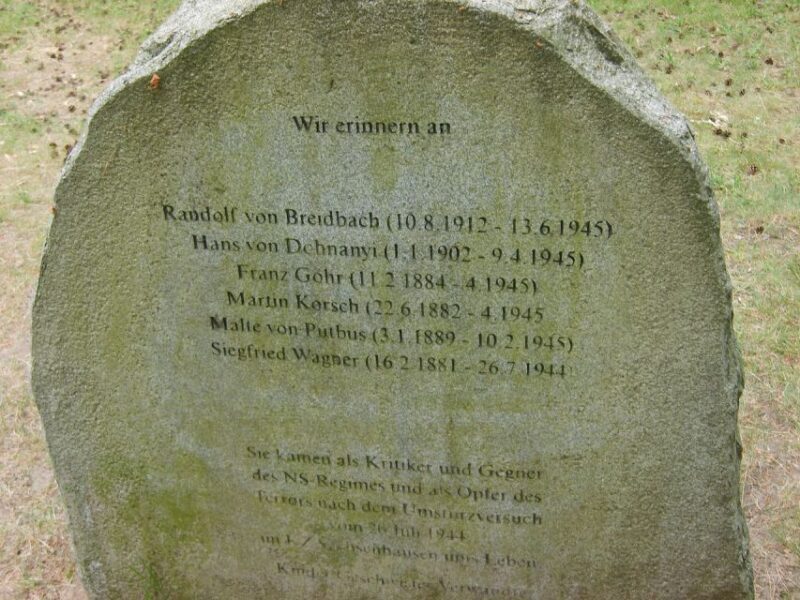
One thing your guide will explain as you move around the site: the memorial includes monuments placed at different times for different ideological reasons. That can be confusing if you only read signs on your own.
With a guide, it becomes clearer. You see how the same physical place can be interpreted differently, and you understand what each addition is trying to communicate in its own time period.
This part also helps you be a more thoughtful visitor. You’re not just looking at objects—you’re learning how societies decide what to remember and how to present it.
The Guide Matters: Why Guests Keep Praising the Delivery
Across the reviews, the biggest praise goes to the guides—especially for knowledge, organization, and respectful delivery. Names that come up again and again include Walid, Peter, Richard, and also guests mentioning Mathis, Hugo, Amelia, and Felipe.
A few patterns stand out in what travelers appreciate:
- Guides are described as knowledgeable and engaging, even when it’s freezing outside
- Many guests mention guides answer questions and manage the group well
- Reviewers emphasize a balance of clear explanation with a tone that doesn’t trivialize victims
One memorable practical detail from guest feedback: guides help ensure everyone has the right transport tickets and guide the return train steps. That’s not glamorous, but it’s exactly what makes a day trip feel smooth rather than stressful.
Timing and Pacing in a 5-Hour World
This is a 5-hour outing, and the pacing is designed to maximize the key sites without turning the memorial visit into a sprint. People mention that the guided portion feels efficient and that time at the memorial covers the major areas.
In cold weather, you may spend less time lingering outdoors. That’s not a downside of the tour so much as a reality of being outside at Sachsenhausen, where conditions can be uncomfortable fast.
The good news: your guide keeps the experience moving in a way that still feels structured and complete.
What to Bring: Shoes, Snacks, and a Weather Plan
The basic advice is straightforward: bring comfortable shoes and snacks. This helps because there’s walking and standing, and this is not a “grab-and-go” stop.
Also plan for weather. Reviews mention bitter cold and that people were cold enough that they didn’t spend extra time outside. Even if you don’t go in winter, bring layers and gloves if you run cold easily.
If you’re the kind of traveler who likes to keep exploring afterward, note that you can choose to return to Berlin with your guide’s help or stay longer to explore on your own pace.
Accessibility: Who Should Rethink This Day Trip
This tour is listed as not suitable for people with mobility impairments and wheelchair users. That’s important, because even with a guided explanation, the route around the camp grounds may not be practical for everyone.
If you need accessibility accommodations, you might want to look for an alternative format or another provider. With places like this, it’s better to be realistic than to struggle through a difficult day.
Who This Tour Suits Best
This tour is a strong fit if you want:
- A structured visit with clear historical explanations
- A guided route through major sites like Tower A, Barracks 38–39, and Station Z
- A companion guide from Berlin who also helps with return logistics
It’s also a good match if you’re traveling with students or a group that benefits from context and careful framing. Several reviews mention education-focused groups and how the guide helped make the events understandable.
On the other hand, if you already feel confident with the background and you prefer maximum independence, you might prefer a self-planned visit. But if you want your questions answered and your time used well, the guided format is the point.
Should You Book Sachsenhausen With This Guided Option?
If your goal is education that feels organized and respectful, I think you should seriously consider booking this tour. The combination of an accredited guide from Berlin, skip-the-line entry, and a stop-by-stop route through major areas creates solid value for the price—especially with the entrance fee included.
Book it if you like guides and want help turning what you see into something you can actually understand. Also book it if you want transport guidance—reviews repeatedly mention guides helping groups get on the right trains and stay on schedule.
Skip it (or research alternatives) if you need wheelchair access or mobility accommodations, or if you know you struggle with long, emotionally heavy walking days.
Berlin: Sachsenhausen Concentration Camp Memorial Tour
FAQ
Where is the meeting point for the Sachsenhausen tour?
The group meets next to the World Time Clock at Alexanderplatz. The guide is described as wearing Buendía accreditation.
How long is the tour from Berlin to Sachsenhausen?
The duration is listed as 5 hours.
Is the entrance fee to the Sachsenhausen Memorial included?
Yes. The tour includes the Sachsenhausen entrance fee (listed as 3€ included).
Do I need a train ticket to get to Sachsenhausen?
Yes. You must purchase an ABC zone train ticket before the activity. Train tickets are not included.
What languages are the live guides available in?
Live tour guide languages listed are Spanish, English, German, French, and Italian.
Is this tour suitable for wheelchair users or limited mobility?
No. It is listed as not suitable for people with mobility impairments and wheelchair users.
You can check availability for your dates here: