If you’re planning a trip to Cambridge and want to understand what makes this 800-year-old university tick, the Cambridge Walking & Punting Tour by Alumni offers exactly what most visitors search for but rarely find—authentic perspectives from people who actually study or studied here. We’ve reviewed this tour based on nearly 700 traveler experiences, and what emerges is a genuinely well-executed combination of guided walking and punting that delivers real value.
- What We Love About This Tour
- One Thing to Consider Upfront
- Who This Tour Is Perfect For
- Breaking Down the Walking Tour Experience
- The King’s College Chapel Option
- The Punting Experience
- Guide Quality: The Real Variable
- Value Assessment
- Practical Details That Matter
- What You’ll Actually Learn
- The Honest Assessment
- FAQ
- More Walking Tours in Cambridge
- More Tours in Cambridge
- More Tour Reviews in Cambridge
What We Love About This Tour
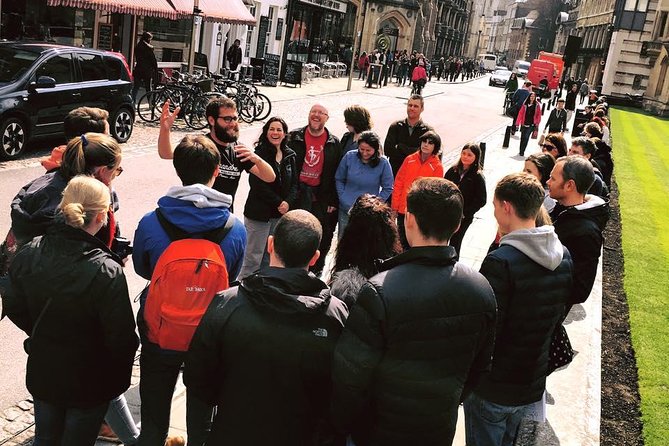
The first thing that stands out is the quality of the guides. You’re not getting a generic tour operator; you’re getting current students or recent graduates who can speak to both the history and the lived reality of Cambridge. One traveler noted their guide was “a current graduate student at Cambridge” who “shared some of the history of Cambridge along with how current day Cambridge is like as a student without going into too much detail (perfect amount of information).” This isn’t a performance—it’s a genuine conversation with someone who belongs here.
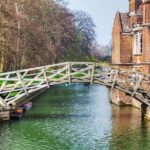
The second strength is the two-in-one structure. You get a thorough 90-minute walking tour covering eight colleges and major landmarks, then transition to a relaxing 45-minute punt down the River Cam. This combination works brilliantly because it addresses a real problem: walking tour fatigue. After 90 minutes on your feet, you’re ready to sit down, and the punt gives you a completely different perspective on the same buildings. You’ll see King’s College Chapel from the water, understand why the Mathematical Bridge matters, and get the kind of views that make Cambridge feel magical rather than just historically significant.
One Thing to Consider Upfront
The tour does require a solid 90-minute walk, and Cambridge in wet weather can be genuinely unpleasant. One traveler had a rainy experience and felt frustrated about not having umbrella options. The tour operator’s response—that weather is beyond their control and dressing appropriately is your responsibility—is fair, but it’s worth checking the forecast and packing accordingly. Cambridge’s flat terrain and college-dense layout mean you’re constantly navigating narrow streets and courtyards, so comfortable, waterproof shoes aren’t optional.
You can also read our reviews of more walking tours in Cambridge



Who This Tour Is Perfect For
This experience works beautifully for people who want to understand Cambridge beyond surface-level sightseeing. If you’re interested in academic history, want to know what student life actually looks like at an elite university, or you’re considering Oxford or Cambridge for your own education, this tour delivers insights you won’t find in guidebooks. Families with teenagers, intellectually curious travelers, and anyone who wants to move beyond “big red bus” tourism will find this worthwhile.
Breaking Down the Walking Tour Experience
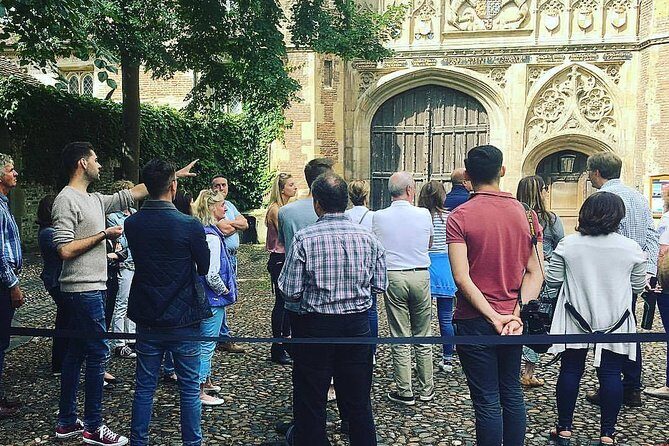
The tour kicks off outside King’s College on King’s Parade, where your guide will be wearing distinctive royal blue clothing with the Alumni Tours heraldic symbol—making them easy to spot in a crowd. This is important because with groups up to 24 people, clear identification prevents the “where’s our guide?” confusion that occasionally plagues larger tours.
The first few stops set the context. You’ll start at the Corpus Clock, a mesmerizing piece of modern sculpture that looks like it belongs in a sci-fi film. Your guide will explain the design details that casual observers miss, which immediately establishes that you’re getting insider knowledge. The Eagle pub, where Cambridge scientists have gathered for over 400 years (including the Cavendish Laboratory crowd), tells the story of how Cambridge became a scientific powerhouse. These early stops aren’t just about checking boxes—they’re establishing the intellectual DNA of the place.
Then you move into the college circuit, and here’s where the tour structure really shines. You’ll visit Queens’ College and learn the quirky reason it’s spelled that way rather than “Queen’s.” The Mathematical Bridge gets proper attention—your guide will explain the myths versus the reality, something you’d never figure out on your own. Trinity College and St. John’s College get their due, and your guide will likely share the friendly rivalry between them, giving you a sense of how Cambridge students actually experience their university.
The Backs—the stretch of parkland behind the colleges along the River Cam—provides breathing room and context. Walking here while learning about King’s College’s connection to three different King Henrys helps you understand that these buildings weren’t built in a vacuum; they’re products of specific historical moments and royal patronage.
One traveler who clearly appreciated the historical depth noted: “We saw the fen that changed the course of Darwin’s life” and learned about “Trinity College where Newton studied, the Cavendish Lab building (home of more than 30 Nobel laureates).” This tells you something important: your guide isn’t just reciting facts. They’re connecting Cambridge’s physical spaces to the actual intellectual revolutions that happened within them.
The King’s College Chapel Option
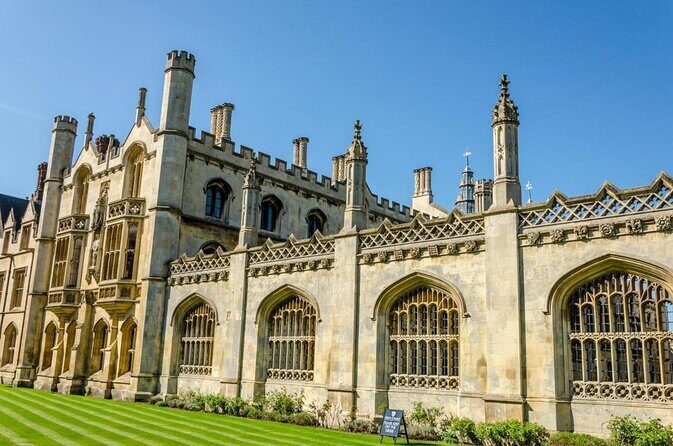
Here’s where you need to make a strategic choice. King’s College Chapel is available as an upgrade, and it’s worth serious consideration. The chapel is genuinely one of Cambridge’s most stunning structures—Gothic architecture that feels like it was designed to inspire awe. The important thing to know: the chapel visit is self-guided and happens after the main walking tour ends. You’re not rushed through it with your group; you can spend as much time as you want. The tour operator estimates 45 minutes, but you can leave whenever you’re ready.
The timing matters for logistics. If you skip the chapel, you’ll head to the punting station 2 hours after the tour starts. If you add the chapel, you’ll go 3 hours after the tour starts. This affects your overall experience length and should factor into your decision if you have other plans that day.
The Punting Experience
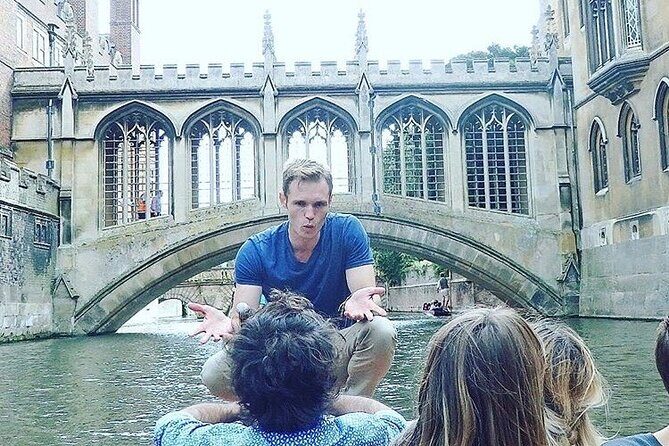
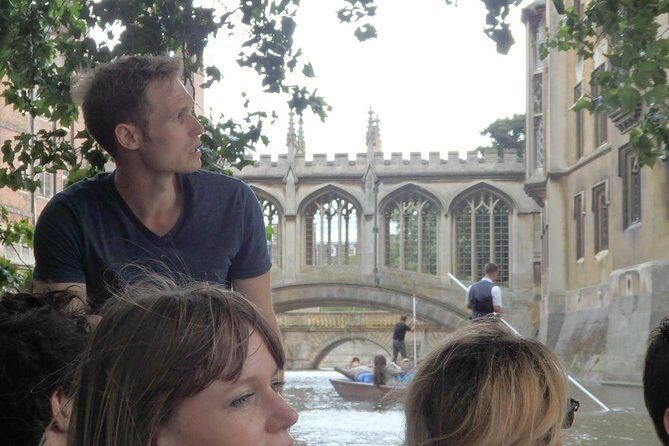
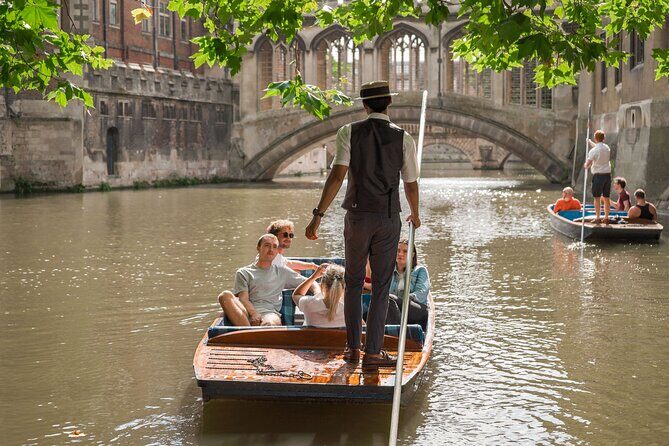
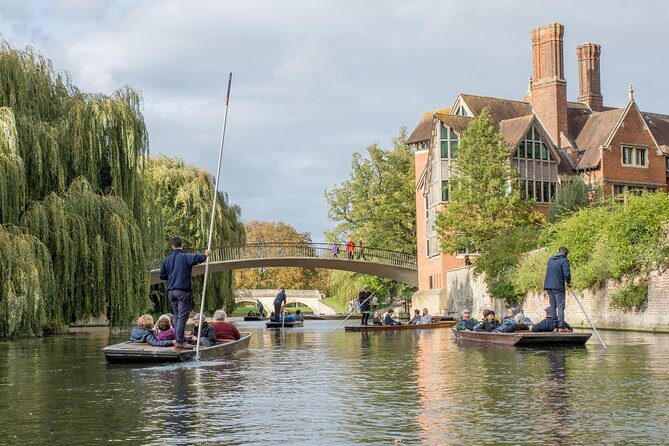
After a brief break, you’ll head to Scudamore’s Mill Lane punting station. Here’s what happens: you’ll be punted (not paddled—the guide does the work) along the River Cam for approximately 45 minutes, passing 8 colleges and 9 bridges. Your guide will handle the pole expertly while explaining the history and architecture from water-level perspective.
This is genuinely where many travelers feel the tour clicks into place. One visitor said, “The walk is just ok, can only see exteriors and they look better on punt.” That’s honest feedback—and it explains why the combination works. From the water, you see how these colleges relate to each other spatially, how the river shaped the city’s development, and you get views that no ground-level walking tour can provide.
You’ll see Darwin’s college (with its Georgian and Victorian architecture), King’s College Chapel from its most photogenic angle, the Mathematical Bridge (yes, the one you heard about on the walk), and Magdalene College, described as “one of the most traditional of the colleges.” Your guide will share stories and context throughout, but you’re also just sitting down after 90 minutes of walking, which feels wonderful.
One traveler captured the appeal perfectly: “The punting is very nice, great views and fun on boat, good tour guides. The walk is just ok, can only see exteriors and they look better on punt.” That’s the real value proposition—the combination elevates both experiences.


Guide Quality: The Real Variable
Looking across the reviews, the quality of individual guides emerges as the most important variable in your experience. Most guides receive glowing praise—named guides like Elliott, David, Annie, Niamh, and Rupert appear multiple times in five-star reviews. One traveler noted their guide “explained things very thoroughly – it was as if she knew everything about the university. Rave, rave!”
However, there’s at least one review noting a guide who “was not competent,” “struggled to keep the group together,” and was “not engaging.” This is honest feedback that suggests guide quality isn’t perfectly consistent. The tour operator responded professionally, acknowledging the issue and offering to follow up directly.
The lesson here: most experiences will be excellent, but there’s a quality range. If you get a guide like Elliott (who appears in multiple rave reviews as having “amazing knowledge and funny stories”) or David (praised for his “very detailed and interesting stories”), you’re in for a genuinely memorable afternoon. If you get someone less experienced, you’ll still see the same buildings, but the experience will feel more transactional.
Value Assessment
At $76.28 per person, you’re getting 2 hours 45 minutes to 3 hours 45 minutes of guided experience plus punting. Let’s be concrete: that’s roughly $20-25 per hour for guided access to Cambridge’s most important sites, including a student or graduate guide with insider knowledge and a relaxing punt. Comparable walking tours in Cambridge run $25-40 per person for 2 hours. Punting tours typically run $20-25 per person. You’re not getting a discount by combining them, but you’re getting a more thoughtfully structured experience than booking separately.
The value isn’t just financial—it’s experiential. A guide who can explain why Trinity and St. John’s have a rivalry, what student life actually involves, and how the Oxbridge application process works is worth something beyond the hourly rate. You’re getting context that transforms a walking tour from sightseeing into understanding.
Practical Details That Matter
Group size: Maximum 24 people. This is reasonable for a walking tour—large enough to make economic sense, small enough that you’re not herded around like a school group. You’ll actually hear your guide in most situations.
Booking timeline: The tour is typically booked 25 days in advance. This suggests it’s popular enough that you shouldn’t assume availability if you’re booking last-minute, but it’s not so specialized that you can’t get a spot with reasonable notice.
Accessibility: The tour isn’t recommended for travelers who can’t complete a 90-minute walk. Service animals are allowed. It’s near public transportation, which matters since you’re starting at King’s College in central Cambridge.
Cancellation: Free cancellation up to 24 hours before, which is generous. Weather cancellations get you a different date or full refund—important for a tour that can genuinely be miserable in heavy rain.
What You’ll Actually Learn
Beyond the factual history (and there’s plenty—31 colleges, 800 years of academic tradition, dozens of Nobel laureates), you’ll get a sense of how Cambridge actually functions as a living university. Your guide can explain the graduation ceremony traditions, the Senate House where grades are publicly announced, and what it’s actually like to be a student here. This context transforms the experience from “look at old buildings” to “understand how one of the world’s most influential institutions works.”
One family with teenagers noted: “Gain an insight into student life at an elite university” and “Learn about the Oxbridge application process from a student.” If your family is navigating university choices, this becomes genuinely useful research, not just tourism.
The Honest Assessment
This tour works because it does three things well: it provides genuine insider perspective through current students and recent graduates, it structures the experience logically (walking to understand the layout, punting to appreciate the architecture), and it operates at a reasonable price point with good cancellation terms. The guides are generally excellent, though there’s some quality variation. The combination of walking and punting addresses the real problem of tour fatigue while giving you different perspectives on the same city.
The main limitations are weather-dependent (Cambridge can be miserable in rain), it requires decent fitness for the walking portion, and your experience quality somewhat depends on which guide you get. These aren’t flaws so much as realistic constraints.
Cambridge Walking & Punting Tour by Alumni™ King’s College Option
FAQ
Q: Do I need to book the King’s College Chapel option in advance, or can I add it on the day?
A: You must book it in advance. The tour operator is clear about this—it cannot be purchased during the tour or after. If you’re interested in visiting the chapel, make sure to select it when booking your tour. If you forget, you won’t be able to add it later.
Q: How much walking is actually involved, and what kind of shoes should I wear?
A: The walking portion is 90 minutes, and it’s fairly continuous. One traveler emphasized that “it WAS a lot of walking so wear proper shoes.” Cambridge’s terrain is flat, but you’re constantly navigating narrow streets, college courtyards, and potentially wet pavement. Comfortable, waterproof walking shoes aren’t optional—they’re essential, especially if there’s any chance of rain.
Q: What’s the actual difference between the walking tour and the punting tour perspectives?
A: The walking tour lets you explore the colleges’ exteriors and learn about their individual histories and significance. The punting tour shows you how these colleges relate to each other spatially along the river and gives you views of buildings (especially King’s College Chapel) that are genuinely more impressive from the water. One traveler noted the walk “is just ok, can only see exteriors and they look better on punt.” They work together to give you a complete picture.
Q: Can I skip the walking portion and just do the punting?
A: The tour is structured as a combination—you do the walking tour first, then transition to punting. The itinerary doesn’t appear to offer a punting-only option through this specific tour operator. If you only want punting, you’d need to book a separate punting tour.
Q: How large are the groups, and will I be able to hear my guide?
A: Maximum group size is 24 people. This is large enough that you might not hear your guide perfectly if you’re at the back of the group and it’s windy, but it’s small enough that you’re not completely lost in a crowd. Several reviews mention guides doing a good job of keeping groups together and being heard, though one review noted difficulty with a less experienced guide managing group dynamics.
Q: What happens if the weather is bad on the day of my tour?
A: The tour operator cancels tours due to poor weather and offers either a different date or a full refund. However, they don’t provide rain gear or umbrellas, so you’re responsible for dressing appropriately. One traveler had a rainy experience and felt frustrated about being drenched, but the operator’s position is that checking the forecast and wearing proper rain gear is the visitor’s responsibility. Check the weather before you go and dress accordingly.
The bottom line: This tour delivers genuine value through guides who actually know Cambridge from the inside, a thoughtfully structured combination of walking and punting that addresses the real challenge of sightseeing fatigue, and reasonable pricing for what you’re getting. It works best for travelers who want to understand Cambridge as a functioning university rather than just photograph famous buildings, and who have decent fitness for a 90-minute walk. Most guides are excellent, the reviews are overwhelmingly positive (4.5 stars across nearly 700 reviews), and the experience genuinely helps you make sense of one of the world’s most important academic institutions. If you’re spending a day in Cambridge and want to spend it wisely, this combination tour deserves serious consideration.