This Mount Etna trekking tour is the kind of trip you book when you want volcanic landscapes without the busload vibe. Based on what travelers repeatedly highlight, guides like Renato and Antonio bring the geology to life, and the route stays away from the most obvious tourist crowds.
I especially like that the day is built around tangible stops: the Silvestri Craters, the massive sweep of Valle del Bove, and even a lava cave (when conditions allow). You also get real value for $81 because transport, gear, and guided hiking are included, not just a transfer and a vague walk.
One thing to consider: this isn’t a gentle stroll. Expect real uphill effort, windy/cold conditions in shoulder seasons, and some health restrictions (plus no cave visit in certain safety situations).
- Key things travelers care about most
- Mount Etna from Catania, with an actually smart route
- The pickup plan: start simple, then settle in at Trecastagni
- Trecastagni stop: food timing matters more than you think
- Gear you don’t have to source yourself
- The hike challenge: altitude gain and “real walking,” not a nature stroll
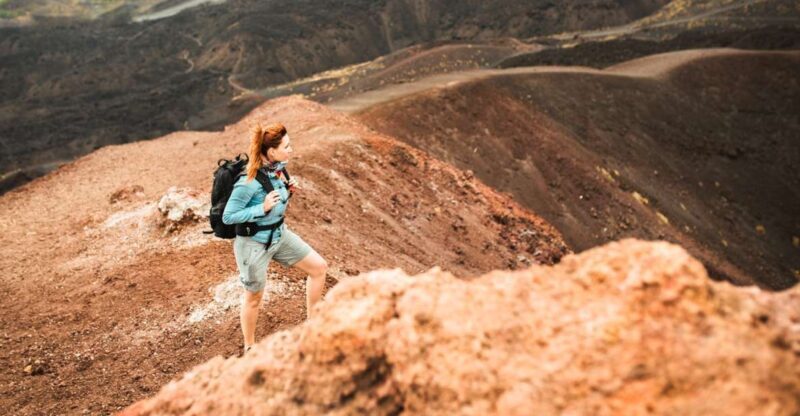
- Silvestri Craters: the part that makes Etna feel alien
- Valle del Bove: a massive volcanic amphitheater and wide-open views
- Lunch at altitude: use the view, not just the break
- The sandy descent: fun walking that feels like a controlled slide
- Inside a lava cave: when safety allows, you get a rare look underground
- Rifugio Sapienza stop: coffee, shopping, and local snack time
- The return to Catania: easy logistics, not a late scramble
- Small-group benefits you’ll actually feel on a volcano
- Who this tour is best for (and who should skip it)
- Weather reality on Etna: cold, wind, and route flexibility
- Value check: is mostly about what’s included
- Practical tips before you go
- Should you book this Mount Etna trekking tour?
- FAQ
- How long is the Mount Etna trekking tour?
- Where does the tour start and end?
- Is transport included?
- What gear is included?
- Is lunch included?
- Does the tour include a lava cave?
- What languages are the guides?
- What’s the cancellation policy?
- More Hiking & Trekking Tours in Mount Etna
- More Tours in Mount Etna
- More Tour Reviews in Mount Etna
Key things travelers care about most
 1 / 9
1 / 9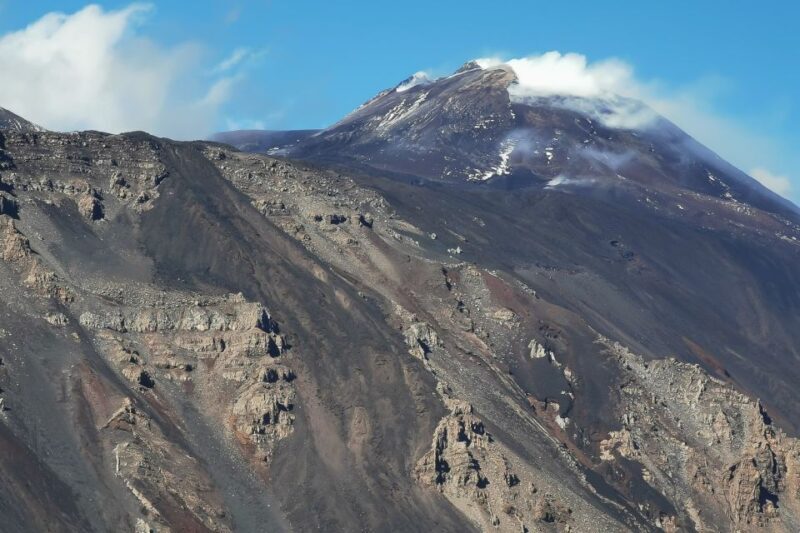 2 / 9
2 / 9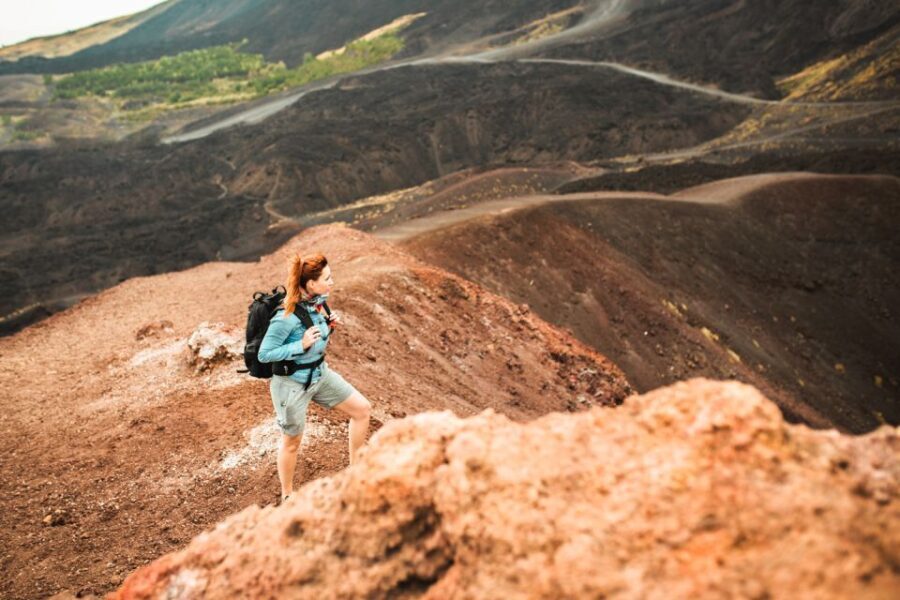 3 / 9
3 / 9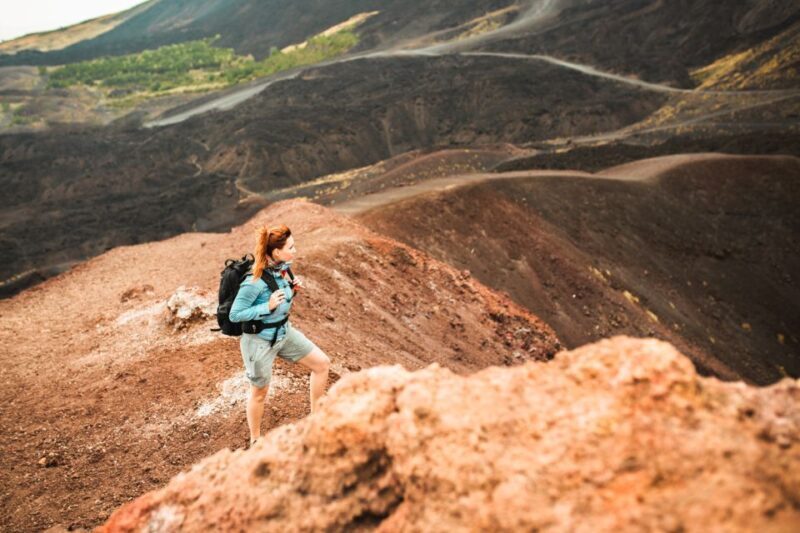 4 / 9
4 / 9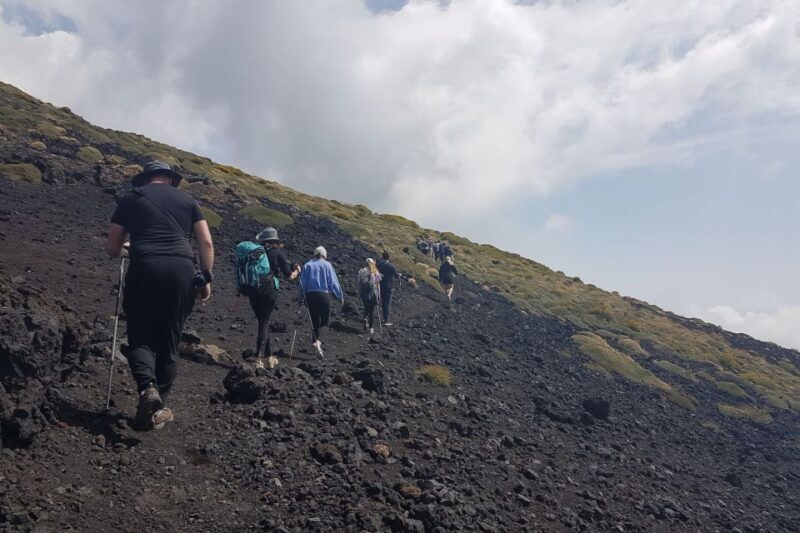 5 / 9
5 / 9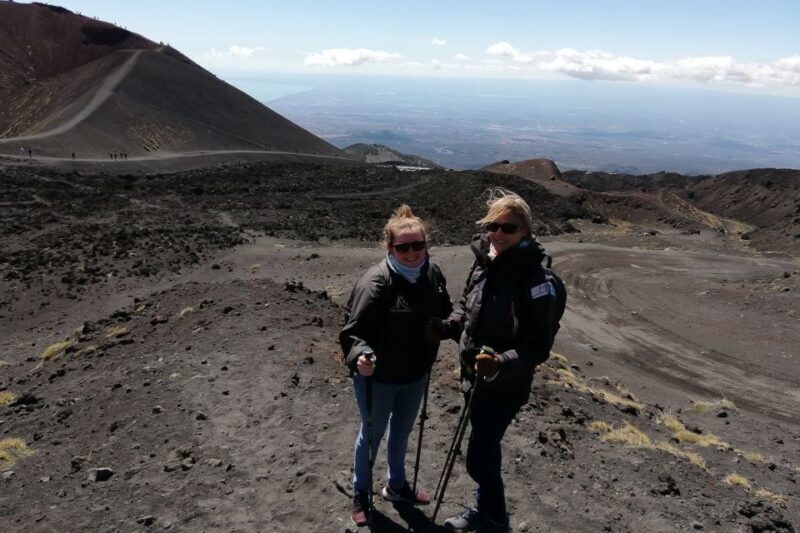 6 / 9
6 / 9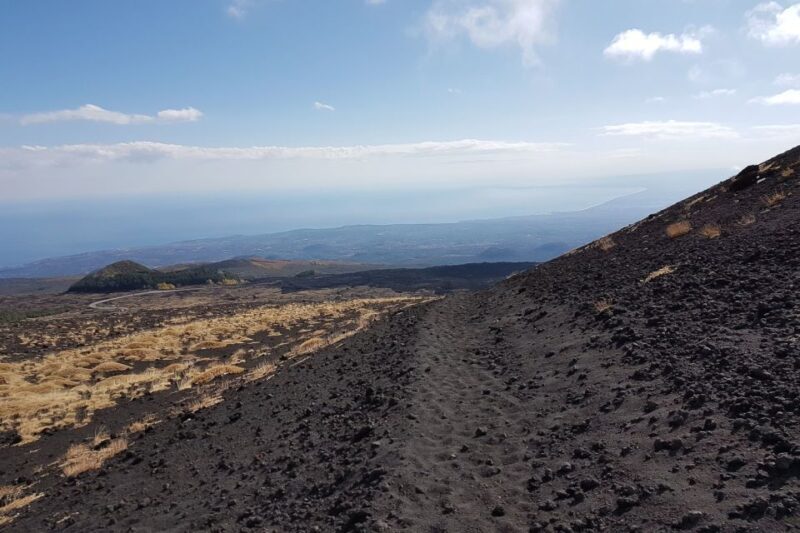 7 / 9
7 / 9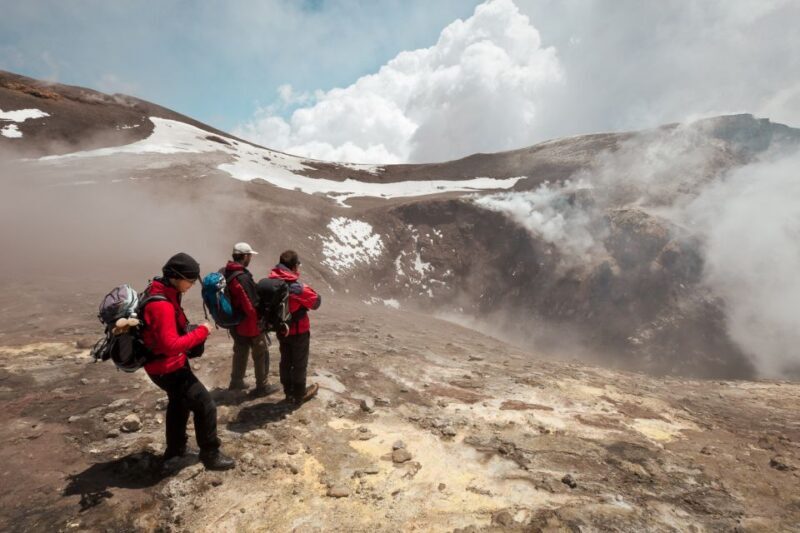 8 / 9
8 / 9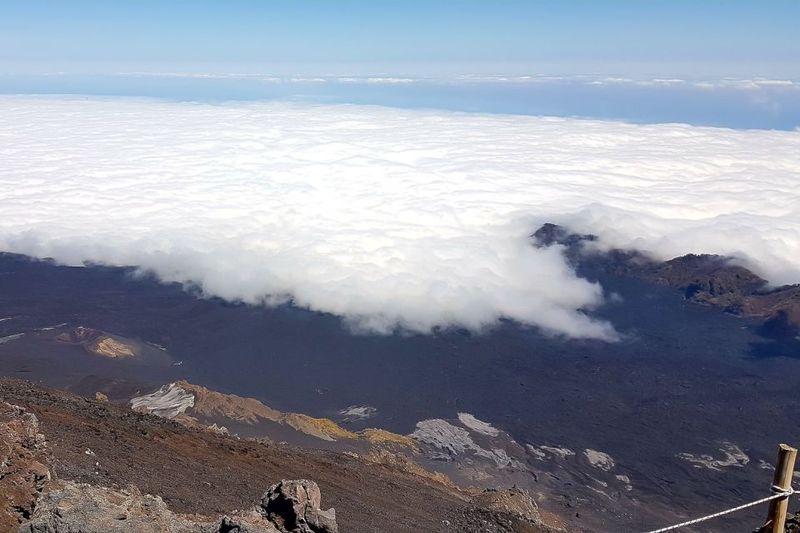 9 / 9
9 / 9- Small-group size (max 8) keeps the pace human and questions easy to answer
- Naturalist-style guidance turns rock and ash into a story you can follow
- Silvestri Craters + recent lava flows give you dramatic, up-close “Etna in action” geology
- Valle del Bove views are huge and cinematic, even on a cloudy day
- Lava cave visit adds a rare twist beyond standard crater overlooks
- Soft volcanic sand descent makes the return feel fun, not just tiring
Mount Etna from Catania, with an actually smart route
If you’re basing yourself in Catania, this tour is a practical way to reach Etna without renting a car or guessing the logistics. You’ll ride out with a small group, get organized quickly, and then spend the day walking where most day-trippers don’t go.
The big win here is how the route connects different “faces” of Etna. You’re not just hitting one viewpoint—you’re moving through craters, valleys, lava fields, and volcanic textures that change under your feet.
You can also read our reviews of more hiking tours in Mount Etna
The pickup plan: start simple, then settle in at Trecastagni
Your day starts in central Catania at a meeting point at McDonald’s. From there, you take a van ride toward Trecastagni, and you’ll get your first onboard context about where you’re headed.
In Trecastagni, there’s a short stop for coffee and a chance to pick up what you’ll need before the hike. Travelers mention it as a helpful rhythm—quiet before the effort, with time to grab water and a sandwich for lunch planning.
Trecastagni stop: food timing matters more than you think
Because the hike reaches high altitude, food timing can make or break your energy. Here, you can buy a locally-prepared sandwich before you start climbing, which means you’re not scrambling at the top while everyone else is already moving.
You also get that small-town pause that feels very Sicilian: not a spectacle, just a normal morning stop before a big landscape day. If you’re picky about lunch, you’ll still have options because you’re buying locally rather than being stuck with one pre-packed choice.
Gear you don’t have to source yourself
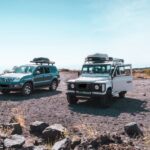
This is one of the most traveler-friendly parts: equipment is included, which lowers the stress of packing. You get an extra warm jacket, a rain jacket, plus trekking sticks and trekking shoes if you need them.
I like that the gear is practical for Etna’s mood swings. Reviews repeatedly mention cold, wind, and dust/ash, and having extra layers makes a real difference when you’re at the higher sections.
Tip: even with included gear, bring the basics you control—comfortable shoes if you have them, a hat, and sunscreen.
More Great Tours NearbyThe hike challenge: altitude gain and “real walking,” not a nature stroll
The tour includes about 550 meters of active altitude difference. That’s not Everest-level, but it is enough that your legs feel it, especially in wind and loose volcanic ground.
Some travelers say the climb can be hard work, and that’s consistent with the route design: you’re moving from around 1,850 meters up toward roughly 2,400 meters. If you’re not used to hiking, you’ll still likely finish, but you should go in with respect for the effort.
Silvestri Craters: the part that makes Etna feel alien
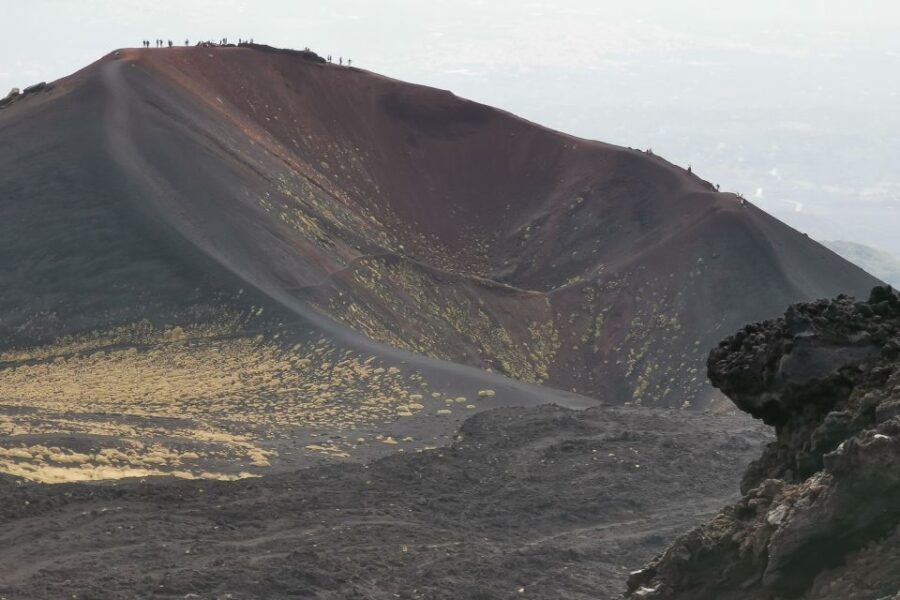
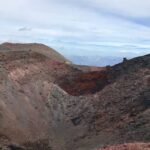
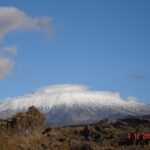
The hike heads off the usual tourist paths and reaches the Silvestri Craters, a striking volcanic formation tied to past eruptions. This is where Etna starts to look less like a mountain and more like a different planet.
You’ll also see dramatic recent lava activity, including a 2001 lava flow. In plain terms: you’re walking through evidence of how fast the landscape can change, and your guide helps you connect the dots between lava, shape, and time.
What to watch for: stability. Volcanic terrain can be uneven, and even when the pace is managed for the group, you’ll want to take your steps seriously.
Valle del Bove: a massive volcanic amphitheater and wide-open views
After the craters, the day opens up into Valle del Bove, a vast natural amphitheater shaped by a major volcanic collapse. Walking along the edges gives you perspective that’s hard to get from a viewpoint—scale becomes physical.
This is also a prime photo zone for the simple reason that the valley frames the world around you. You’ll get sweeping sightlines toward the active southeastern area of Etna and out toward the Ionian coastline on clear days.
Lunch at altitude: use the view, not just the break
Lunch happens around 2,400 meters, which is why the tour’s food approach works. You pause long enough to eat while you’re already in the best position to understand the geography you just walked through.
The payoff isn’t only food—it’s mental recalibration. You look at the valley walls, you hear how your guide explains what formed them, and then you reset before the descent.
Practical note: food and drinks aren’t included in the price. That said, the tour sets you up so you can buy a sandwich locally, and many travelers plan their day around that purchase.
The sandy descent: fun walking that feels like a controlled slide
After lunch, you move into the “lava sand beaches” section. This is a soft, steep, playful route where the ash and volcanic sand make your steps feel different than on normal trails.
If you’ve been picturing Etna as a tough hike only, this part changes the mood. Reviews describe it as fun—and it makes the day feel like an adventure rather than pure exertion.
Just be aware: soft ground still tires you. Keep your pace steady, and let your trekking sticks do their job.
Inside a lava cave: when safety allows, you get a rare look underground
A highlight is the lava flow cave, formed when molten rock carved routes underground and left cooled basalt behind. It’s one of those experiences that adds contrast: you spend the day seeing the volcano’s surface, then you get a glimpse of its hidden pathways.
There’s a catch that matters for planning. If there are high tremors and eruptions, the cave visit isn’t possible even if the eruption has finished. That’s a safety rule, not a downgrade of the day.
If the cave does happen, it’s worth it because it turns “cool scenery” into “how volcanoes work in real life.”
Rifugio Sapienza stop: coffee, shopping, and local snack time
Later, you reach Rifugio Sapienza for a break. You’ll have time for coffee, and there’s shopping and local snacks available.
This is a smart buffer before you head back down and toward Catania. Even if you’re feeling strong, it’s good to pause and refuel because volcanic air can be drying and cold.
The return to Catania: easy logistics, not a late scramble
Transport back is straightforward, and you’ll arrive back at the meeting point in Catania after about an hour in the van. The tour is listed as 7 hours, which is a good balance for a full Etna hike without turning your day into a travel marathon.
What I like most about this setup is that you don’t have to coordinate your own pick-up at altitude. Etna days can be unpredictable, and having the logistics handled reduces stress.
Small-group benefits you’ll actually feel on a volcano
The group size is limited to 8 participants, and that’s not just a marketing point. On a hike with wind, dust, and uneven terrain, a smaller group means you’re easier to manage, and guides can adjust pace and attention.
Travelers also mention being checked on if someone is slower, including for cases like heel discomfort. That’s a quiet but important signal: the day isn’t only about speed, it’s about keeping people safe and moving.
Who this tour is best for (and who should skip it)
This is best for hikers who can handle a steep uphill day and a descent on soft volcanic sand. Many people describe it as challenging but doable, with guides supporting you throughout.
It’s not suitable for:
- children under 10
- pregnant women
- people with heart problems or respiratory issues
- people with altitude sickness
- people with low fitness
- people with mobility impairments
If you’re unsure, take the altitude difference seriously and think about your comfort in cold, windy environments.
Weather reality on Etna: cold, wind, and route flexibility
Even in warmer months, Etna can feel different at altitude. Reviews repeatedly mention cold and strong wind in shoulder seasons, so dress like you’re going somewhere that can change fast.
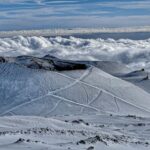
Winter routes may change due to snow. And on days with poor visibility, guides adjust safely to keep you seeing meaningful scenery while staying within conditions.
That flexibility is a good sign. It usually means you’ll still get a solid Etna experience, even if the cave stop or route specifics shift.
Value check: $81 is mostly about what’s included
For $81 per person, you’re paying for much more than a guided walk. You’re getting:
- pickup and drop-off in Catania center and Trecastagni
- a naturalistic guide (English and Italian)
- included trekking gear and extra layers
- a full day structured around key volcanic zones
Food and drinks are not included, so you do pay for lunch/snacks you buy along the way. But the tour sets you up with the chance to buy a sandwich locally before you climb, which is better than doing it at the last second.
This is strong value if you’re the kind of traveler who hates wasting time figuring out transport and gear.
Practical tips before you go
- Bring comfortable basics even if shoes and jackets are provided
- Pack a hat and sunscreen; altitude can be sneaky
- Expect wind and cold at higher points
- Skip heavy luggage; the tour doesn’t allow luggage or large bags
- Bring only what you’ll use on the excursion, and avoid items like laptops
If you want your day to feel smooth, plan for dusty volcanic ground. Wear layers you can adjust, and bring socks you’re comfortable walking in.
Should you book this Mount Etna trekking tour?
Book it if you want an Etna day with knowledgeable naturalistic guides, fewer crowds, and a route that includes real variety: Silvestri Craters, Valle del Bove, a lava cave (when conditions allow), and the playful lava sand descent.
Think twice if you’re not comfortable with hiking at high altitude, or if you’re sensitive to wind and cold. Also, if you have any health limitations mentioned as not suitable, this isn’t the right choice.
If you’re ready to trade lounging for geology, views, and a genuinely hands-on volcanic experience, this is one of the best ways to do Etna from Catania without making the day complicated.
Catania: Mount Etna Trekking Tour Beyond the Tourist Trails
FAQ
How long is the Mount Etna trekking tour?
It’s scheduled for 7 hours.
Where does the tour start and end?
Pickup and drop-off are in Catania city center, with the meeting point listed at McDonald’s.
Is transport included?
Yes. The tour includes van transport from Catania toward the mountain area and back to the meeting point.
What gear is included?
You’ll receive trekking sticks and shoes, plus an extra warm jacket and a rain jacket.
Is lunch included?
Food and drinks are not included in the tour price. Participants can buy a locally-prepared sandwich before the hike, and there are breaks with options to purchase items.
Does the tour include a lava cave?
A lava cave visit is part of the experience, but it isn’t possible in the case of high tremors and eruptions, even if the eruption has finished.
What languages are the guides?
The live tour guide is available in Italian and English.
What’s the cancellation policy?
Free cancellation is available up to 24 hours in advance for a full refund.
You can check availability for your dates here: