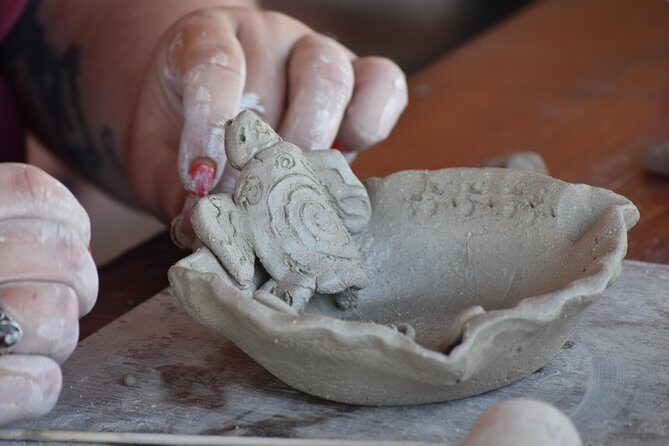
If you want a Zakynthos activity that is more than another photo stop, this ceramic workshop at Adamieion Ceramic Art Studio is a great pick. You’ll spend about 3 hours with Dionysia, making two pieces (a turtle plus one free-form item), then your ceramics get kiln-fired and glazed so you can collect them about 72 hours later.
What I like most is the mix of hands-on instruction and the relaxed country setting. You’re working outdoors (olive trees and vineyards nearby), starting with time in the gallery shop so you can get ideas from Dionysia’s own ceramic style.
One thing to plan for: the session can run through late morning into early afternoon, and the studio area doesn’t offer an easy place for food. Bring some snacks just in case, even though you’ll get water and hot drinks.
- Key Things to Know Before You Go
- Where This Workshop Really Happens: Adamieion Studio in Zakynthos Countryside
- The Morning Start: Gallery Browsing and Inspiration Before the Clay
- Meet Your Teacher: Dionysia’s Approach and Why It Works
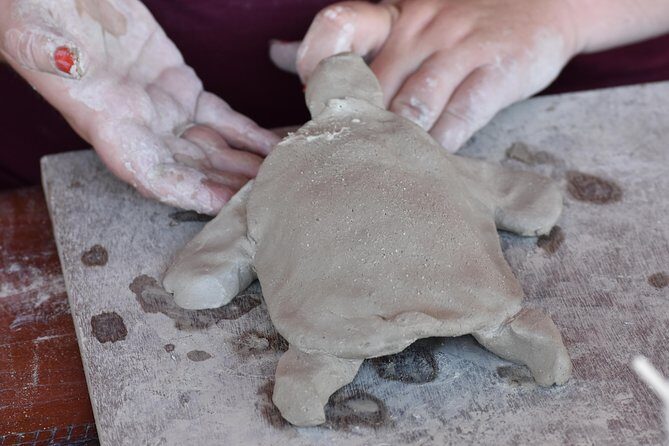
- The Two-Piece Plan: Turtle Plus a Free-Form Second Creation
- What You Actually Do During the 3 Hours
- Drying, Glazing, and Kiln Time: Waiting 72 Hours for the Real Results
- After the Workshop: Farm Walk and Olive-Tree Views
- Price and Value: Is .54 Worth It?
- Logistics That Matter: Getting There and Timing Your Day
- What to Expect When You Collect Your Ceramics
- Who This Workshop Is Perfect For
- A Balanced View: The One Possible Downside to Keep in Mind
- Cancellation and Weather: You’re Not Left Hanging
- Final Tips to Make Your Day Smooth
- Should You Book This Ceramic Workshop in Zakynthos?
- FAQ
- How long is the ceramic making experience in Zakynthos?
- How much does the workshop cost?
- Where does the experience start?
- What language is the workshop offered in?
- What’s included in the price?
- When will the ceramics be ready?
- Is private transportation included?
- How many people are in each workshop?
- What is the cancellation policy?
- More Tour Reviews in Zakynthos
Key Things to Know Before You Go
 1 / 9
1 / 9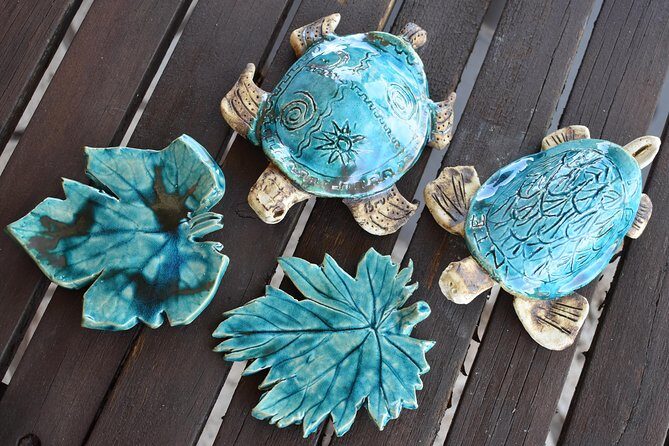 2 / 9
2 / 9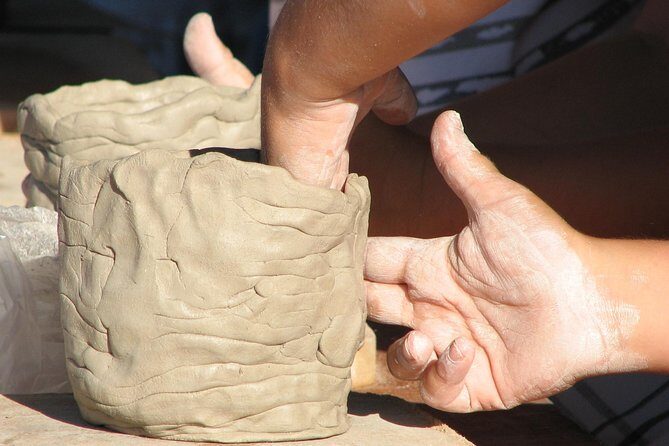 3 / 9
3 / 9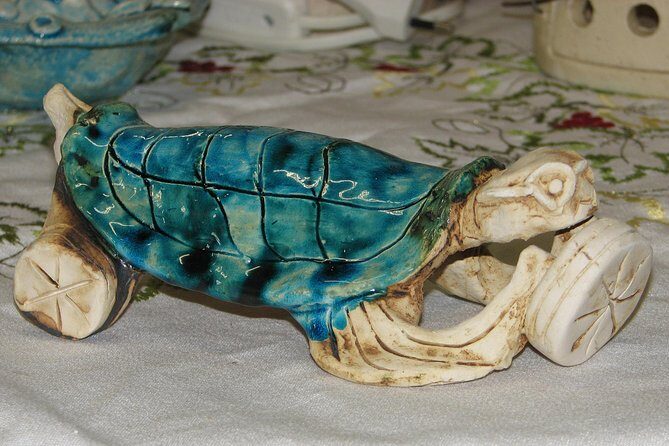 4 / 9
4 / 9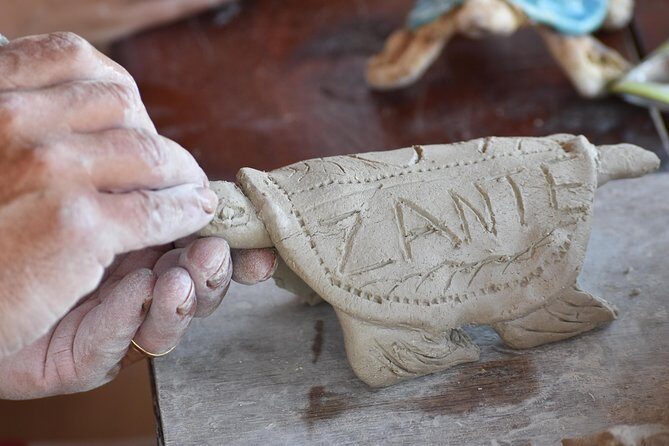 5 / 9
5 / 9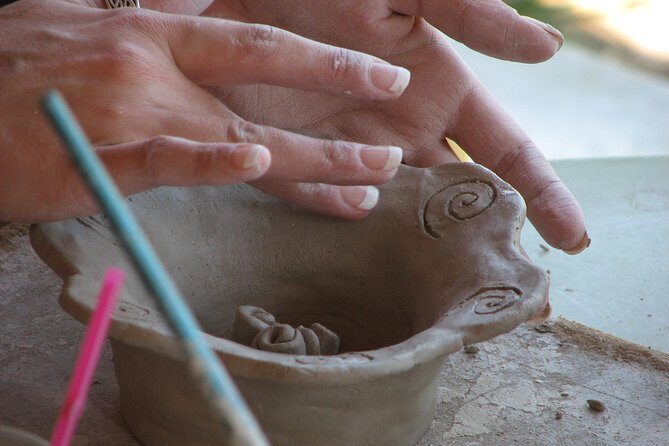 6 / 9
6 / 9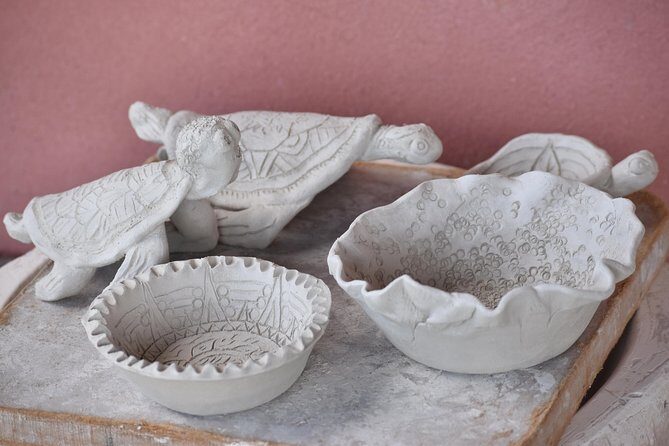 7 / 9
7 / 9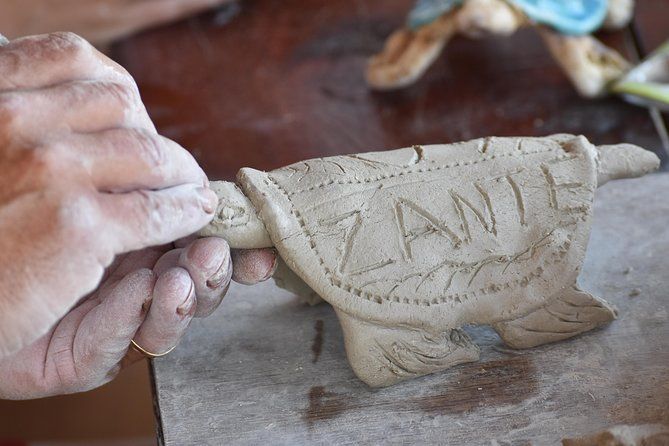 8 / 9
8 / 9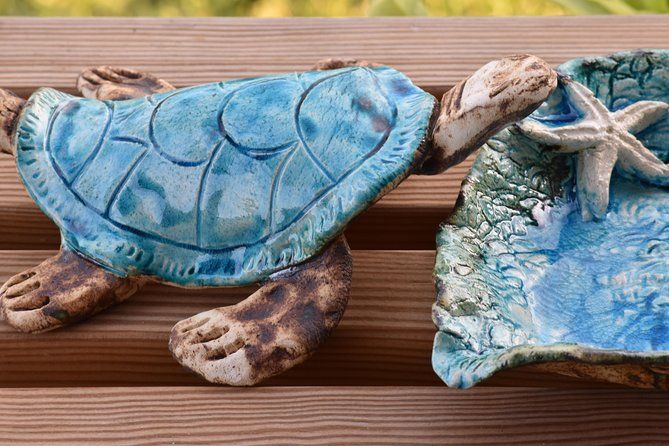 9 / 9
9 / 9- You make two pieces: the standard set is a turtle and a second piece you design (bowl, tile, or something more freestyle).
- It’s guided, not rushed: Dionysia teaches you how to work with clay and helps you shape and decorate your ideas.
- Your work is fired later: you dry the pieces and then Dionysia glazes and fires them, ready in about 72 hours (weather and kiln schedule can affect timing).
- Small group size: up to 12 travelers per booking, so you’re not lost in a crowd.
- A peaceful farm walk: after the workshop you can enjoy the grounds and see some of the oldest olive trees in Zakynthos.
- No private transport included: you’ll need to handle getting there yourself.
Where This Workshop Really Happens: Adamieion Studio in Zakynthos Countryside
The meeting point is ADAMIEION Ceramic Art Studio, Marineika 177, Zakinthos 291 00, Greece. This matters because the experience is not a city studio with parking-lot vibes. You’re going out to the countryside, surrounded by farm land, olive trees, and vineyards—exactly the kind of place that makes the time with clay feel like a real break.
The group stays small (a maximum of 12 people), and the class is offered in English. Most travelers can participate, and service animals are allowed. If you’re traveling with kids, children must be accompanied by an adult, and for children under 7, at least one adult has to attend and pay for the workshop too.
Practical tip: try to arrive 5–10 minutes early. It’s not a “sprint to your seat” event; it’s built for learning and settling in.
You can also read our reviews of more tours and experiences in Zakynthos.


The Morning Start: Gallery Browsing and Inspiration Before the Clay
Before you sit down with the clay, you’ll first visit the studio’s gallery/shop. This is more than a quick look-around. It helps you see what Dionysia’s work looks like up close—how shapes are formed, and how decorations come together.
For first-timers, this step is surprisingly useful. You might think you want to copy a style, or you might use it as a jumping-off point for something more personal. Either way, you’re starting with ideas you can hold in your head when the hands-on part begins.
Meet Your Teacher: Dionysia’s Approach and Why It Works
Dionysia is the key to making this feel like a genuine craft class rather than a souvenir factory. In many experiences like this, the teacher is either hands-off or they talk at you. Here, the tone you’ll typically get is supportive and patient, with real guidance on the steps.
From traveler feedback, people often mention that the instructions are clear and the teacher helps you create something that looks like your own vision—even if you’ve never worked with clay before. That’s a big deal. Clay can be intimidating if you think it’s only for artists. The vibe here is more like: you’ll be guided to success.
One balanced note: there is at least one review that complained about the instructor speaking for a long time and negative wording when a mistake happened. That sounds like the exception, but it’s worth knowing if you’re someone who wants the class to focus more on doing than talking.
The Two-Piece Plan: Turtle Plus a Free-Form Second Creation
The standard project includes two pieces. First, you make a turtle. Second, you create a more free-form item—examples mentioned include a bowl or a tile, though the exact style and decoration are up to your imagination.
This two-piece structure is smart for travelers. The turtle gives you a recognizable shape and a clear starting point. Then the second piece lets you customize—so you’re not stuck producing the same exact souvenir as everyone else.
Also, because you’re not on a tight “paint for 20 minutes” schedule, you can actually spend time getting the form and decoration to feel right. Several travelers described it as relaxed and not rushed.
What You Actually Do During the 3 Hours
The class time is roughly 3 hours (on average). You’ll:
- get introduced to clay and the tools,
- learn how to shape and handle your pieces,
- build and decorate both items based on guidance and your own ideas,
- leave the ceramics to dry under the sun.
Then comes the part you don’t do: Dionysia glazes and fires your creations later. Your job during the workshop is shaping and getting everything to the drying stage.
You should plan around the fact that you’re not leaving with finished ceramics in-hand the same day. That’s the tradeoff—and also the reason the final product can look properly made.
Drying, Glazing, and Kiln Time: Waiting 72 Hours for the Real Results
Here’s the big timeline detail: your pieces stay to dry under the sun first. After that, Dionysia will glaze and fire them. They’re ready from the kiln about 72 hours (3 days) after the workshop, depending on weather and kiln firing schedule.
Why this matters for your trip planning:
- If you’re leaving soon after the class, you’ll need to time your booking so you can collect the ceramics.
- Many travelers treat the waiting period like part of the souvenir experience. You get something more “real” than a mass-produced trinket because your item goes through the full ceramic process.
Some guests also reported that delivery to a hotel can be arranged for an extra fee, and a couple of travelers mentioned timing help for flights. The key takeaway: ask ahead about collection versus delivery if your schedule is tight.
After the Workshop: Farm Walk and Olive-Tree Views
Once the clay session ends, you can take a walk in the farm surroundings. This is where the workshop stops feeling like a classroom and turns into a countryside break.
Travelers specifically mention admiring some of the oldest olive trees in Zakynthos, plus the overall garden-and-farm setting. If you like quiet moments with good light, you’ll probably enjoy this part more than you expect.
A few reviews also mention small food touches on-site—like bread and olive oil, plus homemade lemonade in one case. Even if you don’t rely on food being a formal part of the day, it’s still a pleasant add-on if it’s offered during your visit.
Price and Value: Is $66.54 Worth It?
At $66.54 per person for an about-3-hour workshop, the value comes from three things:
- you’re making two pieces (not one quick craft),
- your items get kiln-fired and glazed afterward (which you can’t do yourself on a vacation),
- you’re getting both instruction and a scenic rural setting.
If your alternative is buying a souvenir in town, this is a different category. You’ll take home something you made with guidance. That usually costs more than a basic shop purchase, but it also becomes a memory you can touch every time you see it.
The small group size (up to 12) helps the price feel more fair because attention isn’t spread too thin.
Logistics That Matter: Getting There and Timing Your Day
Private transportation isn’t included, so you’ll need to plan your ride. Some travelers recommend hiring a car to make the countryside easy. Others have mentioned walking from Zante town, though it can be about an hour if you’re okay with that kind of trek.
Navigation tip from traveler feedback: use Google Maps rather than Apple Maps, because at least one group found Apple Maps routed them onto off-road paths.
Timing-wise, note that the session can run from late morning into early afternoon (one review mentioned 11:00am–2:00pm). Because you might not have food options nearby, consider bringing snacks. You will be offered bottled water and coffee and/or tea, but snacks can save you from getting hangry before the creative part finishes.
What to Expect When You Collect Your Ceramics
You’ll collect your ceramics after they come out of the kiln, around 72 hours later. In most cases, you should treat it as 3 days and plan for some flexibility depending on weather and firing schedule.
If you’re staying near the studio, collection is simpler. If you’re not, ask about delivery options early. Some travelers mentioned hotel delivery for an extra cost, and a couple mentioned coordinating collection before travel days.
Who This Workshop Is Perfect For
This is a strong fit if you:
- want something more personal than a standard island tour,
- enjoy slow activities and want a break from busyness,
- like making souvenirs that aren’t identical to everyone else’s.
It also works well for mixed groups, including adults and children, because the class caters across ages and abilities. If you’re an experienced artist, you’ll likely enjoy having a skilled teacher guide technique. If you’re a total beginner, you’ll still get structure and help so you don’t feel lost.
A Balanced View: The One Possible Downside to Keep in Mind
Most feedback points to a calm, friendly, skilled workshop. Still, one traveler felt it wasn’t worth the money because the teacher talked for a long time and used harsh wording when mistakes happened.
So I’d frame your expectation like this: you’ll learn technique through a mix of explanation and hands-on time. If you strongly prefer constant “show me your hands” demonstration, you might want to ask more questions during the class.
Also remember: the experience requires good weather. That’s not a small detail—because drying and kiln scheduling depend on conditions. The good news is the cancellation policy handles this with care (more on that next).
Cancellation and Weather: You’re Not Left Hanging
You can cancel for free up to 24 hours before the experience start time for a full refund. If you cancel less than 24 hours before, the amount paid won’t be refunded.
If the experience is canceled due to poor weather, you’ll either get offered a different date or a full refund. The fact that they plan around weather is important for a ceramics workshop that depends on drying outdoors.
Final Tips to Make Your Day Smooth
- Bring a small snack, especially if your session runs through the lunch window.
- Arrive 5–10 minutes early so you can start calmly.
- If you want your finished pieces before a flight, book early in your trip and coordinate collection versus delivery.
- If you’re driving, plan for countryside navigation and consider double-checking your map app.
Should You Book This Ceramic Workshop in Zakynthos?
I think you should book it if you want a real, hands-on Zakynthos experience with expert guidance, a peaceful setting, and take-home results that don’t feel generic. The price looks fair for what you get: two pieces, real firing and glazing afterward, and a small-group class with a scenic farm walk.
Skip it only if you need a strictly hands-off activity, you can’t handle the 3-day wait, or you’re worried about the countryside logistics. If you’re flexible on timing and ready to get a little clay on your hands, this is one of the more memorable ways to spend a few hours on the island.
Ceramic Making Experience in Zakynthos
FAQ
How long is the ceramic making experience in Zakynthos?
It lasts about 3 hours.
How much does the workshop cost?
The price is $66.54 per person.
Where does the experience start?
You meet at ADAMIEION Ceramic Art Studio, Marineika 177, Zakinthos 291 00, Greece.
What language is the workshop offered in?
The workshop is offered in English.
What’s included in the price?
Included are local taxes, the ceramic workshop, clay and tools/materials, firing after the workshop, bottled water, coffee and/or tea, and a walk in the farm.
When will the ceramics be ready?
Your ceramics will be ready from the kiln about 72 hours (3 days) after the workshop, depending on weather and the kiln firing schedule.
Is private transportation included?
No. Private transportation is not included.
How many people are in each workshop?
There is a maximum of 12 travelers per booking.
What is the cancellation policy?
You can cancel for free up to 24 hours in advance for a full refund. If canceled less than 24 hours before, the amount paid isn’t refunded.