
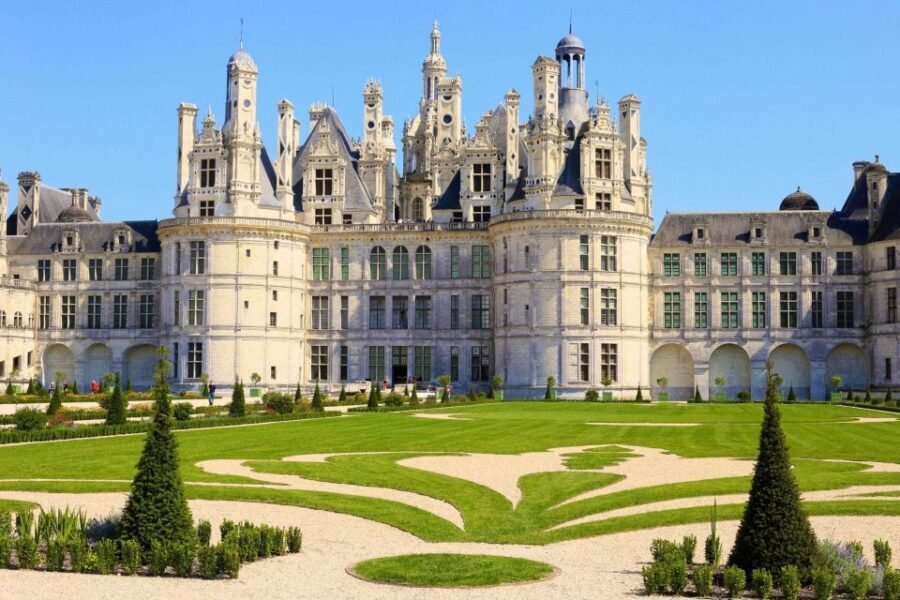
Château de Chambord is one of those France stops that looks unreal in photos and still bigger in real life. With this entry ticket you get access to the castle’s main visit route, plus temporary exhibitions, and you also get skip-the-line entry to the ticket counter (security lines still apply).
I like that this is a practical, self-paced visit: you can spend as long as you want in the rooms and move through the castle at your own pace. I also like the history support on-site, especially the 20-minute film with English, Italian, Spanish, and German translations, plus a free visitor guide.
The one catch: you won’t have a live guide included. If you really want someone to explain everything turn-by-turn, you’ll need to rely on the on-site media and maps, and you should also plan for a lot of stairs.
- Key things to know before you go
- Why Chambord feels special even when you visit on your own
- Price and what you really get for the money
- Timing rules that can make or break your visit
- Getting there and parking without wasting your day
- Skip-the-line: what it skips, and what it doesn’t
- Entering the castle: the route, the rooms, and the temporary exhibits
- The history support: film, guide, and your best “self-guided” strategy
- French Renaissance on full volume: towers, domes, ceilings, and fireplaces
- The double-helix staircase: the moment most people remember
- Views from upper levels: where the castle rewards your patience
- How long to plan: a realistic schedule that won’t leave you wrecked
- The park and gardens: huge grounds, plus a few fun extras
- Tickets, ID checks, and free entry rules (so you don’t get stuck)
- Accessibility and comfort: expect stairs, lots of them
- Value check: when this is a smart booking
- Who should book this ticket, and who should choose something else
- Should you book this ticket for Château de Chambord?
- FAQ
- What does skip-the-line mean for this Chambord ticket?
- How long is the ticket valid?
- What time should I plan to enter the castle?
- When do the formal gardens close?
- Are temporary exhibitions included?
- Is a guide included with the ticket?
- What is the meeting point for this activity?
- Do I need ID?
- Is there free entry for under 18s and EU citizens under 26?
- Is the film available in English?
- How do I handle parking?
- More Tickets in Loire Valley Chateaux
- More Tour Reviews in Loire Valley Chateaux
Key things to know before you go
 1 / 10
 2 / 10
 3 / 10
 4 / 10
 5 / 10
 6 / 10
 7 / 10
 8 / 10
 9 / 10
 10 / 10
- Skip-the-line is limited to the ticket counter only, not security.
- Last access matters: enter the castle up to 30 minutes before closing, and the formal gardens close 30 minutes before.
- Self-guided route with separate entry/exit means you should follow the signage and don’t expect a free wandering loop.
- Plan for size: the castle visit area includes 60+ rooms and massive interior complexity.
- On-site history tools include a 20-minute multi-language film and a free visitor guide.
- Non-refundable tickets make timing and planning important.
Why Chambord feels special even when you visit on your own
I love that Chambord doesn’t require you to be an expert to enjoy it. Even if you only care about architecture, the castle gives you enough to keep your brain busy for hours. Up close, it’s tall, ornate, and unmistakably “French Renaissance”—but it’s also a place where you can get lost in staircases and viewpoints without trying.
And the practical part is good, too. This ticket is built for people who want to arrive, scan in, and get walking. No group choreography, no waiting around for a tour start time, and you can move when you feel like moving.
You can also read our reviews of more tours and experiences in Loire Valley Chateaux


Price and what you really get for the money
The price is $24 per person, and the best value piece here is what’s included: skip-the-line entry to the ticket counter and access to temporary exhibitions. Those two perks can matter on busy days, because the ticket counter is one of the places where time gets stolen from your itinerary.
You do not get a live guide, so you’ll be doing most of the explaining via the on-site film and materials. If you’re happy to explore independently (or you like using an audio guide like the iPad-style options mentioned by visitors), this is a straightforward deal.
Timing rules that can make or break your visit
Chambord has strict closing flow, and I’d treat it like a clock, not a suggestion. Last access is 30 minutes before the castle closes, and the formal gardens close 30 minutes before as well.
Also, the visit experience runs on a designated route with a separate entry and exit. That’s good for keeping crowds moving, but it means you shouldn’t plan to “pop out” and return to the route later. Commit to the route and follow the signage.
Getting there and parking without wasting your day
Parking requires advance action. You’ll pay for parking on arrival at automatic terminals in the car parks, and then you should allow about 10 minutes’ walk between the car parks and the entrance.
One more real-world note: security checks at the entrance can add delays. Even with skip-the-line for the ticket counter, give yourself slack so you’re not sprinting through gates at the end of the morning.
More Great Tours NearbySkip-the-line: what it skips, and what it doesn’t
This is the biggest benefit people notice—then the biggest misunderstanding, too. The ticket includes skip-the-line to the ticket counter only. Security checks still have their own lines, so you’ll still want to arrive with a little buffer.
In practical terms, you should expect the biggest time savings if you arrive during peak arrival windows. If you arrive later in the day, lines may be shorter anyway—but the prebook still keeps you from being stuck at the counter when you just want to start walking.
Entering the castle: the route, the rooms, and the temporary exhibits
Once you’re past entry, the castle visit is routed. You’ll work through the designed path inside and then exit through the planned exit, so you get a smooth flow instead of open wandering.
You also get access to more than 60 rooms and the temporary exhibitions happening during your visit. Reviews from past visitors often mention how many rooms and stairways there are, so if you enjoy “keep finding new things” visits, you’re in the right place.
The history support: film, guide, and your best “self-guided” strategy
Chambord gives you history context in two main ways: a 20-minute film and a free visitor guide. The film includes translations into English, Italian, Spanish, and German, so it’s easier for most people to connect with what they’re seeing.
My advice: don’t try to read everything at every stop. Instead, use the film or guide to build a mental framework, then walk until the details start clicking—especially the way the architecture looks like it’s doing something clever on purpose.
Visitors also recommend extra on-site options like an iPad-style guide (sold separately). If you’re the type who likes guided explanations but still wants independence, those tools can be worth it.
French Renaissance on full volume: towers, domes, ceilings, and fireplaces
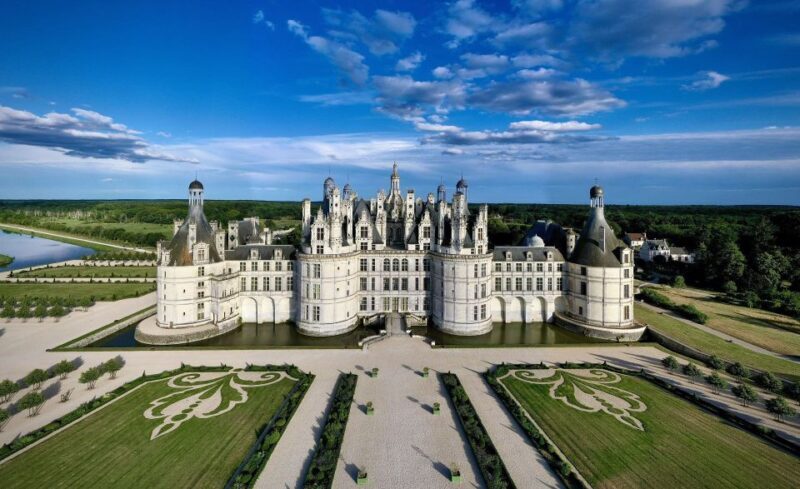
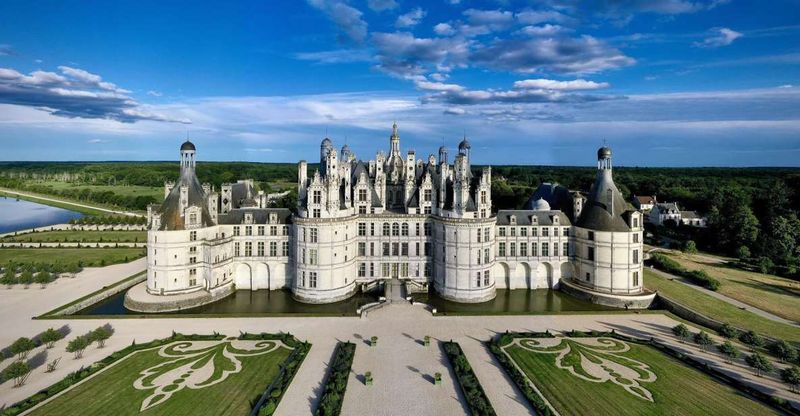
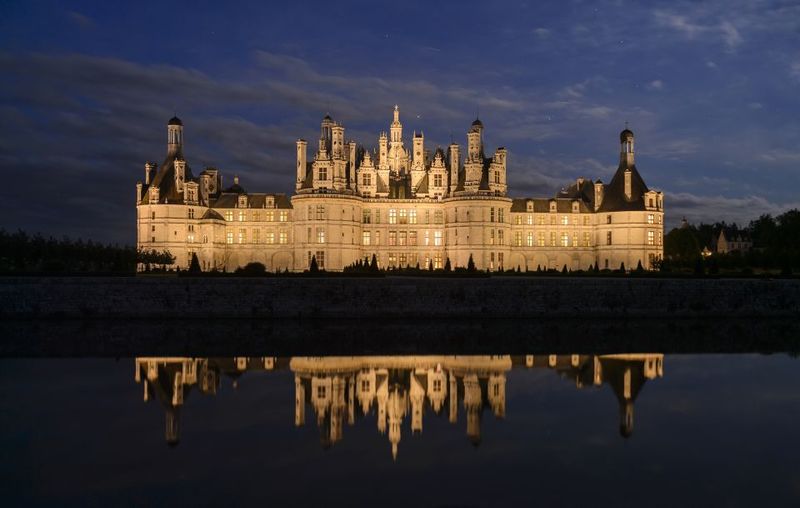
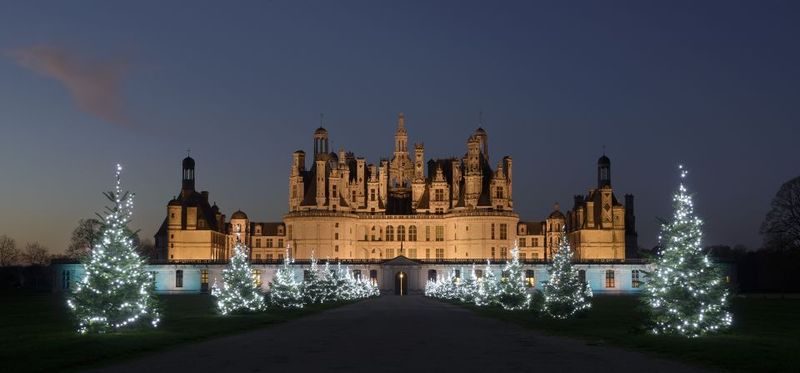
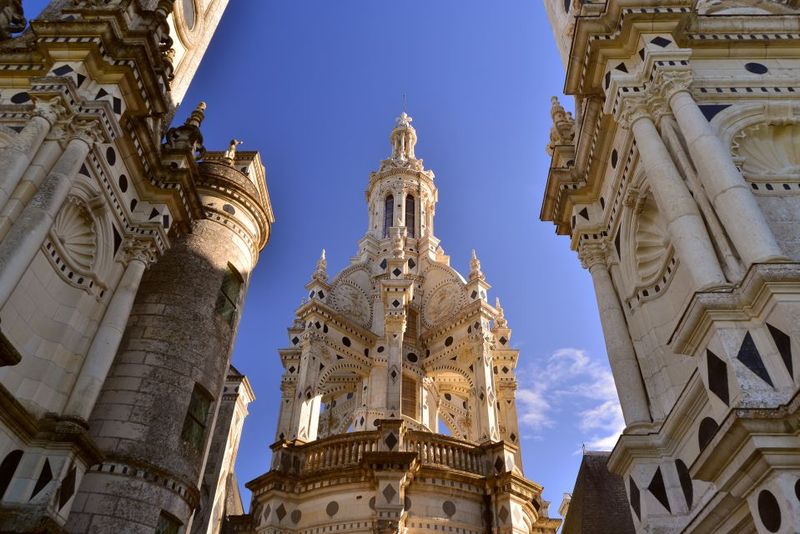
Chambord is famous for its distinctive French Renaissance architecture, and the ticket helps you see why. The castle’s scale comes through fast: you’re looking at an interior that includes hundreds of rooms, more than 80 staircases, and an extraordinary number of features like 365 fireplaces.
Even if you don’t memorize numbers, you’ll feel the complexity. The towers, high ceilings, pointed domes, and graceful pinnacles create visual layers. That’s why people keep circling back—because your brain keeps discovering new angles.
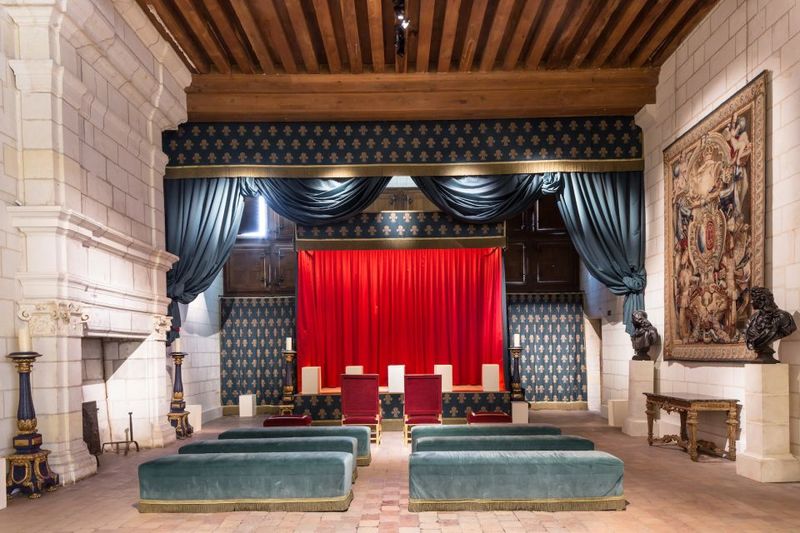
One thing to keep your expectations realistic: interior rooms may feel more austere than the big exterior fantasy. Several visitors note that while the castle is breathtaking outside, the interior display can feel limited in terms of furnishings or restoration. That doesn’t ruin the visit, but it changes how you should experience it: focus on architecture, viewpoints, and layout rather than expecting a fully furnished palace museum.
The double-helix staircase: the moment most people remember
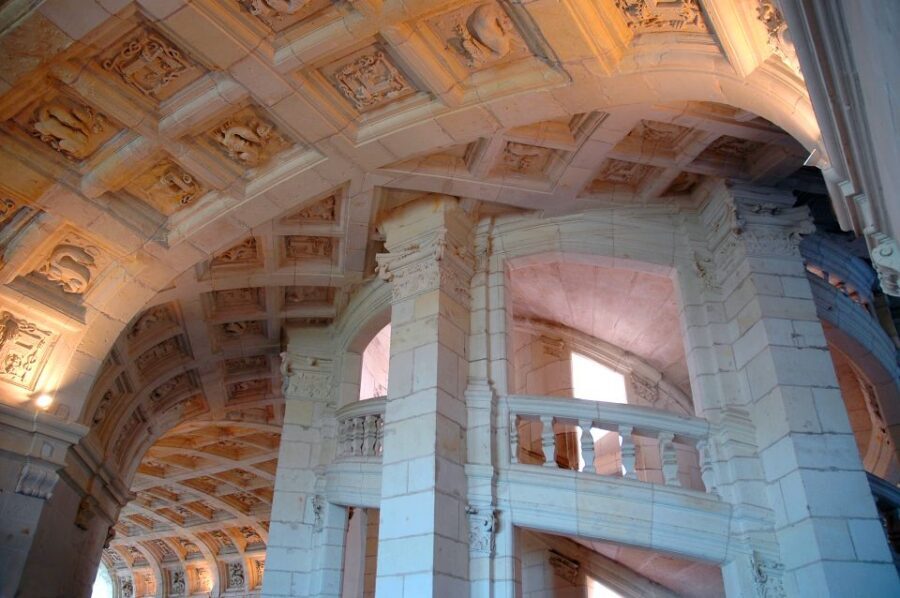
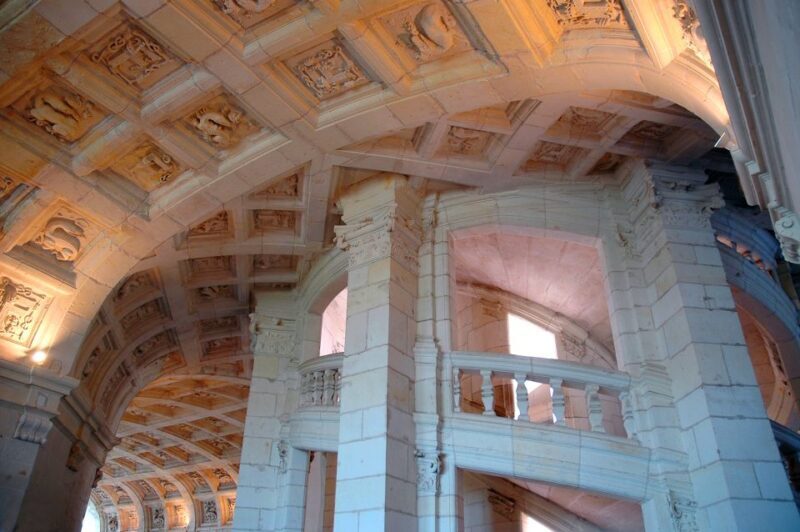
If you only remember one thing, make it the double-helix staircase—two staircases going around on the same side without crossing. This is one of those design ideas that feels almost impossible until you’re standing near it.
What makes it satisfying is that you can’t just look at it once. You’ll likely want to move to get a different perspective, because the structure reads differently from below versus above. It’s a “walk around it” kind of attraction, and Chambord gives you the space to do that.
Views from upper levels: where the castle rewards your patience
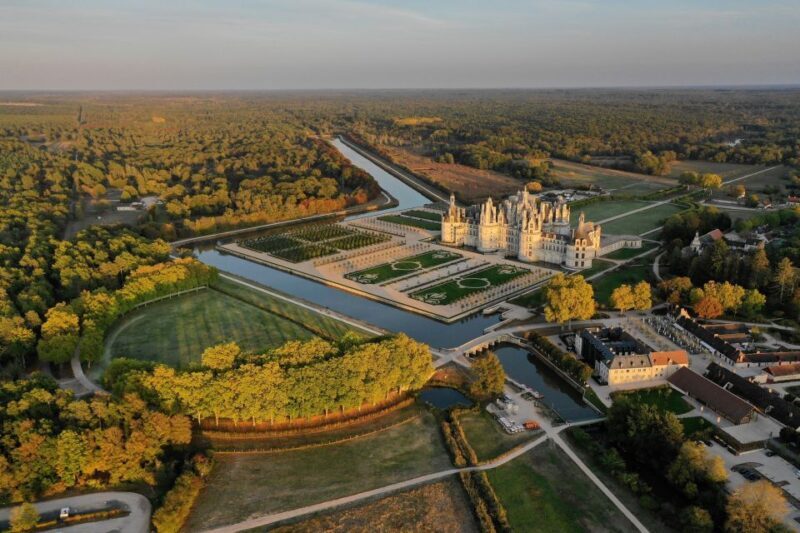
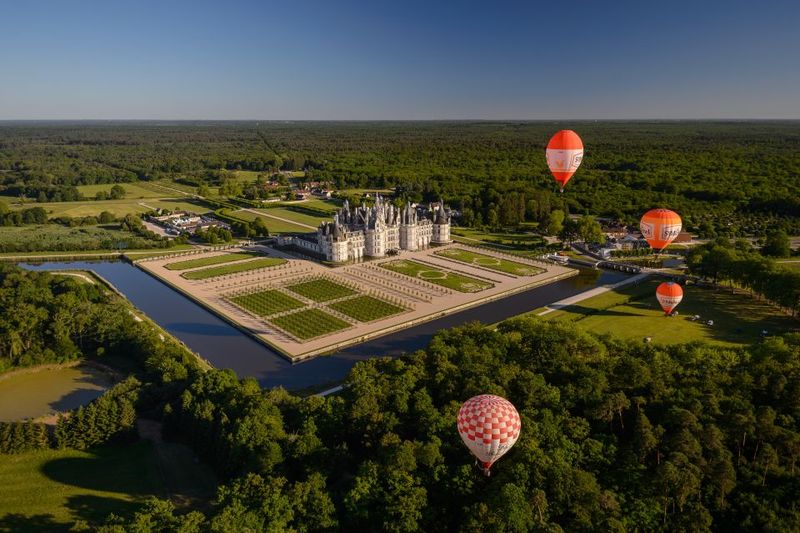
A lot of visitors point to balconies and upper viewpoints, and that makes sense. Once you’re higher up, the castle connects to the landscape and gardens around it, which helps you see the bigger plan.
If you’re the type who likes photos, plan for a few pauses. Don’t rush the upper areas just to get it done. The views are part of the point, and they’re also where you start to understand why Chambord feels like a stage set built for spectacle.
How long to plan: a realistic schedule that won’t leave you wrecked
A visit can be as short or long as you make it, but Chambord’s size means “quick stop” rarely stays quick. Many visitors recommend at least a couple of hours to take it in properly, especially if you want time for the film and to explore more than the first rooms you hit.
Here’s a simple way to think about your time:
- 1.5–2.5 hours for the main highlights and a few viewpoints
- 2.5–4 hours if you want to read more, catch the film, and slow down
Also, don’t forget the clock for the gardens. Since the formal gardens close 30 minutes before the castle, leaving them for the very end can trap you.
The park and gardens: huge grounds, plus a few fun extras
Chambord isn’t only the building. The park covers 5,000 hectares, and the grounds are part of why the castle feels so grand. Even if you don’t do every garden path, being outside with the scale of the estate around you changes the mood.
Visitors also mention that the property can be explored with added options like taking bikes around the grounds (bikes are a common “smart move” in a place this big). Another add-on some visitors call out is a horse show held twice a day for an extra charge.
The core ticket itself doesn’t include those extras, but it does give you the freedom to spend time outside as well as inside, as long as you respect the garden closing time.
Tickets, ID checks, and free entry rules (so you don’t get stuck)
This part matters. On-site ID checks apply, and the ticket categories depend on residency and age.
Here are the practical takeaways from the rules provided:
- Standard categories are listed for non-EEA and EEA reduced categories, with ID checked on-site.
- Free entry applies for visitors under 18 and EU citizens under 26 with photo ID, but this category still requires a ticket that is issued onsite.
- For EU citizens under 26: you’ll need a European Union residence permit and photo ID, and it’s for an individual visit.
- There are also seasonal free/discount rules for EU youth (6–17 and 18–25) depending on the month. From November to February, it’s free; from March to October, there’s a €3 reservation fee per person for those categories.
If this category affects you, arrive with the right documents. The most common travel frustration is thinking you qualify, then discovering the needed proof isn’t with you.
Accessibility and comfort: expect stairs, lots of them
Chambord is famously stair-heavy, and this ticket is for walking a lot of floors. The castle includes more than 80 staircases, so even if you’re not aiming for every level, expect stairs to be part of the experience.
Bring sensible shoes and plan for breaks. If you’re traveling with someone who tires easily, you’ll want to pace your route and choose a few priority viewpoints instead of trying to do everything.
Value check: when this is a smart booking
If you’re visiting during busier travel days, the skip-the-line part alone can feel like value. Prebooked tickets can save you the most annoying waiting—especially at the ticket counter—so you can focus on the castle rather than queuing.
I also think the temporary exhibitions access is a quiet value booster. It’s one way to keep the visit interesting beyond just the permanent architecture, especially if you’re there longer than the minimum.
And price-wise, it’s fairly positioned for a famous Loire Valley stop where the “main attraction” is the architecture itself. You’re paying for guaranteed entry plus friction reduction, not for a premium guided program.
Who should book this ticket, and who should choose something else
This ticket fits you if:
- You want a self-guided day at a top-tier Loire Valley château
- You’re into architecture, staircases, and viewpoints
- You like using the on-site film and guide to fill in details
You might choose something else if:
- You’re expecting a live guide (this ticket does not include one)
- You need flexible plans, since the ticket is non-refundable
- You’re hoping for a highly curated, commentary-style experience the whole way through
Also, a note about food and drinks: visitors mention cafés and restaurant options around the site. If you want a specific wine plan, the ticket info here doesn’t mention a wine tasting or included wine selection, so you’d likely need to arrange that separately.
Should you book this ticket for Château de Chambord?
Yes—if you’re going to Chambord anyway. Prebooking improves your odds of starting smoothly, and the included temporary exhibitions and history support help you get more out of the time you spend inside.
I’d only hesitate if you truly need a guided explanation from a person, or if your plans are so uncertain that non-refundable changes would stress you out. Otherwise, this is one of those “book it, then enjoy the walk” tickets.
If you want the best visit, arrive with documents ready for any free/discount category rules, keep an eye on the 30-minute last access window, and give yourself at least a couple of hours. Chambord rewards patience more than rushing.
Chambord: Entry Ticket to the Castle
FAQ
What does skip-the-line mean for this Chambord ticket?
It includes skip-the-line entry to the ticket counter only. You’ll still need to go through security checks, which may have lines.
How long is the ticket valid?
The ticket is valid for 1 day. You can check starting times for your visit day.
What time should I plan to enter the castle?
You need to use your last access by 30 minutes before the castle closes.
When do the formal gardens close?
The formal gardens close 30 minutes before the castle closes.
Are temporary exhibitions included?
Yes. The ticket includes access to temporary exhibitions.
Is a guide included with the ticket?
No. A guide is not included.
What is the meeting point for this activity?
Start your activity at Château de Chambord.
Do I need ID?
ID is checked on-site for the available ticket categories. If you’re eligible for free entry rules (such as EU residents under 26), you’ll need photo ID and the required documents listed in the rules.
Is there free entry for under 18s and EU citizens under 26?
Yes, free entry is listed for visitors under 18 and EU citizens under 26 with photo ID. This category still requires a ticket, which is issued onsite.
Is the film available in English?
The on-site 20-minute film is translated into English, Italian, Spanish, and German.
How do I handle parking?
You pay for parking upon arrival at automatic terminals in the car parks. Then allow about 10 minutes’ walk to the entrance, and expect possible delays due to security checks.
You can check availability for your dates here: