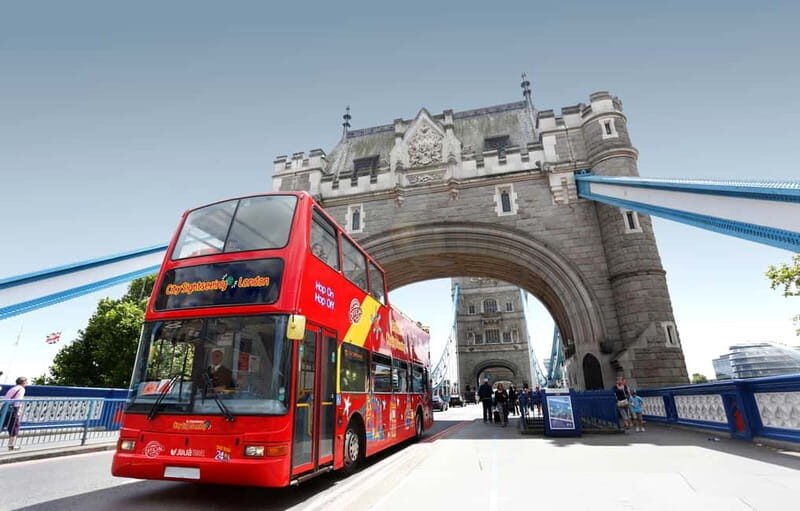
I’m reviewing the City Sightseeing London Hop-On Hop-Off Bus & Bookable Extras, a simple way to cover big London landmarks without wrestling with routes all day. You get an open-top ride, on-board audio in 11 languages, and an AI-powered app with live bus tracking to help you time your hops.
What I like most is the practical setup: lots of stops across multiple areas, plus frequent service so you’re not stuck waiting. I also like that the ticket choices bundle smart add-ons like the Thames river cruise (and even a night option on longer passes).
One thing to consider: the river cruise and shuttle details vary by ticket type, and a few travelers noted confusion about what was included. So before you head to the pier, double-check your exact cruise option and keep your ticket handy for verification.
- Key highlights at a glance
- Hop-On Hop-Off in London: What You’re Actually Getting
- Routes and the Shuttle Plan: How Not to Get Stuck
- Red Route: Westminster, Big Ben, St Paul’s, Tower of London, Buckingham Palace
- Green Route: From the London Eye Back to Euston and Russell Street
- Blue Route: Kensington, Harrods, and the V&A Area
- Timing and Frequency: When Buses Are Frequent vs When You Wait
- App and Live Tracking: The Fastest Way to Find Your Next Bus
- On-Board Audio: 11 Languages, Headphones Included
- Thames River Cruise Extras: One-Way vs Return Depends on Your Pass
- Route Master and Night Tour: Extras for Longer Stays
- What the Stop Spacing Feels Like in Real Life
- Traffic and Detours: The One Reality Check
- Accessibility, Rules, and Baggage Limits
- Price and Value: Why This Can Be a Smart First-Timer Move
- Who Should Book, and Who Might Skip It
- Common Snags to Plan For Before You Go
- Should You Book This London Hop-On Hop-Off Bus?
- The Best Of London!
- More City Tours in London
- More Tour Reviews in London
Key highlights at a glance
 1 / 10
 2 / 10
 3 / 10
 4 / 10
 5 / 10
 6 / 10
 7 / 10
 8 / 10
 9 / 10
 10 / 10
- AI-powered live bus tracking app so you can plan hops without guessing
- Three routes with 54 stops covering Westminster, the City, Tower area, and Kensington
- Thames cruise options that depend on whether you pick 24, 48, or 72 hours
- Audio in 11 languages with headphones included, plus a kids route booklet
- High-frequency service on the main route with clear first/last bus times
- Night tour for 72-hour ticketholders with departures near Green Park Station

👉 See our pick of the We Rank The 15 Best Shopping & Market Tours In London
Hop-On Hop-Off in London: What You’re Actually Getting
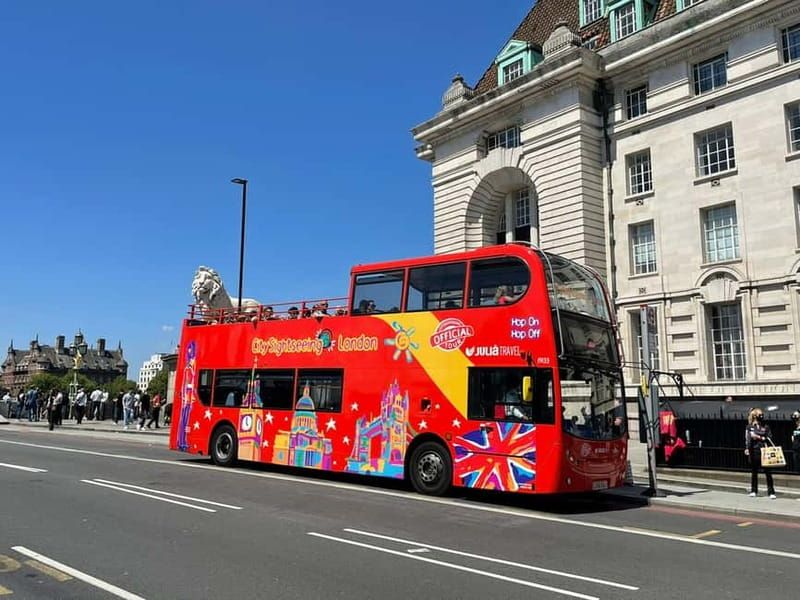
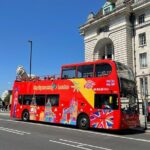
This tour is built for one goal: letting you see the major highlights across London at your pace, without locking yourself into a walking-only day. You buy a time window (24, 48, or 72 hours), then ride the buses as much as you want along the route(s) you choose.
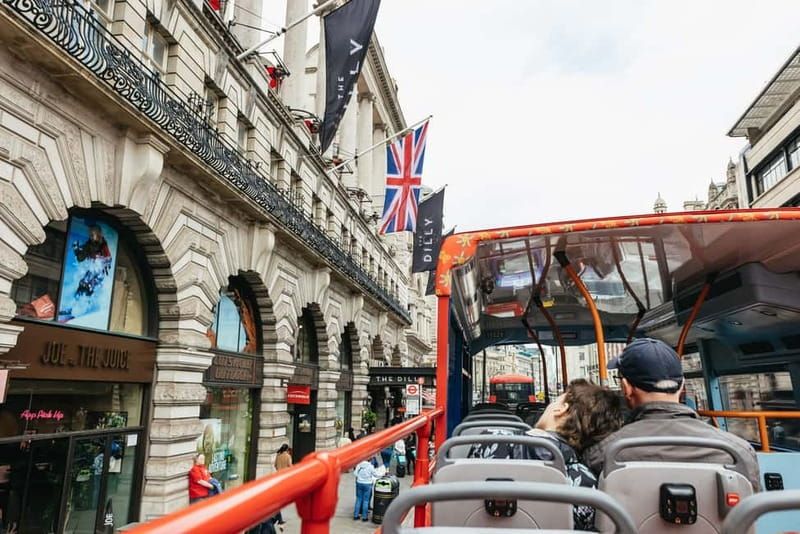
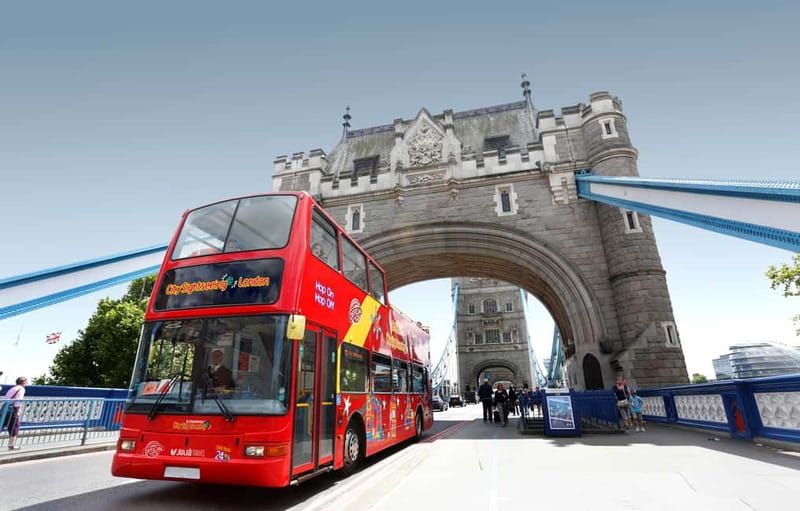
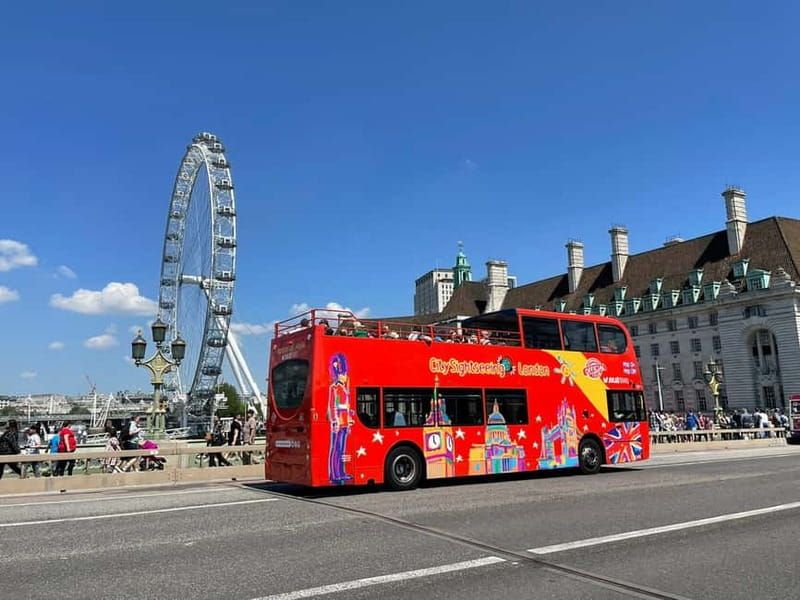
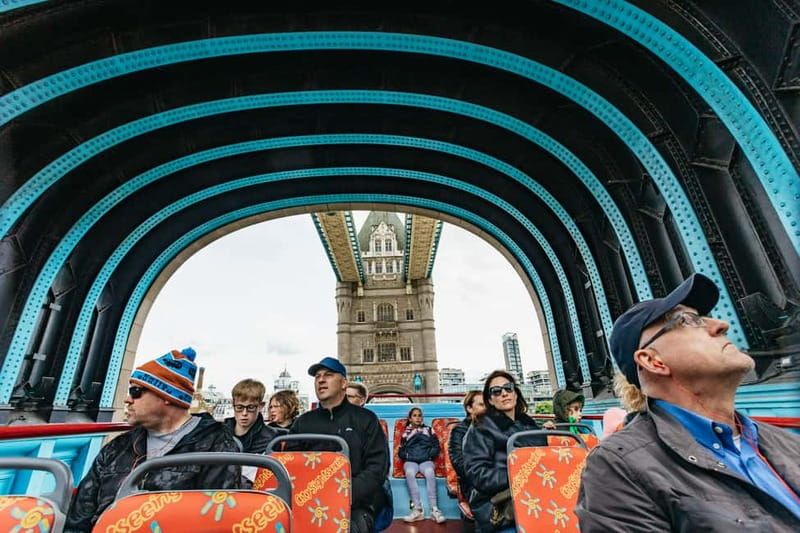
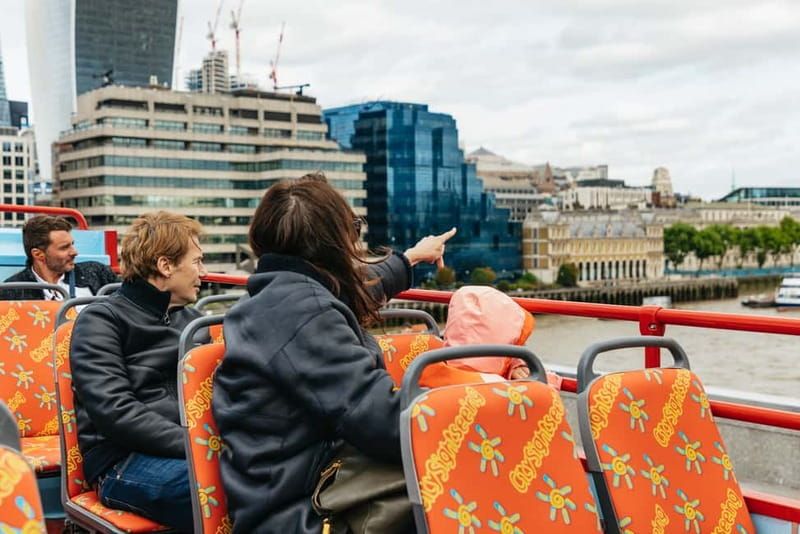
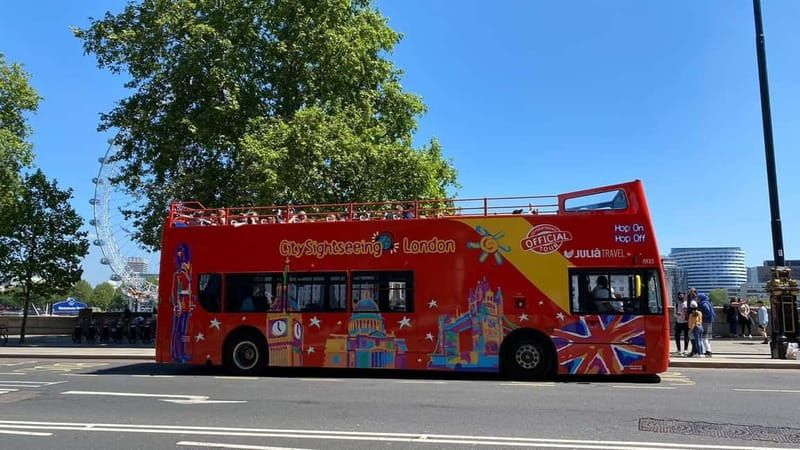
The buses are open-top, so on a clear day you get that classic London street-to-skyline view from the top deck. And since you’re riding a loop of stops rather than a one-and-done route, you can hop off, roam, and return when you’re ready.
Value matters here. At around $33 per person, you’re paying for transport between scattered landmarks plus audio commentary so you’re not just staring out the window. For many first-timers, it’s less about “one tour” and more about turning your ticket into a convenient moving base.
You can also read our reviews of more city tours in London


Routes and the Shuttle Plan: How Not to Get Stuck
London’s big landmarks are spread out, which is where the three-route system helps. The Red Route is your main spine for the Westminster-to-Tower-to-Buckingham Palace corridor. The Green Route and Blue Route fan out toward other neighborhoods, including the Euston/Camden-ish side (via Euston and Russell Street areas) and the Kensington/V&A area.
What you may not expect is the importance of timing when routes overlap. The info notes a Green Route shuttle that connects lines, and some travelers found it took a moment to understand how the red, green, and blue routes work in practice. Once it clicks, it’s a lot less stressful than planning multiple separate buses.
Practical tip: download the app as soon as you can. Several travelers specifically said it helped them find the right stops fast, especially when signage is confusing or you arrive during busy times.
Red Route: Westminster, Big Ben, St Paul’s, Tower of London, Buckingham Palace
If you only do one route, this is the one. The Red Route is packed with the names people come to London for, and the stop list shows a clear path through the city’s most famous postcard areas.
Key stops you’ll pass (and can hop off at) include:
- Westminster Bridge (Big Ben area) and the Houses of Parliament zone
- Horseferry Road and Victoria Embankment
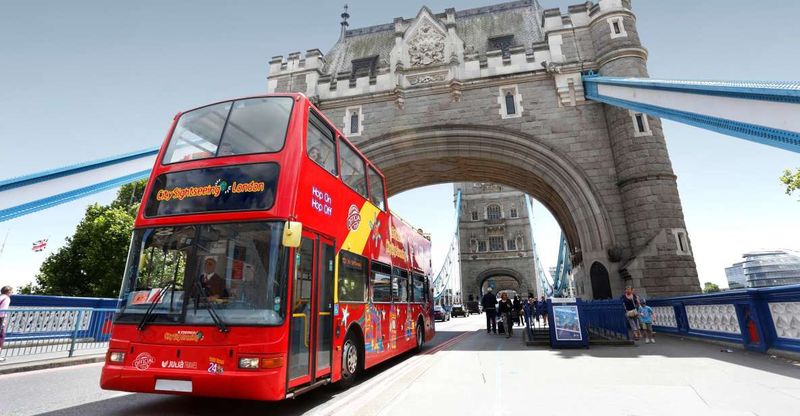
- Tower Hill for the Tower of London area
- Cannon Street Station near St. Paul’s Cathedral
- London Bridge and Tooley Street
- Trafalgar Square area links through central Westminster coverage
- Buckingham Palace multiple times (so you can return without hunting)
The best way to use this route is to treat it like your “orientation layer.” Ride it once early to get your bearings, then do targeted hops the next day for whatever you care about most.
One detail that surprised a few people: some stops repeat the same landmark area, like Buckingham Palace roadside stops. That repetition actually helps. If you miss a bus or want to reposition later, you’re not forced to make a complicated detour.
Green Route: From the London Eye Back to Euston and Russell Street
The Green Route is about expanding coverage beyond the core Westminster/Tower corridor. It starts again near Belvedere Road behind the London Eye, then moves through central streets and swings up toward the Euston area.
Stops include Southampton Row, Woburn Place, Great Russell Street, and Euston Road / Euston Square. Later, you’ll see Stephen Street and Lancaster Place (Somerset House area, Stop B), plus a York Road stop near M&S.
This route can be a lifesaver if you’re staying on the north side or you want to reach neighborhoods that don’t touch Westminster directly. But pay attention to the schedule: the green route has its own first and last bus times, and service runs less frequently than the main red line.
If you’re planning a late afternoon hop, check the last departure time for the green route first. One traveler mentioned the green route seemed to stop working after 5pm, which is the kind of thing that can affect your day even if the rest of London is still lively.
More Great Tours NearbyBlue Route: Kensington, Harrods, and the V&A Area
The Blue Route focuses on west London, and the stop list makes it easy to aim for big museum and shopping zones. You’ll pass:
- Marble Arch (Speakers’ Corner area coverage)
- Harrods zone
- Victoria and Albert Museum
- Royal Albert Hall area (via the Royal Albert Hall bus stop listing)
- Kensington Palace and Palace Gardens Terrace
- Lancaster Gate and Edgware Road end-side coverage
This is a strong choice if your trip includes museum time or if you want a change from the Westminster crowds. It also pairs well with a “ride midday” strategy: do the red route in the morning for the main classics, then switch to blue later for a calmer feel.
One small note: the blue route timing and first/last buses are different from the red route. So if you want a full day, plan your museum stop earlier rather than assuming you can slide it in late.



Timing and Frequency: When Buses Are Frequent vs When You Wait
Service frequency is part of the value. The Red Route runs every 20 to 30 minutes, with the first bus at 8:50am and the last at 5pm, and a journey duration of about 150 minutes.
The Green Route runs every 90 minutes, with first bus at 9:20am and last at 4:18pm (duration about 80 minutes, based on the route’s listed duration). Less frequent doesn’t mean bad, but it does mean you should build your day around the schedule.
The Blue Route runs every 30 minutes, with first bus at 9:15am and last at 4:35pm from its listed stop, with duration about 60 minutes.
My practical advice: don’t build a tight minute-by-minute plan. But do build a loose one: decide what you want to see by neighborhood, then time your hop to when you expect a bus to be in the air.
App and Live Tracking: The Fastest Way to Find Your Next Bus
The tour’s big tech selling point is the City Sightseeing app with AI-powered live bus tracking. In plain terms: it reduces the guessing game of where the bus is and when you should walk back to the stop.
A few travelers specifically mentioned that the app helped them find the stops quickly and that buses arrived sooner than expected. Others warned about GPS not matching the exact meeting point at one stop, so it’s wise to use the app as guidance, then confirm using staff at the stop if needed.
If you’re traveling in a busy area, this app is also your stress reducer. It’s easier to wait when you know the bus is close, and it’s easier to hop when you know you won’t be abandoned at the curb.
On-Board Audio: 11 Languages, Headphones Included
You get on-board audio commentary with headphones, in English plus Spanish, French, German, Italian, Japanese, Chinese, Portuguese, Russian, Polish, and Arabic. That’s a big deal for comfort and independence—especially if you’re traveling with mixed-language groups.
In the ride experience, audio adds meaning to the views. Travelers described the information as helpful and noted it’s a good way to learn while moving across London’s different neighborhoods.
Possible drawback: a couple of reviews said the audio boxes weren’t always working in every area, and another mentioned the commentary doesn’t always tell you which direction to look for what’s being discussed. Translation: you might need to glance around on your own, especially on higher-traffic stretches.
Thames River Cruise Extras: One-Way vs Return Depends on Your Pass
The Thames adds a totally different angle. If you pick a 24-hour ticket, you get a single river cruise journey between Westminster Pier and Tower Pier.
If you choose 48 or 72 hours, the cruise becomes a Greenwich return River Cruise. That difference matters because one traveler was surprised when their shorter ticket didn’t match what they expected for the boat portion. Another traveler emphasized keeping the physical ticket because it’s used to verify entry for the river cruise.
So here’s the rule of thumb: check what your ticket includes before you line up at the pier. Then bring your printed or physical voucher if that’s what you were issued, since verification is part of the process.
Route Master and Night Tour: Extras for Longer Stays
If you’re on a 48 or 72-hour ticket, you also get a Route Master bus ride. It’s one more included transport segment that can broaden where you go without adding another separate booking.
For 72-hour ticket holders, there’s a night tour with multiple daily departures (with schedules that vary by season). It departs outside Green Park Station, and it’s designed for evening views and a different pace than the daytime loops.
Night options are great if you want a “second look” at the landmarks without spending daylight hours trying to squeeze everything in. Just remember that you still need to manage your day-to-night timing since the last bus times on certain routes are earlier.
What the Stop Spacing Feels Like in Real Life
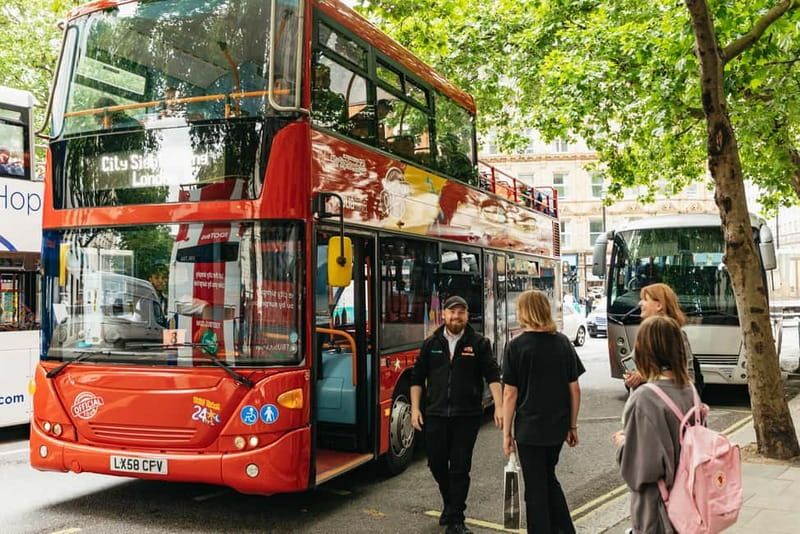
The bus stops are labeled and spread out around the city, and that’s not a small thing. Several travelers said designated stops made it easy to find your boarding point, and that the map handout helped.
In practical terms, the best use of the hop-on setup is:
- Ride early to map where everything is
- Hop off near a landmark you care about
- Return later on the next loop when you’re ready
You’ll pass famous names repeatedly across the central zones, including the Westminster/Parliament area, Big Ben area, St. Paul’s Cathedral, and the Tower of London area. That repetition lets you make the day flexible if traffic slows down.
Traffic and Detours: The One Reality Check
London traffic can disrupt any bus route. Some travelers mentioned detours due to events like road closures and parades, but they still felt the ride stayed organized and they got to see the sights they wanted.
It helps to have the right expectations: the bus company controls operations, but not the street grid. The fact that buses run often on the red line means detours usually don’t ruin the day. Still, if you’re trying to catch a very specific timed entry somewhere, give yourself slack.
Accessibility, Rules, and Baggage Limits
This tour is wheelchair accessible, which is good news for travelers who need more room or easy boarding.
The rules are pretty standard but worth noting:
- No pets
- No smoking
- No luggage or large bags
- No alcohol and drugs
If you’re traveling with a carry-on or bulky items, you’ll want to plan around these limits before you buy.
Also, the meeting point may vary depending on what option you book. That’s another reason the app and staff help at stops matter.
Price and Value: Why This Can Be a Smart First-Timer Move
At about $33 per person, you’re buying more than a ride. You’re buying:
- transport between widely scattered neighborhoods
- audio commentary in many languages
- a flexible schedule across the time window you choose
- optional extras like river cruise and night tour based on ticket length
One of the most convincing review themes is that this helped people cover a lot of London in limited time. Travelers who had just one full day used it as their personal city bus and felt the ticket paid off quickly. Others said it was easier than figuring out London’s transit system while also trying to see multiple sights.
The main downside on value is if you’re the type who only wants one attraction. If your plan is ultra focused—say, just one museum and you’re done—then a hop-on bus might feel like overkill. But if you want variety across several areas, it usually makes financial sense fast.
Who Should Book, and Who Might Skip It
This is a strong match for:
- first-time visitors who want easy navigation
- families who appreciate the kids’ audio option on the blue route (with the Mia Cloo’s London Quest booklet)
- travelers who want big views without constant walking between neighborhoods
- people who like to build their own day and don’t want to time every step
You might rethink it if:
- you’re traveling with large luggage (since large bags aren’t allowed)
- you need guaranteed direction cues from audio every time (some reviewers said it doesn’t always point your attention)
- you’re expecting the 24-hour ticket to include the same river cruise as longer passes (ticket differences matter)
Common Snags to Plan For Before You Go
Based on traveler feedback and the operational details, these are the predictable pain points:
- Audio devices not working in some areas
- buses feeling cold on lower levels in enclosed seating (mentioned by a traveler)
- GPS or stop location confusion at a specific starting point
- occasional complaints about how traffic affects timing, though detours still kept major sights in view
- confusion about which cruise is included with which ticket
None of these make the tour a bad idea. They just mean you should show up prepared: bring your physical ticket, use the app for timing, and keep expectations realistic about city traffic.
City Sightseeing London Hop-On Hop-Off Bus & Bookable Extras
Should You Book This London Hop-On Hop-Off Bus?
If you’re trying to see a wide range of sights across multiple neighborhoods, I’d say yes—especially for a first trip. The combination of frequent service (on the red route), flexible hopping, and audio in 11 languages is what turns it into a practical value play.
Before you book, do two quick checks:
- confirm which river cruise option matches your ticket length (24-hour vs 48/72)
- make sure you can handle the no large bag rule and bring whatever ticket format is required for cruise verification
If you want one ticket that helps you get oriented fast, reduce transit stress, and hit landmarks without planning every turn, this is one of the easier ways to do it.
You can check availability for your dates here: