
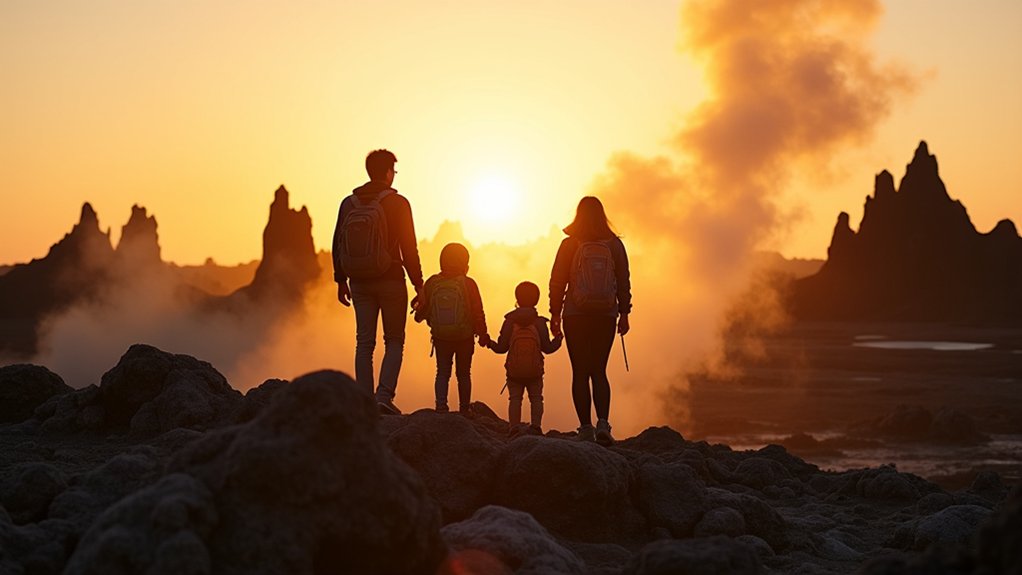
You can trade typical classroom learning for hands-on adventures where your kids dig up 150-million-year-old dinosaur bones in Utah’s Hanksville-Burpee Quarry, sleep in Revolutionary War huts at Valley Forge, or paddle through Florida’s Everglades spotting alligators and crocodiles. These aren’t your average field trips—they’re immersive experiences where families explore underground coal mines with retired miners, walk across New River Gorge’s massive steel arch bridge, and discover sacred Lakota sites in South Dakota’s Black Hills. These unique destinations transform learning into unforgettable family adventures.
- Dig for Dinosaur Bones at the Burpee Museum in Utah
- Step Back in Time at Colonial Williamsburg’s Living History Experience
- Journey Underground Through West Virginia’s Exhibition Coal Mines
- Kayak Through Florida’s Everglades Ecosystem
- Explore Native American Heritage in South Dakota’s Black Hills
- Witness Civil Rights History in Atlanta and Montgomery
- Discover Yellowstone’s Geysers and Natural Wonders
- Cross the New River Gorge’s Steel Arch Bridge
- Experience 18th Century Daily Life at Valley Forge
- Hunt for Prehistoric Remains Along Utah’s Ancient Riverbeds
- Last Words
Dig for Dinosaur Bones at the Burpee Museum in Utah
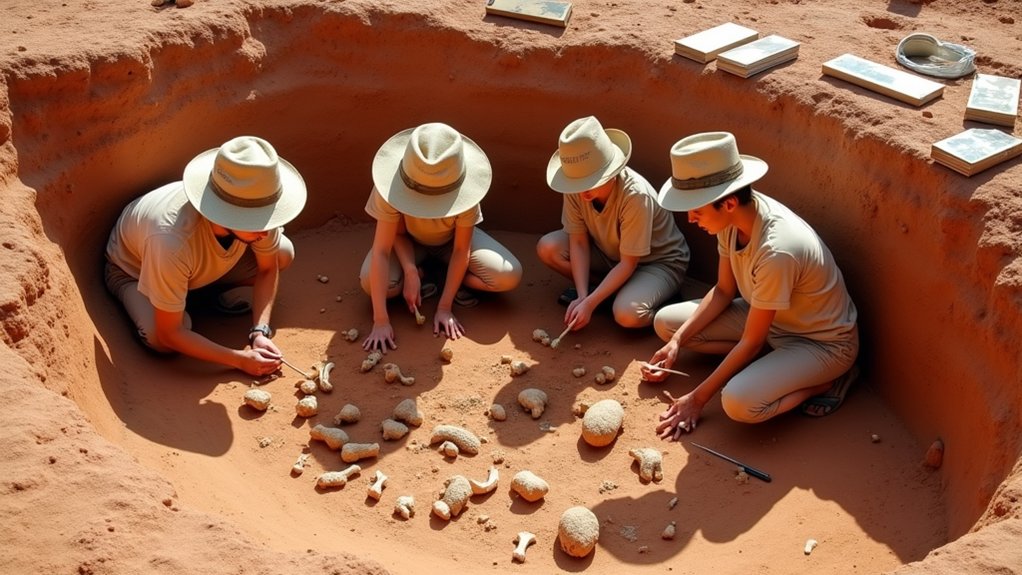
Have you ever wondered what it feels like to uncover a 150-million-year-old dinosaur bone with your own hands? At Utah’s Hanksville-Burpee Dinosaur Quarry, you’ll experience exactly that thrill.
This massive bonebed contains remains from at least 15 different dinosaurs, including Diplodocus and Allosaurus fossils jumbled together by ancient river systems.
You’ll join week-long expeditions departing daily at 8:30 AM in off-road trucks, working real excavation sites until 5:00 PM. The dig site operates on federal BLM land, ensuring proper permits and protection of all fossil discoveries.
The chances of finding multiple bones per spot are remarkably high—over 1,000 fossils have been removed since 2007, with thousands more waiting underground.
Competitive scholarships offer $400 week-long experiences with expert mentorship.
For younger kids, museum camps range from $25-240.
Applications close May 10, 2025.
Step Back in Time at Colonial Williamsburg’s Living History Experience
While most history lessons confine kids to textbooks and museum displays, Colonial Williamsburg drops your family directly into 1775. You’ll explore 301 acres where blacksmiths hammer red-hot iron while your children watch spellbound, and kitchen interpreters explain how families survived without refrigeration.
Don’t rush through this massive living museum—plan at least two days to absorb the experience. Your kids can watch musket demonstrations at Market Square, then peek inside the Governor’s Palace where real governors once lived. The interpreters aren’t just wearing costumes; they’re master craftspeople who’ll patiently answer your eight-year-old’s twenty questions about colonial toilets. You might even encounter Nation Builders, historians who fully immerse themselves as specific historical figures and engage visitors through both casual conversations and theatrical performances.
Pro tip: Start early at popular sites like the Raleigh Tavern, where revolutionaries plotted America’s future over ale.
Journey Underground Through West Virginia’s Exhibition Coal Mines
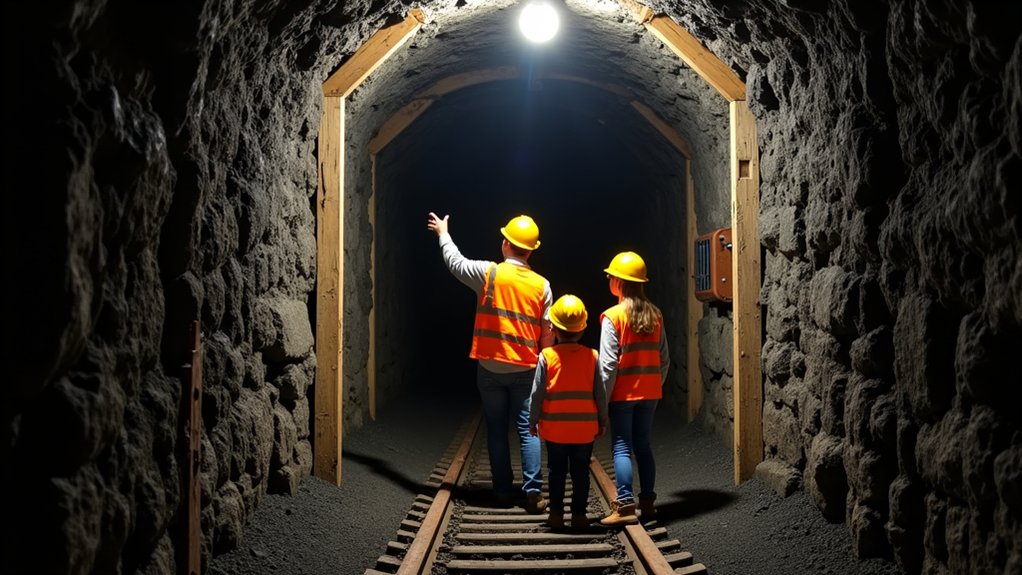
Deep beneath the hills of Beckley, West Virginia, your family can experience what 48,000 visitors discover each year—the authentic world of coal mining that powered America for generations.
At Beckley Exhibition Coal Mine, you’ll board a 35-person “man car” for a 35-minute journey 1,500 feet into a real drift mine that operated from 1906 to 1953.
Pack jackets—it’s a constant 58 degrees underground with occasional ceiling drips. Retired miners guide these hourly tours, sharing firsthand stories about payment methods and daily dangers.
Above ground, explore the restored coal camp featuring a company house, church, and school. The site operates as a cultural journey into West Virginia mining history, extending far beyond the original short underground tour concept.
The full experience costs $15-20 per person and takes 2-3 hours, offering cushioned seats and no underground walking required.
Kayak Through Florida’s Everglades Ecosystem
Trading underground darkness for open skies, Florida’s Everglades offers your family a completely different adventure—paddling through America’s largest subtropical wetland. You’ll navigate sawgrass marshes and mangrove tunnels across 2 million acres where alligators and crocodiles actually coexist—the only place in the world this happens.
Start at Shark Valley or Gulf Coast Visitor Center for family-friendly guided tours. Your kids will spot endangered wood storks, Florida panthers, and over 2,000 species thriving in this 5,000-year-old ecosystem. The 99-mile Wilderness Waterway offers multi-day camping adventures for older children. This remarkable ecosystem supports the largest mangrove ecosystem in the Western Hemisphere, creating natural tunnels and channels great for kayaking exploration.
Here’s the educational hook: you’re witnessing both conservation success and ongoing challenges. Water levels have dropped 60% from historical norms, making every wildlife sighting more precious and teaching real environmental stewardship.
Explore Native American Heritage in South Dakota’s Black Hills
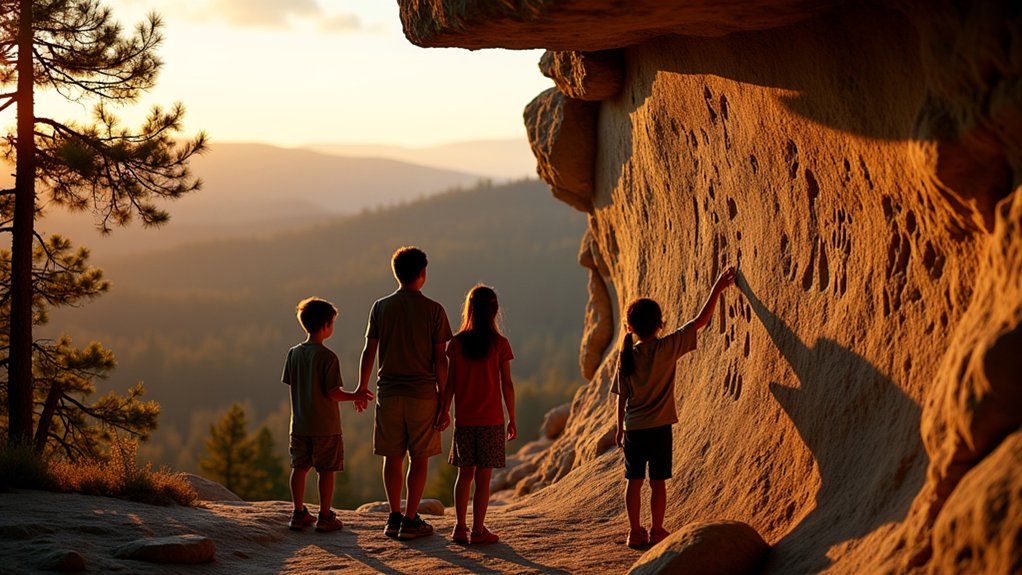
Where alligators give way to sacred peaks, South Dakota’s Black Hills invite your family into 5,000 square miles of living Native American history. You’ll discover Bear Butte, where Lakota leaders sought visions, and Wind Cave, considered the birthplace of the Lakota people in creation stories.
The massive Crazy Horse Memorial offers hands-on learning through its Indian Museum and Cultural Center, while your kids can participate in June’s Volksmarch hike.
At Red Cloud Heritage Center, you’ll explore over 2,000 Native artworks dating to the 1870s.
Remember to respect prayer cloths on hiking trails—they’re still actively used for ceremonies.
The Journey Museum’s Star Room connects Lakota constellations to Black Hills landmarks, making astronomy tangible for young learners seeking authentic cultural education. Wind Cave features the majority of Earth’s discovered boxwork formations that create intricate honeycomb-like patterns throughout the underground passages.
Witness Civil Rights History in Atlanta and Montgomery
Standing where Rosa Parks made her defiant choice on December 1, 1955, you’ll feel the weight of history at Montgomery’s Rosa Parks Museum on Montgomery Street. Your kids will grasp the courage it took when they see the actual bus stop where everything began.
Take Jake Williams’ tour—he marched from Selma to Montgomery and shares firsthand stories that textbooks can’t capture.
At Dexter Avenue King Memorial Baptist Church, you’ll stand where MLK planned the 381-day bus boycott that changed America. These guided visits connect you directly to the pivotal moments where civil rights leaders fought for justice and equality.
In Atlanta, visit MLK’s birth home and Ebenezer Baptist Church where he preached. The self-guided GPS audio tours let your family move at their own pace.
Saturday tours start at 10 a.m. from Montgomery’s Visitor Center—call 334-262-0013 to reserve spots.
Discover Yellowstone’s Geysers and Natural Wonders
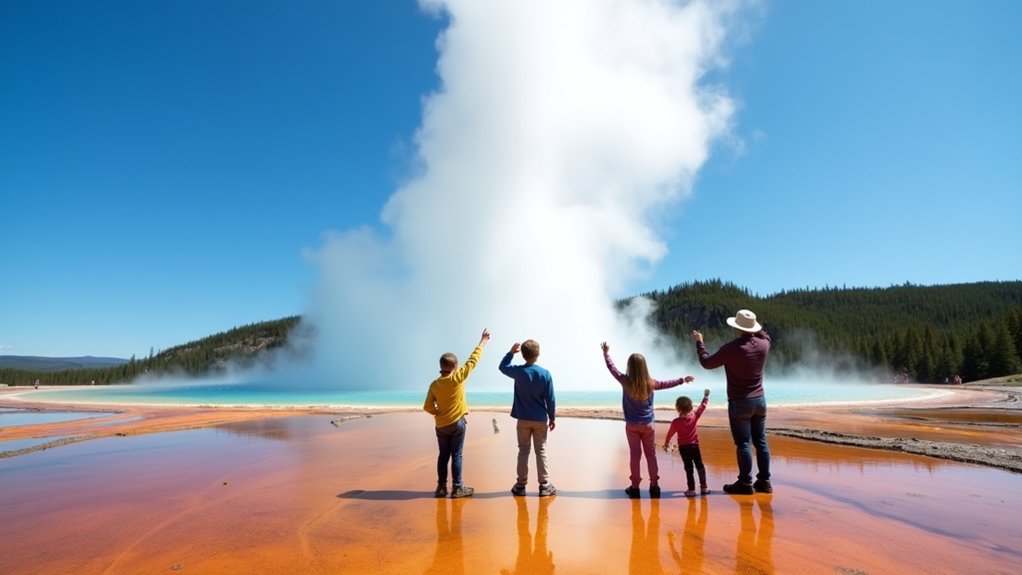
When you witness Old Faithful‘s towering column of superheated water shooting 180 feet into the Wyoming sky, you’ll understand why Yellowstone captivates 4 million visitors annually. Your family will discover over 500 active geysers—more than half the world’s total—scattered across nine distinct basins.
Plan your visit around Old Faithful’s predictable 60-110 minute intervals, but don’t miss Steamboat Geyser, the world’s largest at 300-400 feet tall.
The Upper Geyser Basin offers the most concentrated experience with 410 geysers, while Shoshone Basin packs 80 geysers into an incredibly compact area.
Beyond geysers, you’ll explore over 10,000 hydrothermal features including colorful hot springs and bubbling mudpots. These natural laboratories showcase unique ecosystems where heat-loving microorganisms create rainbow-colored mineral deposits. The hydrothermal features are highly dynamic, changing daily, seasonally, and yearly, ensuring every visit offers new discoveries.
Cross the New River Gorge’s Steel Arch Bridge
As your family approaches the New River Gorge Bridge along West Virginia’s winding mountain roads, you’ll spot the massive steel arch spanning 1,700 feet across the dramatic canyon—making it the longest single arch bridge in the Western Hemisphere.
Standing 876 feet above the New River, this engineering marvel transforms what was once a 45-minute journey into a 45-second crossing.
Your kids will be amazed learning how workers used cable-way systems and airborne trolleys to construct this 88-million-pound structure from COR-TEN steel that naturally rusts without needing paint.
Plan your visit during Bridge Day in October when BASE jumpers leap from the deck, creating unforgettable memories while teaching your family about innovative construction techniques and regional history. For year-round educational opportunities, families can take guided Bridge Walk tours that venture beneath the bridge structure itself.
Experience 18th Century Daily Life at Valley Forge
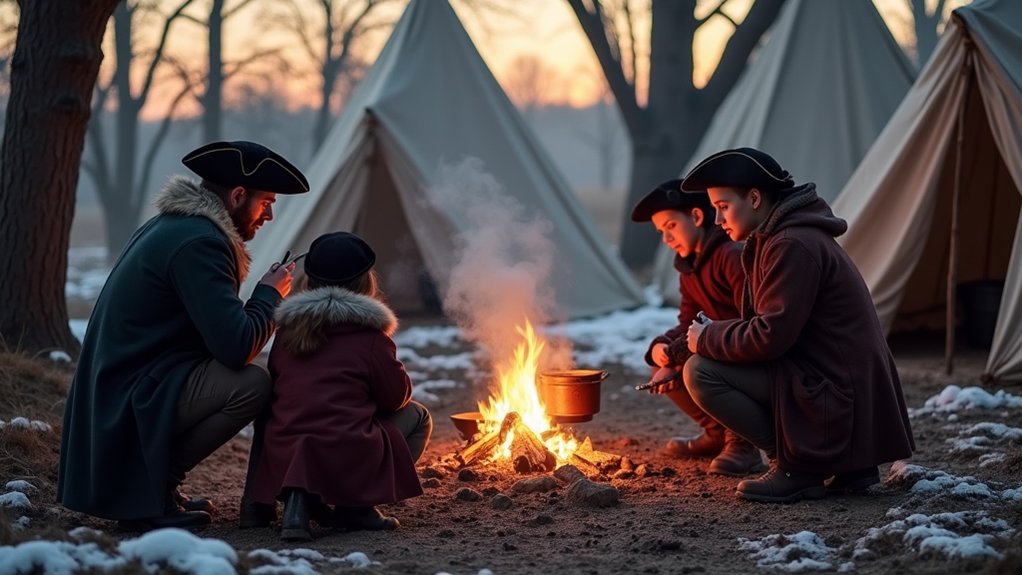
While your children might grumble about another history lesson, Valley Forge National Historical Park offers something textbooks can’t—the chance to sleep in recreated Continental Army huts, cook firecakes over open fires, and understand what those brutal winter months of 1777-1778 felt like for George Washington’s soldiers.
You’ll watch your kids’ attitudes shift as they build 14×16-foot huts using 18th-century tools and sleep eight to twelve people per cabin, just like the original soldiers. They’ll mix flour and water into firecakes, experiencing the hunger that claimed nearly 2,000 lives. Many squads dug floors nearly two feet below ground to reduce wind exposure, demonstrating the ingenious survival techniques soldiers used to endure the harsh winter conditions.
The park’s immersive programs let families follow drum signals throughout the day—from Reveille at sunrise to Tattoo at bedtime—transforming abstract history into visceral understanding of Revolutionary War hardships.
Hunt for Prehistoric Remains Along Utah’s Ancient Riverbeds
Though your kids might think fossils only exist behind museum glass, Utah’s ancient riverbeds offer something far more thrilling—the chance to discover 500-million-year-old treasures with your own hands.
Start at Mill Canyon Dinosaur Trail, just 13 miles north of Moab. Here, you’ll walk among actual dinosaur fossils and petrified wood in their natural setting—no ropes or barriers blocking your view. The kids can touch rocks that once housed massive creatures.
For deeper exploration, head to Blacksmith Fork of Green River in Cache County, where multiple fossil exposures line the channels. Pack plenty of water and sturdy shoes; these aren’t manicured museum floors. The area is particularly rich in Devonian fish fossils, including ancient species like Protaspis that swam in prehistoric seas.
Before you go, visit USU Eastern Prehistoric Museum in Price to see what complete skeletons look like, then let your imagination run wild in Utah’s fossil-rich riverbeds.
Last Words
You’ll create memories that last far beyond any classroom lesson with these hands-on adventures. I’ve seen kids who couldn’t sit still for five minutes become completely absorbed while digging for fossils or exploring underground mines. Don’t worry if you’re not the outdoorsy type—most destinations offer guided experiences great for beginners. Pack your curiosity, comfortable shoes, and prepare for those “wow” moments when your family discovers learning can be the ultimate adventure.