We found this tour exceptional for one straightforward reason: it’s genuinely designed with first-time visitors in mind, and it delivers exactly what it promises. Rather than rushing you through a checklist of attractions, the guide takes time at each stop to explain not just what you’re looking at, but why it matters to Dubrovnik’s story. The Franciscan Monastery’s 700-year-old pharmacy, the strategic importance of Stradun street, the way the 1990s war shaped the city’s recovery—these aren’t just facts rattled off. They’re woven together to help you actually understand how Dubrovnik became what it is today.
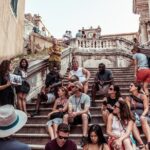
We also appreciate that this tour respects your time. At 90 minutes, it’s long enough to cover the essential Old Town sites without leaving you exhausted or overwhelmed. You’re not dragged through every corner of the walled city; instead, you hit the highlights in a logical flow that leaves you oriented and ready to explore further on your own. The small group size—capped at 30 people—means you can actually hear your guide and ask questions without feeling like you’re part of a tourist cattle drive.
One consideration: this is an active walking tour through narrow medieval streets with some elevation changes. While the tour itself doesn’t require climbing city walls or accessing steep fortifications, getting around Old Town does involve uneven cobblestones and stairs. If you have mobility concerns, you’ll want to discuss this with the tour operator before booking.
This tour works best for visitors arriving in Dubrovnik for the first time who want to orient themselves quickly, understand the city’s layered history, and get solid recommendations for what to explore next.
- The Real Value: Why Actually Matters Here
- Meet at the Fountain: How the Tour Unfolds
- Stop 1: The Onofrio Fountain and City Origins
- Stop 2: The Church of the Holy Savior and Religious Life
- Stop 3: The Franciscan Complex—Books, Monks, and Medicine
- Stop 4: Stradun—The Heart of the City
- Stop 5: The Orthodox Church and Religious Diversity
- Stop 6: Gundulic Square and Local Life
- Stop 7: The Rector’s Palace—Government and Power
- Stop 8: The Cathedral and Lokrum Island Legend
- Stop 9: The Harbor and Maritime History
- Stop 10: Luza Square and the Eastern End
- What the Reviews Tell Us About the Guide Quality
- Practical Details That Actually Matter
- Cancellation Policy and Flexibility
- Who Should Book This Tour—And Who Might Skip It
- The Bigger Picture: Value in Chaotic Tourism
- Frequently Asked Questions
- The Best Of Dubrovnik!
- More Walking Tours in Dubrovnik
- More Tours in Dubrovnik
- More Tour Reviews in Dubrovnik
The Real Value: Why $24 Actually Matters Here
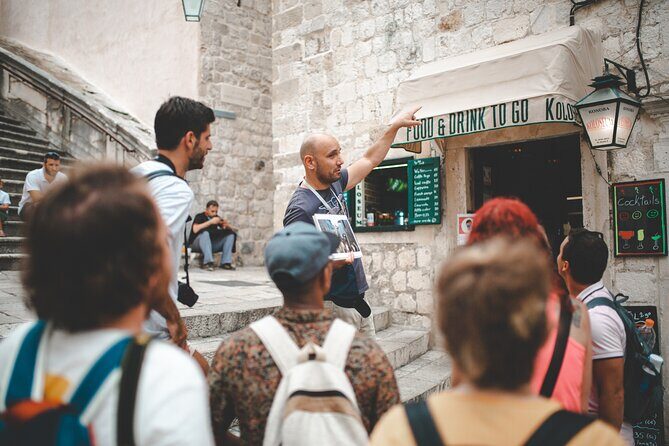

Let’s talk about price, because context matters. Dubrovnik is an expensive destination—accommodation, meals, and attractions can drain a vacation budget quickly. At $24 per person, this walking tour costs less than a casual dinner for two and delivers something you genuinely can’t get from a guidebook or wandering solo.
One traveler noted, “Good value at £18 pp considering Dubrovnik is a very expensive City to visit,” and they’re right. You’re paying for a local who can answer questions on the fly, point out details you’d otherwise miss, and give you honest recommendations for what’s worth your time and money for the rest of your stay. Many reviewers specifically mentioned using their guide’s suggestions to plan the rest of their visit—that kind of personalized local knowledge has real value.
The tour is also bookable with mobile tickets, which means you can book it as late as 37 days before your trip (the average booking window), giving you flexibility to adjust plans if needed. And since it’s offered multiple times daily at different departure times, you can slot it into your schedule whenever works best.
👉 See our pick of the 8 Best Shore Excursions In Dubrovnik (With Reviews & Prices)
Meet at the Fountain: How the Tour Unfolds
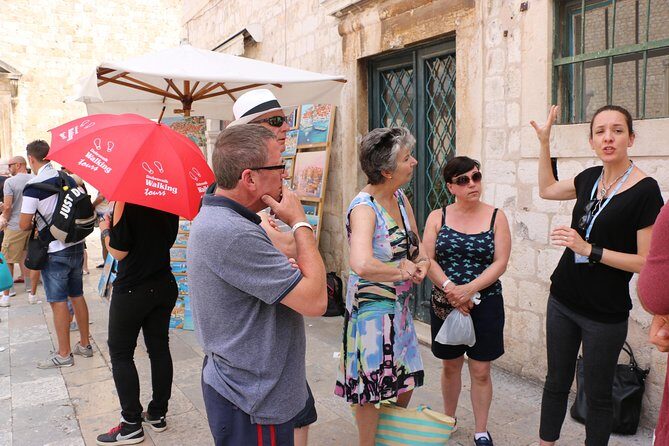
The tour gathers at the Large Onofrio’s Fountain, right next to the Hard Rock Cafe on Poljana Paska Miličevića. You’ll spot your guide by the red umbrella—a practical detail that makes finding your group foolproof, even in the chaotic early-morning tourism rush. From there, you’re off for 90 minutes of walking through the Old Town’s most historically significant locations.
You can also read our reviews of more walking tours in Dubrovnik
Stop 1: The Onofrio Fountain and City Origins
Your guide starts here with the big picture, explaining how Dubrovnik began as a small maritime trading city-state called Ragusa and grew into a Mediterranean powerhouse. The Large Onofrio’s Fountain you’re standing at is part of an ingenious 15th-century aqueduct system—a detail that tells you something important about medieval Dubrovnik: it was innovative, well-organized, and thinking long-term about infrastructure.
This opening stop sets the tone for everything that follows. Rather than just showing you a pretty fountain, your guide is explaining why Dubrovnik’s rise mattered and how the city took care of itself. That context makes every subsequent stop more meaningful.
Stop 2: The Church of the Holy Savior and Religious Life
Just off Stradun (the main street), you’ll pause at the small votive Church of the Holy Savior. Here, your guide discusses how deeply religion shaped Dubrovnik’s development—not as a dry historical fact, but as a living force that influenced everything from urban planning to social structure. Understanding this helps you see the Old Town differently as you walk; it’s not just pretty buildings, it’s a city built by people whose faith was inseparable from their daily lives.
Stop 3: The Franciscan Complex—Books, Monks, and Medicine
The Franciscan Church and Monastery is one of the tour’s most substantial stops. This 13th-century complex contains a monastery, church, library, and pharmacy—and yes, that pharmacy from 1317 is the third-oldest still-functioning pharmacy in the world. The library holds over 20,000 books, including 1,200 valuable old manuscripts.
What makes this stop special isn’t just the impressive numbers. It’s understanding that the Franciscans were preserving knowledge, providing healthcare, and maintaining intellectual continuity through centuries of political upheaval. Your guide will mention centuries-old traditions that persist today, helping you see how Dubrovnik’s past directly connects to its present. One reviewer noted, “Lots of historical but also interesting facts about the city, way of living and what else to visit during your stay”—and this stop is a perfect example of that blend.
Stop 4: Stradun—The Heart of the City
Stradun (also called Placa) is Dubrovnik’s most important street, and your guide takes time here to explain why. It’s the widest street in the Old Town, dividing the city into northern and southern halves, and it’s been the gathering place for public celebrations, processions, and business for centuries. Standing in the middle of it, you can understand the city’s layout in a way that makes exploring on your own much easier afterward.
Here’s also where your guide discusses the more difficult chapters of Dubrovnik’s recent history—the fall of the Ragusa Republic, the Yugoslav period, and especially the 1990s Homeland War. This context is crucial. Dubrovnik isn’t just a beautiful medieval city; it’s a city that was heavily damaged during the war and has rebuilt itself. Understanding this adds depth to everything you see. Bullet holes and shrapnel scars are still visible on buildings throughout the Old Town, and knowing the story behind them transforms how you experience the city.
You can also read our reviews of more historical tours in Dubrovnik


Stop 5: The Orthodox Church and Religious Diversity
Walking into the narrower streets toward the port, you’ll stop at the Orthodox Christian Church (the Church of the Holy Annunciation). This stop highlights something many visitors don’t realize: Dubrovnik was genuinely multicultural. Orthodox Christians, Jews, and Muslims all had communities here, and this diversity shaped the city’s character. It’s a reminder that medieval Mediterranean cities were more cosmopolitan than we often assume.
Stop 6: Gundulic Square and Local Life
The Green Market at Gundulic Square gives you a chance to see how locals actually live—not the tourist version of Dubrovnik, but the real one. Your guide will share stories and traditions connected to the square, grounding the history in everyday life. One reviewer mentioned their guide “gave a slice of how Croatians live daily,” and this is where that happens.
Stop 7: The Rector’s Palace—Government and Power
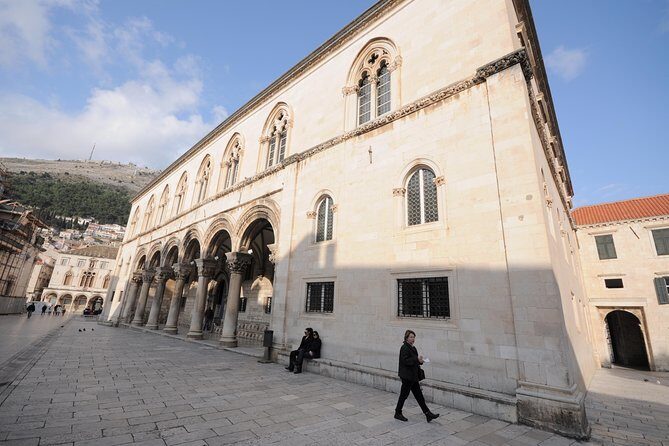
The Rector’s Palace served as the seat of government for the Republic of Ragusa from the 14th century until 1808. It housed not just the Rector’s residence, but also the Minor Council, state administration, an armory, powder magazine, watch house, and prison. This single building tells you everything you need to know about how medieval Dubrovnik was organized—power, military readiness, and justice all under one roof.
Stop 8: The Cathedral and Lokrum Island Legend
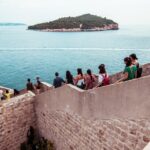
At the Cathedral of the Assumption, your guide shares the legend of Richard the Lionheart, who was supposedly shipwrecked on nearby Lokrum Island in 1192 while returning from the Crusades. Whether historically accurate or not, this story illustrates how Dubrovnik saw itself—connected to major historical events, important enough to host royalty, cosmopolitan enough to have stories worth remembering.
Stop 9: The Harbor and Maritime History
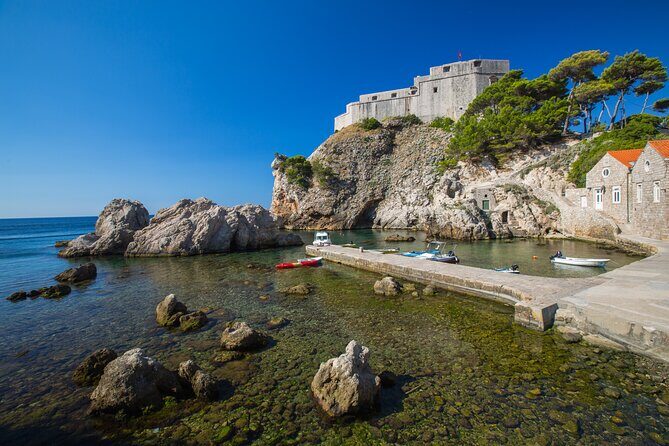
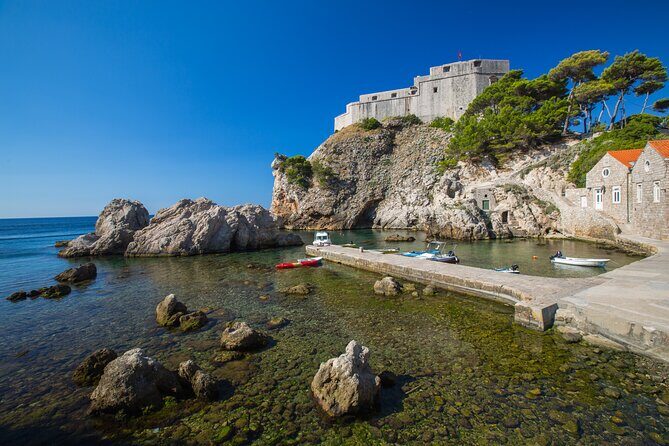
The harbor stops (the Old Port and the legendary Arsenal) explain why Dubrovnik mattered. Ships built here were renowned throughout the Mediterranean and served in navies across Europe. The stories about the famous Quarantine and nearby fortresses of St. Luke and St. John connect the city’s maritime power to its practical defenses.
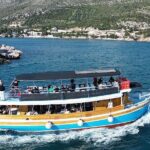
One reviewer specifically mentioned doing “a 45 min boat tour around city wall” after this walking tour, suggesting that this stop effectively sets up what you might want to explore next. That’s smart tour design—you get oriented on foot, then you know what to book for the water-based views.
Stop 10: Luza Square and the Eastern End
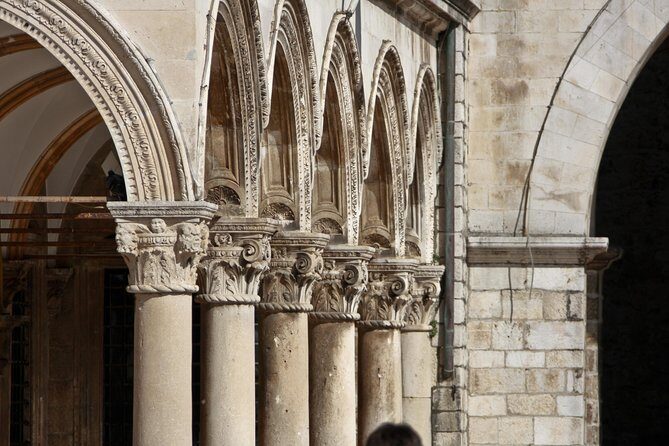
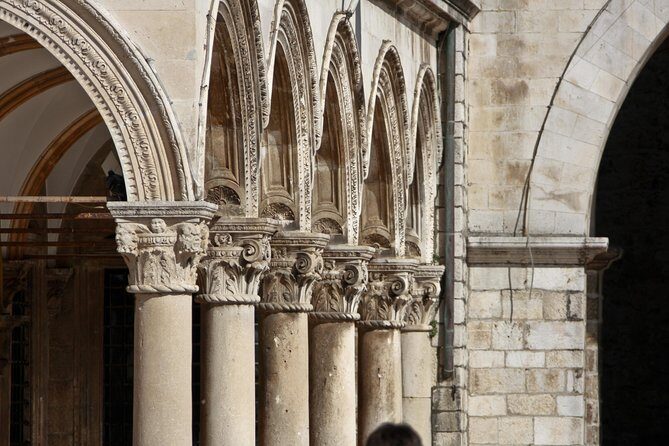
You finish at Luza Square, where several important sites cluster together: the Church of St. Blaise (the city’s patron saint), the Orlando Column (with its legendary knight), Sponza Palace, the Small Onofrio’s Fountain, and the City Bell Tower. This final stop brings together symbols of civic pride, religious devotion, and municipal organization. It’s a fitting end because you’ve come full circle, understanding how all these elements worked together to make Dubrovnik function and thrive.
What the Reviews Tell Us About the Guide Quality
The reviews consistently praise one thing above all else: the guides. And this matters because a walking tour is only as good as the person leading it. We’re not talking about guides who simply read facts from a script. Reviewers describe guides who are “knowledgeable, funny, and gracious,” who share “personal stories,” and who “brought it to life with interesting details and funny anecdotes.”
One traveler noted their guide “was a true local that once lived in the city” with family still in the Old Town—the kind of authenticity that makes a tour memorable. Another reviewer mentioned, “You could tell that she loved her city and her job. The 90 minutes flew by!” That’s not filler praise; that’s someone noticing the difference between a guide doing a job and a guide genuinely invested in sharing something they care about.
The guides also seem genuinely responsive to their groups. One reviewer mentioned their guide “kept a pace that fit the group and showed genuine excitement for sharing about her city’s sites and history.” That’s harder than it sounds—managing group dynamics while maintaining engagement while keeping to a schedule. The fact that this comes up repeatedly in reviews suggests it’s a consistent strength of this tour operator.
Practical Details That Actually Matter
Group Size: Capped at 30 people, which is small enough that you can hear your guide and ask questions, but large enough that the tour operates regularly. You’re not waiting weeks for a small-group departure.
Timing: The tour is 90 minutes, which is long enough to cover meaningful ground but short enough that you’re not exhausted. Several reviewers specifically mentioned the length was “just right” and that it left them energized to explore further on their own.
When to Book: This tour is booked an average of 37 days in advance, suggesting it’s popular but not impossible to secure. However, if you have specific dates in mind, booking ahead makes sense, especially during peak season (June-September).
Best Time to Visit: One reviewer specifically praised visiting in November: “November was the perfect time to visit Dubrovnik, the crowds were small and the scenery was large!” If you have flexibility, shoulder seasons offer a better experience than summer peak season.
Accessibility Note: The tour is mostly flat and doesn’t require climbing walls, but Old Town involves cobblestone streets and some stairs. One reviewer noted, “There are lots of steps to climb & very busy with travelers so less able visitors may struggle to get around easily.” Be honest with yourself about your mobility before booking.
Cancellation Policy and Flexibility
The tour offers free cancellation up to 24 hours in advance for a full refund. If weather is bad, you’ll be offered a different date or full refund. This flexibility is genuinely useful—Dubrovnik can have rainy days, and you’re not stuck with a tour you can’t use. That said, the cutoff is strict (24 hours), so plan accordingly if you need to cancel.
Who Should Book This Tour—And Who Might Skip It
This tour is ideal for first-time visitors who want to understand Dubrovnik’s history and get oriented efficiently. If you’re arriving in the city and want to maximize your time, this 90-minute investment pays dividends. You’ll understand the layout, learn the major historical turning points, and get recommendations from someone who actually knows the city.
You might skip this if you’re a seasoned medieval history enthusiast who’s already read extensively about Ragusa and the Dalmatian coast—though even then, the local insights and recent history context might be worth it. You’d also skip it if you’re only in Dubrovnik for a few hours and just want to wander independently; in that case, the tour’s value is less clear.
The Bigger Picture: Value in Chaotic Tourism
What we appreciate most about this tour is that it respects your intelligence and your budget. You’re not being sold expensive add-ons or pushed toward overpriced attractions. You’re being given genuine context and honest recommendations by someone who lives in the city. In a destination as touristy as Dubrovnik, that’s increasingly rare.
The fact that 99% of travelers recommend this tour isn’t surprising when you look at the reviews. People aren’t raving about luxury or exclusivity; they’re raving about learning something real, about guides who care, about getting oriented and then having the confidence to explore further. That’s exactly what a good introductory walking tour should do.
Dubrovnik Old Town History Walking Tour
Frequently Asked Questions
Q: Do I need to book in advance, or can I show up on the day?
A: While the tour is booked an average of 37 days ahead, you can book later if space is available. Mobile tickets are available, so you have flexibility. However, if you have specific dates or times in mind, booking ahead is recommended to guarantee a spot, especially during peak season.
Q: What’s included in the $24.19 price?
A: The price includes a local guide and all taxes, fees, and handling charges. What’s not included is hotel pickup and drop-off—you’ll need to get yourself to the meeting point at the Large Onofrio’s Fountain. Entry to the sites themselves (like the Franciscan Monastery or Cathedral) is not included; the tour covers the exteriors and history, not interior museum access.
Q: Is this tour suitable for families with children?
A: Yes. The 90-minute duration is manageable for kids, and the pace is described as comfortable. However, Old Town involves walking on cobblestones and some stairs, so factor in your children’s physical abilities. One reviewer mentioned their whole family enjoyed it, so it’s definitely family-friendly.
Q: What if the weather is bad?
A: The tour requires good weather. If it’s canceled due to poor conditions, you’ll be offered either a different date or a full refund. This is a walking tour through outdoor streets, so rain can genuinely impact the experience, and the operator is fair about rescheduling.
Q: Will I actually learn something, or is this just a tourist trap?
A: Based on consistent reviewer feedback, this is genuinely educational. Guides share detailed history about the Ragusa Republic, the 1990s war, religious diversity, maritime power, and how the city is organized. Multiple reviewers specifically mentioned learning things they wouldn’t have discovered on their own. It’s not a superficial tour.
Q: Can I do this tour on my first day in Dubrovnik?
A: Absolutely—in fact, reviewers specifically recommend it. One noted, “This tour would be good on the first few days when you arrive,” and another said, “This is the first thing a new visitor to Dubrovnik should do. Based on her recommendations, you can schedule the rest of your stay here.” The tour essentially gives you a map and context for everything else you’ll do.
Bottom Line: At $24 per person for 90 minutes with a knowledgeable local guide in one of Europe’s most expensive destinations, this tour is genuinely excellent value. You’ll understand Dubrovnik’s complex history—from medieval maritime republic to modern city rebuilding after war—and you’ll leave with solid recommendations for how to spend your remaining time. The small group size, flexible scheduling, and consistently praised guides make this a smart first stop for anyone arriving in the city. Skip the long walking tours that drag you everywhere; this one gets you oriented, entertained, and ready to explore on your own terms.