
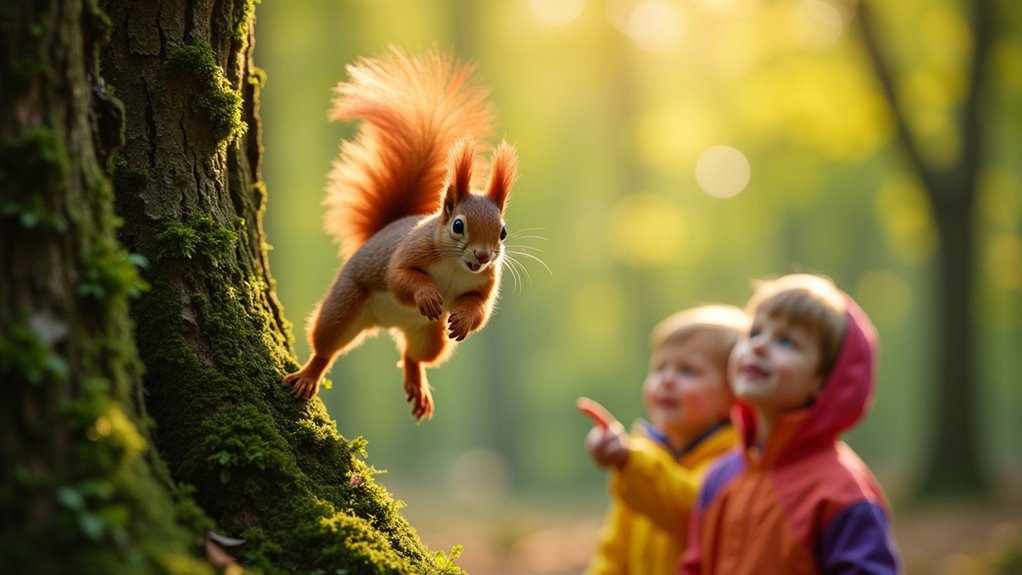
You’ll discover some of Britain’s most spectacular wildlife encounters right on your doorstep, from watching over 80 fallow deer battle during rutting season at Dinefwr Park to observing puffins raise their chicks on the dramatic cliffs of Bempton. Experience red squirrels leaping through Whinlatter Forest, spot ospreys diving for trout at Loch Garten, or watch seals with their pups at Blakeney Point. These carefully selected locations offer safe, family-friendly viewing opportunities that’ll create unforgettable memories for wildlife enthusiasts of all ages.
- Watching Fallow Deer During Rutting Season at Dinefwr Park
- Spotting Ospreys Fishing at Loch Garten in the Cairngorms
- Discovering Red Squirrels in Whinlatter Forest
- Observing Dragonflies and Damselflies at Wicken Fen
- Viewing Puffins From the Clifftops at Bempton Cliffs
- Encountering Red Deer and Otters in Knapdale Forest
- Seal Watching at Blakeney Point in Norfolk
- Bird of Prey Experiences at the Cotswold Falconry Centre
- Badger Watching in the Forest of Dean
- Whale and Dolphin Spotting From the Isle of Mull
- The Sum Up
Watching Fallow Deer During Rutting Season at Dinefwr Park
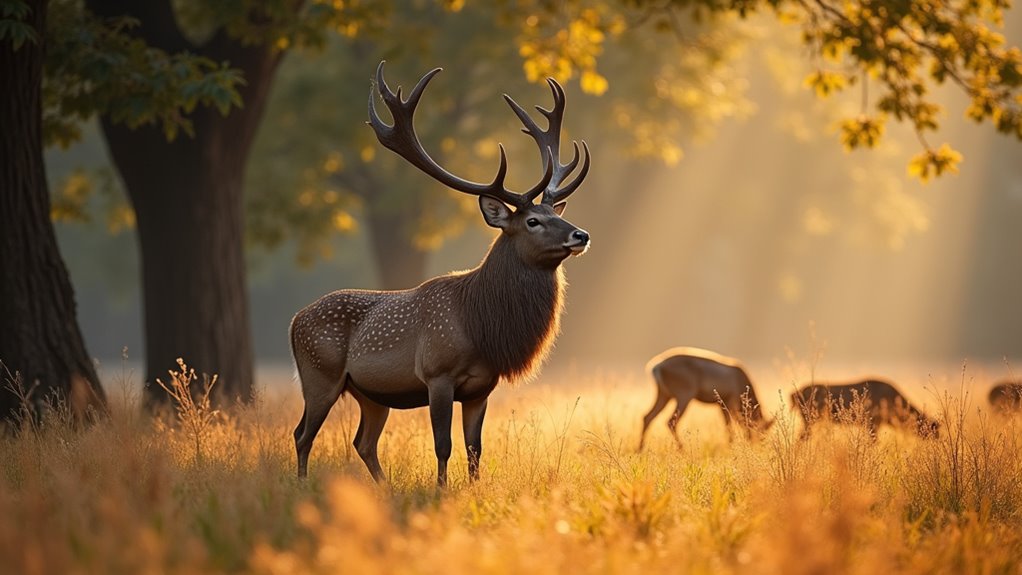
When autumn arrives at Dinefwr Park in Carmarthenshire, you’ll witness one of nature’s most dramatic spectacles as over 80 fallow deer engage in their annual rutting season. During September and October, testosterone-fueled bucks compete fiercely for mating rights through groaning, parallel walking, and intense antler-locking battles.
You’ll observe stags charging, rolling in mud, and bellowing challenges while rounding up females. This National Trust property near Llandeilo offers exceptional viewing opportunities, but safety’s vital. Keep your distance using binoculars, stick to marked paths, and leave dogs at home. The deer’s unpredictable aggression during this period demands respect. Remember that this natural behavior should not be disturbed as the animals navigate this intense mating period.
Drive cautiously around the park, especially during morning and evening when deer activity peaks. Use headlights to spot them but dim when approaching to prevent freezing behavior.
Spotting Ospreys Fishing at Loch Garten in the Cairngorms
After experiencing the raw power of rutting deer, you’ll find a completely different thrill watching Scotland’s most celebrated fishing birds at Loch Garten in the Cairngorms.
These magnificent raptors returned to Scotland in 1954 after going extinct in 1916, making every sighting precious.
Visit the RSPB Osprey Centre between April and September for your best chances.
You’ll watch these skilled hunters cruise the loch at heights of 10-90 meters before diving steeply to snatch trout with their spine-covered talons. With their special nasal valves that close underwater, ospreys can submerge up to a meter deep when fishing.
The centre provides telescopes, binoculars, and live CCTV nest feeds, so you won’t miss any action.
Located six miles northeast of Aviemore, the facility sits within Abernethy National Nature Reserve‘s ancient Caledonian pine forest, offering additional wildlife spotting opportunities.
Discovering Red Squirrels in Whinlatter Forest
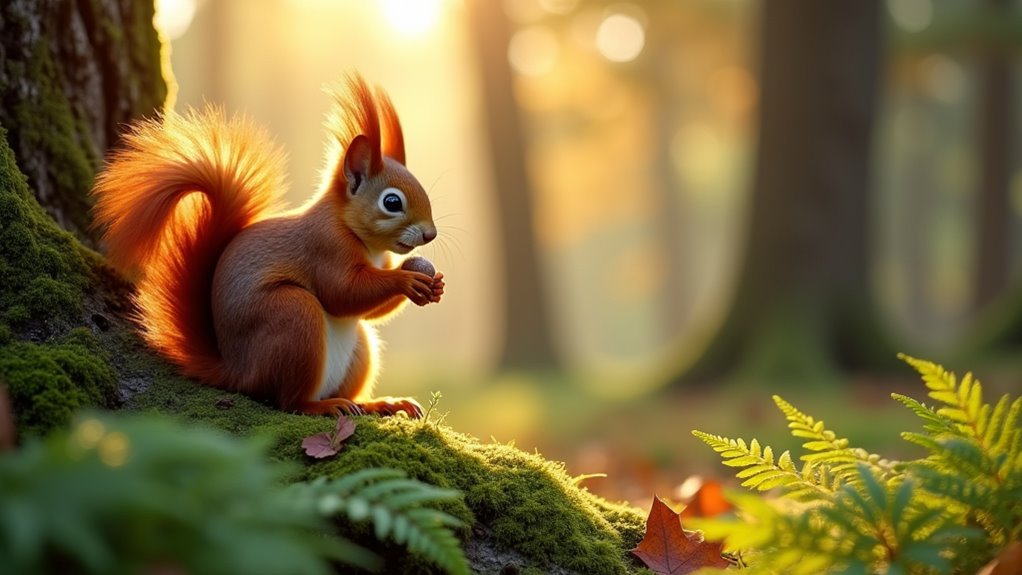
While ospreys command attention with their dramatic fishing displays, red squirrels offer an entirely different charm as they dart through Whinlatter Forest’s towering pines near Keswick.
You’ll find the Lake District’s largest forest perfectly positioned above Bassenthwaite Lake, with parking available at the Visitor Centre (NY208245).
Start your adventure at the Red Squirrel Experience, where CCTV feeds guarantee indoor viewing opportunities.
The Squirrel Scurry Trail maps guide you through dedicated routes where feeders attract these elusive creatures.
You’ll spot them throughout the woodland walks, busily gathering food and leaping between branches.
The family-friendly trails combine education with magical wildlife encounters.
This Forestry Commission woodland actively supports red squirrel conservation, giving you excellent chances of sightings while contributing to essential protection efforts against grey squirrel encroachment. These reds have remarkably thrived after facing near-extinction from grey squirrel competition in the region.
Observing Dragonflies and Damselflies at Wicken Fen
Though red squirrels captivate with their acrobatic displays, Wicken Fen’s ancient wetlands offer an entirely different spectacle as 22 species of dragonflies and damselflies patrol the waterways near Ely.
You’ll witness nearly 60% of Britain’s dragonfly species in this National Trust reserve, including the striking Emperor dragonfly with its vibrant sky-blue body and distinctive red-eyed dragonflies.
Plan your visit between June and August when peak flight activity occurs, though early arrivals in May can spot emerging species. These insects belong to the order Odonata, meaning toothed jaws, which reflects their nature as highly mobile aerial hunters with powerful predatory abilities.
The diverse water bodies support everything from still-water lovers to fast-flowing stream dwellers.
Your family can observe complete life cycles from aquatic larvae to mature adults.
Wicken Fen’s official “Dragonfly Hotspot” status guarantees exceptional viewing opportunities along the waterside vegetation where these ancient insects breed and perch.
Viewing Puffins From the Clifftops at Bempton Cliffs
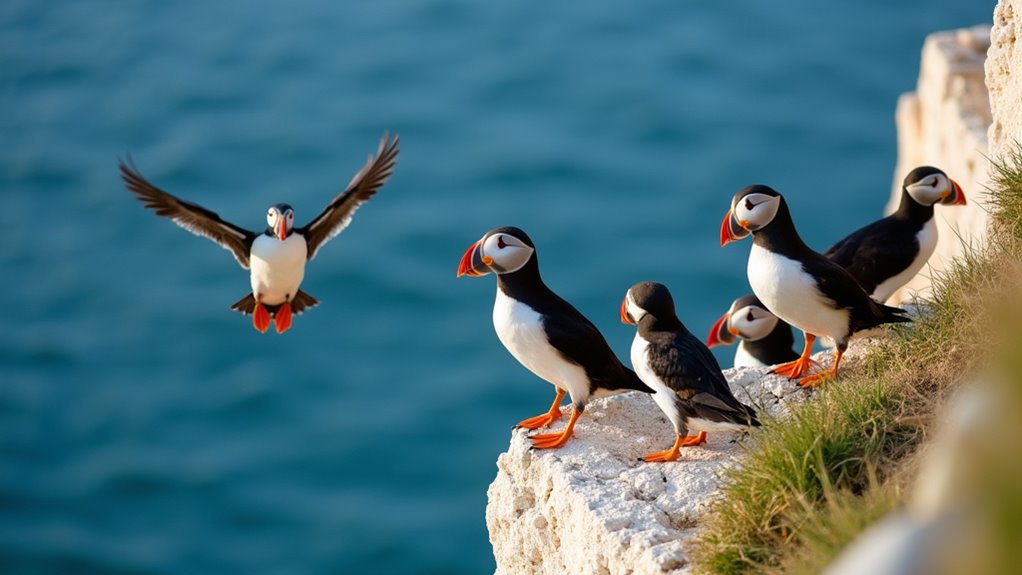
From the tranquil waterways of Wicken Fen, your wildlife watching journey can extend northward to Yorkshire’s dramatic coastline, where Bempton Cliffs provides Britain’s only mainland opportunity to observe puffins in their natural habitat.
Visit between late April and early July for ideal sightings, when these colourful “sea parrots” display their rainbow-coloured beaks and red eye patches during breeding season.
Six wooden observation platforms stretch along three miles of 120-metre chalk cliffs, with the closest requiring just a five-minute walk from the car park.
You’ll pay £7 for adults and £3.50 for children during peak season.
Weather conditions improve considerably in late spring, reducing muddy paths. Puffins are most active at dawn and dusk when they return from fishing at sea, making early mornings and evenings the optimal times for viewing.
Bring protective clothing for exposed coastal winds, and wear suitable footwear for cliff-top safety.
Encountering Red Deer and Otters in Knapdale Forest
Beyond Yorkshire’s coastal cliffs, Scotland’s Knapdale Forest offers you a all-encompassing wildlife experience where red deer roam ancient woodlands and otters patrol the peninsula’s numerous waterways. You’ll find red deer throughout the forest year-round, with impressive antlered stags particularly striking during rutting season. Follow the coastal and woodland trails for your best chances of spotting them.
Otters require more patience since they’re naturally wary. Look for their V-shaped wakes in water or sweet-smelling spraint along riverbanks. Coastal otters are active during daylight hours, while inland ones prefer dawn and dusk. The region’s temperate rainforest creates an exceptionally lush environment with rare broadleaf trees, ferns, and mosses that support this diverse wildlife population.
The Heart of Argyll Wildlife Organisation offers guided walks tailored to families, combining deer and otter watching with beaver viewpoints for a comprehensive Scottish wildlife adventure.
Seal Watching at Blakeney Point in Norfolk
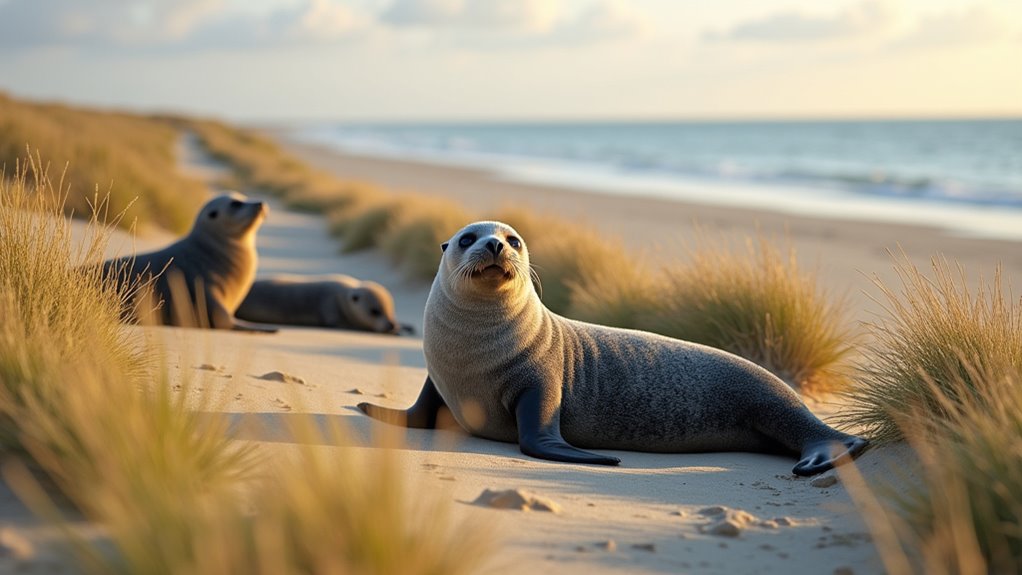
While Knapdale Forest showcases Scotland’s woodland wildlife, Norfolk’s Blakeney Point delivers England’s most spectacular seal-watching experience on a dramatic four-mile shingle spit. This National Trust reserve hosts up to 500 seals in a mixed colony of harbour and grey seals, with nearly 9,000 grey seal pups born in 2024.
You’ll find seals year-round, but peak viewing occurs during grey seal pupping from late October to mid-January. Take boat trips from Blakeney or Morston harbours for close, undisturbed views—boats circle the colony multiple times for photography. The area also attracts thousands of breeding terns during spring and summer, creating spectacular birdwatching opportunities alongside the seal colonies.
The three-mile walk from Cley involves challenging loose shingle terrain.
Boat trips suit all ages, including well-behaved dogs. Check seasonal restrictions and tide times before visiting, and dress warmly for winter trips.
Bird of Prey Experiences at the Cotswold Falconry Centre
Moving inland from Norfolk’s coastal seals, the Cotswold Falconry Centre offers England’s premier bird of prey experience in the heart of Gloucestershire’s rolling hills. You’ll encounter over 130 birds representing 60 species, including eagles, hawks, owls, and critically endangered species with essential conservation focus.
Daily flying displays at 11:30, 13:30, and 15:00 showcase different hunting techniques, with indoor alternatives during poor weather. Each show features different birds, ensuring unique experiences every visit. You’ll observe kestrels’ exceptional hovering abilities and hear buzzards’ distinctive ‘mew’ calls. Red kites gather in social groups to demonstrate their scavenging behavior during feeding demonstrations.
For hands-on encounters, book Flying Starts or Owl Experience programs offering one-hour private sessions with protective gloves provided. These popular experiences require advance booking and don’t need separate admission tickets.
The centre reopens February 14, 2026, offering full-day access with return privileges.
Badger Watching in the Forest of Dean
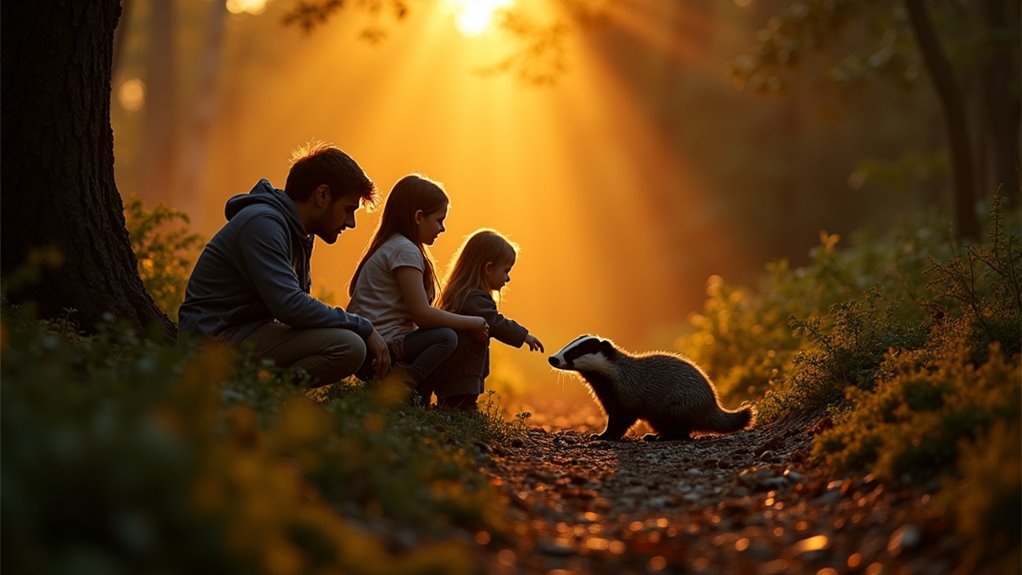
As evening shadows lengthen across the Forest of Dean’s ancient woodlands, you’ll discover one of Britain’s most elusive nocturnal mammals in their natural habitat. While specific badger watching tours aren’t widely advertised in this area, you can still experience these fascinating creatures through general wildlife safaris that operate during twilight hours.
You’ll need patience and quiet movement when exploring potential badger territories. Bring red-filtered torches to avoid disturbing wildlife, and wear dark, comfortable clothing. Stay on designated paths for safety and environmental protection.
The Forest’s diverse ecosystem supports various wildlife beyond badgers, making your evening adventure worthwhile regardless. During these twilight excursions, you might also encounter Wild Boar roaming through the woodland areas, adding an extra element of excitement to your wildlife watching experience. Check with local visitor centers for current wildlife activity reports and guided tour availability, as seasonal variations affect animal behavior and viewing opportunities throughout the year.
Whale and Dolphin Spotting From the Isle of Mull
From the rugged coastline of the Isle of Mull, you’ll witness some of Scotland’s most spectacular marine wildlife encounters. Plan your visit between mid-June and late September for peak whale watching season, when minke whales regularly appear alongside year-round residents like bottlenose dolphins and harbour porpoise.
You’ll also spot common dolphins bow-riding your boat and potentially encounter magnificent basking sharks.
Sea Life Mull, the UK’s longest-running whale watching company, operates daily tours from Tobermory exploring nutrient-rich waters where Atlantic currents create ideal feeding conditions. Choose from 1.5-hour cruises to week-long live-aboard research trips with the Hebridean Whale and Dolphin Trust.
For land-based viewing, head to Duart Castle car park or visit the interactive Hebridean Whale Centre on Tobermory’s harbour front. The waters around Mull have recorded sightings of over 24 cetacean species during two decades of dedicated marine research, making this one of the UK’s most biodiverse whale watching destinations.
The Sum Up
You’ll create unforgettable memories exploring Britain’s incredible wildlife with your family. Remember to pack weather-appropriate clothing, bring binoculars, and maintain safe distances from all animals. Don’t forget to check site opening times and seasonal availability before traveling. Stay on designated paths, keep noise levels low, and teach children to respect wildlife habitats. Book guided experiences when possible—expert knowledge enhances safety and spotting success. Start planning your next wild adventure today!