If you want Rome that feels lived-in, start in Trastevere, not the postcard centers. This is a small-group cooking experience focused on fresh ingredients, local shops, and a hands-on pasta workshop that ends with gelato education—not just dessert.
At roughly three hours, it’s long enough to learn real technique and eat well, but short enough to still enjoy Rome afterward. And with groups kept around a dozen, you get coaching rather than watching other people cook.
- The small-group advantage: get real help shaping pasta
- Where you meet: Via Natale del Grande to Trastevere’s backstreets
- Stop 1 at La Norcineria: porchetta, wine, and the ingredient lesson
- The market and butcher-style tastings that make Rome click
- Fresh pasta workshop at Rione 13 Ristorante
- Wine that keeps the class feeling like dinner, not school
- Gelato finale at Fatamorgana: spot real vs fake
- What you actually eat: a true Trastevere spread
- Dietary needs: what’s possible and what to clarify
- Who this tour fits best (and who might want to skip it)
- Practical tips for booking and going
- Cancellation and meeting logistics in plain terms
- More Workshops & Classes in Rome
- More Cooking Classes in Rome
- More Tour Reviews in Rome
The small-group advantage: get real help shaping pasta
 1 / 8
1 / 8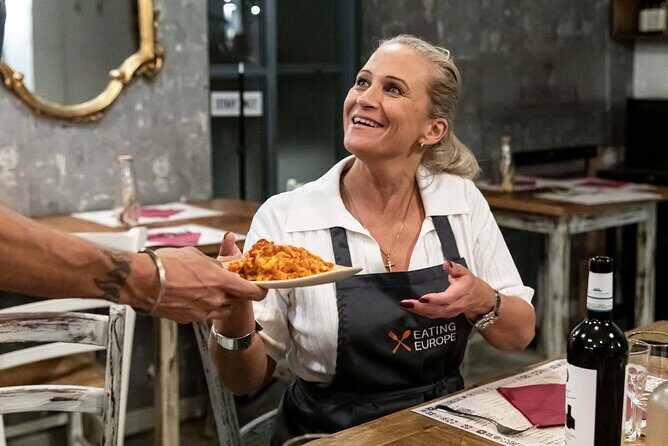 2 / 8
2 / 8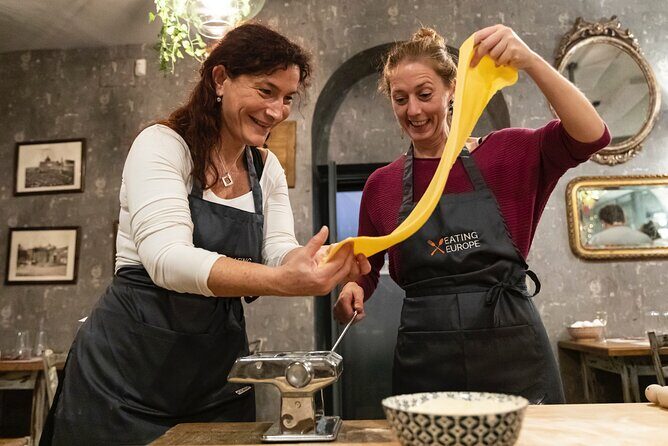 3 / 8
3 / 8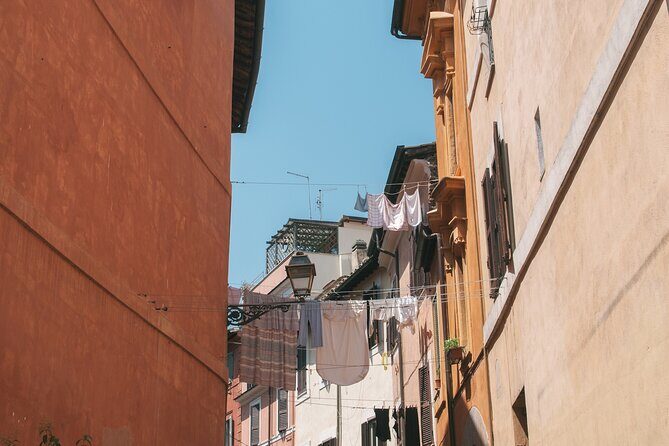 4 / 8
4 / 8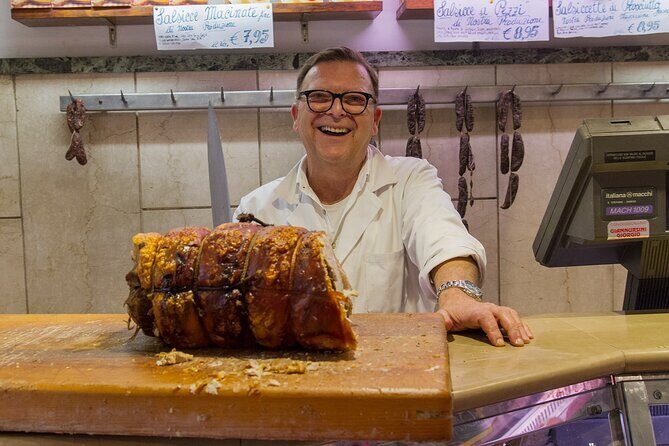 5 / 8
5 / 8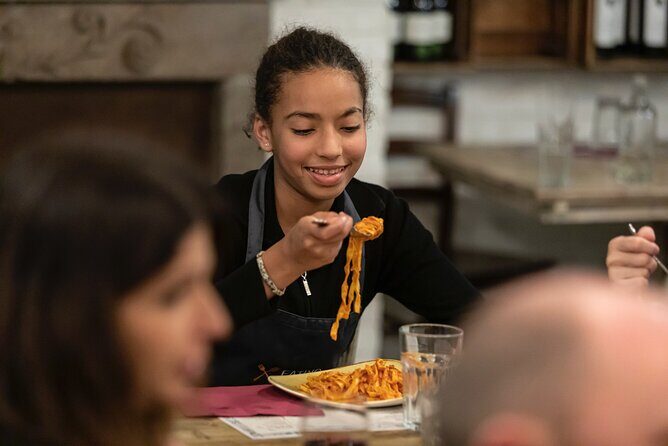 6 / 8
6 / 8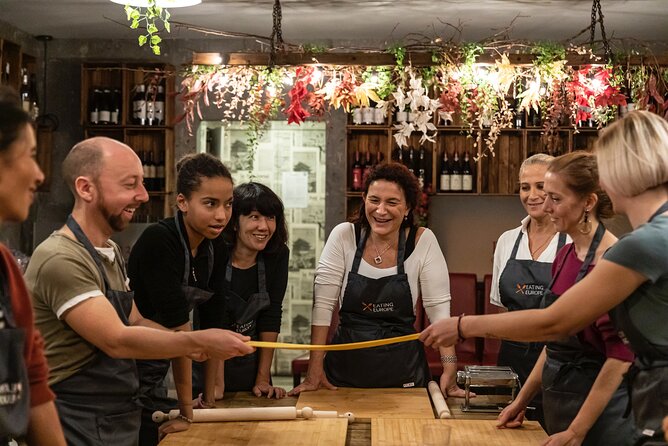 7 / 8
7 / 8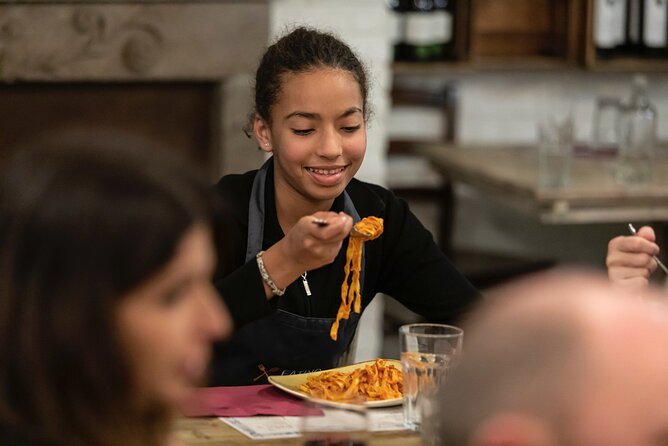 8 / 8
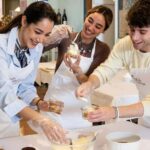
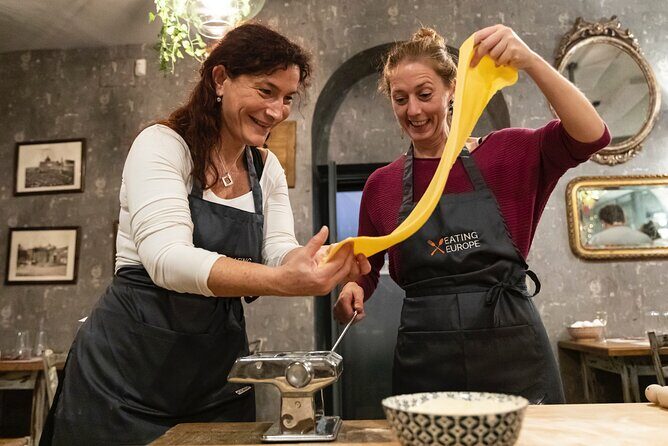
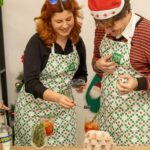
8 / 8Many cooking tours are basically a tasting with a garnish of instruction. This one aims for the opposite: you roll, cut, and shape, with a guide/chef who circulates and gives feedback.
Expect a lively group vibe—recent reviews repeatedly mention groups of about 10–12 as the sweet spot. That size helps you learn faster, too, because you can ask questions without shouting.
Where you meet: Via Natale del Grande to Trastevere’s backstreets
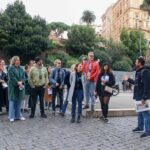
You’ll start near Via Natale del Grande and spend the evening moving through Trastevere. The meeting and end points are both in the neighborhood, which makes the logistics easy and keeps you walking through real streets rather than hopping between distant landmarks.
If you’re using public transport, you’re in a convenient area. Wear comfortable shoes; you’ll be on your feet for tastings and the walk between stops.
You can also read our reviews of more cooking classes in Rome
Stop 1 at La Norcineria: porchetta, wine, and the ingredient lesson
Before you ever touch dough, you get Rome’s flavor DNA. The workshop begins at a traditional Roman delicatessen in Trastevere, where the guide sets the stage with samples and talks about what goes into the pasta-making menu.
You’ll typically start with pizza bianca stuffed with savory porchetta, plus wine. The guide also highlights key ingredients—fresh eggs, grated Parmigiano, and sheep ricotta—so when you later cook, it makes sense rather than feeling like a magic trick.
The market and butcher-style tastings that make Rome click
One of the tour’s best features is the emphasis on where food comes from. You don’t just “taste Italian”—you taste Roman, straight from local suppliers in the neighborhood.
Recent guests consistently call out the meaty tastings and the way the guide explains the choices behind them. Even if you’re not obsessed with food, it’s the kind of stop that turns your dinner the next day into a “now I get it” moment.
Fresh pasta workshop at Rione 13 Ristorante
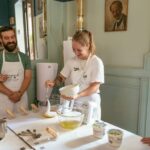
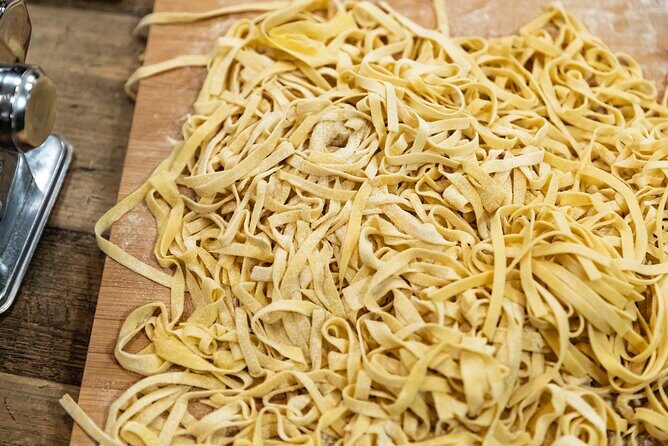
The heart of the experience happens in a classic old-school Roman trattoria at Rione 13. This is where you learn the process for fresh pasta—hands-on fettuccine and ravioli—with a local expert on hand.
You’ll work through the dough, shape it with help, and then enjoy what you make. The meal includes pasta chitarra with amatriciana plus ravioli filled with sheep ricotta and lemon zest, finished with classic sauces and a glass (or more) of wine.
Expect the tone to be friendly and instructive. Many reviews mention the guide/chef being patient and attentive, especially when it comes to troubleshooting technique like thickness, cutting, and stuffing.
Wine that keeps the class feeling like dinner, not school
Pasta classes can be awkward if the mood feels rigid. Here, wine is part of the flow—present from the shop tastings and continued with the meal.
If you’re traveling with kids or you don’t drink, there are alternative beverage options mentioned in the tour details. That’s important on a cooking class, because it keeps everyone included rather than making it a separate experience for non-drinkers.
You can also read our reviews of more tours and experiences in Rome
Gelato finale at Fatamorgana: spot real vs fake
No Rome food night ends at pasta. This tour closes with gelato at Fatamorgana, and the approach is smarter than typical dessert stops.
You’ll not only eat organic gelato—you’ll learn how to tell the difference between real gelato and the more imitation-style versions. It’s a fun, quick lesson that helps you order confidently later, when you’re surrounded by gelaterie claiming everything is the best.
What you actually eat: a true Trastevere spread
Come hungry. Reviews repeatedly stress that you’ll eat plenty, and not just in token bites. The menu centers on Roman favorites and the kinds of flavors Trastevere does especially well.
Across the stops, you can expect a mix of:
- Porchetta and savory pork-focused tastings
- Cheese and ricotta sampling tied to the pasta lesson
- Wine paired through the class and meal
- Pasta you help make, then sit down to eat
- Organic gelato for the finale
Food offerings can vary by day or season, so you’re not locked into a single rigid script. The upside is that you’re more likely to get what’s freshest and local rather than what’s easiest to reproduce for a crowd.
Dietary needs: what’s possible and what to clarify
Vegetarians and gluten-free guests can be accommodated in many cases if you message ahead. The tour encourages emailing or noting dietary requirements at booking, and guides do their best to adjust.
There’s also a clear safety note for severe allergies: the experience isn’t suitable if you have life-threatening food allergies. If that applies to you, it’s worth reaching out before booking so you don’t end up with a risky situation.
Who this tour fits best (and who might want to skip it)
This is ideal for travelers who want both: the neighborhood food crawl and a real cooking takeaway. If you’ve got even basic interest in Roman cuisine, the ingredient-focused explanation makes the experience feel deeper.
It may be less satisfying if you expect a heavy, multi-course formal meal with lots of extra sightseeing. One review calls it less engaging than hoped for the price, which likely comes from differing expectations about how much time is spent strictly walking vs. cooking. If you’re the type who wants cooking as the main event, you’ll probably love it.
Practical tips for booking and going
- Book ahead: it’s commonly reserved about a month and a half in advance on average, so don’t wait until the last minute.
- Don’t schedule dinner too late: you’ll be busy for around three hours and then you’re likely full.
- Bring questions: the best learning comes when you ask about technique and ingredients.
- Plan your evening: this ends back in Trastevere, so it’s a great launch point for a casual night walk.
Rome Trastevere Pasta Making Class with Eating Europe
Cancellation and meeting logistics in plain terms
Cancellation is flexible: you can cancel up to 24 hours before for a full refund. If you’re booking close to your trip dates, check local start times and don’t assume time zones.
Meeting is at Via Natale del Grande, 46 and it ends at Via Roma Libera, 11, both in Trastevere. That makes it easy to get on with your day after the class without backtracking across Rome.