
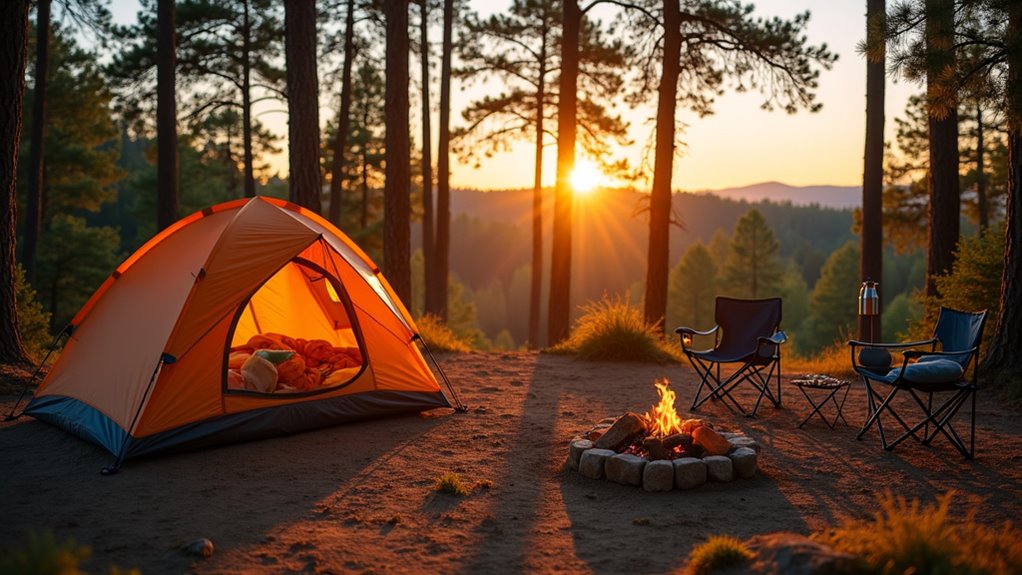
Start your family camping adventure by choosing a tent twice your group’s size and practicing setup at home first. Select family-friendly campgrounds with flush toilets, showers, and playgrounds near your tent site. Pack strategically using plastic bins, prepare freezer meals ahead, and bring extra clothing for kids. Establish a 3-foot safety perimeter around fire pits, involve children in age-appropriate camp tasks, and always follow Leave No Trace principles. These foundational strategies will set you up for outdoor success.
- Choose the Right Accommodation Type for Your Family’s Comfort Level
- Research and Select Family-Friendly Campsites With Essential Amenities
- Create a Comprehensive Gear Checklist and Pack Strategically
- Practice Setting Up Your Tent at Home Before the Trip
- Master Proper Tent Positioning and Site Selection Techniques
- Pack Smart With Essential Clothing and Minimal Gear
- Bring the Right Navigation and Emergency Safety Tools
- Plan Simple, Kid-Friendly Meals and Cooking Methods
- Optimize Sleeping Comfort With Proper Insulation Techniques
- Establish Clear Fire Safety Rules and Boundaries
- Involve Children in Activity Planning and Camp Setup
- Follow Leave No Trace Principles and Wildlife Safety Guidelines
- The Sum Up
Choose the Right Accommodation Type for Your Family’s Comfort Level
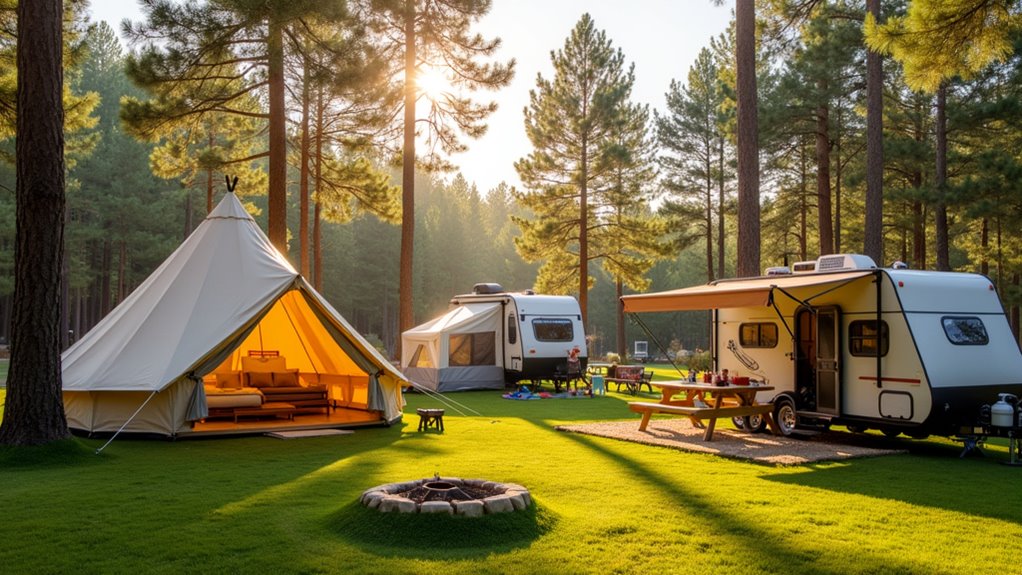
When you’re planning your family’s first camping adventure, selecting the right tent can make the difference between a memorable experience and a miserable one. Start by choosing a tent that’s twice your group size—if you’re a family of four, get an 8-person tent for comfort and gear storage.
Dome tents work well for short trips with 2-4 people, offering excellent wind resistance and budget-friendly options under $200. However, their sloping walls limit headroom.
Cabin tents provide maximum space with near-vertical walls, accommodating 4-8 people and allowing room for cots. For serious family camping, canvas bell tents offer superior durability and weather resistance, though they’re heavier. Canvas tents are naturally breathable materials, reducing condensation and improving comfort while helping regulate temperature.
Prioritize waterproof ratings of 3,000mm+ with sealed seams, plus adequate ventilation to prevent condensation.
Research and Select Family-Friendly Campsites With Essential Amenities
Finding the perfect campsite can transform your family’s first camping trip from stressful to spectacular, so prioritize locations with essential amenities that’ll keep everyone comfortable and happy.
Focus on campgrounds with flush toilets, showers, and laundry facilities – these basics reduce daily hassles markedly when you’re managing small children.
Look for sites featuring playgrounds, pools with lifeguards, and game rooms that enable supervised multi-age play.
Choose locations near national parks or family attractions, ensuring your campsite sits close to bathrooms and recreational areas for short walks with little ones. Many established campgrounds now offer glamping options like luxury tents and treehouses that provide a comfortable introduction to outdoor experiences for families hesitant about traditional tent camping.
Prioritize fenced play areas, well-lit paths, and clean facilities that indicate operational competence.
Create a Comprehensive Gear Checklist and Pack Strategically
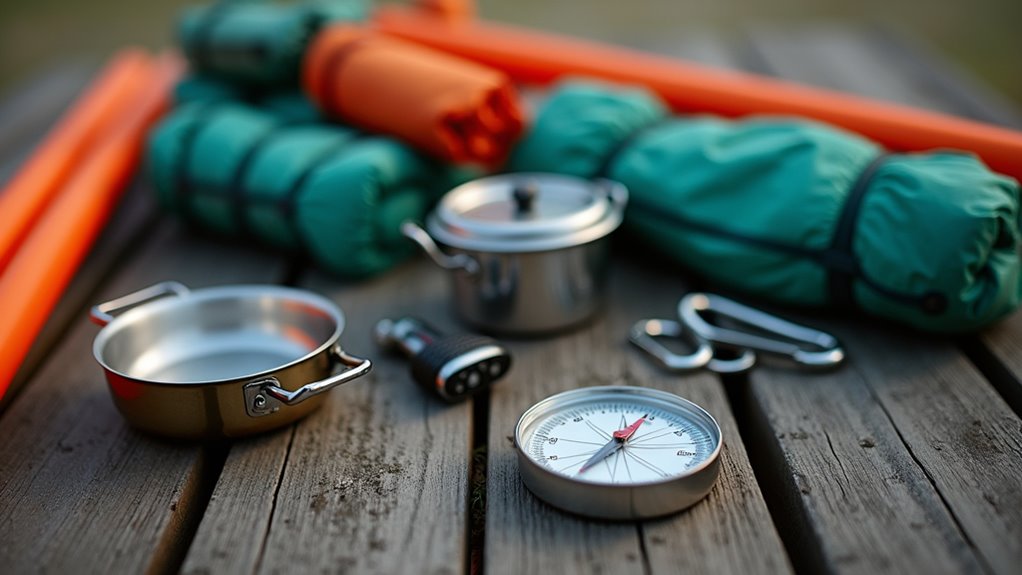
Nothing transforms a chaotic camping experience into an organized adventure quite like a well-planned gear checklist that accounts for every family member’s needs. Start with shelter essentials—your tent, sleeping bags, pads, and repair kit. Don’t forget that hammer for stakes and extra guylines for unexpected weather.
Pack strategically using plastic storage bins to organize gear by category. Keep cooking essentials like your portable stove, fuel, cooler, and utensils together. Load frequently needed items like headlamps, first-aid kit, and toiletries in easily accessible containers. Roll clothing to save space in your bins and make room for other essential gear.
For families with young children, include child-size chairs, sippy cups, and extra clothing. Pack moisture-wicking shirts, rain gear, and sturdy hiking shoes for everyone. Remember your multi-tool, duct tape, and firestarter—these camping lifesavers solve countless unexpected problems.
Practice Setting Up Your Tent at Home Before the Trip
Before you head to your campsite, practicing tent setup in your backyard or living room will save you hours of frustration and potential family meltdowns. Home practice builds confidence through muscle memory development and helps you identify missing gear before departure.
You’ll considerably reduce on-site setup time while ensuring familiarity with manufacturer instructions.
Unpack your tent and lay it flat on an even surface. Assemble poles section by section, then insert them through sleeves gently. Raise the structure and stake corners at 45-degree angles. Attach the rainfly, aligning seams carefully. Practice also helps you troubleshoot any issues and improve technique before your actual camping trip.
Avoid snapping poles violently or over-tensioning corners initially. Assign tasks to children like handing pegs or counting stakes aloud. Practice the complete teardown and repacking process together.
Master Proper Tent Positioning and Site Selection Techniques
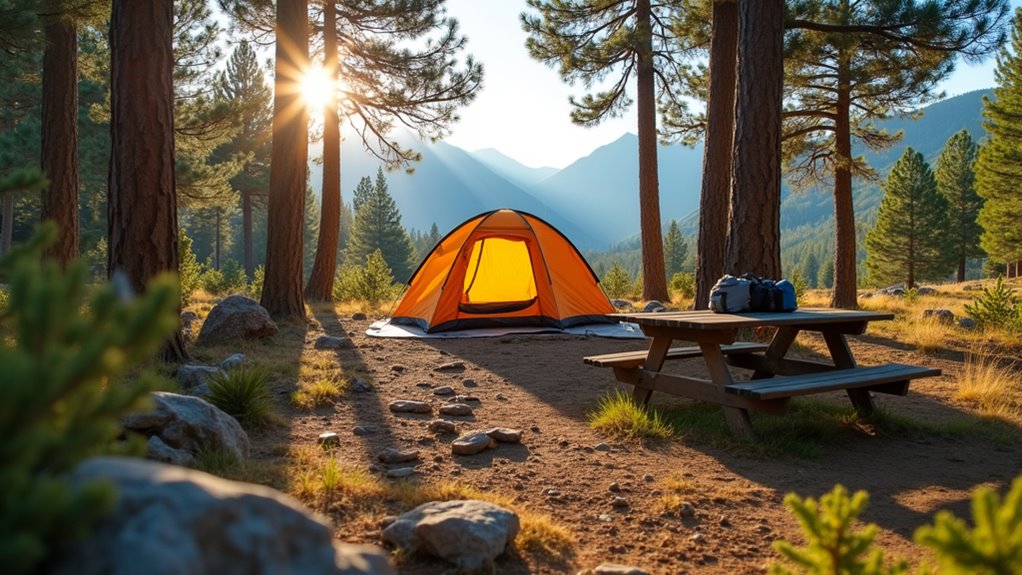
While your tent setup skills matter, choosing the right spot can make or break your family’s camping experience. Start by selecting flat, level ground and clearing away sticks, rocks, and debris that’ll create uncomfortable lumps beneath your tent.
Look for natural windbreaks like trees or hills to shield your family from prevailing winds, but avoid camping under damaged branches that could fall. Choose higher ground to prevent water pooling and runoff, which keeps your campsite dry during unexpected rain showers.
Position your tent’s entrance away from the wind to prevent constant flapping and water intrusion. Lay your footprint first, then align your tent precisely before staking.
For families, orient doors toward your campsite for easy access to kids and gear.
Drive stakes at 45-degree angles away from the tent for maximum holding power, and always secure guylines on the windward side first for stability.
Pack Smart With Essential Clothing and Minimal Gear
Since overpacking ranks among the most common mistakes new family campers make, you’ll want to focus on versatile clothing that handles multiple conditions without weighing down your packs. Start with moisture-wicking base layers – synthetic or wool underwear, T-shirts, and socks that regulate temperature and manage sweat.
Pack quick-drying pants, long-sleeve shirts for bug protection, and lightweight fleece for cool evenings. Don’t forget essential rainwear including waterproof jackets and pants.
Choose footwear strategically: sturdy hiking shoes for terrain, camp slip-ons for comfort, and water shoes if swimming’s planned. Pack sleepwear appropriate for expected temperatures, plus warm layers like jumpers for cold nights.
Essential accessories include hats, sunglasses, and extra outfit changes for kids who inevitably get messy during outdoor adventures. Always include extra socks and underwear beyond your planned daily needs, as these items provide crucial comfort during multi-day camping trips.
Bring the Right Navigation and Emergency Safety Tools
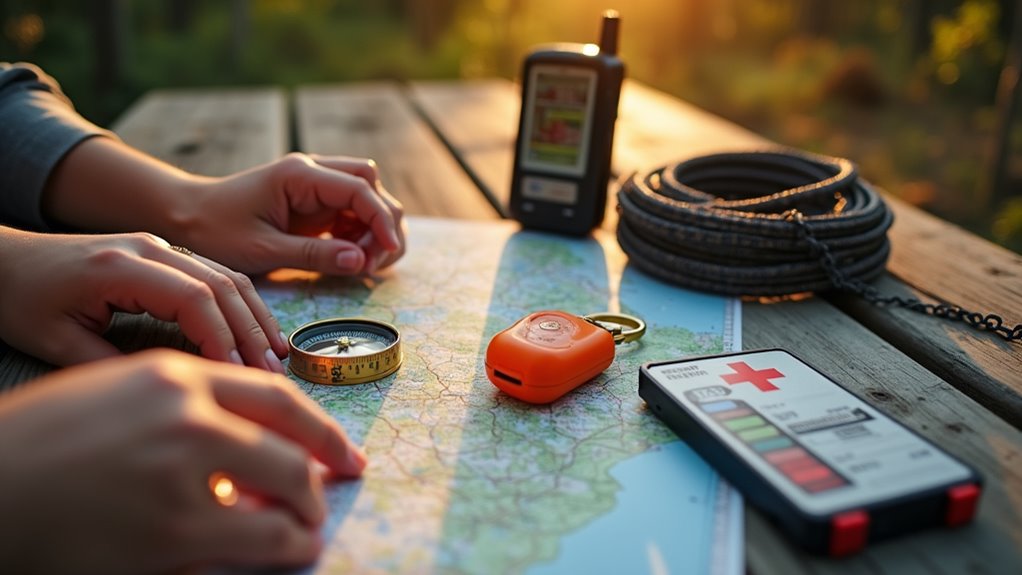
Getting lost with your family in unfamiliar wilderness can transform a fun camping trip into a dangerous emergency, making reliable navigation tools absolutely essential for first-time campers.
Start with smartphone apps like AllTrails for trail discovery and route planning, but always download offline maps before you leave home since cell service disappears in remote areas. Pack a portable battery bank to keep devices charged throughout your trip.
Don’t rely solely on technology—bring paper maps and a magnetic compass as backup navigation tools. Store your maps in two-gallon-sized freezer bags to protect them from moisture and keep them organized during your trip.
For family camping, consider a GPS watch to track mileage and monitor your progress.
If you’re venturing into remote locations, invest in a satellite communicator like the Garmin inReach Mini 2 for emergency SOS capability and two-way messaging when cell towers aren’t available.
Plan Simple, Kid-Friendly Meals and Cooking Methods
Though camping with kids often conjures images of elaborate campfire feasts, successful family meals actually depend on simplicity and advance planning rather than culinary ambition. You’ll want to assess your cooking setup beforehand—whether you’ll have fire pits, camp stoves, or face fire restrictions that limit your options.
Stock your cooler with freezer-friendly premade meals like chili, mac and cheese, or black bean fajitas that you’ve prepared and frozen a week before your trip.
For exhausting activity days, rely on “lazy camp meals” such as cast iron nachos, hot dogs with boxed pasta, or foil packet dinners that require minimal prep and cleanup.
Plan breakfasts around your daily activities—overnight oats for high-energy trail days, eggs and bacon for relaxed campground mornings. Keep a separate cooler for drinks to minimize opening your food cooler and maintain consistent temperatures for your perishables.
Optimize Sleeping Comfort With Proper Insulation Techniques
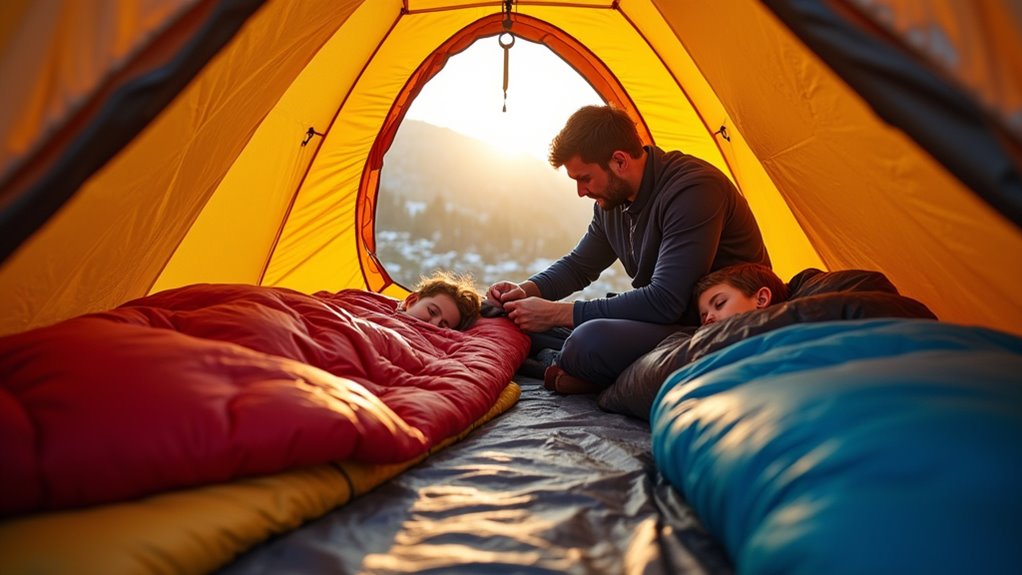
While you’ve packed the perfect meals and mapped your hiking trails, a sleepless night on frozen ground can quickly derail your family’s camping enthusiasm. Start with proper ground insulation by layering at least two closed-cell foam pads under your inflatable mattresses. Choose pads with R-values of 3.5 or higher for cold conditions, and place a tent footprint underneath for moisture protection.
Create a complete sleeping system by adding sleeping bag liners and thermal bivvy sacks for extra warmth. Seal tent gaps with duct tape or spare clothes, but maintain some ventilation to prevent condensation that’ll soak your gear. Store your family’s clothes inside sleeping bags overnight so they’ll be warm and ready to put on in the morning.
Position your tent entrance away from prevailing winds and consider attaching reflective emergency blankets to tent walls as radiant barriers to bounce body heat back to your family.
Establish Clear Fire Safety Rules and Boundaries
Before you strike that first match, establish a clear safety perimeter that’ll protect your family from burns and prevent your camping trip from becoming an emergency room visit. Create a 3-foot clearance around your fire pit and mark it with sticks or bright tape so kids understand boundaries.
Position fires at least 15 feet from tents and flammables, checking for overhanging branches within 10 feet.
Gather everyone for a pre-fire briefing. Show children the safety zone, water bucket location, and practice stop-drop-roll techniques.
Assign fire-building to adults only—kids can help gather natural materials but shouldn’t handle matches or flames. Use only natural materials and matches to start your fire, avoiding accelerants like gas or lighter fluid that can cause dangerous flare-ups.
Maintain constant supervision with one designated adult watching children. Never leave fires unattended, and assist young campers with marshmallow roasting to prevent accidents.
Involve Children in Activity Planning and Camp Setup
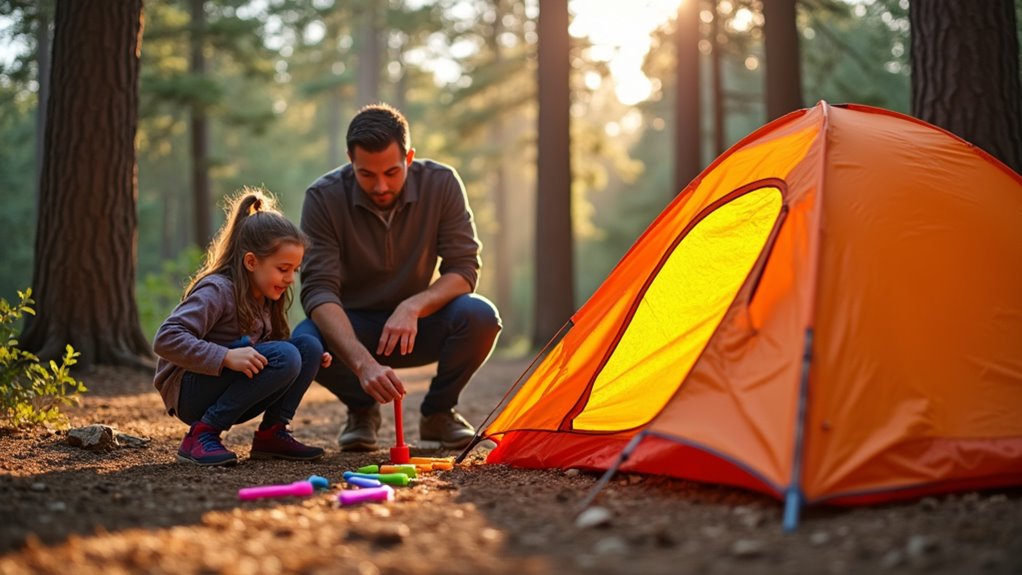
When you involve your children in planning activities and setting up camp, you transform potential chaos into collaborative excitement while teaching valuable outdoor skills. Assign age-appropriate tasks like gathering firewood and packing sleeping bags. Create scavenger hunt lists and plan stargazing sessions with constellation charts to encourage exploration.
During camp setup, teach tent assembly collaboratively and have kids arrange their sleeping areas. They’ll love collecting branches for campsite decoration and building stick forts in wooded areas. Give them gear checklists to ensure nothing’s forgotten.
Turn daily tasks into engaging activities—make dishwashing a fun role-playing game or organize outdoor games like capture the flag. Pack puzzles in ziplocks for quiet moments and gather natural materials for creative crafts. Consider setting up friendly competitions for tasks like tent setup or firewood collection to add an element of excitement to camp duties. This involvement fosters confidence while making memories.
Follow Leave No Trace Principles and Wildlife Safety Guidelines
After you’ve built memories through collaborative camping activities, protecting the natural environment becomes your family’s next important responsibility. Teach your children to pack out all trash and food scraps, leaving campsites cleaner than you found them.
Camp only on durable surfaces like established sites, and stay 200 feet away from water sources when setting up.
Keep wildlife safe by storing food in bear-proof containers and observing animals from a distance—never feed them. Show kids how to dispose of waste properly by burying human waste 6-8 inches deep, well away from water and trails.
Leave natural objects undisturbed, and avoid building rock cairns or stick structures. Use lightweight stoves instead of campfires whenever possible to minimize environmental impact. These practices guarantee future families can enjoy pristine wilderness experiences while keeping everyone safe.
The Sum Up
You’ve got the foundation for an incredible family camping adventure. Don’t let perfectionism hold you back—your first trip won’t be flawless, and that’s perfectly fine. Focus on safety, preparation, and flexibility when things don’t go as planned. Your kids will remember the s’mores and stargazing, not the forgotten camp chairs. Start with these basics, learn from experience, and you’ll build confidence for many future outdoor memories together.