
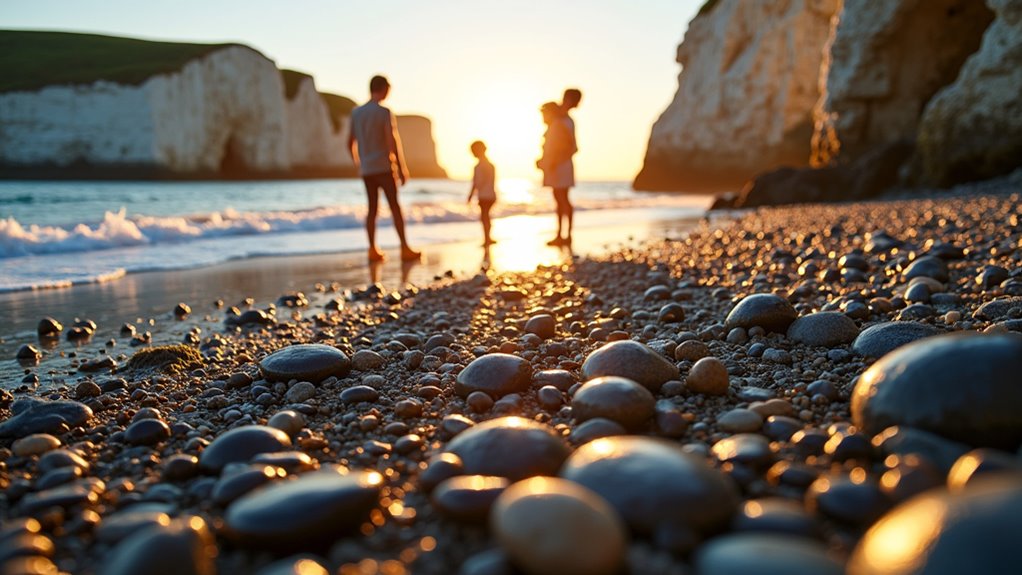
You’ll find Britain’s best family-friendly fossil hunting at Lyme Regis and Charmouth in Dorset, where guided walks help you discover ammonites safely. Warden Point on the Isle of Sheppey offers shark teeth finds, while Bracklesham Bay provides easy access without cliff dangers. Don’t miss Watchet Beach for giant ammonites, Robin Hood’s Bay for diverse Jurassic fossils, and Peacehaven’s accessible chalk cliffs. Always collect loose fossils only, avoid cliff digging, and check tide times before exploring these prehistoric treasure troves.
- Lyme Regis Beach, Dorset – The Crown Jewel of Jurassic Coast Fossil Hunting
- Charmouth Beach, Dorset – Perfect Beginner’s Paradise With Expert Support
- Warden Point Beach, Isle of Sheppey – Ancient Shark Teeth and Prehistoric Treasures
- Bracklesham Bay, Chichester – Eocene Fossil Hotspot for All Ages
- Watchet Beach, North Somerset – Blue Lias Formations and Giant Ammonite Discoveries
- Barton on Sea, Hampshire – Famous Clay Exposures With Hundreds of Species
- Kimmeridge Bay, Dorset – Fossil-Rich Ledges and Marine Reptile Remains
- Robin Hood’s Bay, Yorkshire – Spectacular Jurassic Cliffs and Diverse Fossil Finds
- Peacehaven, East Sussex – Chalk Cliff Fossils and Sea Urchin Treasures
- The Sum Up
Lyme Regis Beach, Dorset – The Crown Jewel of Jurassic Coast Fossil Hunting
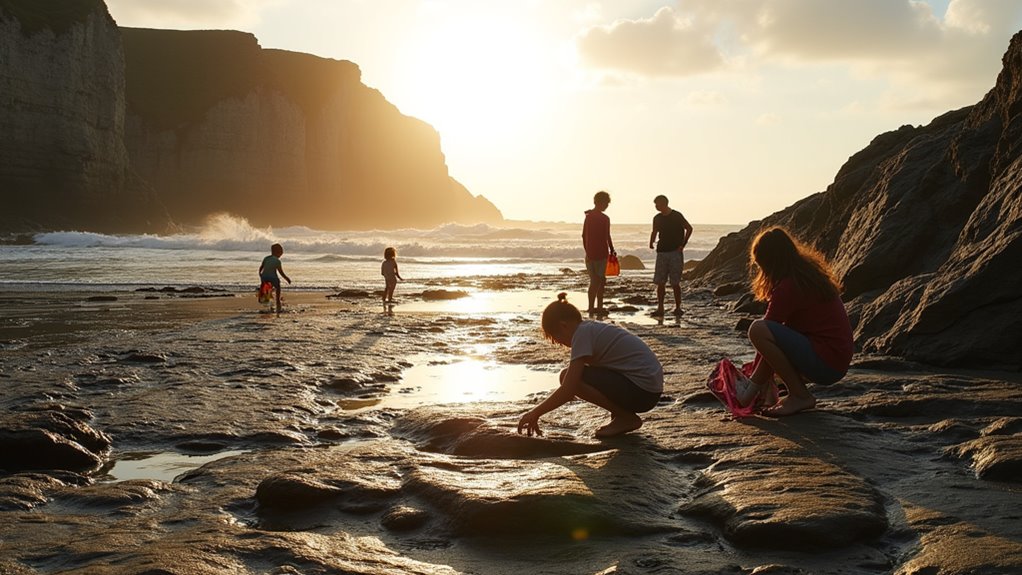
When you’re searching for the perfect fossil hunting destination, Lyme Regis Beach in Dorset stands as the undisputed crown jewel of the UK’s Jurassic Coast. This UNESCO World Heritage site spans 185 million years of geological history, where Mary Anning made her groundbreaking ichthyosaur discovery in 1811.
You’ll find excellent hunting spots including Main Beach near town center and Monmouth Beach’s famous ammonite pavement. Your family can easily spot ammonites, belemnites, and crinoid stems among the fallen rocks.
Remember to collect only loose fossils—never dig into cliffs, as they’re extremely dangerous.
Check tide times carefully and hunt during low tide for safety. The Lyme Regis Museum offers expert-guided walks that’ll teach your children proper identification techniques while sharing fascinating stories about this fossil capital. For beginners seeking additional expertise, Charmouth Beach provides guided walks and features a dedicated visitor center with professional fossil experts.
Charmouth Beach, Dorset – Perfect Beginner’s Paradise With Expert Support
Just three miles east of Lyme Regis, Charmouth Beach offers you the perfect introduction to fossil hunting with professional guidance that’ll boost your family’s confidence from day one.
You’ll find Wardens from Charmouth Heritage Coast Centre leading 1.5-hour guided walks for £14 adults and £8 children. Meet at the red lifebuoy outside the centre—look for blue high-vis jackets. You’ll keep every Jurassic fossil you discover while learning prime hunting spots and techniques. Before your walk, you’ll receive an introductory talk video covering local rocks, fossils, and identification tips to help prepare you for the experience.
This 190-million-year-old coastline yields pyritised ammonites, belemnites, and occasional marine reptile bones. Search the foreshore during falling tides between high and low water marks—no hammering required as waves naturally sort fossils from clay.
Wear sturdy footwear for uneven terrain and stay clear of unstable cliffs for safety.
Warden Point Beach, Isle of Sheppey – Ancient Shark Teeth and Prehistoric Treasures
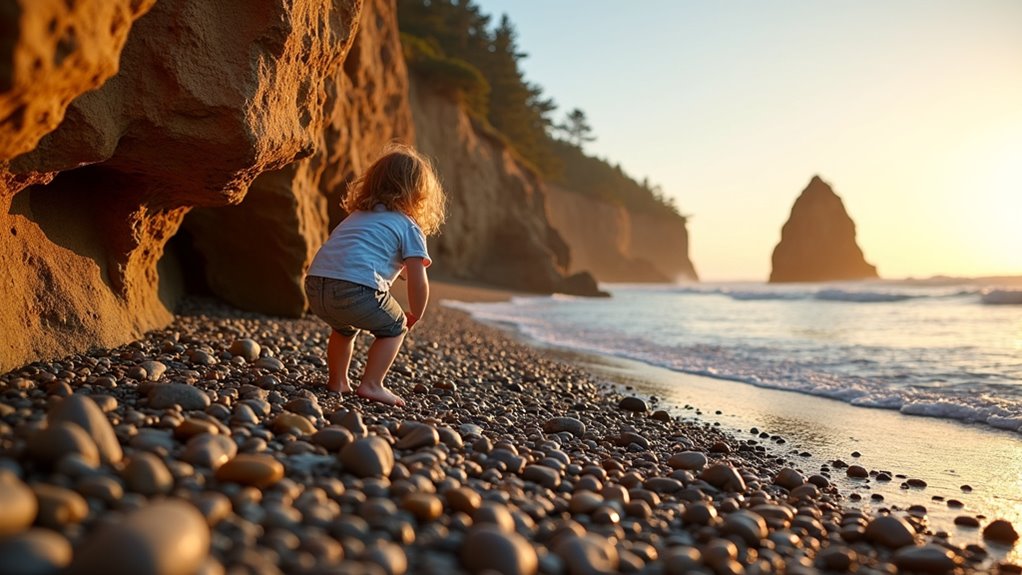
While most fossil beaches require perfect timing with tides, Warden Point Beach on the Isle of Sheppey delivers ancient shark teeth and prehistoric treasures year-round—making it your family’s most dependable hunting ground in Kent.
You’ll find 52-million-year-old London Clay constantly eroding, releasing Otodus obliquus shark teeth, Zanthopsis crabs, and pyritized wood onto the beach. The extensive foreshore lets kids search comfortably on hands and knees, discovering gastropods and fish vertebrae in shingle accumulations.
Visit two hours after high tide for ideal conditions. Check phosphatic nodules below the high water mark—they often contain perfectly preserved lobsters and trace fossils. Bring trowels and knives for extraction.
The coastline stretches from Minster to Warden Point, creating an exceptionally fossil-rich hunting zone for families to explore.
Stay alert for fast tides, sticky clay, and cliff falls. Never dig the SSSI-protected cliffs, but enjoy this accessible treasure trove.
Bracklesham Bay, Chichester – Eocene Fossil Hotspot for All Ages
Moving from Kent’s ancient shark teeth to West Sussex, Bracklesham Bay presents Britain’s most spectacular Eocene fossil hunting experience—where your family can discover 160 different fish species alongside massive disc-shaped foraminifera called Nummulites on a safe, sandy beach.
You’ll find shark teeth, gastropods, and bivalves scattered across the sand after storms, with no cliff dangers to worry about. The broad beach offers shallow water and easy car park access, making it great for children. The site also features convenient visitor amenities including toilets and a small on-site cafe.
Look for small turreted shells called Turritella and distinctive coin-shaped Nummulites fossils up to several centimeters across.
Plan your visit during low tide following rough weather for the best fossil exposure. These 46-million-year-old treasures from warm Eocene seas wash directly onto the strandline, creating effortless collecting opportunities for young fossil hunters.
Watchet Beach, North Somerset – Blue Lias Formations and Giant Ammonite Discoveries
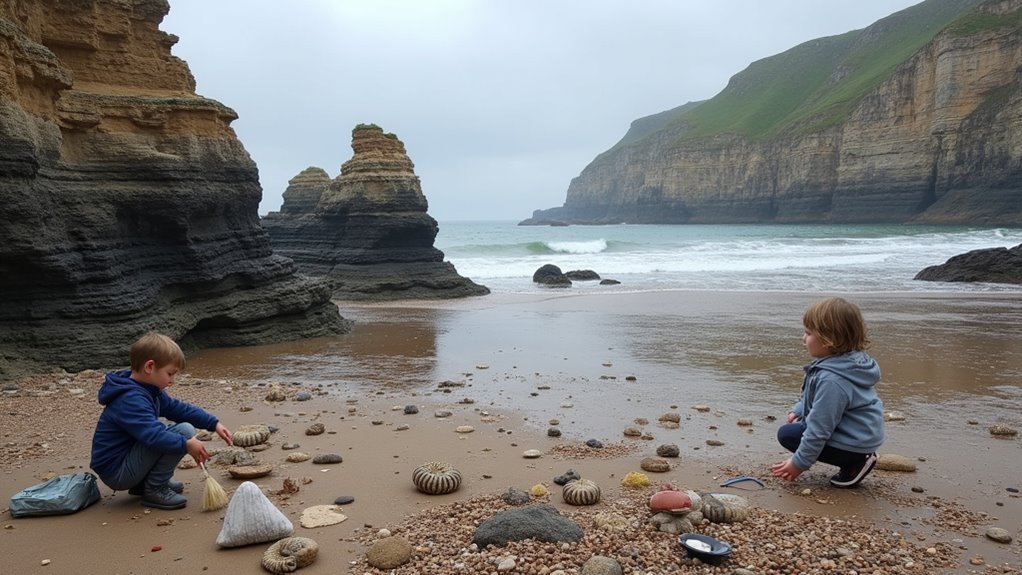
Along North Somerset’s dramatic coastline, Watchet Beach offers your family the chance to discover spectacular giant ammonites and nautiloids embedded in 200-million-year-old Blue Lias rock platforms—where rhythmic layers of limestone and mudstone create natural fossil treasure troves at low tide.
You’ll find abundant cephalopod shells, including massive Cenoceras nautiloids forming distinctive “islands” across limestone surfaces. The famous Gryphaea arcuata oysters, nicknamed “Devil’s Toe Nails,” are perfect beginner finds for children exploring the wide intertidal platforms.
Time your visit carefully around low tide, as these platforms become inaccessible when submerged. Collect only from loose foreshore material—never hammer cliffs due to rockfall dangers. Storm events often expose fresh material along the shoreline, as natural exposure events reveal new fossils for collecting.
Watchet’s proximity to Blue Anchor and Kilve creates an excellent fossil-hunting corridor for multi-day family adventures.
Barton on Sea, Hampshire – Famous Clay Exposures With Hundreds of Species
From the ancient seas of the Jurassic, you’ll step forward in time to Hampshire’s Barton on Sea, where 40-million-year-old Eocene clays have weathered from towering cliffs to create one of Britain’s most fossil-rich beaches.
You’ll find hundreds of marine mollusc species, including gastropods and bivalves, plus shark teeth and occasional plant fossils scattered across the foreshore.
The soft clays erode constantly, exposing fresh fossils year-round. Head towards Highcliffe for the best exposures, where slumped clay deposits concentrate finds near the water’s edge.
You’ll discover complete shells by inspecting grey and brown clay chunks closely. However, stay well away from the unstable cliff face—these cliffs retreat about three feet annually.
The protective limestone blocks also yield crinoid stems and other surprises when weathered. Plan your visit during low tides for optimal fossil hunting conditions when more of the fossil-rich foreshore becomes accessible.
Kimmeridge Bay, Dorset – Fossil-Rich Ledges and Marine Reptile Remains
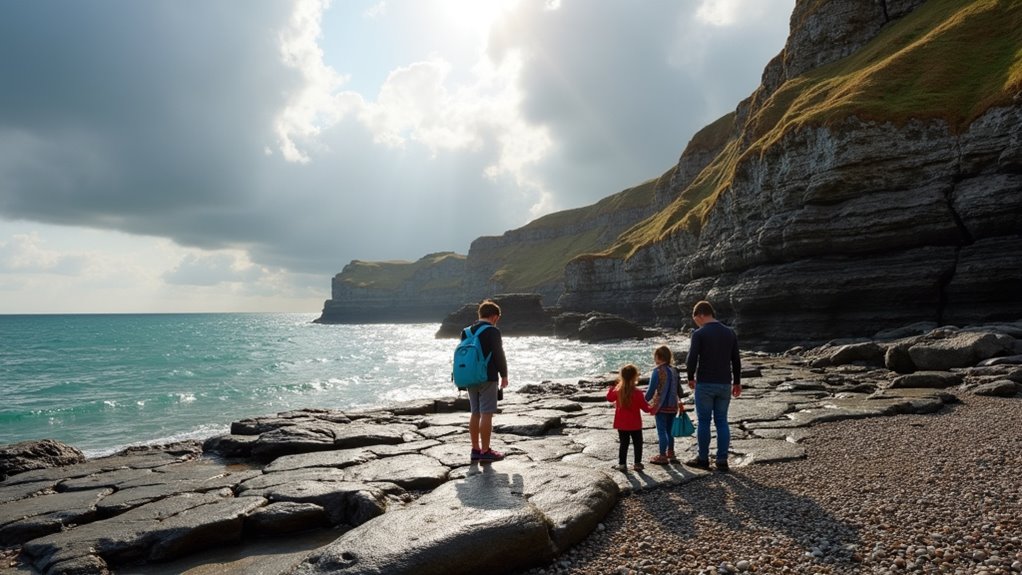
While Kimmeridge Bay sits within Dorset’s UNESCO World Heritage Jurassic Coast, you’ll discover it’s become one of Britain’s most restricted fossil hunting locations due to strict collecting rules and dangerous conditions.
You can’t use hammers or collect from cliffs, and only loose fossils from the foreshore are permitted. The site’s famous for marine reptile remains and abundant ammonites, but Steve Etches holds exclusive collecting rights here.
The dramatic Kimmeridge Clay cliffs expose 185 million years of Earth’s history, making fossil observation fascinating even without collecting. The Wild Seas Centre near the car park provides educational insights about the local marine environment and geological features.
However, you’ll face serious safety challenges: dangerous tides that cut off collectors, unstable cliffs prone to rockfalls, and tricky access paths. Best stick to viewing fossils at the nearby Etches Collection Museum instead.
Robin Hood’s Bay, Yorkshire – Spectacular Jurassic Cliffs and Diverse Fossil Finds
Moving north from Dorset’s restrictive collecting rules, Robin Hood’s Bay in Yorkshire offers an invigorating change with its spectacular 50-meter Jurassic cliffs and excellent fossil hunting opportunities.
You’ll discover abundant ammonites, belemnites, and bivalves in the foreshore rocks and nodules, particularly after winter storms expose fresh material.
However, this site requires serious safety consideration for families. The cliff access earns only two diamonds for children due to dangerous conditions, making it unsuitable for young kids.
You’ll need tools for splitting rocks since loose fossils are uncommon. Head to the north side after cliff falls for the richest finds, where Redcar Mudstone Formation yields impressive specimens.
Consider booking guided tours that ensure responsible collecting in this protected SSSI while teaching children about Jurassic ecosystems safely. Park at the cliff top and take the footpath down to the beach for the most convenient access to the fossil-rich foreshore.
Peacehaven, East Sussex – Chalk Cliff Fossils and Sea Urchin Treasures
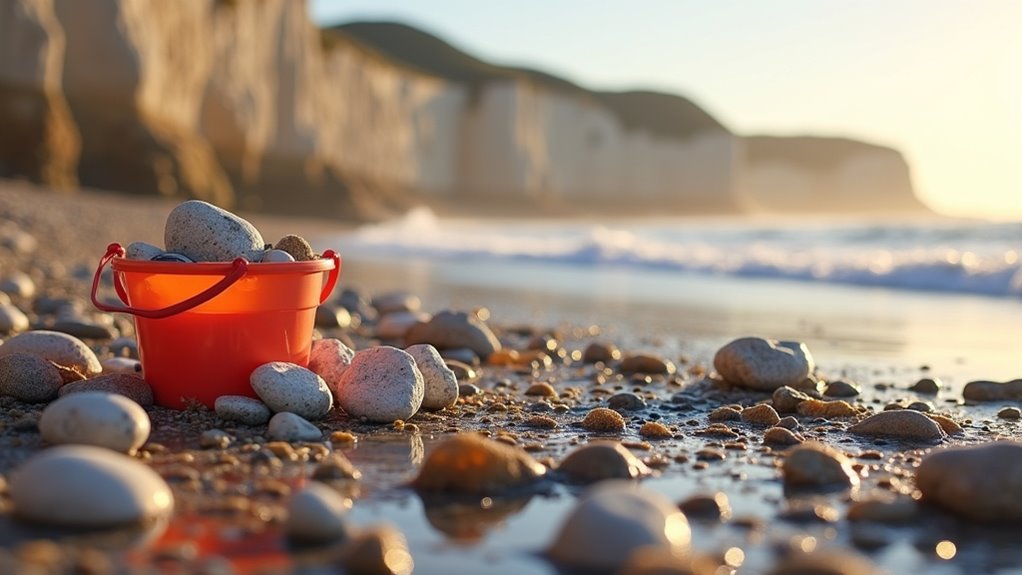
Although Peacehaven’s chalk cliffs lack the dramatic height of Yorkshire’s coastline, they’re great for families seeking accessible fossil hunting with children. You’ll find concrete steps carved into the cliff face leading to productive foreshore areas, with convenient roadside parking above.
Head to low tide when fallen rocks reveal the best specimens. Your kids will love spotting massive four-foot diameter ammonites visible every few yards on the beach platform. Search baguette-sized rocks for flint-preserved sea urchins, particularly the large Echinocorys cincta species that’s abundant here.
Remember SSSI rules prohibit hammering the cliffs, but you won’t need tools. Fallen blocks contain complete echinoids, bivalves, and occasional shark teeth. The foreshore northwest of the steps offers the most productive hunting during scouring conditions. The exposed Cretaceous chalk formations date back approximately 83.5 million years, when this area lay beneath a warm, shallow sea.
The Sum Up
You’ll create unforgettable memories exploring these fossil-rich beaches with your family. Always check tide times before you go, and bring proper tools like a small hammer and safety goggles. Don’t forget to pack snacks and water for your young paleontologists! Remember to respect the environment—only collect loose fossils from the beach, never chip directly from cliffs. Most importantly, supervise children closely near water and unstable cliff areas for everyone’s safety.