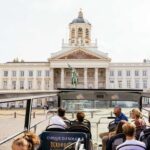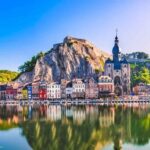
I’m putting this Bruges & Ghent day tour under the microscope because it’s a practical way to see two UNESCO-feeling cities in one long day, with a guided walk in each and time to roam. You start by coach near the National Bank of Belgium, then swap cobblestones and canal views between Ghent and Bruges.
What I like most is how you get both structure and breathing room: guided stops at the big-ticket sites plus enough free time to sit down, wander, and reset. I also appreciate the way the tour leans on knowledgeable, organized guides like Veronica and Juliana, with radios/earphones so you don’t miss the stories while you’re walking.
One thing to consider: it’s a full 10.5-hour day and it’s not built for wheelchairs or mobility needs. Also, lunch and entry tickets are not included, so you’ll want to plan around that.
- Key things to know before you go
- From Brussels to Flanders: Coach comfort and a tight day plan
- Ghent first: Saint Bavo Cathedral and the Mystic Lamb
- Graslei, Castle of the Counts, and the Great Butchers’ Hall
- Ghent break time: how to use 105 minutes well
- Crossing to Bruges: the fairytale city switch
- Lake of Love and the Begijnhof built in 1245
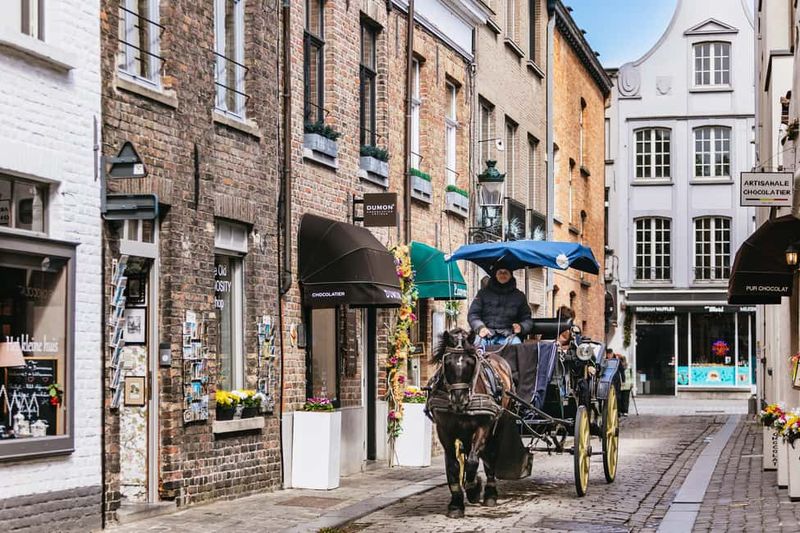
- Bruges on foot: cobbles, canals, and a good walking pace
- Lunch in Bruges: timing is part of the experience
- Old St. John’s Hospital and Bruges’s layered past
- Our Lady’s Church and Michelangelo’s Madonna
- Grote Markt and the Belfry tower moment
- Optional canal cruise: the last 60 minutes that really help
- Guides: the difference between seeing and understanding
- What to pack and how to pace yourself
- Price and value: is worth it?
- Who this day tour suits best
- Should you book? My honest take
- FAQ
- Where do I meet the tour in Brussels?
- How long is the tour and when do we return?
- What’s included in the price?
- Is lunch included, and are entry tickets included?
- What languages do the guides speak?
- Is the tour suitable for wheelchair users?
- More Tours in Brussels
- More Tour Reviews in Brussels
Key things to know before you go
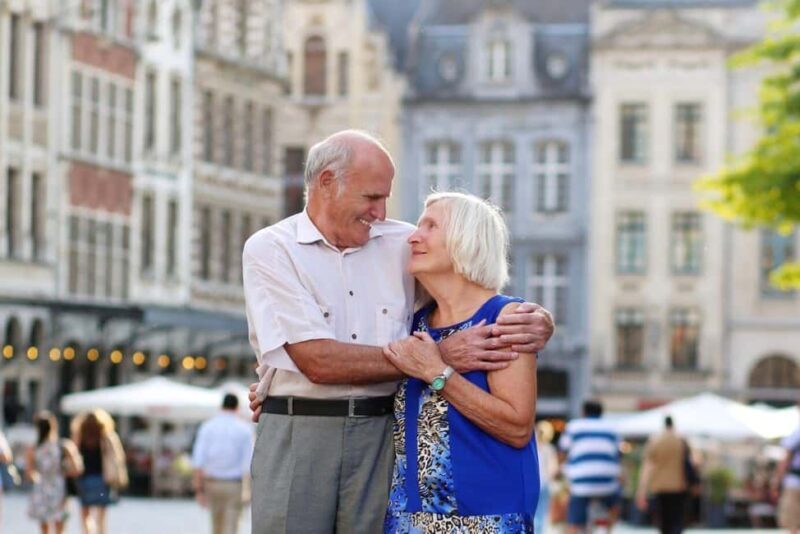
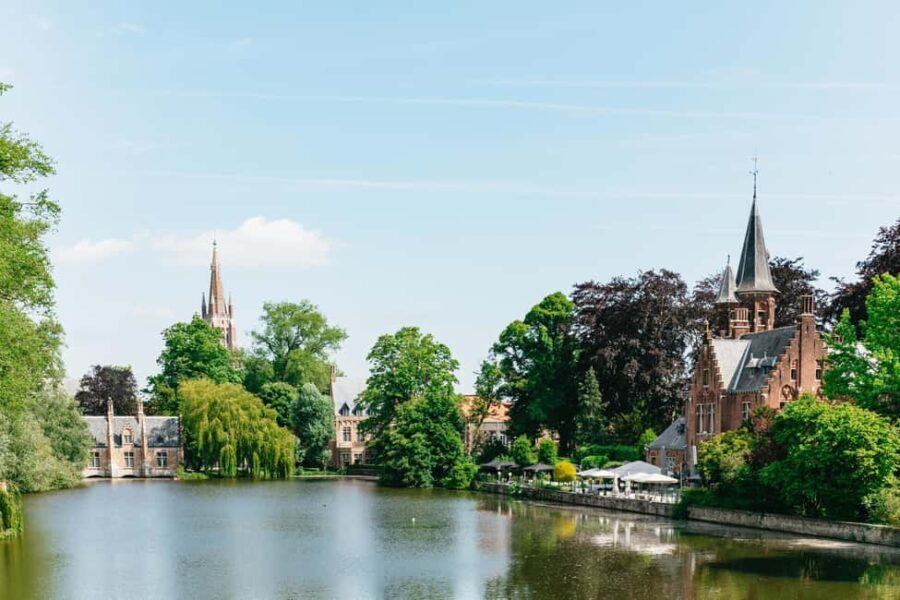
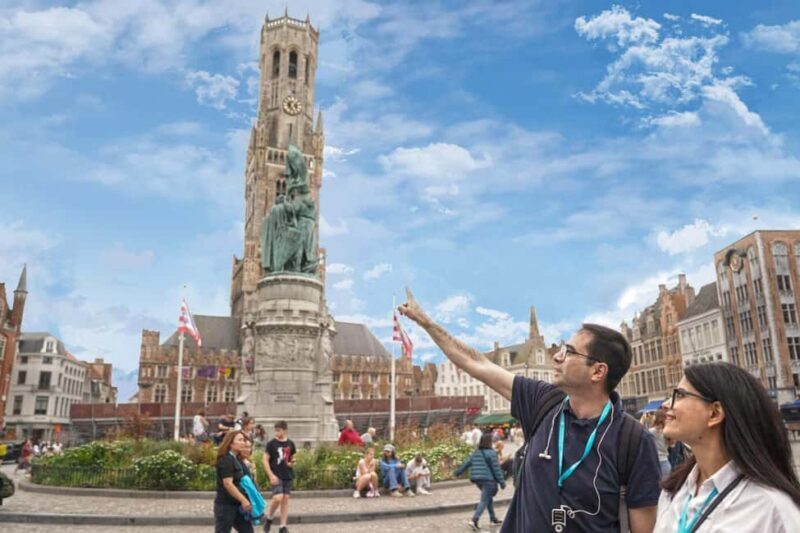
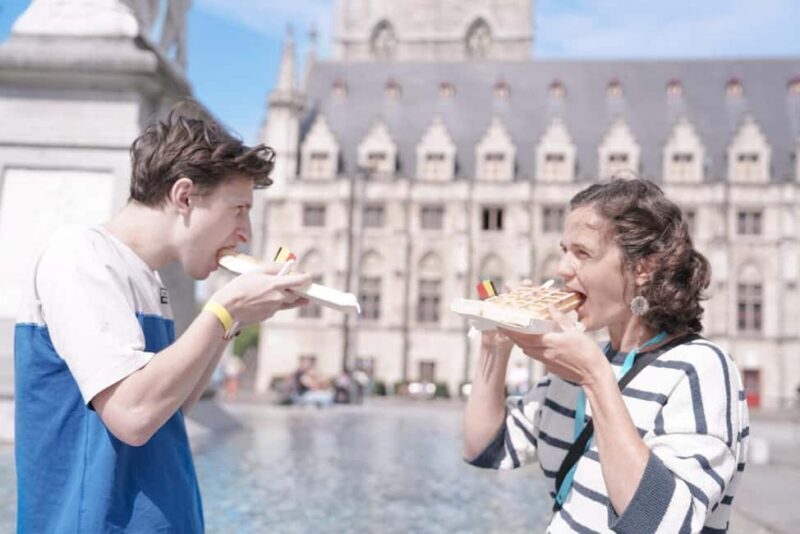
- Two guided walking blocks: Ghent first, then Bruges, with clear time for exploring on your own
- Saint Bavo Cathedral plus the Mystic Lamb: a must-see anchor stop in Ghent
- Begijnhof, Lake of Love, and canal viewpoints: Bruges at a human pace, not rushed through
- Comfort and audio support: air-conditioned coach and radios/earphones for the walk
- Canal cruise option: a great closer when you want Bruges from water level
- Real guide energy: reviews repeatedly mention guides who know their stuff and keep the group moving well
From Brussels to Flanders: Coach comfort and a tight day plan
This tour is built for convenience. You meet outside the National Bank of Belgium, then you’re on a comfortable, air-conditioned coach headed into Flanders. That matters more than people think, because you’re stacking two cities in one day. The driver and guide work as a team to keep departures on time, and many travelers call out how the trip runs like clockwork.
The day is long—about 630 minutes total—with roughly 1 hour in transit to Ghent, time on foot once you’re there, then another coach ride to Bruges, and finally the return to Brussels around 7:30 PM. If you like slow travel, this isn’t that. If you want a strong hit of the region’s top sights with a guide explaining what you’re seeing, it fits well.
You can also read our reviews of more tours and experiences in Brussels.


Ghent first: Saint Bavo Cathedral and the Mystic Lamb
Ghent is the opener, and the tour chooses a smart “anchor” stop right away: Saint Bavo Cathedral. This is where you can find the famous Adoration of the Mystic Lamb painting. Even if you’re not a die-hard art person, this stop gives you context fast—why Ghent mattered, why patrons commissioned works, and why the building itself carries weight.
A guided cathedral stop also helps you avoid the usual tourist problem: wandering through big churches without knowing what to look for. With a guide, you get direction. You don’t have to guess.
Practical note: cathedrals mean standing, walking inside, and listening in a busy environment. Wear shoes you can trust for long hours.
Graslei, Castle of the Counts, and the Great Butchers’ Hall
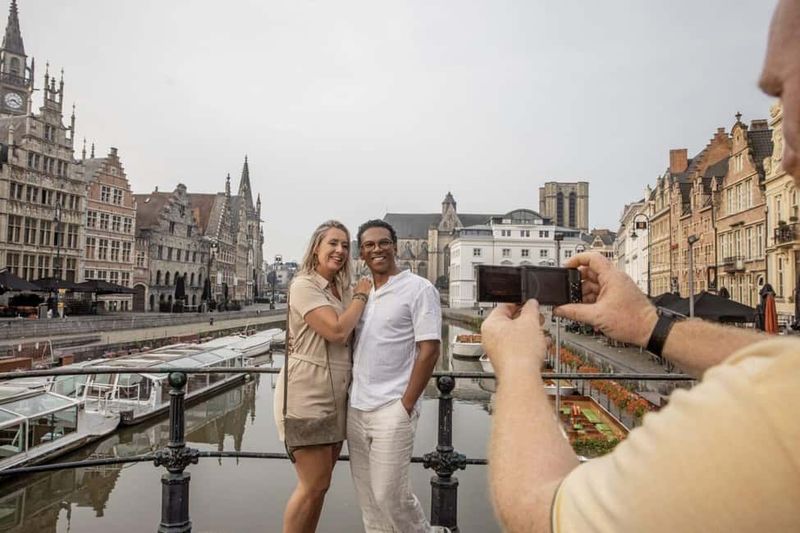
After Saint Bavo Cathedral, you shift into Ghent’s medieval “show-your-work” side. You’ll walk through Graslei, the famous old port area. It’s one of those places where the buildings feel like they were built for photos, but the guide’s stories make it more than background.
Then you move toward the Castle of the Counts, a key symbol of power in the region. This isn’t just “look at the castle” sightseeing. It’s about understanding who lived there, how the city functioned, and why the landscape was shaped the way it was.
One of my favorite named stops here is the Great Butchers’ Hall. It’s a reminder that medieval cities weren’t only about royalty and churches. Trade and guilds ran daily life too. In other words: you’re not just touring nobles’ homes—you’re seeing where regular people’s industries lived.
Ghent break time: how to use 105 minutes well
You get a break time of about 105 minutes in Ghent. This is your chance to do the things a schedule can’t. Grab a snack, sit somewhere with a view, or simply walk around without a headset guiding you every step.
Many travelers mention enjoying the ability to choose: join the guided flow or step out on your own. If you like structure, you can use this time for a quick loop near the guided route. If you like photos, this is when you’ll want to slow down—Ghent rewards that.
Tip: plan for a rest stop early if your day is starting with energy and you usually hit a wall by early afternoon.
Crossing to Bruges: the fairytale city switch
Once the coach ride puts you in Bruges, you’ll feel the shift immediately. Bruges is often described as the Venice of the North because of its waterways, and you’ll see why as soon as the old streets and canal shapes start showing up.
The guided portion in Bruges is about 2 hours, and that’s a good setup for what follows: you’ll cover the core sights without feeling like you’re sprinting. The tour uses the guide’s storytelling to help you connect what you’re seeing—religious life, guild power, and the city’s later layers.

Lake of Love and the Begijnhof built in 1245
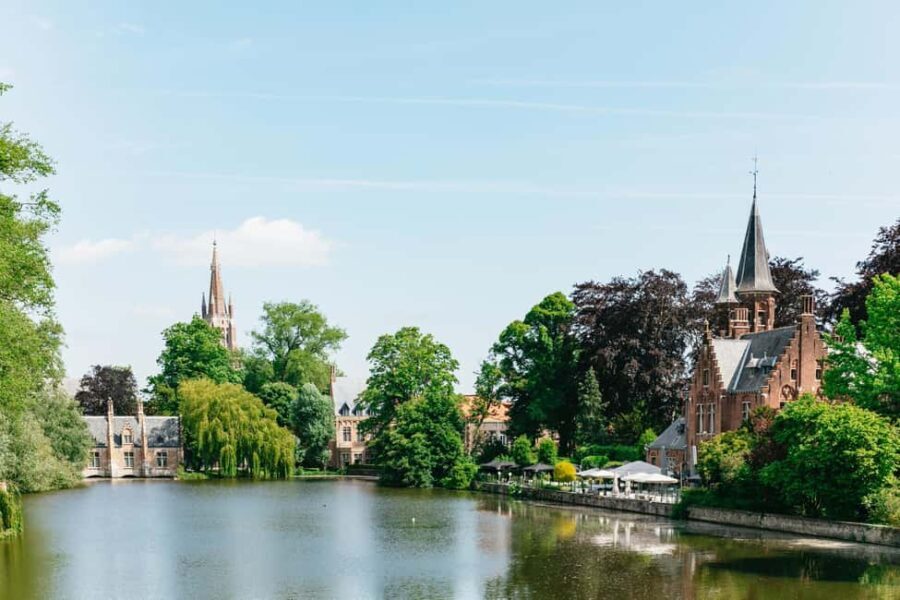
In Bruges, the tour leans into the city’s quieter, character-rich side. You’ll walk to Lake of Love, then explore the Begijnhof complex, built in 1245 to house religious women.
This is one of those stops where the setting does half the explaining. The buildings and pathways aren’t just pretty. They show a different kind of city life—community rhythms, rules, and daily routines shaped by faith, but not the same as a cathedral-centered world.
If you like places that feel “lived-in,” this is a highlight. And if you’re tired of only seeing grand monuments, it’s a refreshing break.
Bruges on foot: cobbles, canals, and a good walking pace
Bruges is cobblestone country. One review notes you might rack up 15,000 to 17,000 steps across the day. That’s not a guaranteed number, but it tells you what the tour’s energy level feels like in real life.
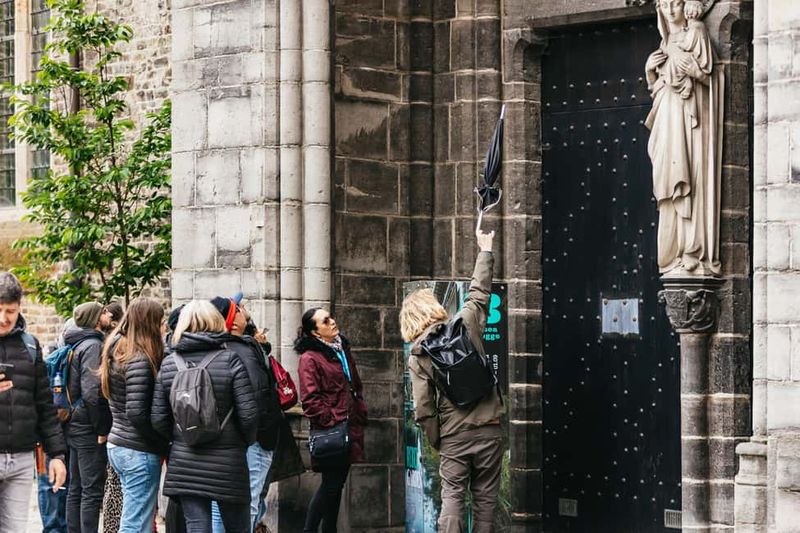
The good news: the guided route isn’t random. It’s paced so you can keep up, and radios/earphones help you stay connected to the explanation while you walk. Several travelers mention the organization and the guide’s ability to manage the group—especially helpful when sidewalks get crowded.
If it’s rainy, you’ll still do the sights; one traveler specifically said a rainy morning cleared up, and the guide kept things enjoyable.
Lunch in Bruges: timing is part of the experience
Lunch is given about 1 hour, but lunch itself is not included. The guide will point you to recommendations, and you’ll likely find plenty of snack and meal options nearby.
A heads-up: timing can be a bit of a personal issue. One traveler mentioned lunch felt late compared to what they expected, so if you’re the kind of person who gets cranky without food at a certain time, plan ahead with a quick breakfast and maybe a snack for the road.
That said, the lunch window is still valuable. It’s enough to eat and reset, not just grab a pastry and rush back.
Old St. John’s Hospital and Bruges’s layered past
After lunch, the tour continues with a guided route through historic neighborhoods, including the former Red Light District and monuments like Old St. John’s Hospital, dating to the 11th century.
This mix is actually a strength. You’re not seeing Bruges as only postcard scenes. You get the city’s practical side—how care was organized, how communities worked, and how the city evolved over time.
If you prefer “one vibe” sightseeing, this might feel like a shift. If you like places with layers, it’s a good reminder that Bruges wasn’t frozen in time; it kept changing.
Our Lady’s Church and Michelangelo’s Madonna
Two named religious-art stops land in the later part of the guided day. You’ll see Our Lady’s Church, and you’ll hear about Michelangelo’s Madonna.
This kind of stop matters because it gives you a specific reason to look past the obvious architecture. It turns the church from a nice backdrop into a place with a story worth understanding. Even if you don’t go deep into art terms, you’ll come away with what makes that Madonna a big deal and why it belongs here.
Grote Markt and the Belfry tower moment
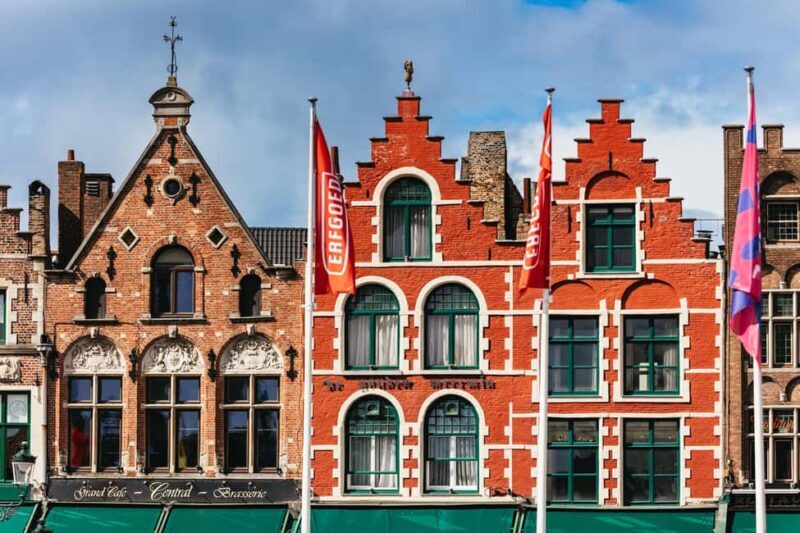
By the time you reach the Grote Markt (Market Square), you’re in the heart of Bruges. The highlight here is the Belfry tower, which dominates the space and helps you orient yourself.
This is a satisfying payoff stop. After hours of churches, courtyards, and canal-side streets, the open square gives your eyes a break and your brain a reset. It’s also the kind of location where you can choose how you want to spend your remaining energy—photos, people-watching, or just absorbing the city atmosphere.
Optional canal cruise: the last 60 minutes that really help
You get free time that includes the chance to join a boat cruise along Bruges’s canals. One reviewer called it a highlight and praised it as a perfect ending because it changes your perspective.
If you’ve walked all day, a cruise makes sense. You see the canals, facades, and bridges in a different way. Plus, it’s one of the few ways to rest your feet without feeling like you’re giving up the main sights.
Check how it’s offered on your particular day, since it’s described as optional in the tour details you’re given.
Guides: the difference between seeing and understanding
This tour lives or dies by the guide, and the reviews mention that over and over. People specifically praise guides for being experienced and professional, and many name them: Veronica, Juliana, Johan, Jan, Nico, Yan, Johan again, Sergio, Albert, Wendy, Andrea, David, Stefano, Pablo, Bruno, and Areyan.
What you should take from that list is not fan-club trivia. It’s a signal that the tour company hires guides who can handle both the logistics of a group and the storytelling side. One traveler even noted that radios/earphones keep things clear while you walk, which helps when commentary is in English and another language depending on the day.
One practical consideration comes from a different review: someone suggested that a single language would be easier to follow. The tour data says multilingual commentary can happen based on customer language preferences. If you’re sensitive to audio switching, you might want to pick a tour date where your language is likely to be prioritized.
What to pack and how to pace yourself
Bring comfortable shoes. That sounds obvious, but Bruges cobbles punish soft soles and worn-out tread. If you can, wear shoes you’ve already walked in before.
Also plan your energy. You’re doing guided walking tours in both cities, plus time to explore on your own. That’s why this works well for travelers who like a structured day but still want choices.
Notably, the tour is not suitable for wheelchair users or people with mobility impairments, so if anyone in your group uses mobility aids, consider a different option.
Price and value: is $57 worth it?
At $57 per person, the value comes from what’s included versus what you’d otherwise pay for.
You’re getting:
- air-conditioned coach transportation
- a multilingual guide
- guided walking tours in Ghent and Bruges
- radios and earphones so you can hear explanations while walking
It’s also a way to avoid the hassle of planning trains and transfers between two cities. One reviewer said they were considering taking the train and that it would cost about 40 euros each, then they realized the guided day trip cost less and felt like better value. That won’t match everyone’s numbers, but it’s a useful reality check: when transportation and guides are bundled, the math often works in favor of the tour.
Could you do it cheaper on your own? Maybe. But you’d pay with time and coordination. For many travelers, this tour is the “get the highlights with minimal stress” choice.
Who this day tour suits best
You’ll probably love this if:
- you have limited time in Brussels
- you want guided context at major sights, not just wandering
- you like a mix of structured stops and free time
- you enjoy walking but can handle a long day
You might not love it if:
- you have mobility limitations
- you hate long coach days
- you want deep museum-level time (this is city-walk sightseeing, not a slow crawl)
Should you book? My honest take
I think this is a strong pick for first-timers who want Bruges and Ghent in one day without doing trip math. The best part isn’t just the “pretty city” label. It’s the combination of named highlights like Saint Bavo Cathedral, Begijnhof, Our Lady’s Church, and Michelangelo’s Madonna, plus the way guides like Veronica and Juliana keep it organized and easy to follow.
Book it if you’re okay with a long day, decent walking, and paying separately for lunch and entry tickets. Skip it if you need step-free access or you’d rather take a slower, multi-day approach.
If you want, tell me your travel dates and your walking comfort level, and I’ll help you decide whether this pacing fits you or if you’d be happier with a more relaxed plan.
From Brussels: Bruges & Ghent Day Tour – 2 Fairytale Cities
FAQ
Where do I meet the tour in Brussels?
Meet outside the National Bank of Belgium, at the Keolis coach area. The starting point is listed as Bd de Berlaimont 18, 1000 Brussels.
How long is the tour and when do we return?
The tour runs for about 630 minutes (10.5 hours). You return to Brussels around 7:30 PM.
What’s included in the price?
Your ticket includes air-conditioned coach transportation, a multilingual tour guide, guided walking tours in both Ghent and Bruges, and radios/earphones.
Is lunch included, and are entry tickets included?
Lunch is not included, and entry tickets are also not included. You’ll have time for lunch during the day and can purchase it on site.
What languages do the guides speak?
The live tour guide languages listed are Spanish, English, and French.
Is the tour suitable for wheelchair users?
No. The tour is not suitable for wheelchair users or people with mobility impairments.
You can check availability for your dates here: