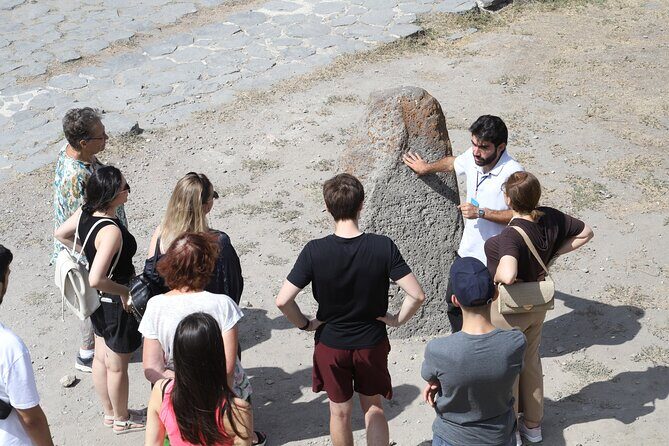
We found this tour exceptional for two standout reasons. First, you’re getting legitimate UNESCO World Heritage sites—Geghard Monastery and the Symphony of Stones—plus Armenia’s only surviving pagan temple, all in a single morning. Second, at $23 per person, it’s genuinely one of the best value day trips available from Yerevan, especially considering guide service and transport are included.
That said, there’s one consideration worth knowing upfront: group management and the bilingual format can occasionally affect the pacing, based on feedback from some travelers. This tour works best for history buffs, cultural explorers, and anyone who wants to pack meaningful sightseeing into a morning without breaking the bank.
- The Real Value Proposition
- Breaking Down Each Stop: What You’ll Actually See
- Charents Arch: Your First Taste of Mount Ararat
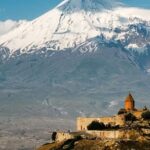
- Geghard Monastery: Where Ancient Spirituality Still Resonates
- Symphony of Stones: Nature’s Geometric Wonder
- Garni Temple: Pre-Christian Armenia’s Surviving Monument
- Lavash Baking: A Living Cultural Tradition
- Transportation, Timing & Group Dynamics
- Guide Quality: The Real Heart of the Experience
- What Travelers Actually Say
- Practical Considerations Before Booking
- FAQ: Practical Questions Answered
- The Bottom Line: Exceptional Value for Cultural Exploration
- More Tour Reviews in Yerevan
The Real Value Proposition
 1 / 6
1 / 6 2 / 6
2 / 6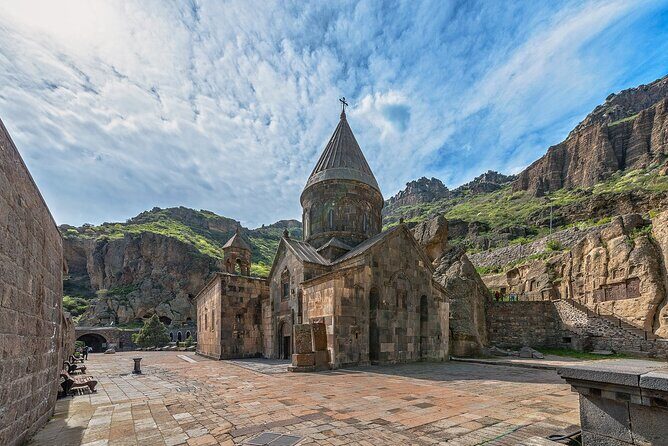 3 / 6
3 / 6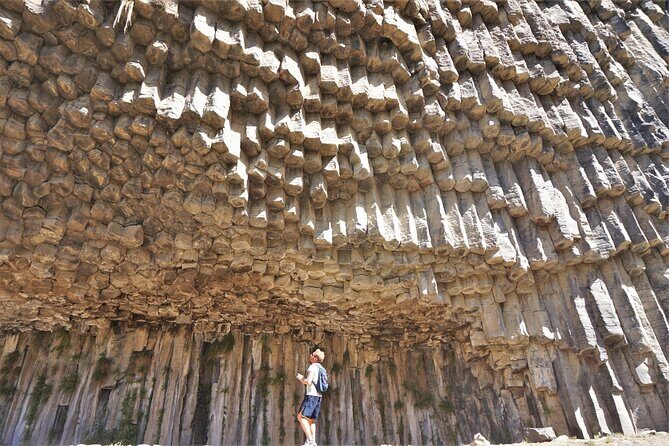 4 / 6
4 / 6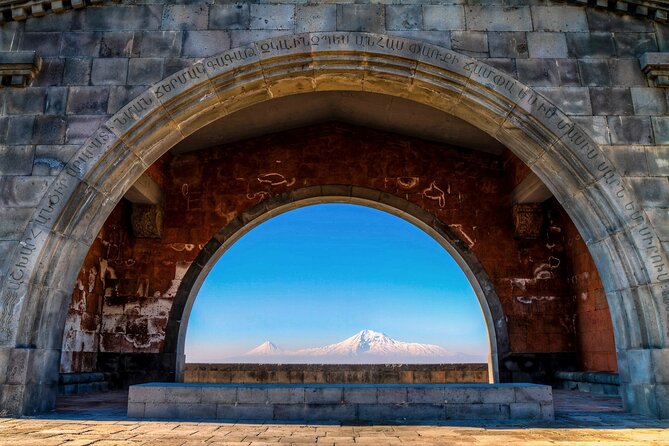 5 / 6
5 / 6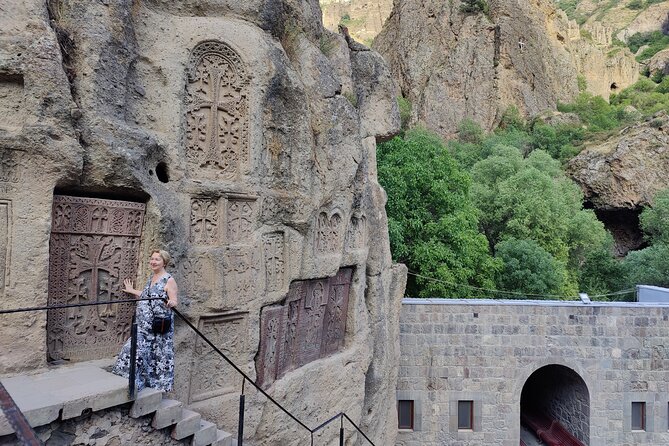 6 / 6
6 / 6Let’s be direct: $23 for six hours of guided touring, transportation, and access to three major cultural sites is remarkably affordable. You’re not paying extra for entrance fees at Geghard (free), Charents Arch (free), or the lavash demonstration (free). Only Garni Temple and the Symphony of Stones require additional paid admission—1,500 AMD and 300 AMD respectively (roughly $4-5 total)—keeping your total investment well under $30.
What makes this pricing even more impressive is what’s included. You get a dedicated guide who actually knows Armenian history, comfortable minibus transportation, and a hands-on cultural experience making traditional bread. Most travelers book this trip about 17 days in advance, and with a 96% recommendation rate from nearly 600 reviews, the demand speaks to the genuine value here.
Breaking Down Each Stop: What You’ll Actually See
You can also read our reviews of more tours and experiences in Yerevan.


Charents Arch: Your First Taste of Mount Ararat
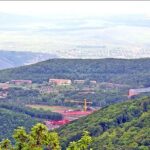
Your tour begins at Charents Arch, a viewing platform built in 1957 by architect Rafael Israelyan. This stop sets the tone perfectly—you’ll stand on a hillside overlooking the Voghjaberd village with Mount Ararat dominating the landscape. The monument features a quote from poet Yeghishe Charents engraved on its entrance: “Go to the world; there is no white peak like Ararat, like the path of unripe glory; I love my Masis mountain.”
This opening feels symbolic. You’re starting with Armenia’s most iconic symbol before diving into the deeper historical sites. Weather permitting, this view alone justifies the tour price. Several travelers mentioned disappointment when clouds obscured Ararat, so understand that mountain visibility depends entirely on conditions—but the stop itself is still worthwhile for the perspective it gives you.
Geghard Monastery: Where Ancient Spirituality Still Resonates
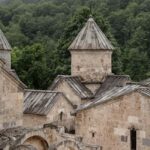
Your first major stop is Geghard Monastery, a medieval complex partially carved directly from the mountain face. The name comes from the legendary spear (geghard in Armenian) that wounded Jesus during the Crucifixion—supposedly brought to Armenia by Apostle Thaddeus and now housed in Echmiadzin’s treasury.
Walking through this UNESCO-protected site, you’ll see why it captivates visitors. The monastery’s integration with the cliff face creates an otherworldly atmosphere. One traveler described it perfectly: “At Geghard, listening to spiritual songs in the temple was incredibly calming.” Your guide will explain the spiritual and historical significance while you explore the carved chambers and stone reliefs. This is one of those places where the atmosphere itself teaches you something about Armenian faith and culture.
The monastery complex showcases architectural ingenuity—medieval builders literally carved portions of the structure into the mountainside. Your guide will have about an hour to walk you through the complex and answer questions, which is adequate time to see the main areas without feeling rushed.
Symphony of Stones: Nature’s Geometric Wonder
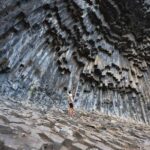
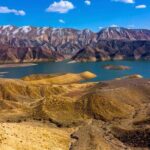
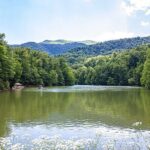
The Symphony of Stones—technically called the basalt organ—is a UNESCO-protected natural formation that stops people in their tracks. Imagine hexagonal basalt columns stretching across the Azat Canyon in perfect geometric harmony, looking exactly like a massive stone pipe organ. It’s the kind of natural phenomenon that makes you question how it formed.
This stop requires an additional 300 AMD admission, but it’s worth every penny. Travelers consistently highlight this as a tour highlight, with one noting it was “breathtaking.” You’ll have roughly an hour to explore the canyon, photograph the formations, and absorb the landscape. The hexagonal geometry is so precise it seems almost impossible—nature really did create something that rivals human engineering here.
One important note: weather can affect access to this site. Several reviewers mentioned missing the Symphony due to snow or rain, and your guide will make that call based on conditions. It’s one of those stops where you hope for good weather but shouldn’t count on it as guaranteed.
Garni Temple: Pre-Christian Armenia’s Surviving Monument
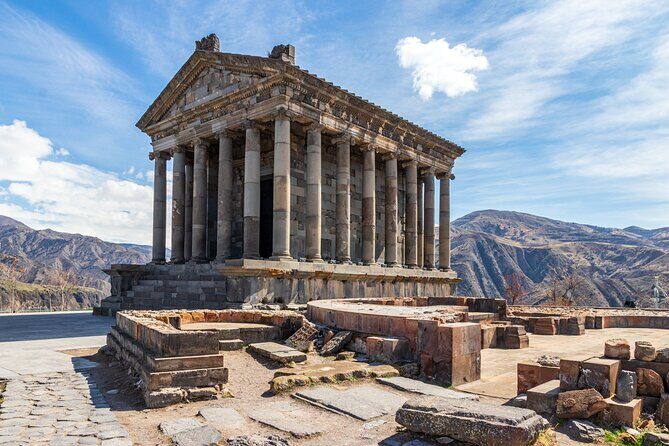
Garni Temple stands alone in its historical significance. Built in the first century as a temple dedicated to Mithra (the God of the Sun), it’s the only surviving pagan temple in Armenia and the entire former Soviet Union. An earthquake destroyed it in 1679, but it was meticulously restored between 1968 and 1975.
Walking around Garni, you’re standing in front of a structure that predates Christianity’s dominance in Armenia. Your guide will explain how this temple represents an entire worldview that preceded the Armenian church’s rise to prominence. The architecture is classical—think Greek and Roman influences—which helps illustrate Armenia’s position as a cultural crossroads. Admission is 1,500 AMD, and you’ll want about an hour here to appreciate both the temple itself and the surrounding fortress ruins.
The views from Garni extend across the surrounding landscape, giving you a sense of why this location was strategically and spiritually important. It’s not a massive complex like some European temples, but its isolation and historical weight make it profoundly meaningful.
Lavash Baking: A Living Cultural Tradition
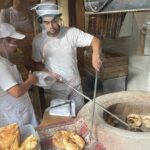
Your tour concludes with a lavash baking demonstration at a family-run restaurant in Garni village. Lavash is traditional Armenian flatbread, and watching it being made in a traditional tandoor oven is genuinely fascinating. You’ll see the dough stretched by hand and slapped against the hot oven walls—a technique that’s been used for centuries.
Here’s where expectations matter: this is primarily a demonstration and tasting experience rather than a full hands-on masterclass. One traveler appreciated it as “fascinating,” while another felt it was “just watching someone bake it for five minutes.” If you’re hoping to actually make lavash yourself with detailed instruction, manage your expectations. What you’re getting is the experience of seeing the tradition in action and tasting fresh bread, which is still quite special.
The restaurant setting is typically pleasant—travelers mentioned enjoying the courtyard atmosphere and the opportunity to eat lunch there (though note that lunch costs extra and wasn’t always clearly communicated in advance).
Transportation, Timing & Group Dynamics
You’ll meet at the Komitas Yerevan State Conservatory at 9:00 AM sharp, making this an early start that allows you to complete the tour by mid-afternoon. The tour operates in a comfortable minibus with a maximum of 20 people per group, which keeps things manageable without feeling like a cattle-car experience.
Transportation quality matters on a day tour, and multiple reviewers praised the drivers for safety and comfort. One solo traveler noted, “The bus is very comfortable,” and another highlighted the driver’s skill: “Big shout out to our driver as well who handles ice veryyyy skilfully!!” This isn’t a minor detail—poor transportation can ruin a day trip, and this operator seems to prioritize it.
One scheduling note: lunch typically takes 1.5 hours, which wasn’t always clearly communicated in advance. Some travelers felt this was longer than expected, while others enjoyed the extended restaurant time. Knowing upfront that you’ll spend significant time eating helps you manage expectations.
The bilingual format (English and Russian groups combined) occasionally affects pacing. While this keeps costs down and makes trips viable, it can create coordination challenges. Your guide will manage this, but you might experience some waiting or need to listen to explanations in multiple languages.
Guide Quality: The Real Heart of the Experience
If there’s one element that makes or breaks a tour, it’s the guide. The 589 reviews consistently praise guides by name—Igor, Yegor, Hasmik, Anna, Mery, Taku—suggesting this operator maintains genuine quality in their guide team. One traveler summed it up: “Yegor was kind, friendly and very knowledgeable on the subject. On many occasions he went over and beyond to make us feel welcome.”
What makes these guides special? They go beyond rote facts. They connect you to Armenian history and culture emotionally, not just intellectually. One reviewer noted: “I am just blown away by it. It’s rich and devastating” after learning about Armenia’s complex past. Another appreciated that “Yegor plays Armenian music both modern and traditional while you’re on the bus traveling between locations,” which adds culture without being heavy-handed.
Your guide will explain what you’re seeing at each stop, answer questions, and help you understand why these sites matter to Armenian identity. This context transforms the experience from sightseeing to genuine cultural learning.
What Travelers Actually Say
The review data reveals consistent patterns. Most people (506 of 589 reviews are 5 stars) love this tour. Travelers appreciate the combination of history, natural beauty, and value. One solo traveler who made a friend on the tour called it “all-around lovely” and “cannot recommend enough.”
The minority of lower ratings (13 four-star reviews, 8 three-star, 5 two-star, and 5 one-star) tend to cite specific issues: AC problems in the van, unclear communication about the restaurant stop, or feeling that bilingual tours diluted the experience. One traveler felt the lavash experience was oversold compared to what was delivered. These aren’t deal-breakers for most, but they’re worth knowing.
The most common complaint centers on group management when combining English and Armenian speakers. One reviewer noted: “We had English and Armenian groups combined and I dont think it worked for the verrry full tour. There was little knowledge sharing particularly about the symphony of stones.” This suggests that while the tour itself is excellent, the logistics of managing multiple languages can occasionally create friction.
Practical Considerations Before Booking
Cancellation flexibility matters. You can cancel up to 24 hours in advance for a full refund, which gives you flexibility if plans change. Weather can cancel the tour, and you’ll be offered either a different date or full refund—important protection since some sites are weather-dependent.
Entrance fees aren’t included. The tour price covers guide and transport, but you’ll pay extra for Garni Temple (1,500 AMD) and Symphony of Stones (300 AMD). Budget accordingly.
Lunch is separate. The restaurant stop is included in the itinerary, but food costs extra. One traveler felt the restaurant was “overpriced for the quality,” so you might want to pack snacks or manage expectations about meal pricing.
Solo travelers do well here. Multiple reviews mention positive solo traveler experiences, and the group format actually helps—you’ll meet people from around the world. One solo traveler noted making a friend on the tour, which added to the experience.
Weather affects the experience. Symphony of Stones access depends on conditions. Mount Ararat visibility is weather-dependent. These aren’t the tour operator’s fault, but they’re worth knowing.
FAQ: Practical Questions Answered
Q: Is this tour suitable if I’m not particularly interested in history?
A: While history is central to the experience, you don’t need to be a history buff to enjoy it. The combination of stunning natural scenery (Mount Ararat, Azat Canyon, the Symphony of Stones), architectural beauty, and cultural experiences appeals to people interested in nature and photography too. Your guide will provide context, but you can engage at whatever level feels right for you.
Q: What’s the actual time commitment, and when would I be back in Yerevan?
A: The tour is listed as approximately 6 hours, starting at 9:00 AM. With the 1.5-hour lunch stop included, you’d typically return to the meeting point by mid-afternoon (around 3:00-3:30 PM). This leaves time for dinner or evening activities back in Yerevan.
Q: Will I definitely see Mount Ararat and the Symphony of Stones?
A: Mount Ararat visibility depends entirely on weather—clouds frequently obscure it, especially in winter. The Symphony of Stones access can be affected by snow, rain, or dangerous canyon conditions. Your guide makes these calls day-of. Multiple travelers missed one or both due to weather, but still found the tour worthwhile. It’s not guaranteed, so manage expectations accordingly.
Q: Is the lavash baking experience hands-on, or just watching?
A: It’s primarily a demonstration where you watch traditional baking happen, followed by tasting fresh lavash. It’s not a full hands-on masterclass where you make the bread yourself. If you’re hoping for intensive instruction, this might disappoint. If you’re interested in seeing the technique and tasting the result, you’ll likely enjoy it.
Q: Are the entrance fees for Garni Temple and Symphony of Stones worth paying?
A: Yes. These are UNESCO-protected sites with genuine historical or natural significance. Garni Temple is Armenia’s only surviving pagan temple—seeing it is worth the 1,500 AMD. The Symphony of Stones is a unique natural formation worth the 300 AMD. Together, they’re less than $5 and add substantially to the experience.
Q: What if I have mobility concerns or physical limitations?
A: The tour involves walking at each site—some on uneven terrain at the Symphony of Stones and around the monastery complex at Geghard. The tour description notes “most travelers can participate,” but you should assess whether the walking involved suits your abilities. The minibus transport itself is accessible, but the sites require some physical movement.
Yerevan: Garni, Geghard, Symphony of Stones & Lavash Baking
The Bottom Line: Exceptional Value for Cultural Exploration
This tour delivers genuine value that’s hard to find at this price point. You’re getting access to UNESCO World Heritage sites, Armenia’s only surviving pagan temple, stunning natural scenery, and a guide who actually cares about sharing Armenian culture—all for $23. The experience works best for travelers who want to understand Armenia’s history and culture beyond surface-level sightseeing, who appreciate authentic experiences over polished tourist attractions, and who are flexible about weather-dependent elements. Yes, there are occasional logistical imperfections and the bilingual format can create minor pacing issues, but the fundamental value proposition is unbeatable. If you’re in Yerevan with a morning to spare, this tour should be near the top of your list.