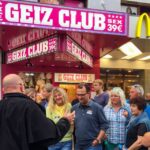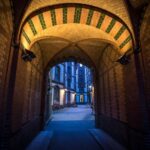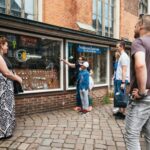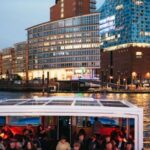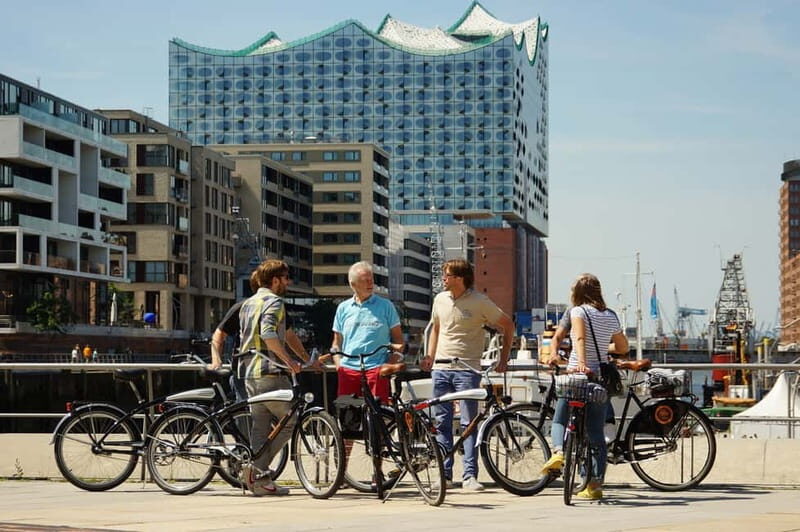
If you want a quick, low-stress way to see central Hamburg, this 3-hour (often closer to 3.5) guided bike tour is built for exactly that. You glide through the city’s signature areas like St. Pauli, the Alster Lakes, Speicherstadt, HafenCity, and ends at the Reeperbahn and the piers.
What I like most is the mix of “old Hamburg” and “new Hamburg” in one ride, plus the way you get local, at-stop storytelling instead of just riding past buildings. Guides such as Phil, Dennis, Ilke, and Sebastian show up in traveler notes as especially knowledgeable and fun.
The only real drawback to consider is that you’re sharing roads with traffic and keeping pace with the group, so it helps if you’re comfortable riding in an urban setting (especially in rain or wind).
- Key Points You’ll Care About
- Why a Bike Tour Works So Well in Hamburg
- Finding Hamburg City Cycles and Starting Smoothly
- The Value: What’s Included, What’s Not
- Bikes, Helmets, and Comfort Basics
- The Route in Plain English: Where You’ll Go
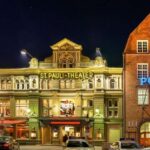
- St. Pauli: Starting Energy and Port-City Mood
- Heiligengeistfeld to the Alster Lakes: Smooth Sailing
- Outer Alster Lake and Inner Alster Lake: Photo Stops That Feel Worth It
- Town Hall Stop: Why This Landmark Gets Mentioned
- Speicherstadt: Canal-Side Warehouses With Real Storytelling
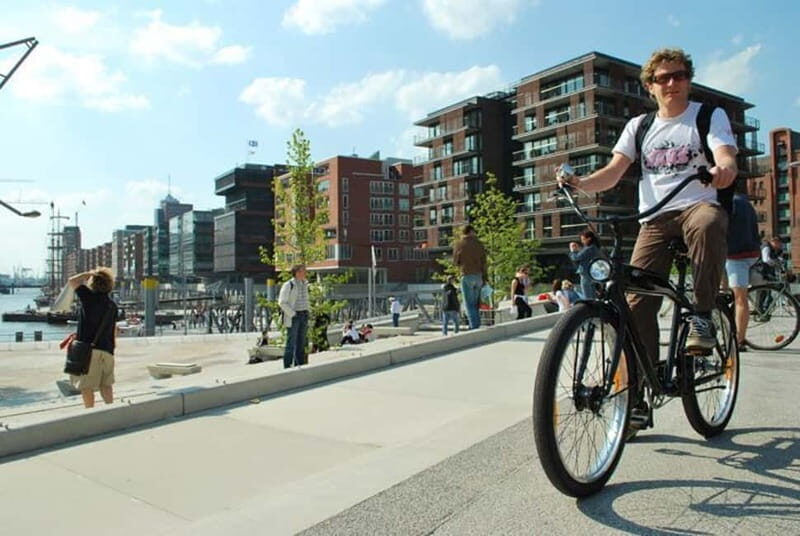
- HafenCity and the Modern Contrast
- Elbphilharmonie Area: Views and Orientation From the Bike
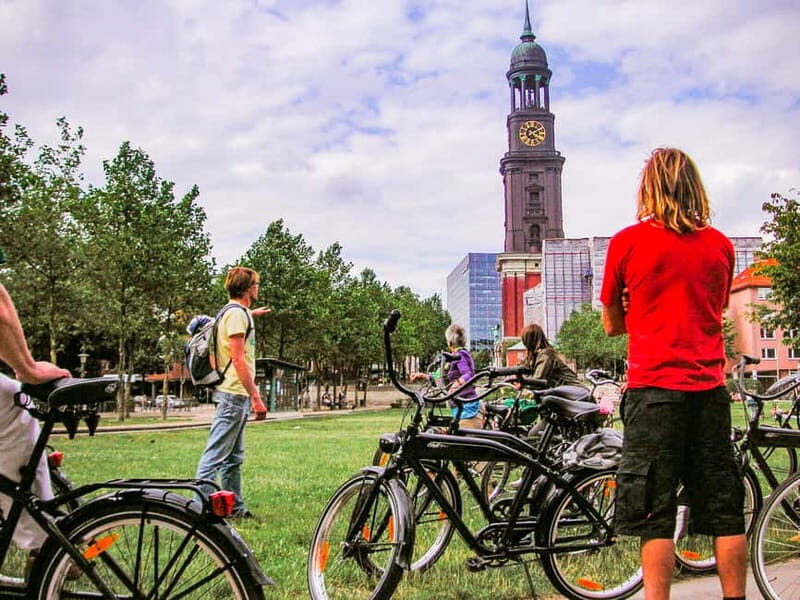
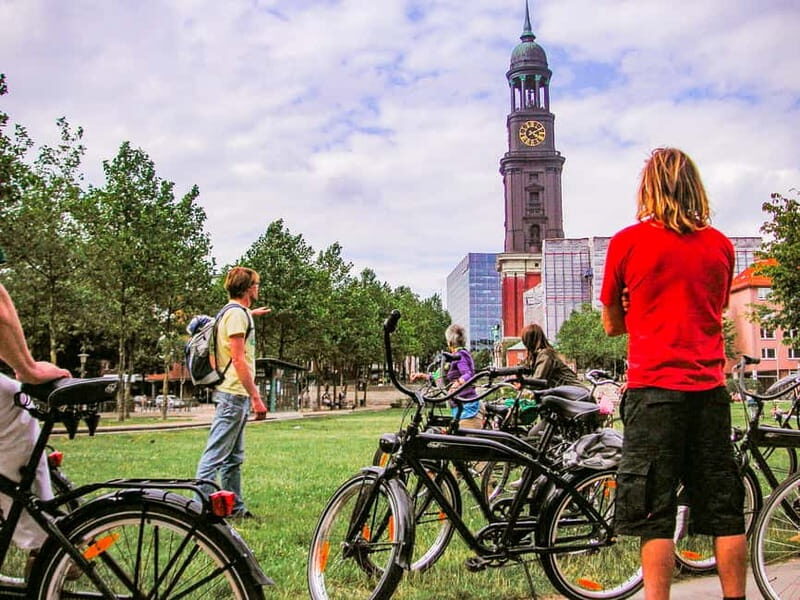
- St. Michael’s Church: A Landmark Stop You Can Actually Appreciate
- St. Pauli Piers and the Reeperbahn Finish: The Big Finale Energy
- Coffee Break: A Small Included Pause With Big Social Value
- Guides Matter: What Travelers Seem to Love
- Pacing and Group Dynamics: The Real-Life Ride Factors
- Weather Reality: Raincoats and Cold Checks
- What You Don’t Get (And Why That’s Okay)
- Who Should Book This Tour
- Who Might Want Another Option
- Practical Checklist Before You Go
- Should You Book This Hamburg 3-Hour Bike Tour?
- FAQ
- Where is the meeting point for the Hamburg 3-hour bike tour?
- How long is the tour?
- What’s included in the price?
- Is food or drinks included?
- What languages do the guides speak?
- Is the ride suitable for beginners and families?
- What’s the cancellation policy?
- The Best Of Hamburg!
- More Cycling Tours in Hamburg
- More Tours in Hamburg
- More Tour Reviews in Hamburg
Key Points You’ll Care About
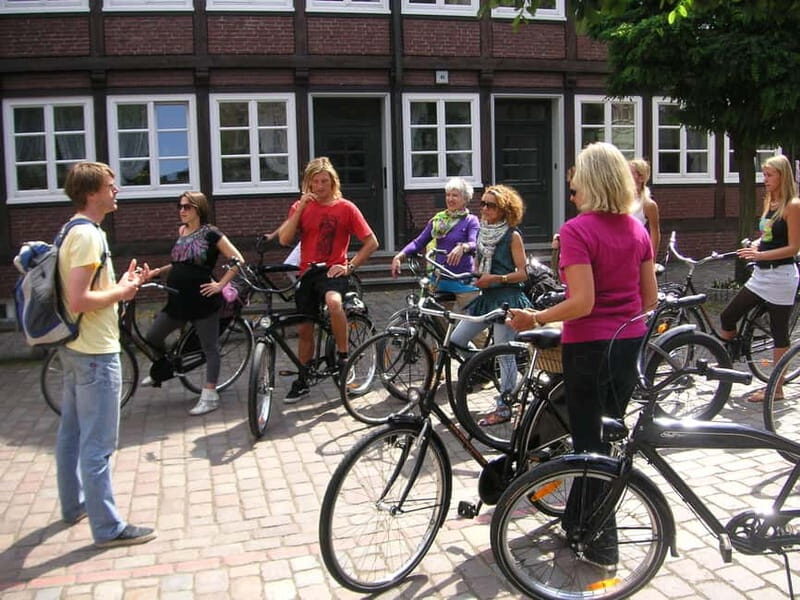
- Stops at the main sights so you’re not just speed-scrolling the skyline from the saddle
- Very flat ride through key areas, which makes it easier for lots of ages and abilities
- English and German live guide options so you can get the stories clearly
- Included coffee break, plus time to ask questions and take photos
- Meet right by St. Pauli, making it a practical start if you’re staying nearby
- Rain handling tends to be thoughtful, with some departures offering complimentary raincoats
👉 See our pick of the Discover 10 Great Wine Tours In Hamburg
Why a Bike Tour Works So Well in Hamburg
Hamburg is one of those cities where biking feels almost unfair—it’s very flat, and that changes everything. You spend your energy on seeing and listening instead of fighting hills.
This tour is also a time-saver. In just about 3 to 3.5 hours, you cover an impressive chunk of the city’s most famous neighborhoods, and you get a different perspective than walking tours can offer.
And because the guide stops at key attractions, the ride doesn’t become a blur. You get context at the moments it matters, then you’re back on the route.
You can also read our reviews of more cycling tours in Hamburg

Finding Hamburg City Cycles and Starting Smoothly
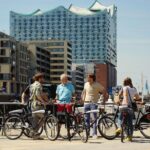
The meeting point is Gebrüder-Wolf-Platz (Hopfenstr. 15b), with the shop on the same square as an Aldi supermarket and a bakery. It’s also described as about 150 meters from the southern end of Taubenstraße, near the Reeperbahn.
Practical tip: plan to arrive about 10 minutes early. You’ll want that buffer to choose the right bike and get helmet/basket sorted without feeling rushed.
If you’re traveling from elsewhere in Hamburg, St. Pauli is a pretty central, easy-to-orient area. It also sets the tone: this is a port-city tour, not a “only museums and squares” kind of day.
The $46 Value: What’s Included, What’s Not
At $46 per person, you’re paying for a guide, a bicycle, and the logistics that keep the day simple. The tour includes the bicycle and a guided city tour, plus a basket and helmet if required.
Not included is food and drinks, along with personal expenses. That matters because you’ll likely want to budget for water or snacks if your coffee break doesn’t cover you.
The value angle here is that the coffee break and the guided stops are part of the experience. You’re not paying extra at every step to “unlock” the sights—your guide handles the pacing and information.
Bikes, Helmets, and Comfort Basics
You’ll start by picking your bike at Hamburg City Cycles. Most travelers will find the ride manageable because of the flat terrain, and the tour is described as easy-going and suitable across riding abilities.
That said, several traveler comments hint at a basic reality: if you’re new to biking in traffic, you’ll feel better with a bike fit that’s comfortable right away. Arriving early helps you adjust handlebars and seating so you don’t spend the tour fighting your setup.
Helmets are provided if needed, and there’s a basket option too. It sounds small, but it makes a difference if you’re carrying a camera or keeping layers handy.
More Great Tours NearbyThe Route in Plain English: Where You’ll Go
You’ll begin in St. Pauli, then ride through Heiligengeistfeld toward the Alster Lakes. From there you connect to the major sights: Town Hall area, Speicherstadt, HafenCity, and St. Michael’s Church, then circle back to the piers and the Reeperbahn.
The overall plan is designed to hit the “main highlights” in a limited time window. The route is also structured with stops—each attraction gets a pause for facts, photos, and questions.
Think of it as a guided line that threads through Hamburg’s different identities: entertainment and waterfront energy in St. Pauli, then heritage warehouses and canal-side views, then city-center landmarks and back again.
You can also read our reviews of more tours and experiences in Hamburg


St. Pauli: Starting Energy and Port-City Mood
St. Pauli is where the tour begins, and it’s a smart choice. It’s lively, it’s recognizable, and it gives you that port-city feel from the first minutes.
As you ride out of the starting area, you’ll transition from the neighborhood vibe into more classic Hamburg scenery. The guide’s narration during these early segments is where you start learning how the city developed into what you see today.
If you’re traveling solo or as a couple, starting here also makes it easy to connect the tour to your later plans. You’ll finish in the same zone, so the “I have to get back across town” problem disappears.
Heiligengeistfeld to the Alster Lakes: Smooth Sailing
After St. Pauli, you ride toward Heiligengeistfeld and then out to the Outer Alster Lake and Inner Alster Lake. This section matters because it’s the ride portion that lets you settle in.
Hamburg’s flatness really shows here. Even if you’re not a cyclist, you can focus on the scenery, settle your grip, and get comfortable with group pacing.
This part of the tour also gives you a quick lesson in how Hamburg balances water and city life. The lakes aren’t just views; they act like anchors for neighborhoods and movement.
Outer Alster Lake and Inner Alster Lake: Photo Stops That Feel Worth It
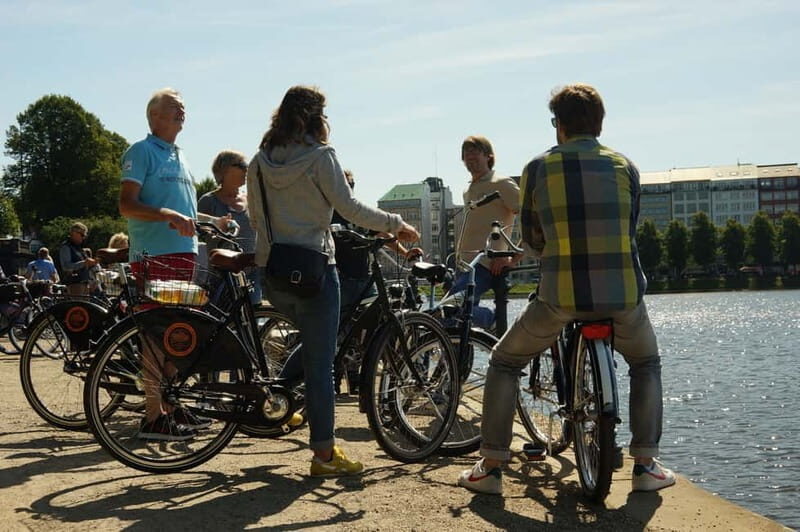
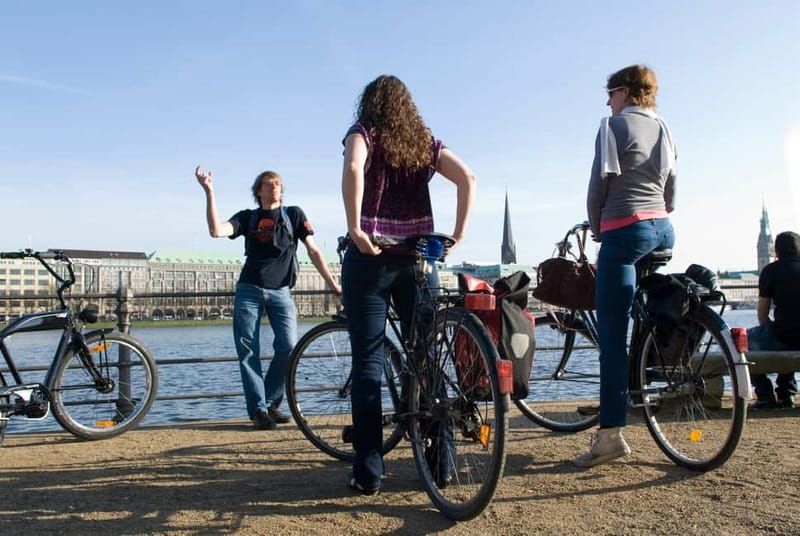
The Alster Lakes are one of the tour’s best opportunities for “stop and breathe.” You get the chance to pause by both the Outer and Inner lakes, which helps you compare the feel of each stretch.
Expect classic city-water contrasts: buildings and bridges beside calm water, plus places to capture photos without rushing. The guide can also point out what to notice, which is useful if you normally miss details while walking.
This is also a good moment to ask questions. Since the ride is easy-going here, you can slow down your brain and actually absorb the explanations.
Town Hall Stop: Why This Landmark Gets Mentioned
From the Alster area, you’ll pass by the Town Hall. The value of this stop is less about the building itself and more about the context you get from your guide’s explanation.
Town Hall landmarks are often visually impressive, but the “why” is what turns it into real learning. You’ll likely hear how this area fits into Hamburg’s city-center layout and civic identity.
A practical note: you’ll see it as part of your moving route, not as a long museum-style stop. So if you crave deep interior time, plan to do that elsewhere after the tour.
Speicherstadt: Canal-Side Warehouses With Real Storytelling
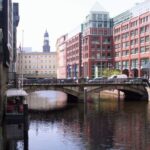
One of the most compelling parts of the route is the Speicherstadt, Hamburg’s warehouse district. This is where you get the “historic Hamburg” feeling with modern guided clarity.
Because the tour stops here, you’re not just glancing at brick and canals. You get facts and details that help you understand what you’re looking at and why it’s been preserved.
This area also works well for photos. Even if you’re not trying to shoot architecture, the combination of canals, warehouses, and waterfront angles makes the stops feel like you earned them.
HafenCity and the Modern Contrast
Then you shift gears into HafenCity, which is Hamburg showing its newer face. The tour structure makes this contrast easy to digest: heritage first, then what’s happening next.
This section is a great reminder that Hamburg isn’t one era. It’s a working port city that keeps rebuilding and reshaping its waterfront.
As you move through, your guide’s narration is what helps you make sense of the streetscape. Without that, some areas can feel like “cool buildings” only. With the guide, they become a story you can follow.
Elbphilharmonie Area: Views and Orientation From the Bike
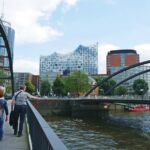
You’ll also pass through the area around the Elbphilharmonie. This is a stop that often becomes a mental anchor for visitors, because it’s one of the city’s most recognizable modern landmarks.
Even if you don’t go inside, the bike tour gives you a sense of where it sits in relation to the water and surrounding city blocks. That orientation is surprisingly useful later when you’re exploring on foot.
If the weather is clear, this area can also deliver some of the best “postcard” angles during the route. If it’s gray, it still works—you’re watching how the city fits together, not just chasing sunshine.
St. Michael’s Church: A Landmark Stop You Can Actually Appreciate
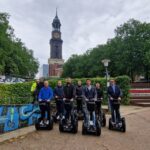
St. Michael’s Church is another major highlight, and the tour’s stop-based approach helps you take it in properly. It’s not only about the building; it’s also about how this landmark shapes the skyline and neighborhood feel.
Since the ride is flat and controlled, you’re not rushing through the moment. You get time for photos and questions, which is where a good guide really earns their keep.
If you’re the kind of traveler who likes “one big landmark explained well,” this stop tends to hit the mark.
St. Pauli Piers and the Reeperbahn Finish: The Big Finale Energy
After St. Michael’s, the tour circles back toward St. Pauli piers and the world-famous Reeperbahn. This ending is a strong choice because it brings you back to the port-side energy you started with.
The piers area is practical for photos, and the Reeperbahn stop connects the tour to Hamburg’s nightlife reputation. Even if you don’t plan to go out, it’s useful to see what people mean when they talk about this part of the city.
By the time you finish, you’ll also be in a great position for dinner nearby without having to plot a long return.
Coffee Break: A Small Included Pause With Big Social Value
You get a coffee break during the tour, which helps break up the concentration of nonstop sights and explanations. It also gives you a chance to talk with fellow travelers, ask extra questions, and decompress for a few minutes.
Because food and drinks aren’t included beyond that, you’ll still want to think ahead for your own snacks. But the included coffee break is one less thing to organize during your day.
One smart move: use the coffee stop to ask your guide what to do next. A good guide will often suggest neighborhoods, viewpoints, and practical routes that you wouldn’t easily guess on your own.
Guides Matter: What Travelers Seem to Love
Many travelers highlight how much they enjoyed the guide storytelling. Names that come up include Phil, Manfred, Maggi, Peter, Dennis, Sebastian, Ilke, Savi, Alex, Victor, and Viktor.
The consistent theme is that these guides don’t just list facts. They connect landmarks to the city’s past and present, while still keeping the ride upbeat and moving.
Safety communication also shows up repeatedly in traveler notes. In weather or traffic conditions, some guides reportedly adjust plans, warn about ride challenges, and keep the group together.
Pacing and Group Dynamics: The Real-Life Ride Factors
Even with a flat route, pacing can feel like a factor. Some travelers mention that it helps to keep up, and a few advise biking comfort first since European streets can have cars and tighter edges than you’re used to.
The tour is designed for all ages and abilities, but “all ages” doesn’t mean “no effort.” If you’re coming in with limited biking experience, you might want to arrive with patience and readiness to go slowly with the group.
One more tip: if you’re worried about pace, speak up early with your guide. Several traveler comments suggest guides are mindful about keeping everyone included when they can.
Weather Reality: Raincoats and Cold Checks
Weather can change your experience fast in Northern Germany. The good news is that some departures have offered complimentary raincoats when it rained heavily.
Still, cold or wet conditions can make a bike ride feel longer, even if it’s not physically harder. Bring layers, consider gloves, and keep an eye on wind—your hands feel it first.
If it’s sunny, great—this tour still works. If it’s gloomy, you’ll still get the city highlights and learnings, just with a more bundled-up crowd.
What You Don’t Get (And Why That’s Okay)
This tour is about coverage and orientation, not deep museum time. The stops are designed for quick learning, photos, and short pauses, not long entries.
That means you’ll leave with a strong map in your head, but you might still want to do follow-up exploration afterward. If you’re hoping for long indoor time, plan separate visits.
Also, since food and drinks aren’t included, you’ll want to manage your own hunger. The included coffee break helps, but it’s not a full meal plan.
Who Should Book This Tour
You’ll probably love this if you:
- want a first-time Hamburg overview in a short window
- like history and city context, but don’t want museum hours
- prefer biking to walking because you can cover more ground
- travel with family or mixed experience levels and want an easy-going route
It’s also a solid option if you’re the type who gets overwhelmed by too much choice. The guide gives you the line to follow, and then you get time to decide what’s next.
Who Might Want Another Option
Consider a different plan if:
- you’re not comfortable riding in a city with traffic
- you need lots of long indoor stops
- you can’t handle rain or cold well (even with rain gear, it can still be unpleasant)
The tour is manageable for many people, but it’s still a real bike ride, not a casual stroll.
Practical Checklist Before You Go
Here are a few things that help this tour go smoothly:
- Arrive about 10 minutes early to pick your bike without stress
- Wear layers and consider rain protection even if the forecast looks mild
- Bring a camera or phone for the stop-and-photo moments
- Bring water or plan to refill where possible after the tour (food isn’t included)
If you’re traveling with kids, remember that child seats or children’s bicycles should be reserved in advance.
Should You Book This Hamburg 3-Hour Bike Tour?
If you only have a short time in Hamburg and you want the main sights stitched together into one guided route, this is a strong booking. The combination of guides, a flat ride, and scheduled stops means you get both movement and meaning.
It’s also a good value because your money goes toward not just transportation, but time-saving coverage: Speicherstadt, HafenCity, Town Hall area, St. Michael’s Church, and the Reeperbahn zone, all with a coffee break.
Book it if you’re comfortable riding in a city. Skip it if you hate traffic exposure or want long indoor visits. Otherwise, this tour is one of the most practical ways to start understanding Hamburg fast.
Hamburg 3-Hour Bike Tour
FAQ
Where is the meeting point for the Hamburg 3-hour bike tour?
The meeting point is Gebrüder-Wolf-Platz (Hopfenstr. 15b). The shop is on the square with an Aldi supermarket and a bakery, and it’s about 150 meters from the Reeperbahn.
How long is the tour?
The tour duration is listed as 3 hours, and the experience description indicates it can run 3 to 3.5 hours depending on the flow.
What’s included in the price?
The tour includes a bicycle and the city tour. You can also receive a basket and a helmet if required.
Is food or drinks included?
No. Food and drinks are not included, though the tour does include a coffee break.
What languages do the guides speak?
The live tour guide is available in German and English.
Is the ride suitable for beginners and families?
Hamburg is described as very flat, and the ride is easy-going, making it suitable for all ages and riding abilities. Child seats or children’s bicycles should be reserved in advance.
What’s the cancellation policy?
You can cancel up to 24 hours in advance for a full refund. The booking also offers reserve now & pay later.
You can check availability for your dates here: