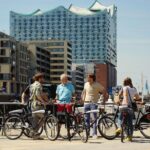
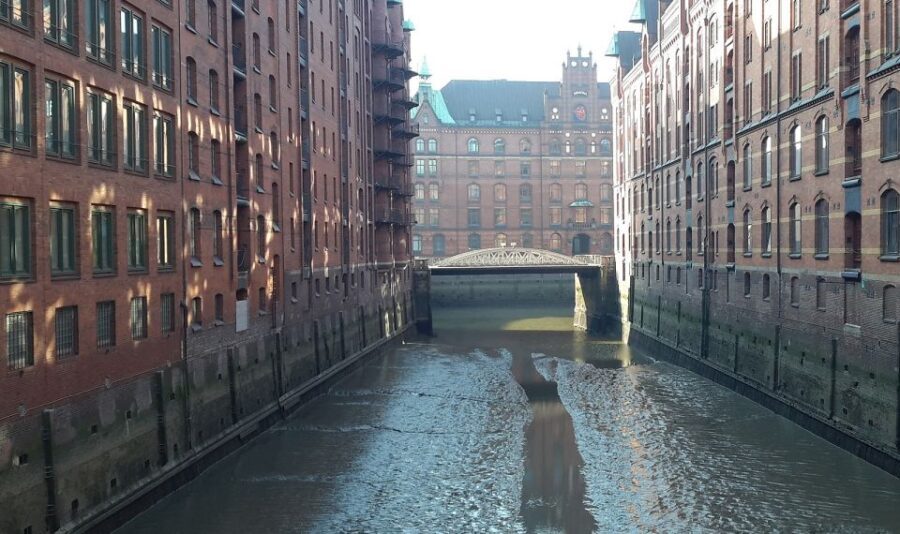
You’ll get a smart, two-hour loop through Hamburg’s past and future: starting at the Elbphilharmonie area, crossing into the historic Speicherstadt, and finishing in the sleek new HafenCity. It’s a compact route, but it covers a lot of city personality in one go.
What I like most is the contrast. One moment you’re learning how the Hanseatic League shaped everyday trade life around the warehouses; the next you’re looking at how HafenCity tries to build for today. I also like that you’re not stuck with only outside sightseeing—you’ll have a guided look at the Elbphilharmonie itself.
One thing to consider: parts of the tour run outdoors. A recent traveler specifically mentioned that an exterior segment felt too cold, so if you’re sensitive to winter weather, dress for it.
- Key points to know before you go
- Why this 2-hour Hamburg loop is worth your time
- Meeting point at Sandtorkai 74: how to find the group fast
- Elbphilharmonie: the harbor crown and the guided focus
- The Kaiserkai area: getting your bearings between old and new
- Miniaturwunderland: a smart detour for curiosity (and patience)
- Coffee roasting plant and spice museum: sensory history, plus one travel reality
- Magellan Terraces: the view-balance moment before Speicherstadt
- Speicherstadt and the Pfeffersäcken story: trade shaped daily life
- Dutch Brook courtyards: why these buildings feel cathedral-like
- Seeing Elbphilharmonie from outside again: the contrast hit
- HafenCity: where Hamburg shows what it wants to build next
- Price and value: is a good deal for two hours?
- Timing, weather, and what to wear
- Language matters: the guide is German
- Accessibility: wheelchair accessible, with one real-world check
- Who should book this tour (and who might not love it)
- Should you book? A simple decision checklist
- FAQ
- How much does the Hamburg Speicherstadt and Hafencity guided tour cost?
- How long is the guided tour?
- What language is the live guide?
- Where is the meeting point?
- Is the tour wheelchair accessible?
- Are entrance fees included in the price?
- What is the cancellation policy?
- Can I reserve and pay later?
- More Guided Tours in Hamburg
- More Tours in Hamburg
- More Tour Reviews in Hamburg
Key points to know before you go
- Two hours, three different moods: Elbphilharmonie, Speicherstadt, and HafenCity in one guided sweep
- Hanseatic merchants explained clearly through the story of the Pfeffersäcken
- Coffee roasting plant + spice museum stop helps you connect food smells to trade history
- Wheelchair accessible route (check the meeting point area and your comfort with outdoor walking)
- Good value at $16 with a professional city guide included
- German-only guide, so plan accordingly if you’re not comfortable in German
Why this 2-hour Hamburg loop is worth your time
This is the kind of tour that works for real travel days. Two hours is long enough to get context and not just take photos, but short enough that you won’t feel drained. If Hamburg is new to you, it’s a good “orientation plus meaning” combination: architecture, trade, and urban planning—without turning into a half-day slog.
You’ll start with the harbor landmark that’s become part of Hamburg’s modern identity: the Elbphilharmonie with its abstract front. Then you’ll move into the warehouse maze of the Speicherstadt, where the guide connects buildings to the people who ran the trade. Finally, HafenCity gives you the modern counterpoint, showing what today’s architecture can do.
You can also read our reviews of more guided tours in Hamburg

Meeting point at Sandtorkai 74: how to find the group fast
Meet at Sandtorkai 74, right on the corner of Sandtorkai/Kaiserkai. The meeting spot is on the square in front of the stairs, and it’s on the white wall with a hole in the middle. That description is specific enough that you can locate it even if you’re arriving by transit and still getting your bearings.
If you tend to show up early (good habit), you’ll have time to warm up and figure out which direction the stairs face before the group gathers. Also note that the tour is German language, so arriving a few minutes early helps you confirm you’re with the right group.
Elbphilharmonie: the harbor crown and the guided focus
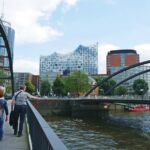
The tour centers on the Elbphilharmonie, described as a masterpiece of architecture with an abstract front. In practical terms, you’ll get help seeing it the way a local would: not just as a dramatic building, but as a new landmark sitting over the harbor like a crown.
Even though the tour is short, the Elbphilharmonie part matters. The guide’s explanations help you understand why this building became such a visual symbol for Hamburg. And you’ll also get exterior viewing time—handy for photos—since the highlight explicitly mentions seeing it from the outside.
Important note: entrance fees are not included. So if any portion you’re offered inside requires paid access beyond the tour, you’ll need to account for that. (Your guide can often tell you what to expect, but the policy says entrance fees are separate.)
The Kaiserkai area: getting your bearings between old and new
After the Elbphilharmonie area, you travel toward the Kaiserkai side (the route describes going from Elbphilharmonie to Kaiser, then onward). This is less about one single stop and more about the transition. Hamburg’s harbor neighborhoods can feel spread out, so having a guide connect the dots makes the walk easier.
You’ll also pass familiar tourist highlights along the way. That’s not wasted time—good guides use those landmarks to explain how the harbor developed into a city within a city.
If you’re the type who loves a clear storyline, this section is where the tour starts to click: modern harbor identity → entertainment and visitor landmarks → then back to the trading past in Speicherstadt.
More Great Tours NearbyMiniaturwunderland: a smart detour for curiosity (and patience)
The tour route includes time near Miniaturwunderland, described as having the world’s largest model railway. Even if you don’t go in, passing it during a guided walk gives you context for what the harbor area offers today: people come here not only to work, but to explore.
A practical tip: model-train attractions tend to mean crowds. Since the tour itself is about 2 hours, you’ll want to keep an eye on timing so you don’t get stuck waiting while others shop, browse, or go slowly. If you’re traveling with kids (or you’re just a kid at heart), you may love seeing how this modern attraction fits into the same harbor ecosystem.


Coffee roasting plant and spice museum: sensory history, plus one travel reality
One of the most memorable parts of this tour is the stop at an old coffee roasting plant and the spice museum. The idea is simple and smart: trade wasn’t abstract. It was beans, spices, and the processing that turned raw imports into goods people could buy.
A traveler feedback detail is worth your attention: there was a 15-minute shopping pause in the coffee roasting plant area, and one guest felt it was too long because they wanted more explanation of the beans and the roasting process. That tells me two things:
- The guide may spend more time on the story than on technical details, depending on the group.
- There can be a short break where shopping is possible, so if you’re not interested in browsing, you’ll want to stay mentally flexible.
If you love food and how products move from port to pantry, this stop is a highlight. If you prefer strict museum-style info with no pauses, mentally prepare for a bit of practical downtime.
Magellan Terraces: the view-balance moment before Speicherstadt
You’ll reach the Magellan Terraces, described as right across the Speicherstadt. This is a key moment because it flips your perspective from street level to a more scenic, across-the-water view.
Why it helps: Speicherstadt can feel like a maze once you enter it. A viewpoint first gives your brain landmarks. You’ll start to see the layout, the canal-adjacent setting, and why the warehouses look so intentional and dense.
This is also a good “photos and orientation” point. Even if the weather is chilly, this stage is where you get to understand the geography of the harbor district before the tour turns into a history walk.
Speicherstadt and the Pfeffersäcken story: trade shaped daily life
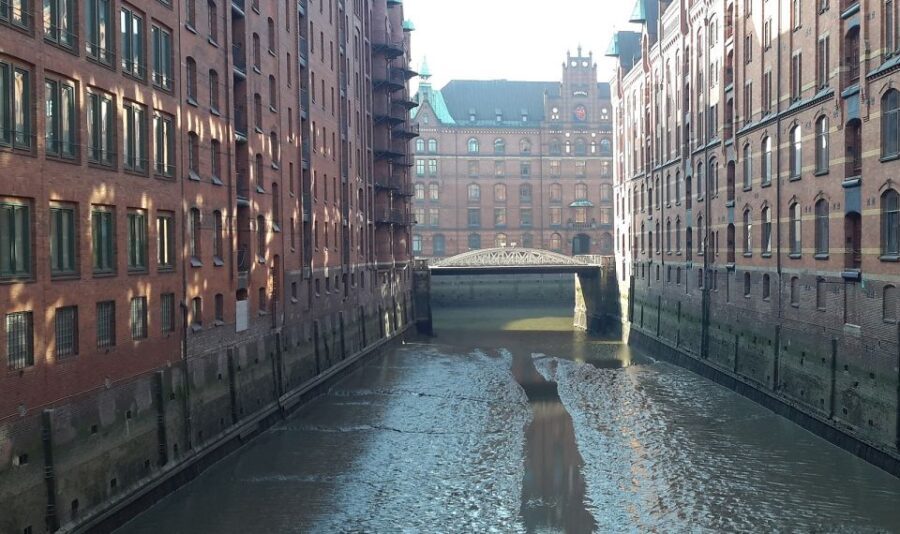
Now you’re in Speicherstadt, following in the footsteps of the Hanseatic merchants, called the Pfeffersäcken (spice merchants). The guide’s role here is important: you’re not just looking at old buildings—you’re learning how the trade economy ran the show.
One supplied detail really lands: the cathedral-like inner courtyards on the Dutch Brook make it clear this wasn’t a church-first environment. It was trade and money that determined everyday life in Hamburg. That framing is useful because it explains why the architecture feels grand. The grandeur wasn’t accidental—it was part of an image of wealth, control, and seriousness around commerce.
If you’ve visited a European old town and felt like the history was too broad or too vague, this is the opposite. The story is tied directly to what you see: courtyards, canal-side structure, and warehouse scale.
Dutch Brook courtyards: why these buildings feel cathedral-like
The tour calls out the Dutch Brook and the inner courtyards there. This is where Speicherstadt earns its unique look. The courtyards have a strong sense of rhythm and enclosure, and the guide connects that feeling back to the merchant world.
Here’s what you should take away as a traveler: architecture is communication. In Speicherstadt, the buildings say money mattered, trade mattered, and organization mattered. Even without memorizing dates, you’ll understand the logic of the place—because the guide points you toward the visible clues.
Also, if you like design details, canal-side districts are excellent for walking slowly with someone who knows what to point out. A guided format makes it easier than wandering alone and guessing which alley or courtyard is the “important one.”
Seeing Elbphilharmonie from outside again: the contrast hit
The tour highlight specifically mentions seeing the Elbphilharmonie from the outside. Even if you already had some Elbphilharmonie time, that outside viewing matters because it locks in the visual contrast.
You’ll go from Speicherstadt’s trading geometry and enclosed courtyards to a building described as abstract and crown-like over the harbor. That contrast is the point of the tour. It helps you notice how Hamburg keeps reinventing itself while still working from the harbor’s core identity.
If you’re traveling on a tight schedule, that contrast is also a shortcut to understanding the city. You don’t need to read a book; you can feel the shift in one guided route.
HafenCity: where Hamburg shows what it wants to build next
At the end, you move into HafenCity, described as the newest and most modern part of the city. This section is there for balance. Speicherstadt teaches you how Hamburg once ran global trade with warehouses and merchant systems. HafenCity shows how the city is translating that harbor importance into modern urban design.
You’ll see sophisticated and environmentally friendly buildings, according to the tour description. The value for you is perspective: you’ll start connecting planning choices to the water and the waterfront culture.
This ending works especially well if you like to travel forward in time—finish with what’s new rather than ending on old stone and then feeling like you’re done. You’ll leave with a clearer sense of where Hamburg is headed, not only where it came from.
Price and value: is $16 a good deal for two hours?
At $16 per person for a 2-hour guided tour with a professional city guide included, this is solid value—especially if you’re using the time as a first visit or as a structured intro.
What you get for that price:
- A guided route connecting Elbphilharmonie, Speicherstadt, and HafenCity
- Explanations that turn buildings into stories
- Help with key context like the Hanseatic League and the Pfeffersäcken
What’s not included:
- Entrance fees
So the value equation depends on whether any portion you want to go inside requires paying separately. Since entrance fees aren’t included, you’ll likely still be fine for outside viewing and guided context, but it’s smart to check what inside access means for your exact Elbphilharmonie portion.
Still, based on the overall positive traveler rating around 4.7 with lots of feedback, the deal seems to land for many people. The big theme is that the guide adds meaning without making the tour feel overpriced.
Timing, weather, and what to wear
This is a harbor-area walk, and one traveler specifically flagged that an exterior segment in very cold temperatures felt unpleasant. That doesn’t mean you should skip; it means you should plan.
My practical advice:
- Dress in layers so you can handle sun breaks or wind off the water
- Bring gloves and something for your neck if you’re visiting in winter
- Keep an eye on footwear—cobblestones and waterfront paths can be slick when cold
Because the tour is only 2 hours, you won’t be miserable forever. But you don’t want your day ruined by being unprepared.
Language matters: the guide is German
The live guide is German. If you speak German well enough to follow guided explanations, you’ll get a lot from the story-driven approach—Hanseatic merchants, trading routes, and the symbolism of courtyards.
If your German is basic, you can still enjoy the visuals, but you’ll miss some of the more specific meaning. In that case, you might want to pair the tour with a bit of pre-reading so key terms like Pfeffersäcken and Hanseatic League don’t feel like random words.
Accessibility: wheelchair accessible, with one real-world check
The tour is marked wheelchair accessible, which is a big plus. Still, your best move is to consider the meeting point area and the type of outdoor surfaces you’ll encounter. The meeting point is on a square in front of stairs, and while the tour is accessible, your comfort level matters.
If you use a wheelchair or mobility aid, arrive a few minutes early to confirm logistics with the guide. Good guides usually coordinate quickly, but it’s worth taking that small extra step.
Who should book this tour (and who might not love it)
This tour is a great fit if you:
- Want a first-time, structured view of Speicherstadt + HafenCity
- Like stories tied directly to what you see (warehouses, merchants, courtyards)
- Appreciate modern architecture contrast, not just old-town sightseeing
- Value clear guidance over wandering alone
It may be less ideal if you:
- Strongly prefer fully indoor tours in winter
- Hate shopping pauses during historical stops (one traveler found the coffee roasting plant break too long)
- Need an English-language guide (this one is German)
Should you book? A simple decision checklist
Book it if you want the best kind of shortcut: meaning plus landmarks in just two hours, with a professional city guide and a strong focus on how Hamburg’s trade shaped its buildings. The $16 price looks like good value, especially when the guide helps you read the city instead of just walking past it.
Skip or reconsider if cold outdoor time would ruin your day, or if you need entrance fees included for the specific parts you care about most. Also think about language: German-only is fine for some travelers, frustrating for others.
If you’re ready for a compact, high-impact route with real context, this is a smart way to spend a chunk of your Hamburg day.
Hamburg: Speicherstadt and Hafencity Guided Tour
FAQ
How much does the Hamburg Speicherstadt and Hafencity guided tour cost?
The tour price is $16 per person.
How long is the guided tour?
It lasts 2 hours.
What language is the live guide?
The live tour guide speaks German.
Where is the meeting point?
Meet directly at Sandtorkai 74, at the corner of Sandtorkai/Kaiserkai. It’s on the square in front of the stairs and on the white wall with the hole in the middle.
Is the tour wheelchair accessible?
Yes, the tour is wheelchair accessible.
Are entrance fees included in the price?
No, entrance fees are not included.
What is the cancellation policy?
You can cancel up to 24 hours in advance for a full refund.
Can I reserve and pay later?
Yes. The option is reserve now and pay later, so you can book your spot and pay nothing today.
You can check availability for your dates here: