
Start planning your home exchange at least 10 months ahead, especially for summer trips. You’ll want to create detailed profiles with high-quality photos and send personalized messages to potential partners. Focus on family-friendly amenities like full kitchens, toys, and safe play spaces. Build trust through video calls and clear communication about your group size and needs. Remember, you’re not just swapping homes—you’re creating authentic travel experiences while saving thousands on accommodation costs that transform how your family explores the world.
- Start Your Search Early and Build Relationships
- Thoroughly Vet Potential Exchange Partners
- Choose the Right Platform for Your Needs
- Maximize Your Listing Appeal in Peak Seasons
- Plan for Family-Friendly Amenities and Spaces
- Leverage Car Swapping for Ultimate Convenience
- Calculate Your True Cost Savings Potential
- Prepare Your Home for Hosting Success
- Embrace the Slower Pace of Exchange Travel
- Build Trust Through Pre-Trip Communication
- Last Words
Start Your Search Early and Build Relationships

While spontaneous weekend getaways have their charm, successful home exchanges require the opposite approach—early planning and genuine relationship building.
You’ll want to start planning your European exchange at least 10 months ahead for the best opportunities. For summer trips, begin reaching out in November or December of the previous year.
Create your profile immediately after joining a platform—this gives you access to available homes and starts building your reputation.
Don’t just send generic requests; craft personalized messages that show genuine interest in your potential exchange partner’s home and location.
Start conversations early, even for trips a year away.
This early approach prevents rushed decisions, secures better property selections, and reduces planning stress while giving you flexibility for the rest of your itinerary. Be prepared to send numerous requests on platforms like HomeExchange.com, as securing the perfect match often requires patience and persistence.
Thoroughly Vet Potential Exchange Partners
Once you’ve started those early conversations and identified promising exchange partners, your next step involves careful evaluation of who you’ll trust with your home. Start by diving deep into their feedback history—those review patterns tell you everything about reliability and how they treat properties.
Don’t skip identity verification; platforms like HomeExchange require proof of ID and recent utility bills, and verified profiles get that trustworthy blue checkmark.
Pay attention to communication quality. Generic copy-paste messages are red flags, while personalized responses showing they’ve actually read your listing signal genuine interest. Building trust through transparent communication helps establish the foundation for a successful exchange relationship.
Schedule a video call before committing—it builds rapport and confirms you’re compatible.
Finally, look for lifestyle alignment. Fellow professionals or families with similar values often make the most respectful exchange partners.
Choose the Right Platform for Your Needs
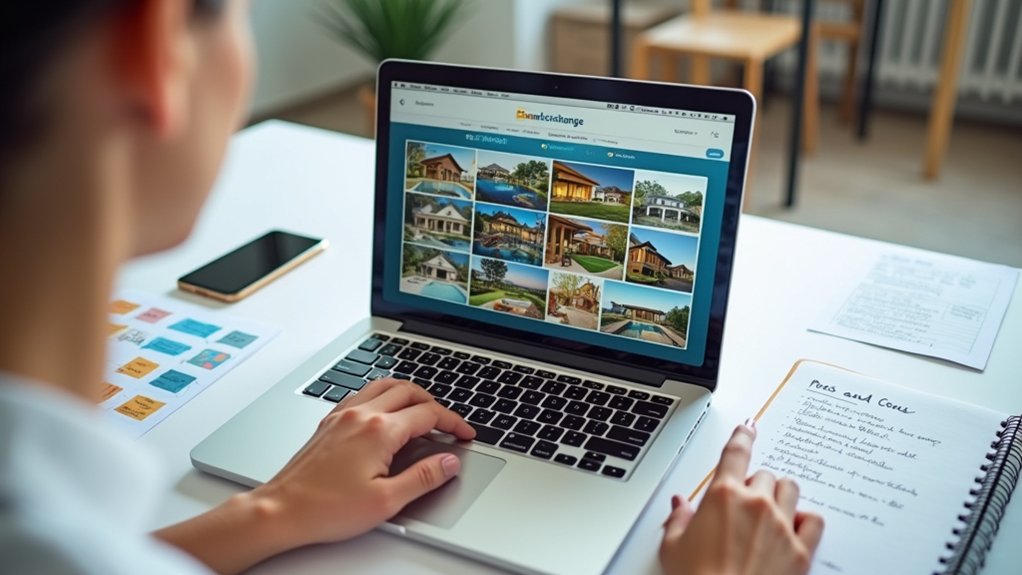
After you’ve narrowed down your ideal exchange partners, selecting the right platform becomes your foundation for success.
If you’re a first-timer seeking maximum options, HomeExchange’s 150,000+ homes across 145 countries gives you incredible variety, though you’ll pay $220 annually.
For budget-conscious families, Swaphouse operates completely free and caters to remote workers if that’s your lifestyle.
I’ve found that platforms with personal coordinators, like Intervac, provide invaluable hand-holding for nervous beginners.
Their European focus works perfectly if you’re dreaming of a continental adventure.
HomeLink’s 70+ year track record offers reliability, while People Like Us provides flexible exchange types including non-reciprocal options when simultaneous swaps don’t align with your schedule. Look for platforms that offer comprehensive insurance policies to protect against damages, cancellations, or disputes during your family exchange.
Maximize Your Listing Appeal in Peak Seasons
Because peak season brings fierce competition among home exchange listings, your property needs to stand out from the hundreds of others vying for attention. I learned this lesson during my first exchange attempt when my listing got buried among similar properties.
Start with high-quality photos showcasing your home’s best features—that renovated kitchen or spacious backyard. Capture exterior shots during spring or fall when landscapes look fresh and lighting flatters your property. Virtual tours work wonders, especially when families can’t visit in person.
Timing matters enormously. List on Thursdays when exchange families plan weekend browsing.
Enhance curb appeal before peak seasons and highlight unique selling points like proximity to attractions. Before listing, complete any necessary repairs and upgrades like fresh paint or fixture replacements to ensure your home makes the best impression. Remember, 56% of exchangers prioritize move-in-ready homes, so emphasize your property’s immediate availability and special amenities.
Plan for Family-Friendly Amenities and Spaces
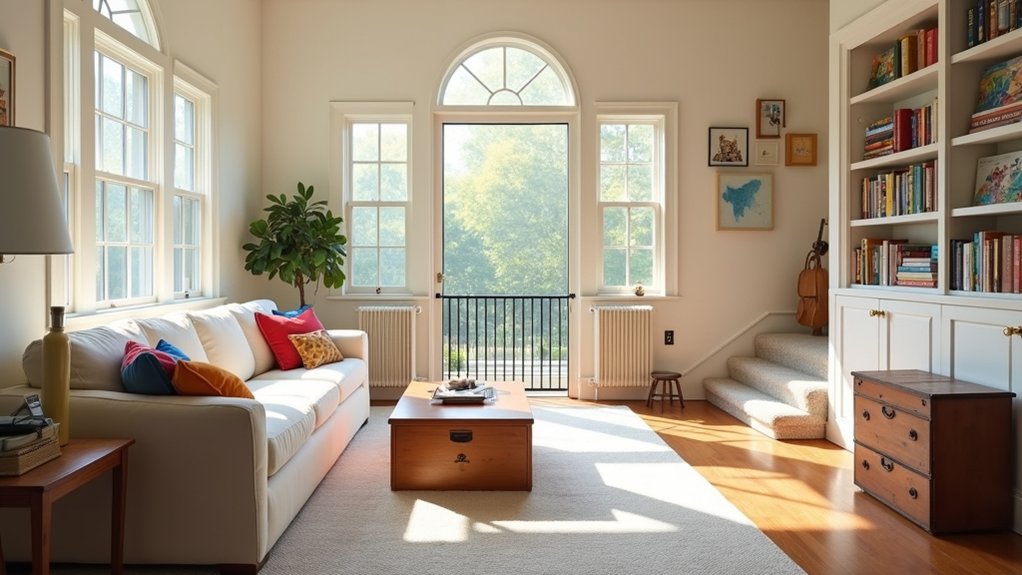
When traveling with children, you’ll discover that family-friendly amenities can make or break your home exchange experience. Look for homes offering cribs and high chairs—these essentials eliminate packing stress and provide immediate setup for your little ones.
You’ll love finding toys, bikes, or trampolines already waiting, giving kids instant entertainment while mimicking local family life.
Full kitchens stocked with cooking tools let you prepare familiar meals, avoiding expensive restaurants and accommodating picky eaters. The average exchange home’s 2,261 square feet typically includes spacious cooking areas great for family meal prep.
Prioritize properties near parks or featuring pools and safe play spaces. Multiple bedrooms ensure everyone gets proper rest, while larger living areas provide comfortable bonding time—crucial advantages over cramped hotel rooms. Consider homes with gardens or backyards where children can play safely while you relax and unwind after busy sightseeing days.
Leverage Car Swapping for Ultimate Convenience
While finding the perfect home exchange property sets the foundation for your trip, adding car swapping to the mix transforms your entire travel experience from good to exceptional. You’ll eliminate rental car fees—often your biggest travel expense after flights—while gaining access to a local vehicle that knows the neighborhood.
Before swapping, treat it like inspecting a rental: document scratches, fill the gas tank, and exchange insurance cards. Print the destination address with the zip code for reliable GPS navigation. Most importantly, add your exchange partner to your existing policy or secure temporary coverage, since insurance typically follows the car.
Set clear expectations about mileage limits and accident procedures upfront. With proper preparation, car swapping opens doors to suburban gems and remote adventures that’d otherwise require expensive rentals, making your family exchange seamless.
Calculate Your True Cost Savings Potential
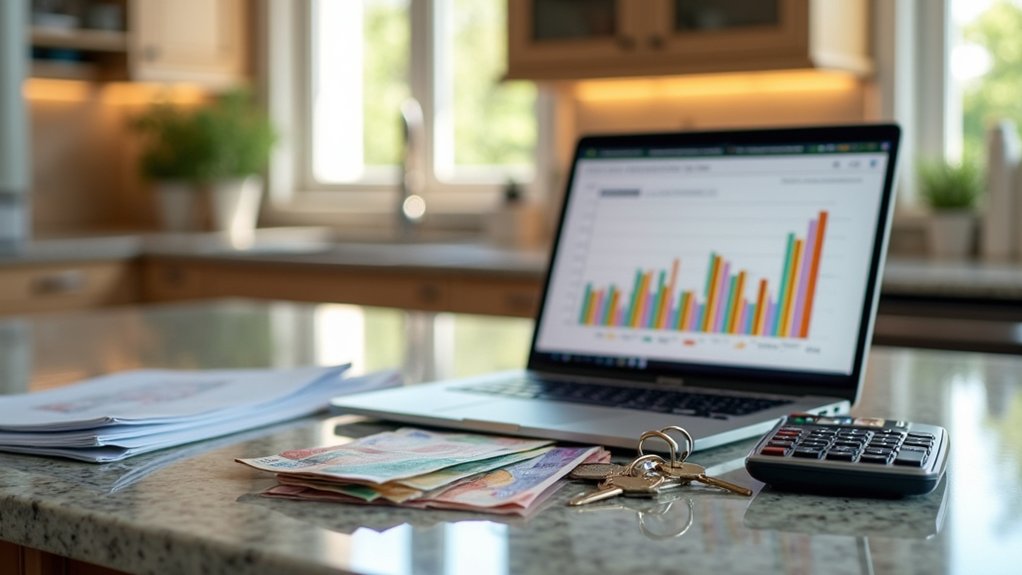
Beyond the obvious perk of free accommodation, home exchanges deliver savings that’ll make your accountant smile. The $235 annual membership pays for itself after one night in most destinations. Consider this: families typically save $2,000 annually on accommodations alone, with some logging savings exceeding $20,000 when traveling extensively.
But accommodation’s just the beginning. Full kitchens let you prepare 90% of meals at home instead of expensive restaurants. One family’s three-week journey through Tofino, Banff, and Yellowstone cost roughly $4 per night.
Add car swapping, and you’ll eliminate $100 daily rental fees. Many homes come equipped with toys and games that keep children entertained, eliminating the need to purchase or rent entertainment items during your stay.
When you factor in laundry access, fully-stocked kitchens with spices and cookware, plus home amenities hotels can’t match, your per-night costs plummet to approximately $1.08.
Prepare Your Home for Hosting Success
Although the thought of strangers staying in your personal space might feel overwhelming, transforming your home into an exchange-ready sanctuary doesn’t require a complete overhaul. Focus on decluttering rather than deep cleaning – clear bathroom counters of personal items and tuck away computer chargers, papers, and toys from living spaces.
Leave guests unpacking room by emptying one dresser drawer and creating closet space.
Stock essentials like toilet paper, hand soap, and fresh linens. Create a simple home manual with WiFi codes, emergency contacts, and appliance instructions. Consider downloading a Home Guide template to create a personalized welcome booklet that helps your guests feel comfortable and well-informed about your home. Use sticky notes to label TV remotes and mark off-limits cabinets.
Test all doors, appliances, and safety features beforehand.
Start preparations the day before departure, personalize your checklist, and communicate arrival details clearly.
Embrace the Slower Pace of Exchange Travel

Once your home is ready for guests, you’ll discover that home exchange travel naturally invites a completely different rhythm than traditional vacations. Instead of rushing between attractions, you’ll find yourself lingering at the local farmer’s market on Saturday mornings or becoming a regular at the neighborhood café.
This slower pace lets you experience genuine connections—joining that weekly trivia night or striking up conversations during daily grocery runs.
The environmental benefits feel rewarding too. You’ll walk more, use public transport, and considerably reduce your carbon footprint compared to hotel-hopping adventures.
Financially, spreading costs across extended stays makes everything more affordable while supporting local businesses through consistent patronage. Many families discover that repeat visitors return to the same exchange destinations, indicating the deep satisfaction that comes from building meaningful connections with both places and people.
Embrace unstructured time for spontaneous discoveries that rigid itineraries never allow.
Build Trust Through Pre-Trip Communication
When you’re entrusting your home to strangers and preparing to sleep in someone else’s bed, clear communication becomes your most valuable tool. Don’t just rely on messaging—schedule a video call with promising matches. I’ve found that seeing someone’s face and hearing their voice transforms the entire dynamic from transactional to personal.
Be upfront about everything: group size, ages, travel dates, and any special needs. One family I exchanged with mentioned their teenage son’s severe allergies upfront, which helped me prepare accordingly.
Document your agreements in writing, even when you’ve built great rapport.
Continue communicating after you’ve finalized the exchange. Share updates about flight changes or local events happening during their stay. This ongoing dialogue builds mutual trust and ensures smoother exchanges. Consider sharing local knowledge about nearby restaurants, attractions, or cultural customs to enhance their experience and demonstrate your investment in their visit.
Last Words
You’ll discover that home exchanges aren’t just about saving money—they’re about creating genuine connections and experiencing destinations like a local. Don’t let perfectionism hold you back from your first swap. I’ve learned that the most memorable family trips come from embracing the unexpected quirks of someone else’s home. Trust the process, communicate openly, and you’ll soon wonder why you ever stayed in sterile hotels when you could’ve been living someone’s real life.