
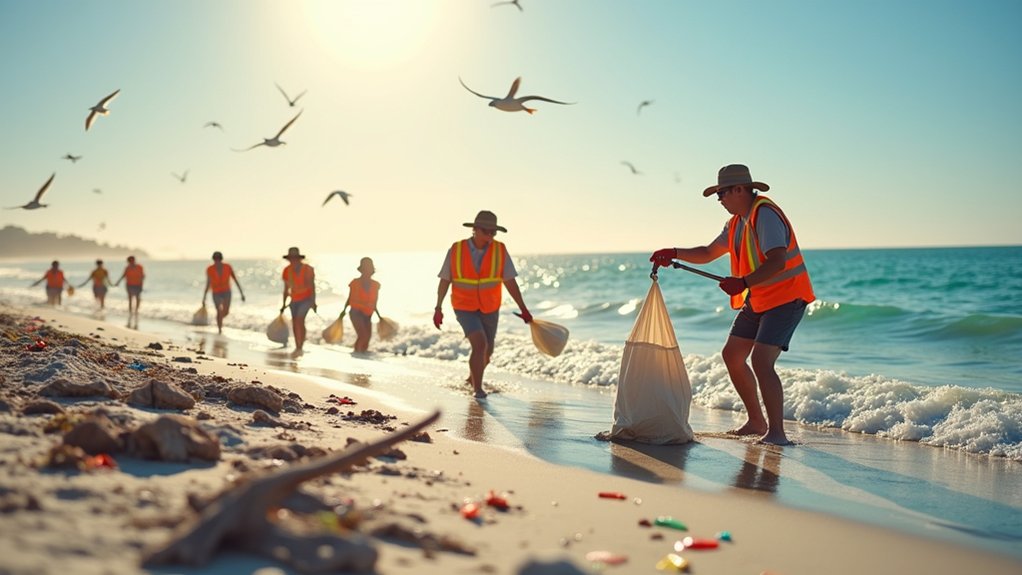
You’ll maximize your beach cleanup impact by choosing low-tide timing and securing permits 1-2 months ahead. Bring sturdy gloves, grabber tools, and separate containers for plastics, glass, and hazardous materials. Wear long sleeves, pants, and closed shoes for protection. Assign clear roles to family members and focus on collecting plastic debris, which comprises 60% of beach waste. Document your findings using apps like Clean Swell to contribute valuable data to environmental research organizations and discover advanced techniques for even greater conservation impact.
- Choose the Right Location and Timing for Maximum Impact
- Secure Proper Permissions and Coordinate Waste Collection
- Gather Essential Supplies and Safety Equipment
- Dress Appropriately and Follow Safety Protocols
- Form Effective Teams With Clear Role Assignments
- Use Strategic Cleanup Techniques for Thorough Coverage
- Prioritize Plastic and Non-Degradable Materials
- Properly Sort and Handle Different Waste Types
- Record Data and Document Your Environmental Impact
- Complete Post-Cleanup Procedures and Equipment Care
- Last Words
Choose the Right Location and Timing for Maximum Impact
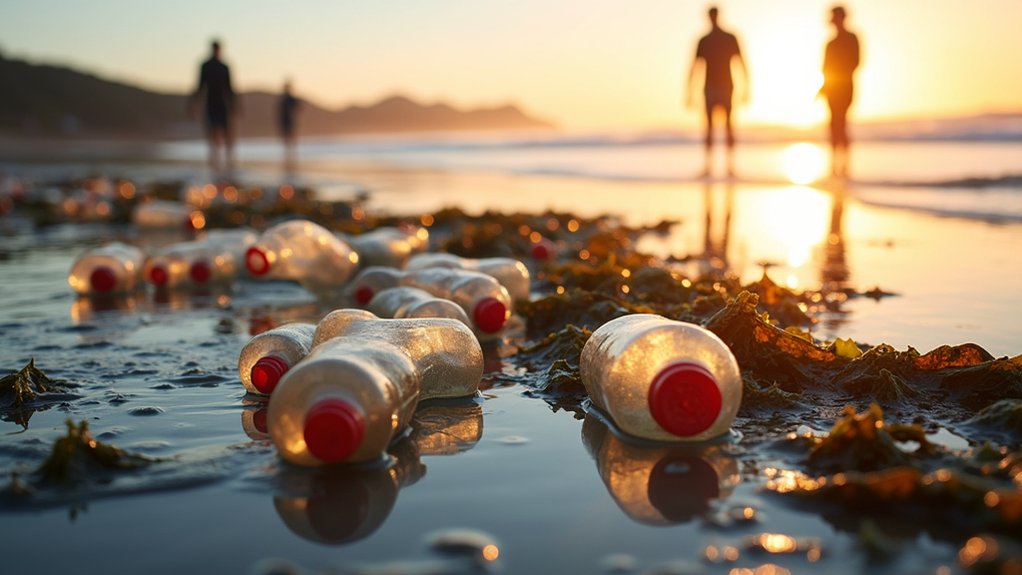
When you’re organizing a beach cleanup, selecting the right location and timing can make the difference between collecting a few scattered bottles and filling dozens of trash bags with meaningful impact.
Start by surveying local beaches for trash hotspots, particularly areas near stormwater drains or popular visitor spots where litter accumulates. Focus on sites with persistent plastic debris for maximum removal effect.
Time your cleanup with low tide schedules to expose the most debris. Begin about two hours after high tide when fresh trash appears on outgoing tides.
Plan early morning or evening sessions during warm months for comfort, and schedule post-rainstorms when litter levels peak.
Ensure your chosen location offers adequate parking, restroom access, and isn’t restricted by private property limitations for volunteer convenience. Check your local events calendar to avoid scheduling conflicts with festivals, concerts, or other major community happenings that might reduce volunteer availability.
Secure Proper Permissions and Coordinate Waste Collection
Before you rally your family and friends for cleanup day, you’ll need to navigate the essential but often overlooked world of permits and waste logistics. Start by contacting your local government or beach administrative office 1-2 months ahead—larger events need even more lead time. Submit a formal letter specifying your cleanup’s date, time, and location.
Don’t forget waste collection coordination! Connect with your Solid Waste Department to arrange proper disposal and get zonal officers’ contact details. Plan how you’ll sort debris—typically black bags for trash, clear for recycling.
Visit your chosen site beforehand to identify optimal trash drop-off spots. You should also coordinate with health departments regarding any hazardous materials you might encounter during the cleanup to ensure proper handling procedures.
Always carry photocopied permission letters on cleanup day, and remember that minors need signed parental waivers. Proper planning prevents permit problems!
Gather Essential Supplies and Safety Equipment
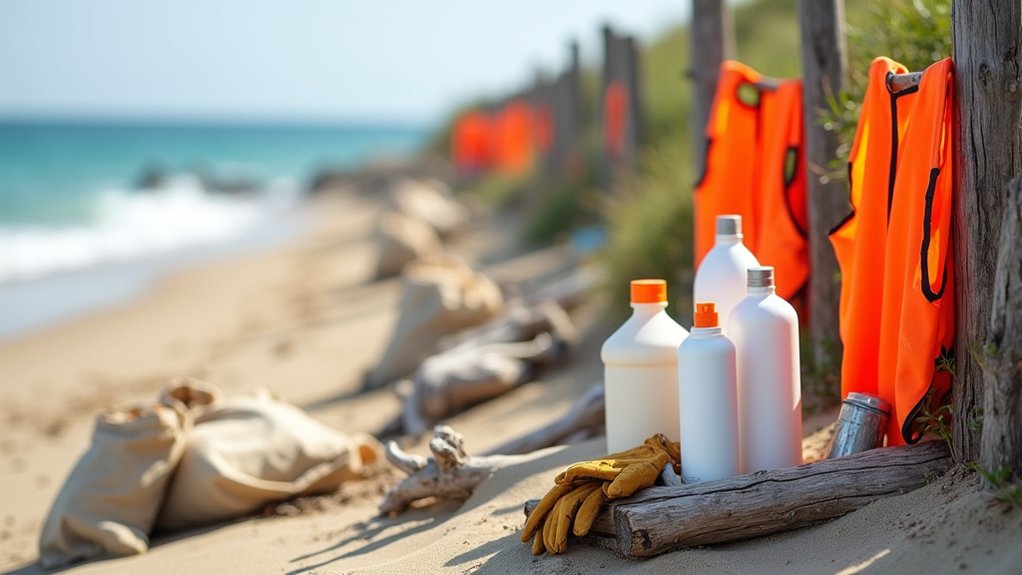
Five essential supply categories will make your family beach cleanup both safe and successful. Start with reusable gloves—police-quality or thick canvas options protect hands from sharp debris while remaining washable for future cleanups. Pack sturdy 13-gallon trash bags and clear recycling bags, or choose reusable 5-gallon buckets that handle jagged edges and heavy loads.
Invest in grabber tools like extendable litter pickers to reduce bending and maintain safe distance from hazards. Don’t forget hydration and sun protection: bring reusable water bottles, reef-friendly sunscreen, and hats for UV protection. Consider packing lightweight snacks like granola bars or nuts with minimal packaging to sustain energy during longer cleanup sessions.
Finally, pack a first aid kit with band-aids, antiseptic wipes, and tweezers. Include a sharps container for broken glass or needles, plus a portable charger to keep your phone ready for emergencies.
Dress Appropriately and Follow Safety Protocols
Although beach cleanups create wonderful family memories, proper clothing and safety protocols protect everyone from potential hazards lurking in sand and surf. Dress your family in long pants and long-sleeved shirts to shield skin from sharp debris and sun exposure. Choose sturdy, enclosed shoes to protect feet from glass, shells, and other dangerous objects. Don’t forget hats and sunglasses for sun protection.
Equip everyone with puncture-proof gloves before handling any trash. Use grabbers to minimize direct contact with litter, and apply sunscreen liberally. Never pick up syringes, medical waste, or dead animals—flag these items for coordinators instead.
Maintain six-foot distances from other groups, stay hydrated, and use hand sanitizer frequently. Bring EPA-approved disinfectants to clean all reusable equipment before and after your cleanup session. Keep first aid supplies accessible throughout your cleanup adventure.
Form Effective Teams With Clear Role Assignments
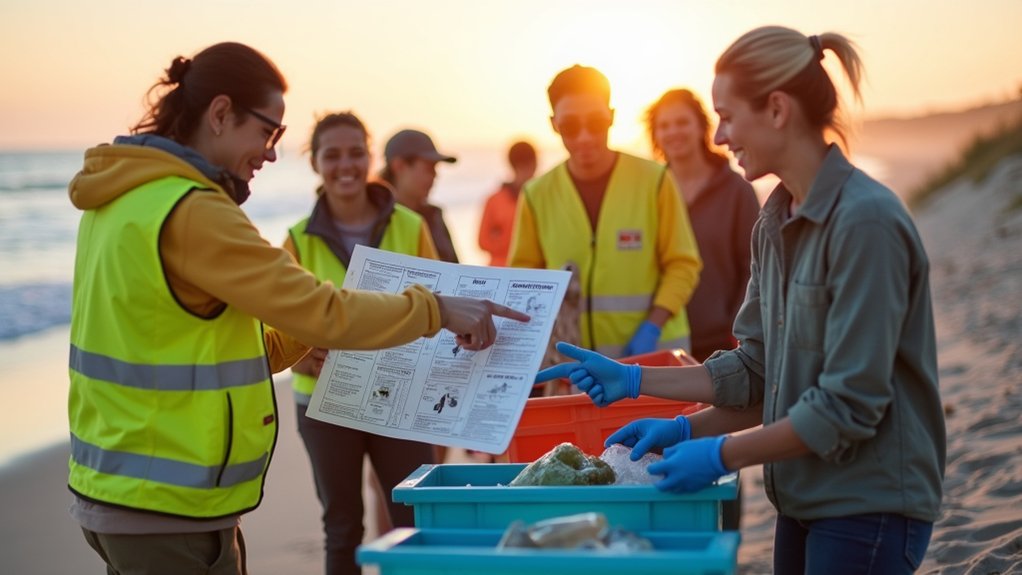
When you’re organizing a beach cleanup with your family and community, creating well-structured teams with specific roles guarantees everyone knows exactly what they’re doing and maximizes your environmental impact.
Start by designating one person to handle hazardous materials using proper protective gear. Assign different teams to cover specific beach areas, preventing overlap and ensuring thorough coverage. Create a check-in station with someone managing sign-in sheets and supplies like pens and pencils.
Appoint a coordinator to communicate with attendees and track RSVPs throughout the event. Don’t forget to designate someone for setting up and clearly labeling your trash drop-off site. Make sure to take before photos at the start to document the area’s condition and show the impact of your cleanup efforts.
During large cleanups, divide groups into smaller teams that can even compete for collecting the most trash or finding the strangest items, making the experience fun for kids.
Use Strategic Cleanup Techniques for Thorough Coverage
While organizing your family beach cleanup, you’ll want to maximize your impact by dividing the shoreline into manageable zones that prevent teams from missing spots or duplicating efforts. Survey the beach beforehand to identify heavily impacted areas, especially near stormwater drains where trash accumulates most.
Time-block your cleanup by focusing on one section at a time for noticeable results.
Equip each zone team with trash grabbers, buckets with identification stickers, and litter pickers paired with bags. For microplastic removal, use fine-mesh sieves on loose sandy areas where tiny particles embed deeply. Screen filtration systems capture fragments missed by hand collection. Consider incorporating vacuum-like devices that can manipulate suction levels to target microplastics specifically while minimizing disturbance to the surrounding ecosystem.
Popular visitor beaches require this zoned approach due to high trash volumes, ensuring your family’s efforts create maximum environmental impact.
Prioritize Plastic and Non-Degradable Materials
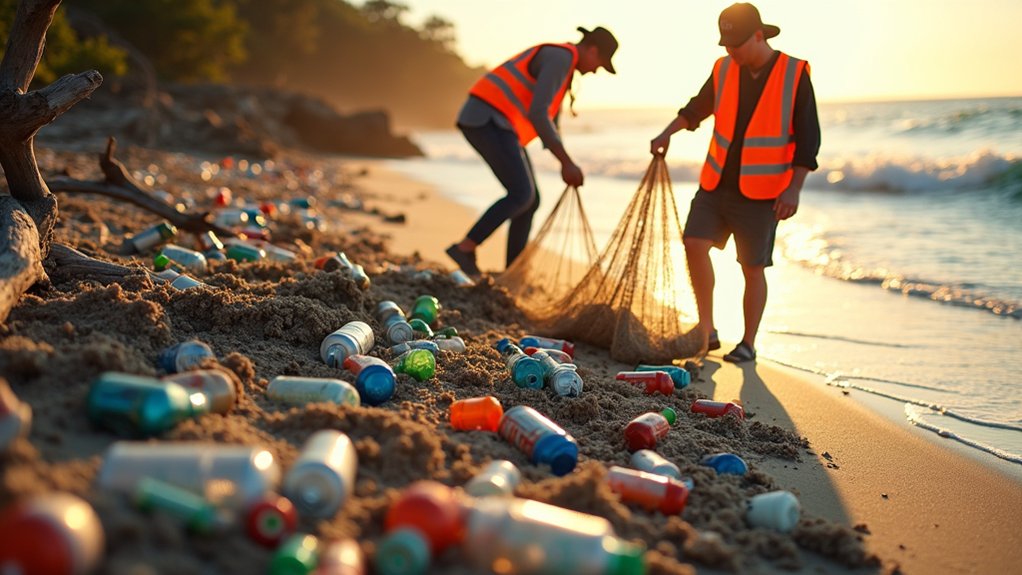
Why should your family focus on plastic and non-degradable materials during beach cleanups? Single-use plastics comprised 83% of all items collected during 2024 beach cleanups, making them your most impactful target. Teach your kids to spot cigarette butts, plastic bottle caps, straws, and fragments—these represented the most common items found last year.
Plastic fragments alone accounted for 32.5% of nearly one million collected items. When you prioritize these materials, you’re preventing them from breaking into microplastics that infiltrate food systems.
Your data collection efforts directly support legislation like Extended Producer Responsibility bills. States with plastic bag bans saw 50% reduction in related litter, proving your cleanup work creates real change for future generations. The scale of ocean contamination is staggering, with 11 million metric tons of plastic entering marine environments annually—equivalent to a garbage truck dumping its contents every single minute.
Properly Sort and Handle Different Waste Types
Once you’ve gathered debris during your family beach cleanup, effective sorting becomes your next essential step for maximizing environmental impact. Set up designated bins for plastics, glass, and general waste to keep recyclables separate.
Use wide-mouth containers with tight-fitting lids for any hazardous materials you encounter.
Sort plastic items into specific categories like bags, straws, caps, and containers, as different types require separate recycling processes. Remember that approximately 60% of beach debris consists of recyclable plastic bottles and containers. Prioritize collecting plastic debris since 80% of ocean plastic originates from land sources, making your shoreline efforts crucial for preventing marine pollution.
Document your collection by weighing sorted materials and taking photos to track your environmental impact.
Coordinate with local recyclers beforehand to ensure your sorted recyclables reach proper facilities rather than standard beach trash bins.
Record Data and Document Your Environmental Impact
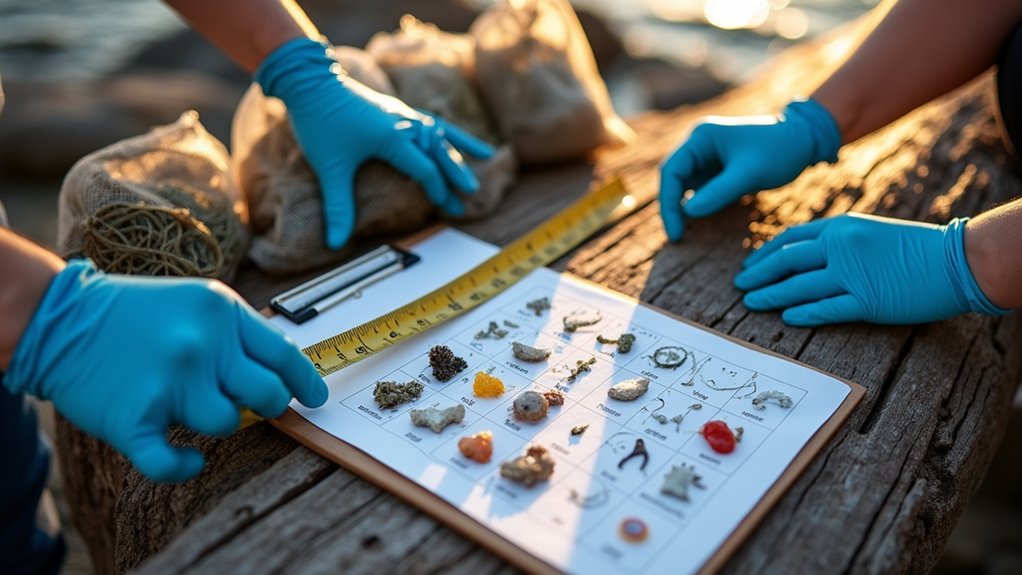
Recording your cleanup data transforms your family’s beach adventure into meaningful environmental action that contributes to global conservation efforts.
Print a simple data card before heading out, or download the Clean Swell app for automatic tracking. Assign one family member as the data recorder to note essential details: date, location, participants, and pounds collected.
Use tally marks for each trash category you find—plastic bottles, cigarette butts, food wrappers. Kids love keeping score this way! Switch recording duties so everyone participates.
The Clean Swell app automatically calculates totals and submits your data to the global TIDES database.
Your family’s efforts strengthen marine protection campaigns and help scientists track pollution trends. Those simple tally marks become powerful tools for ocean conservation. Don’t forget to take visual photographs of unusual debris items, as these images provide valuable documentation that complements your quantitative data collection.
Complete Post-Cleanup Procedures and Equipment Care
After you’ve documented your family’s impressive cleanup results, it’s time to properly wrap up your beach conservation project. Start by ensuring all trash gets removed from the site using garbage trucks or sealed bags tied securely to prevent spillage.
Coordinate recycling by separating materials from general waste beforehand. Place sharp items like glass fragments in clearly labeled hazardous waste containers for safe disposal.
Clean and sanitize all reusable tools like scissors and trowels to prevent contamination. Have everyone wash their hands thoroughly before touching phones or faces.
Collect and verify all completed data forms for accuracy, then store them properly or mail to the organizing agency. Submit your completed forms to Ocean Conservancy to contribute valuable data for marine conservation research.
Finally, confirm the site’s completely waste-free and vegetation remains undamaged, leaving the beach better than you found it.
Last Words
You’ve got everything you need to make a real difference at your next beach cleanup! Remember, you’re not just removing trash—you’re protecting marine life and creating cleaner spaces for families to enjoy. Don’t forget to bring the kids along; they’ll love being environmental heroes. Take photos, celebrate your hard work, and share your experience with friends. You’ll be amazed at how rewarding this family adventure becomes!