
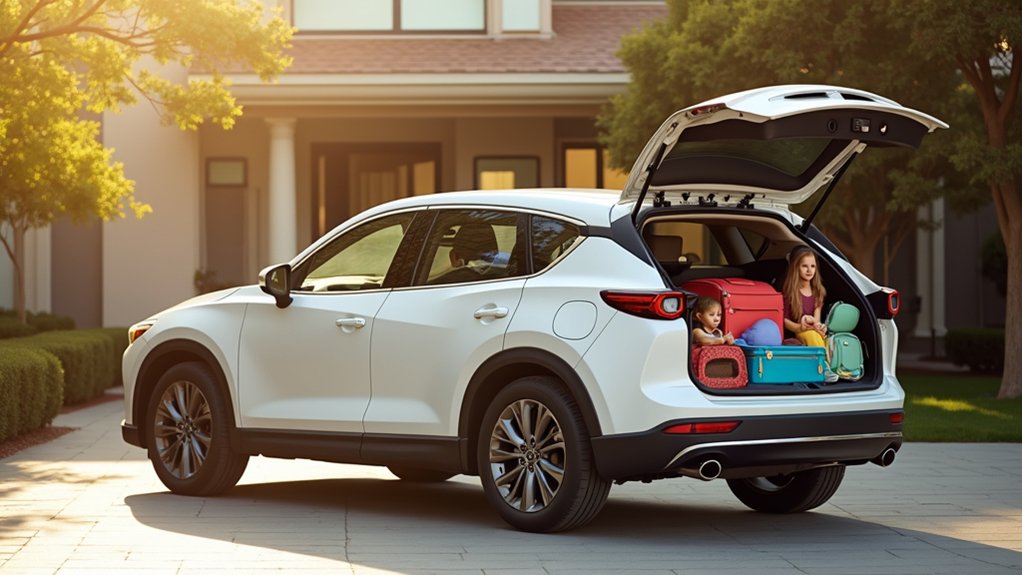
You’ll save $20-$30 daily by booking one month ahead instead of six months early, but reserve 2-3 months out during peak seasons for availability. Small SUVs dominate family rentals for their space and safety. December 20th sees the highest pickup demand nationwide, while gas prices have dropped below $3 per gallon for the first time in four years. Check your personal auto insurance coverage before declining rental protection, and consider hybrid models for longer trips to maximize fuel efficiency and minimize stops.
- Small SUVs Lead Holiday Rental Preferences for Families
- Book Early to Secure Better Rates and Vehicle Availability
- December 20th Marks Peak Rental Demand Nationwide
- Gas Prices Drop Below Per Gallon for First Time in Four Years
- Top Five Markets Experience Highest Holiday Rental Demand
- Weekend Bookings Command Premium Pricing Over Weekdays
- Vehicle Features Matter for Long Family Road Trips
- Insurance Coverage and Liability Protection Essentials
- Roadside Assistance Preparedness During Peak Travel Season
- Alternative Transportation Costs Make Car Rentals More Attractive
- Last Words
Small SUVs Lead Holiday Rental Preferences for Families
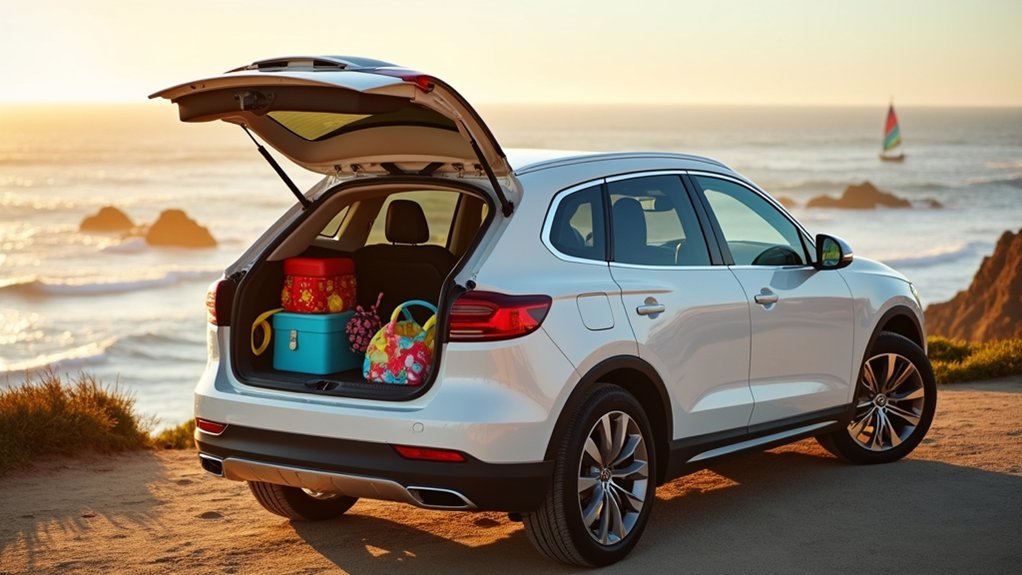
When you’re planning your next family vacation, you’ll likely find yourself drawn to the same vehicle that’s capturing the attention of holiday travelers nationwide: the small SUV. These vehicles have claimed the top spot in holiday rentals, and it’s easy to see why they’re great for family trips.
Small SUVs offer the spacious interiors your family needs, plus extra cargo capacity for all that vacation luggage. They provide enhanced safety and stability that gives you peace of mind when driving with loved ones.
Whether you’re heading to Orlando’s theme parks or exploring California’s coastlines, these versatile vehicles handle different terrains and weather conditions with ease. If you’re planning to rent on December 20, expect higher demand as this is projected to be the busiest day for car rentals.
With 89% of holiday travelers choosing road trips, you’re joining a trend that prioritizes convenience and comfort for memorable family adventures.
Book Early to Secure Better Rates and Vehicle Availability
While it might seem counterintuitive, booking your family rental car about one month in advance typically delivers the best savings—not six months ahead as you’d expect. KAYAK data shows you’ll save $20–$30 per day compared to booking six months early, thanks to rental companies’ yield management strategies that adjust pricing closer to travel dates.
However, during peak holiday seasons, reserve 2-3 months ahead to guarantee availability. Early booking secures your preferred vehicle size—crucial when you need that SUV for family luggage—and ensures access to extras like child seats and GPS. For specialized vehicles like luxury cars or convertibles, consider booking 4-6 months in advance to secure better rates and ensure your preferred model is available.
Here’s a smart strategy: book early with free cancellation, then monitor prices. Many travelers save 10-20% by rebooking if rates drop, combining reservation security with potential last-minute deals.
December 20th Marks Peak Rental Demand Nationwide

Timing your booking becomes even more critical when you consider that December 20th represents the absolute busiest rental car pick-up day across the entire United States. Both Hertz and AAA data confirm this Saturday kicks off a demanding 13-day travel period that’ll stretch rental availability thin nationwide.
You’ll face the stiffest competition in Orlando, Los Angeles, Atlanta, Miami, and Phoenix—markets where demand spikes dramatically during year-end holidays.
With AAA projecting 122.4 million travelers between December 20th and January 1st, and 89% choosing road trips, you’re competing against massive numbers. Small SUVs remain the most sought-after rental vehicle class during this peak period.
Don’t expect relief after Christmas either. INRIX forecasts that Christmas week stays busier than New Year’s week, with Friday, December 26th bringing another surge as families head home from holiday gatherings.
Gas Prices Drop Below $3 Per Gallon for First Time in Four Years
Just as rental car demand peaks nationwide, you’re catching a break at the pump that couldn’t come at a better time. Gas prices dropped below $3 per gallon for the first time in four years, hitting $2.85 in December 2025.
You’ll find prices below $3 in 37 states, with 22 states offering gas under $2.75. Some lucky drivers are even paying under $2 per gallon in four states, with Colorado recording the lowest at $1.69.
This timing couldn’t be better for your holiday road trip. With crude oil staying below $60 per barrel and strong supply keeping prices down, you’re spending the lowest percentage of disposable income on gas in two decades. Current gas prices have reached a 1,681-day low nationwide, marking the most significant decline in recent memory.
That means more money for family activities and fewer worries about fuel costs during peak travel season.
Top Five Markets Experience Highest Holiday Rental Demand
When you’re planning your holiday getaway, you’ll want to book early in these five hotspot destinations where rental car demand reaches its peak.
Orlando leads AAA’s rankings, driven by Florida’s leisure-heavy market and cost-effective family reunions.
Los Angeles takes second place, with small SUVs dominating Southern California’s road trip scene.
Atlanta ranks third, benefiting from Southeast tourist concentration and elevated pickups on peak days like December 20th.
Miami claims fourth spot as Florida’s warm weather attracts the record 122 million holiday travelers seeking sun-filled getaways.
Phoenix rounds out the top five, where Southwest leisure travel fuels rental needs in warm climates. Despite easing inflation elsewhere, rental rates have risen about 1% year-over-year in these competitive markets.
You’ll face the toughest competition and highest prices in these markets during holiday peaks.
Weekend Bookings Command Premium Pricing Over Weekdays
Beyond choosing the right destination, your rental costs will fluctuate dramatically based on which day you pick up your car. Weekend bookings consistently command premium pricing over weekdays due to leisure traveler demand. You’ll notice Friday prices spike sharply as weekend demand kicks in, particularly at airports.
Saturday rentals hit their peak in vacation-heavy areas, while Sunday rates stay elevated from returning travelers.
Tuesday and Wednesday typically offer your best deals among weekdays. Airport locations experience the heaviest weekend traffic, inflating Friday-Sunday rates substantially. Neighborhood spots maintain more stable pricing but still charge weekend premiums. Fixed transaction fees are spread over more days with weekly rates, making the per-day cost lower than daily bookings.
When booking, compare weekly versus daily rates—longer rentals often prove cheaper for five-plus days. Consider shifting flexible trips to avoid peak weekend pricing patterns.
Vehicle Features Matter for Long Family Road Trips
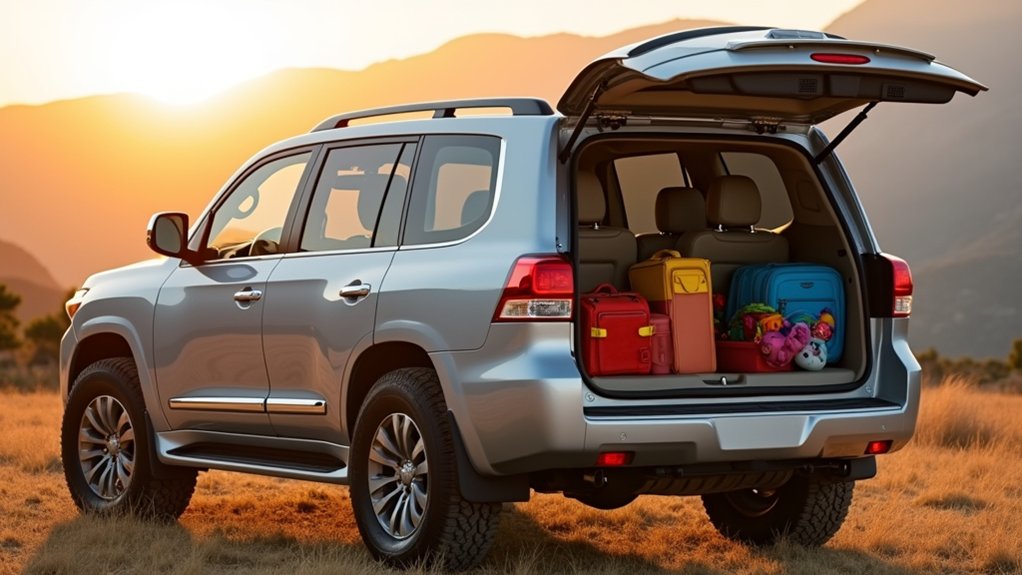
While securing the right pickup date saves money, choosing the wrong vehicle can turn your dream family vacation into a cramped nightmare. You’ll want seats for everyone plus cargo space for luggage and gear.
Minivans offer flexible seating with fold-flat options, while SUVs provide high ground clearance for mountain roads.
Don’t overlook entertainment features during long drives. Rear screens, USB ports, and WiFi keep kids occupied for hours.
Safety matters too—look for blind-spot monitoring, 360° cameras, and excellent crash ratings. Modern vehicles also come equipped with 24/7 roadside support to give you peace of mind during your family journey.
Consider fuel efficiency; hybrid models like the Toyota Sienna deliver 35-37 MPG, while the Kia Carnival Hybrid offers 700+ miles per tank for cross-country adventures without constant fuel stops.
Insurance Coverage and Liability Protection Essentials
Although you’ve picked the perfect vehicle for your family adventure, you’ll face a maze of insurance options at the rental counter that can double your daily costs if you’re unprepared.
Your personal auto policy typically extends coverage to rental cars for up to 30 days, including collision and all-encompassing protection with your existing deductibles.
Check your policy’s declaration page before traveling to confirm coverage details.
Many credit cards offer rental car protection, though most provide secondary coverage that kicks in after your personal insurance.
However, credit card coverage rarely includes liability protection, which covers damages you cause to others.
The rental company’s collision damage waiver costs $15-30 daily but eliminates their claims against you for vehicle damage, theft, or unavailability—potentially worth considering for peace of mind. Super CDW provides zero-deductible coverage for an additional $10-30 per day, offering maximum financial protection against unexpected damages.
Roadside Assistance Preparedness During Peak Travel Season

When you’re part of the 122.4 million Americans hitting the road during peak holiday travel, roadside emergencies become far more likely—and far more stressful to resolve.
You’ll want thorough roadside assistance before departing, especially since towing leads all service requests during busy travel periods. Battery jump-starts, tire replacements, and fuel delivery become essential when you’re stranded with family in unfamiliar territory.
Check if your rental car includes roadside coverage or if your personal auto insurance extends protection. Many credit cards offer emergency assistance, while auto club memberships provide reliable backup with nationwide networks.
Peak season strains available services, so digital platforms with GPS tracking help reduce response times. Mobile apps with GPS dispatch tools are becoming essential for faster service coordination during high-demand periods. Don’t assume help’s readily available—remote routes and holiday volumes can considerably delay assistance when you need it most.
Alternative Transportation Costs Make Car Rentals More Attractive
Beyond emergency preparedness, the economics of family travel often tip the scales toward rental cars when you compare actual costs across transportation options. You’ll find taxi rides accumulate quickly—especially with multiple daily stops, heavy traffic, and night tariffs that can double your fare.
Public transport might seem cheaper at $1-5 per ride, but transfers add extra costs for each family member.
Here’s where rentals shine: you’re splitting costs among passengers. That $30-100 daily rate becomes incredibly affordable when divided by four or five family members. For longer vacations, weekly discounts make rentals even more attractive.
While you’ll pay for fuel and parking, the flexibility to explore multiple destinations without repeated per-person fares often makes car rentals your most economical choice. Rental cars also provide access to remote destinations that buses and trains simply cannot reach, opening up unique opportunities for family adventures beyond standard tourist routes.
Last Words
You’ll save money and stress by planning your family rental car strategy now. Don’t wait until December 20th when demand peaks—book that small SUV early while rates are still reasonable. With gas under $3 per gallon, road trips are more affordable than flying your whole family. Check your insurance coverage, add roadside assistance, and focus on comfort features for long drives. Your family vacation depends on reliable transportation.