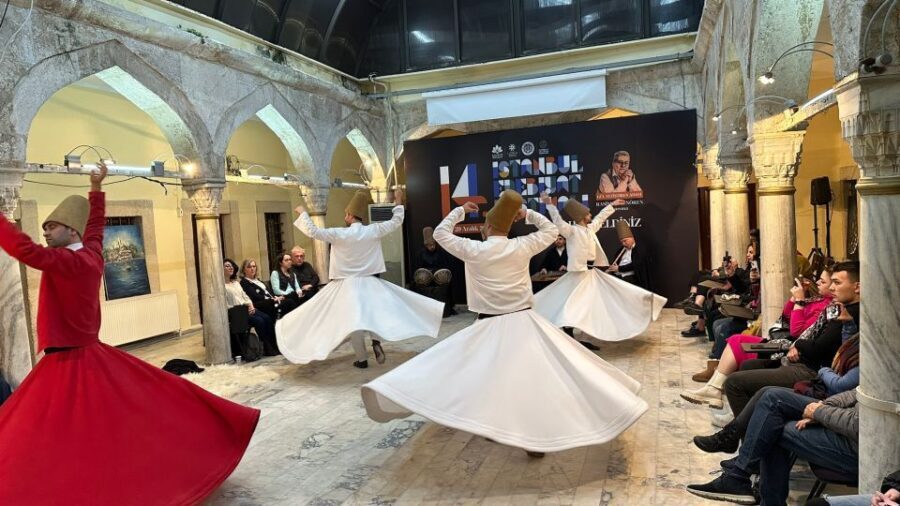
Our review: This Whirling Dervishes ceremony brings you into the Mevlevi Sema tradition at the Hoca Rüstem Medrese, right in Istanbul’s historic area. You’ll hear musicians chant and sing before the dervishes begin their spinning ritual, and the whole thing runs about an hour.
What I like most is the combo of live sound and hypnotic movement in a small, intimate setting. Another big win: you get an English audio guide app on your smartphone, so you’re not stuck guessing what you’re seeing.
One consideration: there’s little in the way of on-site explanation, and some guests felt the room could feel tight or crowded. If you want lots of background from a guide while you sit, plan to use the audio guide and arrive early.
- Key things I’d write on a sticky note before you go
- Mevlevi Sema at Hoca Rüstem Medrese: the setting that makes it feel real
- Price and Logistics: what gets you, and what it doesn’t
- Getting seated: timing that affects what you see
- The hour-by-hour flow: music, chanting, then the whirling ritual
- The meaning behind the spinning: why the ritual looks the way it does
- What you might miss if you want a full lecture
- The audio guide app: how to use it without getting distracted
- Etiquette in a spiritual service: quiet respect beats big reactions
- Tea and hospitality: a small comfort that helps the mood
- Viewpoints, crowding, and photography reality checks
- Meet your hosts and performers: the human side of the ritual
- Who should book this (and who should set expectations)
- Getting there in Istanbul: no pickup, but the venue is reachable
- Accessibility and facilities: what’s confirmed
- Should you book the Istanbul Whirling Dervishes ceremony?
- FAQ
- How long is the Whirling Dervishes ceremony?
- Where does the ceremony take place?
- What is included in the ticket?
- Do I need my own headphones?
- Is there a requirement for when I should arrive?
- Is it wheelchair accessible?
- The Best Of Istanbul!
- More Tour Reviews in Istanbul
Key things I’d write on a sticky note before you go
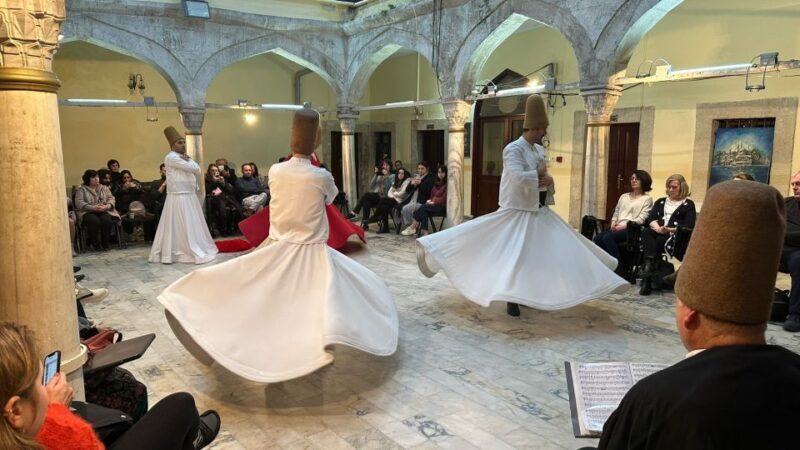
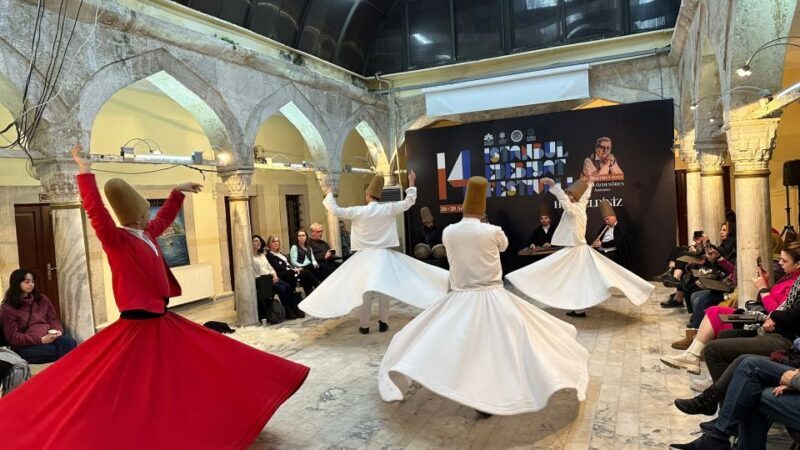
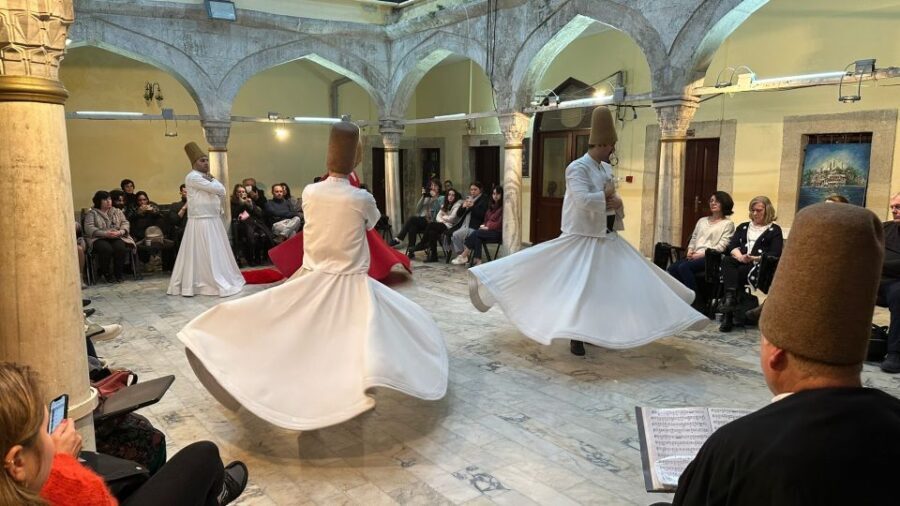
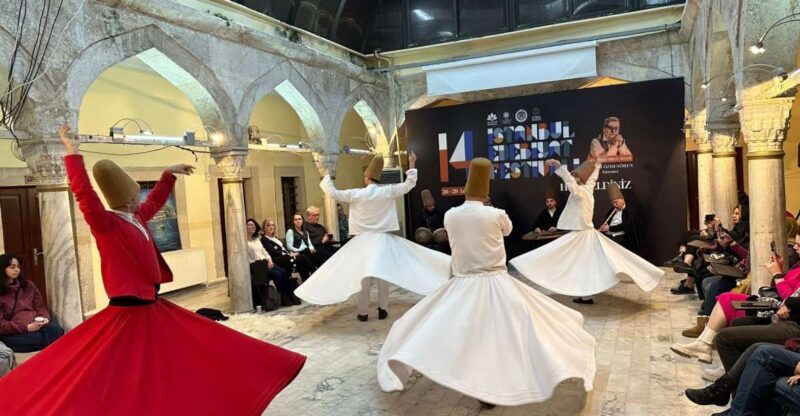
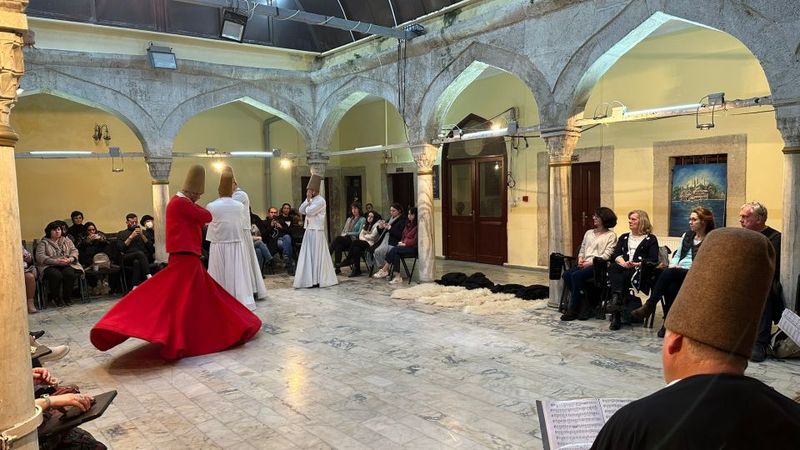
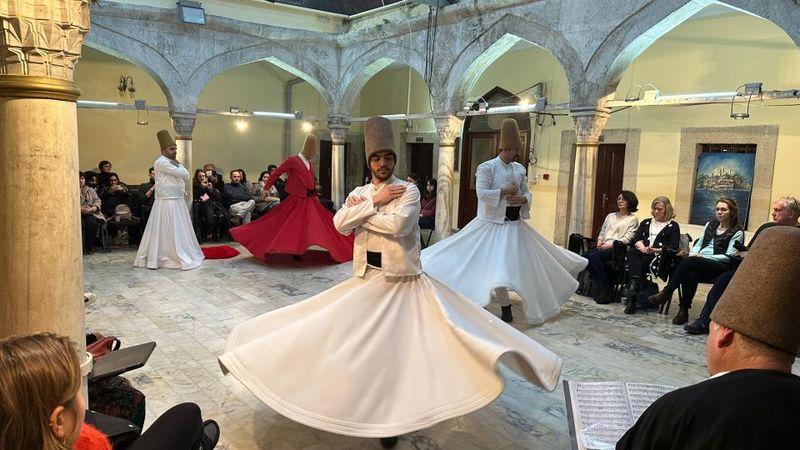
- Hoca Rüstem Medrese is the stage: a historic medrese setting that feels more like a ceremony than a theater.
- Music first, spinning second: many visitors describe a first half focused on music and chanting, then the dervishes come out.
- Tea while you wait: several guests mention hot tea before the show, especially helpful in cooler weather.
- English audio guide app included: bring headphones and a charged phone so you can follow along.
- Arrive early for better sightlines: reviews note only a couple of rows and occasional blocked views from pillars.
- Etiquette is part of the experience: guests repeatedly say this is a spiritual service—keep it quiet and avoid clapping.
👉 See our pick of the 15 Best Photography Experiences In Istanbul (With Prices)
Mevlevi Sema at Hoca Rüstem Medrese: the setting that makes it feel real
This ceremony happens at Hoca Rüstem Medrese, in the heart of Istanbul where you can still feel the city’s layers. One thing I notice in the way guests describe it: the building and layout matter. People call it cozy and intimate, like you’re sitting inside a small madrasa rather than walking into a big tourist venue.
If you’re used to Ottoman-era sightseeing where you look first and understand later, this is flipped. Here, you watch—up close—and let the music and movement carry you. Several travelers note the atmosphere is peaceful and humbling, not flashy.
That said, there are a couple of practical notes. A few guests mention visual distractions from back-lit side panels, and others point out pillars or crowding that can block footwork. You won’t ruin the experience by any means—but if you care about video and close detail, your seat choice matters.
You can also read our reviews of more tours and experiences in Istanbul.



Price and Logistics: what $23 gets you, and what it doesn’t
The ticket price is listed as $23 per person and the duration is 1 hour. For a live, traditional ceremony with musicians plus dervishes, that’s solid value—especially because the experience includes an audio guide app in English.
Two logistics points to keep in mind:
- Hotel pickup is not included, so you’ll need to make your own way to the venue.
- You’re told to arrive at the hall 15 minutes before the show starts, but multiple reviews suggest arriving earlier than that for a better view.
Good news if your plans are flexible: the booking info says you can cancel up to 24 hours in advance for a full refund, and there’s a reserve-and-pay-later option. That lowers risk if your day in Istanbul changes.
Getting seated: timing that affects what you see
Start with the simple rule: arrive early. Many guests mention that front-row seating is hard to get because there are only a limited number of rows. Some people show up 40 minutes early and still feel they were just short of the best seats.
If you end up toward the back, it’s still worth it. One traveler notes they could stand for photos and get a better view. But if you want the cleanest sightlines—especially for the dervishes’ precise footwork—shoot for the earliest time you can reasonably manage.
Also note what you might face inside. Reviews mention the room can feel overpacked, and if you’re not in an ideal spot you may have to crane or accept a wider view rather than a close one.
The hour-by-hour flow: music, chanting, then the whirling ritual
The ceremony runs about an hour, and the pacing is part of what makes it work. Most descriptions follow the same pattern:
1. Tea and waiting time: guests frequently mention hot tea served before the dervishes appear.
2. Music and chanting: several reviews say a trio of musicians plays and sings first, sometimes described as around the first half of the ceremony.
3. Opening prayer vibe, then dervishes: you get the spiritual mood set through sound, and then the dervishes enter and begin the ritual.
One review even gives a rough split: about 20 minutes of music before the dervishes start their turning. Another says it felt like the musicians and then the dancers took over the second half. Either way, expect a gradual shift from listening to watching.
Also, a detail I appreciate: guests repeatedly say there are competent musicians and singers, including people performing as hafızs. That means you’re not just watching movement; you’re listening to a live devotional soundtrack.
More Great Tours NearbyThe meaning behind the spinning: why the ritual looks the way it does
What you’ll see is striking, but the value comes from understanding why it’s done. The ceremony follows the Mevlevi tradition connected to Mevlana Jelaleddin Rumi. The background shared with guests emphasizes Sufi ideas within Islam and frames whirling as a spiritual path of harmony and love.
Here’s how that meaning connects to what happens in the ritual:
- Whirling as harmony: the core idea presented is that whirling represents being in harmony with creation—life and death, day and night, and more.
- Costumes with symbolism: guests get the idea that clothing isn’t random. Black costumes are described as symbolizing death; white ones mean birth. Long hats are tied to tombstones of the ego, and the attire is treated as part of the spiritual language of the ritual.
- Gestures and the spiritual map: the descriptions you’re given link hand positions to receiving and distributing blessings—right hand toward the sky, left hand toward the earth.
Even if you don’t catch every detail in the moment, knowing the symbolism makes the movement feel less like a performance and more like a language.


What you might miss if you want a full lecture
A theme shows up in reviews: many people love the ceremony, but they wish there were more explanation. Some travelers say there’s no on-site narration, and at least a few note there’s no frills or instructions for what to expect in the room.
So I’d think of this as a ceremony you witness, not a class you attend. The good part: people who come in curious tend to leave feeling peaceful. The caution: if you need step-by-step context to stay engaged, you’ll want to do pre-reading or rely heavily on the English audio guide app.
A couple of guests say they found their own understanding through research online. That’s not a requirement—but it’s a good backup plan.
The audio guide app: how to use it without getting distracted
The audio guide is included, and it’s in English. Reviews confirm that the event doesn’t always come with a lot of spoken explanation inside the hall. That’s why the audio guide is your best friend here.
Bring headphones and make sure your smartphone is charged. The booking info explicitly says this, and it’s a practical must if you want the guide’s details while the ceremony unfolds.
Try this approach:
- Start the audio guide as the ceremony begins or just before the dervishes come out.
- Use it to decode costumes and key symbolism.
- Keep it at a volume you can still hear the live music, because part of the impact is how sound builds the mood.
Etiquette in a spiritual service: quiet respect beats big reactions
If you only remember one practical tip, make it this: treat it like a spiritual service, not a generic stage show.
Several guests advise being respectful and quiet, and a few specifically mention that clapping at the end can feel out of place. One review notes the organizer seemed upset when applause broke out, which tells you how the event is expected to be received.
In other words: watch closely, stay calm, and let the music and turning do their work.
Also be mindful about your spot. If the room is busy and you’re tempted to stand constantly, you might block others. If you want photos, consider short checks, not long shifts.
Tea and hospitality: a small comfort that helps the mood
A surprisingly sweet detail: many guests mention hot tea served before the show. People call it a nice touch, and some say it was especially appreciated when weather outside was cool.
This works well because it softens the waiting time. You’re not just sitting in silence wondering when things start—you’re eased into the evening with something warm, then the musicians begin.
Viewpoints, crowding, and photography reality checks
Let’s talk sightlines, because this is where a lot of the experience can swing.
From reviews:
- Some guests have front-row access and describe it as a privilege.
- Others end up behind pillars and feel their view is less ideal.
- A few note the room can feel overpacked, which can reduce your ability to see footwork.
For photos: back-lit side panels are called out by one traveler as distracting. And if you’re aiming for close shots, pick your seat carefully. The dervishes’ spinning is dramatic, but the most detailed footwork may be easier to spot from the best-position seats.
If you’re flexible, though, you’ll still get a memorable experience. Even in less-than-perfect seats, the combination of sound and movement tends to land.
Meet your hosts and performers: the human side of the ritual
People consistently mention the quality of the performers—musicians, singers, and the dervishes. One guest specifically praises a host named Kadir, calling him amazing, and notes the live music and competence of the whole team.
That matters because a spiritual ritual lives or dies on sincerity and focus. Reviews repeatedly describe the performers as enthusiastic and deeply engaged, not just going through motions.
When you combine serious musicianship with disciplined spinning, you get something that feels earned rather than staged.
Who should book this (and who should set expectations)
This experience is best for you if:
- You want a genuine cultural moment in Istanbul that’s more than photo stops.
- You enjoy live music and meditative pacing.
- You’re open to learning through the audio guide rather than a long talk from a guide.
It’s less ideal if:
- You want a guided, detailed lecture inside the hall.
- You get uncomfortable with crowds or tight seating.
- You’re very sensitive to visual distractions or blocked views.
The sweet spot: travelers who come curious, arrive early, use the audio guide, and treat it with quiet respect.
Getting there in Istanbul: no pickup, but the venue is reachable
Hotel pickup isn’t included, so you’ll navigate on your own. Reviews suggest the meeting point and directions are generally clear, and one traveler says they found it easily, close to other major sights.
However, at least one guest asks for a better map/wayfinding because they got a bit lost in Fatih. That’s a small heads-up: if you’re arriving after a busy day, give yourself buffer time and check your route twice.
Wheelchair accessibility is confirmed, so at least basic mobility needs are supported.
Accessibility and facilities: what’s confirmed
The activity is listed as wheelchair accessible. Reviews also mention washrooms are available, though the booking info doesn’t specify details. If you have specific mobility needs, it’s still worth checking with the provider before you go.
In a venue like this, comfort is tied to seating and how you enter the hall, so arriving early can help you choose the most practical spot.
Should you book the Istanbul Whirling Dervishes ceremony?
I think you should book it if you want a focused, traditional Mevlevi Sema ritual in a small Istanbul setting, with live music, meaningful symbolism, and strong overall value at $23. The included English audio guide app is a real assist if you’re trying to understand the whirling beyond the visuals.
Skip it—or at least be cautious—if you’re expecting lots of explanations from a guide inside the hall, or if you’re very concerned about crowding and sightlines. A few reviews mention those issues, and one mentions the event is more ceremony than show, so clap-happy vibes don’t match the tone.
If you do book: arrive early, bring headphones, keep it respectful, and let the hour unfold.
Istanbul: Whirling Dervishes Ceremony and Mevlevi Sema
FAQ
How long is the Whirling Dervishes ceremony?
The ceremony lasts about 1 hour.
Where does the ceremony take place?
It takes place at Hoca Rüstem Medrese in Istanbul.
What is included in the ticket?
You get the ticket and an English audio guide app for your smartphone.
Do I need my own headphones?
Yes. You’re asked to bring headphones and a charged smartphone for the audio guide.
Is there a requirement for when I should arrive?
You need to be at the hall about 15 minutes before the show starts.
Is it wheelchair accessible?
Yes, the activity is listed as wheelchair accessible.
You can check availability for your dates here: