
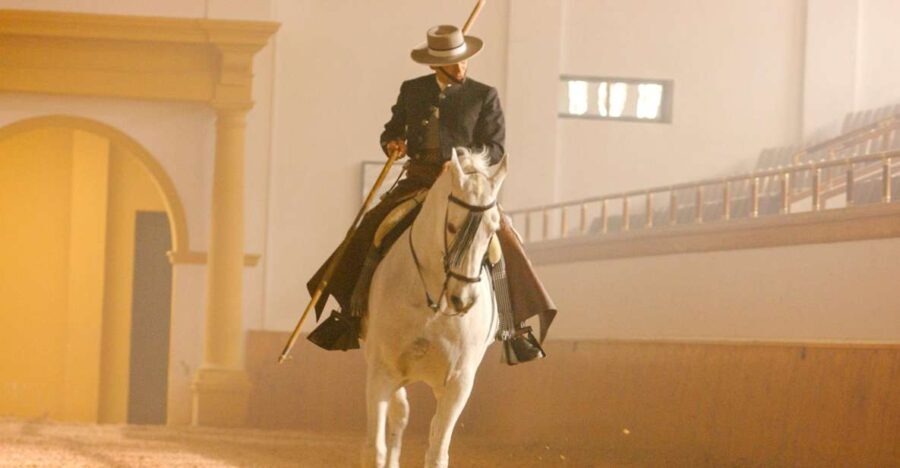
If you’re in Jerez de la Frontera and want something uniquely Andalusian, this equestrian ballet at the Fundación Real Escuela Andaluza del Arte Ecuestre is a smart pick. You’ll watch horses and riders move through a set of choreographies that mix classic dressage, country-style riding, and even carriage work, all backed by Spanish music and traditional 18th-century costumes.
Two things I really like about it: the focus on horsemanship (you can see the skills clearly) and the sense that the venue runs the show professionally. One thing to keep in mind: you can’t pick your exact seat, and ticket rules are strict about things like printed vouchers and no flash photography.
So if you’re flexible on seating and you’re okay following the venue rules, this show is a very good use of an evening in southern Spain.
- Key Highlights That Make This Show Worth Your Time
- How the Royal Andalusian School Makes Horses Feel Like Dancers
- Tickets, Duration, and How Long You’re Really Tying Up
- Where You Go: Reservation Box Office at the Royal Andalusian School
- What the Show Includes: 6–8 Choreographies, Not Just One Routine
- Doma Vaquera: Traditional Country-Style Riding Moments
- Classical Dressage: The Pieces That Turn Training Into Art
- Pas de Deux and Timing: When Two Skills Lock Together
- Work in Hand: Advanced Moves Without the Rider in the Saddle
- Carriage Driving: A Different Kind of Strength and Control
- The Carrousel Finale: Synchronized Movement as the Grand Ending
- Costumes and Music: Why the 18th-Century Look Works
- Value for Money: Is ~ a Good Deal?
- Seating and Viewing: You Can’t Choose, But Many Visitors Like Their Spots
- Photography and Rules: What Will Affect Your Experience
- Before the Show: Arrive Early for the Grounds and Training Atmosphere
- Who Should Book This Show (And Who Might Skip It)
- Special Dates Note: Four Equestrian European Schools Anniversary Galas
- Practical Packing Checklist (So You Don’t Get Turned Away)
- Should You Book How the Andalusian Horses Dance in Jerez?
- FAQ
- How long is the show?
- Where do I check in for the tickets?
- How much does it cost?
- What do I need to bring to collect tickets?
- Can I cancel and get a refund?
- Is it wheelchair accessible?
- Are flash photos allowed?
- Can I select a specific seat or row?
Key Highlights That Make This Show Worth Your Time
 1 / 8
1 / 8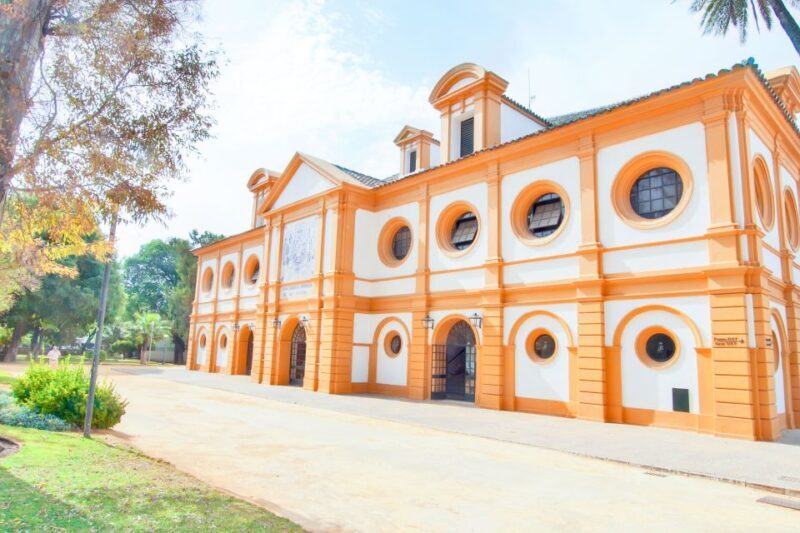 2 / 8
2 / 8 3 / 8
3 / 8 4 / 8
4 / 8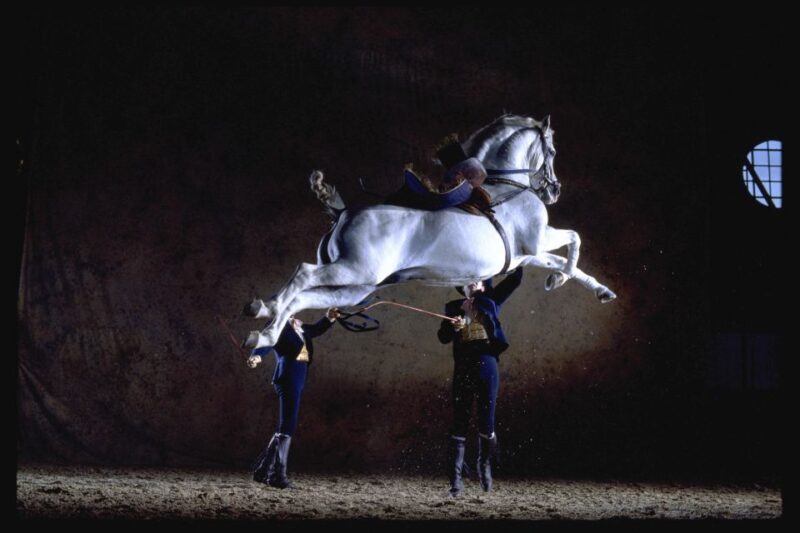 5 / 8
5 / 8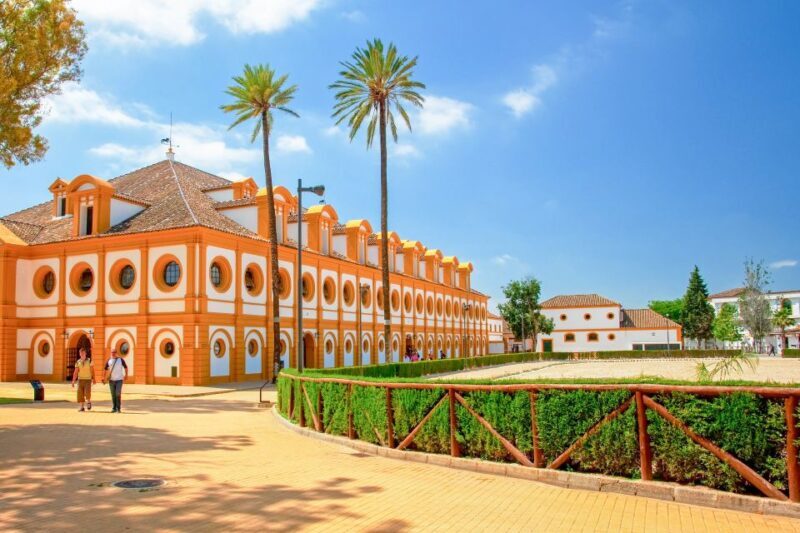 6 / 8
6 / 8 7 / 8
7 / 8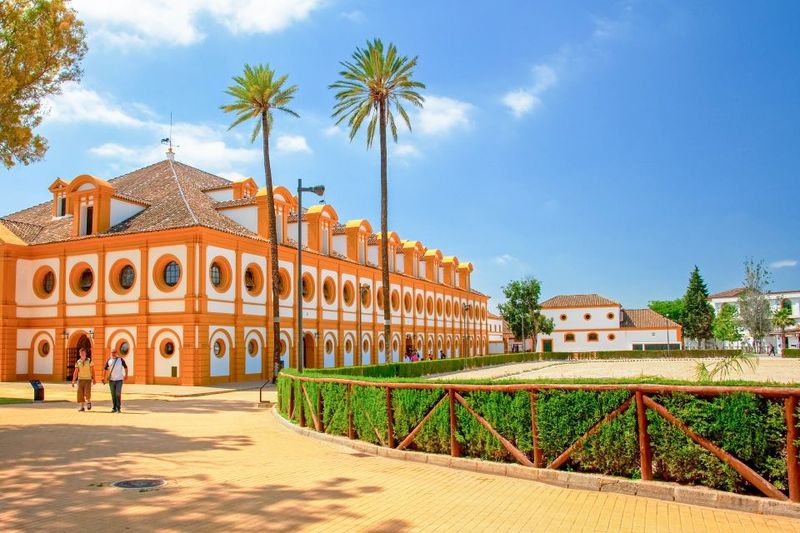 8 / 8
8 / 8- A full choreography program (usually 6–8 pieces) that moves beyond one single routine
- Doma Vaquera moments, including pirouettes and arreones (rhythm changes and gallop breaks)
- Classical Haute École exercises such as levades, caprioles, courbettes, piaffe, and the Spanish walk
- Work in hand segments, where the horse performs advanced moves even when the rider isn’t in the saddle
- Carriage driving with classical harnesses and skilled coachmen showing what these horses can do
- A group carrousel ending that’s built to finish strong with synchronized movement
How the Royal Andalusian School Makes Horses Feel Like Dancers
The “How the Andalusian Horses Dance” show isn’t trying to be spooky-cinematic or artsy-for-art’s-sake. It’s built around something simple: Andalusian horses doing disciplined, athletic movements that are beautiful to watch.
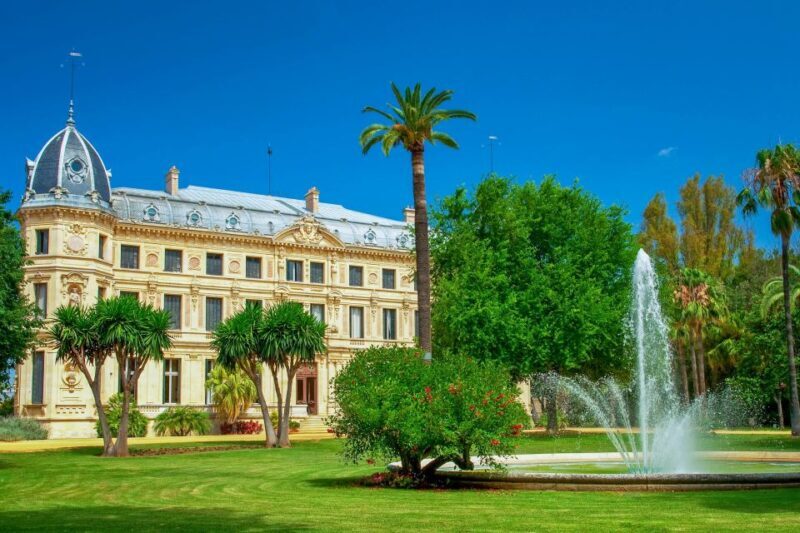
The Royal Andalusian School setting in Jerez matters, too. This is a working equestrian arts foundation, so the program feels like a performance plus a demonstration of training—rather than just a one-off spectacle.
What you’ll notice quickly is that the show is organized like a sequence, not random tricks. Each choreography is meant to highlight a different style, from classical dressage to traditional Spanish riding.
Tickets, Duration, and How Long You’re Really Tying Up
Plan on 90 minutes to 2 hours. That time range is long enough for a real program with multiple choreographies, and short enough that you won’t feel stuck all night.
At about $31 per person, the value is the main story. You’re paying for a curated performance that includes different riding disciplines (not just one act), and you’re getting a formal venue designed specifically for this kind of work.
A practical tip: pick a time that fits your energy level. If you’re arriving straight from sightseeing, aim to reach the area with a little buffer so you’re not rushing at the gate.
Where You Go: Reservation Box Office at the Royal Andalusian School
Your meeting point is the Reservation Box Office at the Royal Andalusian School of Equestrian Art. If you arrive early, you’ll probably have time to get your bearings and follow the entry flow without stress.
One rule you should take seriously: you must present your printed voucher at the ticket office. That means don’t assume a phone screen will work if the venue specifically asks for a paper copy.
If you bought anything at a discount, be ready to show proof of eligibility when collecting tickets. If you don’t, you may have to pay the difference toward the standard full price (when tickets are available).
What the Show Includes: 6–8 Choreographies, Not Just One Routine
Each show uses a repertoire of different choreographies scheduled by the school. You can expect 6–8 different pieces across the evening, usually switching between styles so the tempo changes and the skills feel varied.
This matters for travelers because it makes the ticket feel like you’re getting a lot for your money. You’re not paying to watch only one type of movement—you’re seeing how the training connects across different disciplines.
The management also reserves the right to alter or change the program. That’s normal in live performance, so be ready for small changes.
More Great Tours NearbyDoma Vaquera: Traditional Country-Style Riding Moments
One of the most distinct sections is Doma Vaquera. This is a Spanish riding discipline rooted in traditional cattle herding style, so the movements feel more grounded and practical than some purely classical work.
What you’ll see in this segment:
- One-hand riding around the arena
- Transition from trot to gallop
- Changing rhythm on command
- Pirouettes and arreones, which include breaking into a gallop
If you’ve never heard of Doma Vaquera before, this is the part that gives you cultural context. It shows that this is not just performance sport—it’s tied to Spanish working traditions.
Classical Dressage: The Pieces That Turn Training Into Art
The show also includes sections from Classical Dressage, with advanced exercises performed to classical music. This is where the “ballet” idea becomes real—because it’s precise and athletic at the same time.
The program can include choreographies such as:
- The Colts
- Airs on Horseback
- Pas de Deux
- Passage and Piaffer
- Domino on Horseback
- Airs Above the Ground
- Fantasy
Even if you’re not a dressage expert, you’ll recognize that the horses are doing controlled, collected movement—not just running around. Expect elevated steps, careful transitions, and movements that look dramatic but are clearly trained.
Pas de Deux and Timing: When Two Skills Lock Together
The “Pas de Deux” idea is exactly what it sounds like: a horse-and-rider partnership built around shared timing. In a live equestrian performance, this is a big deal because the rider’s cues and the horse’s response have to match instantly.
You’ll likely feel the difference between general riding and this kind of choreographed training. It’s not only that the horse performs well; it’s that the movement feels coordinated, like both partners are speaking the same language.
For many visitors, this is the emotional peak—because the choreography makes the skill visible in a way you don’t usually see in everyday stables.
Work in Hand: Advanced Moves Without the Rider in the Saddle
One of the most interesting parts for most first-timers is Work in Hand. This section shows a horse obeying its rider even when the horseman is not in the saddle.
You’ll see Haute École dressage exercises such as:
- Levades
- Caprioles
- Courbettes
- Piaffe (including between pillars)
- The Spanish walk
For you as a traveler, this section is valuable because it changes how you understand what’s happening. You start seeing communication and training, not just action. And it makes the horses’ intelligence feel obvious.
Carriage Driving: A Different Kind of Strength and Control
Another discipline in the repertoire is Carriage Driving. The horses can draw carriages using classical harnesses, with coachmen demonstrating the sport and exhibition skills.
Even though these carriages began as transport, the performance version is all about precision and control now. You’re watching the horses use strength and responsiveness in a controlled, choreographed way—not just pulling.
If you like variety, this segment helps break up the evening. It keeps the show moving while still highlighting training.
The Carrousel Finale: Synchronized Movement as the Grand Ending
The ending is a carrousel: a group performance where horses and riders do advanced equestrian exercises in unison.
This is where you’ll understand the “dance” part most clearly. The show stops being about one horse at a time and becomes a group pattern, where timing and rhythm matter across multiple animals.
It’s also the kind of finale that works well for families and mixed groups, because it’s visually clear and built to land the emotional note.
Costumes and Music: Why the 18th-Century Look Works
The show includes traditional 18th-century style costumes and quintessential Spanish music. The costumes aren’t just decoration; they help frame the choreography so it feels like a curated slice of heritage.
The music also helps you follow the mood shifts between routines. When the rhythm changes (especially in Doma Vaquera-style moments), the performance feels more dynamic instead of repetitive.
If you’re a fan of regional culture—beyond just food and churches—this is a fun add-on that still feels authentic.
Value for Money: Is ~$31 a Good Deal?
Let’s talk value plainly. At around $31, you’re paying for:
- a full equestrian ballet with multiple disciplines
- a professional venue setup at a major training foundation
- around 90 minutes to 2 hours of structured entertainment
Based on what travelers tend to mention, people feel this is worth it, not just because it’s pretty, but because the skills are presented clearly. A lot of visitors also say the viewing is good, which matters when you’re trying to get value from a paid seat.
If you’re deciding between this show and another evening activity in the area, this is one of the easiest “yes” choices—especially if you like animals, performance, or Spanish tradition.
Seating and Viewing: You Can’t Choose, But Many Visitors Like Their Spots
Tickets are sold by category, and you don’t select row or exact seat number. Seats are assigned according to order of purchase or booking.
That sounds risky on paper, but a lot of visitors report that the viewing works well from many seats. The arena is designed so you can see the main action without needing a front-row miracle.
Still, if you’re picky about sightlines, booking earlier is the safer move. When you can’t choose seats, timing becomes your best strategy.
Photography and Rules: What Will Affect Your Experience
The venue is strict about safety and recording. You should know:
- No flash photography
- No audio recording
- No pets
- No glass objects
- No weapons or sharp objects
- No bottles/cans/animals/objects the management considers unsuitable
Also: the program can change. That’s not a red flag—live shows do this sometimes. If you’re visiting during a busy season, your best approach is to arrive ready for flexibility, not perfection.
Before the Show: Arrive Early for the Grounds and Training Atmosphere
Even if you’re not doing any fancy pre-show add-ons, many people enjoy arriving with time to spare. Visitors often mention being able to watch horses and riders during training before and after the performance, which adds a behind-the-scenes feel.
That makes the evening more than a ticketed event. You get context—how structured the training is—and it makes the choreography during the show feel more impressive.
If you can, build in an easy buffer of 20–30 minutes before start time so you don’t rush. Live animal venues often have their own pace.
Who Should Book This Show (And Who Might Skip It)
This is a great fit if you:
- love animals but want something more than a simple petting experience
- enjoy Spanish culture and traditions expressed through performance
- want a one-evening activity that’s organized and usually good from most seats
You might consider skipping it if:
- you strongly dislike structured performances with strict rules
- you need lots of free time and wandering during the event (this is mainly a show-focused experience)
- you’re expecting an outdoor “festival” vibe rather than an equestrian arena event
For a first trip to Andalusia, though, it’s a strong cultural stop that’s easier than planning anything more complicated.
Special Dates Note: Four Equestrian European Schools Anniversary Galas
There’s also a notable special event tied to the V Schools 50th Anniversary Galas on June 30 and July 1 at 9:00 p.m. You’ll have a combined exhibition from schools in Austria, France, Spain, and Portugal, plus the Abu Dhabi International Riding School joining under supervision and training of the Royal Andalusian School.
The event is planned on the outdoor arena next to the Álvaro Domecq riding arena, with 4,000 seats and space for leisure and catering.
If you’re traveling during those dates, this is the kind of event where it’s worth double-checking ticket options early.
Practical Packing Checklist (So You Don’t Get Turned Away)
Bring:
- Passport or ID card
Plan for:
- a printed voucher for ticket collection
- following the no-flash and no-recording rules
- leaving pets and prohibited items at home
And wear something comfortable. Even in an arena setting, you’ll likely be walking the grounds and waiting in lines.
Should You Book How the Andalusian Horses Dance in Jerez?
If you want a high-quality night out in southern Spain, I’d book this. It’s good value for money, it’s professionally run, and the show highlights real horsemanship across multiple disciplines like Doma Vaquera and classical dressage.
The one real decision point is seating: you can’t choose, but many travelers report good viewing. If you’re the type who needs the best possible sightline, book sooner rather than later.
Bottom line: this is the sort of experience that feels uniquely Andalusian—without being complicated to enjoy. You’ll walk away with a clearer sense of why Andalusian horses have such a reputation, and you’ll likely wish you’d booked an extra night in Jerez to come back.
Jerez de la Frontera: How the Andalusian Horses Dance
FAQ
How long is the show?
The show lasts about 90 minutes to 2 hours, depending on the scheduled performance.
Where do I check in for the tickets?
Go to the Reservation Box Office at the Royal Andalusian School of Equestrian Art Foundation.
How much does it cost?
The listed price is about $31 per person.
What do I need to bring to collect tickets?
Bring a passport or ID card. The venue also requires your printed voucher at the ticket office.
Can I cancel and get a refund?
Yes. Free cancellation is available up to 24 hours in advance for a full refund.
Is it wheelchair accessible?
Yes, the experience is wheelchair accessible.
Are flash photos allowed?
No. Flash photography is not allowed.
Can I select a specific seat or row?
No. Tickets are sold by category only, and seats are allocated according to order of purchase/booking. You don’t choose an exact row or seat number.
You can check availability for your dates here: