When you’re planning a day trip from Heraklion, you face a familiar dilemma: do you join the crowds at the major archaeological sites, or do you venture into the quieter corners of Crete to experience how locals actually live? This tour from Explore Real Crete offers a refreshing answer by combining both approaches—you get the famous Knossos Palace at day’s end, but you spend the bulk of your time discovering the villages, farms, and traditions that define the real island.
What we particularly love about this experience is how thoughtfully it’s constructed. Rather than racing through checkpoints, the itinerary deliberately builds throughout the day, moving from working olive oil factories to windmill-dotted plateaus to mountain villages where you might be the only visitor. The guides—especially those named frequently in reviews like Stavros, Ed, Mike, and Demetrius—aren’t just pointing out sights; they’re sharing genuine connections to their homeland, often bringing travelers to family farms and local restaurants that travelers rarely find on their own.
One consideration worth noting: the tour is fairly full-bodied at 7.5 hours, and while the pace is leisurely, it does require a reasonable level of mobility for walking through villages and exploring various sites. If you prefer a more relaxed, single-destination experience, this might feel ambitious.
This tour works beautifully for travelers who want to understand Crete beyond its ancient ruins—people who’d rather pick strawberries in a family vineyard than stand in another museum queue, and who appreciate the kind of guide who goes out of their way to ensure you taste authentic yogurt and sample local wine.
- What You’re Actually Getting for Your Money
- Breaking Down the Itinerary: Where the Day Actually Takes You
- The Guides: Why These People Matter
- Practical Details That Actually Matter
- What Travelers Actually Experience: Beyond the Itinerary
- The Reality Check: Is This Tour Right for You?
- Frequently Asked Questions
- The Best Of Heraklion!
- More Tour Reviews in Heraklion
What You’re Actually Getting for Your Money
At $136.65 per person for a full day of exploration, this tour sits at a reasonable price point for what’s included. You’re getting transportation in an air-conditioned vehicle, multiple tastings (olive oil and local products), bottled water and beverages, hotel pickups across a wide area, and the knowledge of a local guide. That’s solid value before you even factor in the experiences you can’t buy separately.
The tour operates with small groups—maximum 10 people—which is genuinely meaningful. You’re not sardined onto a 40-person bus where the guide’s microphone becomes your only connection to the experience. This size allows for flexibility and spontaneity. One traveler mentioned that their guide brought them to a cucumber and strawberry farm for picking and wine drinking—the kind of moment that only happens when there’s room to improvise.
What strikes us most from the reviews is the consistency of value across different guides. Whether you’re with Stavros, Ed, or Mike, travelers describe genuine engagement and knowledge. One visitor noted they’d done “almost one tour every day” throughout Greece and deemed this the best—that’s not a casual compliment.
👉 See our pick of the 15 Must-Try Private Driver Services In Heraklion
Breaking Down the Itinerary: Where the Day Actually Takes You
The Omalia Olive Press: Understanding Crete’s Golden Economy
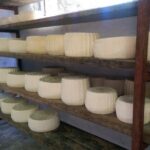
Your day begins with a visit to a working olive oil factory, where you’ll see both modern machinery and traditional equipment side by side. This isn’t a polished tourist facility; it’s a functional space where the real work of olive oil production happens. You’ll understand the difference between industrial and small-batch operations, and you’ll taste the product itself.
What makes this stop valuable is context. Olive oil isn’t just a condiment in Crete—it’s woven into the economy, culture, and daily life. One traveler mentioned tasting “infused olive oil and unique products like rich olive paste,” suggesting the guides take time to explain what you’re sampling rather than rushing through.
Mochos Village: Coffee in a Real Square
After 30 minutes at the olive press, you’ll arrive in Mochos, where the stop is deliberately low-key. You’ll walk through narrow streets and grab a coffee or juice in the main square. This is where many tours fail—they hit a village for a photo and leave. This tour gives you time to actually sit, observe, and feel the rhythm of a place where travelers are uncommon.
The Lasithi Plateau Windmills: A Landscape Lesson
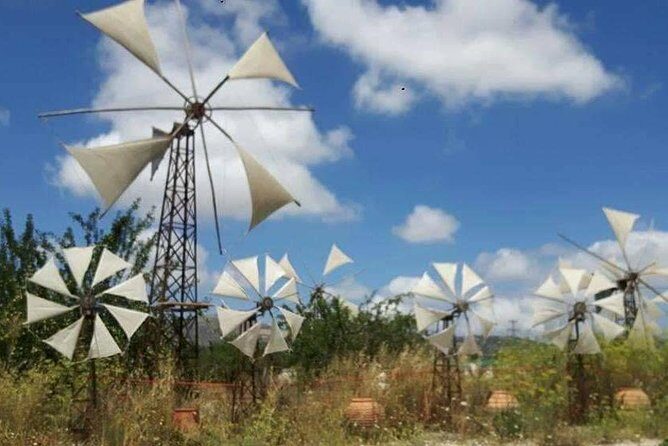
The windmills of Lasithi are worth understanding. These weren’t decorative features; they were engineering solutions. Some pumped water from underground sources to irrigate crops, while others ground wheat and corn into flour. Standing among them, you’re looking at the practical ingenuity that kept mountain communities alive for centuries.
The tour spends 30 minutes here, enough time to photograph and absorb the landscape without feeling rushed. The plateau itself sits at about 2,800 feet elevation, offering genuinely impressive views of the surrounding mountains.
Krasi and the Ancient Platanus Tree: A Living Monument
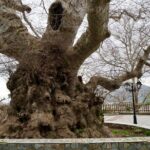
In the village of Krasi, you’ll encounter one of Crete’s most impressive natural features—a Platanus tree claimed to be among the oldest and largest on the island. These ancient trees were gathering places for communities; they’re where people conducted business, shared news, and simply existed together across generations.
Walking through Krasi’s stone-built streets gives you a sense of how mountain villages were constructed for practicality and community rather than tourism. Narrow passages provided shade and protection, and buildings were designed to last centuries.
The Mountain Restaurant Stop: Optional but Recommended
Around midday, you’ll reach a family-run restaurant on the mountain with views worth lingering over. Here’s where the tour offers flexibility—lunch is optional, which matters if you have dietary restrictions or prefer to skip. But travelers consistently recommend taking it. One visitor called it “nothing short of magical—fresh, local ingredients served with love in a beautiful, relaxed setting.”
The fact that these are family operations, not chain establishments, changes the entire character of the meal. You’re eating food prepared by people who’ve been cooking this way for decades, not following a corporate menu.
Aposelemi Canyon and Dam: A Scenic Breather
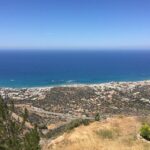
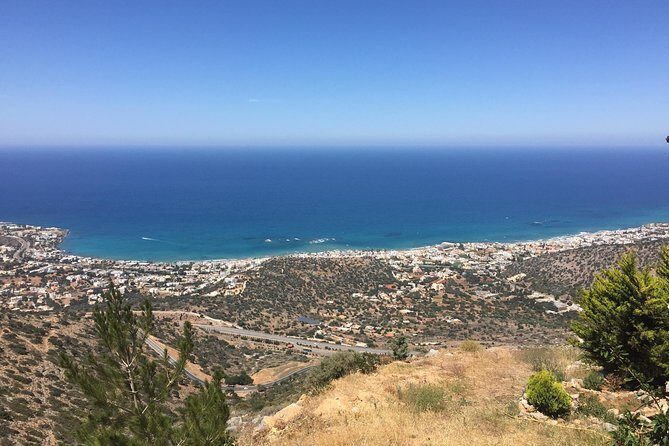
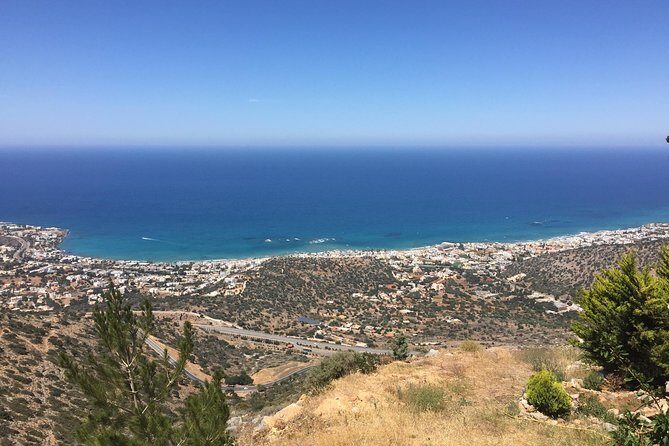
A brief 5-minute stop at the Aposelemi Dam provides sweeping views and a chance to stretch your legs. It’s the kind of moment that doesn’t sound significant until you’re standing there looking out across the landscape—exactly the type of pause that makes a day feel less like checking boxes and more like actually experiencing a place.
Dikteon Cave: Where Zeus Was Born (When It’s Open)
Here’s an important note: at the time this tour information was compiled, Dikteon Cave was closed, with plans to reopen at the end of April. This is the mythological birthplace of Zeus, and it’s a significant cultural site. The cave closure is temporary, but you’ll want to confirm current status when booking.
When open, the cave involves about an hour of exploration. The mythology here is thick—this is where Zeus’s mother supposedly hid him from his father Kronos. Standing in a cave where ancient Greeks imagined divine birth happens connects you to how this culture understood their world.
Knossos Palace: The Day’s Archaeological Anchor
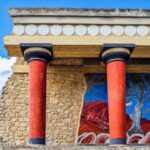
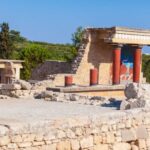
Your final stop is Knossos, the Bronze Age palace that dominates Cretan archaeology. This stop is optional, which might seem odd until you realize it matters. Some travelers might be exhausted after a full day; others might want to skip it to have more time elsewhere.
The palace itself is remarkable—multi-story structures, advanced plumbing, artistic sophistication. It’s sprawling enough that you could spend hours here, but the tour allocates about an hour. That’s enough to see the main features and understand the scale of Minoan civilization without feeling like you’re racing through.
One traveler who visited at the end of the tour appreciated the timing: “The itinerary for stops was well thought out to avoid travelers surges at hotspots like Knossos.” By visiting late in the day, you’re arriving when morning crowds have moved on.
You can also read our reviews of more tours and experiences in Heraklion.


The Guides: Why These People Matter
Reading through dozens of reviews, certain names appear repeatedly—Stavros, Ed, Mike, Demetrius—and the consistency of praise is striking. These aren’t guides who’ve memorized scripts; they’re locals sharing their home.
Stavros appears most frequently, described as “great fun, and overflowing with stories and facts” and “especially good with kids.” Another traveler who’d done multiple tours throughout Greece called him “an outstanding guide: a true local who knows the history and culture of Crete inside and out.”
Ed receives similar praise: “A proud local from a small village in southern Crete, Ed was knowledgeable, engaging, funny, and incredibly attentive.” Notably, one couple on their honeymoon said they went into the tour “really liking Crete but came out absolutely loving it”—that’s the difference a genuinely passionate guide makes.
Mike is described as “very knowledgeable, kind, and polite,” and notably, he’s praised for letting guests “pick and choose what we wanted to do and gave us several options.” That flexibility is crucial; it means the tour adapts to your interests rather than forcing you through a predetermined script.
What emerges from the reviews is that these guides go beyond their job description. One traveler mentioned a guide bringing them to his own family farm to pick strawberries and drink wine. Another received a bottle of olive oil from the guide’s personal olive trees. These aren’t perks in the official itinerary—they’re moments of genuine hospitality.
Practical Details That Actually Matter
Group Size and Flexibility
The maximum of 10 people is genuinely significant. You’re small enough that the guide can adjust pacing based on group interest, but large enough that costs stay reasonable. If someone wants to linger at a village, it’s possible. If the group wants to skip something, that conversation can happen.
Pickup Coverage
The tour picks up from an extensive list of coastal areas: Heraklion, Kartero, Gouves, Analipsi, Hersonissos, Anissaras, Stalida, Malia, and Sisi for shared tours. Private tours extend to Agios Nikolaos, Elounda, and Rethimno. One important limitation: they don’t pick up from Chania, which is on the western side of the island.
If you’re staying outside these zones, you can arrange a meeting point in the Heraklion region. This matters because it affects how much of your day gets spent in a vehicle rather than experiencing the tour.
Timing and Pacing
The 7.5-hour duration spans roughly 8:30 AM to 5:00 PM based on one traveler’s account. That’s a full day, but it’s structured with built-in breaks—time at each village, the lunch stop, moments to photograph. It’s not a sprint.
Inclusions and Optional Costs
Bottled water, coffee, tea, and olive oil tasting are included. Lunch is optional but recommended. Knossos Palace entrance (€20 per person, half price for those under 25) is not included. If you want a private guide inside Knossos, that’s an additional charge. This transparency about costs matters.
Mobile Tickets and Confirmations
You’ll receive mobile tickets, and confirmation comes at booking time (unless you book within 12 hours, in which case it arrives as soon as possible). Service animals are allowed, and the tour is described as accessible to “most travelers,” though the village walking and cave exploration require reasonable mobility.
Cancellation Flexibility
You can cancel up to 24 hours before for a full refund. If weather forces cancellation, you get a different date or refund. If minimum group size isn’t met, same deal. This is standard but fair.
What Travelers Actually Experience: Beyond the Itinerary
What’s remarkable about this tour is how often travelers describe unexpected moments. One couple mentioned being brought to an organic farm in peak season, where they “picked strawberries, watermelon, cucumbers, and peppers straight from the vine—no pesticides, no fuss, just pure, sweet flavor.” They even “enjoyed wine under the apple trees.”
Another group talked about their guide buying them “pure sheep yogurt and honey” and noted that while the description doesn’t mention a food tour, “it practically became one with how much food we ate—from olive oil with bread and tomatoes, picking a bunch of fresh fruit from a farm.”
These aren’t standard tour moments; they’re what happens when guides have genuine relationships with local farmers and restaurant owners. One traveler specifically noted appreciating “the personal touches and thought that went into every aspect of the tour.”
The phrase “real Crete” appears constantly in reviews. One visitor wrote: “We were brought through a number of authentic small villages. We met wonderful owners of different shops, restaurants, cafes along the way. It was the most enjoyable day of our trip.” Another said: “He took us to the absolute best and local spots that we wouldn’t have otherwise found ourselves… We barely saw any travelers.”
The Reality Check: Is This Tour Right for You?
This tour shines for travelers who want substance over spectacle. If you’re checking off famous sites, you’ll get that (Knossos is at the end). But if you’re seeking to understand how Cretans actually live—their food, their work, their relationship to the land—this delivers.
It’s excellent for travelers with moderate mobility who can walk village streets and navigate cave entrances. It’s good for families (guides are praised for engaging children), and it works for couples seeking authentic experiences without the typical resort-tour feel.
It’s less ideal if you want a quick, easy afternoon activity. This is a full-day commitment. It’s also not the choice if you’re primarily interested in Minoan archaeology—Knossos gets limited time, and the tour’s heart lies elsewhere.
The 100% recommendation rate from 694 travelers is genuinely unusual. That’s not hyperbole; it’s consistency across different guides, different seasons, and different traveler types.
Knossos-Zeus Cave -Old Traditional Villages-Olive Oil Factory
Frequently Asked Questions
Q: Do I need to book Knossos Palace tickets in advance, or can I buy them when I arrive?
A: Knossos Palace tickets (€20 per person, €10 for those under 25) are not included in the tour price. You can arrange to purchase them through the tour, but it’s not automatic. We’d recommend confirming ticket availability with the tour operator when you book, especially during peak season.
Q: What happens if I want to skip the Knossos Palace visit at the end of the tour?
A: The tour accommodates this. You can let the operator know in advance that you’d prefer to skip Knossos, and they’ll drop you at your hotel before heading to the palace with the rest of the group. This flexibility is built into the tour design.
Q: Is lunch really included, or do I need to pay extra?
A: Lunch is optional and not included in the tour price. The tour stops at a family restaurant on the mountain, and you can choose to eat there or skip it. If you do eat, you’ll pay directly to the restaurant. Most travelers recommend taking lunch—reviews consistently praise the food quality and mountain views.
Q: What’s the maximum group size, and does that affect the experience?
A: The maximum is 10 people per tour. This small size is actually a major advantage—it allows guides to adjust pacing, offer flexibility, and create a more personal experience than larger bus tours. It’s large enough to keep costs reasonable but small enough to feel intimate.
Q: Can I bring my service animal on this tour?
A: Yes, service animals are allowed. You should mention this when booking so the operator can note it for your specific guide.
Q: Where exactly will I be picked up, and what areas are covered?
A: Pickups happen from hotels in Heraklion, Kartero, Gouves, Analipsi, Hersonissos, Anissaras, Stalida, and Malia (shared tours). Private tours also cover Agios Nikolaos, Elounda, and Rethimno. If you’re staying elsewhere, you can arrange a meeting point in the Heraklion region. The tour does not pick up from Chania.
Q: What should I wear, and how much walking is involved?
A: While specific recommendations aren’t detailed in the tour information, you’ll be walking through village streets, exploring a cave, and potentially navigating the Knossos site. Comfortable walking shoes are essential. The tour is described as suitable for “most travelers,” suggesting moderate physical demands rather than strenuous hiking.
Q: If the Dikteon Cave is closed, what happens to that part of the itinerary?
A: At the time this tour information was current, the cave was temporarily closed with plans to reopen at the end of April. When closed, the tour likely adjusts the itinerary or provides an alternative stop. You should confirm current cave status when booking, as it may affect your specific experience.
This tour represents genuine value for travelers seeking authentic Crete without the typical tourist-circuit feel. At $136.65 per person, you’re getting a full day with a knowledgeable local guide, transportation, tastings, and access to places most visitors never find. The small group size and consistently praised guides create flexibility and personal attention that larger tours can’t match. It’s best suited for travelers who prioritize culture and local experiences over rapid-fire sightseeing, and who appreciate the kind of day where picking strawberries on a family farm and tasting wine under apple trees become the real memories.