We’ve examined this Westminster-focused WWII tour thoroughly, and it genuinely delivers on what it promises: a deeply informative journey through some of London’s most historically significant sites, complete with unrestricted access to the Churchill War Rooms. What makes this experience particularly valuable is the combination of expert local guides who bring genuine passion to their subject matter, paired with the intimate group size that ensures you’re not shuffling through crowds with 40 other travelers.
The possible drawback worth mentioning upfront is that this tour focuses exclusively on Westminster’s WWII story, so if you’re hoping for a broader London bombing narrative or visits to other neighborhoods affected by the Blitz, you’ll want to look elsewhere. That said, this concentrated approach actually works in the tour’s favor—it allows for deeper exploration of the government’s wartime response and the political machinations that shaped Britain’s survival.
This experience works best for anyone with a genuine interest in World War II history, British politics, or Churchill’s legacy. Whether you’re a history enthusiast with encyclopedic knowledge or someone coming to WWII relatively fresh, the guides consistently adjust their approach to match your group’s existing knowledge level.
- What You’re Actually Getting for Your Money
- The Meeting Point and Logistics
- The Walking Tour Itinerary: A Detailed Breakdown
- Westminster Bridge and the Houses of Parliament
- Parliament Square and Its Democratic Monuments
- Whitehall: The Ministry of Defence and Sacred Memorials
- Horse Guards Parade and a Photo Opportunity
- The Churchill War Rooms: The Tour’s Centerpiece
- The Guides: Where This Tour Truly Excels
- Group Size and Its Impact on Your Experience
- Practical Considerations
- Frequently Asked Questions
- The Bottom Line: Is This Tour Worth Your Time and Money?
- The Best Of London!
- More Walking Tours in London
- More Tours in London
- More Tour Reviews in London
What You’re Actually Getting for Your Money
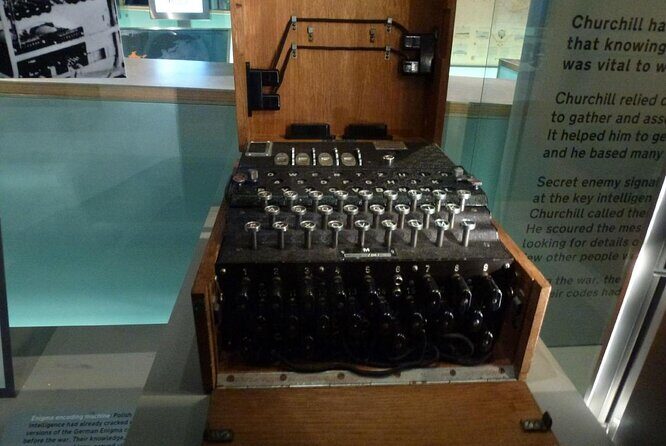
At $104.02 per person, you’re paying for three distinct components: the guided walking tour through Westminster’s WWII landmarks, professional commentary from a local expert, and entrance to the Churchill War Rooms with an audio guide. Breaking this down, the War Rooms entrance alone typically costs around £20-25, which means you’re essentially paying $75-80 for the guided walking portion—reasonable for a 90-minute expert-led tour in one of Europe’s most expensive cities.
The value proposition strengthens considerably when you factor in the small group size. With a maximum of 15 travelers, you’re not competing for your guide’s attention or struggling to hear explanations over a crowd. One traveler noted that their guide “got us into the war room ahead of the line,” suggesting these guides have established relationships and insider knowledge that can streamline your experience.
👉 See our pick of the We Rank The 15 Best Shopping & Market Tours In London
The Meeting Point and Logistics
Your tour begins at the Boadicea and Her Daughters statue on Victoria Embankment—a location that’s genuinely easy to find and sits right on the Thames. This isn’t a random spot; it’s historically resonant, which sets the tone for what’s to come. The ending point is the Churchill War Rooms themselves on King Charles Street, so you’ll finish exactly where you need to be.
One practical note: you’ll want to arrive a few minutes early. The tour operates rain or shine, and while London’s weather in spring and autumn can be unpredictable, the walking portion involves outdoor exploration of some of Westminster’s most iconic streets. Wear comfortable shoes—you’ll be covering several blocks and standing outside for roughly 90 minutes before moving indoors to the War Rooms.
You can also read our reviews of more walking tours in London



The Walking Tour Itinerary: A Detailed Breakdown
Westminster Bridge and the Houses of Parliament
Your first two stops establish the geographical and political context for everything that follows. Westminster Bridge, painted green to honor the House of Commons, becomes unexpectedly poignant when your guide explains that bomb fragments are still occasionally discovered in this location more than 80 years later. This isn’t just historical trivia—it’s a concrete reminder of how London bore the physical scars of German bombardment.
The Houses of Parliament stop involves standing outside and looking at the building where Churchill and his war cabinet grappled with existential threats. Your guide will explain how Parliament itself became a target, how the government prepared for potential invasion, and the political debates that raged as Britain stood alone against Nazi Germany. This context matters because it helps you understand that the War Rooms weren’t just a bunker—they were the nerve center of desperate decision-making.
Parliament Square and Its Democratic Monuments
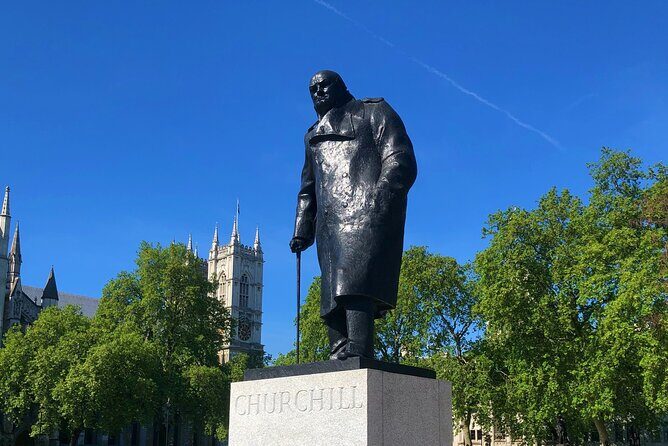
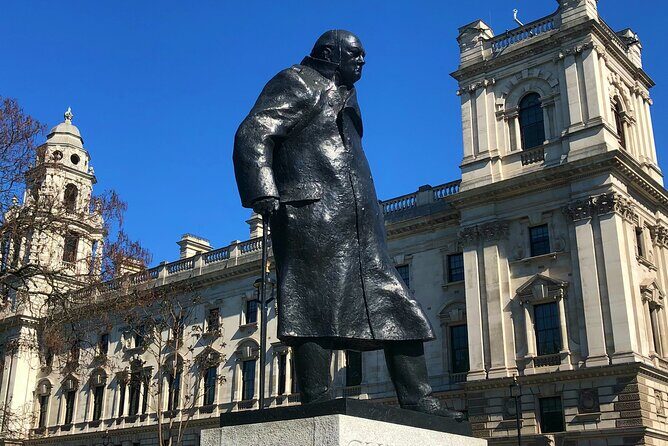
Parliament Square presents a fascinating juxtaposition. Here stand statues of figures like Mahatma Gandhi, Millicent Fawcett, and Abraham Lincoln—monuments to democracy and human rights. Your guide will connect this symbolism to WWII’s larger meaning: Britain wasn’t just fighting for survival; it was fighting for democratic values that fascism threatened to extinguish. This thematic approach is what separates a good WWII tour from a great one, and reviewers consistently praised guides for making these intellectual connections.
Whitehall: The Ministry of Defence and Sacred Memorials
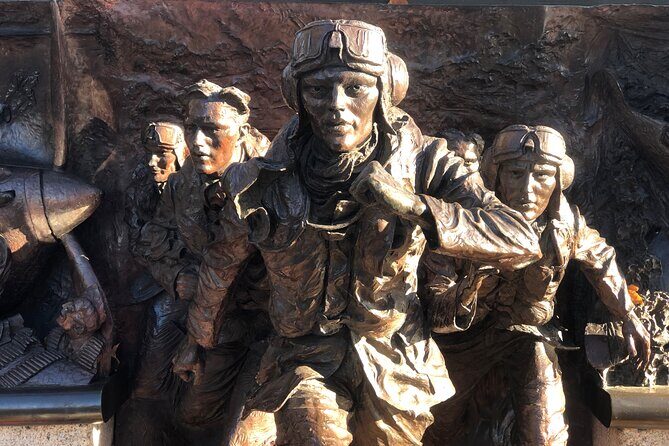
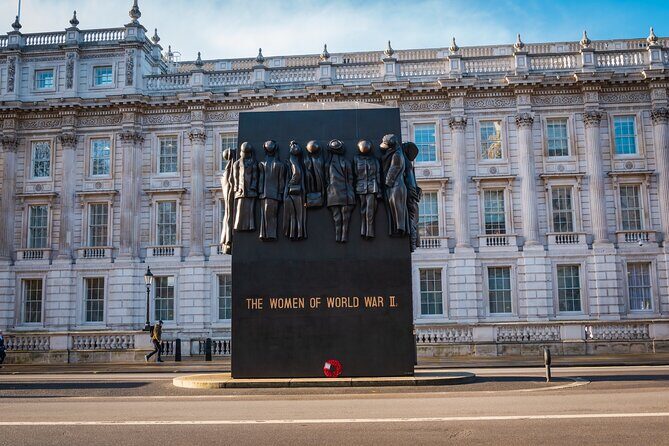
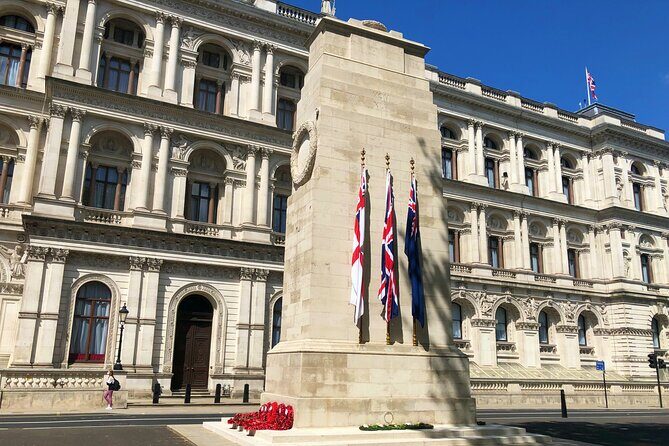
Whitehall is where the tour becomes emotionally resonant. You’ll see the Cenotaph, Britain’s most significant war memorial, along with the Women in WW2 monument. A traveler mentioned their guide “focused on the human impact of the war through his narratives on some of the memorialize soldiers,” which speaks to how these guides treat memorials not as mere photo stops but as places for genuine reflection.
The Ministry of Defence building itself sits on this street, reinforcing the reality that this wasn’t abstract history—government offices that coordinated Britain’s war effort occupied these very buildings while bombs fell outside.

Horse Guards Parade and a Photo Opportunity
Horse Guards Parade provides a lighter moment in your tour, offering the chance to photograph the mounted cavalry of the Queen’s Horseguards. While this might seem like a tourist cliché, it’s also the official entrance to Buckingham Palace and represents the continuity of British institutions through wartime—the monarchy continued, the pageantry continued, even as the nation fought for its existence. Your guide will likely explain how the royal family’s decision to remain in London during the Blitz boosted morale across the country.
The Churchill War Rooms: The Tour’s Centerpiece
After roughly 90 minutes of walking and talking, you’ll arrive at the Churchill War Rooms—the underground complex where the British government coordinated its war effort. This is where the tour transitions from outdoor exploration to self-guided discovery, which actually works beautifully. Your guide will get you inside and oriented, but then you’re free to explore at your own pace with the provided audio guide.
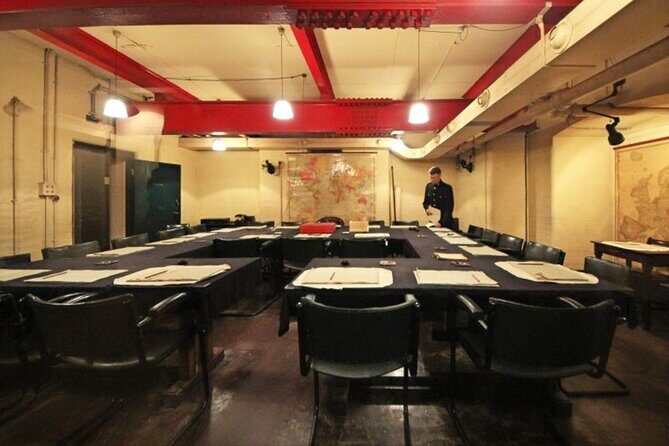
The War Rooms themselves are genuinely atmospheric. These aren’t reconstructed spaces—they’re the actual offices, map rooms, and sleeping quarters where Churchill and his war cabinet worked during London’s darkest hours. The audio guide provides excellent context, but you’ll find the experience even richer because of the 90 minutes of preparation your guide provided. You’ll understand why decisions were made in these rooms, not just that they were made.
One reviewer captured this perfectly: “The war rooms were just like I have seen in the movies. But above all, I enjoyed listening to Nathan who was the best we have had in London.” The guide’s preparation transformed what could be a museum visit into a pilgrimage to the actual seat of wartime power.
The Guides: Where This Tour Truly Excels
If there’s a standout element across the 721 reviews, it’s the quality and passion of the guides. We’re not talking about people reading from scripts—these are individuals who’ve clearly invested deeply in understanding WWII history and Churchill’s role. Multiple reviewers used words like “encyclopedic,” “dynamic,” and “infectious enthusiasm.”
What’s particularly striking is how guides adapt to their audiences. One traveler with a family of five requested “a slight change in itinerary,” and their guide “not only went with the flow, he also was able to shift topics to share his knowledge with area we asked about.” Another group mentioned their guide injected “the right amount of humor,” suggesting these aren’t dry academic lectures but engaging conversations about history.
Several guides received specific praise by name—Nathan, Jeremy, Babs, Paul, Francis, and Richard all earned glowing reviews. This consistency across multiple guides suggests the tour company has hired people who genuinely care about their work, not just collecting paychecks.
Group Size and Its Impact on Your Experience
The 15-person maximum isn’t just a number—it fundamentally changes how you experience history. With a smaller group, you can hear your guide clearly even in busy Westminster areas. You can ask follow-up questions without holding up 50 people. You can actually have conversations with fellow travelers who share your interest in history.
One reviewer noted that their group was “a group of 9,” which creates an even more intimate setting. The tour company seems to honor these smaller groups, suggesting they understand that WWII history deserves thoughtful, unhurried exploration rather than rushed tourist processing.
Practical Considerations
Cancellation Policy: You can cancel up to 24 hours in advance for a full refund, which provides reasonable flexibility for travel plans.
Accessibility: The tour notes that “most travelers can participate,” and service animals are allowed. However, the walking portion involves outdoor exploration of Westminster’s streets and the War Rooms involve descending into underground spaces, so consider your mobility needs carefully.
Weather: Since roughly 90 minutes occur outdoors, dress appropriately for London’s weather. Layers work well, as you’ll be moving from outdoor walking to the climate-controlled War Rooms.
What’s Not Included: Westminster Abbey entrance isn’t included, though you’ll walk past it. Food and drinks aren’t provided, so you might grab coffee before or after. Hotel pickup isn’t included, but the meeting point is near excellent public transportation.
Frequently Asked Questions
Q: How much walking is involved?
A: Expect roughly 90 minutes of walking through Westminster’s streets, covering several blocks at a moderate pace. The route includes outdoor exploration of major landmarks, but it’s not particularly strenuous—more leisurely exploration than athletic hiking.
Q: Can I skip the War Rooms and just do the walking tour?
A: Based on the tour structure, the War Rooms entrance is included in the price, and the tour concludes there. However, you’re free to explore at your own pace once inside, so theoretically you could spend minimal time in the museum itself, though that would defeat the purpose of booking this particular experience.
Q: What if I’m not deeply knowledgeable about WWII history?
A: Guides consistently adjust their approach based on group knowledge level. One reviewer with “teen boys” noted they “enjoyed it tremendously,” suggesting guides effectively engage younger or less-specialized audiences. You don’t need expert knowledge to appreciate this tour.
Q: Is this tour suitable for families with children?
A: Yes, based on reviews mentioning family groups and younger travelers. However, the walking portion lasts 90 minutes, and the War Rooms require standing and moving through underground spaces. Children who can comfortably walk and maintain focus during a guided tour would enjoy this.
Q: How far in advance should I book?
A: On average, this tour is booked 48 days in advance, suggesting it’s popular but not impossible to book last-minute. For flexibility with dates and guide preferences, booking earlier is wise.
Q: What’s the best time of year to take this tour?
A: The tour operates year-round. Spring and autumn offer pleasant walking weather, while winter means shorter days and potentially wet conditions. Summer can be crowded in Westminster, though smaller group sizes help mitigate this.
Q: Will I have time to explore the War Rooms thoroughly?
A: Yes. After the 90-minute walking portion, you’ll have approximately one hour to explore the War Rooms at your own pace with the audio guide. This is sufficient to see the major exhibits and get a genuine sense of the space, though you could spend longer if desired.
London in WW2 Walking Tour with Churchill War Rooms Visit
The Bottom Line: Is This Tour Worth Your Time and Money?
This is genuinely one of London’s better historical tours, and the 98% recommendation rate from travelers reflects consistent quality across multiple guides and groups. You’re paying a fair price for expert knowledge, intimate group sizes, and unrestricted access to one of London’s most fascinating historical sites. The guides elevate this from a standard museum visit into an engaging narrative about Britain’s finest hour—and one reviewer called it “the best we have had in London,” which speaks volumes.
The experience works because it combines preparation (the walking tour) with immersion (the War Rooms), ensuring you understand context before exploring the actual historical spaces. Whether you’re a serious WWII history enthusiast or someone with casual interest in Churchill and the Blitz, you’ll find this tour delivers genuine value and insight into one of history’s most consequential periods.