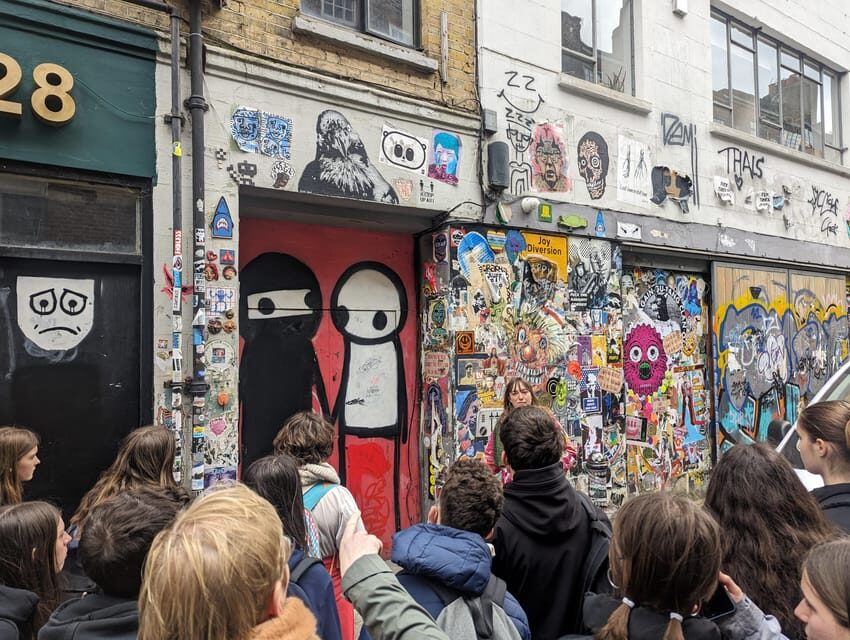
London street art can feel like a free-for-all until you get the context. This 2-hour guided walking tour threads you through East London’s most famous creative pockets, starting at Old Spitalfields Market and moving on to Brick Lane and Shoreditch. You’re not just hunting for famous names. You’re learning why the art shows up where it does, and how the area’s history shaped the visuals on the walls.
Two things I really like: the tour is guided by people with real street art knowledge (not just surface-level commentary), and you’ll get guided attention on details most visitors would miss—everything from small hidden pieces to big murals, plus plenty of photo-worthy spots. It’s also strong value for the money, given what you get in both history and artwork guidance.
One possible drawback: this is an outdoor walking experience. If the weather turns, you’ll need to stay comfortable, so bring rain gear and expect streets, crowds, and all the normal walking logistics of central London.
- Key highlights you’ll care about
- Getting to Old Spitalfields Market Without Stress
- What This East London Walk Actually Covers
- Meet Your Guide: The Factor That Makes It Worth Paying
- Spitalfields: The Start Point With the Right Energy
- Brick Lane Murals and Tags: Seeing Techniques, Not Just Names
- Shoreditch: Where Street Art Feels Like Part of Daily Life
- The Artists You’ll Hear About (and Why Their Names Matter)
- Why Street Art Tours Keep Changing
- Pace and Timing: 2 Hours That Usually Feels Just Right
- Price and Value: What Buys You in London
- Weather, Gear, and Accessibility You Should Know
- Optional Add-On: Tour Plus Street Art Workshop Options
- Who This Tour Fits Best
- Should You Book It? My Practical Take
- FAQ
- Where do we meet for the London street art and graffiti guided walking tour?
- What’s the closest train station to the meeting point?
- How long is the tour?
- Is the tour wheelchair accessible?
- What should I bring?
- Is there free cancellation, and how does the payment work?
- The Best Of London!
- More Walking Tours in London
- More Tours in London
- More Tour Reviews in London
Key highlights you’ll care about
 1 / 4
1 / 4 2 / 4
2 / 4 3 / 4
3 / 4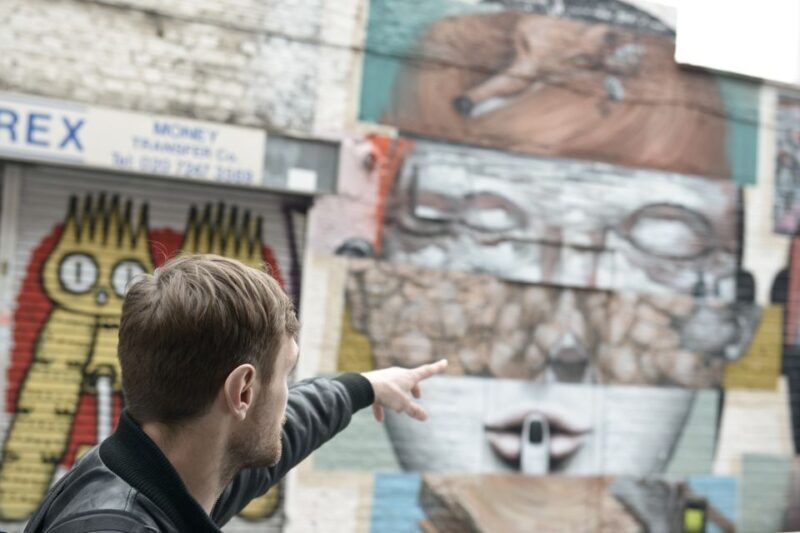 4 / 4
4 / 4- 40 artists covered across East London, including Banksy, ROA, Invader, Shepherd Fairey, and Stik
- Start point made easy: meet under the White Goat Statue on Brushfield Street, outside Old Spitalfields Market
- Guides with street access and background who can explain the culture, not just the pictures
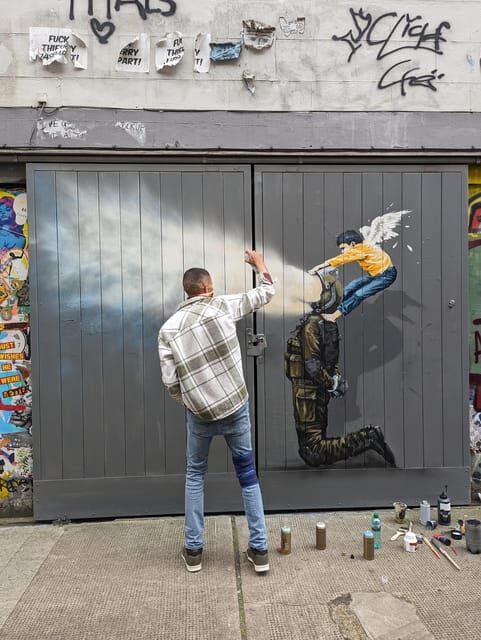
- Stops include the obvious and the hidden, from tiny tucked-away works to large murals
- Route evolves over time because street art is constantly changing
- Good pace that often feels faster than the clock, even for first-timers

👉 See our pick of the We Rank The 15 Best Shopping & Market Tours In London
Getting to Old Spitalfields Market Without Stress
The tour meets under the White Goat Statue on Brushfield Street, right outside Old Spitalfields Market. The closest train station is Liverpool Street Station, so you’re not stuck with complicated transfers.
Here’s a simple way to get there once you exit Liverpool Street:
- Exit onto Bishopsgate
- Walk left
- Take a right onto Brushfield Street (it’s between Pizza Express and the RBS building)
- Continue about 100 meters up Brushfield Street
Arrive about 10 minutes early. You’ll find the guide under the statue with the goat on top. It’s a friendly setup, and it helps the walk start on time.
You can also read our reviews of more walking tours in London



What This East London Walk Actually Covers
The tour focuses on East London’s street art scene as you move through a few key neighborhoods. The arc usually goes Spitalfields → Brick Lane → Shoreditch, which is a good match for first-time visitors because it connects the area’s layers without feeling like you’re jumping around the map.
Along the way, you’ll see street art and graffiti from around 40 acclaimed local and international artists. The route is designed so you don’t just walk past walls—you learn what you’re looking at as you go, including how styles, materials, and techniques differ from piece to piece.
And because the city’s walls are living canvases, you should expect some variation from day to day. Street art changes. So the tour changes with it, which keeps the walk feeling fresh instead of copy-and-paste.
Meet Your Guide: The Factor That Makes It Worth Paying
A guided street art tour lives or dies by the guide. This one is built around a very knowledgeable host who has worked with artists and shares street art culture through a first-hand lens. In practice, that shows up as better storytelling and better pointing out of details.
What you might notice right away:
- Guides are warm and approachable, and they create space for questions
- You get historical and cultural context alongside the art itself
- You hear about artists and techniques in a way that helps you connect the dots
Across the many guests who’ve gone, you’ll often hear praise for guides by name—Gabby, Eva, Laura, Josh, Ava, Gabi, Nathalie, and Natalie all show up in traveler accounts. That’s a sign the team isn’t casual about the subject.
Spitalfields: The Start Point With the Right Energy
Your walk begins near Old Spitalfields Market, which is a good choice. It gives you a “starter map” for the East End—busy but not chaotic, historic but not frozen in time.
From the first streets, the tour’s focus is on teaching you how street art is part of the neighborhood’s identity. Instead of treating graffiti as random, you’ll learn how it connects to community, identity, and local history. Expect your guide to point out:
- details you’d miss at normal walking speed
- smaller hidden works tucked into corners
- how artists use placement to change what a piece means
This is one of those tours where your eyes start adjusting. You stop seeing blank walls and start seeing conversations.
More Great Tours NearbyBrick Lane Murals and Tags: Seeing Techniques, Not Just Names
Brick Lane is where a lot of visitors expect big street art moments—and it delivers. But the real value here is how the guide explains what’s happening inside the artwork, not just who made it.
You’ll hear about artists such as:
- Banksy
- ROA
- Invader
- Shepherd Fairey
- Stik
The guide also helps you understand the materials and techniques behind what you see. You might notice works using different methods side by side, from smaller pieces that reward close attention to larger-scale murals made with a range of tools and surfaces.
One small but important traveler win: when a guide teaches you what to look for (style, medium, and placement), your photos become better, and your appreciation lasts after the tour ends.
You can also read our reviews of more guided tours in London

Shoreditch: Where Street Art Feels Like Part of Daily Life
After Brick Lane, you move into the Shoreditch area, known for its creative energy. This section of the walk feels a bit more trendy and forward-leaning, which matches the way street art culture tends to evolve—new voices, new formats, and new ways to capture attention.
Many tours focus only on the most famous pieces. This one tries to show you both the headline art and the “in-between” works—pieces on signs, on walls, and sometimes in places most people don’t check.
One traveler noted the guide pointed out art on roofs and even the floor, which is exactly the kind of attention that makes a guided walk worth it. You’re not just passing by. You’re learning how to read the street.
The Artists You’ll Hear About (and Why Their Names Matter)
It’s easy to hear big names like Banksy and treat them like museum labels. Here, the names are stepping stones into the wider street art world.
You’ll learn about a mix of styles and approaches through the artists mentioned on the tour:
- Banksy (often the gateway for first-timers)
- ROA (animal-inspired imagery that helps explain how symbols travel through the scene)
- Invader (connected to the idea of repeating forms and public presence)
- Shepherd Fairey (useful for understanding graphic style and street-to-street messaging)
- Stik (good for seeing how lettering and character can carry meaning)
The real benefit is how your guide ties the artwork to the East End’s culture and history. That turns the street art into something you can interpret, not just photograph.
Why Street Art Tours Keep Changing
Street art constantly shifts. New pieces appear, older ones get painted over, and hidden works get revealed—or disappear. This matters because it keeps a tour from feeling like a checklist.
On this tour, that’s built into the experience: the route is said to evolve regularly. So instead of feeling like you’re following a fixed script, you’re reacting to what’s on the walls that day and what your guide knows about the area’s changing scene.
For travelers, that means two things:
- You can book without feeling like you’ll get a museum re-run
- You’ll come away with a framework for understanding street art wherever you go next
Pace and Timing: 2 Hours That Usually Feels Just Right
The tour duration is 2 hours. In practice, guests often mention the walk feeling well paced—sometimes around 1.5 hours for certain groups and always described as manageable.
Expect:
- a relaxed tempo with time to ask questions
- a walkthrough that makes you stop and notice
- enough storytelling to connect the art to the neighborhood
If you’re traveling with teens or first-time art fans, that matters. Some people can bounce off “talk-heavy” tours. This one tends to keep moving and uses the streets as the lesson plan.
Price and Value: What $33 Buys You in London
At $33 per person for a 2-hour guided walk, the value comes from what’s included: a live guide. You’re not paying for just movement from point A to B.
Instead, you’re buying:
- interpretation of street art (history, culture, meaning)
- attention to details you’d miss on your own
- a focus on around 40 acclaimed artists
- a guided route through East End neighborhoods that connect logically
London gets expensive fast. This is a small-ticket activity with big payoff because it changes how you see the city afterward. It’s also a strong option for short stays, since it’s long enough to matter but short enough to fit most schedules.
Weather, Gear, and Accessibility You Should Know
This is an outdoor experience, and the activity guidance specifically recommends bringing rain gear. Even if rain is light, London sidewalks can get slick and walking can become less enjoyable.
Good news: the tour is listed as wheelchair accessible, and it runs with a live English-speaking guide. If you’re bringing mobility needs, it’s still worth booking with confidence, since accessibility is explicitly noted.
Optional Add-On: Tour Plus Street Art Workshop Options
This experience can come as a combination. You can attend a shorter workshop (listed around 45 minutes to 1 hour) for kids over 10, available daily. There’s also a longer version that runs around 2 hours with a break for ages over 12.
If part of your group wants the tour while others want the workshop, you can book separately for the same day. For participants under 16, an adult must accompany them throughout.
This is useful if you have mixed interests—one person wants the history and artwork spotting, and another wants hands-on creativity.
Who This Tour Fits Best
I think this tour is a great fit if:
- you’re a first-timer to street art and want a guide who explains it clearly
- you enjoy learning how art connects to neighborhood history
- you want a visual walking experience that’s not the usual tourist checklist
- you’re traveling with teens who might enjoy the creativity angle
It’s also a nice Valentine’s Day-style activity for couples, since it’s shared discovery in real city streets. And if you’ve taken street art tours elsewhere, this one has a reputation for adding context, not just images.
Should You Book It? My Practical Take
Yes, book this tour if you want the city with sharper eyes. The main reason is simple: the experience is built around guides and guided noticing. You’ll likely come away seeing East London street art as a culture with rules, history, and meaning—not just decoration.
I’d hesitate only if you dislike walking outdoors or if you want classic sightseeing only. This isn’t trying to replace Big Ben and museums. It’s its own kind of London.
If you’re on the fence, here’s an easy decision test:
- If street art interests you even a little, this is a strong value way to level up fast.
- If it doesn’t interest you at all, you might end up craving more traditional sights.
London: Street Art and Graffiti Guided Walking Tour
FAQ
Where do we meet for the London street art and graffiti guided walking tour?
Meet under the White Goat Statue on Brushfield Street, outside Old Spitalfields Market. The tour guide will be under the statue with a white goat on top.
What’s the closest train station to the meeting point?
Liverpool Street Station is the closest station. From there, you exit onto Bishopsgate, walk left, then turn right onto Brushfield Street to reach the statue area.
How long is the tour?
The walking tour duration is 2 hours.
Is the tour wheelchair accessible?
Yes, the activity is listed as wheelchair accessible.
What should I bring?
The guidance recommends bringing rain gear.
Is there free cancellation, and how does the payment work?
You can cancel up to 24 hours in advance for a full refund. There’s also an option to reserve now & pay later.
You can check availability for your dates here: