
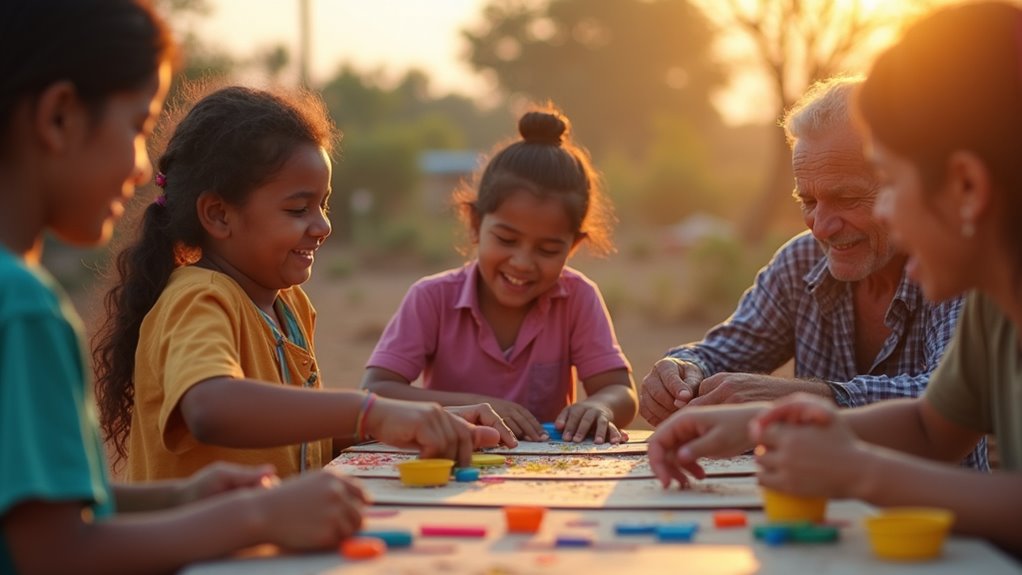
You can support children ethically by volunteering with family preservation programs that keep 73-91% of families together, mentoring community-based foster families, or helping kinship caregivers. Consider supporting micro-finance projects for low-income parents, advocating for policy changes that prevent unnecessary family separation, or partnering with local churches providing wraparound services. You might also create enriching home environments, run child protection awareness campaigns, or provide administrative support to vetted organizations. These approaches address root causes while strengthening entire communities.
- Support Family Reunification and Preservation Programs
- Volunteer With Community-Based Foster Care Initiatives
- Contribute to Micro-Finance and Economic Development Projects
- Advocate for Child Protection Policy Changes
- Partner With Local Churches Supporting Vulnerable Families
- Assist With Skills Training and Business Development Programs
- Support Early Childhood Development in Home Settings
- Engage in Child Protection Awareness Campaigns
- Provide Administrative Support to Vetted Local Organizations
- Volunteer With Holistic Community Development Programs
- The Sum Up
Support Family Reunification and Preservation Programs

Rather than contributing to the cycle that separates children from their families, you can support programs that work tirelessly to keep families together. Family preservation services have proven remarkably effective—programs following the Homebuilders model reduce out-of-home placements by 31 percent while keeping 73-91 percent of families intact at twelve months.
You’ll find these programs deliver incredible value, producing $2.59 in benefits per dollar spent while reducing future abuse and neglect. When you donate to or volunteer with family reunification organizations, you’re supporting evidence-based interventions that address root causes rather than symptoms.
Look for local agencies offering home-based services, case management, and housing assistance. These targeted supports reduce child removal risks substantially while strengthening family functioning long-term. Programs typically provide intensive services for 30 to 60 days, focusing on immediate stabilization and skill-building during critical periods.
Volunteer With Community-Based Foster Care Initiatives
While orphanage volunteering takes you far from home to help unfamiliar children, community-based foster care lets you make a meaningful difference right in your neighborhood. You’ll support vulnerable kids who desperately need stability—with 30-50% of foster families quitting annually, your commitment matters enormously.
Start by contacting local foster care agencies about volunteer opportunities. You might mentor teens aging out, provide respite care for overwhelmed families, or help with placement shifts. Many children experience multiple placements, so consistent volunteers become lifelines during chaotic times.
Consider supporting kinship families caring for relatives’ children—they often lack resources but provide familiar, loving environments. You could organize donation drives, offer tutoring, or simply be a reliable presence. These children face complex health needs including higher risks for mental health, developmental, and chronic medical issues that require ongoing support.
Since most foster children come from deep poverty, practical help like transportation or meal preparation creates lasting impact within your community.
Contribute to Micro-Finance and Economic Development Projects

How can you create lasting change that addresses root causes of poverty instead of just treating symptoms? You’ll make deeper impact by supporting micro-finance and economic development projects that strengthen entire communities.
When you contribute to microfinance institutions, you’re helping low-income families access credit for small businesses and microenterprises. These loans create jobs, increase local trade, and boost household income—benefits that ripple through neighborhoods for generations.
Focus on programs targeting women borrowers, who typically reinvest earnings in their families’ education and health. Look for organizations bundling financial literacy training with loans, ensuring sustainable money management skills.
Research MFIs carefully—choose those with responsible lending standards and strong consumer protections. Studies show that microfinance can enhance total factor productivity across numerous developing countries, demonstrating measurable economic benefits. Your support helps families build credit histories, escape poverty cycles, and gain economic independence that keeps children safely with their parents.
Advocate for Child Protection Policy Changes
When you shift your focus from volunteering at orphanages to advocating for policy changes, you’re tackling the systems that separate children from families in the first place. Contact your representatives about redirecting funding from institutions to family support services—remember, 88% of “orphans” have living parents who need assistance, not separation from their children.
Push for stronger legal frameworks requiring judicial oversight before any child placement. Many countries lack basic gatekeeping criteria, allowing poverty and disability to drive unnecessary institutionalizations. Countries maintain sovereignty over child protection policies, which creates significant variability in standards and oversight mechanisms across different nations.
Advocate for mandatory registration of all residential facilities and national databases tracking children outside family care.
Your advocacy can help shift the $2.3 billion orphanage industry toward family-first policies that actually protect children.
Partner With Local Churches Supporting Vulnerable Families
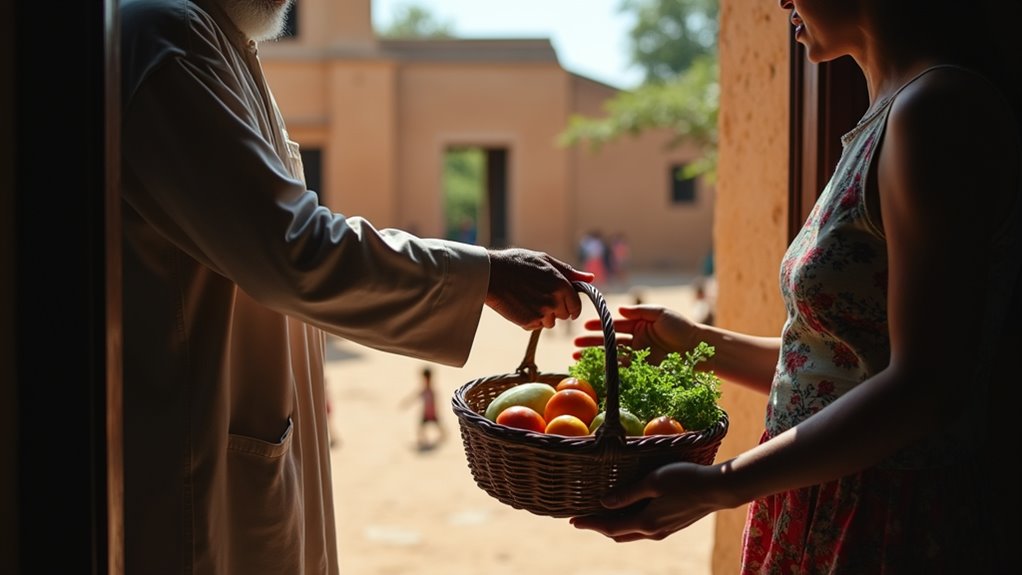
Beyond policy advocacy, you can create immediate impact by partnering with local churches that already understand family preservation. Churches provide 19% of transitional housing beds and 16.7% of rapid rehousing for families, directly preventing separation. Look for congregations with Family Advocacy Ministries that offer meals, babysitting, and practical help before foster care becomes necessary.
Programs like Better Families demonstrate this works—98% of 5,400 children served stayed home. You can help churches use tools like CarePortal, where caseworkers request specific assistance like rent or furniture. These faith-based partnerships span over 2,000 churches across 40 states, showing the scalability of community-driven child welfare efforts.
Churches generate $10,000 annually in economic impact through volunteering and preventative services.
Start by identifying churches in neighborhoods with high child protection involvement. Offer to help them organize wraparound support teams for vulnerable families.
Assist With Skills Training and Business Development Programs
While traditional orphanage volunteering often creates dependency, you can break cycles of poverty by supporting skills training programs that keep families together.
I’ve seen remarkable transformation when vulnerable youth access technical training combined with real-world apprenticeships. In Ghana, participants developed reading, calculating, and trade skills through hands-on experience, achieving 48-58% employment rates.
You’ll maximize impact by choosing programs that include career counseling, employer referrals, and internship placements.
Women benefit especially from soft-skills training with empowerment components.
Look for initiatives offering stipends to cover transportation and foregone income—this removes participation barriers for families struggling financially. Research indicates that generic skills may actually provide higher returns than technical skills alone for vulnerable populations.
Consider supporting organizations that provide realistic job referrals and employer matching services. These connections reduce information barriers while improving job quality for graduates, creating sustainable pathways out of poverty.
Support Early Childhood Development in Home Settings
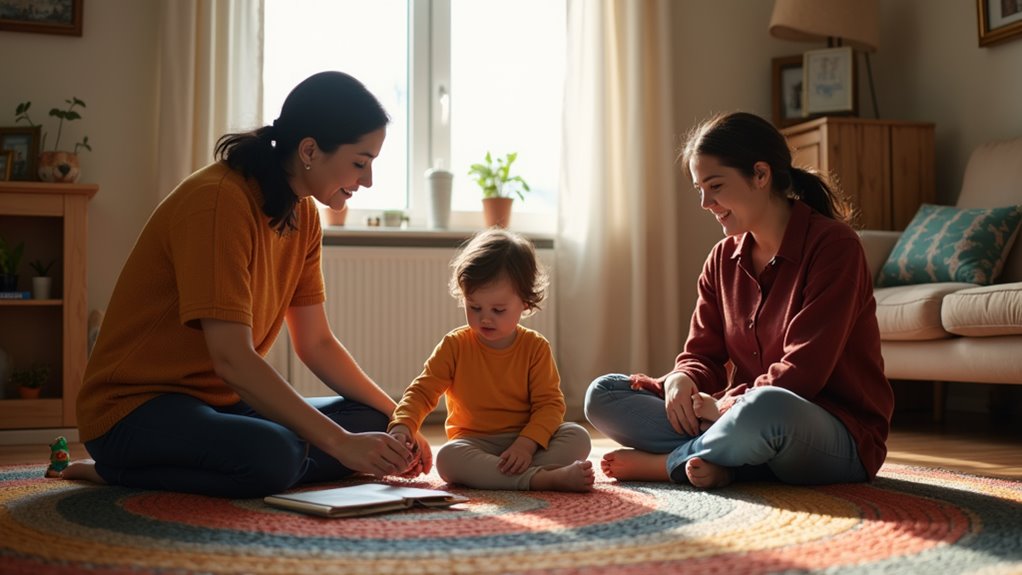
Skills training programs work best when children have strong early foundations, which is why supporting early childhood development in home settings creates lasting change. You can help families create enriching environments by providing simple learning materials like books, puzzles, and art supplies.
Teach caregivers how reading stories, singing songs, and playing games directly impact their children’s development—these activities cost nothing but make enormous differences.
Focus on training home-based childcare providers who serve millions of children daily. They’re often overlooked but care for 27% of subsidized infants. Help them understand child development milestones and create safe, stimulating spaces. Professional development efforts, including ongoing training and coaching, are linked to quality improvements in early care settings.
You’ll also want to support family, friend, and neighbor caregivers—they’re the most common childcare arrangement. Simple training on developmental activities transforms ordinary homes into learning environments.
Engage in Child Protection Awareness Campaigns
When families feel supported rather than judged, they’re more likely to seek help before reaching crisis points—that’s why child protection awareness campaigns create such powerful ripple effects throughout communities.
You can volunteer with organizations running campaigns that reduce stigma around parenting support. These efforts have proven results: one campaign decreased help-seeking stigma by 10%, while others considerably reduced child abuse incidents and improved parenting practices.
Effective campaigns use multiple approaches—billboards, social media, radio PSAs, and community events. You might help distribute materials, staff information booths, or share resources through your networks. Media campaigns have successfully demonstrated their power to change behaviors across many public health issues, from reducing smoking and drunk driving to increasing physical activity through initiatives like the Truth anti-smoking campaign.
Focus on campaigns that provide resource numbers rather than crisis hotlines, as this encourages prevention over intervention.
Your involvement helps normalize conversations about positive parenting while connecting families to support before problems escalate into crises.
Provide Administrative Support to Vetted Local Organizations

Behind every successful child-focused organization, there’s a volunteer quietly managing spreadsheets, filing intake forms, and updating donor databases—work that might seem mundane but directly impacts how many families receive help. You’ll find meaningful opportunities through places like Scottsdale Career Center, where your data entry skills help job seekers support their families.
Libraries need volunteers for computer classes that teach parents digital literacy. Museums require archiving assistance that preserves community history for future generations. Administrative volunteers can also support court-ordered restitution programs where they help supervise community service tasks like litter removal and cleaning.
Start by contacting coordinators like Sheila Williams at 480-312-0058 to match your administrative skills with local needs. Whether you’re filing documents for Fountain Hills government programs or tracking volunteer statistics for United Way’s 5,492 volunteers, your behind-the-scenes work creates ripple effects that strengthen entire communities.
Volunteer With Holistic Community Development Programs
Where can you make the biggest difference for children without stepping into an orphanage? Holistic community development programs address root causes affecting entire families. You’ll find these programs through Extension services offering 4-H youth development, Master Gardening, and family sciences initiatives that strengthen communities from within.
These programs work because they’re sustainable. Take Hillsborough County’s Master Gardener program—it generated over $1.1 million in economic impact across six years. When you volunteer with skills-based flexibility, you’re 51% more likely to boost your own employability while creating lasting change.
Look for programs measuring real outcomes: volunteer retention rates, community economic impact, and families served. You’ll join the 62% of volunteers who recommend these experiences to friends, knowing your efforts support entire family systems rather than creating dependency. Rural communities particularly benefit from these holistic approaches, as they have traditionally relied more heavily on volunteer activities to maintain essential services and social bonds.
The Sum Up
You’ll discover that supporting families in their own communities creates lasting change far beyond what traditional orphanage volunteering offers. I’ve seen families thrive when they receive the right support to stay together. Focus your efforts on programs that strengthen family bonds and community resources. You’re not just helping individual children—you’re building systems that’ll protect countless families for generations. That’s the kind of impact that transforms communities and honors children’s fundamental right to family.