
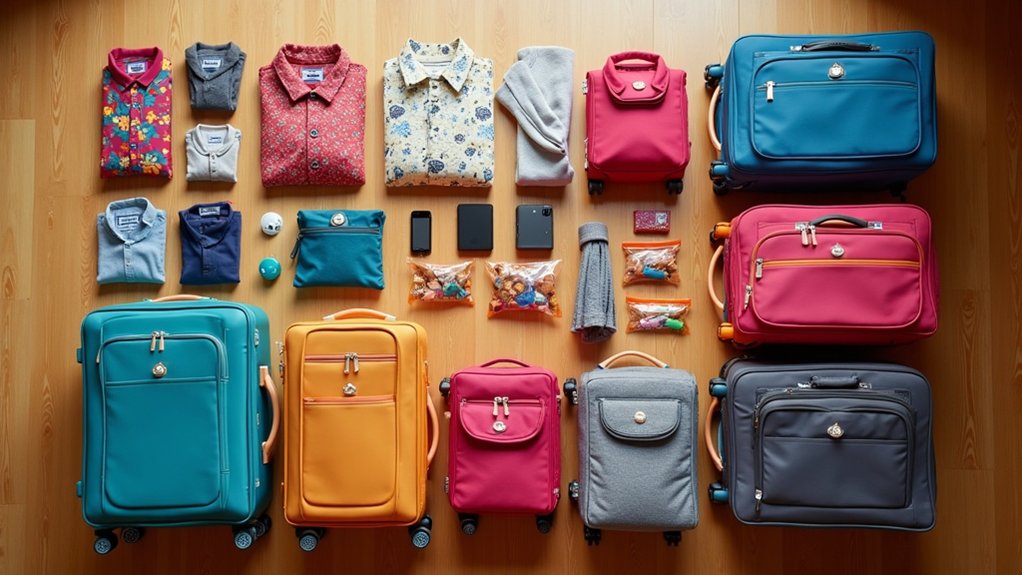
When you’re traveling with other families, create shared Google Docs for collaborative packing lists and assign color-coded cubes to each family member. Designate specific roles like one family handling shared toiletries while another manages emergency supplies. Coordinate outfit colors for group photos, distribute weight strategically across all luggage, and consolidate bags to reduce fees. Establish clear communication through group chats and schedule pre-departure check-ins to make certain everyone’s prepared and nothing essential gets left behind.
- Create Shared Packing Lists for All Families
- Coordinate Color-Coded Packing Cubes Across Groups
- Establish Weight Limits for Each Family Member
- Designate One Family for Shared Travel Essentials
- Plan Outfit Coordination to Avoid Duplicate Items
- Use Vacuum-Sealed Bags for Bulky Clothing
- Assign Responsibility for Common Forgotten Items
- Share Luggage Space Through Strategic Consolidation
- Pack Emergency Supplies Across Multiple Bags
- Create a Group Check-In System Before Departure
- Last Words
Create Shared Packing Lists for All Families
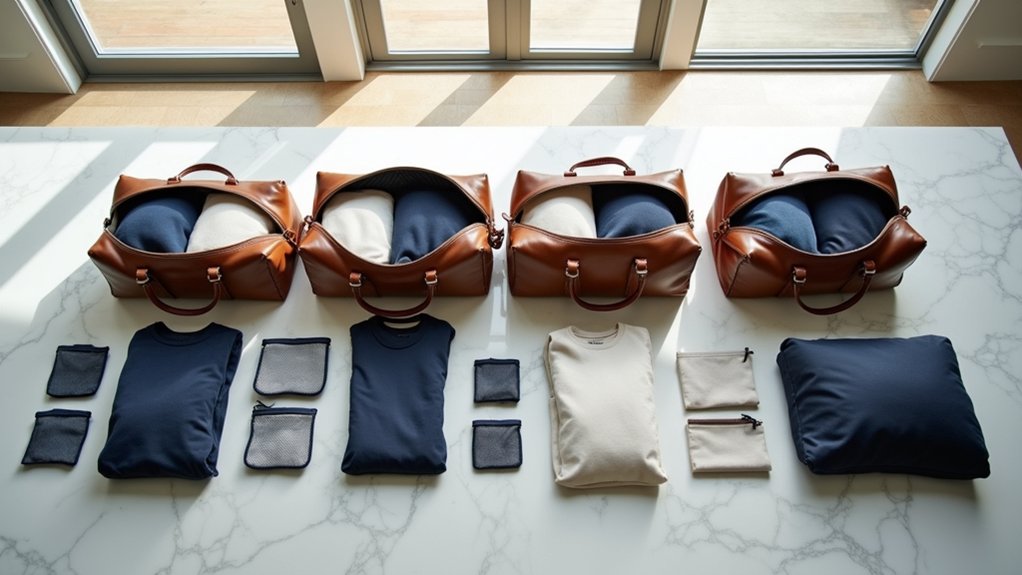
When you’re coordinating a trip with multiple families, creating shared packing lists becomes your secret weapon for staying organized and guaranteeing nothing gets forgotten. Google Docs templates make this collaboration effortless – simply share your master family packing list with other families so everyone can add their specific needs in real-time.
Start with your extensive template covering clothing, toiletries, gadgets, and travel documents, then let each family customize sections for their size and preferences.
Color-code different sections for each family to track items quickly. You can share finalized lists through email, direct links, or printouts for group planning.
This collaborative approach prevents duplicate items and guarantees shared responsibilities like sunscreen or first-aid supplies don’t get overlooked, making your multi-family adventure seamless. Consider using checkboxes to track which items each family has packed, ensuring accountability and preventing anyone from forgetting essential gear.
Coordinate Color-Coded Packing Cubes Across Groups
Color-coded packing cubes transform chaotic multi-family luggage situations into organized systems where everyone can instantly locate their belongings. Assign each family member a unique color—blue cubes for one person, red for another—and coordinate with other families to guarantee no color overlap between groups. This prevents mix-ups when sharing suitcase space or storing luggage together.
Use mesh panels on cubes so you can identify contents without opening them during cross-group checks. Complement color-coding with clear labeling like “Mom’s outfits” for family-specific gear.
Categorize items within each person’s cubes: group complete outfits together, separate clean from dirty clothes, and isolate shoes in specialized compartments. Consider adding dedicated shoe packing cubes that can fit three pairs per cube for optimal space utilization when traveling with multiple families who need extra footwear for various activities. You’ll compress your items by 15-30%, maximize space, and eliminate confusion during multi-family adventures.
Establish Weight Limits for Each Family Member
Since airline weight restrictions vary dramatically—from 15 pounds on Asian carriers to 22 pounds on European airlines—you’ll need to establish clear weight limits for each family member before anyone starts packing.
Start by checking your specific airline’s policies, then distribute weight based on age and physical capability.
Children aged 4-7 should handle only 5-10% of their body weight, meaning your 42-pound five-year-old carries just 2-4 pounds.
Kids eight and older can manage 15% of their body weight safely—so an 80-pound child handles about 12 pounds maximum.
For adults, aim for 18-20 pounds per carry-on, leaving room for souvenirs. Use packing cubes to organize items efficiently and help stay within weight limits while maximizing space in each family member’s bag.
Consider having one adult carry clothes for two people while distributing heavier items like electronics and toiletries among stronger family members.
Designate One Family for Shared Travel Essentials
While each family handles their own clothing and personal items, you’ll save significant space by designating one family to pack shared travel essentials that everyone will use.
Assign toiletries like shampoo, sunscreen, and bug spray to one family using travel-sized containers and separate Ziploc bags to prevent leaks.
Have another family manage all electronics and chargers in an organized tech station with cord organizers and RFID-blocking pockets.
Designate one family for the emergency kit containing band-aids, pain relievers, and prescriptions alongside safety items.
Create a shared snack system where one family packs an IKEA market bag filled with treats chosen by all the kids. Use a travel snack organizer to keep shared treats neat and easily accessible for all families throughout the trip.
Don’t forget multi-use accessories like lightweight scarves, hats, and laundry bags from a centralized pack.
Plan Outfit Coordination to Avoid Duplicate Items
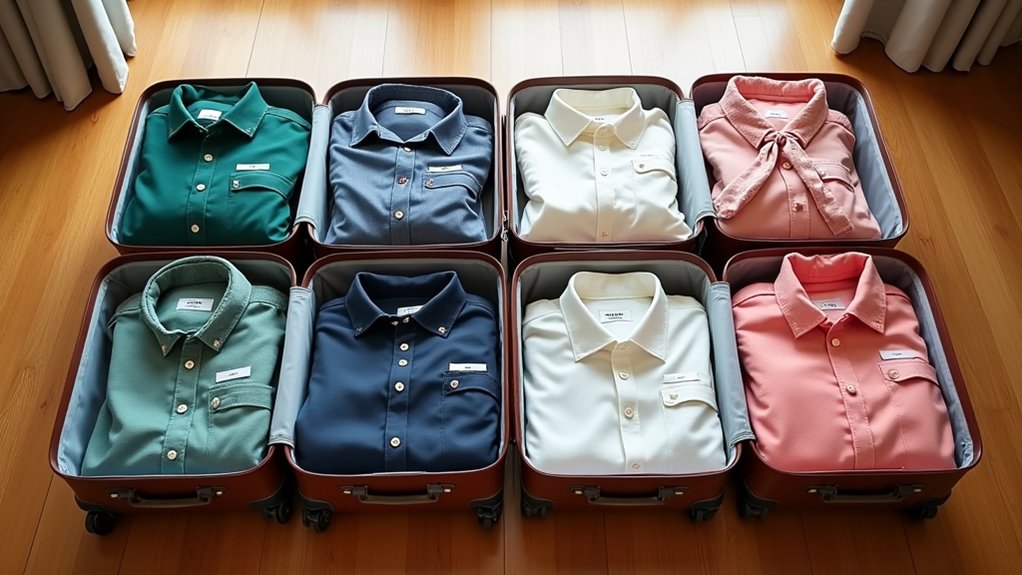
When multiple families travel together, coordinating outfits prevents everyone from packing the same items while creating a cohesive look for group photos. Start by selecting a core color palette with 2-4 complementary colors as your base. Choose one main color and incorporate neutrals like beige, gray, or cream for balance.
Begin coordination with key pieces like dresses or patterned items, then build around them. Ladies should select outfits first, followed by coordinating men’s and children’s clothing. Mix similar themes while avoiding identical designs to maintain individual style.
Use accessories like scarves, hats, and shoes to unify the group’s appearance. Consider your destination’s season and activities when choosing colors and formality levels for ideal photo opportunities. This approach simplifies packing by reducing the overall number of items needed across all families.
Use Vacuum-Sealed Bags for Bulky Clothing
After coordinating your group’s outfits, you’ll need smart packing strategies to fit everyone’s clothing efficiently. Vacuum-sealed bags are game-changers for bulky items like jackets, sweaters, and pajamas. They’ll compress your clothing to 20% of its original size, reducing volume by up to 80% without affecting weight.
You’ll maximize suitcase space and fit more outfits for everyone traveling. These bags also protect clothes from dust, moisture, and odors during transit. They’re great for separating clean and dirty items between families. High-quality vacuum bags are designed for multiple uses when handled carefully, making them ideal for frequent family travelers.
However, guarantee clothes are completely dry before sealing to prevent trapped moisture. Use them for casual items like T-shirts and yoga pants that won’t be damaged by compression. Avoid vacuum-sealing delicate fabrics that might lose their shape permanently.
Assign Responsibility for Common Forgotten Items
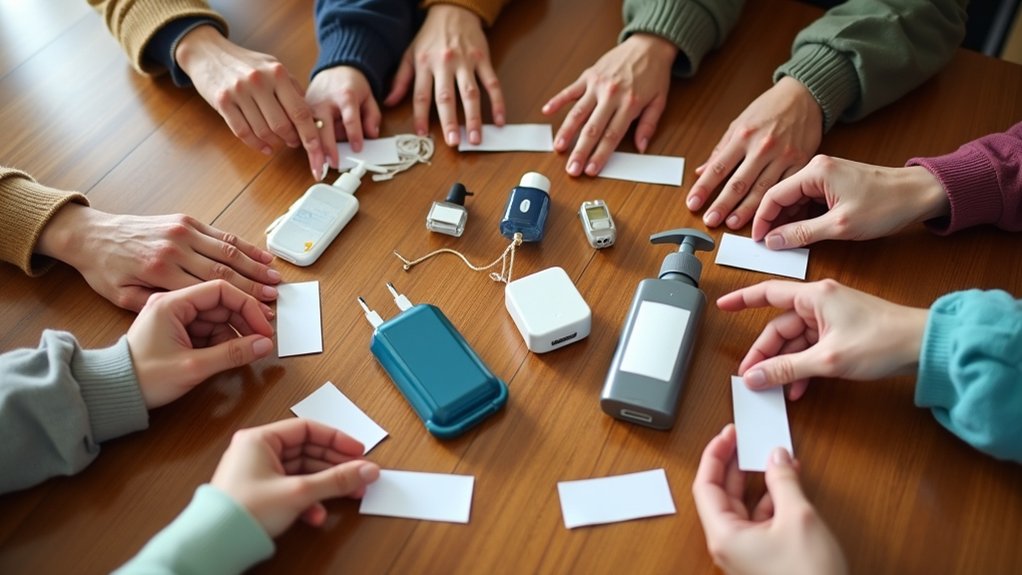
Nothing ruins a family vacation faster than realizing you’ve forgotten essential items like phone chargers or medications at your destination. When traveling with multiple families, assign specific coordination roles to prevent these oversights.
Designate one person as your Device Charger Coordinator to collect all chargers and pack them in multiple locations. Use color-coded systems to prevent mix-ups.
Create a Medications and Documents Manager who consolidates prescriptions, passports, and emergency contacts in easily accessible locations. Always pack documents and medications first before adding clothing, as this ensures critical items are secured before space becomes limited.
Assign a Snack and Entertainment Lead to inventory tablets, books, and non-perishable snacks while eliminating duplicates.
Establish a Clothing Exchange Coordinator to distribute backup outfits across different suitcases.
For families with babies, delegate a Baby Supplies Organizer to manage diapers, formula, and comfort items with 50% surplus quantities.
Share Luggage Space Through Strategic Consolidation
Beyond organizing who brings what, you’ll want to think strategically about how you actually pack everything together. Consolidating luggage among families dramatically reduces the number of bags you’re managing while cutting baggage fees and simplifying airport logistics.
Assign each family specific packing cubes or compartments within shared suitcases. Color-coding these sections lets everyone quickly identify their belongings without digging through others’ items.
For multi-stop trips, pack by destination rather than item type—group everything needed for one location in a single bag so you can leave unused luggage in the car. Rolling clothes creates compact bundles that fit efficiently into designated family sections while minimizing wrinkles during transport.
Use nested storage for accessories by placing smaller bags inside larger ones, and layer frequently needed items near the top. This strategic approach minimizes disruption when multiple families need simultaneous access to shared luggage.
Pack Emergency Supplies Across Multiple Bags
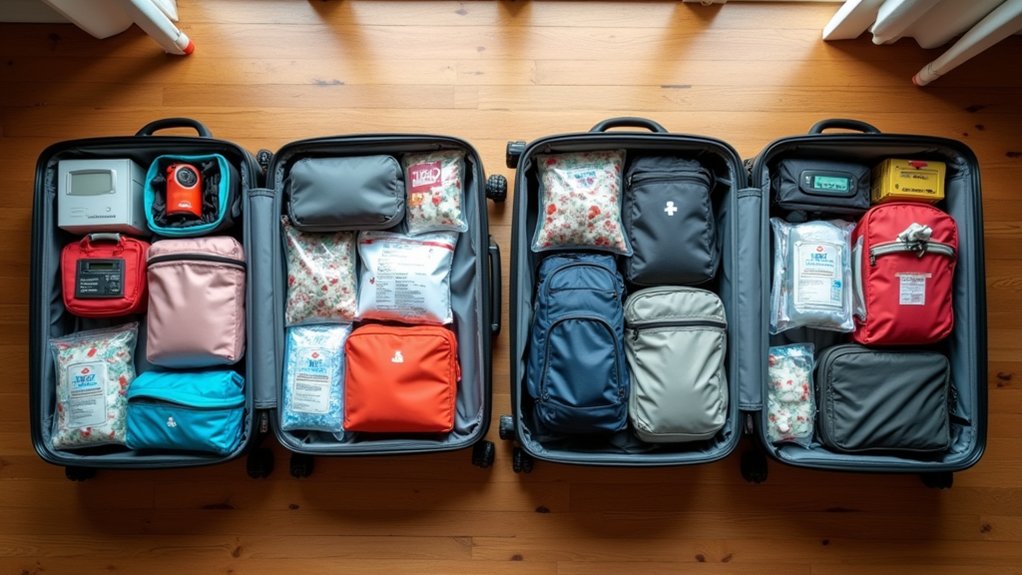
When you’re traveling with multiple families, distributing emergency supplies across different bags creates essential backup options if luggage gets lost or separated during your trip. You’ll want to pack basic first aid essentials like bandages, gauze, medical tape, and antibiotic ointment in waterproof containers across multiple bags.
Each family should handle their own prescription medications in original containers with prescription copies, while sharing general supplies like pain relievers, antihistamines, and antiseptic wipes.
Include travel-specific items like sunscreen, insect repellent, and motion sickness medicine based on your destination. Don’t forget digital thermometers, instant cold packs, and hand sanitizer for immediate health needs. Consider including antiseptic spray alongside antiseptic wipes for more thorough wound cleaning when deeper disinfection is needed.
Store everything in clearly marked, accessible containers with quick-reference guides so any family member can locate supplies during emergencies.
Create a Group Check-In System Before Departure
Before your departure date arrives, you’ll need to establish a reliable group check-in system that keeps all families connected and accountable throughout the planning process. Designate one person as the trip coordinator who’ll manage communication and track important deadlines like ticket purchases and reservation confirmations.
Set up group chat apps like WhatsApp or GroupMe for real-time updates, while using email threads for detailed itineraries and cost breakdowns.
Schedule regular check-ins to prevent issues from escalating and ensure everyone stays on the same page. Your coordinator should collect essential traveler information including names, addresses, and passport details before departure. Consider implementing project management tools like Trello or Asana to effectively track tasks and assignments across all participating families.
Create shared Google Calendars so all families can track departure times and important dates, making the entire planning process smoother and more organized.
Last Words
You’ve got all the tools you need to pack smartly with other families. Don’t let the coordination overwhelm you—start with shared lists and assign clear responsibilities. Remember, you’re all working toward the same goal: a stress-free trip where everyone’s prepared. Stick to your color-coding system, double-check those shared essentials, and trust that your planning will pay off. You’ll arrive at your destination organized, relaxed, and ready to make memories together.